In 1913, the Cushing-Drumright Oil field produced its first oil-well from the Bartlesville Sands zone producing about 500 barrels per day. The oil field had been discovered in 1912 when Thomas "Dry Hole" Slick drilled a well near Cushing, Oklahoma that yielded about 400 barrels of oil per day. Later, Thomas Slick earned the nickname "King of the Wildcatters." [1]
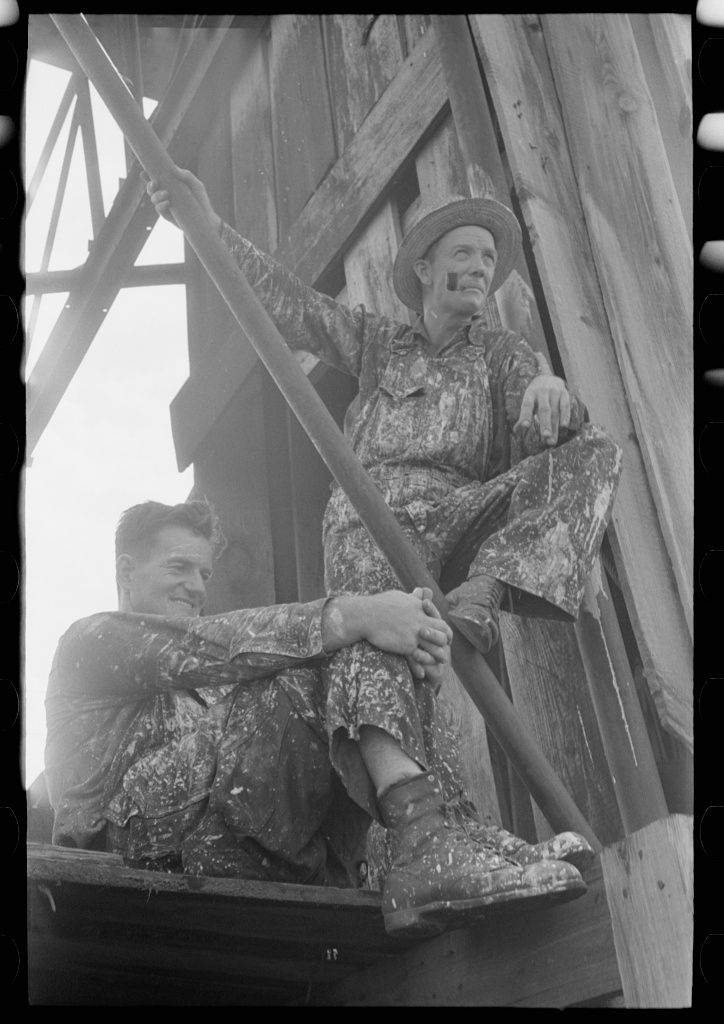
Thomas Slick, starting in 1904, became an expert at obtaining oil and gas leases in various parts of the country, but had never drilled a successful oil well and over time he became known as "Mad Tom" in addition to "Dry Hole" Slick. In 1912, Slick began securing leases near Cushing, Oklahoma and given his unfavorable track record, people were eager to be paid for leases where oil didn't likely exist. The Cushing newspaper at the time stated,
We would repeat that we believe it to be in the best interests of the individuals and all that these leases be granted…And just a word of warning. If you make a lease see that the lessees name is not left blank, but that the name of Thomas B. Slick is there.[2]
This eagerness to ensure Thomas Slick's name was on the lease was not a strike against Thomas Slick but rather it was a testament to his character and integrity that if they were going to lease with someone, Thomas Slick was the preferred counterparty.
How Cushing Oklahoma Became An Oil Hub - YouTube Short
On March 12, 1912, on Frank M. Wheeler's farm, the Wheeler No. 1 became the first oil well to strike oil in the Cushing-Drumright field. After hitting oil, Slick quickly leased up every available rig in the area as well as hired every notary in the town so that he was able to continue leasing while keeping others from being able to do the same.[3] Eventually, despite Slick's best efforts to conceal his discovery, a wave of oil exploration began in the area. Slick continued to experience success as well as others.
On November 30, 1913 the Prairie Oil and Gas Company brought a well online at a depth of 2,600 feet from a geologic zone called the Bartlesville Sand that started out producing around 500 barrels of oil per day. As more wells were drilled in the Bartlesville Sand geologic zone, it was not uncommon to have a well producing 1,000 to 5,000 barrels per day.[4]
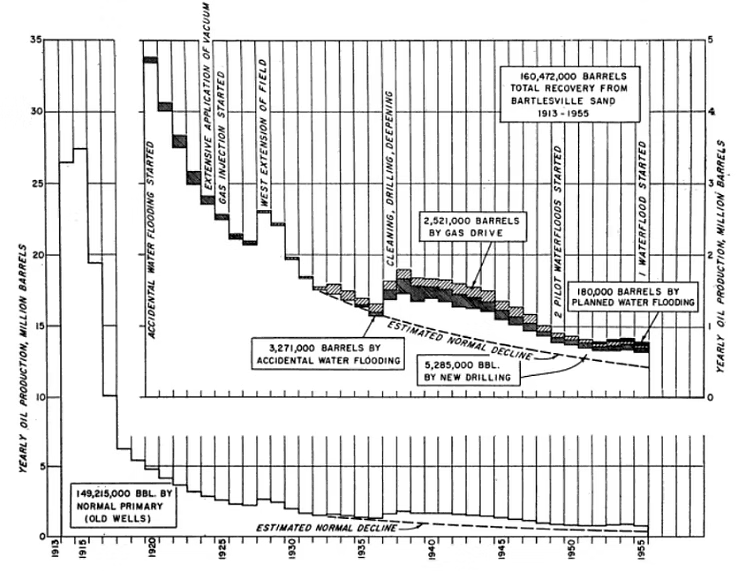
Source: History and Potentialities of the Cushing Oilfield Creek County, Okla. 1958.
By 1915, oil wells in Cushing peaked as they were already producing 300,000 barrels per day. By October 1916, 165 million barrels had been produced and by 1920, the field had produced 236 million barrels across the field which now spanned across 32 square miles. In 1919, the field produced 17 percent of the total United States supply of oil. [5]
Today, Cushing, Oklahoma is known as the "Pipeline Crossroads of the World" and the place where the settlement price for West Texas Intermediate(WTI) crude is determined each day. Prior to oil being discovered near Cushing, there was not a significant population in Cushing, however after 1913, the population exploded and by 1920, the town’s population was 6,284 residents. And nearby Drumright was also founded in 1913.
It bears mentioning that the Cushing-Drumright oil discovery arrived just as World War I was about to begin and it became a very timely discovery for America leading into the war.
Important Dates
Thomas Slick began his career obtaining oil and gas leases in various parts of the country, though he had never successfully drilled a producing oil well.
Thomas Slick began securing leases near Cushing, Oklahoma.
The Wheeler No. 1 well, drilled on Frank M. Wheeler's farm, became the first well to strike oil in the Cushing-Drumright field, marking the official discovery of the field.
Prairie Oil and Gas Company brought the first Bartlesville Sand well online at 2,600 feet depth, initially producing approximately 500 barrels of oil per day.
The nearby town of Drumright was founded, a direct result of the oil boom sparked by the Cushing-Drumright discovery.
Oil production in the Cushing-Drumright field peaked at 300,000 barrels per day.
Cumulative production from the Cushing-Drumright Oil Field reached 165 million barrels.
The Cushing-Drumright field produced 17 percent of the entire United States oil supply for the year.
Total cumulative production from the field reached 236 million barrels, and the town of Cushing's population had grown to 6,284 residents, reflecting the transformative impact of the oil boom.
Frequently Asked Questions
Who discovered the Cushing-Drumright Oil Field in Oklahoma?
The Cushing-Drumright Oil Field was discovered in 1912 by Thomas B. Slick, a wildcatter who had earned the nicknames "Dry Hole" and "Mad Tom" due to his previous lack of drilling success. Despite his unfavorable track record, Slick's persistence and integrity made him the preferred leasing partner in the region, and he later earned the title "King of the Wildcatters."
When did oil production begin in the Cushing-Drumright Oil Field?
Commercial oil production in the Cushing-Drumright Oil Field began on November 30, 1913, when Prairie Oil and Gas Company brought a well online producing approximately 500 barrels per day from the Bartlesville Sand geological zone. Wells in this zone frequently produced between 1,000 and 5,000 barrels per day as exploration expanded across the field.
What is the Bartlesville Sand, and why is it significant to the Cushing Oil Field?
The Bartlesville Sand is a subsurface geological zone located at approximately 2,600 feet depth that served as the primary oil-producing formation in the Cushing-Drumright Oil Field. It was responsible for some of the most prolific well production in early Oklahoma oil history, helping to make Cushing one of the most important oil-producing regions in the United States.
How much oil did the Cushing-Drumright Oil Field produce at its peak?
At its peak in 1915, the Cushing-Drumright Oil Field produced an extraordinary 300,000 barrels of oil per day, making it one of the most productive oil fields in American history. By 1919, the field was supplying 17 percent of the entire United States oil output, spanning 32 square miles of Creek County, Oklahoma.
Why is Cushing, Oklahoma called the "Pipeline Crossroads of the World"?
Cushing, Oklahoma earned the title "Pipeline Crossroads of the World" because of the vast pipeline infrastructure built around its oil storage and distribution hub, which grew directly out of the massive production from the early 20th-century oil boom. Today, Cushing serves as the delivery point and pricing benchmark for West Texas Intermediate (WTI) crude oil, one of the world's most important oil price references.
How did the Cushing Oil Field discovery impact World War I?
The discovery and rapid development of the Cushing-Drumright Oil Field proved strategically significant as the United States entered World War I, providing a substantial and timely domestic oil supply to support the war effort. With 236 million barrels produced by 1920 and peak daily production of 300,000 barrels, the field helped ensure American energy security during one of history's most critical periods.
How did the Cushing-Drumright Oil Field affect the local population?
Before the oil discovery, Cushing, Oklahoma had a modest population, but the oil boom triggered rapid growth that brought the town's population to 6,284 residents by 1920. The oil field's development also directly led to the founding of the nearby town of Drumright in 1913, permanently transforming the demographic and economic landscape of Creek County, Oklahoma.
Citations
- Wells, Bruce. “Oklahoma’s King of the Wildcatters.” American Oil & Gas Historical Society, March 23, 2023. https://aoghs.org/petroleum-pioneers/wildcatter-tom-slick/ ↑
- Wells. “Oklahoma’s King of the Wildcatters.” ↑
- Wells. “Oklahoma’s King of the Wildcatters.” ↑
- Riggs, C. H.. History and Potentialities of the Cushing Oilfield Creek County, Okla. United States: United States Department of the Interior, Bureau of Mines, 1958. 32-34. ↑
- Weaver, Bobby. “Cushing-Drumright Field.” Oklahoma Historical Society | OHS. Accessed September 12, 2023. https://www.okhistory.org/publications/enc/entry?entry=CU008. ↑