When John D. Rockefeller established the Rockefeller Foundation in 1913, he created what would become one of the most influential philanthropic organizations in modern history. Backed by the fortune of the world's richest man, the foundation quickly expanded its reach into public health, medical education, and international development. During its first decade, the organization launched ambitious initiatives that shaped healthcare systems, funded medical research, and extended its influence across the globe.
John D. Rockefeller and The Rockefeller Foundation
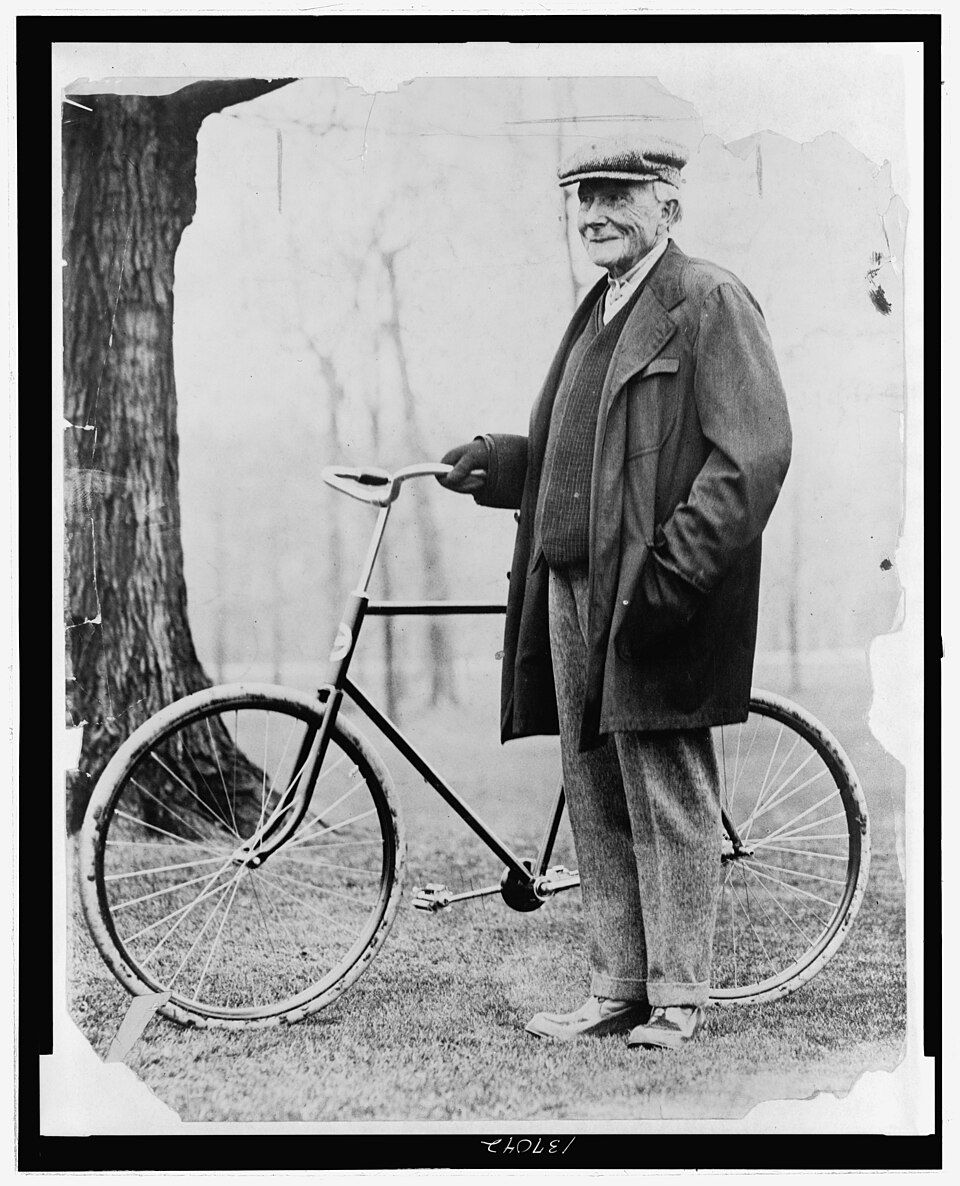
On May 14, 1913, The Rockefeller Foundation was founded by John D. Rockefeller which had the stated goal "to promote the well-being of mankind throughout the world."
John D. Rockefeller was the oil business magnate that started what became Standard Oil in 1865. By 1913, Mr. Rockefeller was the richest man in the world with a net worth of $900 million according to several sources. This was an impressive amount by any standard, but at that time, it was equal to 3% of the United States GDP.
John D Rockefeller and the Rockefeller Foundation: 1913 to 1920 - YouTube Short
When the foundation began, there were two types of causes that the foundation focused its resources towards. The foundation focused on those causes that were started inside the foundation as well as causes that were external to the foundation. In the beginning, two primary organizations were created inside of the Rockefeller Foundation which included the China Medical Board and the International Health Board. The International Health Board was started as the International Health Commission on June 27, 1913. Its mission statement was the..."promotion of public sanitation and the spread of knowledge of scientific medicine."[1]
The China Medical Board
The China Medical Board was started in November 1914 and was the second major organization started by the Rockefeller Foundation. It funded projects throughout China and Southeast Asia with one example being the Peking Union Medical College Hospital. By 1920, it had strategic initiatives scattered throughout the Chinese region. The map below was taken from their 1920 annual report and demonstrates how the Rockefeller Foundation devoted resources in various places and mostly aided in helping various hospitals and medical schools, in its early days.
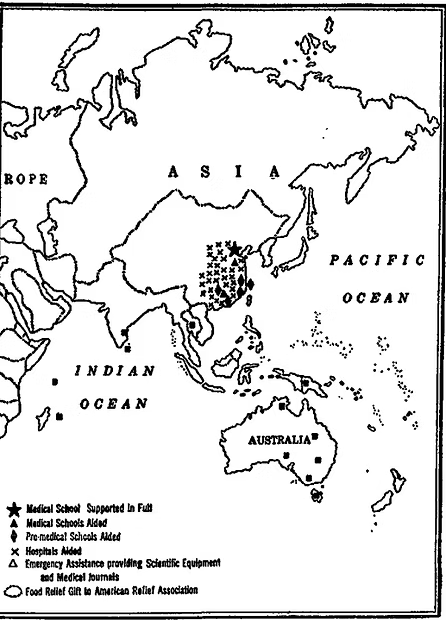
Source: Rockefeller Foundation 1920 Annual Report
The International Health Board
The International Health Board was also strategic in its initiatives around the globe. The International Health Board originally focused on eradicating hookworm. As its first objective, it chose to focus on hookworm because it provided an "ideal wedge that would allow for the creation or extension of public health organizations." According to the Rockefeller Foundation, it was also an opportunity to provide general medical education such the importance of sanitation.[2] The Board's first initiative took place in the British colony of Guiana in 1914 after the director of the Health Board received approval from the British Colonial Office.
Demonstrations in the control of this one disease....are having a more important effect in creating a popular interest in public health and in promoting the development of permanent agencies for the control of this and other preventable diseases.[3]
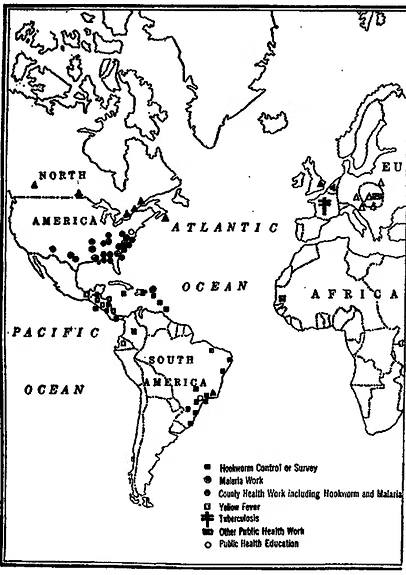
Source: Rockefeller Foundation 1920 Annual Report
The National Committee of Mental Hygiene
The National Committee of Mental Hygiene(NCMH) also began receiving resources from the Rockefeller Foundation. This organization was founded on February 19, 1909 as the first organization to focus on mental health and is known today as Mental Health America.
When the NCMH began, William Welch was the dean of the Johns Hopkins medical school and was at the founding meeting for the NCMH in 1908. As World War I began, the organization began to focus on the problem of "psychiatric casualties." These were men who were unable to continue fighting due to becoming debilitated mentally. Based on the "successful" treatment results, it was proposed to the General Education Board of the Rockefeller Foundation in 1915 that mental hygiene should become a field of study and on June 16, 1916, the Johns Hopkins School of Hygiene and Public Health was founded.[4]
The Foundation's Early Growth
The Rockefeller Institute of Medical Research was founded in 1901 and so Mr. Rockefeller had already been deeply involved in the world of medicine before he started the Rockefeller Foundation along with its medical initiatives in 1913.
However, as time went on, the foundation's endowment grew. On Christmas day in 1919, Mr. Rockefeller made a donation to the foundation of $50 million. A portion of this $50 million was designated towards medical education in Canada. This donation brought the total funds in the foundation to $170 million. During the Great War, the Rockefeller foundation continued its medical education campaigns and when the war was over, it had spent $22.5 million on funding general causes during the war.[5]
The Rockefeller Foundation today is located at 420 Fifth Avenue in New York City.
Frequently Asked Questions
Why was the Rockefeller Foundation established?
The Rockefeller Foundation was founded on May 14, 1913, by John D. Rockefeller to promote the well-being of humanity around the world. Its early efforts focused heavily on public health, medical education, and scientific research.
Who was John D. Rockefeller?
John D. Rockefeller was the founder of Standard Oil and one of the most successful businessmen in American history. By 1913, he was widely regarded as the richest person in the world, with a fortune equivalent to roughly 3% of the U.S. GDP.
What was the International Health Board?
The International Health Board was one of the first major organizations created by the Rockefeller Foundation in 1913. Its mission was to improve public sanitation and promote scientific medicine, initially focusing on the eradication of hookworm disease.
What was the purpose of the China Medical Board?
Founded in 1914, the China Medical Board funded hospitals, medical schools, and healthcare initiatives throughout China and Southeast Asia. One of its most notable projects was supporting the development of the Peking Union Medical College Hospital.
How did the Rockefeller Foundation contribute to mental health?
The foundation provided support to the National Committee of Mental Hygiene, the first organization dedicated to mental health in the United States. Its backing helped advance mental hygiene as a field of study and contributed to the establishment of public health education programs.
What role did the Rockefeller Foundation play during World War I?
During World War I, the foundation continued funding medical education and public health initiatives while also supporting various wartime relief efforts. By the end of the conflict, it had spent more than $22 million on causes related to the war.
How did the Rockefeller Foundation grow during its first decade?
The foundation's resources expanded significantly through additional donations from John D. Rockefeller, including a $50 million gift in 1919. By 1920, its total funds had grown to approximately $170 million, allowing it to broaden its influence around the world.
Citations
- Annual Report - International Health Board. United States: Offices of the Commission, 1915. 8. ↑
- “The Rockefeller Foundation’s 20th-Century Global Fight against Disease.” REsource, August 3, 2022. https://resource.rockarch.org/story/the-rockefeller-foundations-20th-century-global-fight-against-disease/ ↑
- Annual Report - The Rockefeller Foundation. Accessed September 10, 2023. https://www.rockefellerfoundation.org/wp-content/uploads/Annual-Report-1920-1.pdf ↑
- “Origins of Mental Health | Johns Hopkins Bloomberg School of Public Health,” Johns Hopkins Bloomberg School of Public Health, n.d., https://publichealth.jhu.edu/departments/mental-health/about/origins-of-mental-health ↑
- The New International Year Book. United Kingdom: Dodd, Mead and Company, 1920. 844. ↑