Geothermal Energy First Discovered
In 1913, Prince Piero Ginori-Conti of Trevignano was responsible for completing the world's first commercial geothermal energy plant near Lardarello, Italy located in the Italian province of Pisa in the region of Tuscany. The plant was built in a location known as Devil's Valley. The natural thermal springs located in and around Lardarello were known as "soffioni boraceferi" which means boraciferous steam vents given that they produced large amounts of boric acid. The boric acid was and still is used to manufacture perborates using Faraday's method of electrolytic oxidation.[1] Perborate is a term describing salt containing borate. Today, they are commonly used in cleaning products.
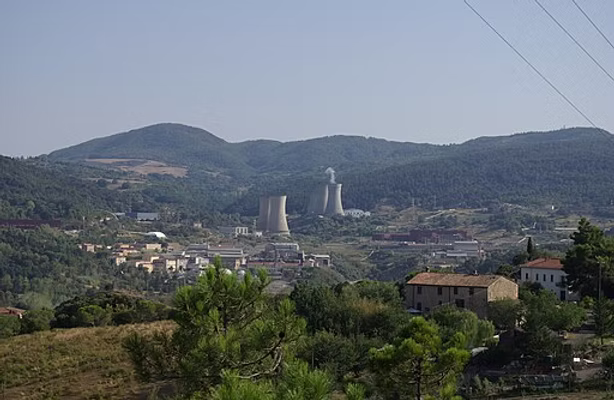
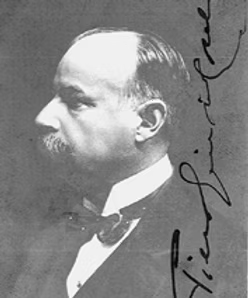
In 1913, Ginori-Conti was the owner of Lardarel Establishments which was founded by Francisco Lardarel in 1818. The boric acid which the company harvests, was discovered as early as 1777 and was used in applications as early as 1815.[2] Prince Ginori-Conti became the general manager of the company in 1899 and he later inherited the company from his father-in-law, Florestano Lardarel upon his death in 1911. Prince Ginori-Conti had married Florestano's daughter Adriana in 1894 and there were no sons to pass the company on to.
Prior to 1913, Ginori-Conti and the company had been experimenting with geothermal energy for roughly a decade. On July 4, 1904, he was able to create enough geothermal electricity at Lardarello using a small steam engine to power five light bulbs.
The Discovery of Geothermal Energy - YouTube Short
As they continued exploring how to create the first commercial geothermal energy facility, Ginori-Conti and his team understood that they couldn't connect the steam generator directly to the steam escaping the "soffioni." This was because the steam contained corrosive chemicals that would damage the turbines in the generator. One of the engineer's on the team, Signor Bringhenti created a simple answer by creating a "depurator." Effectively, it was a way to use the thermal steam to create pure steam without the corrosive chemicals.[3]
When the plant first began, it was producing 250 kW of energy. This initial plant served as an experimental geothermal energy site. Immediately following, in 1914, construction on an additional plant began at the site known as the Lardarello Geothermal Plant using three 2,500 kW generators. By 1916, the plant was completed with two of the 2,500 kW generators in use and the other one used as a backup.[4] In a 1934 publication, it was stated that there were 135 steam wells supplying steam at the Lardarello site and multiple other sites with geothermal plants in the region.[5]
The Geysers Geothermal Complex, California
At one point, it was recorded that Prince Ginori-Conti believed that there were western United States geysers that are comparable to the ones in Italy.[6]
Someone in America was listening because in the mid-1920s, The Geyser Development Company acquired strategic acreage north of San Francisco known for thermal springs. This location was known as "The Geysers" and here the first steam wells in America were drilled in 1921. The first wells were drilled between 62 and 148 meters deep. The development of the facility at The Geysers was slow initially, but following World War II, The Geysers Geothermal Complex experienced aggressive expansion. Today, the original steam wells are still producing steam at the same rate as when they were first drilled in the 1920s.[7]And The Geyers Geothermal Complex is the largest geothermal energy complex in the world.
Prince Ginor-Conti died in 1939 and Nature journal stated, "Italy [has] lost one of her most energetic industrial personalities and international science a devoted supporter."[8]
144 Years Earlier
In 1769, the first description of the pools at Lardarello were recorded by Tozzetti Targioni. Targioni was conducting a survey of the natural resources in the area.[9]
“They are places where water pool, coupled in the Earth interior with volatile mineral acids, Sulphur, Alum, Vitriol and salt...absorb a great heat and spring out boiling in a terrifying way, with horrible noise, with hot and wet vapour, dense as fog, with sulphur smell...”[10]
Then in 1777, the chemist U.F. Hoffer discovered that the steam contained boric acid as he was analyzing the "Lagoni" just south of Lardarello at Monterotondo Marittimo.
Important Dates
Giovanni Targioni Tozzetti recorded one of the first known descriptions of the geothermal pools and steam vents in the Larderello region during a survey of local natural resources.
Chemist U.F. Hoefer discovered that the geothermal steam near Larderello contained boric acid, a finding that later led to commercial extraction.
Prince Piero Ginori-Conti successfully generated geothermal electricity at Larderello, producing enough power to illuminate five light bulbs in a landmark demonstration.
Prince Piero Ginori-Conti inherited control of the Lardarel company following the death of his father-in-law, Florestano de Larderel, allowing him to accelerate geothermal energy development.
The world's first commercial geothermal power plant began operation near Larderello, producing approximately 250 kW of electricity and launching the geothermal power industry.
The expanded Larderello Geothermal Plant was completed, with two 2,500-kW generators in operation and a third generator available as backup, greatly increasing geothermal electricity production.
The first geothermal steam wells were drilled at The Geysers, marking the beginning of geothermal energy development in the United States. These wells, drilled to depths between 62 and 148 meters, laid the foundation for what would become the world's largest geothermal energy complex.
Frequently Asked Questions
What was the world's first commercial geothermal power plant?
The world's first commercial geothermal power plant was built in 1913 at Larderello Geothermal Plant by Prince Piero Ginori-Conti. Located in Tuscany, Italy, the facility marked the beginning of commercial geothermal electricity generation and established geothermal energy as a viable renewable power source.
Why was Larderello, Italy chosen for geothermal energy development?
Larderello was selected because the area contains abundant natural steam vents known as "soffioni boraciferi," which release geothermal steam rich in underground heat. These geothermal resources provided ideal conditions for developing one of the world's earliest renewable energy projects.
How did Prince Piero Ginori-Conti demonstrate geothermal electricity before 1913?
On July 4, 1904, Prince Piero Ginori-Conti successfully generated enough geothermal electricity to power five light bulbs at Larderello. This breakthrough experiment proved that geothermal steam could be used to produce electrical power and paved the way for the first commercial geothermal plant.
What challenge did engineers face when developing the first geothermal power plant?
The natural geothermal steam contained corrosive chemicals that could damage turbines and other power generation equipment. Engineer Signor Bringhenti solved this problem by creating a "depurator," which produced cleaner steam suitable for electricity generation.
How much electricity did the first geothermal power plant produce?
The original 1913 geothermal power plant generated approximately 250 kilowatts (kW) of electricity. Its success led to the expansion of the Larderello geothermal facility with larger generators capable of producing several thousand kilowatts of power.
What is the connection between Larderello and The Geysers in California?
The success of geothermal energy development in Italy helped inspire exploration of geothermal resources at The Geysers, the largest geothermal energy complex in the world. Early drilling began there in the 1920s, and the site remains one of the most important geothermal power-producing regions today.
Why is Prince Piero Ginori-Conti important in geothermal energy history?
Prince Piero Ginori-Conti is widely recognized as a pioneer of geothermal power because he led the development of the world's first commercial geothermal energy plant. His innovations helped transform geothermal energy from a scientific curiosity into a practical source of renewable electricity used around the world today.
Citations
- Science. United States: American Association for the Advancement of Science, 1925. 47. ↑
- Industrial & Engineering Chemistry. United States: American Chemical Society, 1924. 1286. ↑
- The Chemical Trade Journal and Chemical Engineer. United Kingdom: Davis Bros., 1925. 130. ↑
- The Chemical Trade Journal and Chemical Engineer. United Kingdom: Davis Bros., 1925. 130. ↑
- The First Steam Turbine Plant. Boys' Life. Boy Scouts of America, Inc. January 1934. 15. ↑
- The Volcano Letter: A Weekly News Leaflet of the Hawaiian Volcano Research Association. United States: University of Hawaii, 1925. ↑
- Geothermal Energy Update. United States: Technical Information Center, Energy Research and Development Administration., 1978. 9. ↑
- Unwin, Jack. “The Oldest Geothermal Plant in the World.” Power-Technology. Accessed September 18, 2023. https://www.power-technology.com/features/oldest-geothermal-plant-larderello/ ↑
- core.ac.uk. “POLITECNICO DI TORINO Repository ISTITUZIONALE,” 2017. Accessed December 17, 2023. https://core.ac.uk/download/pdf/234916692.pdf ↑
- Targioni Tozzetti, G. (1769). Relazioni d'alcuni viaggi fatti in diverse parti della Toscana per osservare le produzioni naturali, e gli antichi monumenti di essa, III. Stamperia Granducale, 473 pp. ↑