The creation of the Federal Reserve System in 1913 marked one of the most significant transformations in American financial history. Established through the Federal Reserve Act signed by President Woodrow Wilson, the new central banking system gradually replaced key functions of the National Banking System and reshaped the relationship between the federal government, banks, and the nation's money supply. This article explores the origins of the Federal Reserve, its role during World War I, and the events that led to the complete transition of the United States banking system by 1920.
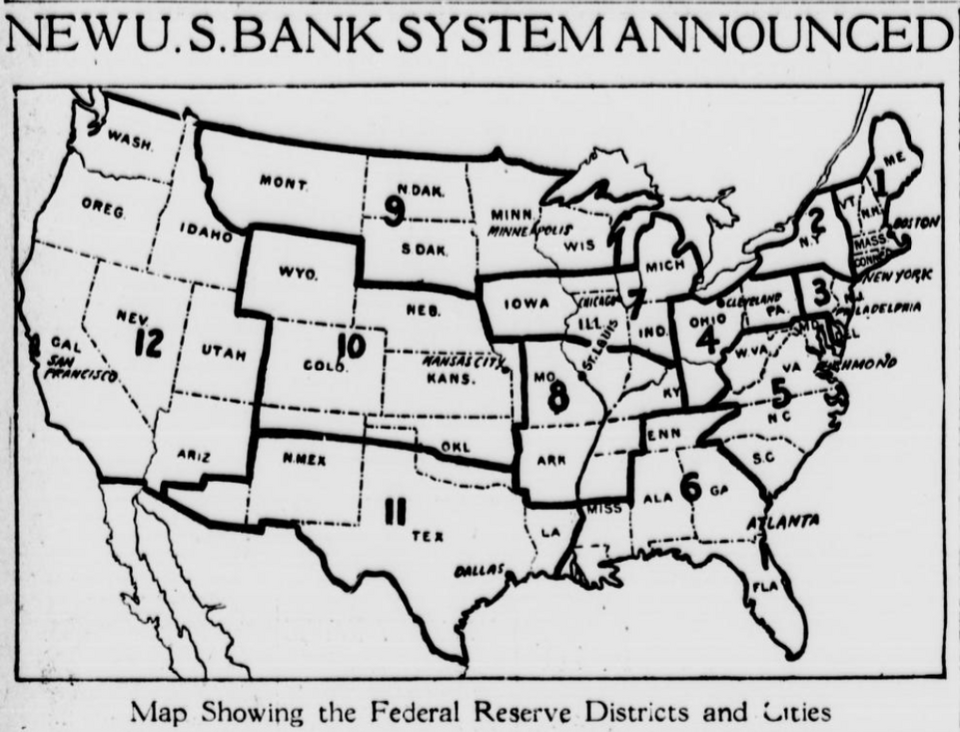
The Federal Reserve Banking System
On December 23, 1913, Woodrow Wilson signed a law which changed the United States banking system forever. The law was introduced in the House of Representatives on August 9, 1913 by a Democrat from Virginia named Carter Glass.
On December 2, 1913, Woodrow Wilson gave the first oral delivery of the State of the Union Address since Thomas Jefferson disposed of the tradition when he became president in 1801. In his address, he strongly encouraged the 63rd United States Congress to pass the bill. He stated:
You already have under consideration a bill for the reform of our system of banking and currency, for which the country waits with impatience, as for something fundamental to its whole business life and necessary to set credit free from arbitrary and artificial restraints. I need not say how earnestly I hope for its early enactment into law. I take leave to beg that the whole energy and attention of the Senate be concentrated upon it till the matter is successfully disposed of.[1]
President Wilson also lobbied in his address that the Federal Reserve Act would be a great benefit to farmers. As many bills often are today, they are lobbied for on behalf of the nation's farmers. Whether it helps farmers or not, to say that something will help farmers has been an effective political tool at least since Wilson's presidency. He lobbied on behalf of farmers by stating:
I present to you, in addition, the urgent necessity that special provision be made also for facilitating the credits needed by the farmers of the country. The pending currency bill does the farmers a great service. It puts them upon an equal footing with other business men and masters of enterprise, as it should; and upon its passage they will find themselves quit of many of the difficulties which now hamper them in the field of credit.[2]
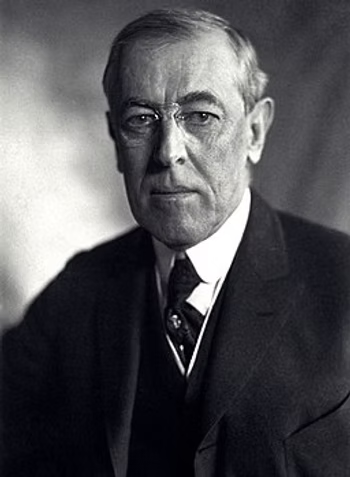
Less than a month later, the bill came to Woodrow Wilson's desk and he wasted no time in signing it into law on December 23rd. After the bill was signed, the US Treasury Secretary William McAdoo became the first ex-officio chairman of the Federal Reserve on August 10, 1914. McAdoo previously founded and operated the Hudson and Manhattan Railroad Company and was invited to become Wilson's treasury secretary after playing an active role in his 1912 campaign. McAdoo is well-known to have implemented Jim Crow policies throughout the Treasury Department during his tenure, including in offices located in northern states.[3] McAdoo resigned in December 1918 after the war was over in order to start his own law firm and was followed by the Congressman who proposed the Federal Reserve Act, Carter Glass. Carter Glass held the position until he was appointed to fill a vacant Senate seat in February1920.[4]
The full transition to the Federal Reserve banking system was completed in 1920. The General Appropriation Act of May 29, 1920, otherwise known as the Independent Treasury Act of 1920 was an amendment to the Federal Reserve Act that in effect repealed the Independent Treasury Act of 1846. When the Federal Reserve Act was passed in 1913, its original intent was to absorb the independent subtreasuries into the regional Reserve Banks. However, as the bill came closer to passing, the bill was reworded to grant the subtreasuries the option to either become integrated with the Federal Reserve system or remain independent. To the chagrin of policymakers, many subtreasuries remained separate from the Federal Reserve system. The Independent Treasury Act of 1920 was passed after the Bureau of Efficiency was tasked in March 1917 with providing a report to Congress of whether they were truly necessary. Naturally, the report came back stating that the subtreasuries were unnecessary. Over the next thirteen months, the various subtreasuries were required to have their funds transferred to the Federal Reserve. This completed the Federal Reserve's "coup de grace" of the old national banking system.[5]
One Federal Reserve observer named Murray S. Wildman ironically stated this in a paper published in 1922:
Large disbursements of government funds will never again stimulate speculation on stock exchanges nor will the collection of a great surplus of revenue cause a chill in the markets of staple products.[6]
The Federal Reserve and World War I
Eight months after the Federal Reserve Act was passed, World War I began in August 1914. Quickly, large amounts of gold began to flood into the United States from Europe to pay for the increased exports in the form of food, munitions, and supplies now coming from the United States. The war forced the Federal Reserve to accelerate their organization in order to finance the war. In the process, the New York Federal Reserve became the designated agent among the twelve regional Federal Reserve banks for the marketing and selling of war bonds known as "Liberty Bonds" to the general public. Between April 1917 and April 1918, there were three Liberty Bond Acts passed by Congress to authorize issuing Liberty Bonds.[7] The Federal Reserve even encouraged individuals to "borrow and buy" their "liberty bonds." How did this work? The Federal Reserve would lend to its member banks, the banks would make loans to individuals, and then the individual would buy "liberty bonds" where the money would then arrive in the hands of the US Treasury. Like many wars, the Federal Reserve operated as a debt-ponzi scheme in order to fund World War I. Then, unlike today, there was plenty of gold flowing to the United States to "back" it up.[8]
Table: Federal Reserve Gold Stock From 1913 to 1920 (in thousands $)
| Year | Total Stock | In Treasury and Federal Reserve Banks | In Circulation |
|---|---|---|---|
| 1913 | 1,924,361 | 262,443 | 1,661,918 |
| 1914 | 1,815,976 | 504,672 | 1,311,304 |
| 1915 | 2,312,444 | 758,595 | 1,553,649 |
| 1916 | 2,864,842 | 973,233 | 1,891,609 |
| 1917 | 3,040,439 | 1,770,347 | 1,270,092 |
| 1918 | 3,080,510 | 2,243,895 | 836,615 |
| 1919 | 2,787,714 | 2,091,054 | 696,660 |
| 1920 | 2,928,848 | 2,216,154 | 712,694 |
Source: St. Louis Federal Reserve
The Banking System Before 1913
Before 1913, the American system of banking operated on what was called a National Banking System. There was no central banking authority, only what was called the Independent Treasury and a series of subtreasuries located throughout the nation.
The National Banking System had been in place since a series of acts were passed during the Civil War known as the National Banking Acts. The National Banking Act of 1865 ultimately rang the death knell for the private state banking system which had operated quite proficiently prior to the national banking system. The Act of 1865 required that all state banks pay a ten percent penalty or tax on the origination of state bank notes. Naturally, this put them at a strong disadvantage to national banks and so they were forced to either dissolve, or operate within the rules and regulations of the new, national banking system.
The national banking system operated well, although not as efficiently as the independent state banks up until 1913. However, in 1899, following the Spanish-American war, the government began to experiment with extending the United States dollar standard beyond American borders. The Spanish-American War resulted in the United States obtaining new territories such as Puerto Rico and Guam from Spain by which these "experiments" could be carried out. Furthermore, America became very involved in Central American politics during this time, forcing many nations to adopt a dollar-exchange standard as well. A dollar-exchange standard is a simple way of describing a system where foreign nations used dollars, but would deposit their gold reserves inside the United States banking system. This allowed the banking system to expand the number of paper dollars in circulation on top of the growing amounts of gold within banks. When banks are permitted to print more money than they have in reserves, this is known as fractional reserve banking.
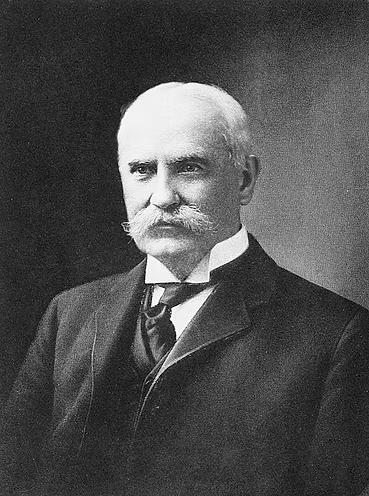
In 1906, there was a banking crisis caused by the Knickerbocker Bank in New York City. In response, JP Morgan took over the bank and in the wake of this bank failure, the Aldrich-Vreeland Act was passed in May 1908 with the intent to reform the banking system. Within the bill was the authority to create the National Monetary Commission, which was a commission that had the goal of studying various European central banks to determine if America should adopt a central banking system as well. By 1911, the National Monetary Commission had published over 50 papers and in January 1911, Senator Nelson Aldrich published a recommendation to National Monetary Commission provided by the famous meeting of international bankers at Jekyll Island.[9]
Important Dates
Congress passed the National Banking Act of 1865, imposing a 10 percent tax on state bank notes and accelerating the shift to the National Banking System.
The Knickerbocker Trust Company suspended operations during the Panic of 1907, contributing to one of the most severe banking crises in U.S. history.
The Aldrich-Vreeland Act was signed into law, creating the National Monetary Commission to study banking reforms and central banking systems.
Senator Nelson Aldrich presented recommendations for banking reform based on the National Monetary Commission's findings.
Congressman Carter Glass introduced the Federal Reserve bill in the U.S. House of Representatives.
President Woodrow Wilson urged Congress to pass the Federal Reserve Act during his State of the Union Address.
President Woodrow Wilson signed the Federal Reserve Act into law, establishing the Federal Reserve System.
The first amendment to the Federal Reserve Act was approved as Europe entered World War I.
Treasury Secretary William G. McAdoo became the first ex-officio chairman of the Federal Reserve Board.
The twelve regional Federal Reserve Banks officially opened for business.
The Bureau of Efficiency was tasked with evaluating whether the Independent Treasury system remained necessary.
William G. McAdoo resigned as Treasury Secretary and chairman of the Federal Reserve Board.
Carter Glass left his Federal Reserve leadership role after being appointed to the United States Senate.
The General Appropriation Act of 1920 (Independent Treasury Act of 1920) effectively repealed the Independent Treasury system and accelerated the transfer of federal funds into the Federal Reserve System.
Federal funds held by remaining subtreasuries were transferred to Federal Reserve Banks, completing the transition to the Federal Reserve-centered banking system.
Murray S. Wildman published "The Assumption of Treasury Functions by the Federal Reserve Banks," analyzing the transfer of Treasury functions to the Federal Reserve.
Frequently Asked Questions
What is the Federal Reserve Banking System and why was it created?
The Federal Reserve Banking System was established by the Federal Reserve Act of 1913 to create a more centralized and flexible banking system in the United States. Lawmakers believed it would improve financial stability, regulate currency, and make credit more accessible to businesses and farmers.
When was the Federal Reserve Act passed and who signed it into law?
The Federal Reserve Act was signed into law by President Woodrow Wilson on December 23, 1913. The legislation permanently transformed the American banking system by creating the Federal Reserve as the nation's central banking authority.
How did the Federal Reserve change the U.S. banking system?
The Federal Reserve replaced key functions of the older National Banking System and gradually absorbed responsibilities previously handled by the Independent Treasury. By 1920, the transition was largely complete, making the Federal Reserve the central institution for managing the nation's banking and monetary system.
What role did Carter Glass play in creating the Federal Reserve?
Carter Glass, a Democratic congressman from Virginia, introduced the bill that became the Federal Reserve Act in 1913. He later served as chairman of the Federal Reserve and helped oversee the early development of the new banking system.
How did the Federal Reserve help finance World War I?
During World War I, the Federal Reserve assisted the U.S. government by supporting the sale and distribution of Liberty Bonds. The system also provided liquidity to member banks, helping raise funds needed to finance the war effort.
What was the National Banking System before the Federal Reserve?
Before the creation of the Federal Reserve, the United States operated under the National Banking System established during the Civil War era. This system relied on national banks and the Independent Treasury rather than a central bank to manage the nation's finances.
What events led to the creation of the Federal Reserve System?
A series of financial crises, including the Panic of 1907, exposed weaknesses in the existing banking system and increased calls for reform. The National Monetary Commission studied central banks around the world and helped lay the groundwork for the Federal Reserve Act of 1913.
Citations
- “First Annual Message | The American Presidency Project.” Accessed October 3, 2023. https://www.presidency.ucsb.edu/documents/first-annual-message-18 ↑
- First Annual Message. ↑
- O’Reilly, Kenneth. “The Jim Crow Policies of Woodrow Wilson.” The Journal of Blacks in Higher Education, no. 17 (1997): 117–21. https://doi.org/10.2307/2963252 ↑
- Federal Reserve History. “Carter Glass,” October 7, 2023. https://www.federalreservehistory.org/people/carter-glass ↑
- Wildman, Murray S. “The Assumption of Treasury Functions by the Federal Reserve Banks.” The Annals of the American Academy of Political and Social Science 99 (1922): 129–35. http://www.jstor.org/stable/1014520 ↑
- Wildman. "The Assumption of Treasury Functions." ↑
- The Federal Reserve Act: (approved December 23, 1913) as Amended August 4, 1914; August 15, 1914; March 3, 1915; September 7, 1916; June 21, 1917; September 26, 1918; March 3, 1919; September 17, 1919; December 24, 1919; April 13, 1920 .... United States: U.S. Government Printing Office, 1920. 1. ↑
- Davies, By Phil. “The Federal Reserve’s Role during WWI.” Federal Reserve History, October 7, 2023. https://www.federalreservehistory.org/essays/feds-role-during-wwi ↑
- Campbell, Pamela. “Uncurrent Events: National Monetary Commission, 1909-1912 | Inside FRASER Blog | Discover Economic History | St. Louis Fed,” October 7, 2023. https://fraser.stlouisfed.org/blog/2018/05/national-monetary-commission-1909-1912/# ↑