Early in 1913, in the Vienna flat of a fellow Russian émigré, Leon Trotsky was drinking tea at a samovar when the door opened without a knock. A short, thin man with a pockmarked, sallow face came in holding an empty glass, filled it at the samovar without a word, and went out again. There was, Trotsky remembered, nothing friendly in his look. His host told him the visitor was "the Caucasian Dzhugashvili," a fellow Georgian. Trotsky would later know him as Stalin.[1] The scene comes from an essay Trotsky wrote many years afterward, when the two men were mortal enemies, and its details cannot be checked. But the visit it describes is well documented. In January 1913 Joseph Stalin spent several weeks in Vienna, writing the article that made his reputation as a Bolshevik theorist.[2]
Stalin was not the only future national leader in the city that winter. A few miles to the north, in a large hostel for single working men in the Brigittenau district, a twenty-three-year-old Austrian named Adolf Hitler was painting postcard views of Vienna for a living. Thirty miles to the south, in the Daimler motor works at Wiener Neustadt, a Croatian metalworker named Josip Broz, later known as Tito, was working as a mechanic and test driver.[3] Each of the three would one day rule a country: Hitler as dictator of Germany, Stalin as dictator of the Soviet Union, Tito as the communist leader of Yugoslavia for thirty-five years. No document shows that any of them met another in Vienna. As a BBC writer put it on the centenary, "No-one knows if Hitler bumped into Trotsky, or Tito met Stalin."[4] What the record does show is how each of them passed through the capital of a vast, multinational empire in the last years before it fell apart, and where each had arrived by the time it was gone. This is the story of those twelve years, from Hitler's arrival in Vienna in 1907 to the peace treaty that ended the old empire in 1919.
A City of Two Million
The Vienna of these years was one of the largest cities in Europe and the capital of an empire of many nationalities. The census of 31 December 1910 counted 2,031,498 people in the city, up from 1,674,957 ten years earlier. Most gave German as their everyday language, but more than 98,000 Austrian citizens in Vienna gave Czech. Even that figure was contested: city officials, alarmed by what they called "an intensive, planned agitation" for Czech before the census, had inspectors review the returns.[5] Housing could not keep pace with the growth. Thousands of working people rented a bed by the night or by the shift in someone else's flat, and it was "not uncommon," the city's own historical encyclopedia notes, for several people to share one bed.[6]
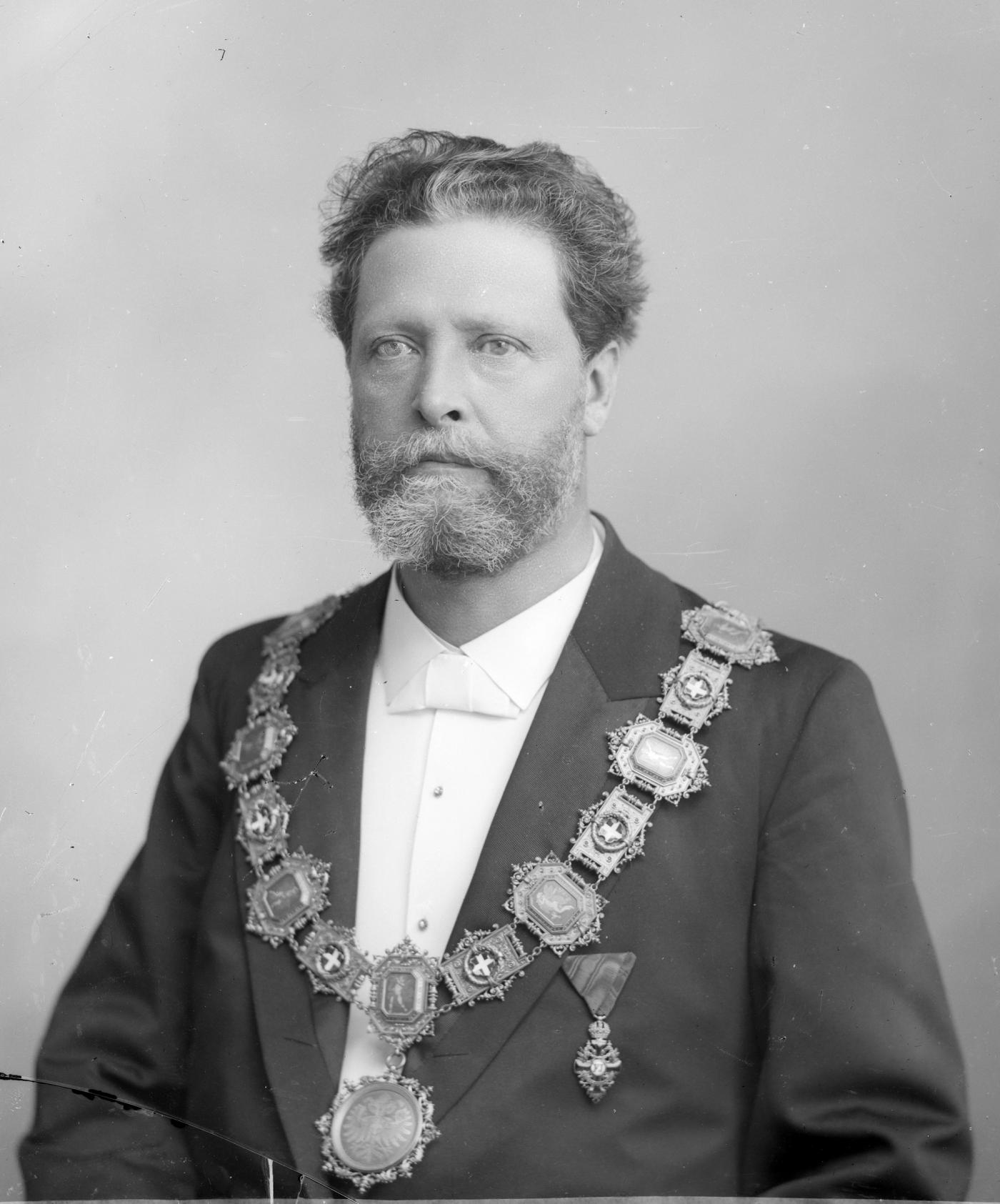
Vienna's politics were shaped by two men Hitler would later name as his teachers. Karl Lueger, founder of the Christian Social Party, had been mayor since 1897, when Emperor Franz Joseph finally confirmed him in office after refusing to confirm his earlier election. Lueger municipalized the gasworks and the tramways, built a second mountain-spring water main, and won the loyalty of the city's lower middle class with a sharp, populist style of politics. He died in office on 10 March 1910. Georg von Schönerer, founder of the German nationalist movement in Austria, wanted the German-speaking lands of the empire joined to the German Reich.[7] On the left stood the Social Democrats of Victor Adler, a Prague-born physician who had led the party since 1889. Adler helped bring about the electoral reform of January 1907 that gave every adult man the vote for the imperial parliament, and in the first election held under it, in May 1907, the Social Democrats became one of the largest parties in the chamber.[8]

It was also a city of coffeehouses. At the Café Central in the Herrengasse, writers, architects, and political exiles read the newspapers and argued over chess. One of its regulars was Trotsky, who arrived in Vienna in October 1907 and stayed until the outbreak of war in 1914, publishing a Russian-language paper called Pravda for smuggling into the tsar's empire. When someone warned an Austrian official before the war that revolution might come to Russia, he is said to have asked who would lead it: "Perhaps Herr Trotsky from the Café Central?"[9] Ludwig von Mises, who would become one of the century's leading economists, began lecturing at the University of Vienna in 1913, and Sigmund Freud saw patients at his flat at Berggasse 19.[10]
The Rejected Painter, 1907–1909
Adolf Hitler first saw Vienna on a visit in the spring of 1906. In September 1907, at eighteen, he came back to stay, renting a room at Stumpergasse 31 in the sixth district. He had come to enter the Academy of Fine Arts, and that autumn he sat its entrance examination and failed.[11] In his own account, written in prison seventeen years later, the rector told him that his drawings "unquestionably showed that painting was not what I was suited for," but that they gave "clear indications of my aptitude for architectural designing." Hitler lacked the school certificate he needed to study architecture. "Yet the fact was that I had failed," he wrote.[12]
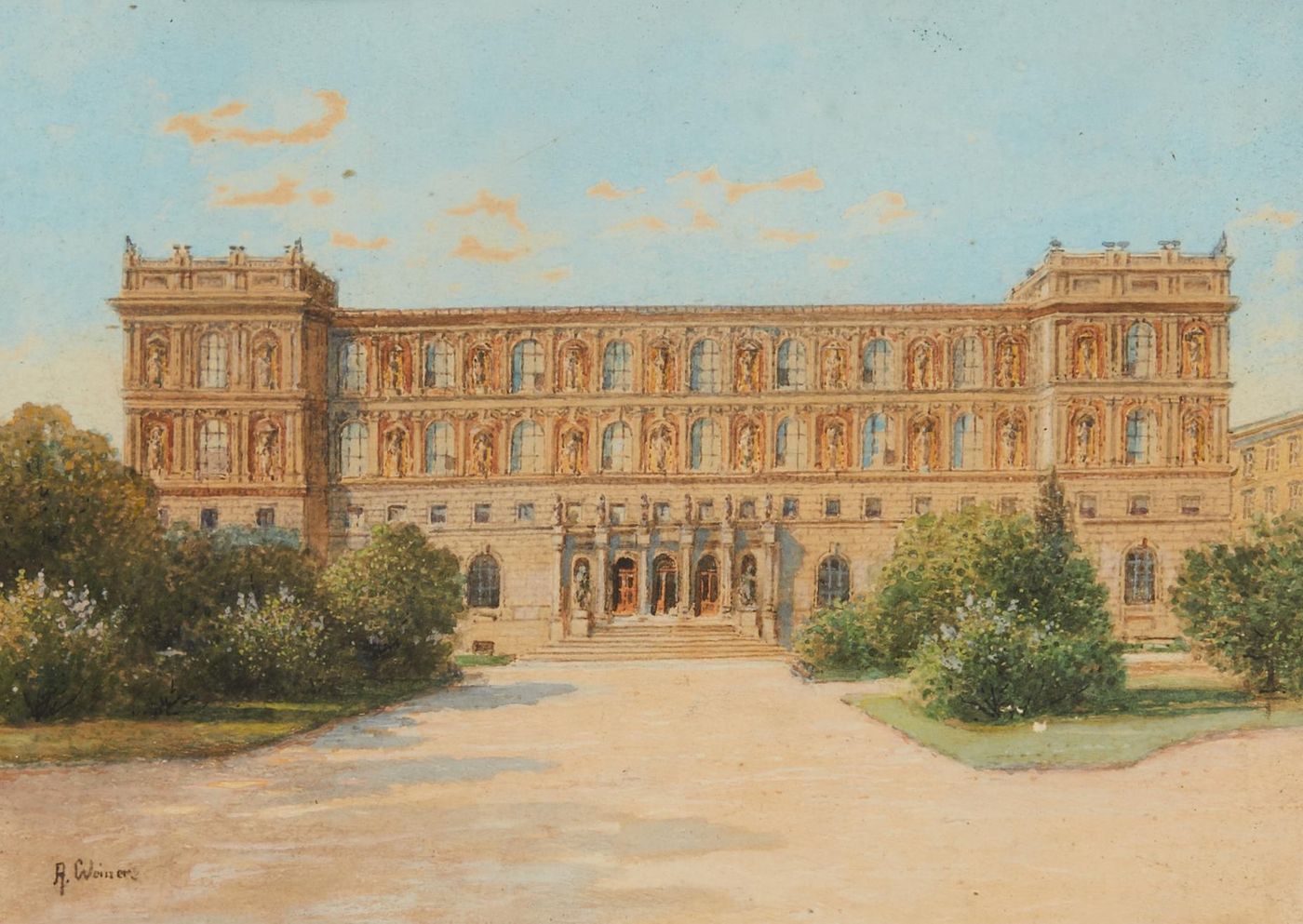
His mother, Klara, was dying of cancer in Linz, and she died there on 21 December 1907.[13] Early in 1908 Hitler returned to Vienna for good, living on a small inheritance, and his friend from Linz, the music student August Kubizek, came to share his room. He applied to the Academy again that year and was rejected again. In November 1908 he left the room at Stumpergasse, and over the following year he moved through a series of cheaper addresses until, with his money gone, he was reduced in the late autumn of 1909 to the municipal shelter for the homeless at Kastanienallee 2 in Meidling.[14]
The Men's Hostel, 1910–1913
Around the turn of 1910 Hitler moved into the Männerheim, a large modern hostel for single working men at Meldemannstraße 25–27 in the twentieth district. He lived there for more than three years.[15] A fellow resident named Reinhold Hanisch, who met him in the homeless shelter, later claimed that he had persuaded Hitler to paint postcards and small watercolors of Vienna landmarks, which Hanisch then sold for him. Among the buyers Hanisch named were frame dealers such as Samuel Morgenstern in the Liechtensteinstraße, who "often bought from him and sometimes recommended him to the private customers." Hanisch's account was published in 1939, after the two had quarreled, and historians treat it with caution, but it is one of the few surviving descriptions of Hitler's life at the hostel.[16]

In Mein Kampf Hitler presented his Vienna years as the time when he formed his view of the world, and he described Lueger as "the most eminent type of German Burgermeister."[17] Historians have been skeptical. The Austrian historian Brigitte Hamann, who went through the Vienna records of these years in detail, found that much of that story rests on Hitler's own word, written more than a decade later. Ian Kershaw, Hitler's leading biographer, has argued that the decisive turn in his politics came later, in Munich in 1918 and 1919.[18]
On 24 May 1913 Hitler left the Männerheim and moved to Munich. His later claim that he had moved in 1912 was wrong, and his reasons were less romantic than he made them sound. At twenty-four he was overdue to register for military service in Austria-Hungary, and leaving the country let him avoid it.[19]
The Georgian in Vienna
Joseph Stalin, born Iosif Dzhugashvili in Gori, Georgia, in 1878, had spent the years since 1907 as a professional revolutionary in the Caucasus and Russia. In June 1907 he was in Tiflis when Bolshevik militants robbed a bank's cash shipment on Erivan Square with bombs and pistols; his exact role is still disputed. He then edited a Bolshevik newspaper in Baku, and between 1908 and 1912 he was arrested and exiled to northern Russia again and again, escaping more than once.[20] In 1912 he was brought onto the Bolshevik Central Committee and helped launch the party's legal daily, Pravda, in St. Petersburg. That spring he began signing his articles "K. Stalin," from the Russian word for steel.[21]
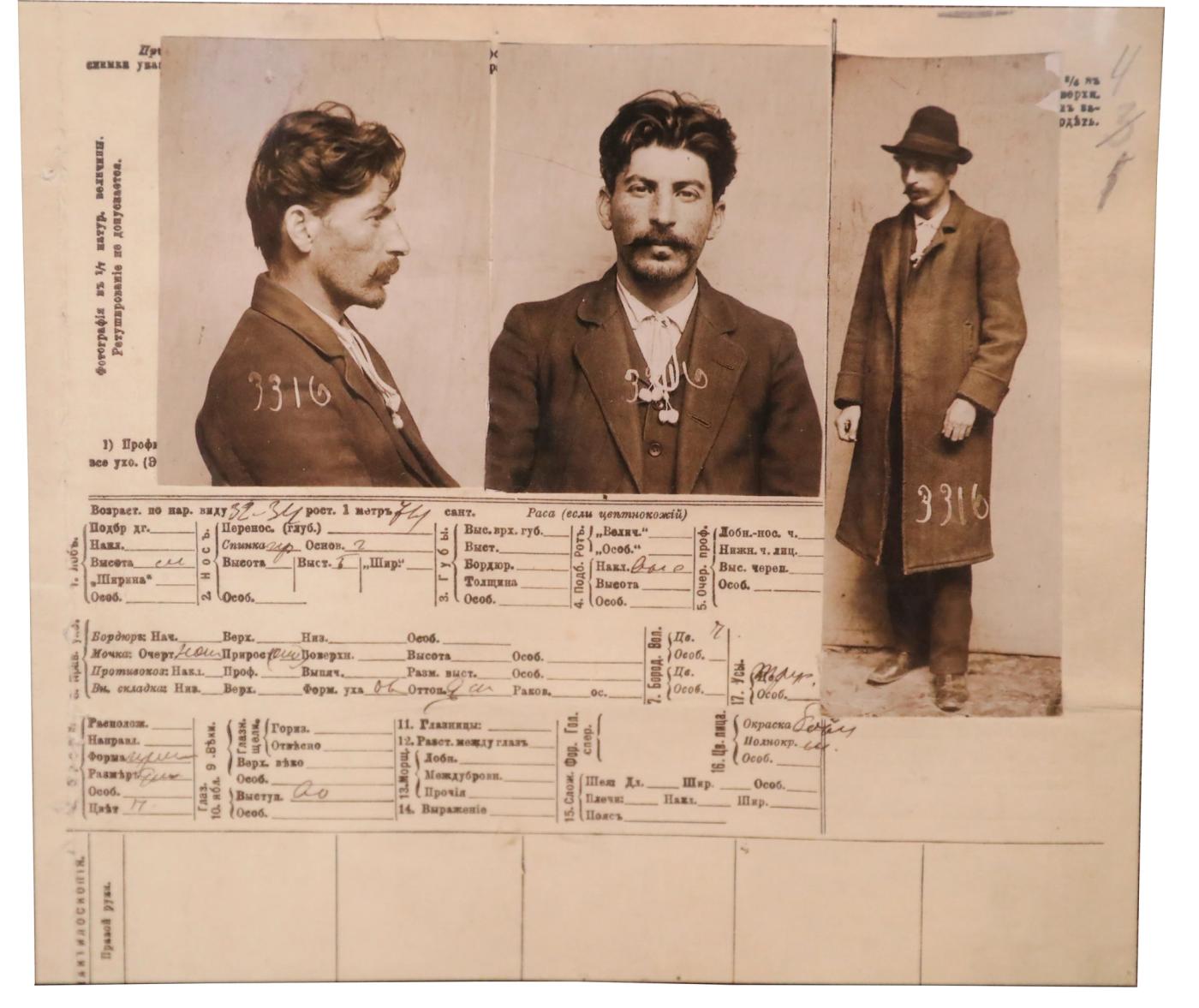
In the autumn of 1912 and again at the turn of the year, Stalin traveled to Kraków, then in Austrian Galicia, where Vladimir Lenin had settled to be close to the Russian border. Lenin wanted a Bolshevik answer to the "national question," the problem of how a revolutionary party should treat the many peoples of the Russian Empire, and he sent Stalin to Vienna to study how the Austrian socialists had dealt with it. Stalin arrived in the second half of January 1913 and lodged with the Bolshevik émigrés Alexander and Elena Troyanovsky at Schönbrunner Schloßstraße 30, a short walk from the emperor's summer palace.[22] He did not read German, and Lenin had asked the young Nikolai Bukharin, who did, to help him with the Austrian sources. Trotsky, who had no reason to flatter him, wrote that Bukharin and Troyanovsky were "under instructions from Lenin to help the 'splendid' but poorly educated Georgian."[23] Lenin himself told Maxim Gorky in February: "We have a marvellous Georgian who has sat down to write a big article for Prosveshcheniye, for which he has collected all the Austrian and other materials."[24]
The result, signed "Vienna, January 1913. K. Stalin," appeared in the Bolshevik journal Prosveshcheniye that spring under the title "The National Question and Social-Democracy," and was later reprinted as Marxism and the National Question. In it Stalin defined a nation and rejected the Austrian socialists' plan for cultural autonomy in favor of a party organized across national lines. He also set out the principle that would later be written, at least on paper, into the Soviet constitution:[25]
Social-Democracy in all countries therefore proclaims the right of nations to self-determination. The right of self-determination means that only the nation itself has the right to determine its destiny, that no one has the right forcibly to interfere in the life of the nation, to destroy its schools and other institutions, to violate its habits and customs, to repress its language, or curtail its rights.[26]
Stalin stayed in Vienna only a few weeks. It was his last stay abroad until the Tehran Conference of 1943.[27] In mid-February he returned to St. Petersburg, where on 23 February by the Russian calendar (8 March by the Western) the police arrested him at a concert organized by Pravda. "Koba has been taken," Lenin wrote, using his party name, adding that he had at least managed to finish his long article first. That summer Stalin was sentenced to four years' exile in the Turukhansk region of Siberia. From 1914 he was held at Kureika, a tiny settlement north of the Arctic Circle, and he was still in Siberian exile, at Achinsk, when the revolution of 1917 freed him.[28]
The Metalworker from Kumrovec
Josip Broz was born on 7 May 1892 in Kumrovec, a village in the Zagorje hills of Croatia, then part of the Hungarian half of the Habsburg monarchy, the son of a Croat father and a Slovene mother. In 1907 he finished primary school and went to the town of Sisak to train as a locksmith and machinist, completing his apprenticeship in 1910. That year he found work in Zagreb, joined the metalworkers' union, and became a member of the Social Democratic Party of Croatia and Slavonia.[29]
Like thousands of young craftsmen of the empire, Broz then went on the road. Between 1911 and 1913 he worked in factories in the Slovene lands, Bohemia, Germany, and Austria. A hardware factory at Kamnik, near Ljubljana, owned by a Vienna company, went bankrupt in 1912, and its workers were sent on to Čenkov in Bohemia, where they discovered they had been hired to break a strike. They refused to work, and the strike was won. After stints in Bavaria, Mannheim, and the Ruhr, Broz came to the Vienna area, working near the city at Vösendorf and then at the Austro-Daimler motor works in Wiener Neustadt, "as mechanic and test-driver," until he was called up for military service.[30] He seems to have lodged outside the city rather than in it, and there is no evidence that he met either of the other two future leaders.
In the autumn of 1913 Broz was called up for his military service, first in Vienna and then in Zagreb, with the 25th Croatian Home Guard regiment. He went through the school for noncommissioned officers, finishing in 1914 as a sergeant, and took second place in an army-wide fencing competition. His English biographer Konni Zilliacus, who interviewed him at length, wrote that he became the youngest sergeant major in the army.[31]
War, 1914–1918
On 28 June 1914 the heir to the Habsburg throne, Archduke Franz Ferdinand, was assassinated in Sarajevo, and by early August most of Europe was at war. Trotsky, a Russian subject in an enemy capital, left Vienna with his family on the evening of 3 August for Zurich.[32] Lenin was arrested by the Austrian police at Nowy Targ in Galicia on 8 August as a suspected Russian spy. Victor Adler and the Galician socialist Herman Diamand vouched for him, and he was released on 19 August. On his way to Switzerland Lenin stopped for a day in Vienna, where Adler told an Austrian minister that Lenin was "a more implacable enemy" of the tsar "than Your Excellency."[33]
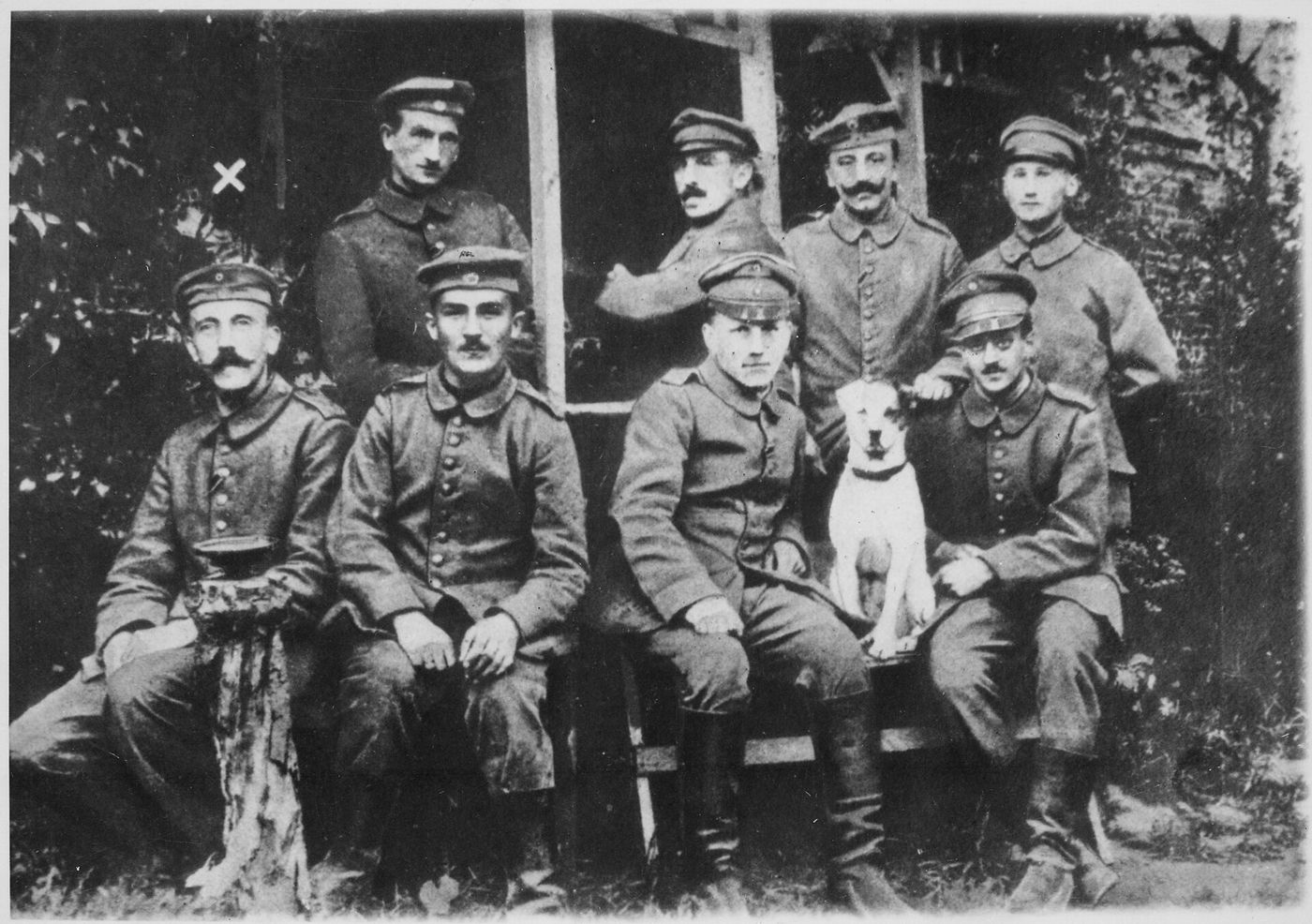
Hitler's war began with an embarrassment. In January 1914 the Austrian authorities had traced him to Munich and summoned him for military service. He was examined at Salzburg in February 1914 and declared too weak to bear arms.[34] When war broke out, he volunteered for the Bavarian army instead and on 16 August 1914 joined what became the 16th Bavarian Reserve Infantry Regiment, known after its first commander as the List Regiment. He was promoted to lance corporal on 1 November 1914 and served as a dispatch runner between regimental headquarters and the front-line units. He received the Iron Cross, Second Class, in December 1914.[35] His service record notes that on 5 October 1916 he was lightly wounded in the left thigh at Le Barque, on the Somme. In August 1918 he received the Iron Cross, First Class, on the recommendation of a regimental officer, Lieutenant Hugo Gutmann. On 15 October 1918 he was caught in a British gas attack and temporarily blinded, and he was recovering in a military hospital at Pasewalk, in Pomerania, when the war ended.[36]

Broz went to war against Serbia in August 1914. In 1915 his regiment was moved to the Russian front in the Carpathians, and in April 1915 it was overrun by Circassian cavalry. A lance thrust in the back "just missed his heart," and he was taken prisoner. He spent thirteen months in a military hospital in an old monastery near Kazan on the Volga, and then worked in prisoner-of-war camps farther east, ending up at Kungur in the Urals.[37] In July 1917 he made his way to Petrograd in time for the Bolshevik demonstrations known as the July Days, was arrested and sent back east, and after the Bolsheviks seized power he joined the International Red Guard at Omsk in Siberia as one of its first recruits.[38]
Stalin spent most of the war in Siberia. The fall of the tsar in March 1917 freed him, and he arrived in Petrograd on 12 March by the Russian calendar. When the Bolsheviks took power in November, Lenin's first government named him People's Commissar for Nationalities Affairs, the post for which his Vienna article had prepared him. The same decree made Trotsky commissar for foreign affairs, and in 1918 Trotsky became commissar for war and built the Red Army.[39]

In Vienna the war brought hunger. Emperor Franz Joseph, who had reigned since 1848, died at Schönbrunn on 21 November 1916, and his great-nephew Karl succeeded him. In January 1918, after the flour ration was cut in half, a strike broke out at the Daimler works in Wiener Neustadt, where Broz had worked five years earlier. It spread across the Austrian lands until as many as half a million workers had walked out, the largest strike in Austrian history.[40]
The Empire Ends, 1918–1919
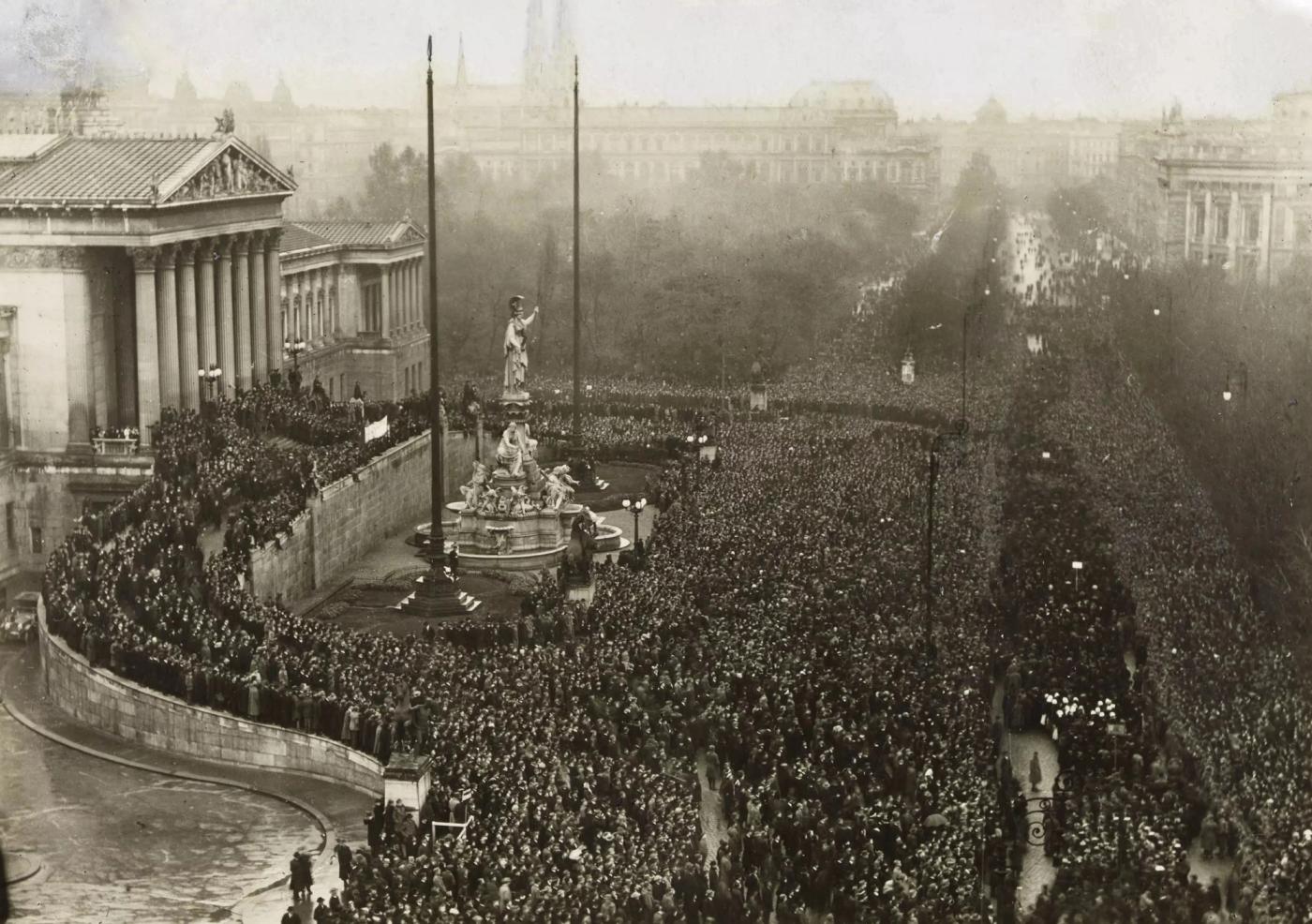
The monarchy dissolved in the autumn of 1918 as its nations declared independence one after another. On 11 November Emperor Karl renounced "any share in the affairs of state." The next day the Provisional National Assembly of German-Austria adopted a law whose first article declared, "German-Austria is a democratic republic. All public powers are instituted by the people," and whose second claimed that German-Austria was part of the German Republic. The republic was proclaimed to a crowd outside the Parliament building on the Ringstraße. Victor Adler, the new state's foreign secretary, did not live to see it; he had died the day before.[41]
On 4 May 1919, in the first municipal election held with votes for women, the Social Democrats won 54 percent of the vote and 100 of the 165 seats on the Vienna city council. Jakob Reumann became the city's first Social Democratic mayor on 22 May, and "Red Vienna" began.[42] On 10 September 1919 the Austrian delegation signed the Treaty of Saint-Germain, which confirmed the end of the empire, fixed the new republic's borders, and forbade the union with Germany that the law of November 1918 had proclaimed. Its Article 88 declared, "The independence of Austria is inalienable otherwise than with the consent of the Council of the League of Nations."[43] The imperial capital where all three future leaders had lived or worked had become the oversized capital of a small German-speaking state.
The three men were by then far apart. Hitler had returned to Munich in November 1918 and stayed in the army. In June 1919 he attended an army political-education course for selected soldiers, and in August he lectured to soldiers at the army camp at Lechfeld, where an officer reported that "through additions and further remarks by Lance Corporal Hitler, the basis for a discussion was created."[44] On 12 September 1919, apparently on behalf of the army, he attended a meeting of the small German Workers' Party at the Sterneckerbräu beer hall, and soon afterward he joined it.[45] The following year the party renamed itself the National Socialist German Workers' Party, and in 1921 Hitler became its leader.
Stalin was by 1919 one of the handful of men who ran Soviet Russia. In 1918 he was sent to Tsaritsyn on the Volga to secure grain for the cities and served on the Revolutionary Military Council of the Republic. In March 1919 he was appointed to the party's new Politburo and Orgburo and named People's Commissar of State Control, while keeping his post as commissar for nationalities.[46] Broz was still in Russia, serving with the Red Guard, and there he married a young Russian woman, Pelagija Belousova. He returned home in 1920 to a new country, the Kingdom of Serbs, Croats and Slovenes, and joined its Communist Party.[47]
Why the Twelve Years Mattered
The three never met in Vienna. Hitler never met either of the others at all. Stalin and Tito met for the first time in September 1944, when Tito flew secretly to Moscow. In a conversation the next month with the American ambassador, W. Averell Harriman, Stalin explained "that he had never seen Tito before although he had lived in Russia during 1917 and 1918."[48]
What the three shared was the empire itself. Each spent part of his youth in a Habsburg state of many nationalities, ruled by an old emperor and held together by an army, a bureaucracy, and a dynasty, and each lived to see it disappear. Stalin's few weeks in Vienna gave him his subject, the national question, and his first government post. Tito came out of the same empire's factories and army to build, after 1945, a federation of South Slav peoples that he ruled as prime minister and then, from 1953 until his death in 1980, as president.[49] Hitler took from Vienna a lasting contempt for the multinational state he had left, which he later set down in Mein Kampf. Two of the three would preside over regimes that killed millions of people.
In 1907 none of them was anyone. One was a rejected art student, one a wanted Georgian revolutionary, one an apprentice locksmith in a Croatian market town. By 1919 the empire that had held all three was gone, Stalin sat in the inner council of a revolutionary government, and Hitler had just joined the party he would lead to power in Germany. Tito's turn was still a quarter of a century away. Vienna had been, for each of them, a stage on the way, and the city that had contained them in 1913 had no idea what it held.
Places in this Story
The places this story moves through, in order — follow them on the interactive map →
- Stumpergasse 31, Vienna September 1907
Eighteen-year-old Adolf Hitler rents a room here when he comes to Vienna to enter the Academy of Fine Arts. His friend August Kubizek joins him early in 1908.
- Academy of Fine Arts, Schillerplatz, Vienna October 1907
Hitler fails the entrance examination. In his own account the rector told him his drawings showed that painting was not what he was suited for. He is turned away again in 1908.
- Homeless shelter, Kastanienallee 2, Meidling Late 1909
With his inheritance gone, Hitler spends the last weeks of 1909 in the municipal shelter for the homeless.
- Männerheim, Meldemannstraße 25–27, Vienna 1910–1913
Hitler lives in this large hostel for single working men for more than three years, painting postcard views of Vienna, until he leaves for Munich on 24 May 1913.
- Café Central, Herrengasse 14, Vienna 1907–1914
A favorite of Vienna's writers and political exiles, among them Leon Trotsky, who lives in the city from October 1907 until the outbreak of war.
- Schönbrunner Schloßstraße 30, Vienna January 1913
Stalin lodges here with the Troyanovskys for a few weeks and writes Marxism and the National Question, signed "Vienna, January 1913. K. Stalin."
- Kureika, Turukhansk region, Siberia 1914–1916
Arrested on his return from Vienna, Stalin spends most of the war in exile at this tiny settlement north of the Arctic Circle.
- Sisak, Croatia 1907–1910
Josip Broz, the future Tito, trains here as a locksmith and machinist before joining the metalworkers' union and the Social Democrats in 1910.
- Daimler works, Wiener Neustadt 1912–1913
Broz works here as a mechanic and test driver until he is called up for military service. In January 1918 the great Austrian hunger strike begins at the same works.
- Le Barque, Somme, France October 5, 1916
Hitler, a dispatch runner with the List Regiment, is lightly wounded in the left thigh, according to his service record.
- Parliament, Ringstraße, Vienna November 12, 1918
The Republic of German-Austria is proclaimed to a crowd outside the Parliament the day after the emperor gives up any share in the affairs of state.
- Sterneckerbräu, Tal 54, Munich September 12, 1919
Hitler, still a soldier, attends a meeting of the small German Workers' Party, apparently on the army's behalf, and soon joins it.
Frequently Asked Questions
Did Hitler, Stalin, and Tito ever meet in Vienna?
No meeting is documented. Hitler lived in Vienna until May 1913, Stalin spent a few weeks there in January and February 1913, and Josip Broz, the future Tito, was working at the Daimler works in Wiener Neustadt, south of the city, at about the same time. Hitler and Stalin never met. Stalin and Tito met for the first time in Moscow in September 1944, and Stalin told the American ambassador that he had never seen Tito before.
When did Hitler live in Vienna?
Hitler came to Vienna in September 1907 to enter the Academy of Fine Arts and failed its entrance examination. After his mother died in Linz in December 1907, he settled in Vienna in early 1908, was rejected by the Academy again, and by late 1909 had run through his money. From about the end of 1909 he lived in the men's hostel on Meldemannstraße, selling small paintings of the city, until he moved to Munich on 24 May 1913.
What was Stalin doing in Vienna in 1913?
Lenin sent him there to study how the Austrian socialists had handled the empire's many nationalities. Stalin arrived in the second half of January 1913, stayed with the Troyanovsky family at Schönbrunner Schloßstraße 30, and with Nikolai Bukharin's help with German sources wrote the article later known as Marxism and the National Question, signed "Vienna, January 1913. K. Stalin." He was arrested in St. Petersburg soon after his return and exiled to Siberia until 1917.
Did Tito live in Vienna?
Not in the city itself, as far as the record shows. As a young metalworker, Josip Broz worked near Vienna at Vösendorf and then at the Daimler motor works in Wiener Neustadt as a mechanic and test driver in 1912 and 1913. In the autumn of 1913 he was called up for military service, first in Vienna and then in Zagreb, and he went to war with the Austro-Hungarian army in 1914.
Why did Hitler leave Vienna for Munich?
Hitler moved to Munich on 24 May 1913, partly to escape military service in Austria-Hungary, for which he was overdue. The Austrian authorities traced him in January 1914, and an examination at Salzburg in February 1914 found him too weak to serve. When the First World War began, he volunteered for the Bavarian army instead and joined the List Regiment in August 1914.
What did Hitler do in the First World War?
Hitler volunteered for the Bavarian army in August 1914 and served with the 16th Bavarian Reserve Infantry Regiment, the List Regiment, mostly as a dispatch runner. He was promoted to lance corporal, received the Iron Cross, Second Class, in December 1914 and First Class in August 1918, and was wounded on the Somme in October 1916. He was temporarily blinded in a gas attack in October 1918 and was in hospital at Pasewalk when the war ended.
What happened to Vienna after the First World War?
The Habsburg monarchy collapsed in the autumn of 1918. On 12 November 1918 the Republic of German-Austria was proclaimed in front of the Parliament in Vienna. In May 1919 the Social Democrats won a majority on the city council, beginning the era known as Red Vienna, and on 10 September 1919 Austria signed the Treaty of Saint-Germain, which fixed its new borders and forbade union with Germany.
Bibliography
"Corporal Hitler: Hero or Deserter?" HistoryNet. https://historynet.com/corporal-hitler-hero-or-deserter/.
Danneberg, Robert. Zehn Jahre Neues Wien. Vienna, 1929. Wienbibliothek im Rathaus. https://www.digital.wienbibliothek.at/download/pdf/1953203.pdf.
Deuerlein, Ernst. "Hitlers Eintritt in die Politik und die Reichswehr." Vierteljahrshefte für Zeitgeschichte 7, no. 2 (1959). Reprinted in Aus Politik und Zeitgeschichte, Bundeszentrale für politische Bildung. https://www.bpb.de/shop/zeitschriften/apuz/archiv/525824/hitlers-eintritt-in-die-politik-und-die-reichswehr/.
Deutscher, Isaac. "Trotsky on Stalin." 1948. Marxists Internet Archive. https://www.marxists.org/archive/deutscher/1948/trotsky-stalin.htm.
"Ergebnisse der Volkszählung vom 31. Dezember 1910." Statistisches Jahrbuch der Stadt Wien. Wienbibliothek im Rathaus. https://www.digital.wienbibliothek.at/download/pdf/2220043.pdf.
Federal Chancellery of Austria. "1919." Gang der Geschichte. https://www.bundeskanzleramt.gv.at/bundeskanzleramt/besuchen-sie-uns/gang-der-geschichte/1919.html.
Foreign Relations of the United States, 1944. Vol. 4, Europe. Documents 924 and 1305. Office of the Historian, US Department of State. https://history.state.gov/historicaldocuments/frus1944v04/d924.
"Gesetz vom 12. November 1918 über die Staats- und Regierungsform von Deutschösterreich." Reprinted in Amtsblatt der Stadt Wien, no. 104, December 28, 1918. Wienbibliothek im Rathaus. https://www.digital.wienbibliothek.at/download/pdf/2291977.pdf.
Hadalin, Jurij. "Broz, Josip (1892–1980)." Slovenska biografija. Slovenska akademija znanosti in umetnosti and ZRC SAZU, 2013. https://www.slovenska-biografija.si/oseba/sbi1019340/.
Hanisch, Reinhold. "I Was Hitler's Buddy." The New Republic, April 5, 12, and 19, 1939. Transcribed by Harold Marcuse, University of California, Santa Barbara. https://marcuse.faculty.history.ucsb.edu/projects/hitler/sources/30s/394newrep/394nrHitlersBuddy.htm.
Hitler, Adolf. Mein Kampf. Translated by James Murphy. London: Hurst and Blackett, 1939. Project Gutenberg Australia. https://gutenberg.net.au/ebooks02/0200601h.html.
Hoser, Paul. "Nationalsozialistische Deutsche Arbeiterpartei (NSDAP), 1920–1923/1925–1945." Historisches Lexikon Bayerns. https://www.historisches-lexikon-bayerns.de/Lexikon/EN:Nationalsozialistische_Deutsche_Arbeiterpartei_(NSDAP-National_Socialist_German_Workers%E2%80%98_Party),_1920-1923/1925-1945.
Hrvatska enciklopedija. "Broz, Josip – Tito." Leksikografski zavod Miroslav Krleža. https://www.enciklopedija.hr/clanak/broz-josip-tito.
Krupskaya, Nadezhda. Reminiscences of Lenin. "Cracow, 1912–1914" and "Cracow, 1914." Marxists Internet Archive. https://www.marxists.org/archive/krupskaya/works/rol/rol17.htm.
Lenin, V. I. "Decision to Form the Workers' and Peasants' Government." October 26 (November 8), 1917. In Collected Works, vol. 26. Marxists Internet Archive. https://www.marxists.org/archive/lenin/works/1917/oct/25-26/26e.htm.
Lenin, V. I. Letter to Maxim Gorky, February 1913. In Collected Works, vol. 35. Marxists Internet Archive. https://www.marxists.org/archive/lenin/works/1913/feb/00mg.htm.
Lenin, V. I. Telegram of August 7, 1914, with editorial note. In Collected Works, vol. 43. Marxists Internet Archive. https://www.marxists.org/archive/lenin/works/1914/aug/07cccp.htm.
Magistrat der Stadt Wien. Ergebnisse der Volkszählung vom 31. Dezember 1910 in der k.k. Reichshaupt- und Residenzstadt Wien. Wienbibliothek im Rathaus. https://digital.wienbibliothek.at/download/pdf/3786733.pdf.
Marxists Internet Archive. "Lenin: 1914." Chronology of Lenin's life and work. https://www.marxists.org/archive/lenin/works/lifework/worklife/1914.htm.
Molden Verlag. Press materials for Günther Haller, Café Untergang: Stalin, Hitler, Trotzki, Tito 1913 in Wien. Vienna: Molden, 2023. https://www.styriabooks.at/download/private/press/upload/PA_Caf_Untergang_Haller.pdf.
Parliament of Austria. Stenographisches Protokoll, 3. Sitzung der Provisorischen Nationalversammlung für Deutschösterreich, November 12, 1918. https://www.parlament.gv.at/dokument/PN/PNSITZ/3/imfname_617286.pdf.
Simms, Brendan. Review of Hitler's Vienna: A Dictator's Apprenticeship, by Brigitte Hamann. Times Higher Education, September 17, 1999. https://www.timeshighereducation.com/node/90340.
Staatsvertrag von Saint-Germain-en-Laye, September 10, 1919. Staatsgesetzblatt für die Republik Österreich, 1920, no. 303. Wikisource. https://de.wikisource.org/wiki/Staatsvertrag_von_Saint-Germain-en-Laye.
Stalin, I. V. Sochineniya. Vol. 2. Moscow, 1946. Marxists Internet Archive. https://www.marxists.org/russkij/stalin/t2/index.htm.
Stalin, J. V. "Marxism and the National Question." 1913. Marxists Internet Archive. https://www.marxists.org/reference/archive/stalin/works/1913/03a.htm.
Stalin, J. V. Works. Vols. 2–4, "Biographical Chronicle." Moscow: Foreign Languages Publishing House, 1953–1954. Marxists Internet Archive. https://www.marxists.org/reference/archive/stalin/works/collected/volume2/biography.htm.
Trotsky, Leon. "Iosif Stalin: Opyt kharakteristiki." Russian text at readli.net. https://readli.net/iosif-stalin-opyit-harakteristiki/.
Trotsky, Leon. My Life. 1930. Marxists Internet Archive. https://www.marxists.org/archive/trotsky/1930/mylife/ch16.htm.
Trotsky, Leon. Stalin: An Appraisal of the Man and His Influence. 1940. Marxists Internet Archive. https://www.marxists.org/archive/trotsky/1940/xx/stalin/index.htm.
United States Holocaust Memorial Museum. "Adolf Hitler: Early Years, 1889–1921." Holocaust Encyclopedia. https://encyclopedia.ushmm.org/content/en/article/adolf-hitler-early-years-1889-1913.
University of Aberdeen. "New Book Reveals Hitler's First War." Press release, August 17, 2010. https://www.abdn.ac.uk/news/3757/.
Walker, Andy. "1913: When Hitler, Trotsky, Tito, Freud and Stalin All Lived in the Same Place." BBC News Magazine, 2013. https://www.bbc.co.uk/news/magazine-21859771.
Welch, David. Review of Hitler 1889–1936: Hubris, by Ian Kershaw. Reviews in History, no. 87, November 1999. https://reviews.history.ac.uk/review/87.
Wien Geschichte Wiki. Stadt Wien. Entries "Adolf Hitler," "Josef Stalin," "Leo Trotzki," "Karl Lueger," "Georg Schönerer," "Victor Adler," "Café Central," "Bettgeher," "Jännerstreik," "Franz Joseph I.," "Ausrufung der Republik," "Gemeinderatswahlen," "Jakob Reumann," "Ludwig Mises," and "Sigmund-Freud-Museum." https://www.geschichtewiki.wien.gv.at/.
Wosnitzka, Daniel. "Adolf Hitler." LeMO Biografie, Deutsches Historisches Museum, 1998. https://www.dhm.de/lemo/biografie/adolf-hitler.
Zilliacus, K. Tito of Yugoslavia. London: Michael Joseph, 1952. Internet Archive. https://archive.org/details/dli.ernet.536623.
Citations
- Leon Trotsky, "Iosif Stalin: Opyt kharakteristiki" (Joseph Stalin: An Attempt at a Characterization), opening paragraph, Russian text at readli.net; translation by history144. Trotsky names the flat as that of Mikhail Skobelev; other accounts place the scene at the Troyanovskys' flat, where Stalin was staying. Isaac Deutscher, "Trotsky on Stalin" (1948), Marxists Internet Archive, recalls "the 'yellow glint' of animosity which [Trotsky] noticed in Stalin's eyes during their first conversation in Vienna, in 1913." ↑
- "Josef Stalin," Wien Geschichte Wiki, Stadt Wien; J. V. Stalin, Works, vol. 2, "Biographical Chronicle" (Moscow: Foreign Languages Publishing House, 1954), Marxists Internet Archive. ↑
- "Adolf Hitler," Wien Geschichte Wiki; K. Zilliacus, Tito of Yugoslavia (London: Michael Joseph, 1952), 33. ↑
- Andy Walker, "1913: When Hitler, Trotsky, Tito, Freud and Stalin All Lived in the Same Place," BBC News Magazine, 2013. ↑
- "Ergebnisse der Volkszählung vom 31. Dezember 1910," Statistisches Jahrbuch der Stadt Wien, 917, Wienbibliothek im Rathaus; Magistrat der Stadt Wien, Ergebnisse der Volkszählung vom 31. Dezember 1910 in der k.k. Reichshaupt- und Residenzstadt Wien, Wienbibliothek im Rathaus. The 98,430 figure counts Austrian citizens who gave "böhmisch-mährisch-slowakisch" as their language of daily use; it excludes citizens of Hungary and foreign states. ↑
- "Bettgeher," Wien Geschichte Wiki. ↑
- "Karl Lueger" and "Georg Schönerer," Wien Geschichte Wiki. ↑
- "Victor Adler," Wien Geschichte Wiki. ↑
- Leon Trotsky, My Life (1930), chaps. 16 and 17, Marxists Internet Archive; "Leo Trotzki" and "Café Central," Wien Geschichte Wiki. The official's remark is a well-known anecdote, not a documented quotation. ↑
- "Ludwig Mises" and "Sigmund-Freud-Museum," Wien Geschichte Wiki. ↑
- "Adolf Hitler," Wien Geschichte Wiki; "Adolf Hitler: Early Years, 1889–1921," Holocaust Encyclopedia, United States Holocaust Memorial Museum. ↑
- Adolf Hitler, Mein Kampf, trans. James Murphy (London: Hurst and Blackett, 1939), vol. 1, chap. 2, Project Gutenberg Australia. ↑
- "Adolf Hitler," Wien Geschichte Wiki; "Adolf Hitler: Early Years," Holocaust Encyclopedia. ↑
- "Adolf Hitler: Early Years," Holocaust Encyclopedia; "Adolf Hitler," Wien Geschichte Wiki, which lists his addresses at Stumpergasse 31, Felberstraße 22, Sechshauser Straße 58, Simon-Denk-Gasse 11, and the shelter at Kastanienallee 2. ↑
- "Adolf Hitler," Wien Geschichte Wiki. ↑
- Reinhold Hanisch, "I Was Hitler's Buddy," The New Republic, April 5, 12, and 19, 1939, transcribed by Harold Marcuse, University of California, Santa Barbara. ↑
- Hitler, Mein Kampf, trans. Murphy, vol. 1, chaps. 2–3. ↑
- Brendan Simms, review of Brigitte Hamann, Hitler's Vienna: A Dictator's Apprenticeship (Oxford University Press, 1999), Times Higher Education, September 17, 1999; David Welch, review of Ian Kershaw, Hitler 1889–1936: Hubris, Reviews in History, no. 87, November 1999. ↑
- "Adolf Hitler," Wien Geschichte Wiki; "Adolf Hitler: Early Years," Holocaust Encyclopedia; Hitler, Mein Kampf, trans. Murphy, vol. 1, chap. 4. ↑
- Leon Trotsky, Stalin (1940), chap. 4, Marxists Internet Archive; Stalin, Works, vol. 2, "Biographical Chronicle." The chronicle gives the dates of Stalin's arrests and exiles by the Russian (Julian) calendar. ↑
- Trotsky, Stalin, chap. 5; Stalin, Works, vol. 2, "Biographical Chronicle"; I. V. Stalin, Sochineniya, vol. 2 (Moscow, 1946), Marxists Internet Archive, which prints the signature "K. Stalin" on articles in Zvezda of April 1912. ↑
- Stalin, Works, vol. 2, "Biographical Chronicle"; "Josef Stalin," Wien Geschichte Wiki. ↑
- Trotsky, Stalin, chap. 5. ↑
- V. I. Lenin to Maxim Gorky, written between February 15 and 25, 1913, in Lenin, Collected Works, vol. 35, Marxists Internet Archive. ↑
- J. V. Stalin, "Marxism and the National Question," in Works, vol. 2, Marxists Internet Archive; Stalin, Sochineniya, vol. 2, note 130. ↑
- Stalin, "Marxism and the National Question," Marxists Internet Archive. ↑
- "Josef Stalin," Wien Geschichte Wiki; Trotsky, Stalin, chap. 5; Nadezhda Krupskaya, Reminiscences of Lenin, "Cracow, 1912–1914," Marxists Internet Archive. Krupskaya remembered Stalin's stay as two months; Trotsky described the article as written "in the course of a few weeks in Vienna and Cracow." ↑
- Stalin, Works, vol. 2, "Biographical Chronicle"; Stalin, Sochineniya, vol. 2, note 130, quoting Lenin's letter of March 1913. ↑
- "Broz, Josip – Tito," Hrvatska enciklopedija, Leksikografski zavod Miroslav Krleža; Jurij Hadalin, "Broz, Josip (1892–1980)," Slovenska biografija, Slovenska akademija znanosti in umetnosti. ↑
- Hrvatska enciklopedija, "Broz, Josip – Tito"; Zilliacus, Tito of Yugoslavia, 32–33; Molden Verlag, press materials for Günther Haller, Café Untergang: Stalin, Hitler, Trotzki, Tito 1913 in Wien (Vienna: Molden, 2023). ↑
- Hrvatska enciklopedija, "Broz, Josip – Tito"; Hadalin, "Broz, Josip," Slovenska biografija; Zilliacus, Tito of Yugoslavia, 34–35. The Croatian encyclopedia gives his rank on leaving the school as sergeant (vodnik). ↑
- Trotsky, My Life, chap. 18. ↑
- Lenin chronology for 1914, Marxists Internet Archive; editorial note to Lenin's telegram of August 7, 1914, in Lenin, Collected Works, vol. 43; Krupskaya, Reminiscences of Lenin, "Cracow, 1914." ↑
- "Corporal Hitler: Hero or Deserter?," HistoryNet; "Adolf Hitler: Early Years," Holocaust Encyclopedia. ↑
- "Adolf Hitler," Wien Geschichte Wiki; Daniel Wosnitzka, "Adolf Hitler," LeMO, Deutsches Historisches Museum; University of Aberdeen, "New Book Reveals Hitler's First War," press release, August 17, 2010. ↑
- Ernst Deuerlein, "Hitlers Eintritt in die Politik und die Reichswehr," Vierteljahrshefte für Zeitgeschichte 7, no. 2 (1959), quoting Hitler's service record; Wosnitzka, "Adolf Hitler," LeMO; University of Aberdeen, "New Book Reveals Hitler's First War." Hitler himself later gave the date of his wound as October 7 and the date of the gas attack as October 14. ↑
- Hrvatska enciklopedija, "Broz, Josip – Tito"; Zilliacus, Tito of Yugoslavia, 38–40. The exact date of his capture varies between accounts; the Croatian encyclopedia gives April 1915. ↑
- Hrvatska enciklopedija, "Broz, Josip – Tito"; Zilliacus, Tito of Yugoslavia, 46–48. ↑
- Stalin, Works, vol. 3, "Biographical Chronicle"; V. I. Lenin, "Decision to Form the Workers' and Peasants' Government," October 26 (November 8), 1917, in Lenin, Collected Works, vol. 26, Marxists Internet Archive; "Trotsky, Leon," Glossary of People, Marxists Internet Archive. ↑
- "Franz Joseph I." and "Jännerstreik," Wien Geschichte Wiki. ↑
- "Ausrufung der Republik" and "Victor Adler," Wien Geschichte Wiki; "Gesetz vom 12. November 1918 über die Staats- und Regierungsform von Deutschösterreich," reprinted in Amtsblatt der Stadt Wien, no. 104, December 28, 1918, Wienbibliothek im Rathaus; Stenographisches Protokoll, 3rd sitting of the Provisional National Assembly of German-Austria, November 12, 1918, Parliament of Austria. ↑
- "Gemeinderatswahlen" and "Jakob Reumann," Wien Geschichte Wiki; Robert Danneberg, Zehn Jahre Neues Wien (Vienna, 1929), which gives the Social Democratic vote as 368,228, or 54.17 percent. ↑
- Staatsvertrag von Saint-Germain-en-Laye, September 10, 1919, Staatsgesetzblatt für die Republik Österreich, 1920, no. 303, Wikisource; Federal Chancellery of Austria, "1919." The English wording of Article 88 follows the treaty's official English text. ↑
- Deuerlein, "Hitlers Eintritt in die Politik und die Reichswehr," quoting the report of First Lieutenant Bendt on the Lechfeld course; translation by history144. ↑
- Paul Hoser, "Nationalsozialistische Deutsche Arbeiterpartei (NSDAP), 1920–1923/1925–1945," Historisches Lexikon Bayerns. The date on which Hitler formally joined the party is disputed. ↑
- Stalin, Works, vol. 4, "Biographical Chronicle," Marxists Internet Archive. ↑
- Hrvatska enciklopedija, "Broz, Josip – Tito"; Zilliacus, Tito of Yugoslavia, 49. Accounts date his marriage to 1919 or January 1920. ↑
- Foreign Relations of the United States, 1944, vol. 4, Europe, doc. 924, Ambassador W. Averell Harriman to President Franklin D. Roosevelt, Moscow, October 12, 1944, Office of the Historian, US Department of State; ibid., doc. 1305, note. ↑
- Hrvatska enciklopedija, "Broz, Josip – Tito." ↑