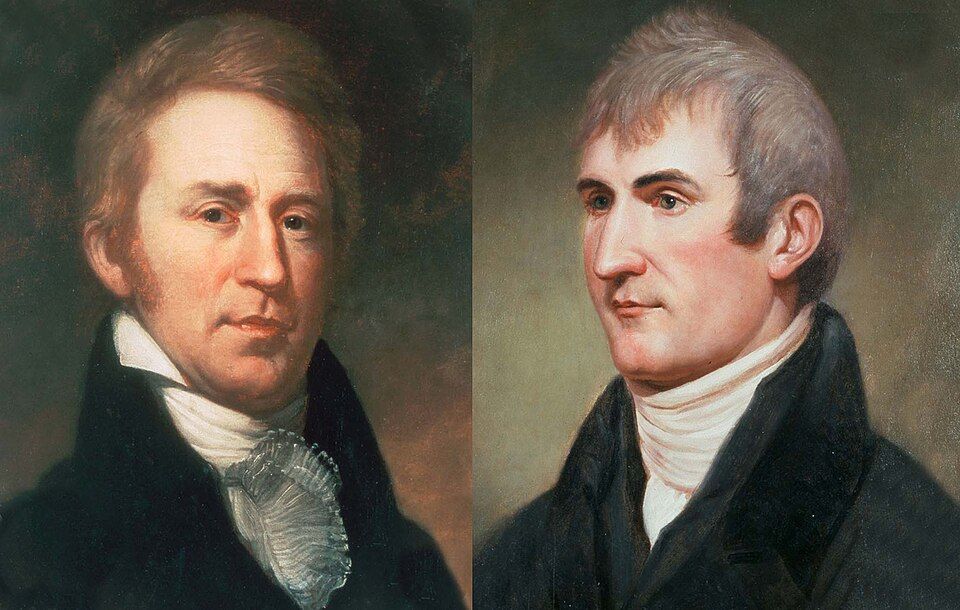
On March 9, 1804, in the river town of St. Louis, the Spanish lieutenant governor of Upper Louisiana, Carlos Dehault Delassus, signed a document handing the province to Amos Stoddard, a captain in the United States Army who had been designated to receive it from Spain on behalf of the French Republic. The Spanish flag came down and the French flag went up. The next morning Stoddard, now acting for the United States, took possession of Upper Louisiana on its behalf. The French flag, after flying for a single day, was lowered, and the American flag took its place. Among the witnesses named in the transfer document was a young army officer, Meriwether Lewis. He was in town preparing an expedition up the Missouri River, and he watched the country it would soon enter change hands twice in two days. His co-commander, William Clark, had spent the winter with their men at a camp across the Mississippi, and whether he crossed over for the ceremonies is uncertain, though one historian judges it likely that he did.[1]
The ceremony, remembered in St. Louis as Three Flags Day, joined two stories that are usually told separately. The Louisiana Purchase and the Lewis and Clark Expedition grew out of the same crisis over the Mississippi River in 1802 and 1803, and the same man planned both in the same months. Thomas Jefferson had conceived the expedition before the Purchase, as a journey through territory claimed by other empires, and the purchase changed its meaning while Lewis was still gathering supplies. Neither project delivered what the maps of the day seemed to promise. The treaty conveyed a European claim with undefined borders to land that Native nations controlled, and much of the expedition's route lay beyond the Purchase altogether. Over the following decade Lewis and Clark became the officials charged with governing the new territory, and the story reached an unexpected close in 1814, when the official account of their journey finally appeared in print in the same year that British forces moved against New Orleans, the city whose fate had started everything. This is the story of those twelve years.
"One Single Spot"
The crisis began with a secret. In October 1800, under pressure from Napoleon Bonaparte, Spain agreed in the Treaty of San Ildefonso to return Louisiana to France, while keeping it for the time being under Spanish administration. Rumors of the arrangement reached the United States shortly after Jefferson's inauguration in March 1801. For Jefferson and his secretary of state, James Madison, the danger lay less in the vast country beyond the Mississippi than in New Orleans. Farmers in Kentucky, Tennessee, and the Ohio country depended on floating their produce down the river and through that port, and a powerful France in control of it could use western commerce to pull the western settlements away from the Union.[2]
In April 1802 Jefferson put his alarm into a private letter to Robert R. Livingston, the American minister in Paris. He sent it with Pierre Samuel du Pont de Nemours, a French friend returning home, and asked that it be placed in Livingston's hands and no one else's. "There is on the globe one single spot, the possessor of which is our natural & habitual enemy," Jefferson wrote. "It is New Orleans." Through that port, he explained, passed the produce of three-eighths of the nation's territory. If France took possession, he warned, the United States would have to "marry ourselves to the British fleet & nation." He also passed along the belief in Washington that the French army then fighting in Saint-Domingue would move on to Louisiana when its work on the island was done, and he predicted that the conquest would take a long time and wear down a great many soldiers.[3] On that point he was right. The French force sent to reconquer the rebellious colony was devastated by resistance and yellow fever, and Napoleon's plan to make Louisiana the granary of a revived Caribbean empire began to come apart.[4]
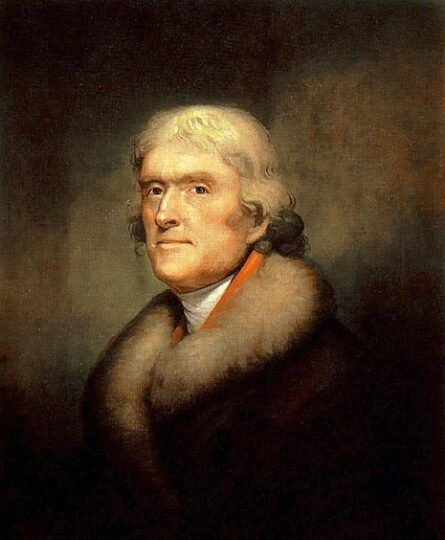
That summer Jefferson read a book that turned his attention north as well as south. Alexander Mackenzie, a Scottish fur trader, had crossed the continent to the Pacific through what is now Canada, and his Voyages from Montreal, published in 1801, urged Britain to secure the Northwest and its fur trade. Jefferson read it in the summer of 1802.[5] He had long feared that Britain would colonize the Pacific Northwest, and in late 1802 he decided to send an American expedition to the Pacific. He gave the planning to his private secretary, Meriwether Lewis, a twenty-eight-year-old army captain from a family Jefferson had known for years in Albemarle County, Virginia.[6]
Then the crisis on the Mississippi sharpened. On October 16, 1802, Juan Ventura Morales, the acting Spanish intendant at New Orleans, ended the American "right of deposit," the privilege, guaranteed by treaty in 1795, of storing goods at New Orleans until they could be loaded onto oceangoing ships. Morales named no substitute site, and he did not reveal even to the Spanish governor that he was acting on confidential instructions from the royal government. A printed notice announcing that the port was shut was circulating in Natchez by October 28, and one New Orleans firm reported that the order had thrown its business into confusion. Some westerners demanded that the government seize New Orleans by force, and Federalists in Congress and the press, among them Alexander Hamilton, pressed the same case.[7]
A Confidential Message
Jefferson chose diplomacy, and he pursued his two projects side by side. On January 11, 1803, he asked Congress to support a special mission by James Monroe to France and Spain.[8] A week later, on January 18, Lewis delivered a confidential message from the president to Congress.[9] The message dealt mainly with the government's policy toward Native nations, but in it Jefferson asked for $2,500 "for the purpose of extending the external commerce of the US," money that would send an officer and a small party up the Missouri and on toward the Pacific. His treasury secretary, Albert Gallatin, had advised him to make the request in confidence, because the expedition would enter lands claimed by other countries and there was no reason to antagonize them needlessly.[10] Jefferson's estimate of the party's size echoed Mackenzie's account of his own crossing, which had been made with ten men. An intelligent officer with ten or twelve chosen men, Jefferson told Congress, should be enough.[11] On the same day he wrote to the governor of Kentucky, James Garrard, to reassure him that the suspension of the right of deposit appeared to be the act of the intendant alone, unauthorized by his government, and that the Spanish minister in Washington was working to have it reversed.[12] Congress approved the money on February 28.[13]
Lewis spent the spring preparing in Lancaster and Philadelphia. In April Jefferson sent him a rough draft of his instructions and suggested that he show it to four Philadelphia savants, Robert Patterson, Caspar Wistar, Benjamin Rush, and Benjamin Smith Barton. For everyone else there was a cover story, that Lewis was going to explore the Mississippi, which in Jefferson's words "masks sufficiently the real destination."[14] The final instructions, signed on June 20, 1803, set out Lewis's duties in geography, diplomacy, commerce, and natural science. One phrase shows how Jefferson still imagined the country Lewis would enter. Most of the document, he explained, would concern Lewis's proceedings "after your departure from the US."[15] When Jefferson wrote those words, a treaty making the Missouri valley American had been signed in Paris seven weeks earlier, but nobody in Washington knew it.
A Bargain in Paris
In Paris events had moved faster than anyone in Washington expected. On April 11, 1803, the French foreign minister, Charles-Maurice de Talleyrand, told Livingston that France was willing to sell all of Louisiana.[16] The next evening, the day Monroe arrived in Paris, Livingston looked up from his dinner table, saw the French treasury minister, François Barbé-Marbois, walking in his garden, and later that night heard him offer the entire province for 100 million livres, about $19 million. Napoleon had several reasons. The failure in Saint-Domingue had undercut the purpose of holding Louisiana, and American talk of war suggested that New Orleans might be lost to France anyway. Renewed war with Britain seems to have weighed most heavily, since British sea power would make Louisiana nearly impossible for France to hold. Selling it would keep it out of British hands and raise money for the coming fight.[17]
Over the next two weeks the negotiators settled on 80 million livres, or $15 million, a quarter of which would pay the claims of American merchants against France. The treaty and the two conventions signed with it on April 30 provided $11.25 million in government stock for France and up to 20 million francs for the American claims. Monroe and Livingston had been authorized to pay no more than $10 million, and only for New Orleans and the Floridas. They had agreed to a larger sum for a territory they had never been instructed to buy, and the treaty left the boundaries of that territory entirely undefined.[18]
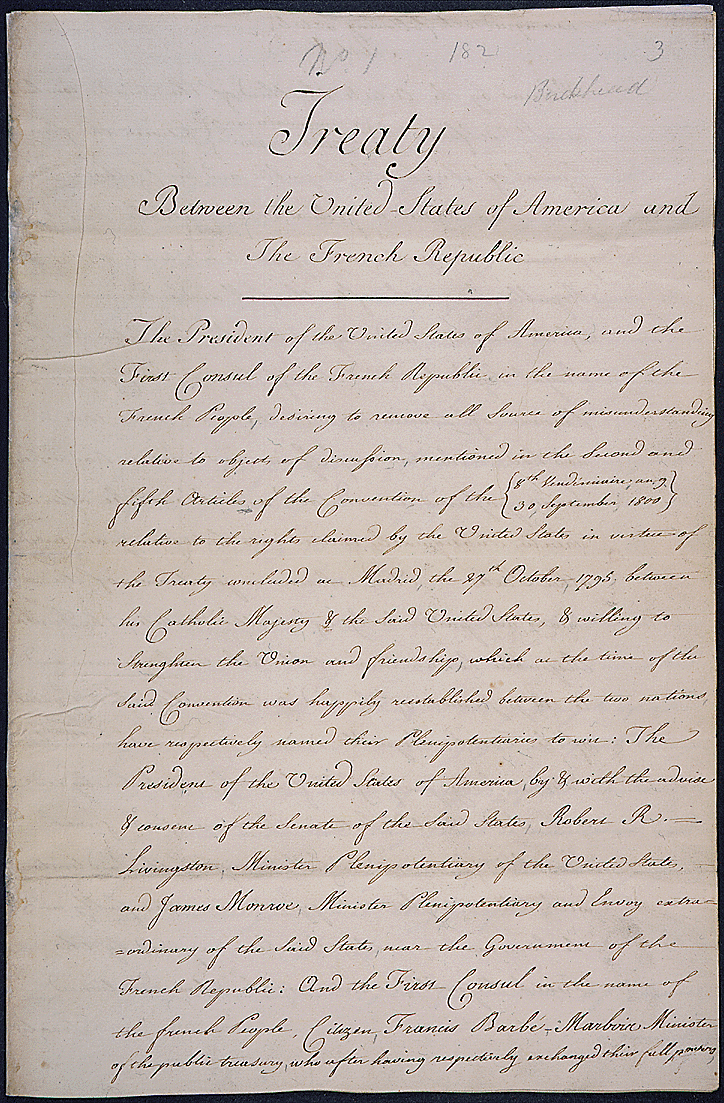
Official word reached Jefferson on July 3.[19] The next day, the twenty-seventh anniversary of independence, the National Intelligencer announced that the United States had acquired New Orleans and the whole of Louisiana. That same day Jefferson gave Lewis an open letter of credit, pledging the government to pay for supplies or passage home should he meet a ship on the Pacific coast.[20] On July 5 Lewis left Washington, and ten days later he reached Pittsburgh.[21]
Jefferson greeted the news with both relief and unease. He doubted that the Constitution allowed the government to acquire new territory, and on the day Lewis departed he drafted an amendment to legalize the purchase. His draft would have kept most of Louisiana north of the thirty-first parallel, a line he moved to the thirty-second in a revision, closed to American settlement, and would have allowed Congress to exchange land there for the land of Native peoples east of the Mississippi. The amendment won no support in the cabinet or in Congress. The Senate ratified the treaty on October 20 by a vote of 24 to 7, and on December 20, at New Orleans, the territorial governor William C. C. Claiborne and General James Wilkinson formally received Louisiana from French officials.[22]
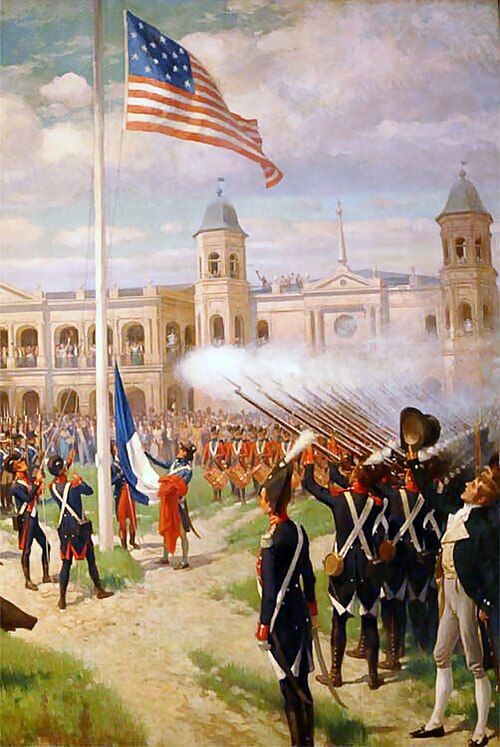
Three Flags at St. Louis
By then the expedition had reached the Mississippi. Clark had agreed to share the command, and the party spent the winter of 1803–1804 at a camp on the Wood River, on the American side of the Mississippi, while Lewis worked in St. Louis gathering supplies and information.[23] The transfer of Upper Louisiana came nearly three months after the handover at New Orleans. In late February Delassus told Stoddard, Lewis, Clark, and several townspeople that he was ready to give up the province, and the ceremonies of March 9 and 10 followed, with Stoddard acting first for France and then for the United States. On March 12, at Stoddard's request, Delassus addressed a gathering of Native visitors to tell them that Upper Louisiana had passed from Spain to the United States.[24]
Not every American official wished the expedition well. That same month, from New Orleans, James Wilkinson, the commanding general of the United States Army and secretly an agent of Spain known to his handlers as Number 13, advised Spanish officials to send soldiers from Santa Fe "to intercept Captain Lewis and his party, who are on the Missouri River, and force them to retire or take them prisoners."[25] Congress, meanwhile, organized the new acquisition. A law signed on March 26, 1804, divided it at the thirty-third parallel, making the south the Territory of Orleans. The north, immense in extent but thinly settled, became the District of Louisiana. It received no territorial government of its own and was attached to the Indiana Territory until July 1805, when it was organized as the Louisiana Territory.[26] In May the Corps of Discovery left the St. Louis area and started up the Missouri.[27]
"The Change Which Had Taken Place"
Jefferson's instructions told Lewis to acquaint the peoples he met with the extent of the United States and its peaceable and commercial intentions, and the purchase gave that message a new edge.[28] On August 3, 1804, at a bluff above the Missouri in what is now eastern Nebraska, the captains held their first formal council, with leaders of the Oto and Missouria. The expedition's men were paraded, and under an awning made from the boat's mainsail the captains delivered a long speech. Clark summarized its purpose as "informing thos Children of ours of the Change which had taken place." They recognized chiefs and handed out medals bearing Jefferson's profile, along with commissions, a flag, clothing, powder, and whiskey. Then Lewis fired his air gun a few times, to the astonishment of the visitors.[29]
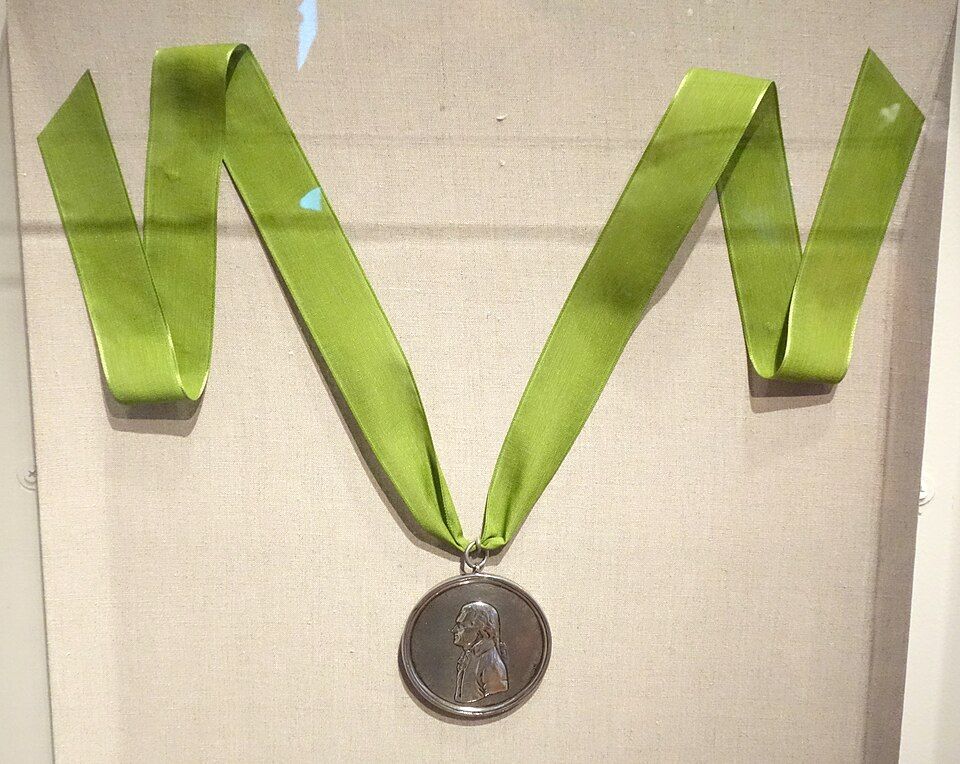
The enlisted men recorded the day in their own ways. Sergeant John Ordway thought the chiefs "appeared to be Glad that they had Got freed from all other powers." Private Joseph Whitehouse noted a more practical response, that the visitors remarked that French traders had never given them so much as a knife without receiving something for it.[30] The two accounts capture a gap that ran through the whole enterprise. To the captains, the council announced a change of sovereignty. The Oto and Missouria had taken no part in the negotiations among European powers in Paris, and their replies, as the Americans recorded them, dwelt on advice, presents, and the prospect of trade. Clark was thinking about trade as well. He judged the bluff an ideal site for a trading post and a fort, and he noted that the Spanish had invited these peoples and the Pawnee to trade at Santa Fe.[31]
The Spanish were more than commercial rivals. Between 1804 and 1806 the government of New Spain sent four expeditions from New Mexico onto the Plains to intercept the Americans, the first three led by the veteran pathfinder Pedro Vial and the last, the largest Spanish expedition ever to cross the Plains, by Lieutenant Facundo Melgares. Spanish officials, like the Americans, badly misjudged the geography of the upper Missouri, and neither Vial nor Melgares could determine where the Corps actually was. None of the parties found the Americans, and Lewis and Clark never learned during their journey that they had been pursued.[32]
Beyond the Purchase
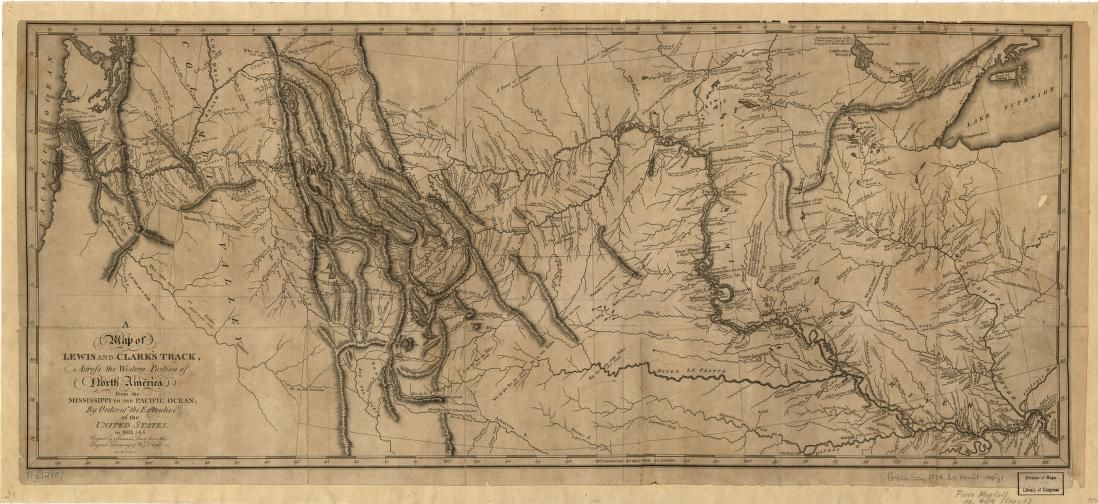
On August 12, 1805, Lewis, scouting ahead with three men, followed an Indian road to what he called "the most distant fountain of the waters of the mighty Missouri," a spring of ice-cold water at the base of a low hill. A little below it, Private Hugh McNeal had stood with a foot on each side of the rivulet and thanked God that he had lived to bestride a river once thought endless. From the top of the ridge above, Lewis saw snow-capped ranges of mountains still stretching to the west. He descended the far side and, at a cold, clear creek, "first tasted the water of the great Columbia river." The ridge was Lemhi Pass, on the present border of Montana and Idaho. In crossing it, Lewis and his companions crossed the Continental Divide and, as the modern editors of the journals note, left the territory of the Louisiana Purchase.[33]
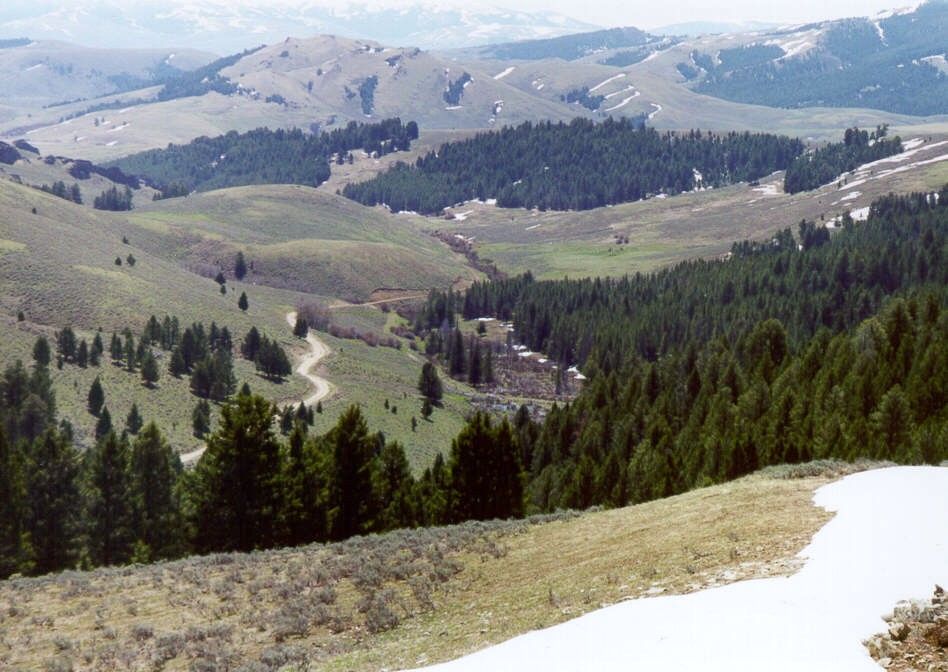
Everything beyond lay outside the Louisiana Purchase and beyond any settled American boundary. The expedition's passage through that country strengthened the American claim to the Pacific Northwest, one that negotiators would press for decades.[34] On November 7, 1805, after a foggy morning among the marshy islands of the lower Columbia, Clark wrote, "Great joy in camp we are in View of the Ocian." The editors of his journal note that he was actually looking at the river's estuary. Earlier that day the party had been guided to the main channel by an Indian pilot wearing a sailor's clothes, and Whitehouse recorded that the Wahkiakum people they met made signs that ships lay at the mouth of the river, and that some had already sailed away.[35] The coast Jefferson hoped to claim was not a blank at the edge of the map. Ships had been trading there before the Corps arrived. The expedition wintered near the ocean and returned to St. Louis in September 1806.[36]
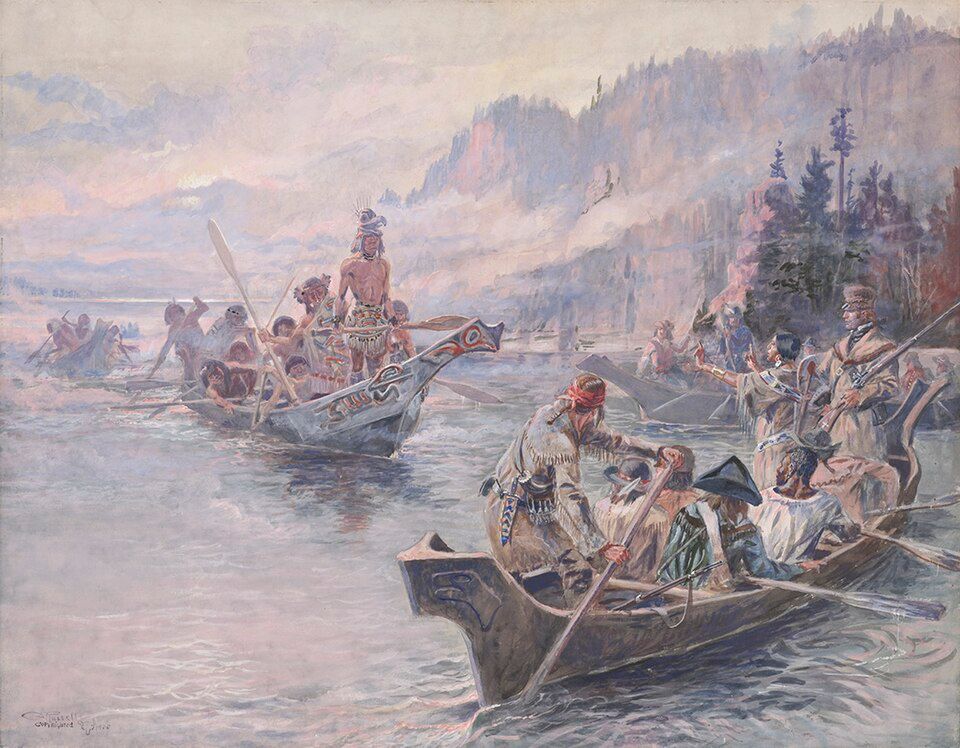
Governing the Purchase
Jefferson rewarded both captains with offices in the country they had crossed. Lewis became governor of the Louisiana Territory, and Clark became brigadier general of the territorial militia and the government's agent for Indian affairs there.[37] Lewis was appointed in March 1807 but did not reach St. Louis until March 1808. He was delayed by his efforts to produce a publishable account of the expedition and by an assignment to attend the treason trial of Aaron Burr. In his absence the territorial secretary, Frederick Bates, made decisions that Lewis objected to on his arrival, and the two men became enemies. Bates began writing to officials in Washington about the governor's failings.[38]
The work itself was the practical side of the purchase. Lewis authorized the building of Fort Osage on the Missouri and Fort Madison on the upper Mississippi, and he carried on contentious negotiations with the Osage over a treaty.[39] Jefferson, meanwhile, continued to think about the far end of the continent. In 1808, as the New York merchant John Jacob Astor began planning a trading post at the mouth of the Columbia, Jefferson wrote to Lewis in warm praise of Astor and his long experience in the fur business.[40]
Money undid Lewis. The Embargo Act of 1807 slowed the funds that reached the territorial government, and Lewis paid some public expenses himself and then asked Washington to reimburse him. When the federal government rejected his requests, his creditors began demanding payment. Facing ruin and the possibility of recall, he left St. Louis in September 1809 to make his case in person, carrying his financial accounts and the notebooks from the expedition. On the night of October 10, at a stopping place on the Natchez Trace called Grinder's Stand, about seventy miles from Nashville, shots were heard. Lewis died of gunshot wounds on October 11, at the age of thirty-five. The surviving evidence has generally been interpreted as indicating suicide, although theories of murder have circulated ever since.[41]
A Claim in Print
The journals Lewis carried on his last journey were still unpublished. He had contracted in 1807 with the Philadelphia firm of C. & A. Conrad and Company to print them, but he never delivered a manuscript. After Jefferson helped get Lewis's papers to Washington, Clark, as Lewis's executor, took the journals to Philadelphia and eventually chose Nicholas Biddle, a young lawyer, to edit them. The outbreak of war with Britain in 1812 and the collapse of Conrad and Company that same year delayed the work again. It was finished with the help of the editor Paul Allen and a new publisher, Bradford and Inskeep.[42]
The Purchase, meanwhile, was being drawn into the Union piece by piece. On April 30, 1812, nine years to the day after the treaty was signed, the Territory of Orleans entered the Union as the state of Louisiana.[43] To avoid confusion, Congress renamed the upper territory, which became Missouri Territory, and in 1813 President James Madison appointed Clark its governor, an office he held until 1820.[44] The claim on the Pacific fared worse. Astor's men had built Fort Astoria near the mouth of the Columbia, but in October 1813, with the war making the isolated post increasingly difficult to supply and defend, his partners sold it to the North West Company of Montreal.[45]
In May 1813 Allen asked Jefferson for a biographical sketch of Lewis, and Jefferson sent it from Monticello on August 18, recalling Lewis's courage and his stubborn perseverance as well as the depressions that had troubled him. Allen persuaded the booksellers to hold back the first volume so the memoir could appear at the front of the narrative, where it was printed as the "Life of Captain Lewis." Jefferson asked for thirteen copies, some of them for sending to Europe.[46] The two-volume History of the Expedition under the Command of Captains Lewis and Clark appeared early in 1814, seven and a half years after the Corps returned. For the next ninety years it would remain the only printed account based on Lewis's journals.[47]
The book reached its readers in a year when the western claims it described were under direct attack. In 1814 Governor Clark led a force up the Mississippi to Prairie du Chien, in present-day Wisconsin, where his troops built a post named Fort Shelby. On July 17 a British force with Native allies laid siege to it, and after three days the American garrison surrendered.[48] In August the British burned Washington. In December British troops landed below New Orleans, intent on capturing the city and, with it, control of the Mississippi. Negotiators at Ghent signed a peace treaty on Christmas Eve that restored the prewar boundaries, and the armies below New Orleans fought their decisive battle on January 8, 1815.[49]
The Door and the Passage
In April 1802 Jefferson had described a French New Orleans as France "placing herself in that door" and defying the United States.[50] Twelve years later a hostile army stood at that door after all. By then, though, the city belonged to a state of the Union, and the Purchase around it had been organized, garrisoned, and described in print by the two men Jefferson had sent across it. The projects he launched in the same winter had become one story. The purchase gave the expedition its larger meaning, and the expedition gave the purchase its first detailed American descriptions with maps, specimens, and the record of councils with the nations who lived there, all of which made the new territory legible to the government in Washington.
In 1814, however, the larger claims embodied in both projects still exceeded the United States' effective control on the ground, and the international boundaries of the Purchase were still unsettled. In 1818 an agreement with Britain established the boundary along the forty-ninth parallel from the Lake of the Woods to the Rocky Mountains and left the country beyond the mountains open to both nations. In 1819 the Adams-Onís Treaty drew the line with Spanish territory from the Gulf of Mexico along the Arkansas River and then the forty-second parallel to the Pacific, which left Britain as the only serious rival for the Oregon Country. The region where Lewis and Clark had wintered remained in dispute between the United States and Britain until 1846.[51] The Pacific coast Lewis and Clark had reached lay outside the Purchase entirely, and the American post there had passed into British hands. Most of the land in between remained the country of the Native nations who had listened to the captains' speeches, accepted their medals, and weighed their promises, and the process of making it American, through treaties, wars, and removals, would occupy the rest of the century.
The ceremony at St. Louis in March 1804 had shown how quickly a flag could change. Spain's colors came down one day and France's the next, and a young captain witnessed both. The rest took far longer. The document Lewis witnessed in 1804 asserted sovereignty over a country no American had mapped, and the book that appeared a decade later, bearing his name and Clark's, gave Americans their first substantial published account of it. Between the two lay a treaty, a journey of some eight thousand miles, and a decade in which the West Jefferson had imagined in 1802 encountered the West that actually existed.[52]
Places in this Story
The places this story moves through, in order — follow them on the interactive map →
- President's House, Washington, D.C. April 18, 1802
Jefferson writes to Robert Livingston that New Orleans is the "one single spot" whose owner must be America's natural enemy.
- New Orleans, Louisiana (the Cabildo, seat of the Spanish government) October 16, 1802
The acting Spanish intendant suspends the Americans' right to store goods in the port for export, which brings the Mississippi crisis to a head.
- U.S. Capitol, Washington, D.C. January 18, 1803
Lewis delivers Jefferson's confidential message asking Congress for $2,500 for an expedition toward the Pacific.
- Paris, France April 30, 1803
Monroe, Livingston, and Barbé-Marbois sign the treaty selling all of Louisiana to the United States for $15 million.
- President's House, Washington, D.C. July 5, 1803
Lewis leaves for the West the day after the purchase is announced, and Jefferson drafts a constitutional amendment to legalize it.
- New Orleans, Louisiana (Place d'Armes, now Jackson Square) December 20, 1803
The United States formally takes possession of Louisiana from French officials.
- St. Louis, Missouri (near today’s Gateway Arch) March 9–10, 1804
On Three Flags Day, Upper Louisiana passes from Spain to France and then to the United States, with Lewis as a witness.
- Camp River Dubois, Wood River, Illinois May 14, 1804
The Corps of Discovery leaves its winter camp and starts up the Missouri River.
- Council Bluff, near Fort Calhoun, Nebraska August 3, 1804
Lewis and Clark hold their first formal council, telling Oto and Missouria leaders of the "Change which had taken place."
- Lemhi Pass, Montana–Idaho border August 12, 1805
Lewis crosses the Continental Divide, tastes the waters of the Columbia, and leaves the territory of the Louisiana Purchase.
- Camp opposite Pillar Rock, Wahkiakum County, Washington November 7, 1805
Clark writes "Great joy in camp we are in View of the Ocian," though he is still looking at the Columbia estuary.
- St. Louis, Missouri September 23, 1806
The expedition returns to St. Louis after more than two years away.
- Grinder's Stand, Natchez Trace, near Hohenwald, Tennessee October 11, 1809
Lewis dies of gunshot wounds while traveling to Washington to defend his accounts.
- New Orleans, Louisiana April 30, 1812
The Territory of Orleans becomes the state of Louisiana, nine years to the day after the treaty.
- Fort Astoria, Astoria, Oregon October 16, 1813
Astor's partners sell the American post at the mouth of the Columbia to the British North West Company.
- Philadelphia, Pennsylvania (Bradford and Inskeep, publishers) By April 12, 1814
The History of the Expedition is in print, and the publishers ship Jefferson his thirteen copies.
- Fort Shelby, Prairie du Chien, Wisconsin July 17–20, 1814
British troops and Native allies besiege and capture the post Clark's expedition had built.
- Below New Orleans, near Chalmette, Louisiana December 23, 1814
British troops reach the Mississippi below the city, threatening the place whose fate had started the story.
Important Dates
Jefferson writes to Robert Livingston in Paris that New Orleans is the "one single spot" whose owner must be America's "natural & habitual enemy."
The acting Spanish intendant at New Orleans suspends the Americans' right to store goods in the port for export, which brings the Mississippi crisis to a head.
Jefferson asks Congress in a confidential message for $2,500 for an expedition to the Pacific, months before anyone knew Louisiana was for sale.
The treaty is signed in Paris, selling all of Louisiana to the United States for $15 million.
Lewis leaves Washington the day after the purchase is announced, and on the same day Jefferson drafts a constitutional amendment to legalize it.
On the second day of Three Flags Day in St. Louis, the American flag is raised over Upper Louisiana, with Lewis as a witness to the transfer.
At Council Bluff, Lewis and Clark hold their first formal council, telling Oto and Missouria leaders of the "Change which had taken place."
Lewis crosses the Continental Divide at Lemhi Pass and leaves the territory of the Louisiana Purchase.
Clark writes "Great joy in camp we are in View of the Ocian" as the Corps nears the Pacific coast.
Lewis dies of gunshot wounds on the Natchez Trace while governor of the Louisiana Territory, with the expedition's journals still unpublished.
Louisiana enters the Union as a state, nine years to the day after the treaty was signed.
British troops reach the Mississippi below New Orleans, threatening the city whose fate had started the story twelve years earlier.
Frequently Asked Questions
Did the Louisiana Purchase cause the Lewis and Clark Expedition?
No. Jefferson decided on the expedition in late 1802 and asked Congress to fund it in January 1803, months before he knew France would sell Louisiana.
How much did the Louisiana Purchase cost?
The United States agreed to pay $15 million, or 80 million livres, with a quarter of that sum going to pay the claims of American merchants against France. Monroe and Livingston had been authorized to spend no more than $10 million, and only for New Orleans and the Floridas.
When was the Louisiana Purchase signed?
The treaty was signed in Paris on April 30, 1803, and the Senate ratified it on October 20, 1803. The United States formally took possession of New Orleans on December 20, 1803, and of Upper Louisiana at St. Louis on March 10, 1804.
Why did Napoleon sell Louisiana?
France's failure to reconquer Saint-Domingue, now Haiti, had undercut the reason for holding Louisiana. With war against Britain about to resume, Napoleon also knew British sea power would make the colony nearly impossible to defend.
Did Lewis and Clark stay within the Louisiana Purchase?
Only until August 12, 1805, when Lewis crossed the Continental Divide at Lemhi Pass on today's Montana–Idaho border. Everything beyond, including the Pacific coast where the expedition spent the winter, lay outside the Purchase in country contested by the United States and Britain.
What was Three Flags Day?
On March 9 and 10, 1804, Upper Louisiana was transferred in St. Louis from Spain to France and then to the United States, with the French flag flying for just one day. Meriwether Lewis witnessed the ceremony while preparing the expedition.
Did Spain try to stop Lewis and Clark?
Yes. Between 1804 and 1806, New Spain sent four armed expeditions from New Mexico to intercept the Corps of Discovery, partly at the urging of General James Wilkinson, an American commander who was secretly a Spanish agent. None of them found Lewis and Clark, who never learned during the journey that they had been pursued.
Bibliography
Allen, Paul. Paul Allen to Thomas Jefferson, August 18, 1813. Founders Online, National Archives. Accessed September 29, 2026. https://founders.archives.gov/documents/Jefferson/03-06-02-0341-0004.
American Battlefield Trust. "Chalmette National Historical Park (Battle of New Orleans)." Accessed September 29, 2026. https://www.battlefields.org/learn/articles/chalmette-national-historical-park-battle-new-orleans.
American Battlefield Trust. "Prairie du Chien." Accessed September 29, 2026. https://www.battlefields.org/learn/war-1812/battles/prairie-du-chien.
Brown, John. John Brown to Thomas Jefferson, November 26, 1802, with editorial notes. Founders Online, National Archives. Accessed September 29, 2026. https://founders.archives.gov/documents/Jefferson/01-39-02-0062.
"Editorial Note" [on Thomas Jefferson's biography of Meriwether Lewis for Paul Allen, 1813]. Founders Online, National Archives. Accessed September 29, 2026. https://founders.archives.gov/documents/Jefferson/03-06-02-0341-0001.
Foley, William E. "Lewis and Clark Expedition." Missouri Encyclopedia, State Historical Society of Missouri, January 24, 2023. Accessed September 30, 2026. https://missouriencyclopedia.org/groupsorganizations/lewis-and-clark-expedition.
Jefferson, Thomas. "I. Draft Amendment, on or before 9 July 1803." Founders Online, National Archives. Accessed September 30, 2026. https://founders.archives.gov/documents/Jefferson/01-40-02-0523-0002.
Jefferson, Thomas. "II. Revised Amendment, ca. 9 July 1803." Founders Online, National Archives. Accessed September 30, 2026. https://founders.archives.gov/documents/Jefferson/01-40-02-0523-0003.
Jefferson, Thomas. "Instructions for Meriwether Lewis, 20 June 1803." Founders Online, National Archives. Accessed September 29, 2026. https://founders.archives.gov/documents/Jefferson/01-40-02-0136-0005.
Jefferson, Thomas. Thomas Jefferson to James Garrard, January 18, 1803. Founders Online, National Archives. Accessed September 29, 2026. https://founders.archives.gov/documents/Jefferson/01-39-02-0301.
Jefferson, Thomas. Thomas Jefferson to Meriwether Lewis, April 27, 1803. Founders Online, National Archives. Accessed September 29, 2026. https://founders.archives.gov/documents/Jefferson/01-40-02-0204.
Jefferson, Thomas. Thomas Jefferson to Paul Allen, August 18, 1813. Founders Online, National Archives. Accessed September 29, 2026. https://founders.archives.gov/documents/Jefferson/03-06-02-0341-0002.
Jefferson, Thomas. Thomas Jefferson to Paul Allen, August 20, 1813. Founders Online, National Archives. Accessed September 29, 2026. https://founders.archives.gov/documents/Jefferson/03-06-02-0344.
Jefferson, Thomas. Thomas Jefferson to Robert R. Livingston, April 18, 1802. Founders Online, National Archives. Accessed September 29, 2026. https://founders.archives.gov/documents/Jefferson/01-37-02-0220.
Lang, William L. "Adams-Onís Treaty (1819)." Oregon Encyclopedia, Oregon Historical Society. Accessed September 30, 2026. https://www.oregonencyclopedia.org/articles/adams-onis-treaty-1819/.
Lang, William L. "John Jacob Astor (1763–1848)." Oregon Encyclopedia, Oregon Historical Society. Accessed September 29, 2026. https://www.oregonencyclopedia.org/articles/astor_john_jacob/.
Lang, William L. "Oregon Question." Oregon Encyclopedia, Oregon Historical Society, June 27, 2017; last updated February 4, 2025. Accessed September 30, 2026. https://www.oregonencyclopedia.org/articles/oregon_question_54_40_or_fight/.
Lewis, James E., Jr. "Louisiana Purchase." Encyclopedia Virginia, Virginia Humanities, December 7, 2020; last updated August 26, 2024. Accessed September 29, 2026. https://encyclopediavirginia.org/entries/louisiana-purchase/.
Lewis and Clark Fort Mandan Foundation. "Dehault Delassus." Discover Lewis & Clark. Accessed September 29, 2026. https://lewis-clark.org/people/dehault-delassus/.
Lewis and Clark Fort Mandan Foundation. "January 18, 1803." Discover Lewis & Clark. Accessed September 29, 2026. https://lewis-clark.org/day-by-day/18-jan-1803/.
Lewis and Clark Fort Mandan Foundation. "July 4, 1803." Discover Lewis & Clark. Accessed September 29, 2026. https://lewis-clark.org/day-by-day/4-jul-1803/.
Lewis and Clark Fort Mandan Foundation. "Louisiana Purchase Timeline." Discover Lewis & Clark. Accessed September 29, 2026. https://lewis-clark.org/louisianas-purchase/louisiana-purchase-timeline/.
Lewis and Clark Fort Mandan Foundation. "Mackenzie's Canada Crossing." Discover Lewis & Clark. Accessed September 29, 2026. https://lewis-clark.org/related-explorers/mackenzies-canada-crossing/.
Lewis and Clark Fort Mandan Foundation. "March 9, 1804." Discover Lewis & Clark. Accessed September 29, 2026. https://lewis-clark.org/day-by-day/9-mar-1804/.
Lewis and Clark Fort Mandan Foundation. "March 10, 1804." Discover Lewis & Clark. Accessed September 29, 2026. https://lewis-clark.org/day-by-day/10-mar-1804/.
Lewis and Clark Fort Mandan Foundation. "March 24, 1804." Discover Lewis & Clark. Accessed September 29, 2026. https://lewis-clark.org/day-by-day/24-mar-1804/.
Lewis and Clark Fort Mandan Foundation. "Nicholas Biddle." Discover Lewis & Clark. Accessed September 29, 2026. https://lewis-clark.org/people/nicholas-biddle/.
Lewis and Clark Fort Mandan Foundation. "Spanish Opposition." Discover Lewis & Clark. Accessed September 29, 2026. https://lewis-clark.org/louisianas-purchase/spanish-opposition/.
Missouri Office of Administration. "Meriwether Lewis." Hall of Governors. Accessed September 29, 2026. https://oa.mo.gov/hall_of_governors/lewis.
Missouri Office of Administration. "William Clark." Hall of Governors. Accessed September 29, 2026. https://oa.mo.gov/hall_of_governors/clark.
Morris, Larry. "Astor Expedition (1810–1813)." Oregon Encyclopedia, Oregon Historical Society. Accessed September 29, 2026. https://www.oregonencyclopedia.org/articles/astor_expedition_1810_1812/.
Moulton, Gary E., ed. The Journals of the Lewis and Clark Expedition. 13 vols. Lincoln: University of Nebraska Press, 1983–2001. Online edition, University of Nebraska–Lincoln. Accessed September 29, 2026. https://lewisandclarkjournals.unl.edu. Entries cited: August 3, 1804 (https://lewisandclarkjournals.unl.edu/item/lc.jrn.1804-08-03); August 12, 1805 (https://lewisandclarkjournals.unl.edu/item/lc.jrn.1805-08-12); November 7, 1805 (https://lewisandclarkjournals.unl.edu/item/lc.jrn.1805-11-07); September 17, 1806 (https://lewisandclarkjournals.unl.edu/item/lc.jrn.1806-09-17).
National Archives and Records Administration. "Jefferson's Secret Message to Congress Regarding the Lewis & Clark Expedition (1803)." Milestone Documents. Accessed September 29, 2026. https://www.archives.gov/milestone-documents/jeffersons-secret-message-to-congress.
National Archives and Records Administration. "Louisiana Purchase Treaty (1803)." Milestone Documents. Accessed September 29, 2026. https://www.archives.gov/milestone-documents/louisiana-purchase-treaty.
National Park Service. "Jefferson's Confidential Letter to Congress, January 18, 1803." Lewis & Clark National Historic Trail. Last updated January 12, 2021. Accessed September 29, 2026. https://www.nps.gov/articles/000/jefferson-s-confidential-letter-to-congress-january-18-1803.htm.
National Park Service. "War's End." Star-Spangled Banner National Historic Trail. Accessed September 29, 2026. https://www.nps.gov/stsp/learn/historyculture/war-s-end.htm.
Newberry Library. "Missouri: Consolidated Chronology of State and County Boundaries." Atlas of Historical County Boundaries. Accessed September 29, 2026. https://publications.newberry.org/ahcb/documents/MO_Consolidated_Chronology.htm.
Office of the Historian, U.S. Department of State. "Louisiana Purchase, 1803." Milestones in the History of U.S. Foreign Relations. Accessed September 29, 2026. https://history.state.gov/milestones/1801-1829/louisiana-purchase.
Office of the Historian, U.S. Department of State. "Oregon Territory, 1846." Milestones in the History of U.S. Foreign Relations. Accessed September 30, 2026. https://history.state.gov/milestones/1830-1860/oregon-territory.
Oregon Encyclopedia. "Lewis and Clark Expedition." Oregon Historical Society. Accessed September 29, 2026. https://www.oregonencyclopedia.org/articles/lewis_and_clark_expedition/.
Thomas Jefferson Foundation. "Expedition Timeline." The Lewis and Clark Expedition. Accessed September 29, 2026. https://www.monticello.org/lewis-and-clark/expedition-timeline.
Thomas Jefferson Foundation. "The Louisiana Purchase." Accessed September 29, 2026. https://www.monticello.org/thomas-jefferson/louisiana-lewis-clark/the-louisiana-purchase/.
Thomas Jefferson Foundation. "Meriwether Lewis, The President's Secretary." The Lewis and Clark Expedition. Accessed September 29, 2026. https://www.monticello.org/lewis-and-clark/preparing-for-the-expedition/meriwether-lewis-the-presidents-secretary.
Thomas Jefferson Foundation. "Return of Lewis and Clark." The Lewis and Clark Expedition. Accessed September 29, 2026. https://www.monticello.org/lewis-and-clark/return-of-lewis-and-clark.
Ronda, James P. Lewis and Clark among the Indians. Bicentennial ed. Lincoln: University of Nebraska Press, 2002. Online edition, University of Nebraska–Lincoln. Chapter 1, "The Voyage Begins." Accessed September 30, 2026. https://lewisandclarkjournals.unl.edu/item/lc.sup.ronda.01.01.
U.S. Capitol Visitor Center. "President Thomas Jefferson's Confidential Message to Congress on Western Exploration, January 18, 1803." Accessed September 29, 2026. https://www.visitthecapitol.gov/artifact/president-thomas-jeffersons-confidential-message-congress-western-exploration-january-18.
White House Historical Association. "America Under Fire: Timeline." Accessed September 29, 2026. https://www.whitehousehistory.org/america-under-fire-timeline.
Wisconsin Historical Society. "Fort Shelby/Fort McKay." Image ID 42292. Accessed September 29, 2026. https://www.wisconsinhistory.org/Records/Image/IM42292.
Worsham, James. "Jefferson Looks Westward." Prologue 34, no. 4 (Winter 2002). National Archives and Records Administration. Accessed September 29, 2026. https://www.archives.gov/publications/prologue/2002/winter/jefferson-message.html.
Citations
- Lewis and Clark Fort Mandan Foundation, "March 9, 1804" and "March 10, 1804"; Foley, "Lewis and Clark Expedition." ↑
- Lewis, "Louisiana Purchase." ↑
- Jefferson to Livingston, April 18, 1802. ↑
- Office of the Historian, "Louisiana Purchase, 1803"; Lewis, "Louisiana Purchase." ↑
- Lewis and Clark Fort Mandan Foundation, "Mackenzie's Canada Crossing." ↑
- Oregon Encyclopedia, "Lewis and Clark Expedition"; Thomas Jefferson Foundation, "Meriwether Lewis, The President's Secretary." ↑
- Lewis, "Louisiana Purchase"; Brown to Jefferson, November 26, 1802, and editorial notes. ↑
- Lewis, "Louisiana Purchase." ↑
- Lewis and Clark Fort Mandan Foundation, "January 18, 1803." ↑
- Worsham, "Jefferson Looks Westward"; National Archives and Records Administration, "Jefferson's Secret Message to Congress." ↑
- Lewis and Clark Fort Mandan Foundation, "Mackenzie's Canada Crossing." ↑
- Jefferson to Garrard, January 18, 1803. ↑
- National Park Service, "Jefferson's Confidential Letter to Congress." ↑
- Jefferson to Lewis, April 27, 1803. ↑
- Jefferson, "Instructions for Meriwether Lewis, 20 June 1803." ↑
- Thomas Jefferson Foundation, "The Louisiana Purchase." ↑
- Lewis, "Louisiana Purchase." ↑
- Lewis, "Louisiana Purchase"; National Archives and Records Administration, "Louisiana Purchase Treaty (1803)." ↑
- Lewis, "Louisiana Purchase." ↑
- Lewis and Clark Fort Mandan Foundation, "July 4, 1803." ↑
- Thomas Jefferson Foundation, "Expedition Timeline"; Lewis and Clark Fort Mandan Foundation, "Louisiana Purchase Timeline." ↑
- Lewis, "Louisiana Purchase"; Jefferson, "Draft Amendment" and "Revised Amendment." ↑
- Missouri Office of Administration, "Meriwether Lewis"; Lewis and Clark Fort Mandan Foundation, "March 24, 1804." ↑
- Lewis and Clark Fort Mandan Foundation, "Dehault Delassus." ↑
- Lewis and Clark Fort Mandan Foundation, "March 24, 1804." ↑
- Lewis, "Louisiana Purchase"; Newberry Library, "Missouri: Consolidated Chronology." ↑
- Missouri Office of Administration, "Meriwether Lewis." ↑
- Jefferson, "Instructions for Meriwether Lewis, 20 June 1803"; U.S. Capitol Visitor Center, "President Thomas Jefferson's Confidential Message." ↑
- Clark, August 3, 1804, in Moulton, Journals. ↑
- Ordway and Whitehouse, August 3, 1804, in Moulton, Journals. ↑
- Clark, August 3, 1804, in Moulton, Journals; Ronda, Lewis and Clark among the Indians, chap. 1. ↑
- Moulton, Journals, September 17, 1806, editorial note; Lewis and Clark Fort Mandan Foundation, "Spanish Opposition." ↑
- Lewis, August 12, 1805, in Moulton, Journals, and editorial note 8. ↑
- Oregon Encyclopedia, "Lewis and Clark Expedition." ↑
- Clark and Whitehouse, November 7, 1805, in Moulton, Journals, and editorial note 10. ↑
- Missouri Office of Administration, "Meriwether Lewis." ↑
- Thomas Jefferson Foundation, "Return of Lewis and Clark." ↑
- Missouri Office of Administration, "Meriwether Lewis." ↑
- Missouri Office of Administration, "Meriwether Lewis." ↑
- Lang, "John Jacob Astor." ↑
- Missouri Office of Administration, "Meriwether Lewis"; "Editorial Note" on Jefferson's biography of Lewis. ↑
- "Editorial Note" on Jefferson's biography of Lewis. ↑
- Lewis, "Louisiana Purchase." ↑
- Newberry Library, "Missouri: Consolidated Chronology"; Missouri Office of Administration, "William Clark." ↑
- Lang, "John Jacob Astor"; Morris, "Astor Expedition." ↑
- Jefferson to Allen, August 18, 1813; Allen to Jefferson, August 18, 1813; "Editorial Note" on Jefferson's biography of Lewis; Jefferson to Allen, August 20, 1813. ↑
- Lewis and Clark Fort Mandan Foundation, "Nicholas Biddle"; "Editorial Note" on Jefferson's biography of Lewis. ↑
- Wisconsin Historical Society, "Fort Shelby/Fort McKay"; American Battlefield Trust, "Prairie du Chien." ↑
- National Park Service, "War's End"; American Battlefield Trust, "Chalmette National Historical Park." ↑
- Jefferson to Livingston, April 18, 1802. ↑
- Lang, "Oregon Question"; Lang, "Adams-Onís Treaty (1819)"; Office of the Historian, "Oregon Territory, 1846." ↑
- National Archives and Records Administration, "Jefferson's Secret Message to Congress." ↑