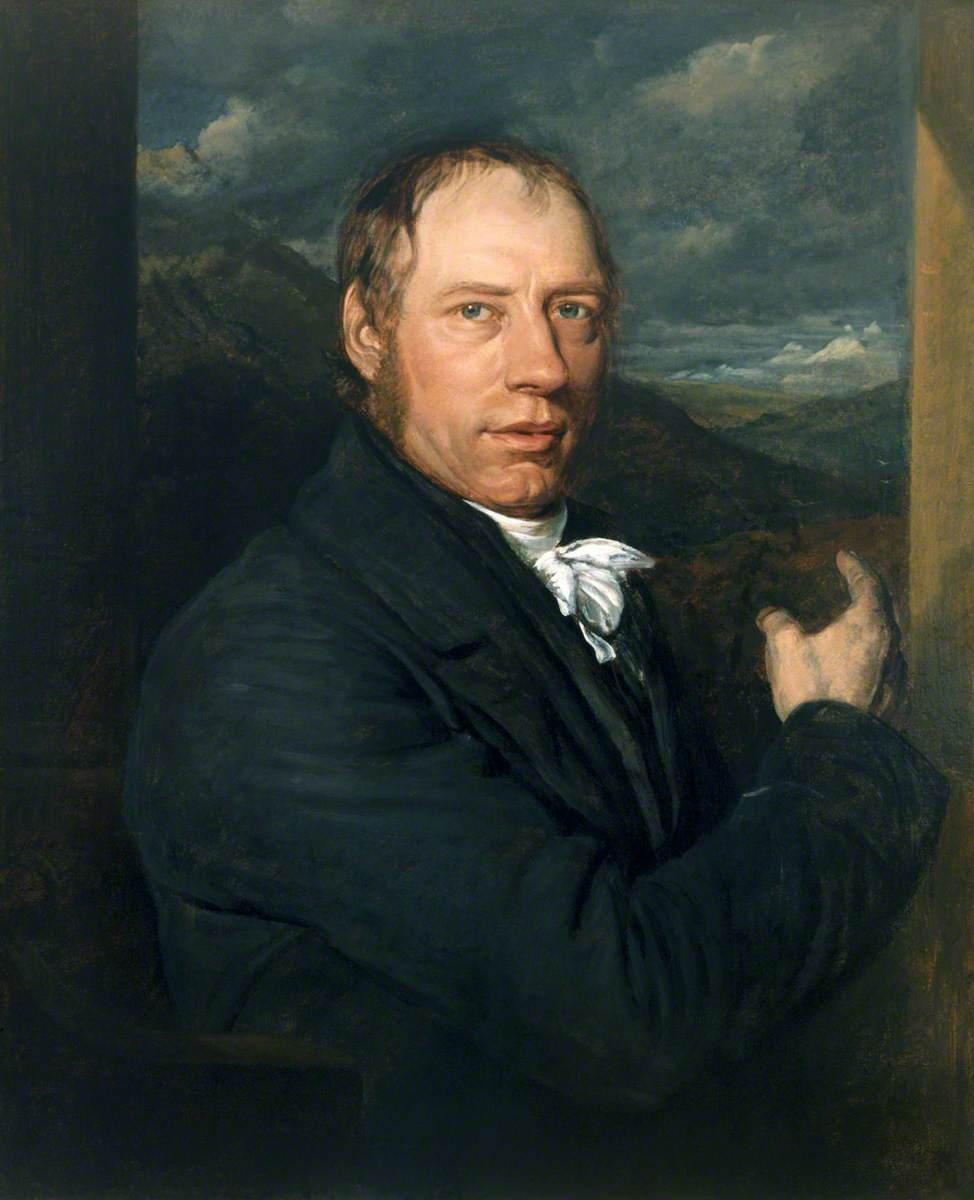
On a Wednesday night in January 1802, two Cornishmen arrived in London after the long journey from the mining country around Camborne. Richard Trevithick was thirty years old, a mine engineer and the son of a mine captain, a man of unusual height and strength who had been a poor and often truant pupil at the village school. With him was his cousin Andrew Vivian, the commercial man of their partnership. Three days later, writing from lodgings in Southampton Street off the Strand, they reported their progress to their patron Davies Giddy. A caveat protecting their invention was secured. The young chemist Humphry Davy had sent them on to Count Rumford, who struck them as a pleasant man, well informed about fireplaces and the use of steam for heating but less experienced with steam acting on a piston. Rumford had nonetheless sketched them "a rough draft of a fire-place, which he thinks is best adapted for our carriage." Friends were urging them to have a carriage built in London and put it on show.[1]
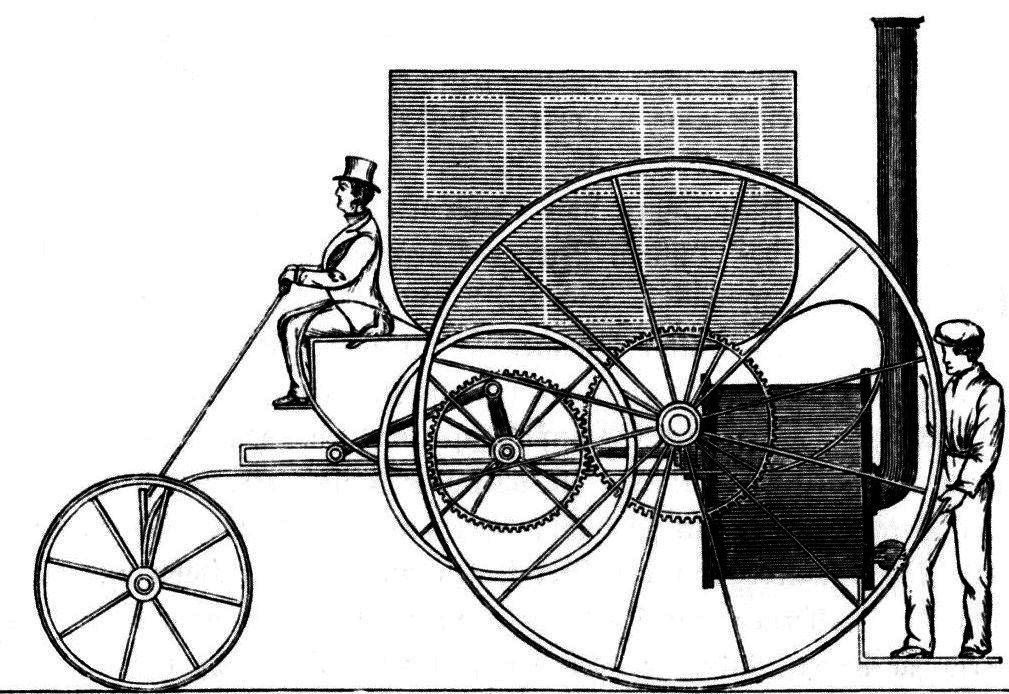
The carriage they had in mind ran on high-pressure steam. Only three weeks earlier, on Christmas Eve 1801, a version of it had carried passengers up the hill out of Camborne, and within days it had burned to a cinder in a shed while its operators dined at a nearby hotel. Undeterred, Trevithick and Vivian had come to London to protect the idea, and on 24 March 1802 they received their patent. For the next twelve years Trevithick tried to show that steam, when worked at several times the pressure of the atmosphere, could drive carriages, pull trains, dredge rivers, thresh grain, and drain the deepest mines. He was far less successful at earning a living from it. His locomotives broke the rails they ran on, a stationary engine suffered a fatal boiler explosion, his backers lost heart, and in 1811 he was bankrupt. Yet in January 1814, almost exactly twelve years after that first London letter, he was back in London putting his name to an agreement to send nine of his engines to the silver mines of Peru, a task that Boulton and Watt had told his new partner could not be done with engines small enough to carry across the Andes. This is the story of those twelve years.
The Problem of Watt's Engine
For a generation the firm of Matthew Boulton and James Watt had built low-pressure condensing engines, in which steam and the vacuum created by condensation worked together to move the piston. Watt's great improvement had been to condense the steam in a separate vessel, so that the main cylinder no longer had to be cooled and reheated with every stroke. His engines were far more economical than Newcomen's but remained large and heavy, tied to cooling water and a massive masonry engine house.
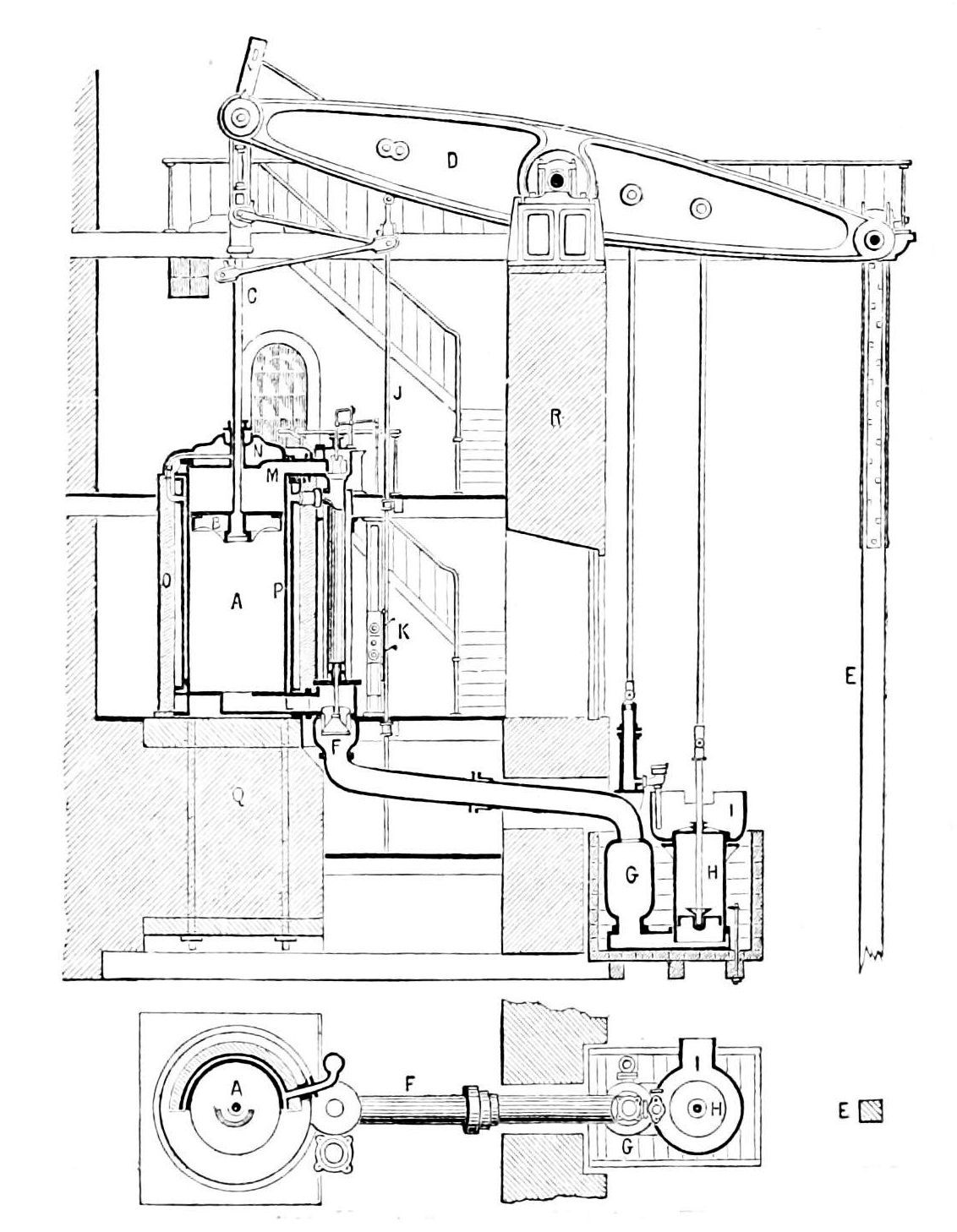
Nowhere were the economics of steam felt more sharply than in Cornwall. The county's copper and tin mines grew deeper every decade and had to be pumped constantly, yet Cornwall had no coal of its own. Boulton and Watt's engineers arrived in the county in 1777, and for the next twenty years Cornish engineers searched for ways to build efficient engines without paying royalties on Watt's patents. Trevithick grew up in the middle of that quarrel. His father managed several of the most important mines in the district, and for much of the 1780s and 1790s William Murdoch, Watt's ablest assistant, lived at Redruth, a few miles from the family home. When Watt's patent expired in 1800, the field opened to new ideas.
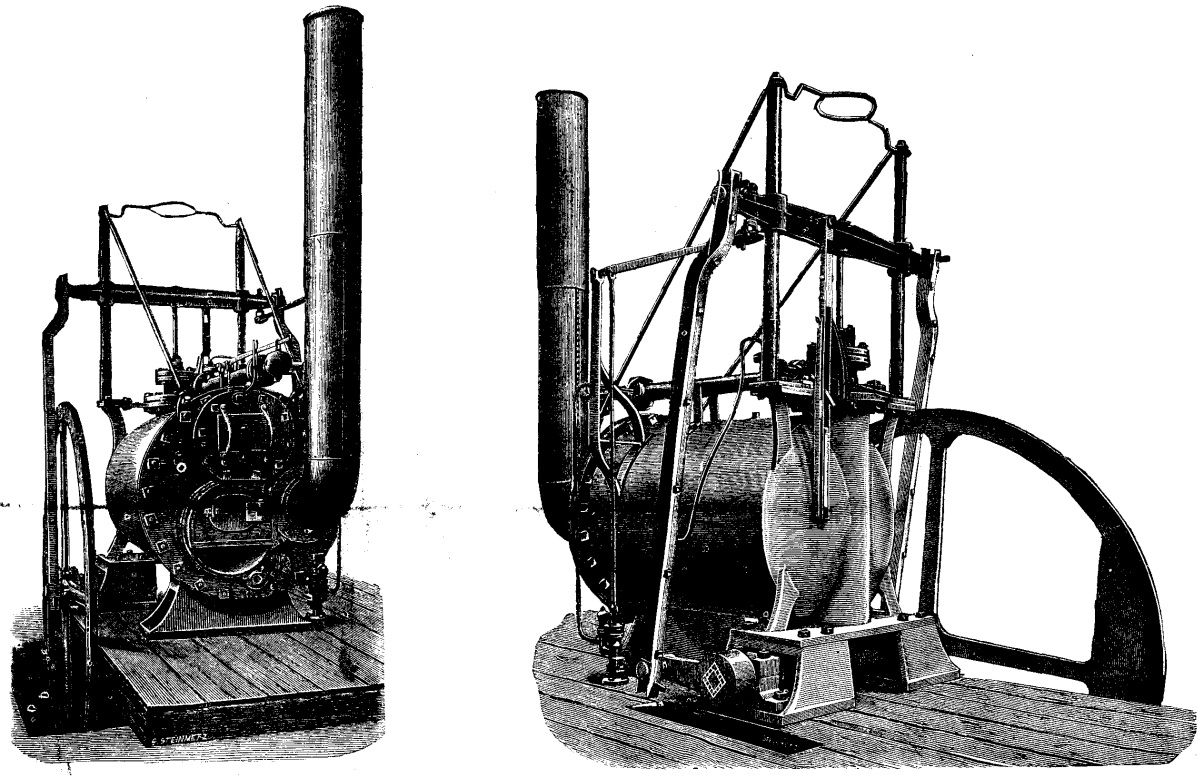
Trevithick's idea was to abandon the condenser. He raised steam to a pressure several times that of the atmosphere, let it push the piston directly, and then released it into the open air through a chimney. Because each stroke delivered much more force, the cylinder could be made far smaller, and without a condenser there was no need for cooling water or an enormous engine house. A high-pressure engine could, in principle, be light enough to carry itself. Watt had long been skeptical of the practical use of high-pressure steam, and much of Trevithick's contribution lay in ignoring that doubt and building engines that actually worked. In 1800 he built a double-acting high-pressure engine with a crank for Cook's Kitchen mine, and engines of this type, called "puffers" to distinguish them from the quiet condensing engines, were soon in demand in Cornwall and South Wales for raising ore from the shafts.[2]
The Christmas Eve run of 1801 was the boldest application yet. Stephen Williams, a cooper who jumped aboard with "may be seven or eight" others, remembered that "she went off like a little bird." Giddy's later account, written in 1839 when he was known as Davies Gilbert, described the sequel. A few days afterward the carriage broke down on an ascent, and its operators left it in a shed and went to the hotel, where they "comforted their hearts with a roast goose, and proper drinks." Meanwhile the water boiled away, the iron grew red hot, and nothing combustible remained "either of the engine or the house." Accounts of these days are not fully consistent. Francis Trevithick, the engineer's son and first biographer, dates the first passenger run to Christmas Eve, while Giddy dated a trip toward Tehidy, and the breakdown that ended it, to 28 December.[3]
The Patent and the Proof
The patent business occupied Vivian for much of the winter. On 23 March 1802 he wrote to Trevithick that after visits to Crane Court, the Rolls Chapel Office, and the Patent Office at the Adelphi, the patent was to be sealed the next day. He had spent two or three hours with a Mr. Nicholson in Soho Square going over the specification, and a Mr. Davy, whom Vivian called "a very clever little fellow," had been asked to see to the final fair copy. The Dictionary of National Biography names him as Peter Nicholson, but the Soho Square address points to William Nicholson, the chemist and patent agent who lived there. The patent, granted on Wednesday 24 March, covered high-pressure engines for stationary use and for propelling carriages. According to Vivian's accounts, Trevithick and Vivian each held two-fifths of it, and William West, the craftsman who had built Trevithick's working models, held the remaining fifth.[4]
Trevithick spent the rest of 1802 proving that the engine could do measurable work. At the Coalbrookdale Company's works in Shropshire he built a small engine with a seven-inch cylinder that pumped water so that its power could be measured. On 22 August he wrote to Giddy that "it went from 50 lbs. to 145 lbs. to the inch in fair working, forty strokes per minute." He added that "the Dale Company have begun a carriage at their own cost for the railroads." Almost nothing more is known about that first railway locomotive, including whether it ever ran.[5]
The road carriage came to London in the early months of 1803, as his friends had urged. John Vivian, a young relative of Andrew's, recalled driving it from Leather Lane through Gray's Inn Lane, past Lord's cricket ground to Paddington, and back by Islington, about ten miles, sometimes at eight or nine miles an hour. On one early run Trevithick shouted "Put the helm down, John!" too late to keep the carriage from tearing down the railings of a garden wall. One onlooker, recalling the scene decades later, said that "the carriage moved along very quickly, and there was great cheering." "Our finances being low," Andrew Vivian later wrote, "we were compelled to abandon it." The engine was taken off the carriage and set to drive a mill rolling hoop iron, and Trevithick's partners lost heart in steam travel.[6]
The Explosion at Greenwich
In September 1803 high-pressure steam suffered the kind of disaster its critics had predicted. One of Trevithick's engines had been set to work pumping water from the foundations of a tide mill under construction in the marshes between Greenwich and Woolwich. Its boiler burst and blew the engine to pieces. The Newcastle Courant, reporting the accident later that month, stated that three men were killed on the spot and three others badly hurt, two of whom were not expected to recover. Later accounts give the number of dead as four.[7]
Accounts of the cause differ. Rees's Cyclopaedia said in 1819 that the engine had been "blown up by overloading the safety-valve." Francis Trevithick insisted that the accident was caused not by any defect in the engine or boiler "but by the fastening down of the safety-valve," and he recorded that his father had complained at the time that Boulton and Watt "had made false reports on the explosion." Trevithick's answer was to make his boilers harder to abuse. According to Rees's Cyclopaedia, he proposed enclosing the safety valve "in such a manner that no one could get access to it," and he drilled a hole in the boiler and plugged it with lead. If the water fell too low, the lead would melt and release the steam before the boiler could burst.[8]
The Wager at Penydarren
The next great test took place in South Wales, at the Penydarren Ironworks near Merthyr Tydfil, where Trevithick had set up a forge engine some years before. The ironmaster Samuel Homfray took an active interest in Trevithick's Welsh engines and by 1804 had joined the patent partnership. In the winter of 1803 Trevithick was at Penydarren building a locomotive to run on the tramroad that carried iron down the valley toward the Glamorganshire Canal. On 20 February 1804 he reported that a wager of 500 guineas now hung on whether it could haul a load the full length of the line, which he gave as nine and three-quarter miles. The bet is usually said to have been laid between Homfray and a rival ironmaster, Richard Crawshay, but the record is confused. One later recollection gave the stake as 1,000 guineas, and a letter of Homfray's from July 1804 names the man who took the bet as a Mr. Hill.[9]
The run took place on Tuesday 21 February. In a letter dated the following day Trevithick told Giddy that "we carried 10 tons of iron, five waggons, and seventy men riding on them the whole of the journey," a distance of more than nine miles, in four hours and five minutes, using two hundredweight of coal. A report in the Royal Cornwall Gazette that March gave a different version, with a running time of two hours and a stake of five hundred pounds. It explained that the engine had been held up by stones and fallen trees left on the line by a recent storm, and that the gentleman who had bet against it "cheerfully paid his money." On 2 March Trevithick wrote that the engine had since drawn twenty-five tons and proved "more than a match for that weight." He also noted that turning the exhaust steam into the chimney "makes the draught much stronger."[10] The blast of spent steam drew the fire harder and raised more steam in turn, a principle that later became central to the steam locomotive.
Penydarren showed that the grip of smooth iron wheels on iron rails was enough to pull a heavy train on a gentle gradient. It also showed the limits of the track. Rees Jones, who worked at Penydarren, recalled that the engine "frequently from her weight broke the tram-plates," which had been cast for horse-drawn wagons. The line returned to horses, and the locomotive was converted into a stationary engine. The Dictionary of National Biography later judged that the failure belonged to the tramroad rather than the engine.[11]
Wylam, the Thames, and the Steam Circus
News of Penydarren reached the coalfields of the North East. A locomotive built at Gateshead to a Trevithick design dated 3 October 1804 was meant for the wagonway at Christopher Blackett's Wylam colliery. The Gateshead Observer, writing half a century later, credited John Steel as its engineer and John Whinfield as its maker, though other accounts give the maker's name as Whitfield. The engine worked only briefly, but it is thought to have formed a link between Trevithick's designs and the locomotives later developed in the Newcastle district.[12]
Trevithick also built Thames dredgers, and in 1806 he entered into an agreement with Trinity House to raise half a million tons of ballast a year at sixpence a ton, though the arrangement seems to have lapsed. On 10 August 1807 he took on a more dangerous commission. The Thames Archway Company was trying to drive a tunnel under the river from Rotherhithe, and its directors engaged him to cut a small pilot passage, or driftway, five feet high, for £1,000 if he reached the far shore and nothing if he failed. By 21 December the drift had advanced 947 feet, but on 23 December the roof broke into a bed of quicksand and water poured in. On 26 January 1808, at about 1,028 feet, the river itself broke through. Trevithick was among the men who floated up the shaft with the rising water, and his wife remembered him coming home "without hat or shoes, half drowned, and covered with clay." Two experienced colliery engineers from the north, William Stobart and John Buddle, reported that he had "shown most extraordinary skill and ingenuity in passing the quicksand," but the directors suspended the work in August 1808 and the tunnel was abandoned.[13]
That summer, for a new engine called Catch Me Who Can, he laid a circular track in a field by the New Road, near the present Euston Square. On 28 July 1808 he wrote that he had tried the engine "about four or five days ago." A witness recalled that it ran at about twelve miles an hour and that visitors paid a shilling to ride, though the advertisements, as the British Library reads them, charged two. Exactly when the public exhibition took place is uncertain. The Dictionary of National Biography says rides were offered in July and August, while the British Library, working from contemporary advertisements, finds that an opening promised for mid-July slipped to September and that the engine ran for at least a fortnight. It ended when a rail broke and the engine flew off the track and overturned on the soft ground. Catch Me Who Can was the last locomotive Trevithick built.[14]
Iron Tanks, Fever, and Debt
In 1808 Trevithick joined Robert Dickinson, a West India merchant, in a series of patents. The most promising was for iron tanks to replace the wooden casks in which ships carried water and cargo, and the partners set up workshops at Limehouse to make them. Another, patented in July 1808, was a steam-driven vessel with a crane that the partners called a "nautical labourer." When it was tried on the Thames, the Society of Coal Whippers, whose members unloaded colliers by hand, refused to work alongside it and "threatened to drown its inventor," and for a time guards were posted at Trevithick's house. In the autumn of 1808 Jane Trevithick brought their four children to London by post-chaise, and the family lived first at Rotherhithe and then at Limehouse. In early 1810 the partners used tanks pumped full of air to raise a sunken ship near Margate, but after a dispute over payment the tanks were cast loose and the vessel sank again.[15]
In 1810 Trevithick fell gravely ill with what his son called brain fever. By the end of that year he was back in Cornwall, and in February 1811 he and Dickinson were declared bankrupt. At some point in these troubles he was imprisoned for debt and released only after the engineer Henry Maudslay bought the tank patent, which Trevithick said had done him more harm than good. According to Francis Trevithick, his mother later recalled that lawyers and bailiffs took everything worth having from her house, including her husband's account books, drawings, papers, and models.[16]
Recovery in Cornwall
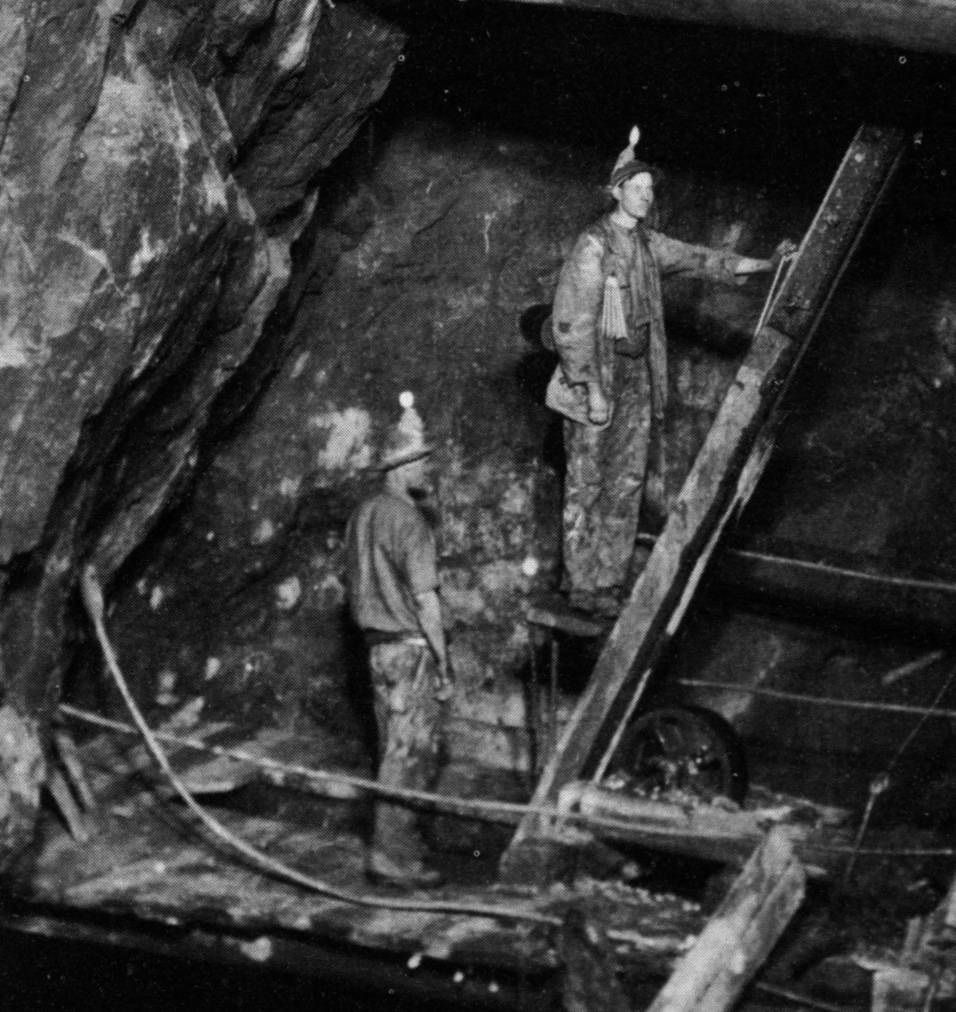
Back home he returned to the economy of mine engines. He designed cylindrical wrought-iron boilers that gave "really strong and expansive steam to the three Dolcoath pumping engines," and all three began to lift more water. One Cornish witness later claimed that the new boilers saved half the cost of coal, though another admitted he could not say what the saving had been. At Wheal Prosper he went further. There he built a "pole" pumping engine, in which steam at 100 pounds to the square inch drove a sixteen-inch plunger through an eight-foot stroke, expanding as it went to about 10 pounds, and was then condensed to form a vacuum for the downstroke. The engine combined high-pressure steam, expansive working, and condensation, and the Dictionary of National Biography called it the first "Cornish engine" ever erected. Accounts differ on its date. Francis Trevithick described it as his father's first undertaking after returning to Cornwall in 1810, while the Dictionary dates it to the spring of 1812.[17]
He also carried steam onto the farm. For Sir Christopher Hawkins of Trewithen, near Probus, he built a small high-pressure engine to drive a threshing machine. Writing from Hayle Foundry on 13 February 1812, he described an engine with a nine-inch cylinder "equal in power to four horses" and costing £80. It burned two shillings and sixpence worth of coal to do work that cost twenty shillings with horses. "The engine requires very little attention," he added; "a common labouring man easily regulates it." In April he wrote to Sir John Sinclair, president of the Board of Agriculture, that "every part of agriculture might be performed by steam," and that doing so would double the population of the kingdom.[18]
The Stranger from Lima
The silver mines of Cerro de Pasco, high in the Peruvian Andes at an altitude that nineteenth-century writers put at between 13,000 and 15,000 feet, had once been among the richest in the Spanish empire. By the early nineteenth century many of their workings had, in the words of a Peruvian official, "ceased to produce ore, in consequence of their bases being completely submerged in water." In 1811 Francisco Uville, a man of influence in Lima, came to England to look into steam pumping. Boulton and Watt assured him, as Richard Edmonds put it in 1859, "that it was impossible to make engines of sufficient power small enough to be carried over the Andes." Uville then saw a model of a Trevithick engine for sale in a London shop, which Francis Trevithick placed at a Mr. Roland's in Fitzroy Square, and bought it for twenty guineas. He carried it by mule to Pasco, where, as one account put it, he fired its small boiler "as he had seen it done in London, and with the same result, to the great joy of Uville." On 17 July 1812 he joined two Lima merchants, Pedro de Abadía and Joseph de Arismendi, in a company with a capital of 40,000 dollars to drain the mines, and their contract authorized him to buy two engines in England and a third if he could find one on credit.[19]
In 1813 Uville set out for England again. He fell ill and was landed at Jamaica, and when he resumed his voyage on a packet bound for Falmouth a fellow passenger, Captain Teague, told him, "The inventor of your high-pressure steam-engine is a cousin of mine." Uville landed at Falmouth around 10 May. On 20 May Trevithick wrote that "a strange gentleman" had called on him, adding that "money is very plentiful with him," and two days later he was writing to the Neath Abbey ironworks about six pumping engines with twenty-four-inch cylinders. Through the summer and autumn he hired smiths, engaged what he called "all the boiler-plates in the county," and sent drawings to the foundry of Hazledine and Rastrick at Bridgnorth, while Uville enlarged the order far beyond what his partners' contract had provided.[20]
The Agreement of January 1814
On Saturday 8 January 1814, in London, Trevithick and Uville signed an agreement admitting the bankrupt engineer to the Peruvian venture, subject to ratification by Uville's partners in Lima, "who will ratify these presents in the capital of Lima as soon as it shall be produced to them." The admission sat uneasily with the partners' own contract of 1812, whose first article declared that the company was "composed of three contracting persons without admitting therein any other whatever." Trevithick had paid, and undertook to pay, "certain bills for machinery ordered by the said Francisco Uville to the amount of £3,000 or thereabouts." In return Uville admitted him as "a member thereof and a partner therein to the extent of 12,000 dollars," a stake that would amount, "as nearly as can now be ascertained to one-fifth of the capital stock." A further clause granted him one and a quarter percent of the net produce of the ore, in recognition of his work in designing the engines, increasing their power by a third without charge, and supplying a fourth engine on credit.[21]
The technical problem was the one Boulton and Watt had declined. The engines had to be built, as Edmonds wrote, "in sufficiently small parts, to be conveyed on the backs of mules from Lima to the mines of Pasco." High-pressure steam offered important advantages in the thin mountain air, and the compact design of Trevithick's engines made it practical to divide them for the journey. The invoice printed by Francis Trevithick lists four pumping "steam-engines of 33-horse-power each," four eight-horsepower winding engines with their whims and barrels, and a portable eight-horsepower engine for rolling, together with mills, spare boilers, and tools, for a grand total of £16,152 1s. 1d., although elsewhere his narrative puts the cost of the nine engines at about £10,000.[22]
On 1 September 1814 the machinery sailed from Portsmouth for Lima aboard the Wildman, a South Sea whaler under Captain Leith. Uville went with it, along with three Cornishmen who were to erect and run the engines: Henry Vivian, Thomas Trevarthen, and William Bull, one of Trevithick's earliest partners. Trevithick stayed in Cornwall. The machinery reached Peru early in 1815, and one of the engines was soon at work in the Mint at Lima. On 27 July 1816 the first of the exported pumping engines began work at the Santa Rosa mine at Pasco under Bull's direction, an event Edmonds later described as the first time a steam engine had been seen in South America, though the Mint engine had evidently preceded it. That October Trevithick sailed from Penzance to follow his engines, and he did not see Cornwall again for eleven years.[23]
Why the Twelve Years Mattered
The two London scenes that frame these years show both the reach of Trevithick's idea and the limits of his luck. Between them he applied high-pressure steam to road carriages, railway locomotion, river dredging, tunneling, ship salvage, farm machinery, and mine pumping, repeatedly showing that steam power could work far beyond the fixed engine houses for which it had been designed. The materials of the day often failed him. The Dictionary of National Biography judged that his "impatience and impetuosity and a certain lack of persistence proved disastrous to his fame and fortune," and that many of the lessons he learned "had to be relearned by subsequent inventors, who bore off the laurels which he might have earned."[24] George and Robert Stephenson would perfect the locomotive and receive most of the credit.
Yet the agreement of January 1814 answered the question that had followed Trevithick and Vivian from their Strand lodgings in January 1802. They had come to London to defend a machine that even Rumford, the great authority on heat, seemed to understand better as a problem of fireplaces than of pistons. Twelve years later the strong steam Watt had distrusted was working expansively in Cornish pumping engines, threshing grain at Trewithen for a fraction of the cost of horses, and about to be shipped to the Andes to do work the most famous engine builders in Britain had refused. Trevithick had gained little financially from these efforts, but the compact high-pressure engines he had brought to London as an unproven technology had become, by 1814, working machines in mines, ironworks, and farmyards.
Places in this Story
The places this story moves through, in order — follow them on the interactive map →
- Camborne Hill, Cornwall December 1801
Three weeks before the London journey, a high-pressure carriage carried passengers up this hill. Stephen Williams, a cooper who jumped aboard with "may be seven or eight" others, remembered that "she went off like a little bird." Days later it burned to a cinder in a shed while its operators ate roast goose at the hotel.
- Southampton Street, off the Strand, London January 1802
Trevithick and his cousin Andrew Vivian wrote to Davies Giddy from lodgings here three days after reaching London. Humphry Davy had sent them to Count Rumford, who knew fireplaces well but steam on a piston less so, and who sketched them "a rough draft of a fire-place" for the carriage.
- Coalbrookdale, Shropshire 1802
Trevithick built a seven-inch-cylinder engine here that pumped water so its power could be measured: "from 50 lbs. to 145 lbs. to the inch in fair working, forty strokes per minute." He added that the Dale Company had begun a carriage for the railroads. That was the first railway locomotive, about which almost nothing else is known.
- The tide mill, marshes between Greenwich and Woolwich September 1803
An engine pumping the mill's foundations burst and blew itself to pieces. The Newcastle Courant reported three killed on the spot and three badly hurt; later accounts give four dead. Trevithick answered by making the safety valve inaccessible and fitting a lead plug designed to melt before a boiler could burst.
- Penydarren Ironworks, Merthyr Tydfil February 21, 1804
The first locomotive known to have hauled a load on rails, winning a wager usually given as 500 guineas: ten tons of iron, five wagons and seventy men, more than nine miles in four hours and five minutes. The engine broke the tram-plates, which had been cast for horses, and the line went back to horses.
- Wylam Colliery, Northumberland 1804–1805
A Trevithick design dated 3 October 1804 was built at Gateshead for Christopher Blackett's wagonway here. It worked only briefly, but it is thought to be the link between Trevithick's designs and the locomotives later developed around Newcastle, George Stephenson's country.
- Rotherhithe, London 1807–1808
Trevithick contracted to drive a pilot tunnel under the Thames for £1,000 if he reached the far bank and nothing if he failed. At about 1,028 feet the river broke in. He floated up the shaft with the water and came home "without hat or shoes, half drowned, and covered with clay."
- The New Road, near Euston Square, London 1808
Trevithick laid a circular track in a field here and ran Catch Me Who Can for paying riders at about twelve miles an hour. A rail broke, the engine flew off and overturned on the soft ground, and he never built another locomotive.
- Limehouse, London 1808–1810
Workshops for the iron tanks meant to replace ships' wooden casks, the most promising of the patents Trevithick took with Robert Dickinson. The partners' steam-powered "nautical labourer" so alarmed the Society of Coal Whippers that they "threatened to drown its inventor," and guards were posted at his house.
- Dolcoath Mine, Camborne 1811–1812
Back from London and bankrupt, Trevithick fitted cylindrical wrought-iron boilers that gave "really strong and expansive steam to the three Dolcoath pumping engines," and all three lifted more water. One witness claimed the new boilers halved the coal bill; another admitted he could not say.
- Trewithen, near Probus, Cornwall February 1812
For Sir Christopher Hawkins he built a nine-inch-cylinder engine "equal in power to four horses" to drive a threshing machine: £80 to buy, and two shillings and sixpence of coal against twenty shillings for the horses. "A common labouring man easily regulates it," he wrote.
- Cerro de Pasco, Peru 1812–1816
Silver mines once among the richest in the Spanish empire, whose lower workings had flooded, their bases "completely submerged in water." Boulton and Watt said no engine both powerful and small enough could cross the Andes. Trevithick's could be taken apart for the mules; the first began pumping at the Santa Rosa mine on 27 July 1816.
Frequently Asked Questions
What did Richard Trevithick invent?
He made high-pressure steam practical. Instead of relying on a condenser as Watt's engines did, his engines worked steam at several times the pressure of the atmosphere, which made them small and light enough to move themselves. He ran a passenger-carrying steam carriage up Camborne Hill on Christmas Eve 1801, patented the high-pressure engine on 24 March 1802, and in February 1804 ran the first locomotive known to have hauled a load on rails, at Penydarren.
What happened at Penydarren in 1804?
On 21 February 1804 Trevithick's locomotive hauled a train down the tramroad from the Penydarren Ironworks near Merthyr Tydfil, winning a wager usually given as 500 guineas. He told Davies Giddy the next day that it carried ten tons of iron, five wagons and seventy men more than nine miles in four hours and five minutes, on two hundredweight of coal.
Why did Trevithick's locomotives fail?
The track failed rather than the engine. The Penydarren tramroad had been built with plates cast for horse-drawn wagons, and Rees Jones, who worked there, recalled that the locomotive "frequently from her weight broke the tram-plates," so the line went back to horses.
What was Catch Me Who Can?
A locomotive Trevithick ran on a circular track by the New Road, near the present Euston Square, in 1808, as a paying exhibition rather than a working railway. It managed about twelve miles an hour until a rail broke and the engine overturned, and it was the last locomotive he built.
How is a high-pressure steam engine different from a Watt engine?
A Watt engine condensed its steam in a separate vessel and drew much of its work from the resulting vacuum, which tied it to cooling water and a heavy masonry engine house. Trevithick dropped the condenser and let strong steam push the piston and escape up the chimney, so the cylinder could be far smaller and the engine light enough to move itself.
What caused the Greenwich boiler explosion of 1803?
Accounts differ. Rees's Cyclopaedia said the engine was "blown up by overloading the safety-valve" while Francis Trevithick blamed "the fastening down of the safety-valve" rather than any defect, and Trevithick answered by making the valve inaccessible and fitting a lead plug that would melt before a boiler could burst.
Did Trevithick's engines ever reach Peru?
Yes. The machinery sailed from Portsmouth on 1 September 1814 aboard the whaler Wildman, and on 27 July 1816 the first of the exported pumping engines began work at the Santa Rosa mine at Cerro de Pasco.
Bibliography
British Library. "Catch Me Who Can: Trevithick's Steam Locomotive Demonstration of 1808." Untold Lives blog, November 6, 2019. Accessed October 19, 2026. https://www.bl.uk/stories/blogs/posts/catch-me-who-can-trevithicks-steam-locomotive-demonstration-of-1808.
Edmonds, Richard. "Contributions to the Biography of Richard Trevithick." Edinburgh New Philosophical Journal, October 1859. Reprinted in Richard Edmonds, The Land's End District: Its Antiquities, Natural History, Natural Phenomena, and Scenery, appendix. London: J. R. Smith, 1862. https://books.google.com/books?id=8ecGAAAAQAAJ.
Gloucester Journal. February 27, 1804. Transcribed in "Richard Trevithick," Grace's Guide to British Industrial History. Accessed October 19, 2026. https://www.gracesguide.co.uk/Richard_Trevithick.
Grace's Guide to British Industrial History. "Richard Trevithick." Accessed October 19, 2026. https://www.gracesguide.co.uk/Richard_Trevithick.
Kresen Kernow. "Agreement, Mines in Lima, Peru." January 8, 1814. Catalogue reference X1208/11. Accessed October 19, 2026. https://kresenkernow.org/SOAP/detail/59e7e86d-cdb4-4269-9e1d-faa3c0fd0ae5/.
Newcastle Courant. September 24, 1803. Transcribed in "Richard Trevithick: Greenwich Explosion," Grace's Guide to British Industrial History. Accessed October 19, 2026. https://www.gracesguide.co.uk/Richard_Trevithick:_Greenwich_Explosion.
Rees, Abraham. The Cyclopaedia; or, Universal Dictionary of Arts, Sciences, and Literature. London: Longman, Hurst, Rees, Orme, and Brown, 1819. S.v. "Steam-Engine." Quoted in Francis Trevithick, Life of Richard Trevithick, vol. 1.
Royal Cornwall Gazette. March 3, 1804. Transcribed in "Richard Trevithick," Grace's Guide to British Industrial History. Accessed October 19, 2026. https://www.gracesguide.co.uk/Richard_Trevithick.
Seccombe, Thomas. "Trevithick, Richard." In Dictionary of National Biography, edited by Sidney Lee, vol. 57. London: Smith, Elder, 1899. https://books.google.com/books?id=mOJfbCDGrTEC.
Trevithick, Francis. Life of Richard Trevithick, with an Account of His Inventions. Vol. 1. London: E. & F. N. Spon, 1872. https://books.google.com/books?id=LGNbVdX448MC.
Trevithick, Francis. Life of Richard Trevithick, with an Account of His Inventions. Vol. 2. London: E. & F. N. Spon, 1872. https://books.google.com/books?id=fUhDAAAAIAAJ.
Citations
- Richard Trevithick and Andrew Vivian to Davies Giddy, January 16, 1802, in Francis Trevithick, Life of Richard Trevithick, with an Account of His Inventions, vol. 1 (London: E. & F. N. Spon, 1872), 112; Thomas Seccombe, "Trevithick, Richard," in Dictionary of National Biography, ed. Sidney Lee, vol. 57 (London: Smith, Elder, 1899), s.v. ↑
- Seccombe, "Trevithick, Richard." ↑
- Recollections of Stephen Williams, and Davies Gilbert to J. S. Enys, April 29, 1839, in F. Trevithick, Life, vol. 1, 107. ↑
- Andrew Vivian to Richard Trevithick, March 23, 1802, in F. Trevithick, Life, vol. 1, 116; Vivian's accounts to November 1804, in F. Trevithick, Life, vol. 1, chap. 10; Seccombe, "Trevithick, Richard." ↑
- Richard Trevithick to Davies Giddy, August 22, 1802, in F. Trevithick, Life, vol. 1, 156. ↑
- Recollections of John Vivian and Mrs. Humblestone, and Andrew Vivian's draft letter, in F. Trevithick, Life, vol. 1, 143; Seccombe, "Trevithick, Richard." ↑
- Newcastle Courant, September 24, 1803. ↑
- Abraham Rees, The Cyclopaedia; or, Universal Dictionary of Arts, Sciences, and Literature (London: Longman, Hurst, Rees, Orme, and Brown, 1819), s.v. "Steam-Engine," quoted in F. Trevithick, Life, vol. 1, 104 and chap. 10; F. Trevithick, Life, vol. 1, 104. ↑
- F. Trevithick, Life, vol. 1, chap. 10; Richard Trevithick to Davies Giddy, February 20, 1804, in F. Trevithick, Life, vol. 1, 162. ↑
- Richard Trevithick to Davies Giddy, February 22, 1804, in F. Trevithick, Life, vol. 1, 154; Gloucester Journal, February 27, 1804; Royal Cornwall Gazette, March 3, 1804; Richard Trevithick to Davies Giddy, March 2, 1804, quoted in Seccombe, "Trevithick, Richard." ↑
- Recollections of Rees Jones, in F. Trevithick, Life, vol. 1, 165; Seccombe, "Trevithick, Richard." ↑
- F. Trevithick, Life, vol. 1, 183–87, quoting the Gateshead Observer; Seccombe, "Trevithick, Richard." ↑
- Seccombe, "Trevithick, Richard"; F. Trevithick, Life, vol. 1, chap. 12. ↑
- Richard Trevithick, letter of July 28, 1808, and recollections of J. I. Hawkins, in F. Trevithick, Life, vol. 1, 192; Seccombe, "Trevithick, Richard"; British Library, "Catch Me Who Can: Trevithick's Steam Locomotive Demonstration of 1808." ↑
- F. Trevithick, Life, vol. 1, 335, and chap. 13. ↑
- F. Trevithick, Life, vol. 1, 301; F. Trevithick, Life of Richard Trevithick, with an Account of His Inventions, vol. 2 (London: E. & F. N. Spon, 1872), 36, 69–71; "Richard Trevithick," Grace's Guide to British Industrial History, for the date of the bankruptcy. ↑
- F. Trevithick, Life, vol. 2, 70–73 and 162–65, the latter quoting the recollections of William Pooly and John Bryant; Seccombe, "Trevithick, Richard." ↑
- Richard Trevithick to Sir Christopher Hawkins, February 13, 1812, in F. Trevithick, Life, vol. 2, 37; Richard Trevithick to Sir John Sinclair, April 26, 1812, in F. Trevithick, Life, vol. 2, 43. ↑
- F. Trevithick, Life, vol. 2, 235, quoting the Intendant of Tarma's despatch of 1816; F. Trevithick, Life, vol. 2, 196–97, 229; contract of July 17, 1812, between Pedro de Abadía, Joseph de Arismendi, and Francisco Uville, in F. Trevithick, Life, vol. 2, 221; Richard Edmonds, "Contributions to the Biography of Richard Trevithick," Edinburgh New Philosophical Journal, October 1859, reprinted in Richard Edmonds, The Land's End District: Its Antiquities, Natural History, Natural Phenomena, and Scenery (London: J. R. Smith, 1862), appendix. ↑
- Richard Trevithick to John Rastrick, May 20, 1813, to William Pengilly, May 22, 1813, and to Francisco Uville, June 2, 1813, in F. Trevithick, Life, vol. 2, 196; contract of July 17, 1812, in F. Trevithick, Life, vol. 2, 221. ↑
- Agreement between Francisco Uville and Richard Trevithick, January 8, 1814, printed in F. Trevithick, Life, vol. 2, 219, 225–26; contract of July 17, 1812, in F. Trevithick, Life, vol. 2, 221; Kresen Kernow, "Agreement, Mines in Lima, Peru," X1208/11. ↑
- Edmonds, "Contributions"; F. Trevithick, Life, vol. 2, 220. ↑
- F. Trevithick, Life, vol. 2, 218–19, 227, 230–31; Edmonds, "Contributions"; Seccombe, "Trevithick, Richard." ↑
- Seccombe, "Trevithick, Richard." ↑