The British government's decision to secure a controlling stake in the Anglo-Persian Oil Company in 1914 marked a pivotal moment in both military and energy history. Driven by Winston Churchill's determination to modernize the Royal Navy and ensure a reliable fuel supply, Britain recognized that oil would become essential to naval power and national security. This strategic investment not only helped transform the Royal Navy but also laid the foundation for Britain's long-term involvement in Middle Eastern oil production.
Winston Churchill, First Lord of the Admiralty
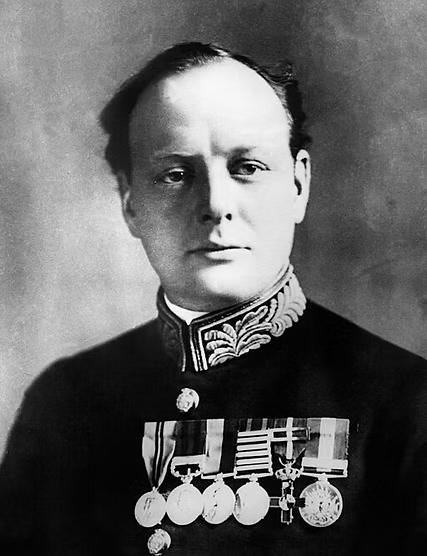
On October 25, 1911, Winston Churchill was appointed as the First Lord of the Admiralty. This is the title given to the head of the British Royal Navy. Churchill was proud to have received this title and responsibility, and he spent eight of his first twelve months traveling on the dedicated yacht the Enchantress visiting each ship and naval base in the British Isles.[1]
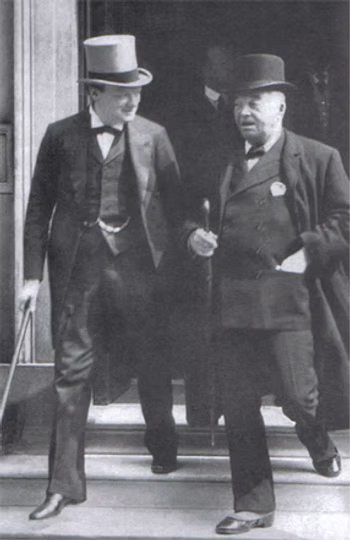
On March 3, 1913 the British Royal Commission on Oil and the Oil Engine with Sir John Arbuthnot Fisher as the chairman recommended that the British Navy should become fueled by oil. Sir Fischer had become the chairman of this commission at the invitation of Winston Churchill and the Prime Minister H. H. Asquith in May 1912.[2]
In July 1913, Churchill lobbied the House of Commons stating, “if we cannot get oil, we cannot get corn, we cannot get cotton, and we cannot get a thousand and one commodities necessary for the preservation of the economic energies of Great Britain."[3] Churchill knew that the success of the navy depended on speed, efficiency and maneuverability and was adamant about transitioning to oil. When recalling the Royal Navy's situation he said, "We could not get the power required to drive these ships at 25 knots except by the use of fuel oil." On July 13, 1913 the House of Commons approved a potential agreement to contribute two million pounds, to purchase fifty percent a company known as the Anglo-Persian Oil Company.[4]
Winston Churchill's Strategic Oil Acquisition - YouTube Shorts
Acquiring a Stake in the Anglo-Persian Oil Company
Around the same time that Great Britain was realizing the importance of oil for their navy, the Anglo-Persian Oil Company was uncovering vast stores of oil in southern Persia. In 1909, the Anglo-Persian Oil Company was founded as a subsidiary of Scotland-based Burmah Oil. Substantial oil discoveries in southern Persia occurred in 1908 by George Bernard Reynolds and APOC began building the Abadan Oil Refinery in 1909. The refinery was completed in 1912, but it experienced difficulty and nearly went bankrupt in 1913. In March 1913, Churchill shared a memo with the cabinet about the Anglo-Persian Oil Company's financial condition.
the Company have expended their capital in sinking wells, building a pipe line of 150 miles from the wells to a port (Abadan, at the head of the Persian Gulf), setting up a refinery, and in providing tank barges for conveyance of oil over the river bar to load deep-draught steamers [5]
Today, it is hard to imagine an oil company not having a demand for their product, but in 1913, the automobile industry was still in its infancy and there wasn't a large demand for Middle Eastern oil. The solution came in 1914 when the British Government signed the deal for the Anglo-Persian Oil Company to provide 40 million barrels of oil to the British Navy over the next 20 years in exchange for two million pounds of capital and a 51 percent ownership stake in the company.[6] In April of 1914, it was acknowledged in Parliamentary records that "the Company cannot adequately develop this very extensive [D'Arcy] Concession without additional capital."[7]
The acquisition of APOC by the British in July 1914 created a mutually beneficial partnership where the British navy provided consistent demand for the refined oil and Britain had a reliable supply of oil for its navy.
In addition to transitioning the Royal Navy to oil, the submarine was also in its very early days in 1914. On May 14, 1914, Fisher sent a memo to the Prime Minister and stated, "the submarine is the coming type of war vessel for fighting, but for that consummation to be reached we must perfect the oil engine and we must store oil." Additionally, Germany was also in the race developing the submarine while also upgrading their navy. The German Naval Law of 1900 was in the process of providing Germany with 19 new battleships and 23 cruisers by 1920.[8]
During World War I, both Winston Churchill and John Fisher resigned their positions in 1915 due to bitter disputes between one another over the failed Gallipoli campaign, where the British were defeated by the Ottomans. Fisher had become First Sea Lord in 1914, a position which he had previously held from 1904 to 1910. Churchill would later become appointed Minister of Munitions in July 1917, and the Secretary of State for War and Air in January 1919.
Sir John Arbuthnot Fisher died on July 10, 1920. Before passing he published a book in 1920 titled Memories and Records where he recounted many of the events of the past decade as well as where he saw the future heading. In his book he recorded, "Oil is the very soul of Sea Fighting!" He claimed "the best thing I ever did" was "an exuberant outburst" in November 1912 where he recorded the advantages of oil relative to coal. This list is summarized and it is not exhaustive of what Fisher recorded.
- Greater speed
- Can refuel while still at sea
- Reduced required personnel by 25 to 50 percent
- Energy density: one ton of oil can do what four tons of coal does
- Reduces need for furnaces and boilers
- Oil keeps in storage better than coal
- To be first in the race is everything! [9]
The value of oil exported from Persia in 1919-1920 was valued near $15 million. By 1920, profits of the Anglo-Persian Oil Company had increased one hundred fold since the acquisition in 1914 and Persia ranked fifth in the world in oil production producing over 12 million barrels annually. In the business year of 1919-20, the company's profit was 2.2 million pounds.[10]
Important Dates
Winston Churchill is appointed First Lord of the Admiralty, becoming the political head of the Royal Navy.
Prime Minister H. H. Asquith and Winston Churchill invite Sir John Fisher to chair the Royal Commission on Oil and the Oil Engine.
The Royal Commission recommends that the Royal Navy transition from coal to oil fuel.
Churchill presents a memorandum to the British Cabinet outlining the financial difficulties facing the Anglo-Persian Oil Company (APOC).
Churchill argues before the House of Commons for securing Britain's oil supply, emphasizing its importance to national security and economic strength.
The House of Commons approves a proposal allowing Britain to invest £2 million for a 50 percent stake in the Anglo-Persian Oil Company.
The British government acquires a controlling 51 percent stake in the Anglo-Persian Oil Company, securing a strategic oil supply for the Royal Navy.
Winston Churchill and John Fisher resign amid disagreements surrounding the failed Gallipoli Campaign during World War I.
Churchill is appointed Minister of Munitions.
Churchill becomes Secretary of State for War and Air.
Persian oil exports are valued at approximately $15 million, and APOC's annual profits reach £2.2 million.
Sir John Fisher dies after publishing Memories and Records, in which he famously declares, "Oil is the very soul of Sea Fighting!"
Persia ranks as the world's fifth-largest oil producer, producing more than 12 million barrels annually.
Frequently Asked Questions
Why did Winston Churchill support the British Navy's transition from coal to oil?
Winston Churchill believed oil-powered ships were faster, more efficient, and easier to maneuver than coal-powered vessels. He saw oil as essential for maintaining Britain's naval superiority in the years leading up to World War I.
What was the Anglo-Persian Oil Company and why was it important?
The Anglo-Persian Oil Company (APOC) was an early oil producer operating in Persia, modern-day Iran. Its vast oil reserves became strategically important to Britain as the Royal Navy shifted from coal to oil fuel.
Why did the British government purchase a stake in the Anglo-Persian Oil Company?
In 1914, the British government acquired a 51 percent stake in APOC to secure a reliable long-term oil supply for the Royal Navy. The investment also provided the company with capital needed to expand production and refining operations.
How did oil change the capabilities of the Royal Navy?
Oil allowed warships to achieve higher speeds while requiring fewer crew members to operate. It also simplified refueling and provided greater energy output compared to coal.
What role did Admiral John Fisher play in Britain's oil strategy?
Admiral Sir John Fisher was a strong advocate for oil-powered naval vessels and chaired the Royal Commission on Oil and the Oil Engine. His recommendations helped convince British leaders that oil was critical to future naval warfare.
How did the Anglo-Persian Oil Company acquisition affect World War I?
The acquisition helped ensure that Britain had access to secure fuel supplies during the war. This strategic advantage supported Royal Navy operations and Britain's ability to project power globally.
How did Britain's investment in Persian oil influence the future energy industry?
Britain's partnership with APOC helped establish the Middle East as a major source of global oil production. The company eventually evolved into what is now known as BP, one of the world's largest energy companies.
Citations
- Olsen, John D. “Churchill Appointed First Lord of the Admiralty.” International Churchill Society, August 10, 2021. https://winstonchurchill.org/the-life-of-churchill/rising-politician/churchill-appointed-first-lord-of-the-admiralty/ ↑
- Baron Fisher, John Arbuthnot Fisher. Records. United States: George H. Doran Company, 1920. 175. ↑
- The National and English Review. United Kingdom: National Review Limited, 1913. 1014. ↑
- American Petroleum Interests in Foreign Countries: Hearings Before a Special Committee Investigating Petroleum Resources, United States Senate, Seventy-ninth Congress, First Session, Pursuant to S. Res. 36 (extending S. Res. 253, 78th Congress) a Resolution Providing for an Investigation with Respect to Petroleum Resources in Relation to the National Welfare. June 27 and 28, 1945. United States: U.S. Government Printing Office, 1946. 298. ↑
- Henry, Natalia. Petroleum, Politics, and Persuasion: Why the British Government Purchased 51-Percent of the Anglo-Persian Oil Company. Accessed September 9, 2023. https://bpb-us-e1.wpmucdn.com/sites.dartmouth.edu/dist/9/244/files/2021/05/Petroleum-Politics-and-Persuasion-by-Natalia-Henry.pdf ↑
- “Early History – 1909-1924: Who We Are: Home.” bp global. Accessed September 16, 2023. https://www.bp.com/en/global/corporate/who-we-are/our-history/early-history.html ↑
- Parliamentary Papers: 1909-1982. United Kingdom: H.M. Stationery Office, 1914. 29. ↑
- Reguer, Sara. Persian oil and the First lord: A chapter in the career of ... - JSTOR, October 1982. https://www.jstor.org/stable/1987894 . 134. ↑
- Baron Fisher, John Arbuthnot Fisher. Records. United States: George H. Doran Company, 1920. 189-193. ↑
- Wagoner, Harless D.. Anglo-Persian Relations 1914-1921. N.p.: University of Wisconsin--Madison, 1942. 67. ↑