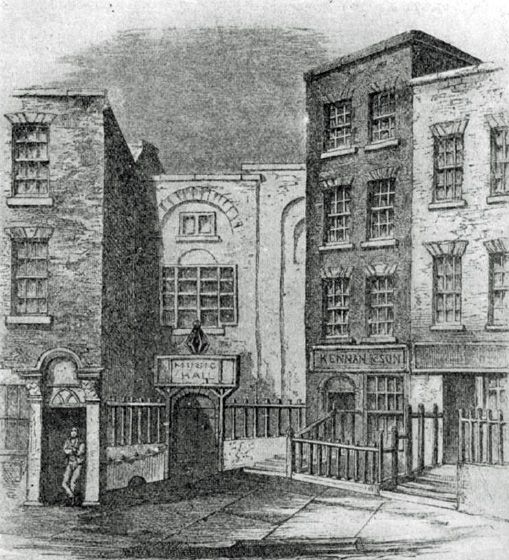
At noon on Tuesday, 13 April 1742, some seven hundred people pressed into William Neale's new Musick Hall on Fishamble Street, a narrow lane that runs down toward the River Liffey in the oldest part of Dublin. The room had been built to hold about six hundred. To squeeze in the extra listeners, the organizers had printed an unusual request in the city's newspapers: the ladies were asked to come without the hoops that held out their skirts, and the gentlemen were asked to leave their swords at home. The occasion was a charity concert for the relief of imprisoned debtors and two of the city's hospitals, and the music was a new oratorio by George Frideric Handel, then fifty-seven years old and the most famous composer in the British Isles. Four days later, Faulkner's Dublin Journal told its readers that "Words are wanting to express the exquisite Delight it afforded to the admiring crouded Audience."[1]
That oratorio was Messiah, and it is now so familiar, so bound up with Christmas concerts and the custom of standing for the "Hallelujah" chorus, that it is easy to assume it arrived in the world complete and admired. It did neither. It was written quickly by a composer who had only months earlier given up the Italian opera that had made him rich, launched in a provincial capital rather than in London, nearly sunk by a quarrel over whether sacred words belonged in a playhouse, and only slowly turned into a fixture of English life, helped above all by a partnership with a home for abandoned children. Along the way Handel revised it again and again, reshaping arias for whatever singers he could hire, until failing eyesight ended his ability to compose. This is the story of the twelve years from the Dublin premiere of 1742 to the Foundling Hospital performance of 1754, the first for which a full list of the musicians survives.
The End of an Opera Career
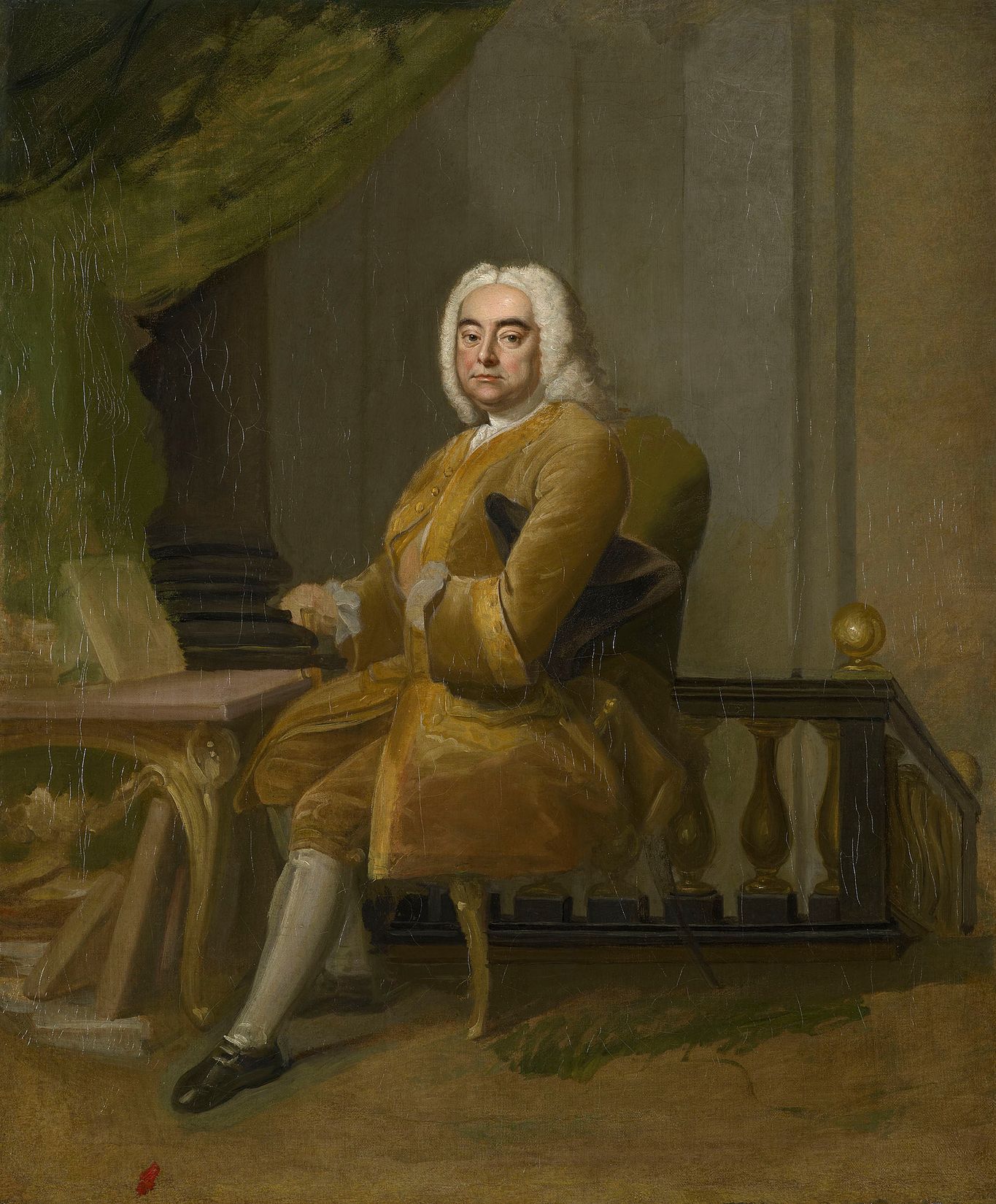
The road to Dublin began with Italian opera. Handel had come to England as a young man to write for the London stage, where opera was a lavish spectacle built around star singers, many of them castrati imported from Italy. By the 1730s, however, the market was crowded and shrinking. In 1733 a group of nobles gathered around Frederick, Prince of Wales, founded a rival company, the Opera of the Nobility, and stocked it with many of Handel's former singers, among them the castrato Senesino and the soprano Francesca Cuzzoni. By the spring of 1737 the Nobility company was collapsing, and Handel's own enterprise was in little better condition.
The strain told on Handel's body as well as his finances. In April 1737 he collapsed, and a report the following month said he had no use of his right hand. Later writers have usually called it a stroke, though the surviving descriptions do not allow a firm diagnosis. In the late summer he went to recover at the spa town of Aachen, then known to the English as Aix-la-Chapelle, and stayed about six weeks.[2] He returned and kept writing operas, but the public's appetite was waning. His last Italian opera, Deidamia, was heard in the winter of 1741, and after that he gave up the form for good.
The change was less abrupt than it looks. Since the early 1730s Handel had been building a second line of work in the English oratorio, a dramatic piece on a sacred or moral subject sung in English by soloists and chorus, but without costumes, scenery, or stage action. Oratorios were cheaper to mount than operas and could be performed in Lent, when the theatres could not stage plays or operas. Works such as Saul and Israel in Egypt, both heard in 1739, had shown what the form could do.
Twenty-Four Days in Brook Street
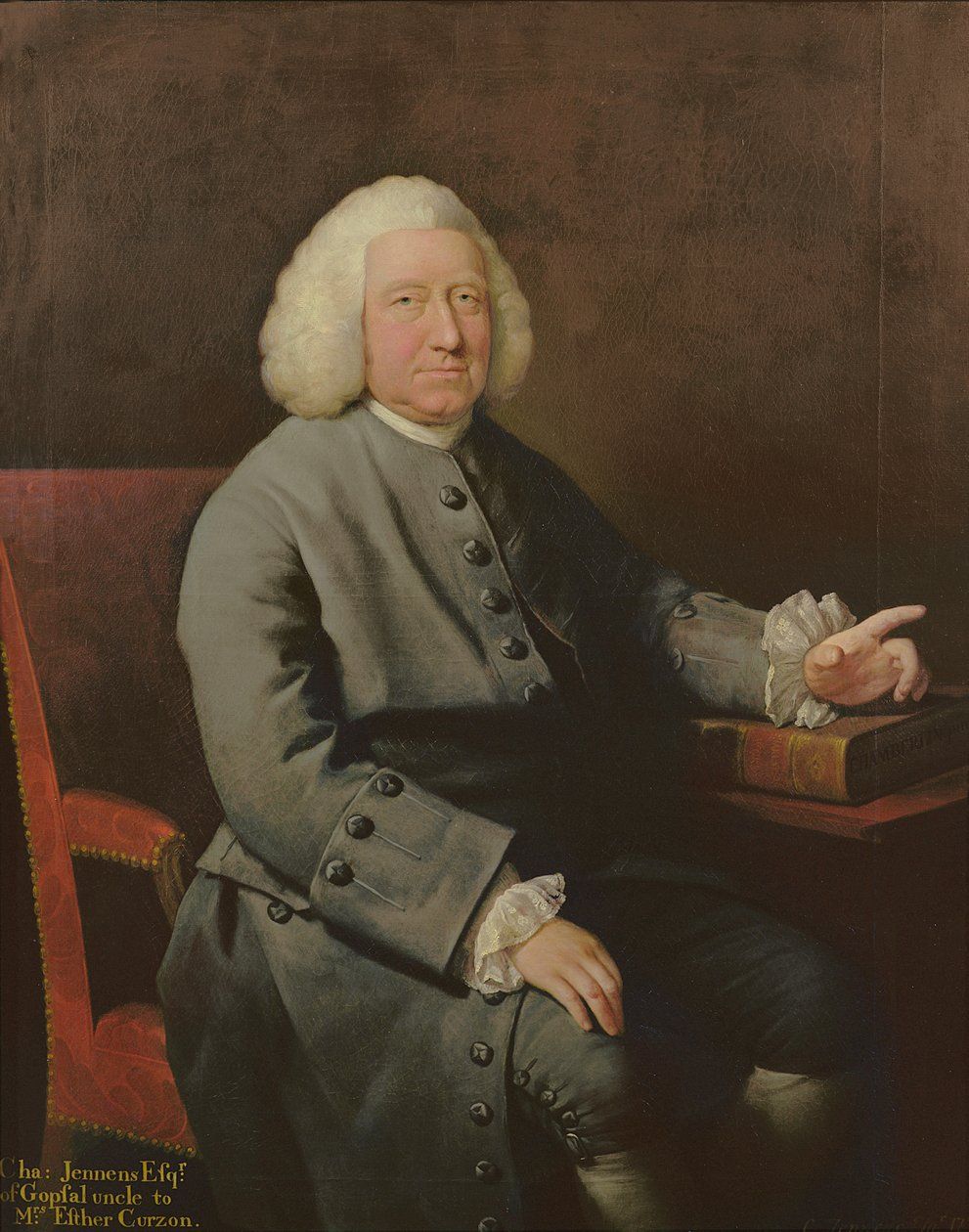
The text that would become Messiah came from Charles Jennens, a wealthy, learned, and notoriously touchy country gentleman from Leicestershire who had already supplied Handel with the words for Saul. Jennens was a devout Anglican, and he assembled his new libretto from selected biblical passages, principally from the King James Bible and the Psalms in the Book of Common Prayer. The selection and ordering were his. On 10 July 1741 he wrote to his friend Edward Holdsworth about the project with high expectations: "I hope he will lay out his whole Genius & Skill upon it, that the Composition may excell all his former Compositions, as the Subject excells every other subject. The Subject is Messiah."[3]
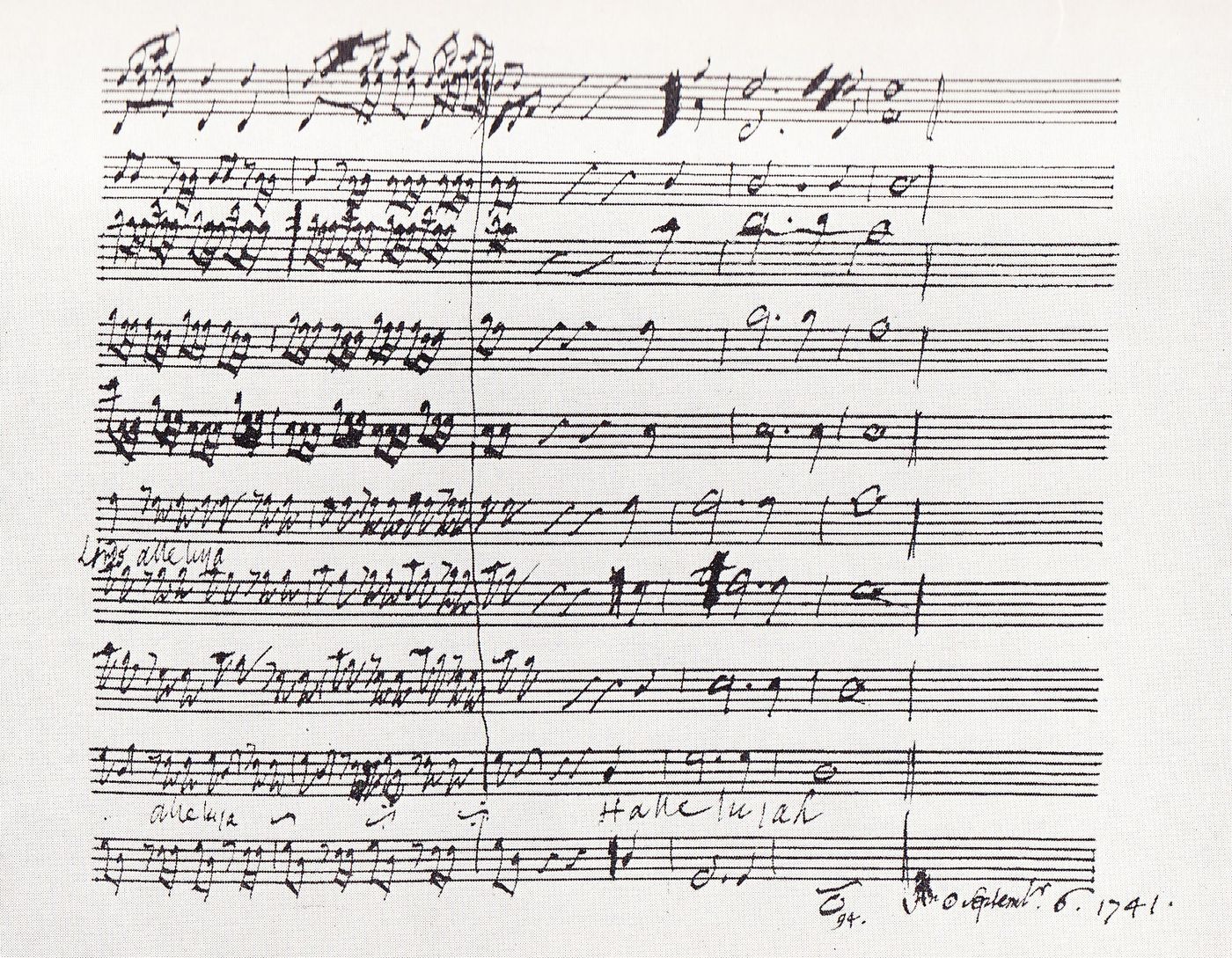
Handel began to set the text on 22 August 1741, working in his house in Brook Street, Mayfair. His working manuscript, which survives in the British Library, carries his own dates showing that the music was largely written between 22 August and 14 September, a little over three weeks. The autograph is full of corrections made during composition and again before and after the first performance, and a single page of preliminary sketches survives in the Fitzwilliam Museum in Cambridge.[4] "For unto us a child is born" and other choruses reuse music from Italian duets he had written that July.[5]
What Handel intended to do with the finished score is not clear. Jennens assumed it would be performed in London, perhaps during Passion Week. Instead, within weeks Handel accepted an invitation to spend the winter in Ireland. When Jennens found out, he wrote to Holdsworth that "it was some mortification to me to hear that instead of performing Messiah here he has gone into Ireland with it."[6]
A Winter in Dublin
The invitation came through the Lord Lieutenant of Ireland, William Cavendish, third Duke of Devonshire, and the arrangements were smoothed by Handel's old friend Matthew Dubourg, a violinist who led the viceroy's band at Dublin Castle. Handel reached Dublin on 18 November 1741, and Faulkner's Dublin Journal reported that he had "arrived here in the Packet-boat from Holyhead."[7] He lodged in Abbey Street.[8] His singers included the soprano Christina Maria Avolio and, later, the actress and contralto Susannah Cibber, who had come to Dublin partly to escape the scandal of her marriage, which was the talk of London.
The season was a success from the start. Handel organized a subscription series of six concerts in the new Musick Hall, presenting L'Allegro, il Penseroso ed il Moderato, Acis and Galatea, and Esther, and when it sold out he added a second series.[9] On 29 December he wrote to Jennens with obvious pleasure. He thanked his librettist for some verses meant to be printed with "Your Oratorio Messiah, which I set to Musick before I left England," and then reported that "The Nobility did me the Honour to make amongst themselves a Subscription for 6 Nights, which did fill a Room of 600 Persons, so that I needed not sell one single Ticket at the Door."[10] In the same letter he wrote that he could not "sufficiently express the kind treatment I receive here," and that he was passing his time "with Honour, Profit and Pleasure."[11]
Handel held Messiah back until the end of his stay. In March 1742 the Dublin Journal announced that "For Relief of the Prisoners in the several Gaols, and for the Support of Mercer's Hospital in Stephen's Street, and of the Charitable Infirmary on the Inns Quay," Handel's "new Grand Oratorio, call'd the MESSIAH" would be performed at the Musick Hall, with the gentlemen of the choirs of both cathedrals assisting.[12] The cathedral singers needed the clergy's consent, and here the record becomes tangled. Accounts differ about Jonathan Swift, dean of St. Patrick's Cathedral, who is variously described as having insisted that the proceeds go to charity as a condition of lending his choir, or as having tried to forbid his singers from taking part at all.[13]
Noon in Fishamble Street
A few days before the premiere, a public rehearsal had drawn a crowd and raised expectations, and the Dublin Journal asked the ladies to come without hoops because "it will greatly encrease the Charity."[14] When the performance finally took place on 13 April, the Dublin Journal reported that "the best Judges allowed it to be the most finished piece of Musick," and praised "The Sublime, the Grand, and the Tender, adapted to the most elevated, majestick and moving Words." About seven hundred people had attended, the receipts came to about £400, and £127 went to each of the three charities.[15] Later accounts credit the concert with freeing 142 debtors. The figure comes from a notice published in January 1744 by Dublin's Charitable Musical Society, which reported releasing 142 prisoners, with debts and fees of £1,225 17s. 1d., over the whole of 1742. How much of that the Messiah proceeds paid for is not recorded.[16]
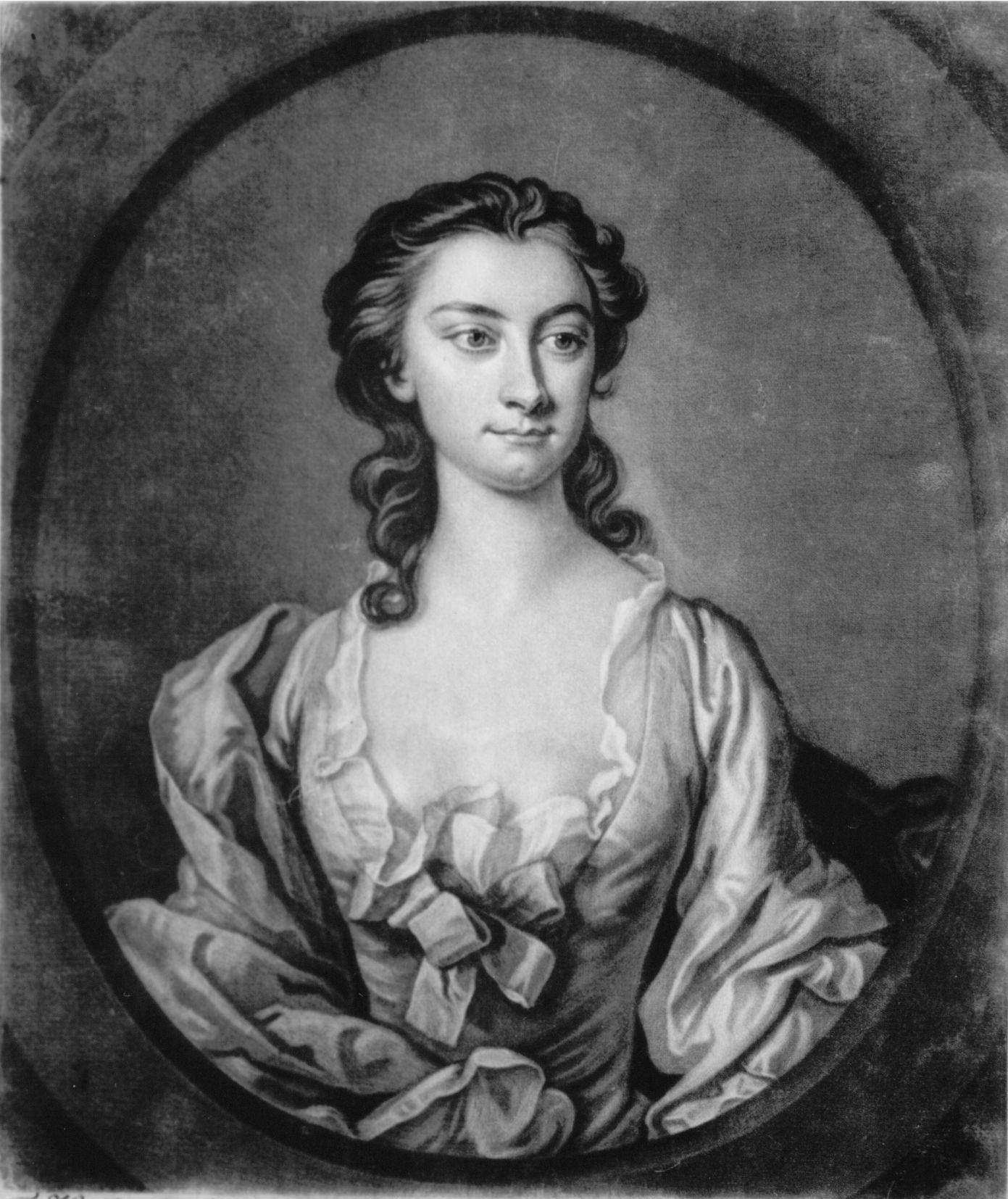
The best-known story of the premiere concerns Susannah Cibber. When she sang "He was despised," according to a frequently repeated account, the Reverend Patrick Delany, a friend of Swift's, rose and exclaimed, "Woman, for this be all thy sins forgiven thee." No report from 1742 records the words. The earliest known version, published by the actor and bookseller Thomas Davies in 1780, credits the remark to an unnamed bishop, and Davies himself declined to vouch for it. The familiar wording and the attribution to Delany appear to be later embellishments.[17]
Handel gave a second performance of Messiah on 3 June, advertised as "the last Performance of Mr. Handel's, during his Stay in this Kingdom."[18] In August the Dublin News-Letter reported that "the celebrated Mr. Handel" had embarked on one of the Chester trading ships, bound for Parkgate on the English side of the Irish Sea.[19] Back in London that September, he told Jennens he had not yet decided whether to give oratorios there that winter, though he was "certain" he would be giving them in Ireland a year later.[20] He never went back to Ireland.
The Playhouse Problem
London proved a harder audience. When Handel finally brought Messiah to the Covent Garden theatre on 23 March 1743, during his Lenten oratorio season, the advertisements did not use its title. They announced only "A NEW SACRED ORATORIO."[21] Handel left no explanation. In the weeks before, the question of whether biblical words could properly be sung in a theatre, by performers who on other nights appeared in comedies, had become a public controversy. On 19 March, four days before the first performance, a correspondent signing himself "Philalethes" put the case in the Universal Spectator: "An Oratorio either is an Act of Religion, or it is not; if it is, I ask if the Playhouse is a fit Temple to perform it in."[22] On 16 April the same paper printed an even sharper attack.[23] A single printed wordbook from these first London performances survives, in the Morgan Library in New York.[24]
There were only three performances that season, on 23, 25, and 29 March. So short a run suggests a modest reception, and the most bitter surviving verdict came from the work's own librettist. Jennens was stung that the premiere had gone to Dublin, and he was scornful of the wordbook printed there.[25] In January 1743, having seen the score, he complained to Holdsworth that "His Messiah has disappointed me, being set in great hast, tho' he said he would be a year about it, & make it the best of his Compositions." The following month he wrote that it was still in Handel's power "by retouching the weak parts to make it fit for a publick performance," but that Handel was "so lazy & so obstinate, that I much doubt the Effect."[26] Jennens did more than grumble. Handel's performing score contains many alterations to the words in Jennens's hand, some of which Handel accepted and some of which he rejected.[27]
The best-known story of this first London season is almost certainly a legend. According to tradition, King George II rose to his feet at the opening of the "Hallelujah" chorus, and the audience rose with him. No contemporary evidence places the king at any performance of Messiah. The story first appears in a letter written by the Scottish poet James Beattie in 1780, thirty-seven years after the event, and it was secondhand even then. The custom of standing seems to have grown up gradually.[28]
Lean Years and a Change of Audience
For several years after 1743, Messiah barely held a place in Handel's own seasons. His energy went instead into a remarkable series of new oratorios: Samson, Semele, Joseph and his Brethren, Belshazzar, Hercules, and, after the Jacobite rising of 1745, the patriotic Judas Maccabaeus, which became one of his greatest popular successes. He revived Messiah only once in these years, at the King's Theatre in the Haymarket in Holy Week 1745, when it was again advertised only as "the SACRED ORATORIO."[29] That summer even Jennens allowed that Handel had made "a fine Entertainment" of it, "though not near so good as he might & ought to have done."[30] The work did not disappear in the meantime. With Handel's permission, the Charitable Musical Society in Dublin began giving it annually from 1744, the Academy of Ancient Music performed it at the Crown and Anchor Tavern in London in February 1744, and it was heard at Oxford in 1749.[31]
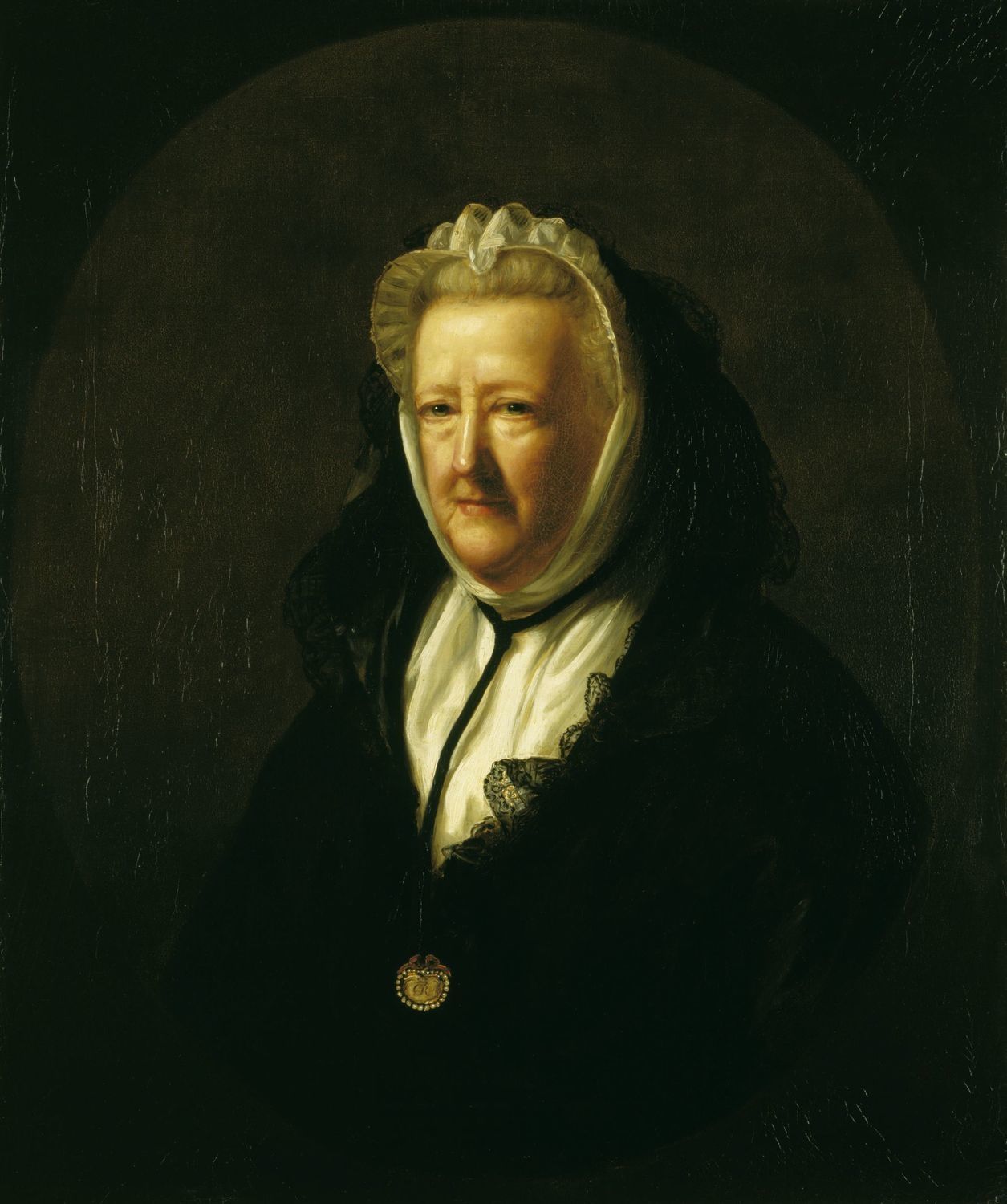
Messiah also kept a small circle of devoted admirers in London. One of them was Mary Delany, wife of Patrick Delany and a close friend of the composer. In March 1744 she wrote to her sister that she preferred Joseph "to every thing he has made, except the Messiah," and a week later, after the last night of the season, she lamented that it had ended with Saul: "I was in hopes of the Messiah."[32] On 23 March 1749, after a gap of four years, the General Advertiser announced "an Oratorio, call'd MESSIAH" for that evening at Covent Garden, its only performance of the season.[33] Among the singers was the soprano Giulia Frasi, who would sing in it for years to come.[34]
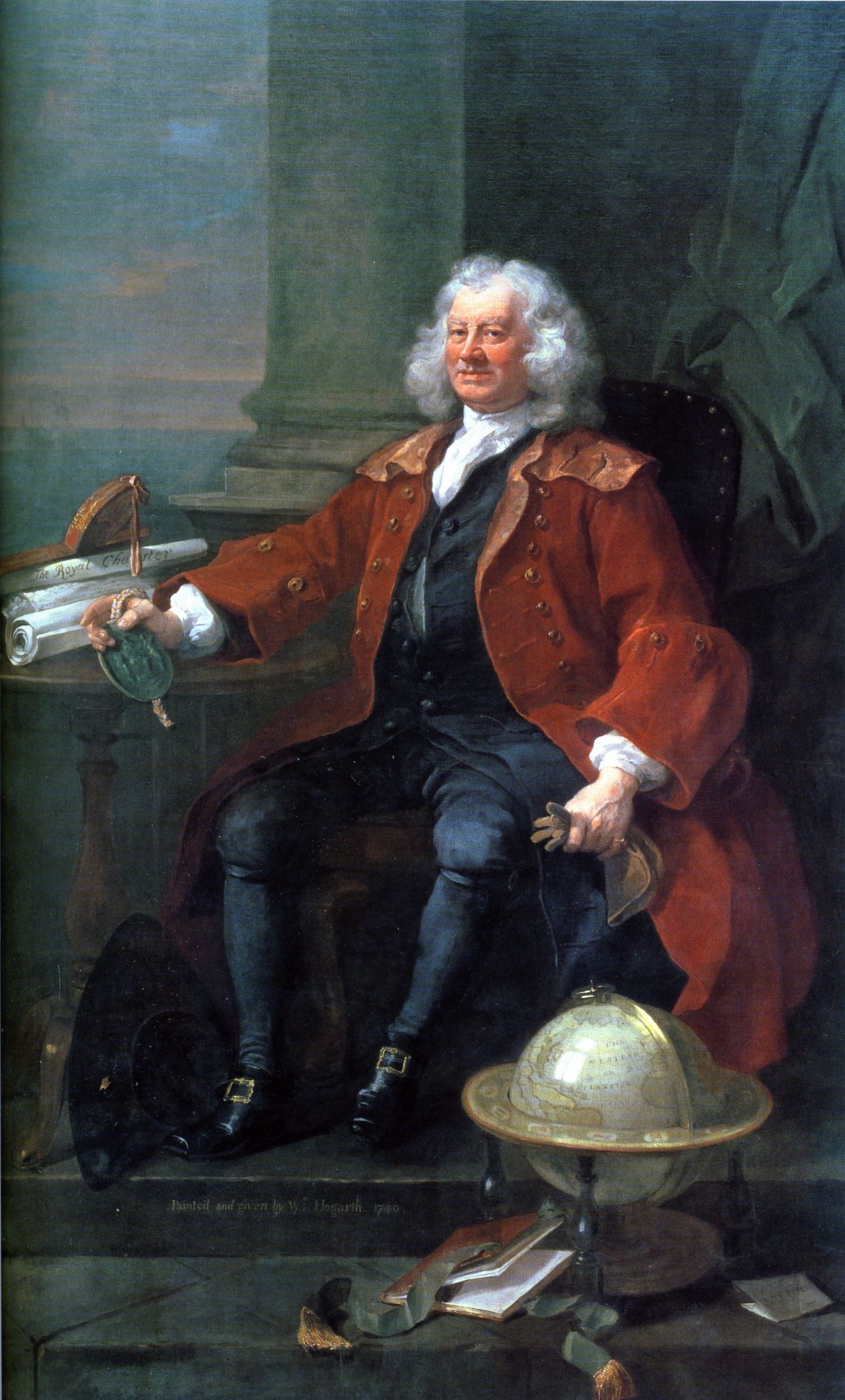
The turn came through charity, as in Dublin. In 1739 the retired sea captain Thomas Coram had won a royal charter for a hospital in London for abandoned infants, the Foundling Hospital, soon one of the most fashionable causes of the day. In May 1749 Handel offered the governors a benefit concert to help pay for the completion of the hospital's chapel. The concert included an anthem he had assembled for the occasion, "Blessed are they that considereth the poor," now known as the Foundling Hospital Anthem, which closed with the "Hallelujah" chorus borrowed from Messiah, though the chorus was not yet the universally familiar music it would later become. The Whitehall Evening-Post reported a thousand listeners "conveniently seated" in the unfinished chapel.[35] The concert was a success, and the following year the hospital made Handel a governor, waiving the usual fee of £50.[36]
The Foundling Hospital
On 1 May 1750, Handel returned to the chapel to direct Messiah. The occasion was advertised as the opening of an organ he had given to the chapel. The London Evening-Post counted "upwards of 1100 Persons of Distinction" in the audience, and the Whitehall Evening-Post put the figure at 1,200.[37] Handel played an organ concerto himself. The new organ was poorly made, and the hospital replaced it in 1768.[38] From then on, performances of Messiah at the Foundling Hospital became an annual event. Even in 1751, when the death of the Prince of Wales closed the theatres, Handel was allowed to give two performances there, again to large audiences.[39]
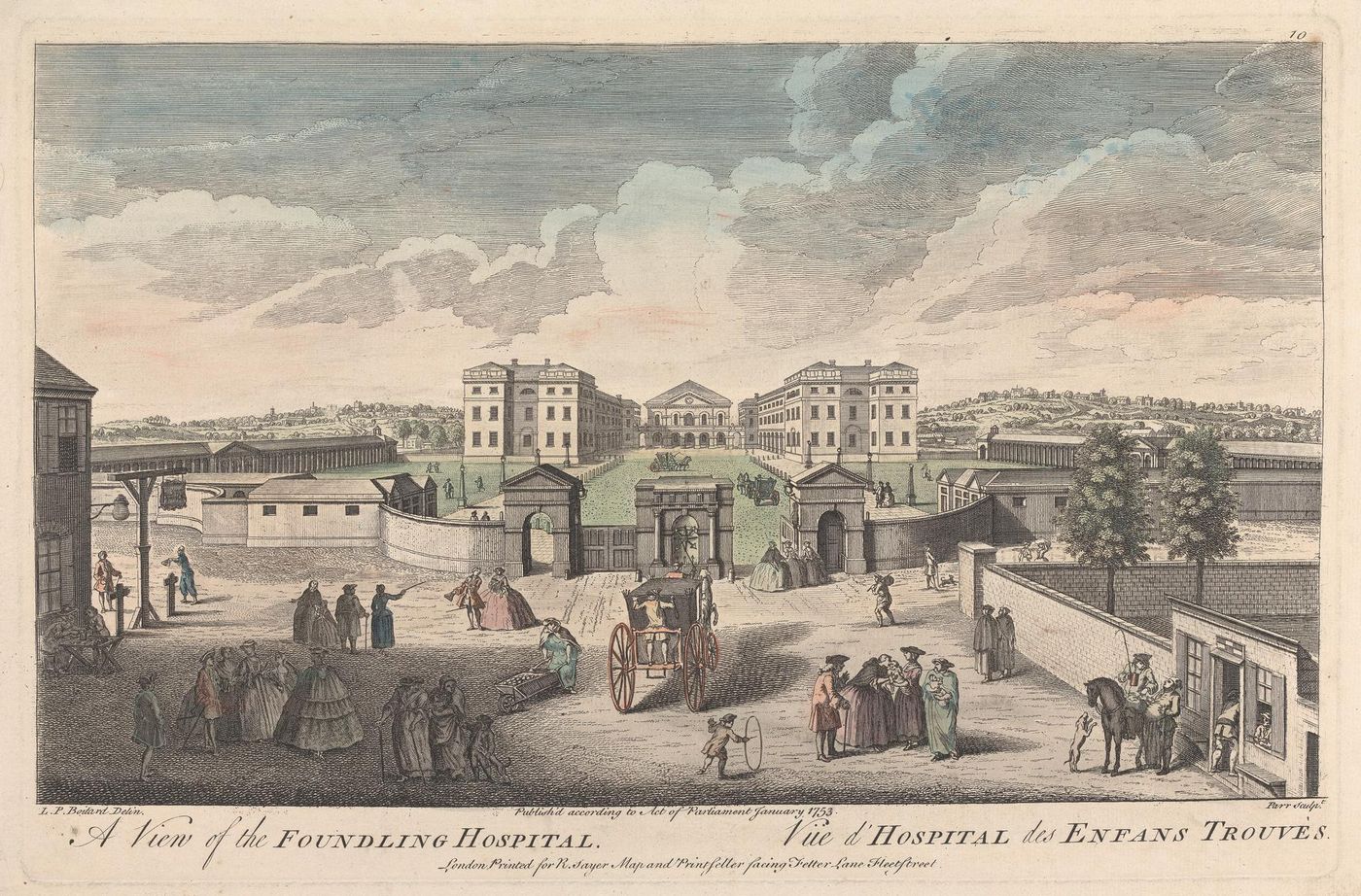
The arrangement suited both sides. The hospital gained a dependable income, and Handel gained a setting where the old objection to Messiah lost its force, since a charity chapel was not a playhouse. At the same time Messiah became a regular part of his Lenten seasons at Covent Garden, performed every year from 1750.
The Restless Score
Throughout these years Handel treated the score as working material and never fixed a single definitive version. Arias were transposed, rewritten, or reassigned to suit the singers of each season. New settings appeared in 1743, and the revivals of 1745 and 1749 brought further changes, among them the division of "He shall feed his flock" between alto and soprano.[40]
The most celebrated revisions came in 1750, when the alto castrato Gaetano Guadagni joined Handel's company. Handel composed new settings for him of "But who may abide the day of his coming," "Thou art gone up on high," and "How beautiful are the feet." The new "But who may abide" transformed the piece. Originally a fairly simple aria for bass, it gained a rapid, virtuosic section to set the words "For he is like a refiner's fire," written to show off Guadagni's agility, and this 1750 setting is the version most often heard today.[41] In seasons without Guadagni, Handel gave his arias to female altos and sopranos, so the same music moved between voices from year to year.[42] The version Handel used around 1752, with Guadagni's arias given to a female alto, is the closest of his own versions to the text usually heard today. The familiar modern text, however, reflects later editorial decisions, including Ebenezer Prout's influential edition of 1902, rather than a single definitive version fixed by Handel.[43]
"How Dark, O Lord"
The revisions of 1750 were among the last substantial changes Handel made to the work, because his sight was beginning to fail. In January 1751 he started composing a new oratorio, Jephtha, to a libretto by Thomas Morell. On 13 February, at the end of the chorus "How dark, O Lord, are thy decrees," he stopped and wrote a note in German in the margin of his manuscript, recording that he had reached that point and could go no further because of the weakening of the sight of his left eye.[44] Handel visited the spas at Bath and Cheltenham, recovered enough to resume work in the summer, and finished the oratorio, but his handwriting in the later pages is shaky.[45]
"Did you hear that poor Handel has lost the sight of one of his eyes?" Mary Delany asked her sister in November 1751.[46] In August 1752 the Covent-Garden Journal reported that he had been "seized a few Days ago with a Paralytick Disorder in his Head, which has deprived him of Sight."[47] In November the General Advertiser announced that he had been "couch'd by William Bromfield, Esq; Surgeon to her Royal Highness the Princess of Wales," with "all imaginable Hopes of Success." Couching was an old operation in which a needle was used to push the clouded lens of the eye out of the line of sight.[48] Mrs. Delany thought at once of the blind hero's lament in Handel's own Samson: "Poor Handel! how feelingly must he recollect the 'total eclipse.'"[49] Any improvement was brief. In January 1753 the London Evening-Post reported that "Mr. Handel has at length unhappily quite lost his Sight."[50]
Blindness effectively ended Handel's composing, but it did not end his public life. His hands still served him, and he went on playing organ concertos in public long after he could no longer read a score. The annual Messiah at the Foundling Hospital continued. On 1 May 1753, with Handel now blind, the London Magazine reported "above 800 coaches and chairs" at the chapel, and the hospital's minutes recorded ticket receipts of £706 3s. 10d.[51]
May 1754
The Foundling Hospital performance of 15 May 1754 brings the twelve-year arc into focus, because for the first time the hospital's records preserve a detailed account of who took part. Published totals vary with how soloists, chorus members, and keyboard players are counted, but modern reconstructions agree on an orchestra of about thirty-eight, including four oboes, four bassoons, two trumpets, two horns, and drums. The chorus numbered nineteen, six of them boy trebles from the Chapel Royal, and there were five soloists. The payments also covered servants, organ blowers, porters, and the constables hired to keep order. Among the singers were John Beard, Giulia Frasi, Caterina Galli, and Christina Passerini, all from London's theatres and opera. Beard and the organist John Christopher Smith gave their services free. The treasurer recorded receipts from 1,219 tickets, together with cash, amounting to £666 15s., and an outlay of £58 17s. 6d. for musicians, singers, constables, and other costs, leaving the hospital a profit of a little over £607.[52] Frasi had been singing in Messiah since 1749, while Passerini was new to London.[53] The Daily Advertiser reported the next day that the oratorio had been performed "under the Direction of George Frederick Handel, Esq;" before "a numerous and polite Audience," and that the blind composer "opened the second Act with a Concerto on the Organ."[54] Mrs. Delany, who was there, had never heard the work "so well performed" and was moved by "the sight of so many poor children brought up."[55]
The hospital kept such lists for its Messiah performances until 1777, but those of 1754, 1758, and 1759 are the only detailed contemporary record of the singers and players Handel himself used in his oratorio performances.[56] The sixty or so performers made up a body far smaller than the massed choirs and orchestras that sang Messiah in later centuries. The 1754 performance is a snapshot of Messiah as Handel finally knew it, its arias tailored over twelve seasons to particular singers and its proceeds given to children the city had abandoned.
On 4 August 1757 Handel added a codicil to his will leaving the hospital "a fair copy of the Score and all the Parts of my oratorio called The Messiah," so that the charity could go on performing it after his death.[57] A note written soon after his death records that "Mr. Handel Perform'd the Messiah at Covent Ga[rden] Apr. 6th: 1759," and that he played a concerto on the harpsichord.[58] He died at his house in Brook Street, where he had written the oratorio eighteen years earlier. A friend, James Smyth, wrote that he died "on Saturday last at 8 o'clock in the morn," which was 14 April, the day before Easter, though the Gentleman's Magazine gave the date as the 12th. Smyth added, "He has left the Messiah to the Foundling Hospital," by which he meant the fair copy of the score and parts named in the will.[59]
Why the Twelve Years Mattered
When Handel set out for Dublin in 1741, his operatic enterprise had failed and his future in the oratorio was uncertain. Dublin showed that a sacred concert work in English, built from scripture rather than drama, could draw a large audience in a charitable setting, though London accepted it more slowly. The work's link with charity answered the objection that had dogged its London debut. By the 1750s the oratorio that the Universal Spectator had thought unfit for a playhouse had become a fashionable civic ritual, and by the end of the decade choirs in Oxford, Salisbury, Bath, Bristol, and the cathedral cities of the Three Choirs Festival were performing it too.[60]
Because Handel kept reshaping the score for the singers in front of him, the work the world came to know owed as much to the seasons of 1743 to 1752 as to Brook Street. And because he left a score and parts to the hospital, his later choices lived on after him. In 1785, the music historian Charles Burney looked back on the oratorio's career and wrote that it had "fed the hungry, clothed the naked, fostered the orphan, and enriched succeeding managers of the Oratorios, more than any single production in this or any country."[61] His sentence reaches back to Fishamble Street, where ladies left their hoops at home for the relief of the city's prisoners. The habit of turning Handel's music into charity began in that room. Together with Handel's constant revision and the survival of his score and parts, that habit carried Messiah through its uncertain first years.
Places in this Story
The places this story moves through, in order — follow them on the interactive map →
- Musick Hall, Fishamble Street, Dublin April 13, 1742
About seven hundred people, the ladies without hoops and the gentlemen without swords, crowd into a hall built for six hundred to hear the first performance of Messiah, given for charity.
- St. Patrick's Cathedral, Dublin Spring 1742
Singers from both Dublin cathedrals join the premiere. Accounts differ over whether Dean Jonathan Swift set conditions on lending his choir or tried to stop it.
- Mercer's Hospital, Stephen Street, Dublin April 1742
One of three charities that share the premiere's proceeds, about £127 each, with the Charitable Infirmary and the relief of imprisoned debtors.
- Parkgate, Cheshire August 1742
Handel sails from Dublin on a Chester trading ship bound for Parkgate. He never returns to Ireland.
- Covent Garden Theatre, London March 23, 1743
Messiah reaches London, advertised only as "A NEW SACRED ORATORIO" amid a public quarrel over sacred words in a playhouse. It is given just three times that season.
- Crown and Anchor Tavern, Strand, London February 1744
The Academy of Ancient Music performs Messiah at the tavern, well outside Handel's own theatre seasons.
- King's Theatre, Haymarket, London April 1745
Handel revives the work in Holy Week, again advertised only as "the SACRED ORATORIO," then sets it aside for four years.
- Oxford 1749
Messiah is heard at Oxford, part of its slow spread beyond Handel's own London seasons.
- Foundling Hospital Chapel, Bloomsbury, London 1749–1754
Handel gives a benefit concert in 1749 and directs Messiah here every spring from 1750. On 15 May 1754, now blind, he plays an organ concerto at a performance whose musicians are recorded in full.
- Brook Street, Mayfair, London February 13, 1751
Composing Jephtha at home, Handel stops at the chorus "How dark, O Lord, are thy decrees" and notes in the margin that the sight of his left eye has failed.
- Bath, Somerset 1751
Handel visits the spas at Bath and Cheltenham in hope of a cure, recovering enough to finish Jephtha that summer.
Frequently Asked Questions
When and where was Handel's Messiah first performed?
Messiah was first performed at noon on Tuesday, 13 April 1742, in William Neale's new Musick Hall on Fishamble Street, Dublin. It was a charity concert for imprisoned debtors, Mercer's Hospital, and the Charitable Infirmary. About seven hundred people squeezed into a room built for six hundred, and the receipts of about £400 were shared equally among the three charities.
How long did it take Handel to write Messiah?
Just over three weeks. Handel began the score on 22 August 1741 at his house in Brook Street, London, and finished it on 14 September. His autograph manuscript, now in the British Library, carries his own dates. He worked quickly partly by reusing music, including Italian duets he had written that July, which became choruses such as "For unto us a child is born."
Who wrote the words for Handel's Messiah?
Charles Jennens, a wealthy Leicestershire landowner who had already written the libretto of Handel's Saul. Jennens chose and arranged passages from the King James Bible and the Psalms of the Book of Common Prayer. He hoped the work would excel all Handel's earlier compositions, and he was later bitterly critical of how quickly Handel had set it.
Why do audiences stand for the Hallelujah chorus?
Tradition says King George II rose to his feet at the opening of the "Hallelujah" chorus at the first London performance in 1743, and the audience followed. No contemporary evidence places the king at any performance of Messiah. The story first appears secondhand in a letter by the poet James Beattie in 1780, and the custom of standing seems to have grown up gradually.
Why was Messiah controversial when it reached London?
Many people thought scripture should not be sung in a theatre by performers who appeared in comedies on other nights. Days before the London premiere at Covent Garden on 23 March 1743, a writer in the Universal Spectator asked whether "the Playhouse is a fit Temple" for an oratorio. Handel's advertisements avoided the title altogether, calling it only "A NEW SACRED ORATORIO," and the work had just three performances that season.
What is the connection between Messiah and the Foundling Hospital?
From 1750 Handel directed Messiah every spring in the chapel of London's Foundling Hospital, a home for abandoned children, to raise money for the charity. The performances drew more than a thousand listeners and turned Messiah into a fashionable civic event. Handel became a governor of the hospital, and in a 1757 codicil to his will he left it a fair copy of the score and parts so it could keep performing the work.
Which version of Messiah is performed today?
No single version. Handel rewrote and reassigned arias for different singers almost every season. The most famous change came in 1750, when he wrote the fast "refiner's fire" section of "But who may abide" for the castrato Gaetano Guadagni. Modern performances usually follow a text close to the version Handel used around 1752, standardized by later editors such as Ebenezer Prout in 1902.
Bibliography
British Library, London. Add. MS 33351, f. 24r. Manuscript note on Handel's last performance, 1759.
Foundling Museum, London. Gerald Coke Handel Collection, acc. no. 2702, "Jennens Holdsworth Letters 2." Letters of Charles Jennens to Edward Holdsworth, 1741–1745.
Covent-Garden Journal (London), 1752.
Daily Advertiser (London), 1743, 1754.
Dublin Journal (George Faulkner), 1741–1744.
Dublin News-Letter, 1742.
General Advertiser (London), 1745, 1749, 1752.
Gentleman's Magazine (London), 1759.
London Evening-Post, 1750, 1753.
London Magazine: Or, Gentleman's Monthly Intelligencer, 1753.
Old England: Or, The National Gazette (London), 1751.
Universal Spectator, and Weekly Journal (London), 1743.
Whitehall Evening-Post (London), 1749, 1750.
All newspaper and periodical items are cited from the transcriptions in the Handel Reference Database unless otherwise noted.
Aberdeen Bach Choir. "Off to Dublin." Program notes, December 2019. https://aberdeenbachchoir.com/December2019/ProgrammeNotes04.shtml. Accessed October 20, 2026.
Barbican Centre. "The English Concert – Handel: The Philanthropist." https://www.barbican.org.uk/node/187459. Accessed October 20, 2026.
Boston Baroque. "George Frideric Handel: Jephtha, HWV 70." Program notes. https://baroque.boston/handel-jephtha. Accessed October 20, 2026.
Brilliant Classics. Notes to Handel, Messiah. Choir of King's College, Cambridge, Brandenburg Consort. Brilliant Classics 94127. https://www.brilliantclassics.com/media/912090/94127-Messiah-Download-file.pdf. Accessed October 20, 2026.
British Library. "Photographs of a letter from George Frideric Handel to Charles Jennens, dated Dublin, 29 December 1741." MUS RP 977. https://searcharchives.bl.uk/catalog/040-001594093. Accessed October 20, 2026.
Burney, Charles. An Account of the Musical Performances in Westminster-Abbey, and the Pantheon, May 26th, 27th, 29th; and June the 3rd, and 5th, 1784, in Commemoration of Handel. London, 1785. Internet Archive, https://archive.org/details/accountofmusical00burn. Accessed October 20, 2026. First-edition record, Morgan Library & Museum, https://www.themorgan.org/music-manuscripts-and-printed-music/69787. Accessed October 20, 2026.
Burrows, Donald. "Correcting the 'Grossest Faults': Charles Jennens and the Composition of Handel's Messiah." Music & Letters 104, no. 4 (2023): 533–66. https://doi.org/10.1093/ml/gcad035.
Burrows, Donald. Handel: Messiah. Cambridge Music Handbooks. Cambridge: Cambridge University Press, 1991. Online edition, https://www.cambridge.org/core/books/handel-messiah/preface/F2BDC007C55EF77619BCAA1845C2BDEE. Accessed October 20, 2026.
Burrows, Donald, Helen Coffey, John Greenacombe, and Anthony Hicks, eds. George Frideric Handel: Collected Documents. Vol. 4, 1742–1750. Cambridge: Cambridge University Press, 2020. Excerpt, https://assets.cambridge.org/97811070/80218/excerpt/9781107080218_excerpt.pdf. Accessed October 20, 2026.
Burrows, Donald. "Lists of Musicians for Performances of Handel's Messiah at the Foundling Hospital, 1754–1777." Royal Musical Association Research Chronicle 43 (2010): 85–109.
Chrissochoidis, Ilias. "Handel Recovering: Fresh Light on His Affairs in 1737." Eighteenth-Century Music 5, no. 2 (2008): 237–44. https://discovery-pp.ucl.ac.uk/19071/1/19071.pdf. Accessed October 20, 2026.
Classical-Music.com. "Handel Messiah: The Work That Caused Traffic Jams at Its Dublin Premiere." BBC Music Magazine. https://www.classical-music.com/articles/hallelujah-story-handel-s-messiah. Accessed October 20, 2026.
Classical Net. "Messiah – Arranged by Mozart." https://www.classical.net/music/comp.lst/works/handel/messiah/mozart.php. Accessed October 20, 2026.
Davies, Thomas. Memoirs of the Life of David Garrick. London, 1780.
Delany, Mary. The Autobiography and Correspondence of Mary Granville, Mrs. Delany. Edited by Lady Llanover. Series 1, vols. 2–3. London: Richard Bentley, 1861. Excerpts via the Listening Experience Database, https://led.kmi.open.ac.uk/entity/lexp/1434636999733. Accessed October 20, 2026.
Deutsch, Otto Erich. Handel: A Documentary Biography. London: Adam and Charles Black, 1955.
Dublin HandelFest. "About." Irish Baroque Orchestra. https://www.dublinhandelfest.com/about. Accessed October 20, 2026.
Foundling Museum. "Belongings: Handel's Will." https://foundlingmuseum.org.uk/object/belongings-handels-will/. Accessed October 20, 2026.
Goethe-Institut Irland. "Traces in Dublin: The Premiere of Handel's 'Messiah.'" https://www.goethe.de/ins/ie/en/kul/sup/deutsche-spuren-in-irland/25701746.html. Accessed October 20, 2026.
Gwynn, Dominic. "The Organs Used by George Frederick Handel." Goetze & Gwynn. https://www.goetzegwynn.co.uk/organs-used-george-frederick-handel-dominic-gwynn/. Accessed October 20, 2026.
Handel, George Frideric. Messiah, HWV 56. Edited by Ton Koopman and Jan H. Siemons. Stuttgart Handel Editions, Urtext. Carus 55.056. Stuttgart: Carus, 2009. https://www.carus-verlag.com/5505600. Accessed October 20, 2026.
Handel Reference Database. Edited by Ilias Chrissochoidis. Annual compilations "1741," "1742," "1743," "1744," "1745," "1749," "1750," "1751," "1752," "1753," "1754," and "1759." https://web.stanford.edu/~ichriss/HRD/1741.htm (and corresponding pages for each year). Accessed October 20, 2026.
Hugill, Robert. "Messiah: The Sixteen at the Barbican." Planet Hugill, December 2012. https://www.planethugill.com/2012/12/messiah-sixteen-at-barbican.html. Accessed October 20, 2026.
KDHX. "Symphony Preview Redux: Stand-Up Routine." https://kdhx.org/articles/classical/1370-symphony-preview-redux-stand-up-routine. Accessed October 20, 2026.
Lamott, Bruce. "Messiah and London's Foundling Hospital." Philharmonia Baroque Orchestra & Chorale. https://philharmonia.org/learn-and-listen/program-notes/messiah-with-mcgegan/. Accessed October 20, 2026.
Lee, Jonathan Rhodes. "From Amelia to Calista and Beyond: Sentimental Heroines, 'Fallen' Women and Handel's Oratorio Revisions for Susanna Cibber." Cambridge Opera Journal 27, no. 1 (2015): 1–34.
London Stage Database. "London Stage Event: 23 March 1743 at Covent Garden." https://londonstagedb.uoregon.edu/event.php?id=21716. Accessed October 20, 2026.
London Stage Database. "London Stage Event: 1 May 1753 at the Chapel of the Foundling Hospital." https://londonstagedatabase.uoregon.edu/event.php?id=26591. Accessed October 20, 2026.
London Stage Database. "London Stage Event: 15 May 1754 at the Chapel of the Foundling Hospital." https://londonstagedatabase.uoregon.edu/event.php?id=27092. Accessed October 20, 2026.
Ludwig Van Toronto. "Charles Jennens: The Unsung Inspiration behind George Frideric Handel's Messiah." December 16, 2012. https://www.ludwig-van.com/toronto/2012/12/16/charles-jennens-the-unsung-inspiration-behind-george-frideric-handels-messiah/. Accessed October 20, 2026.
Morgan Library & Museum. "Messiah: An Oratorio / Set to Musick by George-Frederic Handel." London: Thos. Wood, 1743. Record 112556. https://themorgan.org/node/1215451. Accessed October 20, 2026.
Music Academy Online. "Messiah, Part I: But Who May Abide." https://www.musicacademyonline.com/programs/messiah_06.php. Accessed October 20, 2026.
Music Academy Online. "What the Dublin Journal Said about the 'Messiah.'" https://www.musicacademyonline.com/newsroom/favorite_messiah_12-23-2006.php. Accessed October 20, 2026.
My Scena. "Messiah Aria Primer: 'But Who May Abide': Alto, Countertenor, Mezzo … or Bass?" https://myscena.org/?p=1102085. Accessed October 20, 2026.
Norman, Gertrude, and Miriam Lubell Shrifte, eds. Letters of Composers: An Anthology, 1603–1945. New York, 1946; repr. 1979. Excerpt via the Listening Experience Database, https://led.kmi.open.ac.uk/entity/lexp/1424645491538. Accessed October 20, 2026.
OUPblog. "Handel Conducts London Premiere of Messiah." March 23, 2012. https://blog.oup.com/2012/03/handel-conduct-london-premiere-messiah/. Accessed October 20, 2026.
Predota, Georg. "On This Day 13 April: Handel's Messiah Was Premiered." Interlude, April 13, 2022. https://interlude.hk/?p=108801. Accessed October 20, 2026.
Providence Singers. "Messiah Myths." https://www.providencesingers.org/post/messiah-myths. Accessed October 20, 2026.
Saskatoon Symphony Orchestra. "Handel's Messiah Premiere." https://saskatoonsymphony.org/handels-messiah-premiere/. Accessed October 20, 2026.
The Etude. "The First Performance of Handel's 'Messiah.'" November 1915. https://etudemagazine.com/etude/1915/11/the-first-performance-of-handels-messiah.html. Accessed October 20, 2026.
The London Stage, 1660–1800. Part 4, 1747–1776. Season 1753–1754, p. 428. https://londonstagedatabase.uoregon.edu/images/pdfs/vol4-1/653.pdf. Accessed October 20, 2026.
"The Subject Is Messiah." Booklet essay for Handel, Messiah. John Nelson, conductor. Erato/Warner Classics, 2023. https://www.warnerclassics.com/sites/default/files/2023-11/5054197741685%20Handel_Messiah_John_Nelson.pdf. Accessed October 20, 2026.
Vickers, David. "Handel's Messiah: A Complete Guide to the Best Recordings." Gramophone. https://gramophone.co.uk/articles/handel-s-messiah-a-complete-guide-to-the-best-recordings. Accessed October 20, 2026.
Vickers, David. "The Story behind the Triumphant Premiere of Handel's Messiah." Gramophone, April 10, 2015. https://gramophone.co.uk/feature/the-story-behind-the-triumphant-premiere-of-handels-messiah. Accessed October 20, 2026.
Citations
- Faulkner's Dublin Journal, no. 1651, 13–17 April 1742, [2], as transcribed in Handel Reference Database, "1742," and reprinted in "The First Performance of Handel's 'Messiah,'" The Etude, November 1915. The same report gives the attendance of about seven hundred in a room built for six hundred. ↑
- Ilias Chrissochoidis, "Handel Recovering: Fresh Light on His Affairs in 1737," Eighteenth-Century Music 5, no. 2 (2008): 237–44. ↑
- Charles Jennens to Edward Holdsworth, 10 July 1741, Foundling Museum, Gerald Coke Handel Collection, acc. no. 2702, item 72, f. 2, as listed in Handel Reference Database, "1741"; full wording as quoted in "The Subject Is Messiah," booklet essay for Handel, Messiah, John Nelson, conductor (Erato/Warner Classics, 2023). ↑
- Donald Burrows, Handel: Messiah, Cambridge Music Handbooks (Cambridge: Cambridge University Press, 1991), appendix 2, "Messiah Sources." ↑
- "Messiah, Part I: But Who May Abide," Music Academy Online, program notes; "The Subject Is Messiah," Erato/Warner Classics booklet. ↑
- Jennens to Holdsworth, 2 December 1741, Gerald Coke Handel Collection, acc. no. 2702, item 74, f. 2r, as listed in Handel Reference Database, "1741"; wording as quoted in "Handel's Messiah Premiere," Saskatoon Symphony Orchestra. ↑
- Faulkner's Dublin Journal, 17–21 November 1741, as transcribed in Handel Reference Database, "1741." ↑
- Goethe-Institut Irland, "Traces in Dublin: The Premiere of Handel's 'Messiah'"; Georg Predota, "On This Day 13 April: Handel's Messiah Was Premiered," Interlude, April 13, 2022. ↑
- David Vickers, "The Story behind the Triumphant Premiere of Handel's Messiah," Gramophone, April 10, 2015. ↑
- George Frideric Handel to Charles Jennens, Dublin, 29 December 1741, in Letters of Composers: An Anthology, 1603–1945, ed. Gertrude Norman and Miriam Lubell Shrifte, 22–23, as transcribed in the Listening Experience Database. Photographs of the original letter are held by the British Library, MUS RP 977. ↑
- Handel to Jennens, 29 December 1741, quoted in Dublin HandelFest, "About." ↑
- Dublin Journal, 27 March 1742, quoted in "Handel Messiah: The Work That Caused Traffic Jams," Classical-Music.com. ↑
- "Handel Conducts London Premiere of Messiah," OUPblog, March 23, 2012; Aberdeen Bach Choir, "Off to Dublin," program notes, December 2019. ↑
- Dublin Journal, no. 1649, 6–10 April 1742, [2], as transcribed in Handel Reference Database, "1742." ↑
- Dublin Journal, 17 April 1742, as reprinted in "What the Dublin Journal Said about the 'Messiah,'" Music Academy Online. ↑
- Dublin Journal, no. 1830, 10–14 January 1743/4, 1, notice dated 14 January 1744 "From the Charitable Musical Society," transcribed in Handel Reference Database, "1744." ↑
- Jonathan Rhodes Lee, "From Amelia to Calista and Beyond: Sentimental Heroines, 'Fallen' Women and Handel's Oratorio Revisions for Susanna Cibber," Cambridge Opera Journal 27, no. 1 (2015): 1–34, discussing Thomas Davies, Memoirs of the Life of David Garrick (London, 1780). Lee traces the familiar wording to Victor Schoelcher's 1857 biography of Handel. ↑
- Dublin Journal, no. 1663, 25–29 May 1742, [2], as transcribed in Handel Reference Database, "1742." ↑
- Dublin News-Letter, 14 August 1742, as transcribed in Handel Reference Database, "1742." ↑
- Donald Burrows, Helen Coffey, John Greenacombe, and Anthony Hicks, eds., George Frideric Handel: Collected Documents, vol. 4, 1742–1750 (Cambridge: Cambridge University Press, 2020), Handel to Jennens, 9 September 1742, with editorial annotation, consulted in the publisher's online excerpt. ↑
- Daily Advertiser, no. 3799, 23 March 1743, [1], as transcribed in Handel Reference Database, "1743"; "London Stage Event: 23 March 1743 at Covent Garden," London Stage Database. ↑
- Philalethes, letter in the Universal Spectator, and Weekly Journal, no. 754, 19 March 1743, [1], as transcribed in Handel Reference Database, "1743." ↑
- Philalethes, letter in the Universal Spectator, and Weekly Journal, no. 758, 16 April 1743, [1], as transcribed in Handel Reference Database, "1743"; reprinted with minor omissions in Otto Erich Deutsch, Handel: A Documentary Biography, 567–68. ↑
- "Messiah: An Oratorio / Set to Musick by George-Frederic Handel" (London: Thos. Wood, 1743), Morgan Library & Museum, record 112556. ↑
- Burrows et al., Collected Documents, vol. 4, annotation to Handel to Jennens, 9 September 1742. ↑
- Jennens to Holdsworth, 17 January 1743 and 21 February 1743, Gerald Coke Handel Collection, acc. no. 2702, items 86 and 88, as listed in Handel Reference Database, "1743"; fuller wording as quoted in "Charles Jennens: The Unsung Inspiration behind George Frideric Handel's Messiah," Ludwig Van Toronto, December 16, 2012. ↑
- Donald Burrows, "Correcting the 'Grossest Faults': Charles Jennens and the Composition of Handel's Messiah," Music & Letters 104, no. 4 (2023): 533–66. ↑
- "Symphony Preview Redux: Stand-Up Routine," KDHX; Providence Singers, "Messiah Myths." ↑
- General Advertiser, no. 3244, 9 April 1745, [1], and no. 3246, 11 April 1745, [2], as transcribed in Handel Reference Database, "1745"; Burrows, Handel: Messiah, chap. 4, which places the 1744–45 season at the Haymarket theatre and the Messiah performances on the Tuesday and Thursday of Holy Week; David Vickers, "Handel's Messiah: A Complete Guide to the Best Recordings," Gramophone. ↑
- Jennens to Holdsworth, 30 August 1745, as summarized in Handel Reference Database, "1745," and quoted in "Handel's Messiah Premiere," Saskatoon Symphony Orchestra. ↑
- Burrows, Handel: Messiah, chap. 5, "Messiah in Other Hands," 47–54. ↑
- Mary Delany to Anne Dewes, 15 March 1743/4 and 22 March 1743/4, in The Autobiography and Correspondence of Mary Granville, Mrs. Delany, ed. Lady Llanover, ser. 1, vol. 2 (London: Richard Bentley, 1861), 282, 284, as transcribed in the Listening Experience Database. ↑
- General Advertiser, no. 4492, 23 March 1749, [1], as transcribed in Handel Reference Database, "1749"; Vickers, "Complete Guide to the Best Recordings." ↑
- Bruce Lamott, "Messiah and London's Foundling Hospital," Philharmonia Baroque Orchestra & Chorale. ↑
- Whitehall Evening-Post, no. 510, 25–27 May 1749, [1], as transcribed in Handel Reference Database, "1749." ↑
- "The English Concert – Handel: The Philanthropist," Barbican Centre. ↑
- London Evening-Post, no. 3514, 1–3 May 1750, [1]; Whitehall Evening-Post, no. 659, 1–3 May 1750, [1], both as transcribed in Handel Reference Database, "1750." ↑
- Old England: Or, The National Gazette, 11 April 1751, [2], as summarized in Handel Reference Database, "1751"; Dominic Gwynn, "The Organs Used by George Frederick Handel," Goetze & Gwynn. ↑
- Lamott, "Messiah and London's Foundling Hospital." ↑
- Vickers, "Complete Guide to the Best Recordings." ↑
- "Messiah Aria Primer: 'But Who May Abide,'" My Scena. ↑
- "Messiah – Arranged by Mozart," Classical Net. ↑
- Vickers, "Complete Guide to the Best Recordings," which identifies the 1752 version as the closest of Handel's own to the standard conflated text and credits Ebenezer Prout's edition of 1902 with codifying it. ↑
- "George Frideric Handel: Jephtha, HWV 70," Boston Baroque, program notes. ↑
- "George Frideric Handel: Jephtha, HWV 70," Boston Baroque. ↑
- Mary Delany to Anne Dewes, 16 November 1751, in The Autobiography and Correspondence of Mary Granville, Mrs. Delany, ed. Lady Llanover, ser. 1, vol. 3 (London: Richard Bentley, 1861), 59–61, as transcribed in Handel Reference Database, "1751." ↑
- Covent-Garden Journal, no. 58, 8 August 1752, [4], as transcribed in Handel Reference Database, "1752." ↑
- General Advertiser, no. 5622, 4 November 1752, [1], as transcribed in Handel Reference Database, "1752." ↑
- Delany to Dewes, 25 November 1752, in Autobiography and Correspondence, ser. 1, vol. 3, 177, as transcribed in Handel Reference Database, "1752." ↑
- London Evening-Post, no. 3940, 27–30 January 1753, [4], as transcribed in Handel Reference Database, "1753." ↑
- London Magazine 22 (1753): 241, as transcribed in Handel Reference Database, "1753"; "London Stage Event: 1 May 1753 at the Chapel of the Foundling Hospital," London Stage Database, citing the Foundling Hospital minutes as given in Deutsch, Handel. ↑
- "Handel's Messiah Premiere," Saskatoon Symphony Orchestra, which gives fifteen violins and five violas, a chorus of nineteen including six Chapel Royal trebles, and five soloists; Robert Hugill, "Messiah: The Sixteen at the Barbican," Planet Hugill, December 2012, and notes to Handel, Messiah, Choir of King's College, Cambridge, Brandenburg Consort (Brilliant Classics 94127), "The Orchestration," which give fourteen violins and six violas. Both string counts yield thirty-eight players including drums. Receipts and expenses are from "London Stage Event: 15 May 1754 at the Chapel of the Foundling Hospital," London Stage Database, and The London Stage, 1660–1800, pt. 4, 1747–1776, 428, both summarizing Deutsch, Handel, 750–52, whose summary gives a lower count of thirty-three musicians and eighteen singers. ↑
- Lamott, "Messiah and London's Foundling Hospital." ↑
- Daily Advertiser, no. 7280, 16 May 1754, [1], as transcribed in Handel Reference Database, "1754." ↑
- Delany to Dewes, May 1754, in Autobiography and Correspondence, ser. 1, vol. 3, 272, as transcribed in Handel Reference Database, "1754." ↑
- Donald Burrows, "Lists of Musicians for Performances of Handel's Messiah at the Foundling Hospital, 1754–1777," Royal Musical Association Research Chronicle 43 (2010): 85–109. ↑
- Foundling Museum, "Belongings: Handel's Will." ↑
- Manuscript note, British Library, Add. MS 33351, f. 24r, as transcribed in Handel Reference Database, "1759." ↑
- James Smyth to Bernard Granville, 17 April 1759, in Autobiography and Correspondence, ser. 1, vol. 3, 549–50; Gentleman's Magazine 29 (1759): 194; both as transcribed in Handel Reference Database, "1759." ↑
- Burrows, Handel: Messiah, chap. 5, "Messiah in Other Hands," 47–54. ↑
- Charles Burney, An Account of the Musical Performances in Westminster-Abbey, and the Pantheon … in Commemoration of Handel (London, 1785), "Sketch of the Life of Handel," [1]–38, quoted in Burrows, Handel: Messiah, preface. ↑