On Friday, June 27, 1788, George Wythe rose before the Virginia ratifying convention in Richmond to report the work of a committee. Two days earlier the delegates had voted 89 to 79 to ratify the new federal Constitution, and the narrow majority had agreed, as the price of that vote, to send the first Congress a list of recommended changes. The committee Wythe chaired had twenty members drawn from both camps, among them Patrick Henry, James Madison, Edmund Randolph, James Monroe, and George Mason.[1] The first item on its list was a declaration of rights, and the first article of that declaration asserted that men possessed certain natural rights they could not bargain away for their descendants, "among which are the enjoyment of life and liberty, with the means of acquiring, possessing, and protecting property, and pursuing and obtaining happiness and safety."[2] The language was twelve years old. Mason had written nearly every word of it in Williamsburg in the spring of 1776, and the editors of John Adams's papers describe the 1788 declaration as essentially a revised version of Virginia's 1776 bill of rights.[3]
The return of that sentence marked a turning point in a long argument. Between 1776 and 1788, Americans quarreled constantly about property: what it was, who could take it, and which government posed the greater danger to it. They inherited a simple formula, "life, liberty, and property," and in the year of independence they rewrote it, setting property beside happiness in some documents and dropping it entirely from the most famous one. During the war and the hard decade that followed, many leaders came to believe that the most serious threat to property came from their own state legislatures rather than from a distant king. The Constitution drafted in Philadelphia in 1787 answered that fear with blunt prohibitions on the states rather than with a declaration of rights, and the ratification struggle of 1788 forced the older language of natural rights back into the national conversation. This is the story of those twelve years.
An Inherited Formula
The phrase had a well-known pedigree. In his Second Treatise of Government, first printed with the date 1690, John Locke explained that people leave the insecurity of the state of nature and join together "for the mutual preservation of their lives, liberties and estates, which I call by the general name, property."[4] For Locke, then, "property" could mean the whole bundle of things a person rightly owned, including his own life and freedom, as well as land and goods, a double meaning that would complicate later arguments.
By the 1770s the colonists had made the formula their own. When the First Continental Congress adopted its Declaration and Resolves on October 14, 1774, the first resolution stated that the inhabitants of the colonies were "entitled to life, liberty and property" and that they had never surrendered to any foreign power the right to dispose of any of these without their consent.[5] The emphasis on consent explains why property stood at the center of the imperial crisis: if Parliament, in which no American sat, could take a colonist's money through taxes, then nothing he owned was secure, and a man whose property was insecure could hardly call himself free. Deciding what property meant inside the new American governments, and how far those governments could regulate or tax it, was a harder question, and it surfaced as soon as Americans began writing constitutions of their own.
Mason's Sentence
In May 1776 the Fifth Virginia Convention met in the Capitol at Williamsburg. On May 15 it unanimously instructed Virginia's delegates in Congress to propose independence and called for a committee to prepare a declaration of rights and a plan of government. George Mason, one of the colony's most respected political thinkers, arrived late because of illness, but he was quickly appointed to the committee and took charge of the drafting. He wrote the first draft of the declaration with some input from his colleague Thomas Ludwell Lee, and although the committee made many changes, the finished document was more Mason's work than anyone else's.[6] The committee reported a draft of eighteen articles to the full convention on May 27. John Dixon and William Hunter's Virginia Gazette printed it on June 1, and by June 6 it had traveled north to Philadelphia, where the Pennsylvania Evening Post published it while the Continental Congress was sitting in the same city.[7]
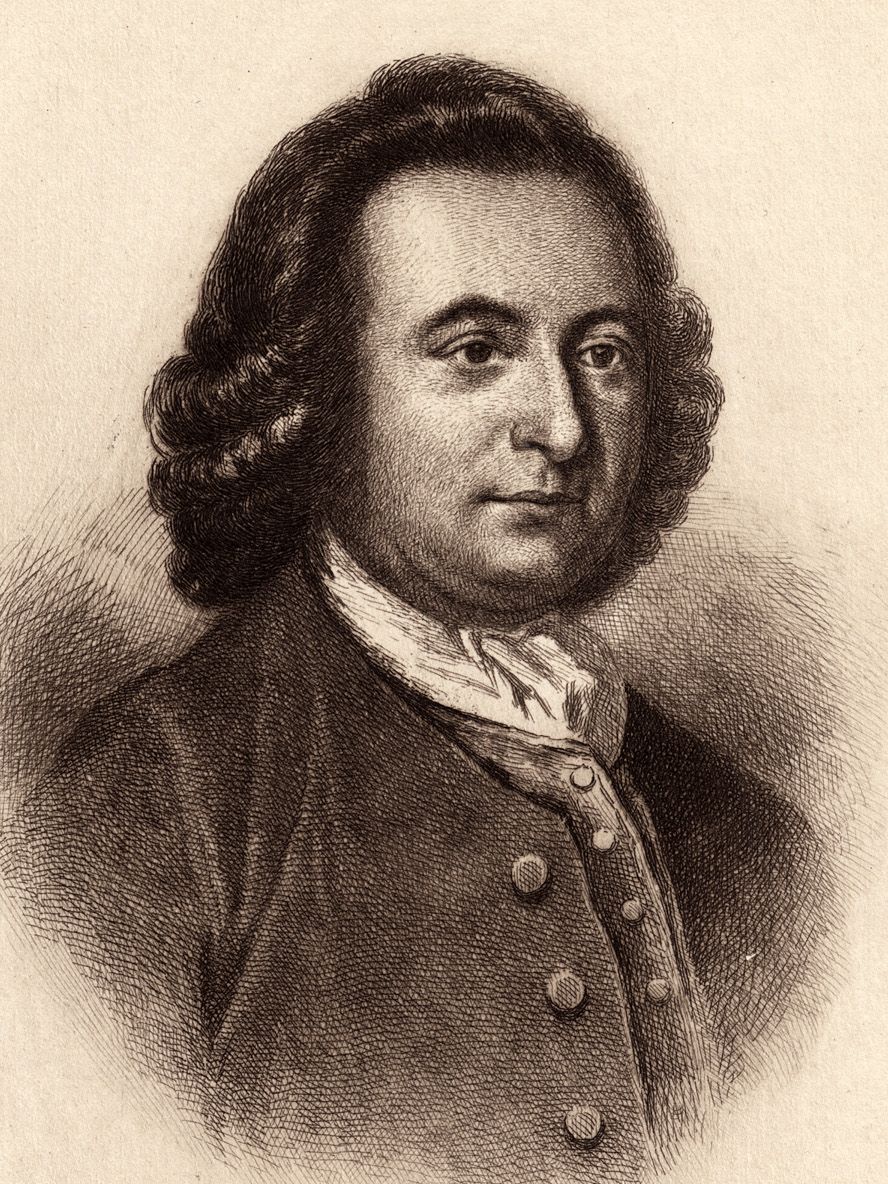
The opening article of that committee draft declared that "all men are born equally free and independant," and that they had certain inherent natural rights, "among which are the enjoyment of life and liberty, with the means of acquiring and possessing property, and pursuing and obtaining happiness and safety."[8] Locke's single word "property" had been broken into a process of acquiring and possessing, and a second goal, happiness and safety, had been set beside it.
The phrase that caused trouble in Williamsburg, however, was the one about equality. The delegate Robert Carter Nicholas objected that a declaration that all men were born free might be read to include enslaved men, and might even be understood to undermine slavery itself in a society built on it. Thomas Ludwell Lee, writing to his brother Richard Henry Lee on June 1, complained that "a certain set of Aristocrats" had kept the reformers "at bay on the first line."[9] The convention eventually settled on a compromise proposed by Edmund Pendleton. The final text said that men were "by nature equally free and independent" and held certain inherent rights "when they enter into a state of society," a qualification the delegates understood to exclude enslaved people, who were not regarded as members of that society.[10] Edmund Randolph and others assured doubters that slaves, not being constituent members of Virginian society, could claim no benefit from the principle.[11] The amended declaration passed unanimously on June 12, 1776.[12]
The episode exposed a fault line that would run through every later discussion of property in the period. For Virginia's planters, human beings were a large part of what they owned, and any broad statement of natural liberty threatened that property directly. Thirty years later the same George Wythe, by then sitting as chancellor, tried to use the declaration's language of equality on behalf of a family suing for their freedom. The state's Court of Appeals granted the family its freedom on a narrower ground but rejected Wythe's reading. Judge St. George Tucker wrote that the declaration had been framed "with a cautious eye to this subject" and was never meant "by a side wind to overturn the rights of property."[13]
Jefferson's Substitution
While the Virginians debated, Thomas Jefferson was in Philadelphia drafting a declaration of independence for the Continental Congress. His surviving draft, which he later labeled the "original Rough draught," states that all men "are created equal & independant," and that from that equal creation they derive rights "inherent & inalienable, among which are the preservation of life, & liberty, & the pursuit of happiness."[14] The editors of Jefferson's papers have shown that this famous document is itself a fair copy of an earlier composition draft, most of which has not survived.[15]
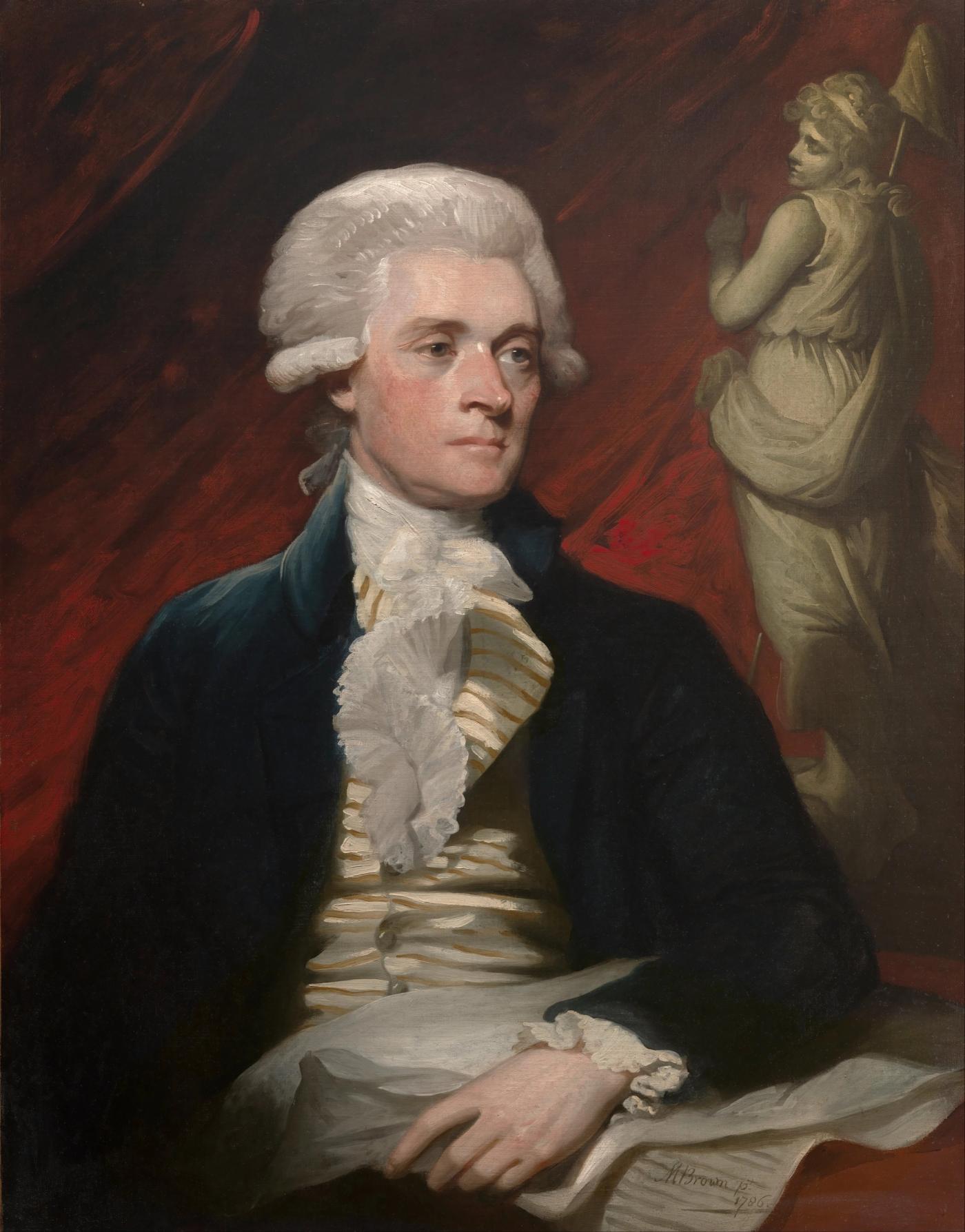
The resemblance to Mason's work is close enough that historians treat the Virginia declaration as one of Jefferson's principal sources, and the staff of Monticello describe Jefferson as almost certainly influenced by it.[16] Yet Jefferson made a striking change. Mason's sentence had named the means of acquiring and possessing property and the pursuing and obtaining of happiness together. Jefferson kept life, liberty, and happiness, and property disappeared.
Jefferson never explained the choice, and historians have read it in different ways.[17] Some argue that the substitution was less dramatic than it looks. The historian Jan Lewis described "the pursuit of happiness" as a broader idea of well-being and fulfillment, which she called "a more expansive sense of property," and noted that scholars still debate whether Jefferson meant individual happiness or the well-being of society as a whole.[18] A more dramatic explanation circulates in popular retellings. According to one frequently repeated account, Jefferson first wrote "property," then struck it out because in the southern colonies the word included enslaved people.[19] No surviving document supports this story. The earliest complete text already reads "the pursuit of happiness," although, since that text is a copy of a largely lost earlier draft, the record cannot settle every question about what Jefferson considered and rejected.
Whatever Jefferson intended, the Declaration of Independence left property out of its famous list of unalienable rights, even as its grievances against the king dealt with taxes imposed without consent and trade cut off. The task of defining property's place among a free people's rights passed to the new state constitutions.
The States Write It Down
Pennsylvania's constitutional convention met in Philadelphia through the summer of 1776, and John Dunlap printed the finished constitution that fall. Its declaration of rights borrowed Virginia's structure and sharpened its language. Its first article listed among men's natural rights "the enjoying and defending life and liberty, acquiring, possessing and protecting property, and pursuing and obtaining happiness and safety."[20] Its eighth article spelled out what that protection meant, declaring that every member of society had a right to be protected in "the enjoyment of life, liberty and property," that he was bound in return to pay his share of the cost of that protection, and that he could not have any part of his property taken or "applied to public uses, without his own consent, or that of his legal representatives."[21]
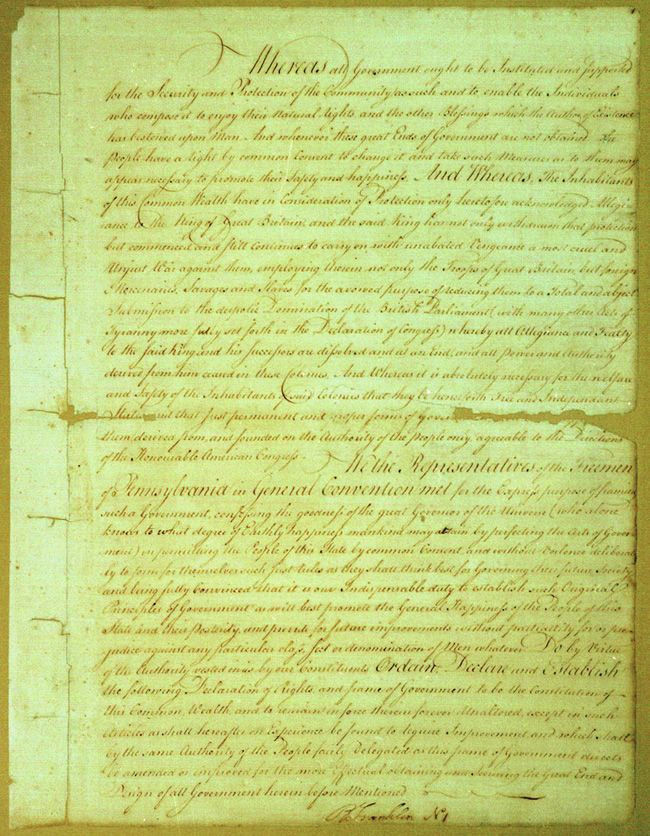
The Pennsylvania drafts also preserved a road not taken. A printed draft of the declaration that circulated among the delegates in late July and early August 1776, revised in manuscript by a hand its modern editors believe was Benjamin Franklin's, ended with a sixteenth article stating that "an enormous Proportion of Property vested in a few Individuals is dangerous to the Rights, and destructive of the Common Happiness, of Mankind," and that every free state therefore had a right to discourage such holdings by law. The convention deleted the article before adopting the final text and put in its place a right of the people to assemble and petition the legislature.[22] In 1776 some Americans evidently saw the defense of property and the limitation of great fortunes as compatible goals, though the majority were not prepared to write the second into fundamental law.
Massachusetts finished its constitution four years later, in 1780, and its declaration of rights followed the same pattern. Its first article listed the rights of "enjoying and defending their lives and liberties; that of acquiring, possessing, and protecting property; in fine, that of seeking and obtaining their safety and happiness." Its tenth article promised every individual protection "in the enjoyment of his life, liberty, and property, according to standing laws," and added that when public needs required that private property be taken for public use, the owner "shall receive a reasonable compensation therefor."[23] That clause anticipated a protection later added to the federal Constitution.
Property in Wartime
The Revolutionary War tested these declarations. Revolutionary governments seized property on a large scale, especially from Loyalists. North Carolina's legislature, for example, passed a series of confiscation acts beginning in 1776, both to punish Loyalists and to raise money. Most of the confiscated real estate was sold in 1786 and 1787, bringing the state roughly £600,000.[24] When Britain and the United States made peace in 1783, Article 5 of the Treaty of Paris provided only that Congress would "earnestly recommend" that the state legislatures restore confiscated estates belonging to British subjects and reconsider their confiscation laws in a spirit of conciliation.[25] The states, for the most part, ignored the recommendation.[26]
Congress and the states paid for much of the war by printing paper money, and the currency collapsed in value. Speaking in the Virginia ratifying convention in 1788, George Mason recalled that the old Continental money had depreciated "to a thousand for one."[27] Speculators who bought up the depreciated paper cheaply hoped to be repaid at something closer to face value. Inflation of this kind was itself a transfer of property carried out by public authority, and it left behind bitter disputes over who owed what to whom.
Debtors, Creditors, and the Crisis of the 1780s
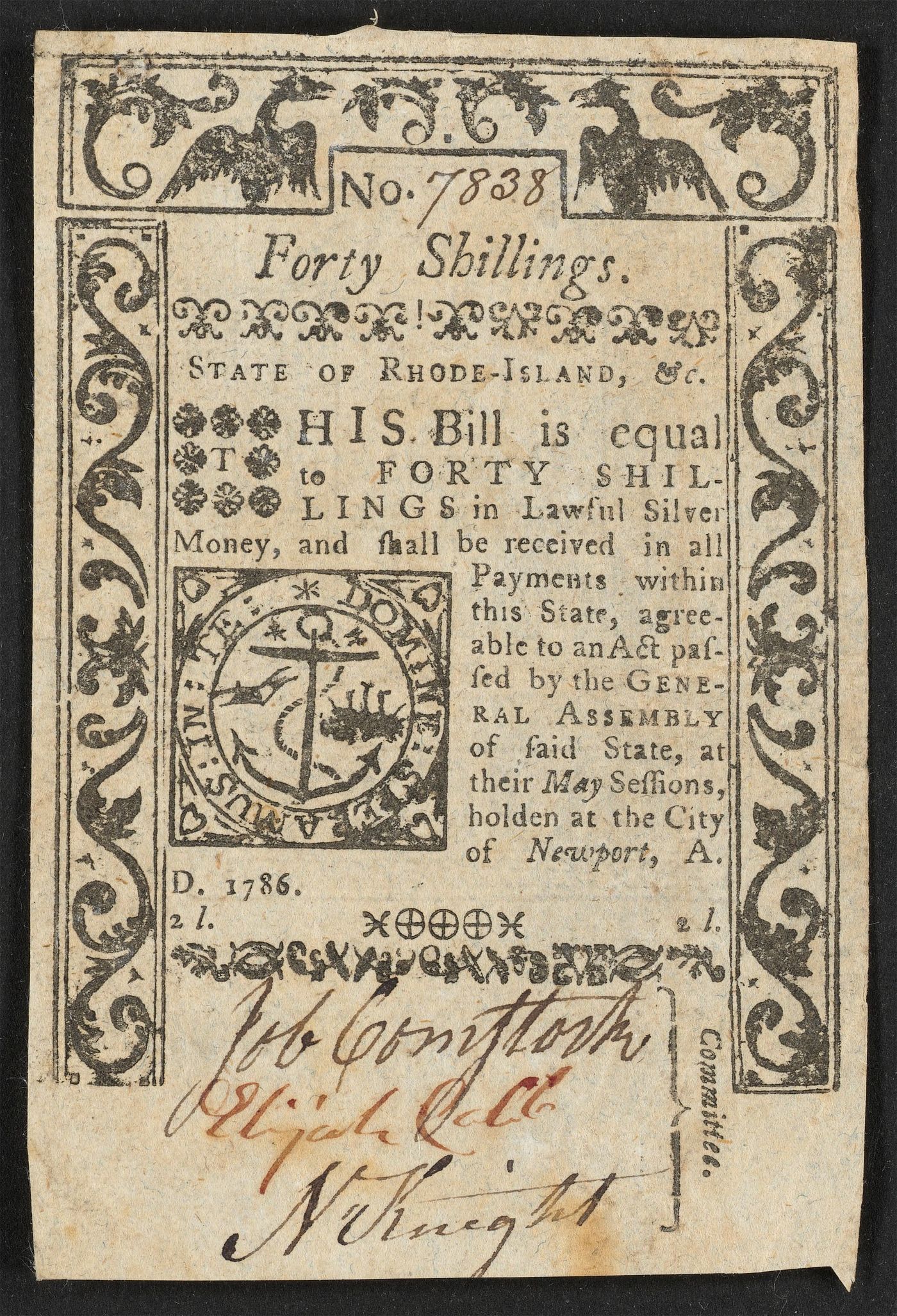
Peace brought no relief. Hard money was scarce, and governments and citizens alike were deep in debt. In state after state, the central question became whether legislatures should help debtors by printing new paper money, postponing debt collection, or allowing debts to be paid in installments or in goods rather than coin. Debtors called such measures relief; creditors called them theft.
Rhode Island became the most famous battleground. In May 1786 a party of rural "Country" politicians took control of the General Assembly and authorized an issue of £100,000 in paper money. When merchants refused it at face value, the Assembly passed a "Forcing Act" fining anyone who refused the paper and soon provided for trying offenders without a jury. In Newport a butcher named John Weeden refused to accept paper money from a customer, John Trevett, who filed a complaint. One of Weeden's lawyers, the former Continental Army general James Mitchell Varnum, argued in September 1786 that the act violated the fundamental right to trial by jury and was therefore void. The judges dismissed the complaint, ruling that it did not fall within their jurisdiction. The Assembly summoned the judges, considered removing them, and in May 1787 declined to reelect four of the five. Contrary to a widely repeated claim, the historian Patrick T. Conley notes, the court never formally declared the law unconstitutional, but Varnum's argument circulated as a pamphlet advertised in Philadelphia just as delegates were arriving for the federal convention.[28]
In Massachusetts the conflict turned violent. Taxes were heavy, hard times followed the war, and creditors pressed farmers through the local courts. On August 29, 1786, armed men shut down the Court of Common Pleas in Northampton, halting proceedings that could have cost them their land, and other courts were closed in the weeks that followed. George Richards Minot, who published a history of the uprising in 1788, put the crowd at Northampton at nearly 1,500.[29] The uprising, which took its name from one of its leaders, Daniel Shays, reached its climax on January 25, 1787, when the insurgents attacked the federal arsenal at Springfield and were repulsed. Accounts of their numbers differ; one places the attacking force at about 2,000, while another gives about 1,200.[30] The rebellion was quickly suppressed, and the legislature afterward passed laws easing the condition of debtors. For many leaders elsewhere, however, it became a powerful argument for a stronger national government.[31]
James Madison drew the lesson in a private memorandum written in April 1787, shortly before the federal convention met. Among the "vices" of the American political system he listed "Paper money, instalments of debts, occlusion of Courts, making property a legal tender," which he treated as aggressions by one state against the citizens of others. More troubling to him was what he called the "injustice of the laws of the States," which cast doubt on the basic republican assumption that majorities were the safest guardians of both the public good and private rights.[32] In 1774, Americans had looked to their own elected assemblies to protect their property from Parliament. Thirteen years later, Madison was asking how to protect property from those same assemblies.
Philadelphia, 1787
On July 5, 1787, during the bitter dispute over how to apportion representation, Gouverneur Morris of Pennsylvania argued that wealth as well as population should be counted. Life and liberty, he acknowledged, were generally said to be worth more than property, but "an accurate view of the matter would nevertheless prove that property was the main object of Society."[33] The most explosive form of property in the room, however, was human. In July the convention agreed to count three-fifths of the enslaved population in apportioning representation, and on August 8 Morris attacked the arrangement directly. "Are they men?" he asked of the enslaved. "Then make them Citizens & let them vote. Are they property? Why then is no other property included?"[34] The finished Constitution nonetheless protected slaveholders' claims, including through its fugitive slave clause, without ever using the word "slave."
On paper money, the convention acted decisively. On August 28, James Wilson and Roger Sherman moved to make the ban on state paper money absolute rather than allowing states to issue it with Congress's consent. Nathaniel Gorham of Massachusetts warned that an absolute ban would provoke desperate opposition. Sherman replied that this was "a favorable crisis for crushing paper money." The motion carried by eight states to one, with one divided. Rufus King then moved to add a prohibition on state interference with private contracts, using the language of a law Congress had just passed for the western territories. Morris objected that this went too far, and Mason warned that circumstances would arise in which some interference would be proper. The convention set King's motion aside and instead voted, seven states to three, for John Rutledge's substitute banning bills of attainder and "retrospective laws." The idea returned in the Committee of Style's draft of September 12, which barred the states from passing laws "altering or impairing the obligation of contracts," and two days later the convention settled the final wording of Article I, Section 10, which forbade the states to "emit bills of credit," to make "any thing but gold & silver coin a tender in payment of debts," or to pass any "law impairing the obligation of contracts."[35]
The territorial law King cited was the Northwest Ordinance, which the Confederation Congress, sitting in New York, had passed on July 13, 1787. Its second article gathered several property guarantees into a single passage. No man in the territory, it declared, "shall be deprived of his liberty or property, but by the judgment of his peers or the law of the land." If public need required taking anyone's property, "full compensation shall be made for the same." And no law should ever be made that would "interfere with or affect private contracts or engagements, bona fide, and without fraud, previously formed."[36] The same ordinance banned slavery north of the Ohio River. Within a single summer, part of that western model had passed into the Constitution.
What the convention did not adopt was a declaration of rights. On September 12, with the work nearly finished, Mason said he wished the plan had been prefaced with a bill of rights and predicted that, with the state declarations as guides, one could be prepared in a few hours. The weary delegates declined, and Mason refused to sign the Constitution, in part because of that omission.[37] The document that went to the states contained no general declaration of natural rights, though it protected particular interests through specific rules and prohibitions.
Ratification, 1787–1788
In the tenth essay of The Federalist, which first appeared in New York's Daily Advertiser on November 22, 1787, Madison made property the foundation of his political theory. The "diversity in the faculties of men, from which the rights of property originate," he wrote, made uniform interests impossible, and "the protection of these faculties is the first object of government." Unequal abilities produced unequal property and therefore factions, and Madison's answer was a large republic in which no single faction, including a majority of debtors pressing for paper money, could easily seize control.[38]
Opponents of the Constitution feared the opposite danger. When Pennsylvania's convention ratified in December 1787, the dissenting minority published an address listing the amendments they had been prevented from proposing. The second demanded that "in controversies respecting property, and in suits between man and man, trial by jury shall remain as heretofore," in federal courts as well as state ones.[39] For these critics, the threat to property came from distant federal courts, and the old remedy was a jury of neighbors.
In Virginia the debate turned fierce. On June 15, 1788, Patrick Henry warned that the new restrictions on the states would force Virginians to redeem the old Continental money "shilling for shilling," enriching northern speculators who had bought it for almost nothing. Mason joined him, arguing that the bans on retroactive laws would prevent anyone from scaling the debt down to its real value. Edmund Randolph, who had refused to sign the Constitution in Philadelphia but now supported ratification, defended the contracts clause, tracing the calamities that had damaged the country's reputation to "frequent interferences of the state legislatures with private contracts." Madison answered that the Constitution left the Continental debt exactly as valid as it had been under the Confederation, no more and no less.[40]
The convention voted to ratify on June 25. The declaration of rights that Wythe's committee reported two days later restored Mason's 1776 language, now strengthened by Pennsylvania's word "protecting," and among its later articles was one in the tradition of Magna Carta and the Northwest Ordinance: no freeman ought to be "deprived of his life, liberty, or property, but by the law of the land."[41] A month later, on July 26, New York's convention at Poughkeepsie ratified by a vote of 30 to 27. Near its outset, its declaration affirmed that "the enjoyment of life, liberty, and the pursuit of happiness, are essential rights," the Declaration of Independence's own phrase, and it went on to state that no person ought to be deprived of "life, liberty, or property, but by due process of law."[42] In the space of a month, both of the great formulas of 1776, Mason's and Jefferson's, had returned in the official acts of two states.
The Argument Settles
The state conventions' recommendations helped shape the amendments the first Congress took up in 1789. On June 8 of that year, Madison, who had written to Jefferson the previous October that "overbearing majorities in every State" had repeatedly violated the "parchment barriers" of the state bills of rights, proposed amendments to the House of Representatives. His first would have placed before the Constitution a statement that government exists for the benefit of the people, which "consists in the enjoyment of life and liberty, with the right of acquiring and using property, and generally of pursuing and obtaining happiness and safety." Another provided that no person should be "deprived of life, liberty, or property, without due process of law," nor obliged to give up his property for public use "without a just compensation."[43] The preamble did not survive the legislative process. The due process and compensation guarantees did, and they became part of the Fifth Amendment, ratified in 1791.
The outcome reflected what Americans had learned since Mason sat down to write in Williamsburg. The broad language of natural rights, in which property stood beside happiness, remained in the state declarations. The national Constitution, by contrast, protected property with specific and enforceable rules: no paper money from the states, no laws impairing contracts, no deprivation without due process, no taking without compensation. Those rules were shaped as much by the experience of the 1780s as by Locke: by Rhode Island's Forcing Act, by the closed courthouse in Northampton, and by the worthless Continental notes Mason remembered at a thousand for one. The Constitution also carried forward the period's deepest contradiction. Through the three-fifths clause, the fugitive slave clause, and its bar on federal prohibition of the slave trade before 1808, a government founded on liberty accommodated slavery and protected slaveholders' interests, a contradiction the Virginia convention of 1776 had faced directly and then written around.
When Wythe read Mason's language aloud in Richmond, he was returning to a statement of rights that had helped shape the Declaration of Independence, been adapted in Pennsylvania and Massachusetts, been tested by war, debt, and rebellion, and found no direct equivalent in the federal Constitution. Its return as a recommendation from Virginia, alongside New York's restatement of Jefferson's words, showed that Americans had never fully chosen between property and happiness. They had decided instead that a free government owed its citizens both, and they spent the next two centuries arguing over what each one required.
Places in this Story
The places this story moves through, in order — follow them on the interactive map →
- Carpenters' Hall, Philadelphia October 14, 1774
The First Continental Congress adopted its Declaration and Resolves here, holding that the colonists were "entitled to life, liberty and property" and had never surrendered to any foreign power the right to dispose of them without consent.
- The Capitol, Williamsburg, Virginia May–June 1776
The Fifth Virginia Convention instructed its delegates to propose independence on May 15 and took up George Mason's declaration of rights. Robert Carter Nicholas objected that "all men are born equally free" might reach enslaved men; Pendleton's compromise limited the rights to men "when they enter into a state of society." Adopted unanimously June 12, 1776.
- The Graff House, Seventh and Market Streets, Philadelphia June 1776
Jefferson drafted the Declaration of Independence in rented rooms here while Mason's text was reaching the city — the Pennsylvania Evening Post printed it on June 6. Jefferson kept life, liberty, and happiness. Property dropped out, and he never said why.
- Boston, Massachusetts 1780
The Massachusetts declaration of rights promised protection in "the enjoyment of his life, liberty, and property, according to standing laws," and required "a reasonable compensation" when private property was taken for public use — a clause that anticipated the Fifth Amendment by eleven years.
- Hôtel d'York, rue Jacob, Paris September 3, 1783
Article 5 of the Treaty of Paris provided only that Congress would "earnestly recommend" that the states restore confiscated Loyalist estates and reconsider their confiscation laws. The states, for the most part, ignored it.
- The Colony House, Newport, Rhode Island September 1786
The butcher John Weeden refused paper money from John Trevett. Varnum argued the Forcing Act void for denying trial by jury; the judges dismissed the complaint for want of jurisdiction, and the Assembly declined to reelect four of the five in May 1787.
- Court of Common Pleas, Northampton, Massachusetts August 29, 1786
Armed men shut the court to halt proceedings that could have cost them their land. George Richards Minot, writing in 1788, put the crowd at nearly 1,500. Other courts closed in the weeks that followed.
- The federal arsenal, Springfield, Massachusetts January 25, 1787
The insurgents named for Daniel Shays attacked the arsenal and were repulsed — accounts put their force at about 2,000 or about 1,200. The rising was suppressed within weeks, but it had already become an argument for a stronger national government.
- The State House, Philadelphia May–September 1787
Gouverneur Morris argued on July 5 that "property was the main object of Society," and on August 8 turned the logic against slavery: "Are they men? … Are they property? Why then is no other property included?" On August 28 the convention banned state paper money eight states to one. Mason's September 12 call for a bill of rights was refused, and he would not sign.
- The Confederation Congress, New York July 13, 1787
Congress passed the Northwest Ordinance: no deprivation of liberty or property "but by the judgment of his peers or the law of the land," "full compensation" for property taken, no law interfering with private contracts — and no slavery north of the Ohio. Rufus King quoted it to the convention six weeks later.
- The New Academy, Shockoe Hill, Richmond June 1788
Patrick Henry warned on June 15 that Virginians would have to redeem old Continental money "shilling for shilling." The convention ratified on June 25, and Wythe's committee reported a declaration of rights two days later that restored Mason's 1776 sentence, now with Pennsylvania's word "protecting."
- Poughkeepsie, New York July 26, 1788
New York ratified by 30 votes to 27. Its declaration affirmed "the enjoyment of life, liberty, and the pursuit of happiness" — Jefferson's phrase — and that no person be deprived of "life, liberty, or property, but by due process of law."
Frequently Asked Questions
Why is property not in the Declaration of Independence?
Jefferson never explained it. His "original Rough draught" already reads "the preservation of life, & liberty, & the pursuit of happiness," so property is absent from the earliest surviving text — and that text is itself a fair copy of a largely lost composition draft. The popular story that he wrote "property" and struck it out because in the southern colonies the word included enslaved people is supported by no surviving document. Historians such as Jan Lewis read "the pursuit of happiness" as a broader idea that absorbs property rather than discards it.
Where does the phrase "life, liberty, and property" come from?
From John Locke by way of the Continental Congress. In the Second Treatise of Government, first printed with the date 1690, Locke wrote that people join in society "for the mutual preservation of their lives, liberties and estates, which I call by the general name, property." The First Continental Congress put the formula into an American state paper on October 14, 1774, when its Declaration and Resolves held that the colonists were "entitled to life, liberty and property" and had never consented to any foreign power disposing of them.
What did the Virginia Declaration of Rights say about property?
George Mason's committee draft listed among men's inherent rights "the enjoyment of life and liberty, with the means of acquiring and possessing property, and pursuing and obtaining happiness and safety." Locke's single word had become a process — acquiring and possessing — with happiness set beside it. The convention adopted the amended declaration unanimously on June 12, 1776. The fight in Williamsburg was not over property but over equality: Robert Carter Nicholas warned that "all men are born equally free" might be read to reach enslaved men, and Edmund Pendleton's compromise limited the rights to men "when they enter into a state of society."
What was Trevett v. Weeden?
A Rhode Island paper-money case of September 1786. After the General Assembly issued £100,000 in paper and passed a "Forcing Act" fining anyone who refused it at face value, a Newport butcher named John Weeden turned down paper from John Trevett, who complained. Weeden's lawyer, the former Continental Army general James Mitchell Varnum, argued the act was void for denying trial by jury. The judges dismissed the complaint for want of jurisdiction; as the historian Patrick T. Conley notes, the court never actually declared the law unconstitutional, contrary to a widely repeated claim. The Assembly then refused to reelect four of the five judges in May 1787, and Varnum's argument circulated as a pamphlet advertised in Philadelphia just as the federal convention assembled.
How did Shays's Rebellion influence the Constitution?
It turned debtor relief into a national argument. On August 29, 1786, armed men shut the Court of Common Pleas at Northampton, Massachusetts — George Richards Minot put the crowd at nearly 1,500 — and on January 25, 1787, the insurgents were repulsed at the federal arsenal in Springfield. Massachusetts suppressed the rising and then eased its debtor laws, but elsewhere it became an argument for a stronger national government. In April 1787 James Madison listed "Paper money, instalments of debts, occlusion of Courts, making property a legal tender" among the vices of the American system, and questioned whether majorities were really the safest guardians of private rights.
Why does the Constitution forbid states from issuing paper money or impairing contracts?
Because of the 1780s. On August 28, 1787, James Wilson and Roger Sherman moved to make the ban on state paper money absolute rather than conditional on Congress's consent; Sherman called it "a favorable crisis for crushing paper money," and the motion carried eight states to one, one divided. Rufus King then proposed barring state interference with private contracts, borrowing language from the Northwest Ordinance. The convention first substituted John Rutledge's ban on "retrospective laws," seven states to three, but the Committee of Style's September 12 draft brought the contracts language back, and Article I, Section 10 emerged forbidding states to emit bills of credit, make anything but gold and silver a legal tender, or pass any law impairing the obligation of contracts.
Where do the Fifth Amendment's due process and takings clauses come from?
From the states and the territories. Massachusetts in 1780 required "a reasonable compensation" when private property was taken for public use. The Northwest Ordinance of July 13, 1787 combined the guarantees: no deprivation of liberty or property "but by the judgment of his peers or the law of the land," "full compensation" for property taken, and no law interfering with private contracts. Virginia and New York both recommended property guarantees when they ratified in June and July 1788. Madison drew on them in the amendments he proposed on June 8, 1789; his proposed preamble on acquiring and using property was dropped, but the due process and just compensation clauses survived into the Fifth Amendment, ratified in 1791.
Bibliography
"The Address and Reasons of Dissent of the Minority of the Convention of the State of Pennsylvania to Their Constituents." Pennsylvania Packet, and Daily Advertiser (Philadelphia), December 18, 1787.
American Battlefield Trust. "Treaty of Paris, September 3, 1783." Accessed October 7, 2026. https://www.battlefields.org/learn/primary-sources/treaty-paris.
Annals of Congress. 1st Cong., 1st sess. Washington: Gales and Seaton, 1834.
Avalon Project. "Declaration and Resolves of the First Continental Congress, October 14, 1774." Lillian Goldman Law Library, Yale Law School. Accessed October 7, 2026. https://avalon.law.yale.edu/18th_century/resolves.asp.
Bell, John L., Jr. "Confiscation Acts." NCpedia. State Library of North Carolina, 2006. Accessed October 7, 2026. https://www.ncpedia.org/confiscation-acts.
Bowers, Becky. "Rick Santorum Says Happiness 'at the Time of Our Founders' Was 'Doing What You Ought to Do.'" PolitiFact, March 7, 2012. Accessed October 7, 2026. https://www.politifact.com/factchecks/2012/mar/07/rick-santorum/rick-santorum-says-happiness-time-our-founders-was/.
Colonial Williamsburg Foundation. "The Virginia Declaration of Rights." January 2, 2026. Accessed October 7, 2026. https://www.colonialwilliamsburg.org/discover/sources/revolutionary-documents/the-virginia-declaration-of-rights/.
Conley, Patrick T. "The Story Behind Rhode Island's Most Important Legal Case: Trevett v. Weeden in 1786." Online Review of Rhode Island History, January 26, 2019. Accessed October 7, 2026. https://smallstatebighistory.com/the-story-behind-rhode-islands-most-important-legal-case-trevett-v-weeden-in-1786/.
ConSource. "Journal Notes of the Virginia Ratification Convention Proceedings, June 25, 1788." Accessed October 18, 2026. https://www.consource.org/document/journal-notes-of-the-virginia-ratification-convention-proceedings-1788-6-25/.
The Constitution of the Common-Wealth of Pennsylvania, as Established by the General Convention. Philadelphia: John Dunlap, 1776.
A Constitution or Frame of Government Agreed upon by the Delegates of the People of the State of Massachusetts-Bay. Boston: Benjamin Edes and Sons, 1780. Massachusetts Historical Society, Collections Online. Accessed October 18, 2026. https://www.masshist.org/database/2508.
Elliot, Jonathan, ed. The Debates in the Several State Conventions on the Adoption of the Federal Constitution. 2nd ed. Vols. 1 and 3. Washington: Printed for the Editor, 1836.
Encyclopaedia Britannica. "Shays's Rebellion." Accessed October 7, 2026. https://www.britannica.com/event/Shayss-Rebellion.
Encyclopedia Virginia. "Amendments Proposed to the Declaration of Rights." Virginia Humanities. Accessed October 7, 2026. https://encyclopediavirginia.org/amendments-proposed-to-the-declaration-of-rights/.
Founders Online. "From James Madison to Thomas Jefferson, 17 October 1788." National Archives. Accessed October 18, 2026. https://founders.archives.gov/documents/Madison/01-11-02-0218.
Founders Online. "George Mason's Proposed Declaration of Rights, [ca. 20–25 May 1776]." National Archives. Accessed October 7, 2026. https://founders.archives.gov/documents/Madison/01-01-02-0054-0001.
Founders Online. "III. Jefferson's 'original Rough draught' of the Declaration of Independence, 11 June–4 July 1776." National Archives. Accessed October 7, 2026. https://founders.archives.gov/documents/Jefferson/01-01-02-0176-0004.
Founders Online. "Revisions of the Pennsylvania Declaration of Rights, [between 29 July 1776 and 15 August 1776]." National Archives. Accessed October 7, 2026. https://founders.archives.gov/documents/Franklin/01-22-02-0314.
Founders Online. "The Declaration of Independence [Editorial Note]." National Archives. Accessed October 7, 2026. https://founders.archives.gov/documents/Jefferson/01-01-02-0176-0001.
Founders Online. "The Federalist Number 10, [22 November] 1787." National Archives. Accessed October 7, 2026. https://founders.archives.gov/documents/Madison/01-10-02-0178.
Hening, William W., and William Munford. Reports of Cases Argued and Determined in the Supreme Court of Appeals of Virginia. Vol. 1. Philadelphia: Smith and Maxwell, 1808.
Kotok, David R. "America's Birthday." Market Commentary, Cumberland Advisors, July 5, 2020. Accessed October 7, 2026. https://www.cumber.com/market-commentary/americas-birthday-0.
Kurland, Philip B., and Ralph Lerner, eds. The Founders' Constitution. University of Chicago Press. Accessed October 7, 2026. https://press-pubs.uchicago.edu/founders/. Documents cited: vol. 1, chap. 14, doc. 43; vol. 1, chap. 16, doc. 16; vol. 3, art. 1, sec. 10, cl. 1, docs. 3 and 8; vol. 5, Bill of Rights, doc. 8.
Locke, John. Two Treatises of Government. London: Awnsham Churchill, 1690.
Madison, James. "Vices of the Political System of the United States (1787)." Historic Document Library, National Constitution Center. Accessed October 7, 2026. https://constitutioncenter.org/the-constitution/historic-document-library/detail/james-madison-vices-of-the-political-system-of-the-united-states-1787.
Mass Humanities. "Rebels Attack Springfield Arsenal." Mass Moments. Accessed October 7, 2026. https://massmoments.org/moment-details/rebels-attack-springfield-arsenal.html.
Massachusetts Historical Society. Editorial note to "To John Adams from Arthur Lee, 4 July 1788." In Papers of John Adams, vol. 19. Adams Papers Digital Edition. Accessed October 7, 2026. https://www.masshist.org/publications/adams-papers/index.php/view/ADMS-06-19-02-0228.
Minot, George Richards. The History of the Insurrections, in Massachusetts, in the Year MDCCLXXXVI, and the Rebellion Consequent Thereon. Worcester: Isaiah Thomas, 1788.
National Constitution Center. "Morris, Constitutional Convention Speeches (1787)." Historic Document Library. Accessed October 7, 2026. https://constitutioncenter.org/the-constitution/historic-document-library/detail/gouverneur-morris-constitutional-convention-speeches-july-5-and-11-and-august-8-1787.
National Constitution Center. "The Northwest Ordinance (1787)." Historic Document Library. Accessed October 7, 2026. https://constitutioncenter.org/the-constitution/historic-document-library/detail/the-northwest-ordinance.
Papers of Thomas Jefferson. "The Virginia Declaration of Rights and the Introductory Paragraphs of the Declaration of Independence." Princeton University Library. Accessed October 7, 2026. https://jeffersonpapers.princeton.edu/declaration-of-independence/virginia-declaration-rights/.
Publius [James Madison]. "The Federalist No. 10." Daily Advertiser (New York), November 22, 1787.
Rowland, Kate Mason. The Life of George Mason, 1725–1792. Vol. 1. New York: G. P. Putnam's Sons, 1892. Google Books. Accessed October 18, 2026. https://books.google.com/books/about/The_Life_of_George_Mason_1725_1792.html?id=F0F6TuWe_LwC.
Saladino, Gaspare J., and John P. Kaminski, eds. The Documentary History of the Ratification of the Constitution. Vol. 10. Madison: Wisconsin Historical Society Press, 1993.
Teaching American History. "CC Day 85: The Committee of Style Report." Ashland University. Accessed October 18, 2026. https://teachingamericanhistory.org/document/september-12-debates-in-the-federal-convention-of-1787/.
Teaching American History. "Madison Argues for a Bill of Rights." Ashland University. Accessed October 7, 2026. https://teachingamericanhistory.org/document/speech-on-amendments-to-the-constitution/.
Teaching American History. "New York Ratifies 30–27 with 31 Proposed Amendments." Ashland University. Accessed October 7, 2026. https://teachingamericanhistory.org/document/new-york-ratifies-30-27-with-31-proposed-amendments/.
Teaching American History. "The Dissent of the Minority of the Convention of Pennsylvania." Ashland University. Accessed October 7, 2026. https://teachingamericanhistory.org/document/the-dissent-of-the-minority-of-the-convention-of-pennsylvania/.
Thomas Jefferson Foundation. "Pursuit of Happiness." Thomas Jefferson Encyclopedia. Accessed October 7, 2026. https://www.monticello.org/encyclopedia/pursuit-happiness.
Varnum, James M. The Case, Trevett against Weeden. Providence: John Carter, 1787.
Wythepedia: The George Wythe Encyclopedia. "Hudgins v. Wrights." Wolf Law Library, William & Mary Law School. Accessed October 9, 2026. https://wythepedia.wm.edu/index.php/Hudgins_v._Wrights.
Citations
- Journal of the Virginia ratifying convention, June 25, 1788, in Gaspare J. Saladino and John P. Kaminski, eds., The Documentary History of the Ratification of the Constitution, vol. 10 (Madison: Wisconsin Historical Society Press, 1993), 1515–44, as transcribed by ConSource. The page range covers the whole day's entry, which records the vote and names all twenty members of the committee. ↑
- Jonathan Elliot, ed., The Debates in the Several State Conventions on the Adoption of the Federal Constitution, 2nd ed., vol. 3 (Washington: Printed for the Editor, 1836), 657–61. The page range is the one given for this document in Philip B. Kurland and Ralph Lerner, eds., The Founders' Constitution, vol. 1, chap. 14, doc. 43 (University of Chicago Press). ↑
- Editorial note to "To John Adams from Arthur Lee, 4 July 1788," in Papers of John Adams, vol. 19, Adams Papers Digital Edition, Massachusetts Historical Society. ↑
- John Locke, Two Treatises of Government (London: Awnsham Churchill, 1690), bk. 2, chap. 9, sec. 123. ↑
- "Declaration and Resolves of the First Continental Congress, October 14, 1774," Avalon Project, Lillian Goldman Law Library, Yale Law School. ↑
- "The Virginia Declaration of Rights," Colonial Williamsburg Foundation, January 2, 2026. ↑
- "The Virginia Declaration of Rights and the Introductory Paragraphs of the Declaration of Independence," Papers of Thomas Jefferson, Princeton University Library. ↑
- Papers of Thomas Jefferson, "Virginia Declaration of Rights and the Introductory Paragraphs." ↑
- Thomas Ludwell Lee to Richard Henry Lee, June 1, 1776, in Kate Mason Rowland, The Life of George Mason, 1725–1792, vol. 1 (New York: G. P. Putnam's Sons, 1892), 240. The page is the one the editors of Madison's papers give for this letter in "George Mason's Proposed Declaration of Rights, [ca. 20–25 May 1776]," Founders Online, National Archives. The wording quoted here follows "Amendments Proposed to the Declaration of Rights," Encyclopedia Virginia, Virginia Humanities. ↑
- Colonial Williamsburg, "Virginia Declaration of Rights." ↑
- Papers of Thomas Jefferson, "Virginia Declaration of Rights and the Introductory Paragraphs." ↑
- Colonial Williamsburg, "Virginia Declaration of Rights." Papers of Thomas Jefferson, "Virginia Declaration of Rights and the Introductory Paragraphs," gives the date as June 11. ↑
- Hudgins v. Wright (1806), in William W. Hening and William Munford, Reports of Cases Argued and Determined in the Supreme Court of Appeals of Virginia, vol. 1 (Philadelphia: Smith and Maxwell, 1808), 140–41. Colonial Williamsburg, "Virginia Declaration of Rights," cites the passage to page 140 and describes Wythe's lower-court ruling; Wythepedia, "Hudgins v. Wrights," gives the imprint and cites the "side wind" language to page 141. ↑
- "III. Jefferson's 'original Rough draught' of the Declaration of Independence, 11 June–4 July 1776," Founders Online, National Archives. ↑
- "The Declaration of Independence [Editorial Note]," Founders Online, National Archives. ↑
- Papers of Thomas Jefferson, "Virginia Declaration of Rights and the Introductory Paragraphs"; "Pursuit of Happiness," Thomas Jefferson Encyclopedia, Thomas Jefferson Foundation. ↑
- Thomas Jefferson Foundation, "Pursuit of Happiness." ↑
- Becky Bowers, "Rick Santorum Says Happiness 'at the Time of Our Founders' Was 'Doing What You Ought to Do,'" PolitiFact, March 7, 2012. ↑
- David R. Kotok, "America's Birthday," Market Commentary, Cumberland Advisors, July 5, 2020. ↑
- The Constitution of the Common-Wealth of Pennsylvania, as Established by the General Convention (Philadelphia: John Dunlap, 1776), Declaration of Rights, art. I. ↑
- Constitution of the Common-Wealth of Pennsylvania, Declaration of Rights, art. VIII. ↑
- "Revisions of the Pennsylvania Declaration of Rights, [between 29 July 1776 and 15 August 1776]," Founders Online, National Archives. ↑
- A Constitution or Frame of Government Agreed upon by the Delegates of the People of the State of Massachusetts-Bay (Boston: Benjamin Edes and Sons, 1780), pt. 1, arts. I and X. ↑
- John L. Bell Jr., "Confiscation Acts," NCpedia, State Library of North Carolina, 2006. ↑
- "Treaty of Paris, September 3, 1783," American Battlefield Trust. ↑
- Bell, "Confiscation Acts." ↑
- Elliot, Debates, 3:471–81. The page range is the one given in Kurland and Lerner, The Founders' Constitution, vol. 3, art. 1, sec. 10, cl. 1, doc. 8, which reprints the debate. ↑
- Patrick T. Conley, "The Story Behind Rhode Island's Most Important Legal Case: Trevett v. Weeden in 1786," Online Review of Rhode Island History, January 26, 2019; for Varnum's argument, see James M. Varnum, The Case, Trevett against Weeden (Providence: John Carter, 1787). ↑
- George Richards Minot, The History of the Insurrections, in Massachusetts, in the Year MDCCLXXXVI, and the Rebellion Consequent Thereon (Worcester: Isaiah Thomas, 1788), 40. For the date and the land at stake, see "Rebels Attack Springfield Arsenal," Mass Moments, Mass Humanities. ↑
- Mass Humanities, "Rebels Attack Springfield Arsenal," gives 2,000; "Shays's Rebellion," Encyclopaedia Britannica, gives about 1,200. ↑
- Encyclopaedia Britannica, "Shays's Rebellion." ↑
- James Madison, "Vices of the Political System of the United States (1787)," Historic Document Library, National Constitution Center. ↑
- "Records of the Federal Convention, Madison, 5 July," in Kurland and Lerner, The Founders' Constitution, vol. 1, chap. 16, doc. 16 (from Farrand, Records, 1:533). ↑
- "Morris, Constitutional Convention Speeches (1787)," Historic Document Library, National Constitution Center. ↑
- "Records of the Federal Convention," in Kurland and Lerner, The Founders' Constitution, vol. 3, art. 1, sec. 10, cl. 1, doc. 3 (from Farrand, Records, 2:439, 2:619); for the Committee of Style's draft, see "CC Day 85: The Committee of Style Report," Teaching American History, Ashland University. ↑
- "The Northwest Ordinance (1787)," Historic Document Library, National Constitution Center. ↑
- Colonial Williamsburg, "Virginia Declaration of Rights." ↑
- Publius [James Madison], "The Federalist No. 10," Daily Advertiser (New York), November 22, 1787; text as given in "The Federalist Number 10, [22 November] 1787," Founders Online, National Archives. ↑
- "The Address and Reasons of Dissent of the Minority of the Convention of the State of Pennsylvania to Their Constituents," Pennsylvania Packet, and Daily Advertiser (Philadelphia), December 18, 1787; text as given in "The Dissent of the Minority of the Convention of Pennsylvania," Teaching American History, Ashland University. ↑
- Elliot, Debates, 3:471–81. ↑
- Elliot, Debates, 3:657–61. ↑
- Elliot, Debates, vol. 1 (Washington: Printed for the Editor, 1836), 327–31. The page range is the one given in Kurland and Lerner, The Founders' Constitution, vol. 5, Bill of Rights, doc. 8. For the vote, see "New York Ratifies 30–27 with 31 Proposed Amendments," Teaching American History, Ashland University. ↑
- Annals of Congress, 1st Cong., 1st sess. (Washington: Gales and Seaton, 1834), 449ff. See also "Madison Argues for a Bill of Rights," Teaching American History, Ashland University. For "parchment barriers," see James Madison to Thomas Jefferson, October 17, 1788, Founders Online, National Archives. ↑