On the afternoon of April 30, 1789, George Washington stepped onto a balcony of Federal Hall, at the corner of Wall and Nassau Streets in New York City, to take the oath as the first president of the United States. The ceremony was held outdoors so that as many citizens as possible could witness it. Robert R. Livingston, the chancellor of New York, administered the oath, while Samuel Otis, the secretary of the Senate, held a Bible borrowed at the last minute from St. John's Masonic Lodge. When Washington had sworn, he kissed the book, and Livingston turned to the crowd filling Wall and Broad Streets below and called out a cheer for the new president. Washington went back inside to read his inaugural address to Congress, nervous and speaking in a surprisingly quiet voice. That night the streets were so thick with people watching the fireworks that his carriage could not get through, requiring the president and his companions to finish the trip home on foot.[1]
The day suggested a nation united behind one man, and in 1789 it largely was. Washington had been elected without opposition, and he had no precedent to follow. "I walk on untrodden ground," he wrote in January 1790.[2] Over the next twelve years the men who came to call themselves Federalists built the working machinery of a national state with its federal courts, a funded public debt, a national bank, a navy, and a foreign policy that kept the country out of a European war. Their achievement had costs, and the costs fell on Revolutionary veterans and frontier farmers, on the Native nations of the Ohio country, and on the enslaved people whom the new government promised to return to their owners. When the Federalists came to fear that the country was slipping away from them, they made it a crime to criticize the president. The deepest question of the era was whether the founders could accept that opposing them was legitimate, and it was answered only in 1801, when the party that had built the government handed it to its rivals. This is the story of those twelve years.
Filling In the Blueprint
The First Congress, meeting in New York, spent much of 1789 filling in the Constitution's outline. It created executive departments for foreign affairs, war, and the treasury, and Washington filled them with men of the revolutionary generation such as Thomas Jefferson at the State Department, Alexander Hamilton at the Treasury, Henry Knox at War, and Edmund Randolph as attorney general. On September 24, 1789, Washington signed the Judiciary Act, which fixed the Supreme Court at a chief justice and five associate justices, divided the country into thirteen judicial districts, and grouped those districts into three circuits. The justices themselves staffed the circuit courts, "riding circuit" for months each year on rough roads, a burden they long protested.
Congress also answered the most persistent complaint of the Constitution's critics, that it contained no bill of rights. On June 8, 1789, Representative James Madison of Virginia introduced his set of amendments. On September 25 Congress proposed twelve amendments to the states. Ten were ratified by December 15, 1791, and thus became the Bill of Rights. The quick passage helped reconcile many former opponents of the Constitution to the new order.
Hamilton's Plan
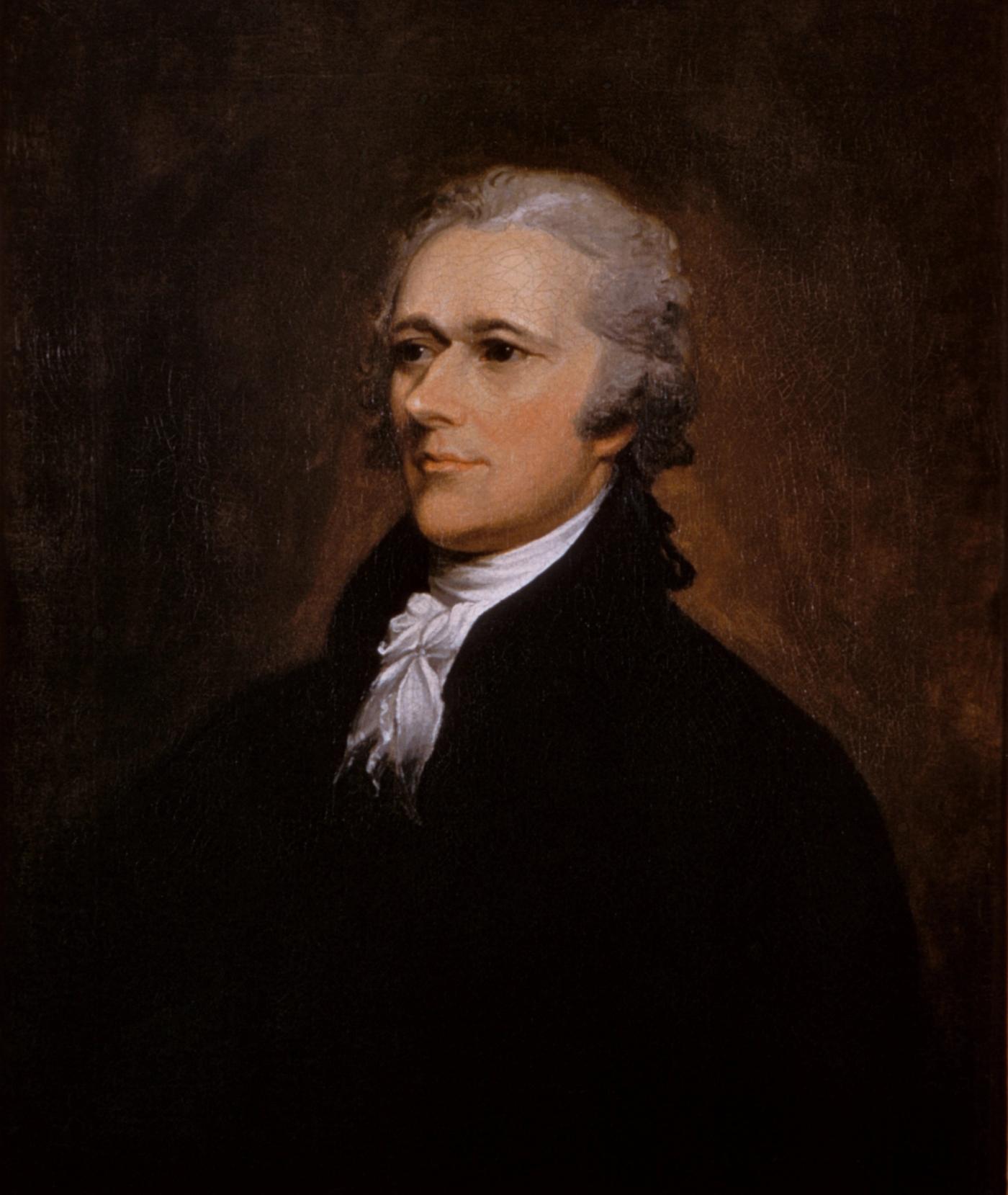
The most urgent problem the new government faced was money. The Revolution had left the federal government owing about $54 million, including unpaid interest, and the states owed roughly $25 million more. In January 1790 Hamilton proposed that the federal government fund its own debt at full value and assume the war debts of the states as well, paying for both by issuing new securities at lower interest. Its burdens fell unevenly, since Virginia, Maryland, Pennsylvania, and North Carolina had already paid off much of their debt.[3]
Paying the debt at full value raised a harder question about who would collect. Many veterans, widows, and farmers who had been paid in government certificates had long since sold them at steep discounts to buyers willing to gamble that the government would someday pay in full. Funding the debt at par would reward those buyers, not the people who had earned the paper. Madison, who had worked closely with Hamilton to win ratification of the Constitution, proposed that Congress distinguish between the original holders and the later purchasers, arguing that massive speculation had "essentially changed the state of the question." Congress judged the scheme impractical and defeated it soundly.[4]
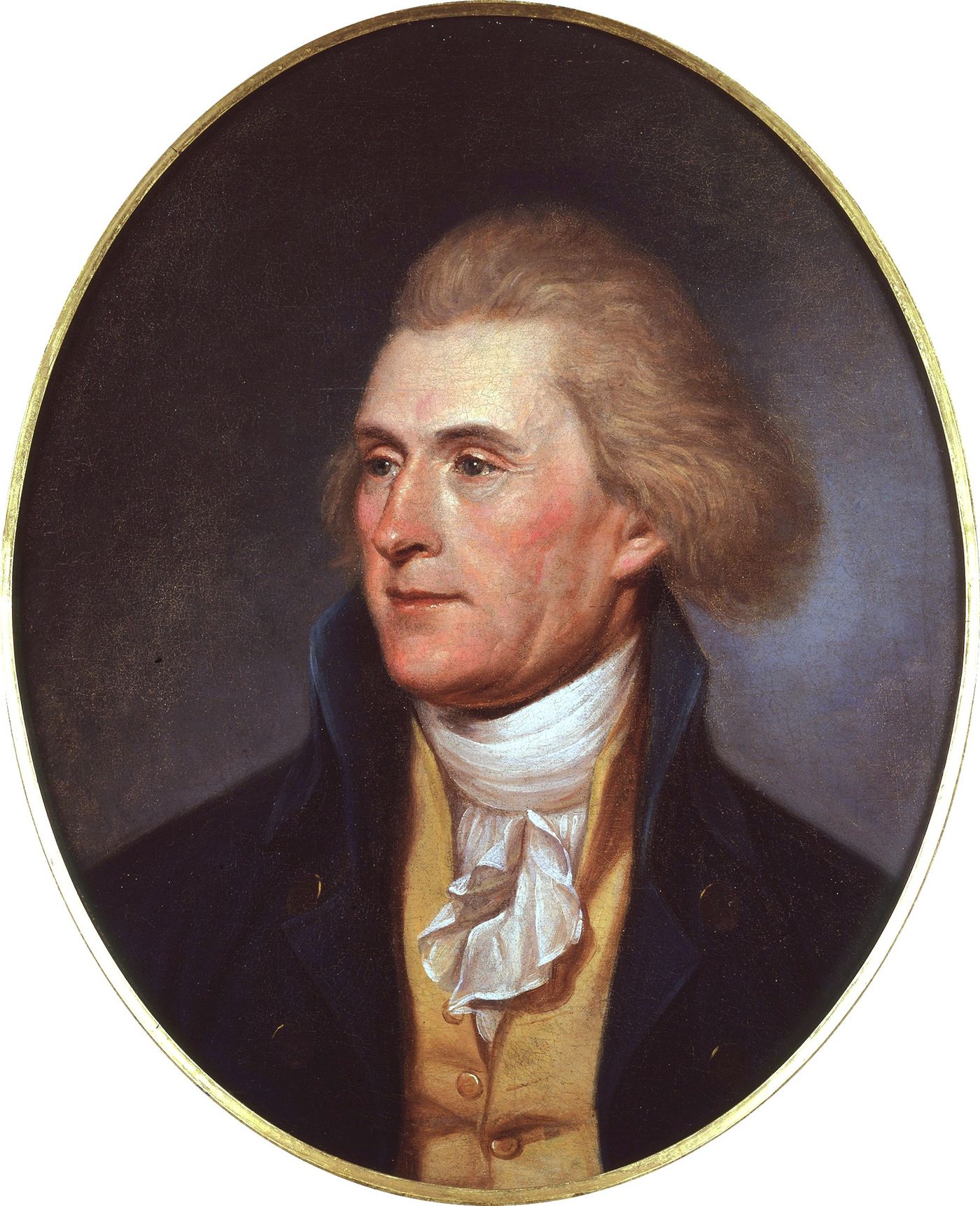
Assumption of the state debts fared worse at first, and in the spring of 1790 the House voted it down. The best-known account of its revival comes from Jefferson, who wrote, probably in 1792, that he had met Hamilton outside the president's door looking haggard and dejected, warning that without assumption New England might leave the Union. Jefferson then invited Hamilton and Madison to dine with him. According to Jefferson's later account, Madison said he would not vote for assumption but would no longer oppose it strenuously, and the men discussed a gesture to soothe the South which was locating the permanent seat of government on the Potomac River. Two Virginia congressmen changed their votes, Pennsylvania was won over with a promise that the capital would sit in Philadelphia in the meantime, and both measures passed. The story should be read with care as the editors of his papers have found no surviving invitations to the dinner, and Jefferson set the account down after he had turned against the policy, which he called unjust and blamed for creating a corrupt "Speculating phalanx" in and out of Congress.[5]
Hamilton's next proposal widened the breach. In December 1790 he asked Congress to charter a national bank that would hold the government's money, lend to it, and issue a sound paper currency. Jefferson feared that the bank would favor merchants and financiers over farmers and argued that the Constitution gave Congress no power to create corporations. Washington signed the bill in February 1791. The Bank of the United States opened in Philadelphia that December with a twenty-year charter and $10 million in capital, $2 million of it owned by the government, which made it the largest corporation of any kind in the country.[6]
The new securities and bank shares also created a market for speculation, and its dangers appeared within months. William Duer, whom Hamilton had made assistant secretary of the Treasury in 1789, borrowed heavily at the end of 1791 to gamble on government bonds and bank stock. When his schemes collapsed, he was jailed for debt on March 23, 1792, and the next day twenty-five failures were reported in New York's small financial community. Hamilton contained the panic by buying federal securities in the market, urging banks not to call in their loans, and letting merchants pay customs duties with notes. The economy soon resumed its rapid growth.[7] To his critics, a former Treasury official's ruin showed whom the system served.
Claiming the Name “Federalist”
The quarrel soon moved from the cabinet into print, and with it came a fight over names. In 1787 and 1788 the word "federalist" had simply described a supporter of the newly written Constitution. The most famous defense of that Constitution, the essays published as The Federalist, had been written by Hamilton, Madison, and John Jay, so Madison had as good a claim to the word as anyone. By the early 1790s, however, Hamilton's supporters increasingly used it as the name of their party, and a man who had done as much as anyone to draft and defend the Constitution found himself leading the opposition to its self-described friends. Madison and Jefferson answered by calling their own followers Republicans, presenting them as guardians of the Revolution against an administration they accused of favoring monarchy, aristocracy, and the moneyed interest.
The fight was carried on by newspapers. Hamilton's measures had a reliable champion in the Gazette of the United States, edited by John Fenno, and in 1791 Jefferson and Madison set out to create a rival. They recruited the poet Philip Freneau, a college friend of Madison's, and Jefferson gave him a $250-a-year post as a translating clerk in the State Department, though Freneau knew only English and French. The first issue of Freneau's National Gazette appeared in Philadelphia on October 31, 1791, and before long it was attacking the administration's policies and eventually the president himself.[8]
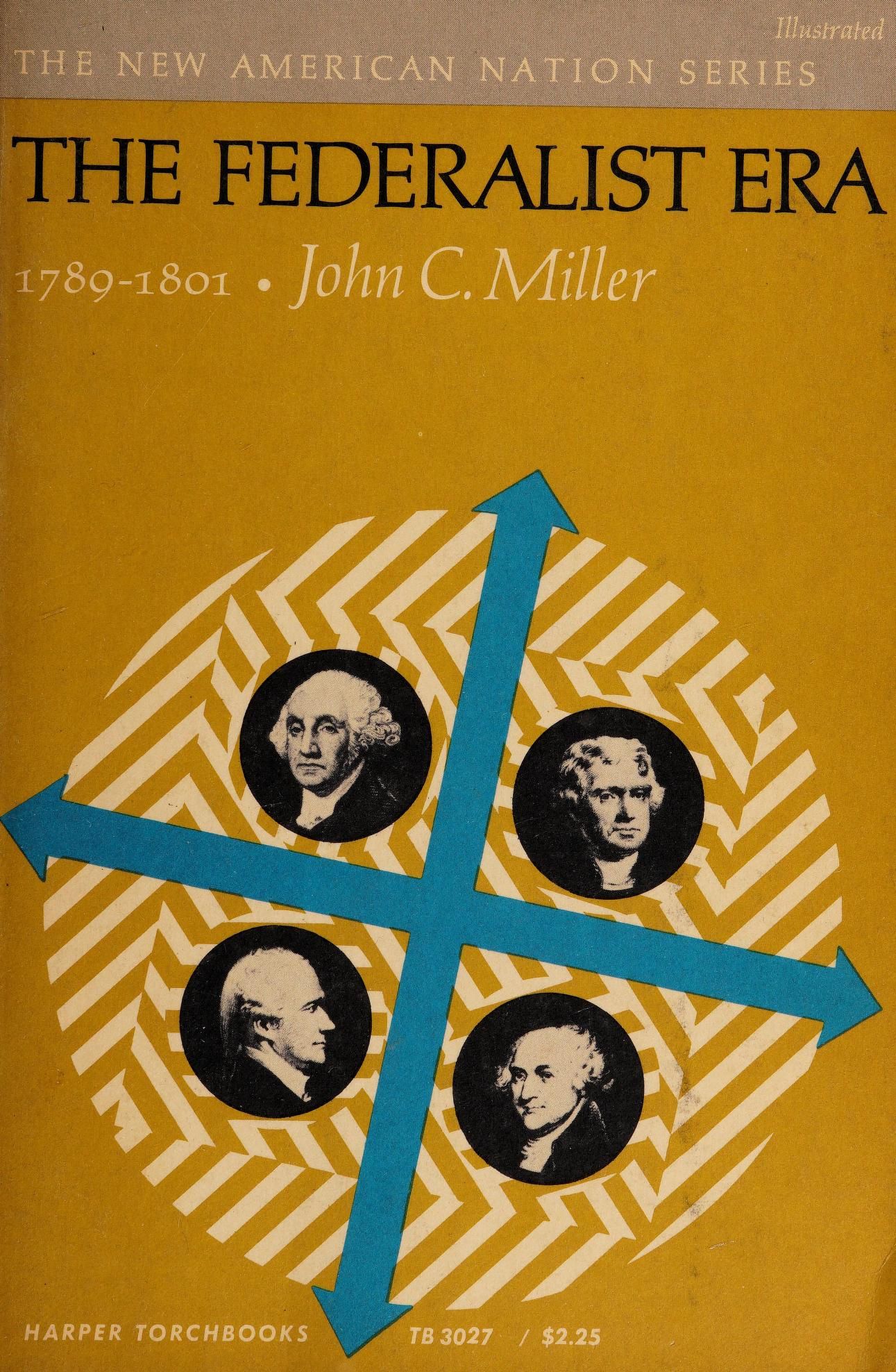
The name the Federalists claimed has stuck to the whole period. Washington thought of himself as above party, yet historians describe his presidency and Adams's together under the Federalist banner. John C. Miller's The Federalist Era, 1789–1801, published in 1960, gave influential scholarly form to this periodization, and Stanley Elkins and Eric McKitrick's The Age of Federalism (1993) remains its most ambitious modern study.[9] The label fits because these were the twelve years in which the Federalists held the presidency, and after 1801 they never held it again.
The Western Country
Beyond the Appalachians, the new government faced enemies it could neither tax nor argue with. Warriors from Native nations north of the Ohio River, among them the Miami, Shawnee, Delaware, Ottawa, Ojibwe, and Potawatomi, had joined together to resist American settlement on their lands, in a region where Britain still kept the trading posts it had promised to give up. On November 4, 1791, warriors led by the Miami leader Little Turtle surprised an American army under General Arthur St. Clair near what is now Fort Recovery, Ohio. More than six hundred of St. Clair's men were killed, and the National Park Service puts the army's total losses at about a thousand. It was one of the worst defeats U.S. forces ever suffered in war with Native peoples.[10]
Washington rebuilt the army under General Anthony Wayne, who defeated the confederation at Fallen Timbers, on the Maumee River near present-day Toledo, on August 20, 1794. On August 3, 1795, at Greenville, the confederation's leaders signed a treaty that ceded most of what would become Ohio and part of what would become Indiana. Eric Hemenway of the Little Traverse Bay Bands of Odawa Indians, writing for the National Park Service, describes the treaty as an imperfect agreement that not every nation accepted, one that ended the violence only for a time.[11] Greenville opened the Northwest to American settlement at the cost of the confederation's homeland.
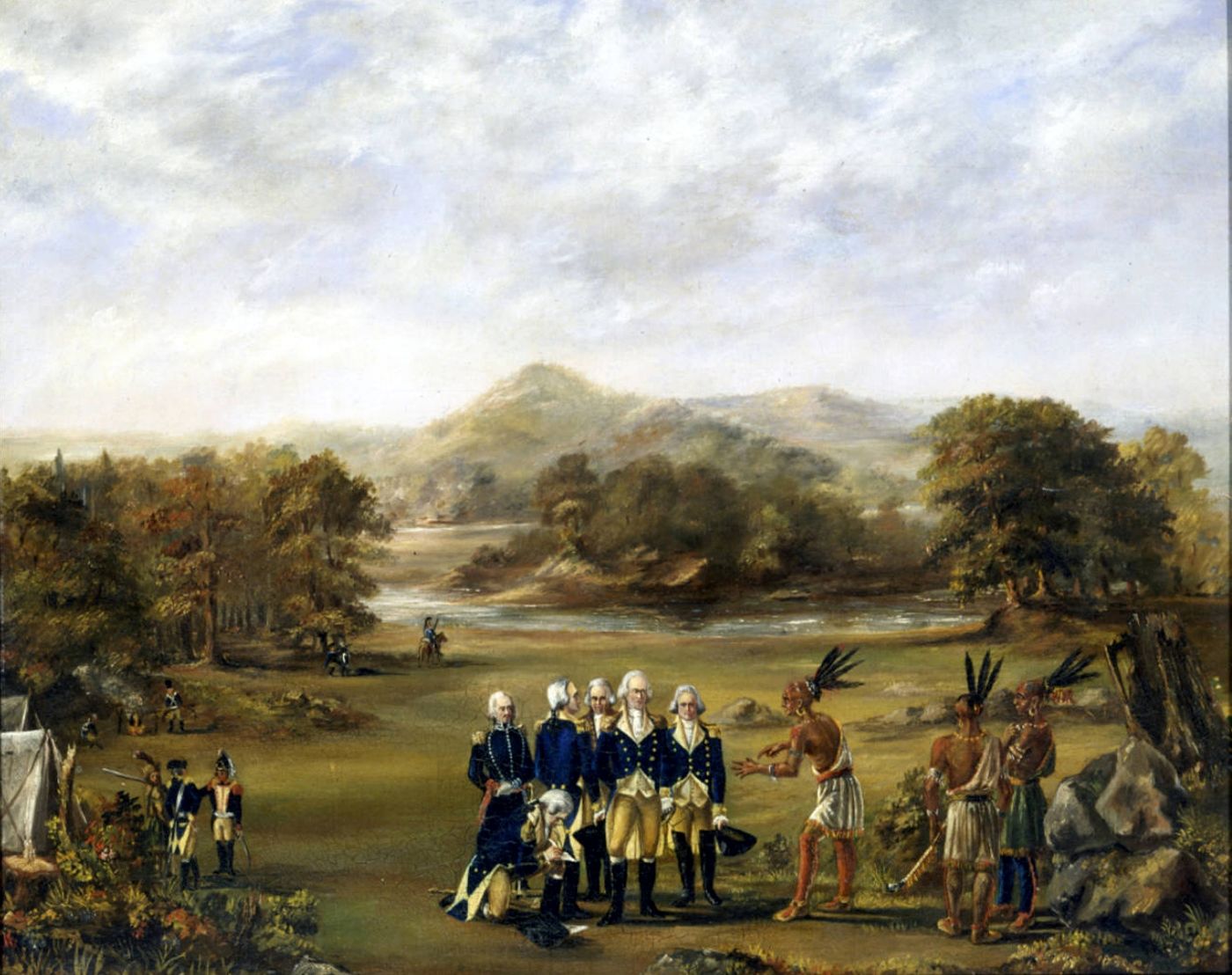
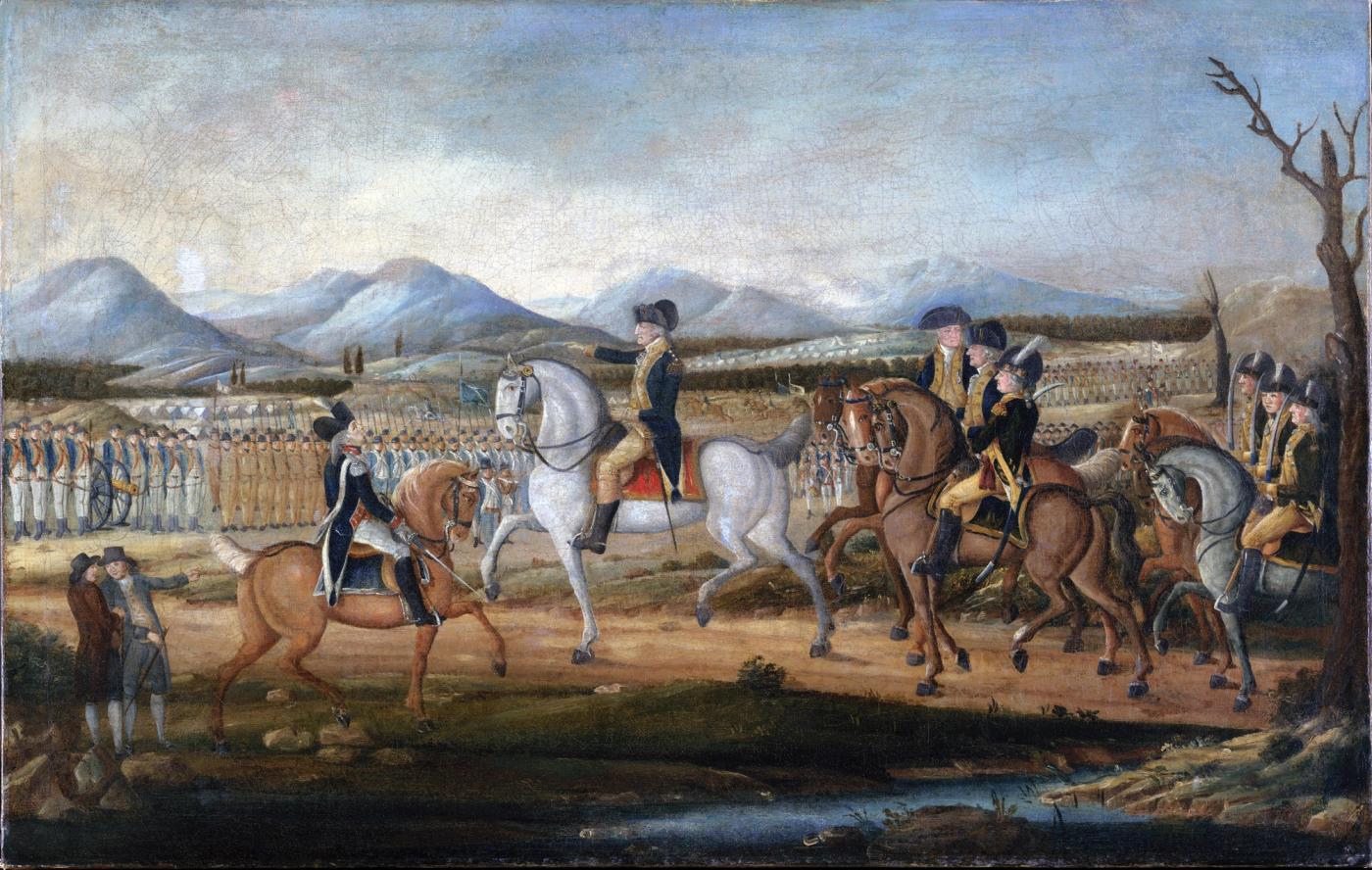
The western country produced a second crisis, this one among American citizens. To help pay down the war debt, Hamilton had proposed in January 1791 an excise tax on domestically distilled spirits. To farmers in western Pennsylvania, who turned their grain into whiskey because it was cheaper to carry over the mountains, the tax looked like one more burden imposed by eastern elites, and it weighed hardest on the poorest of them. Many refused to pay. In July 1794 the protests turned violent when nearly four hundred rebels near Pittsburgh set fire to the home of John Neville, the regional supervisor of tax collection. Urged on by Hamilton, Washington called out nearly 13,000 militiamen and initially led them westward himself. The rebels scattered before it arrived. About 150 men were arrested, but only two were convicted of treason, and Washington pardoned both.[12] The episode showed that the federal government could enforce its laws by force. To Republicans it also showed how readily the Federalists would reach for an army.
Neutrality and Its Price
Events in Europe hardened the party lines. In 1793, after the execution of Louis XVI, Britain and France went to war. The United States was still bound to France by the alliance of 1778, but it depended on trade with Britain, and its leaders divided almost exactly along party lines, Jefferson sympathizing with France and Hamilton leaning toward Britain. On April 8, 1793, the new French minister, Edmond-Charles Genêt, landed at Charleston, South Carolina, and began recruiting Americans to fight for France. On April 22, with the unanimous support of his cabinet, Washington issued a proclamation urging Americans to behave impartially toward the warring powers. Genêt pressed ahead regardless and at one point threatened to appeal over Washington's head directly to the American people.[13] His conduct embarrassed even his Republican friends, and Jefferson, increasingly isolated in the cabinet, resigned at the end of 1793.
Relations with Britain, meanwhile, were close to war. British troops still held the northwestern posts, and the Royal Navy was seizing American ships trading with the French West Indies. In 1794 Washington sent Chief Justice John Jay to London to negotiate. The treaty Jay signed on November 19, 1794, secured the evacuation of the posts and some commercial privileges, but it sent most other disputes, including British seizures of American ships, to arbitration, and it conceded Britain's right to confiscate French goods carried in American vessels. Hamilton had quietly assured the British that the United States would not join a league of armed neutrals, leaving Jay little leverage.[14]
When the terms became public in 1795, crowds burned Jay in effigy and set fire to copies of the treaty in cities across the country. When Hamilton defended the treaty at a public meeting in New York he was struck by a thrown stone.[15] The Senate approved the treaty by 20 votes to 10 on June 24, 1795, the narrowest possible two-thirds margin, and Washington, judging it the price of peace, put it into effect.[16] The Republican majority in the House then tried to kill it by refusing the money needed to carry it out. After the ailing Massachusetts Federalist Fisher Ames warned on April 28, 1796, that rejection would break the nation's faith and invite war on the frontier, the House voted 51 to 48 to fund it. Washington credited the result less to oratory than to a flood of petitions from the eastern and middle states demanding that the treaty be honored.[17]
Jay's treaty had a more popular sequel. On October 27, 1795, Thomas Pinckney signed a treaty with Spain that fixed the southern boundary at the 31st parallel, opened the Mississippi River to American navigation, allowed Americans to deposit goods at New Orleans without paying Spanish duties, and committed Spain not to incite Native nations against the United States. It was hugely popular in the West, where farmers depended on the river to reach markets. Together the two treaties kept the country at peace through the most dangerous years of the European war.
The Farewell Year
Washington spent his last full year in office in the president's house in Philadelphia, in a household that depended on enslaved labor. Pennsylvania's gradual abolition law of 1780 threatened his claim to the enslaved people he brought from Mount Vernon, and he quietly rotated them out of the state, asking his secretary to use deception to hide the practice. The federal government had already shown how far it would go to protect slaveholders. When Benjamin Franklin, as president of the Pennsylvania Society for Promoting the Abolition of Slavery, petitioned the First Congress in February 1790 to act against slavery, proslavery members denounced the petition, a House committee concluded that the Constitution barred Congress from ending the importation of enslaved people before 1808, and the petition was set aside. On February 12, 1793, Washington signed the Fugitive Slave Act, which allowed slaveholders or their agents to seize people who had escaped to another state, bring them before a judge or magistrate, and carry them back on proof of ownership. Anyone who interfered faced a fine of five hundred dollars.[18]
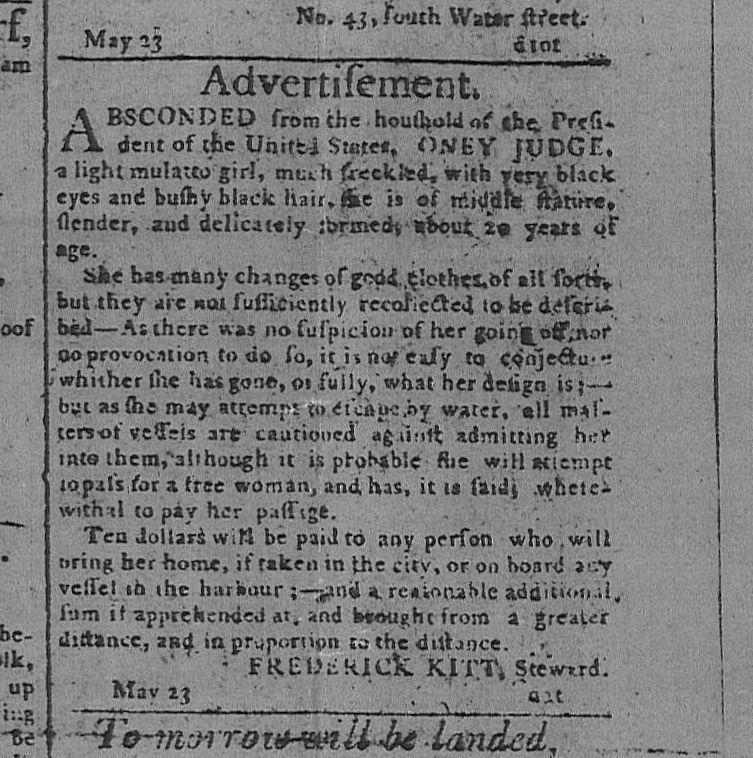
On May 21, 1796, that machinery reached into Washington's own household. Ona Judge, then about twenty-two, had been Martha Washington's personal maid since the age of ten. When she learned that she was to be given to Martha's granddaughter Eliza Parke Custis Law, she slipped out of the president's house and boarded the ship Nancy, bound for Portsmouth, New Hampshire. "I was determined never to be her slave," she said years later, and she spoke of "a thirst for compleat freedom." Washington tried to recover her through Joseph Whipple, the customs collector at Portsmouth, and in 1799 Martha's nephew Burwell Bassett Jr. tried to seize her, but she escaped with help from Senator John Langdon. She married, raised a family, and lived free until her death in 1848.[19]
Four months after Judge's escape, Washington took his leave of public life. Madison had drafted a farewell address in 1792, when Washington first hoped to retire. By 1796, with Madison leading the opposition, Hamilton reworked it into a new text built on Washington's own themes. Never delivered as a speech, it appeared in Philadelphia's American Daily Advertiser on September 19, 1796. The address warned Americans against the spirit of party and against divisions between regions, and it urged the nation to "steer clear of permanent alliances" with foreign powers.[20] After four years of bitter partisanship, the warning carried an obvious edge, but it also expressed a fear Washington shared with his generation, that faction had destroyed free governments before.
In the election that fall, Vice President John Adams narrowly defeated Jefferson. Because the Constitution then gave the vice presidency to the runner-up, Jefferson became Adams's vice president, and the leaders of the two parties now served side by side at the head of the government.
Not a Sixpence
Adams inherited a crisis with France. Angered by the Jay Treaty, the French government had ordered the seizure of American merchant ships, and in 1797 Adams sent three envoys, Charles Cotesworth Pinckney, John Marshall, and Elbridge Gerry, to Paris to negotiate. The foreign minister, Charles-Maurice de Talleyrand, refused to receive them officially, and his intermediaries let them know that talks could begin only after the United States agreed to a loan to France and paid Talleyrand a substantial bribe. Adams published the envoys' dispatches with the French agents' names replaced by the letters W, X, Y, and Z.
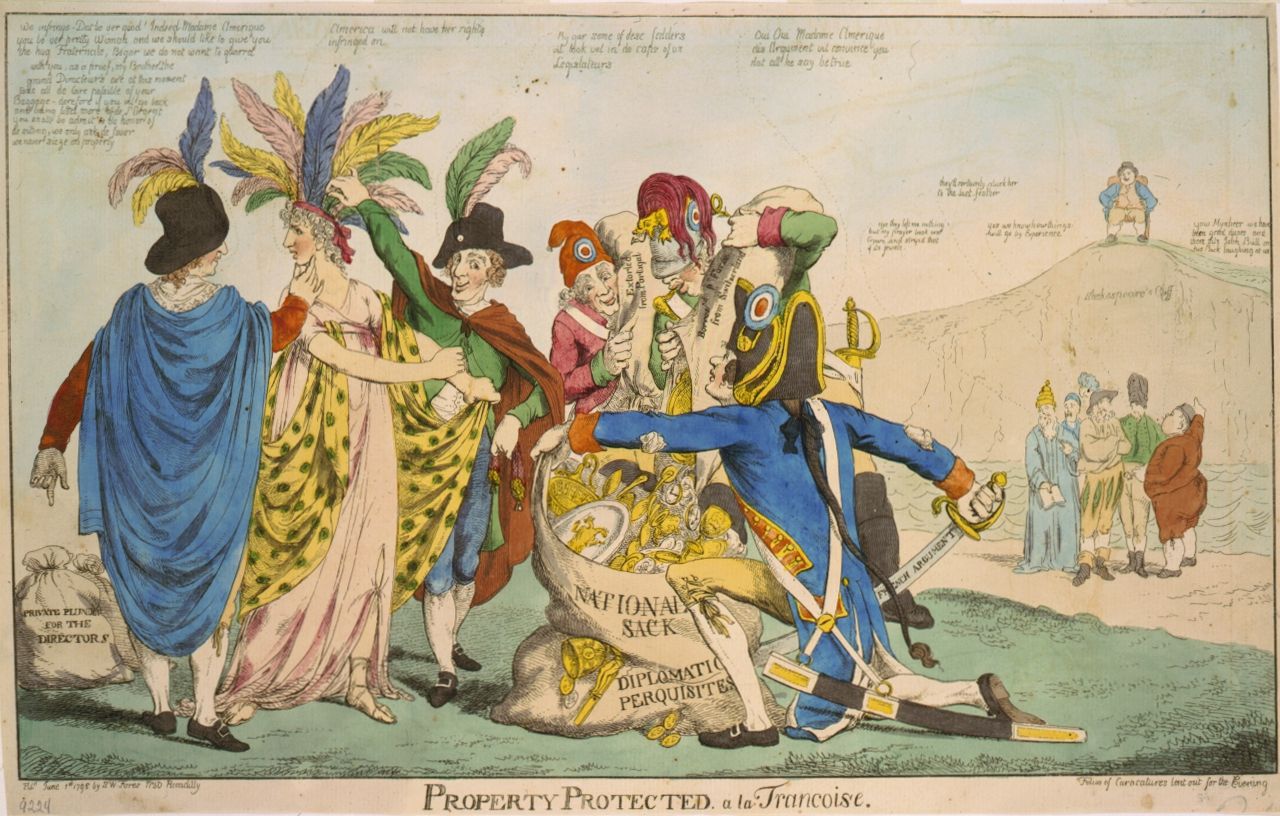
The publication caused a sensation and, for a time, made the Federalists popular. The rallying cry of the hour, "Millions for defense, but not one cent for tribute," has long been attributed to Pinckney. What Pinckney actually told the French agents was "No! No! Not a sixpence!" The more famous line was spoken the following June by the South Carolina congressman Robert Goodloe Harper, at a banquet for the returning Marshall.[21] Congress created a separate Department of the Navy in 1798 and authorized the navy to attack French privateers, and an undeclared naval conflict, the Quasi-War, followed in the Caribbean.
Sedition
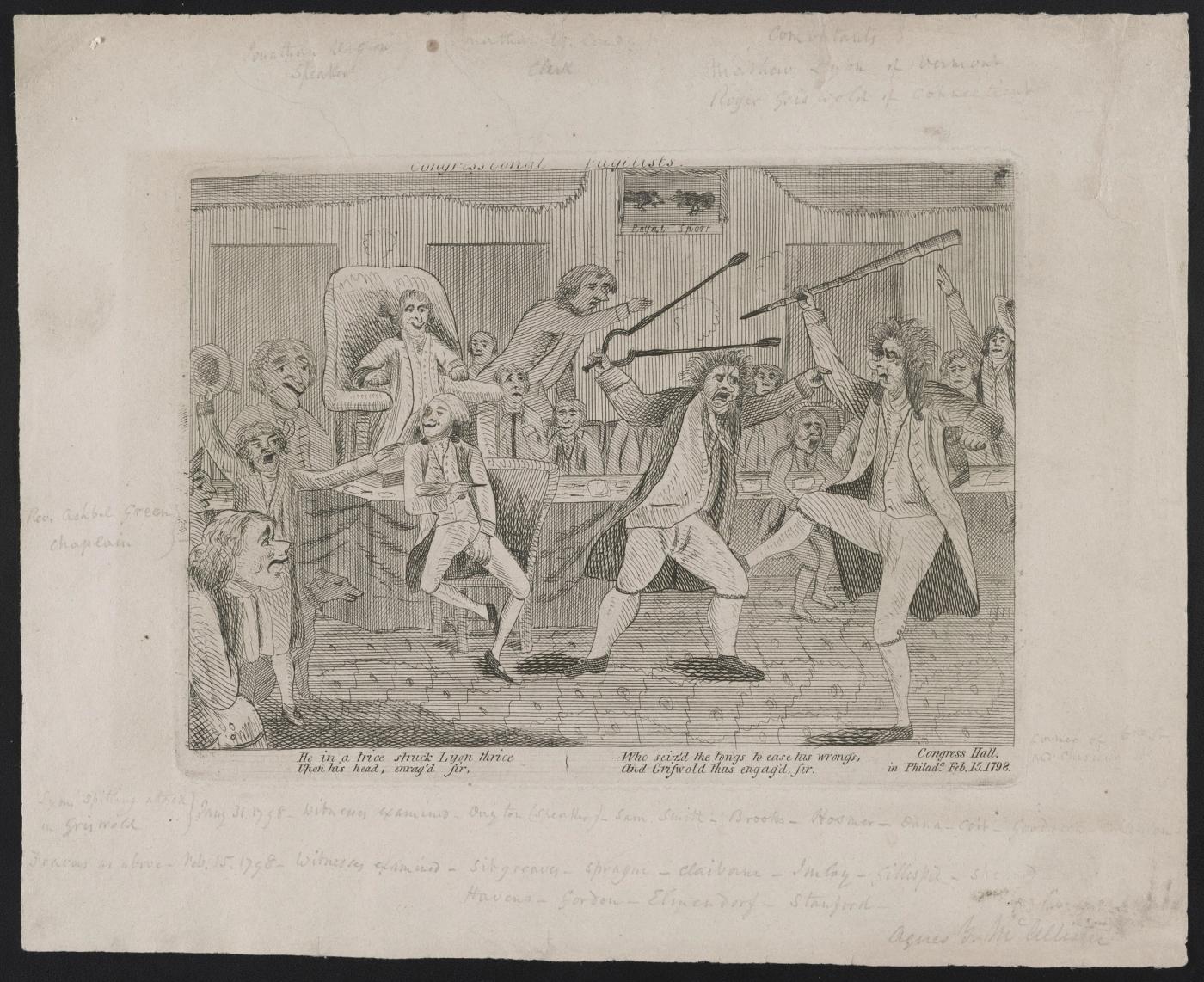
By then the temper of politics had turned ugly. In the House on January 30, 1798, after the Connecticut Federalist Roger Griswold mocked Matthew Lyon's conduct in the Revolution, Lyon, a Republican from Vermont, spat at him. When the Federalists failed to muster the votes to expel Lyon, Griswold attacked him on the House floor on February 15 with a cane, and Lyon fought back with fireplace tongs. Abigail Adams observed that the affair had "created more warmth, more wrath more ill will, than the most momentous questions of National concern."[22]
That summer many Federalists saw the crisis with France as a chance to deal with their enemies at home. In June and July 1798, Congress passed four measures known together as the Alien and Sedition Acts. They lengthened the residence required for citizenship from five years to fourteen, and let the president deport aliens he judged dangerous. The Sedition Act, signed on July 14, made it a crime to publish "false, scandalous and malicious" writing against the government, Congress, or the president. Recent immigrants tended to vote Republican, and the only journalists prosecuted under the Sedition Act edited Republican papers. The act was written to expire on March 3, 1801, the last day of Adams's term.[23]
Lyon was soon in deeper trouble. He had written that Adams showed "an unbounded thirst for ridiculous pomp." Tried in 1798 before Justice William Paterson, Lyon argued that the law was unconstitutional, but the jury convicted him on all counts, and he was sentenced to four months in jail and a $1,000 fine. He ran for reelection from his cell and won easily.[24] The law reached tavern talk as well. When a cannon salute greeted the president as he passed through Newark, New Jersey, that summer, a drunken Luther Baldwin remarked that he did not care if they fired through Adams's "arse." He was convicted of sedition and fined $150.[25] Between 1798 and 1801, at least twenty-six people were prosecuted in federal courts for seditious writing or speech.[26]
Jefferson and Madison answered in secret. Jefferson, still vice president, drafted resolutions that the Kentucky legislature adopted on November 16, 1798, and Madison wrote a set that Virginia approved on December 24. Both declared the Alien and Sedition Acts unconstitutional and asserted that the states could judge when the federal government had exceeded its powers, though Madison's language was more restrained than Jefferson's. Later generations cited them in defense of nullification and secession, uses that went well beyond their authors' chief aim of protesting the threat to civil liberties.[27]
Thirty-Six Ballots
The Federalists' greatest weakness turned out to be their own disunity. Many in the party's militant wing, Hamilton's allies prominent among them, pressed for a harder line and greater military preparations, while Adams kept the door open to peace. When Talleyrand signaled that he would receive a new American mission, Adams sent one, to the dismay of the war party. In May 1800 he dismissed half his cabinet after learning that its members had been taking direction from Hamilton rather than from him, and Hamilton responded by denouncing Adams in writing as unfit for the presidency, in the middle of an election campaign. Washington, whose prestige had held the coalition together, had died in December 1799. In 1800 Adams's envoys reached an agreement with the French government under Napoleon Bonaparte. The Convention of 1800 ended the Quasi-War and dissolved the alliance of 1778. The Senate rejected it in January 1801, then approved a modified version on February 3. Adams ratified it on February 18, and after France accepted the changes, the Senate declared it fully ratified that December.[28] Adams had kept the country out of a full war with France, and he had split his party in doing so.
The Federalists had hoped to carry South Carolina in the election of 1800, but its electors went to the Republicans. On December 16, 1800, Adams learned both that he had lost and that his son Charles had died in New York more than two weeks earlier.[29] Each elector then cast two votes without distinguishing between president and vice president, and Jefferson and his running mate, Aaron Burr, each received 73. The tie sent the election to the House, where each state delegation cast one vote.
The House that would decide was the outgoing one, and many of its Federalist members preferred Burr to Jefferson. Balloting began on February 11, 1801, and for six days the House remained deadlocked. Hamilton, who despised Burr even more than Jefferson, worked behind the scenes to break the impasse. On February 17, on the thirty-sixth ballot, James Bayard, Delaware's only representative, and the South Carolina Federalists cast blank ballots, while the Maryland Federalists did the same and Vermont's Federalist, Lewis Morris, was absent, allowing those states to go to Jefferson. That gave him ten of the sixteen states and the presidency.[30] Among those whose votes counted that day was Matthew Lyon, who cast Vermont's vote for Jefferson little more than two years after his conviction under the Sedition Act.[31] The near-disaster led Congress and the states to adopt the Twelfth Amendment in 1804, requiring electors to cast separate votes for president and vice president.
While the House deadlocked, the outgoing Federalists fortified the judiciary. After John Jay declined to return as chief justice, Adams, by Marshall's own later recollection, asked his secretary of state whom he should nominate, and when Marshall had no answer, said that he believed he must nominate Marshall himself. On February 13, 1801, Congress passed a new Judiciary Act, which provided that the Supreme Court would shrink from six justices to five at the next vacancy, created sixteen new circuit judgeships, and freed the justices from riding circuit. Adams filled the new posts within days. Republicans called them the "midnight judges," but according to the historian Richard Samuelson, most were nominated weeks before Adams left office, and on his final day he signed only a few commissions, all by nine in the evening.[32] The Republicans soon repealed the act, but Marshall remained on the Court for more than three decades.
"Brethren of the Same Principle"
Before dawn on March 4, 1801, Adams left the President's House and took the four o'clock public stagecoach out of Washington, bound for home in Massachusetts. He never explained why he missed his successor's inauguration. Resentment may have played a part, but no custom yet required his presence, he does not appear to have been invited, and his son's death three months earlier was another burden.[33] Later that morning Jefferson walked from his boardinghouse to the Capitol. In the Senate chamber he took the oath from John Marshall, the cousin he had come to detest, and delivered an address meant to calm the country. "Every difference of opinion is not a difference of principle," he declared. "We have called by different names brethren of the same principle. We are all Republicans, we are all Federalists."[34]
The Federalists left a mixed record whose parts belong to one story. What they built lasted. The public credit Hamilton established, the courts Marshall would lead, the navy, and the policy of neutrality that Washington and Adams defended at real political cost all survived the party that created them. What they built was paid for unevenly. Speculators collected the full value of debts that soldiers had sold for a fraction of it, frontier farmers paid the whiskey tax, the nations of the Ohio country surrendered their homeland at Greenville, and the federal government created legal machinery for returning people like Ona Judge to slavery. And when the Federalists believed the republic was threatened, they turned its new strength against its critics, jailing a congressman for his words and fining a drunk for a joke. The backlash against the Sedition Act helped bring down the party that passed it.
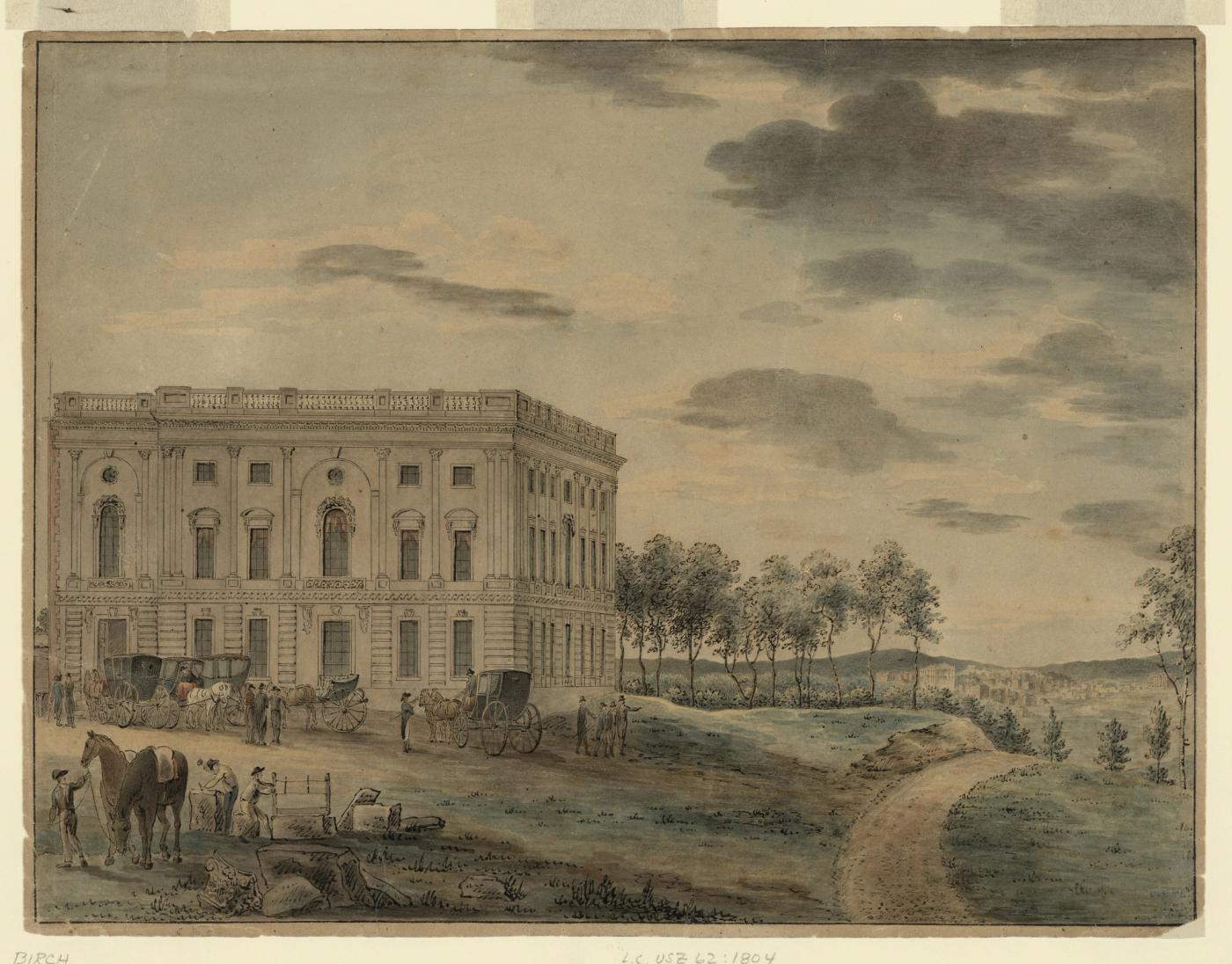
In 1789 a unanimously chosen hero took office amid cheering crowds, his authority resting largely on his own reputation. In 1801 the leader of an opposition party took office in an unfinished building in a raw new city, elected after a constitutional crisis, while his defeated predecessor rode away in the dark. The second scene was in some ways the greater achievement. The Federalists had come close to treating opposition as disloyalty, yet when the voters and the constitutional rules turned against them, they handed over the presidency peacefully, even as they entrenched their allies in the courts. Jefferson's claim that all were Republicans and all Federalists was partly a maneuver aimed at moderate Federalists, but it held a truth. Both parties, for all their mutual suspicion, had accepted that the Constitution, rather than any single leader or faction, would decide who governed. Washington had begun on untrodden ground, and twelve years later the path from one party to the other had been walked for the first time.
Places in this Story
The places this story moves through, in order — follow them on the interactive map →
- New York City, NY April 30, 1789
Washington takes the oath at Federal Hall.
- Federal Hall, New York City, NY January 1790
Hamilton proposes funding the national debt at full value, opening the fight over assumption.
- Fort Recovery, OH November 4, 1791
Warriors led by Little Turtle inflict St. Clair's Defeat, one of the worst losses U.S. forces ever suffered to Native forces.
- Pittsburgh, PA July 1794
Rebels burn tax collector John Neville's home, igniting the Whiskey Rebellion.
- Fallen Timbers Battlefield, near Maumee, OH August 20, 1794
Wayne defeats the Western Confederacy at Fallen Timbers.
- Congress Hall, Philadelphia, PA June 24, 1795
The Senate approves the Jay Treaty by the narrowest possible margin, 20 to 10.
- Philadelphia, PA September 19, 1796
Washington's Farewell Address is published.
- Newark, NJ Summer 1798
Luther Baldwin is fined for a drunken joke under the Sedition Act.
- Washington, D.C. March 4, 1801
Jefferson is inaugurated as Adams rides away before dawn.
Frequently Asked Questions
Why is 1789 to 1801 called the Federalist Era?
The Federalist Era takes its name from the Federalist Party, which dominated the national government from George Washington's inauguration in 1789 to John Adams's departure in 1801. John C. Miller's 1960 book The Federalist Era, 1789–1801 gave influential scholarly form to the title and periodization commonly used for the era. After Thomas Jefferson's election in 1800, the Federalists never won the presidency again.
Was George Washington a Federalist?
Washington never formally joined the Federalist Party and warned against party spirit in his 1796 Farewell Address. In practice, however, he usually sided with Alexander Hamilton and the Federalists on the national bank, the whiskey tax, and the Jay Treaty, and historians group his presidency with John Adams's as the Federalist Era.
What did the word "Federalist" originally mean?
In 1787 and 1788, "Federalist" meant a supporter of the newly written Constitution. James Madison co-wrote The Federalist essays with Alexander Hamilton and John Jay, but in the 1790s Hamilton's supporters kept the name for their party, while Madison and Thomas Jefferson led the opposing Republicans.
What were the main achievements of the Federalist Era?
The Federalist Era created the federal courts, the Bill of Rights, a funded national debt, the Bank of the United States, and a separate Navy Department. Treaties with Britain and Spain kept the country out of a declared war with Britain or France, and the era ended with the first peaceful transfer of power between parties in 1801.
What were the Alien and Sedition Acts?
The Alien and Sedition Acts were four laws passed in 1798, during the crisis with France. They lengthened the residence required for citizenship, allowed the president to deport aliens, and made it a crime to publish false, scandalous, and malicious writing against the government. At least twenty-six people were prosecuted in federal courts for seditious writing or speech between 1798 and 1801, and the journalists prosecuted under the Sedition Act all edited Republican papers.
Did Charles Cotesworth Pinckney say "Millions for defense, but not one cent for tribute"?
No. When French agents demanded a bribe in 1797, Charles Cotesworth Pinckney replied, "No! No! Not a sixpence!" The famous line "Millions for defense, but not one cent for tribute" came the following June from Congressman Robert Goodloe Harper, at a banquet for John Marshall.
Why did John Adams skip Thomas Jefferson's inauguration?
John Adams left Washington by stagecoach at 4 a.m. on March 4, 1801, and never explained why. Possible reasons include resentment, the lack of any custom or invitation for an outgoing president to attend, and the strain of his son Charles's death three months earlier.
Bibliography
"Aftermath of the Jay Treaty: Responses, Ratification, and Implementation." Editorial note in The Selected Papers of John Jay, vol. 6. Founders Online, National Archives. Accessed October 4, 2026. https://founders.archives.gov/documents/Jay/01-06-02-0124.
American Battlefield Trust. "George Washington and Neutrality." Accessed October 4, 2026. https://www.battlefields.org/learn/articles/george-washington-and-neutrality.
Avalon Project. "Convention of 1800." Treaties and Other International Acts of the United States of America. Lillian Goldman Law Library, Yale Law School. Accessed October 6, 2026. https://avalon.law.yale.edu/19th_century/fr1800.asp.
Benson, Alvin K. "Luther Baldwin." Free Speech Center, Middle Tennessee State University, 2009, updated March 31, 2025. Accessed October 6, 2026. https://firstamendment.mtsu.edu/article/luther-baldwin/.
Council on Foreign Relations. "The Senate Approves the 1795 Jay Treaty." Accessed October 4, 2026. https://www.cfr.org/articles/the-senate-approves-the-1796-jay-treaty.
Digital History. "Alexander Hamilton's Financial Program." Digital History ID 268. University of Houston. Accessed October 4, 2026. https://www.digitalhistory.uh.edu/disp_textbook.cfm?smtID=3&psid=268.
Elkins, Stanley, and Eric McKitrick. The Age of Federalism: The Early American Republic, 1788-1800. New York: Oxford University Press, 1993.
Encyclopaedia Britannica. "Battle of Fallen Timbers." Accessed October 6, 2026. https://www.britannica.com/event/Battle-of-Fallen-Timbers.
Encyclopaedia Britannica. "Saint Clair's Defeat." Accessed October 6, 2026. https://www.britannica.com/event/Saint-Clairs-Defeat.
Encyclopaedia Britannica. "Treaty of Greenville." Accessed October 6, 2026. https://www.britannica.com/event/Treaty-of-Greenville.
Encyclopaedia Britannica. "Virginia and Kentucky Resolutions." Accessed October 4, 2026. https://www.britannica.com/event/Virginia-and-Kentucky-Resolutions.
Federal Judicial Center. "Landmark Legislation: Judiciary Act of 1801." Accessed October 6, 2026. https://www.fjc.gov/history/legislation/landmark-legislation-judiciary-act-1801.
Gordon, John Steele. "The Great Crash of 1792." American Heritage 50, no. 3 (May/June 1999). Accessed October 6, 2026. https://www.americanheritage.com/great-crash-1792.
Hemenway, Eric. "Summer 1795: The Treaty of Greenville Creates an Uneasy Peace." National Park Service. Accessed October 6, 2026. https://www.nps.gov/articles/a-long-legacy.htm.
Hildreth, Richard. The History of the United States of America. Vol. 4, Administration of Washington, 1789-1797. New York: Harper & Brothers, 1851. Google Books. Accessed October 7, 2026. https://books.google.com/books?id=WlA1AQAAMAAJ.
Hildreth, Richard. The History of the United States of America. Vol. 5. New York: Harper & Brothers, 1851. Google Books. Accessed October 7, 2026. https://books.google.com/books?id=Ep4cAAAAMAAJ.
Hill, Andrew T. "The First Bank of the United States." Federal Reserve History, December 4, 2015. Accessed October 4, 2026. https://www.federalreservehistory.org/essays/first-bank-of-the-us.
Howard, Lauren. "Party Men and Congressional Pugilists: The Rise of Party Conflict during the Adams Administration." The Beehive (blog), Massachusetts Historical Society, April 2021. Accessed October 6, 2026. https://www.masshist.org/beehiveblog/2021/04/party-men-and-congressional-pugilists-the-rise-of-party-conflict-during-the-adams-administration/.
Jefferson, Thomas. "First Inaugural Address," March 4, 1801. The Avalon Project, Lillian Goldman Law Library, Yale Law School. Accessed October 4, 2026. https://avalon.law.yale.edu/19th_century/jefinau1.asp.
Jefferson, Thomas. "Jefferson's Account of the Bargain on the Assumption and Residence Bills," [1792?]. In The Papers of Thomas Jefferson, vol. 17. Founders Online, National Archives. Accessed October 4, 2026. https://founders.archives.gov/documents/Jefferson/01-17-02-0018-0012.
Kotowski, Peter. "Whiskey Rebellion." Digital Encyclopedia, George Washington's Mount Vernon. Accessed October 4, 2026. https://www.mountvernon.org/library/digitalhistory/digital-encyclopedia/article/whiskey-rebellion.
Leibiger, Stuart. "The Jay Treaty." Bill of Rights Institute. Accessed October 6, 2026. https://billofrightsinstitute.org/essays/the-jay-treaty.
Library of Congress. "George Washington's Farewell Address: Primary Documents in American History." Research guide. Accessed October 4, 2026. https://guides.loc.gov/washington-farewell-address.
Library of Congress. "Today in History: February 17." Accessed October 4, 2026. https://www.loc.gov/item/today-in-history/february-17.
MacLeod, Jessie. "Ona Judge." Digital Encyclopedia, George Washington's Mount Vernon. Accessed October 6, 2026. https://www.mountvernon.org/library/digitalhistory/digital-encyclopedia/article/ona-judge.
Marshall, John. The Life of George Washington, Commander in Chief of the American Forces, During the War Which Established the Independence of His Country, and First President of the United States. Vol. 5. Philadelphia: C. P. Wayne, 1807. Google Books. Accessed October 7, 2026. https://books.google.com/books?id=4TdLAAAAYAAJ.
Miller, John C. The Federalist Era, 1789-1801. New York: Harper & Brothers, 1960.
Mount Vernon. "Fugitive Slave Act of 1793." Primary Source Collections, George Washington's Mount Vernon. Accessed October 6, 2026. https://www.mountvernon.org/education/primary-source-collections/primary-source-collections/article/fugitive-slave-act-of-1793.
Mount Vernon. "George Washington's Farewell Address." Digital Encyclopedia, George Washington's Mount Vernon. Accessed October 4, 2026. https://www.mountvernon.org/library/digitalhistory/digital-encyclopedia/article/george-washington-s-farewell-address.
Mount Vernon. "National Gazette." Digital Encyclopedia, George Washington's Mount Vernon. Accessed October 4, 2026. https://www.mountvernon.org/library/digitalhistory/digital-encyclopedia/article/national-gazette.
Mount Vernon. "Neutrality Proclamation." Digital Encyclopedia, George Washington's Mount Vernon. Accessed October 4, 2026. https://www.mountvernon.org/library/digitalhistory/digital-encyclopedia/article/neutrality-proclamation.
Mount Vernon. "President Washington's Inauguration." George Washington's Mount Vernon. Accessed October 4, 2026. https://www.mountvernon.org/george-washington/the-first-president/inauguration/timeline.
Mount Vernon. "Presidential Precedents." Digital Encyclopedia, George Washington's Mount Vernon. Accessed October 4, 2026. https://www.mountvernon.org/library/digitalhistory/digital-encyclopedia/article/presidential-precedents.
National Archives and Records Administration, Center for Legislative Archives. "Benjamin Franklin's Anti-Slavery Petitions to Congress." Accessed October 6, 2026. https://www.archives.gov/legislative/features/franklin.
National Archives and Records Administration. "Alien and Sedition Acts (1798)." Milestone Documents. Accessed October 4, 2026. https://www.archives.gov/milestone-documents/alien-and-sedition-acts.
National Constitution Center. "A Look Back: Sedition, Free Speech and the President." Constitution Daily. Accessed October 4, 2026. https://constitutioncenter.org/blog/a-look-back-sedition-free-speech-and-the-president.
Office of the Historian, U.S. Department of State. "John Jay's Treaty, 1794-95." Milestones in the History of U.S. Foreign Relations. Accessed October 4, 2026. https://history.state.gov/milestones/1784-1800/jay-treaty.
Office of the Historian, U.S. Department of State. "The XYZ Affair and the Quasi-War with France, 1798-1800." Milestones in the History of U.S. Foreign Relations. Accessed October 4, 2026. https://history.state.gov/milestones/1784-1800/xyz.
Ragsdale, Bruce A. The Sedition Act Trials. Federal Trials and Great Debates in United States History. Washington, DC: Federal Judicial Center, 2005. Accessed October 6, 2026. https://www.fjc.gov/sites/default/files/trials/seditionacts.pdf.
Rakove, Jack. "The Compromise of 1790." Bill of Rights Institute, September 11, 2020. Accessed October 6, 2026. https://billofrightsinstitute.org/essays/the-compromise-of-1790.
Samuelson, Richard A. "The Midnight Appointments." White House History, no. 7 (Spring 2000). White House Historical Association. Accessed October 4, 2026. https://www.whitehousehistory.org/the-midnight-appointments.
"Seven Things Corrected." American Heritage 38, no. 2 (February/March 1987). Accessed October 4, 2026. https://www.americanheritage.com/seven-things-corrected.
U.S. House of Representatives, Office of the Historian. "The House Appropriated Funds for Jay's Treaty." History, Art & Archives. Accessed October 4, 2026. https://history.house.gov/HistoricalHighlight/Detail/35424.
U.S. House of Representatives, Office of the Historian. "The Life of Representative Matthew Lyon of Vermont and Kentucky." History, Art & Archives. Accessed October 4, 2026. https://history.house.gov/Historical-Highlights/1800-1850/The-life-of-Representative-Matthew-Lyon-of-Vermont-and-Kentucky/.
Washington, George. George Washington to Catharine Sawbridge Macaulay Graham, January 9, 1790. The Papers of George Washington, Presidential Series, vol. 4. Founders Online, National Archives. Accessed October 6, 2026. https://founders.archives.gov/documents/Washington/05-04-02-0363.
Washington, George. George Washington to Thomas Pinckney, May 22, 1796, with editorial notes. The Papers of George Washington, Presidential Series, vol. 20. Founders Online, National Archives. Accessed October 4, 2026. https://founders.archives.gov/documents/Washington/05-20-02-0131.
White House Historical Association. "Notably Absent: Presidential No-Shows on Inauguration Day." Accessed October 4, 2026. https://www.whitehousehistory.org/notably-absent-presidential-no-shows-on-inauguration-day.
Citations
- Mount Vernon, "President Washington's Inauguration." ↑
- Washington to Catharine Sawbridge Macaulay Graham, January 9, 1790. Mount Vernon's "Presidential Precedents" says Washington used the phrase often before his inauguration, but the written statement dates from 1790. ↑
- Digital History, "Alexander Hamilton's Financial Program." The month of Hamilton's report, January 1790, is widely recorded; the debt figures and the objection of states that had already paid their debts come from this source. ↑
- Rakove, "The Compromise of 1790." Rakove quotes Madison's phrase but does not give the date or margin of the vote. ↑
- Jefferson, "Jefferson's Account of the Bargain on the Assumption and Residence Bills," text and editorial note. For a nineteenth-century narrative of the same bargain, see Hildreth, History of the United States, 4:212. ↑
- Hill, "The First Bank of the United States." ↑
- Gordon, "The Great Crash of 1792." ↑
- Mount Vernon, "National Gazette." ↑
- Miller, The Federalist Era; Elkins and McKitrick, The Age of Federalism. Elkins and McKitrick's subtitle dates the period 1788–1800. ↑
- Encyclopaedia Britannica, "Saint Clair's Defeat"; Hemenway, "Summer 1795." ↑
- Encyclopaedia Britannica, "Battle of Fallen Timbers"; Encyclopaedia Britannica, "Treaty of Greenville"; Hemenway, "Summer 1795." ↑
- Kotowski, "Whiskey Rebellion"; Hildreth, History of the United States, 4:498–500. John Marshall, writing as a Federalist who later served as Adams's secretary of state, credited the "prudent vigour of the executive" with ending "an insurrection which, at one time, threatened to shake the government of the United States to its foundation." Marshall, Life of George Washington, 5:590. ↑
- Office of the Historian, "John Jay's Treaty, 1794–95"; American Battlefield Trust, "George Washington and Neutrality"; Mount Vernon, "Neutrality Proclamation." ↑
- Office of the Historian, "John Jay's Treaty, 1794–95." ↑
- "Aftermath of the Jay Treaty: Responses, Ratification, and Implementation," editorial note, Papers of John Jay; Council on Foreign Relations, "The Senate Approves the 1795 Jay Treaty"; Hildreth, History of the United States, 4:549, 551, 562. Hildreth records that the stone struck Hamilton "in the forehead, but glanced off without much injury." Marshall objected that crowds at public meetings were passing judgment on a treaty that a statesman "would need deep reflection in the quiet of his closet" to understand. Marshall, Life of George Washington, 5:625–26. A frequently repeated remark attributed to Jay, that he could have traveled the country by the light of his burning effigies, is omitted here because its original source could not be found. ↑
- Office of the Historian, "John Jay's Treaty, 1794–95." ↑
- Leibiger, "The Jay Treaty"; Washington to Thomas Pinckney, May 22, 1796, and editorial notes; U.S. House of Representatives, "The House Appropriated Funds for Jay's Treaty." ↑
- MacLeod, "Ona Judge"; National Archives, Center for Legislative Archives, "Benjamin Franklin's Anti-Slavery Petitions to Congress"; Mount Vernon, "Fugitive Slave Act of 1793." ↑
- MacLeod, "Ona Judge." Judge's age is approximate; MacLeod places her birth around 1774. ↑
- Mount Vernon, "George Washington's Farewell Address"; Library of Congress, "George Washington's Farewell Address: Primary Documents in American History." ↑
- "Seven Things Corrected," American Heritage. ↑
- Howard, "Party Men and Congressional Pugilists"; Hildreth, History of the United States, 5:187–91. ↑
- National Archives, "Alien and Sedition Acts (1798)," including the transcript of the Sedition Act, secs. 2 and 4. ↑
- U.S. House of Representatives, "The Life of Representative Matthew Lyon of Vermont and Kentucky"; National Constitution Center, "A Look Back: Sedition, Free Speech and the President"; Hildreth, History of the United States, 5:249–50. ↑
- Benson, "Luther Baldwin." ↑
- Ragsdale, The Sedition Act Trials. Ragsdale counts "at least twenty-six individuals" prosecuted between 1798 and 1801; published totals of indictments and convictions under the act itself vary. ↑
- Encyclopaedia Britannica, "Virginia and Kentucky Resolutions." ↑
- Office of the Historian, "The XYZ Affair and the Quasi-War with France, 1798–1800"; Samuelson, "The Midnight Appointments"; Avalon Project, "Convention of 1800." The Avalon Project dates the Senate resolution declaring the convention fully ratified to December 19, 1801; Office of the Historian, "The XYZ Affair and the Quasi-War with France, 1798–1800," gives December 18. ↑
- Samuelson, "The Midnight Appointments." ↑
- Library of Congress, "Today in History: February 17." The Library of Congress and most accounts give six days and thirty-six ballots, the last of which elected Jefferson. Samuelson, "The Midnight Appointments," gives four days and thirty-five ballots. Hildreth, History of the United States, 5:403–8, also gives thirty-six ballots, and records that on the last one the Vermont Federalist Lewis Morris was absent while the Maryland Federalists Craik and Baer cast blanks; the Library of Congress describes all of these Federalists as casting blank ballots. ↑
- U.S. House of Representatives, "The Life of Representative Matthew Lyon of Vermont and Kentucky." ↑
- Samuelson, "The Midnight Appointments," drawing on Marshall's autobiographical sketch written at the request of Joseph Story; Federal Judicial Center, "Landmark Legislation: Judiciary Act of 1801." ↑
- White House Historical Association, "Notably Absent: Presidential No-Shows on Inauguration Day"; Samuelson, "The Midnight Appointments." Adams left no record of his reasons, and both sources treat the explanations as possibilities. ↑
- White House Historical Association, "Notably Absent"; Samuelson, "The Midnight Appointments"; Jefferson, "First Inaugural Address," Avalon Project. ↑