In 1907 the American film business lived in and around New York, with a second cluster in Chicago. Twelve years later it lived in a few square miles of southern California, and the four most famous people in it had formed a company to distribute their own pictures. Two explanations are usually offered for that move, the sunshine and the flight from Edison's lawyers, and each of them is about half right.
What happened in between is not really a story about weather or about patents. It is a story about an industry discovering, in the space of a decade, that it was an industry: that pictures could be made on a factory floor, that a performer's name was worth money, that the people who owned the theatres were not the same as the people who owned the films, and that whoever controlled distribution controlled everything.
The demand came first, and it came from storefronts. In June 1905 Harry Davis and John P. Harris opened a theatre on Smithfield Street in Pittsburgh that showed nothing but films and charged five cents, which is where the nickelodeon got its name. More than a hundred followed in Pittsburgh alone within two years, and one estimate has nearly two million Americans visiting one by 1907.[1] Nobody had built a supply chain for that. A nickelodeon changed its programme two or three times a week and needed something new every time, and almost everything that follows, the patents and the lawsuits and the move to California and the factory lots, is at bottom an attempt to feed a machine that had been switched on before anyone worked out how to supply it.
A Chicago Company Chasing the Sun
The first push west was practical and slightly desperate. Francis Boggs, a director for William Selig's Selig Polyscope Company in Chicago, could not finish a Count of Monte Cristo in a Chicago winter, so he took a crew to southern California to shoot the exteriors. Accounts date the trip to late 1907 or early 1908, and the film itself is usually catalogued as 1908.[2] The crew built a set on a rooftop on Main Street in Los Angeles, which the American Film Institute's catalog describes as generally considered the first movie studio on the West Coast.[3]
Boggs went back. In 1909 he made In the Sultan's Power and The Heart of a Race Tout on a vacant lot downtown, the first pictures shot entirely in California, and by that autumn he had taken a bungalow in Edendale as a permanent base.[4] Selig put him in charge of the company's Los Angeles branch.
The sun was the reason given, and it was a real one. A studio with no roof could work most days of the year, and the landscape within a short drive ran from ocean to desert to mountains, which mattered enormously when a company might need a Mexican village on Monday and a Swiss alp on Thursday. Film stock was slow and electric lighting was poor, so daylight was not a convenience but a precondition. Land was cheap and labour was not organised. A company that moved west could work twelve months a year on ground it could afford to waste.

Boggs did not live to see what he had started. On October 27, 1911 he was shot dead at the Selig studio in Los Angeles by an employee of the company, who also wounded Selig himself. Accounts differ on whether the man was a gardener or a janitor and on the spelling of his name; he was later judged insane.[5] It was the same day, by an accident of the calendar, that the first studio opened in Hollywood proper, four miles away.
Hollywood itself was not yet the point, and for four years it was not even the destination. It was a dry subdivision laid out on 120 acres of apricot and fig groves bought in 1886 by Harvey and Daeida Wilcox of Topeka, Kansas. The story that it was named for the holly growing on the hillsides is almost certainly wrong, since the native toyon is not holly and the name appears to have been simply one Daeida liked.[6] In 1910 it voted to be annexed to Los Angeles, mostly to get the city's water.
The Trust and the Independents
The other reason for going west was legal. In December 1908 Edison combined his own manufacturing company with nine other holders of film patents to form the Motion Picture Patents Company.[7] The combination did not own films. It owned the patents on the machines that made and showed them, and it used them as a toll gate. Cameras, projectors and raw stock were licensed, and so, in the end, were the theatres.
In April 1910 the trust went further and set up the General Film Company, which bought up the exchanges that rented films to exhibitors, so that the same organisation now controlled manufacture, distribution and the terms of exhibition.[8] A theatre that ran only licensed pictures paid a licence fee on its projector, reported at two dollars a week and later at five, on top of a royalty by the foot of film. Exhibitors resented paying a weekly rent on equipment they had already bought, and some of them simply stopped.[9] It was a conventional trust of its period, built on the same logic that governed oil and sugar and steel, and it attracted the same kind of enemies.
It is worth remembering what a film actually was at this point. The standard unit was one reel, about a thousand feet, ten to fifteen minutes on screen, and it was sold the way rope is sold, by the foot, at the same price per foot whether it was any good or not. Exhibitors bought a programme rather than a title. Nobody advertised a director and nobody printed a performer's name. The trust's whole fee structure assumed that model and depended on it, because a royalty by the foot only makes sense if a foot of film is a commodity like any other. Everything that broke the trust in the end, the feature, the star, the branded studio, was a way of insisting that one foot of film was worth more than another.
Filmmakers who were refused a license, or who refused to take one, became known as the independents, and the trust pursued them with lawyers, with injunctions, and with men hired to find unlicensed cameras and break them. Southern California was a long way from that enforcement, and close to a border that a camera crew could cross in a hurry.
That distance is the version of the story Hollywood has always preferred to tell about itself, and it is worth being careful with. It is true, but it is not the whole truth. The climate, the cheap land and the variety of scenery would have pulled production west regardless, and the trust's own licensees, Selig among them, were in California first. The independents did not discover California. They followed the Edison companies there and then outgrew them.
The First Studio in Hollywood Proper
The first film shot in Hollywood was not made by a refugee from the trust either. In early 1910 the Biograph Company sent D. W. Griffith west with a troupe that included Mary Pickford and Lillian Gish, and in Hollywood he made In Old California, a melodrama about the Mexican period, released that March.[10] Biograph was a founder member of the Patents Company. The trust was in Hollywood before its enemies were.
What changed on October 27, 1911 was permanence. The Nestor Film Company took over a shuttered tavern at the corner of Sunset Boulevard and Gower Street and opened the first standing studio inside Hollywood itself. The rent was thirty or forty dollars a month, depending on which account you read.[11] Nestor had been founded two years earlier as part of the Centaur Film Company of Bayonne, New Jersey, and the Hollywood lot became its West Coast base. Within three months fifteen other companies had followed it into the district.[12]
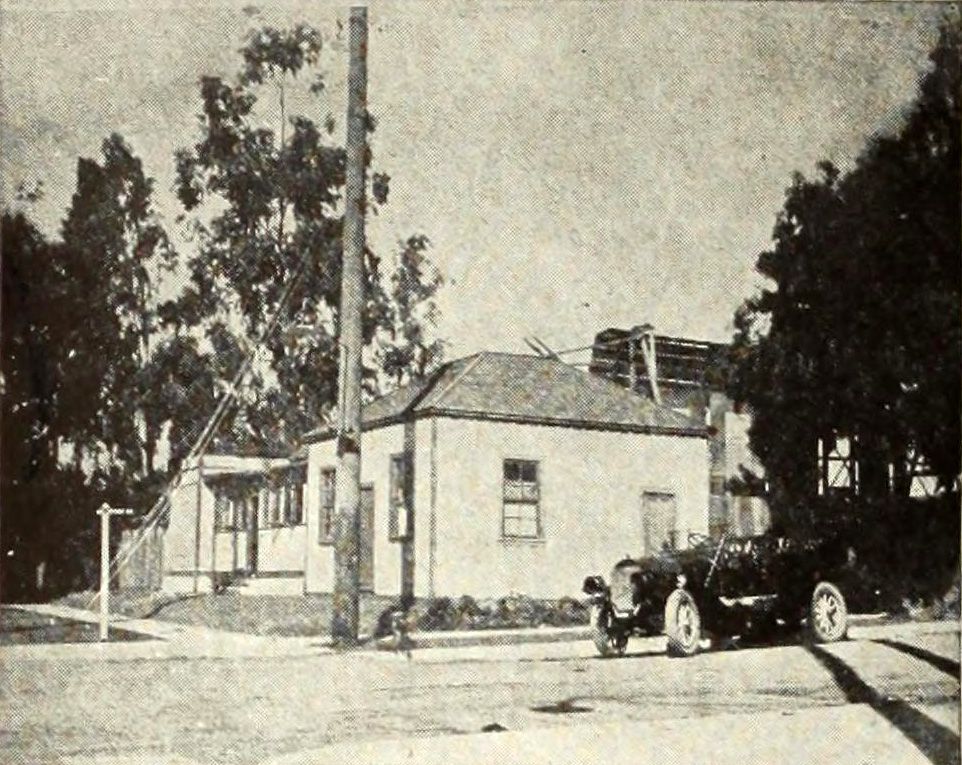
Consolidation came almost immediately. The Universal Film Manufacturing Company was incorporated in New York in April 1912 and absorbed Nestor along with the New York Motion Picture Company, Champion and others within weeks. Universal was a New York company on paper, but its production moved steadily to California, and in March 1915 it opened Universal City, a 230-acre lot that was the largest production facility in the world.[13]
A studio of that size was a factory, and it was run like one. Standing sets were built to be reused and redressed, several companies shot at once on the same lot, and the work was divided among departments that specialised and stayed put. It was the same logic that Henry Ford was applying to automobiles at Highland Park at exactly the same moment, arrived at independently and for the same reason: the demand was larger than craft production could meet. Universal City also sold tickets to watch the filming, which tells you how novel the whole business still was.
The Star Who Had No Name
For the first fifteen years of the business, the people on the screen were anonymous. Producers did not print their names, and the reason was commercial rather than snobbish: a performer with a name could ask for money, and a performer without one could be replaced. Audiences invented names anyway. The most popular actress in America was known as the Biograph Girl, because Biograph would not say what she was called.
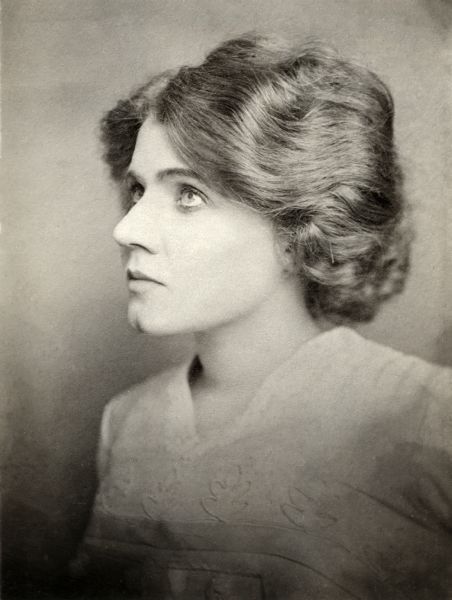
Her name was Florence Lawrence, and in 1910 Carl Laemmle hired her away to his Independent Moving Pictures Company. What he did next is usually told as the beginning of the star system. A story appeared that she had been killed by a streetcar in St. Louis. Laemmle then took out an advertisement headed "We Nail a Lie," blamed the rumour on his enemies in the trust, announced that Miss Lawrence was alive and well and appearing in his next picture, and sent her to St. Louis in person to prove it. The crowd that met her is supposed to have rivalled the one that turned out for President Taft. Accounts of the stunt differ in their details and in their dates, and historians disagree about whether Laemmle invented the star system or merely noticed it first.[14]
Either way the point was made, and it was a point about ownership. The trust's business rested on controlling the machinery. Laemmle had found something the patents did not cover and could not reach, because it did not live in a camera. It lived in the audience's attachment to a face, and whoever that face belonged to could, eventually, name a price.
The Barn at Selma and Vine
In 1913 Jesse Lasky, a vaudeville producer who had just failed as a New York restaurateur, formed a feature film company with his brother-in-law Samuel Goldfish, the lawyer Arthur Friend, and a theatre director with no film experience named Cecil B. DeMille. They sent DeMille west, originally toward Flagstaff, and he carried on to Los Angeles and leased a barn at Selma and Vine, with its attached studio facilities, for $250 a month.[15]
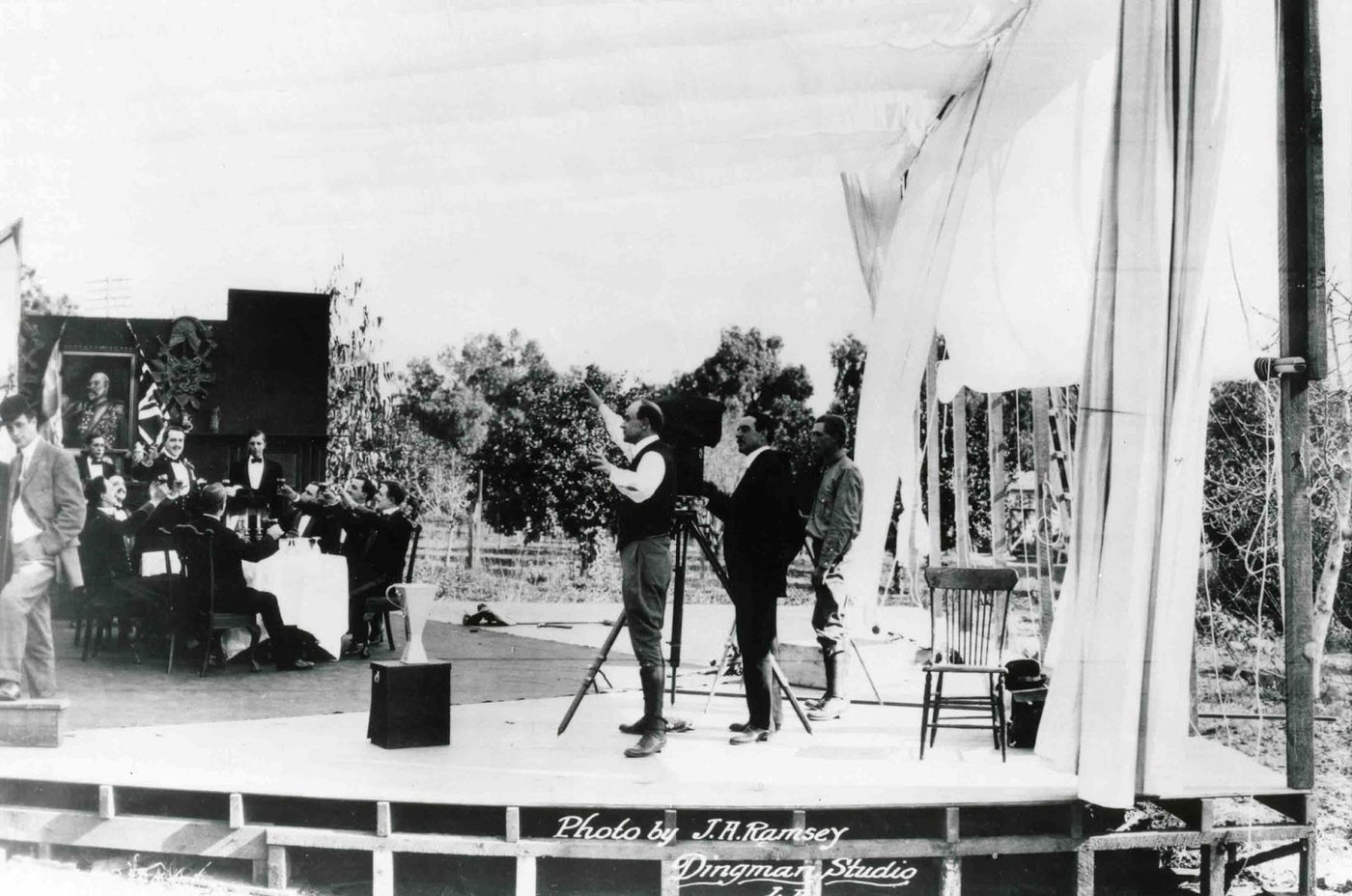
What they made there was The Squaw Man, generally called the first feature film produced in Hollywood. The exact start of filming is unsettled, with some accounts giving December 29, 1913 and others February 14, 1914.[16] It cost in the region of $15,000 and returned many times that,[17] which was the point. A feature could earn what a one-reeler never would, because it could fill an evening and justify a higher ticket, and the barn on Vine Street had just proved it to an industry that had spent years insisting audiences would not sit still for an hour.
The gamble in a feature was real, and the industry had been arguing about it for years. The nickelodeon's economics depended on turnover: a short programme, a full house, everybody out, the next house in, repeated from noon until late. A film that ran an hour cut the number of showings in a day and demanded a building with seats people would tolerate for that long, which storefronts did not have. The objection was never that audiences could not follow a long story, which was obviously untrue of anyone who had ever been to a play. It was that the buildings and the ticket prices were wrong for it. Features won the argument by forcing both to change, and the men who had built their trade on five-cent turnover were mostly not the ones who profited from the change.

The economics of the whole move west are visible in four numbers from those years. In 1911 a studio was a tavern you rented for the price of a good suit. By 1915 it was 230 acres.
On June 28, 1916 the Lasky company merged with Adolph Zukor's Famous Players to become Famous Players-Lasky, with Zukor as president and Lasky as vice-president in charge of production.[18] Zukor had taken over Paramount as a distributor two weeks earlier, so the new company could make pictures and put them into theatres, which is the combination that would define the studio era.[19] The same impulse to merge was running through American industry that decade, from oil to the carmakers consolidating into General Motors, and for the same reason: scale was cheaper than competition.
What a Star Cost
Once names were printed, the price of them moved very fast. Charlie Chaplin signed with Keystone in 1913 at about $150 a week. A year later Essanay offered him $1,250 a week and a bonus of $10,000. In 1916 Mutual gave him $10,000 a week with a signing fee of $150,000, which worked out at something close to $670,000 for the year, and in 1917 First National contracted for eight pictures at a million dollars. The figures differ between sources and should be read as the order of magnitude rather than the ledger.[20] What is not in doubt is the shape: a performer's pay rose roughly sixtyfold in three years.
Mary Pickford's rose in the same way and she was the better businesswoman. Her 1915 contract paid $2,000 a week and half the profits on ten pictures a year; her 1916 contract paid $10,000 a week with profit participation that guaranteed her over a million dollars annually; late in 1918 she moved to First National for $675,000 to make three films.[21] She also took control of her own production unit, which mattered more than the money, because it meant the studio was now a service she bought rather than an employer she answered to.
This was the hinge on which the next decade turned. The business had been built on the assumption that films were interchangeable product sold by the foot. By 1917 the most valuable asset in it was a handful of people, and none of those people owned a theatre or a distribution network. That imbalance could not last, and it did not.
A Business, Pure and Simple
While the money was arriving, so was the censor. In February 1915 the Supreme Court decided Mutual Film Corp. v. Industrial Commission of Ohio, a challenge to Ohio's board of film censors brought by a distributor. The Court ruled unanimously against the film industry. Motion pictures, Justice McKenna wrote, were "a business, pure and simple, originated and conducted for profit," and not to be regarded as part of the press or as organs of public opinion. They therefore had no claim on free speech protection, and a state was free to license what could be shown.[22]
The decision stood for thirty-seven years, until Joseph Burstyn, Inc. v. Wilson overturned it in 1952. In the meantime it shaped the industry's instincts permanently. State and municipal censor boards multiplied, each with its own standards, and a producer selling into all of them learned to anticipate the strictest. The habit of self-censorship that produced the Hays Code in the 1930s was learned in the years right after 1915, and it was learned because the Supreme Court had said that films were merchandise.
The point was made unmissable within weeks. The Birth of a Nation opened in February 1915, cost somewhere around $110,000 to make, and earned more than any film had earned before. Its receipts are not firmly documented, though Epoch reported $4.8 million cumulatively by the end of 1917.[23] It was also a work of explicit racist propaganda that presented the Ku Klux Klan as heroes, and it was met with protests, lawsuits and bans in a number of cities. The film demonstrated simultaneously that the medium could command a national audience and that nobody had settled who, if anyone, was entitled to tell it no.
The War Hands Hollywood the World
The decisive advantage arrived from outside the industry altogether. France and Italy had dominated film exports before 1914, with Pathe the largest single supplier to the American market. The war wrecked them. Studios closed, crews were conscripted, and the chemical plants that made raw stock were turned over to explosives.
American producers inherited markets they had not won, and they kept them. By the time the Treaty of Versailles was signed in 1919, ninety percent of the films screened in Europe, Africa and Asia were American. The one exception was Germany, which had been cut off from American pictures for the duration and built its own industry behind that wall.[24] The figure is for films shown rather than films made, but for an industry selling prints it was the figure that counted.
The reversal inside France is the clearest measure of it. American pictures took about a third of the French market by 1916 and about half by 1918, in a country whose own industry had been the largest supplier in the world a few years earlier. Pathe survived by giving up production and concentrating on distribution and exhibition, which is to say by becoming a customer of the people who had replaced it. Into the early 1920s only twenty to thirty percent of the films shown in French cinemas were French.[25] An industry can lose a market in four years and spend a century failing to get it back.
At home the war years brought the exhibitors into the fight. In 1917 twenty-six of the largest first-run cinema chains in the country combined as First National Exhibitors' Circuit, organised by Thomas L. Tally and J. D. Williams partly in reaction to Paramount's dominance over what they were allowed to book.[26] First National then began financing production itself, which is how it came to be writing million-dollar contracts to Chaplin and Pickford. Every part of the chain was now trying to own the parts next to it.
The Trust Falls and the Stars Take Over
The Motion Picture Patents Company did not survive the decade. A federal suit found the combination illegal, the Third Circuit affirmed in 1917, the Supreme Court declined to hear it, and by 1918 the trust was gone.[27] It was one of a run of federal actions against combinations in those years, part of the broader expansion of federal regulatory power under Woodrow Wilson. By the time it collapsed it had been overtaken anyway. Its patents had expired or been designed around, its licensees had been out-produced, and the independents it had tried to exclude were now the industry.
What replaced it was not competition but a different concentration. Zukor's Famous Players-Lasky made films and distributed them through Paramount; First National's exhibitors made films to fill their own theatres. The stars, who were the one thing neither side could manufacture, were being bid between them.
On February 5, 1919 Charlie Chaplin, Mary Pickford, Douglas Fairbanks and D. W. Griffith incorporated United Artists. Each took a quarter of the preferred shares and a fifth of the common, with the last fifth going to their lawyer, William Gibbs McAdoo, who had been Wilson's Treasury Secretary and was his son in law.[28] The company made nothing itself. It existed to distribute what its four owners made, so that the people whose faces filled the screen would keep the money their faces earned.
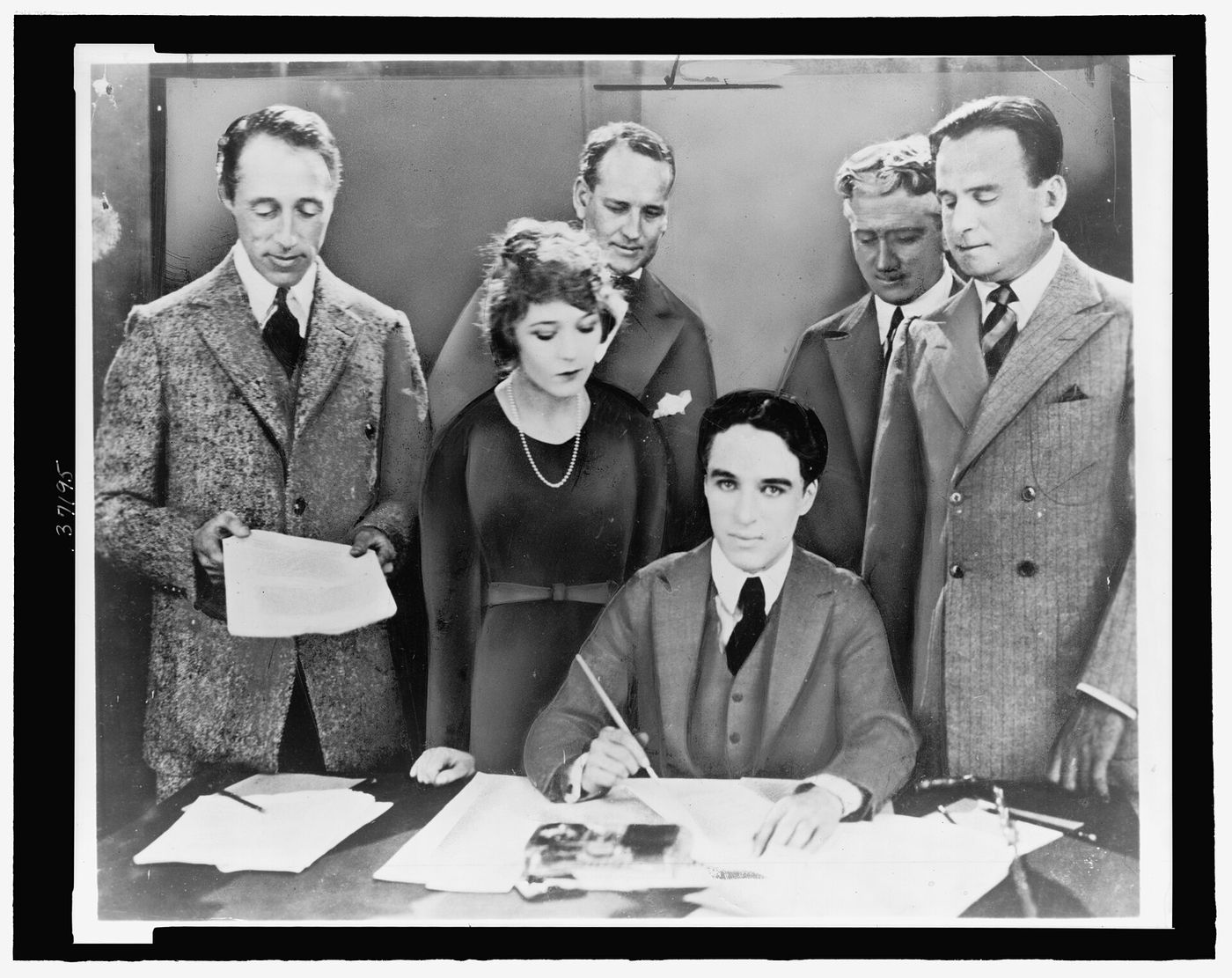
The reaction from the people they were leaving is the best summary of what had changed. Richard Rowland of Metro is supposed to have said that the lunatics had taken charge of the asylum. The line survives because it was wrong in an interesting way. The performers had not seized the asylum; they had noticed that the asylum's value was mostly them.
Twelve years earlier a Chicago director had come to Los Angeles because it was raining at home, and had been murdered at his own studio before the place he founded had a name worth saying. By 1919 the industry had a permanent address, a factory system, the world market, a Supreme Court ruling that it was merchandise rather than speech, and a company owned by its own talent. Nearly every argument the next fifty years would have about Hollywood, over monopoly, over censorship, over who is owed what for a performance, was already in place and already being had. A new medium was coming up behind it in the wireless companies that would become broadcast radio, and it would repeat most of the same arguments from the beginning.
Places in this Story
The places this story moves through, in order — follow them on the interactive map →
- Los Angeles, California 1907
Francis Boggs brought a Selig Polyscope crew from Chicago to finish a Count of Monte Cristo, building a set on a Main Street rooftop that is generally considered the first movie studio on the West Coast.
- West Orange, New Jersey December 1908
Edison combined his manufacturing company with nine other patent holders to form the Motion Picture Patents Company, which licensed cameras, projectors and raw stock and later the theatres themselves.
- Edendale, Los Angeles, California 1909
Boggs took a bungalow here as a permanent base, the first standing motion picture studio on the West Coast. He was shot dead at the Selig lot on October 27, 1911.
- St. Louis, Missouri 1910
Carl Laemmle sent Florence Lawrence here in person to disprove a rumour of her death that he had planted himself, an episode usually told as the beginning of the Hollywood star system.
- Hollywood, Los Angeles, California October 27, 1911
The Nestor Film Company opened the first studio inside Hollywood itself, in a shuttered tavern at Sunset and Gower rented for a few tens of dollars a month. Fifteen companies followed within three months.
- Hollywood, Los Angeles, California December 1913
Cecil B. DeMille leased a barn at Selma and Vine for $250 a month and made The Squaw Man there, generally called the first feature film produced in Hollywood.
- Universal City, California March 1915
Universal opened a 230-acre lot here, the largest film production facility in the world, run on the factory logic that was reshaping American manufacturing in the same decade.
- Columbus, Ohio February 1915
Ohio's board of film censors was upheld by the Supreme Court in Mutual Film Corp. v. Industrial Commission of Ohio, which held that films were a business and not protected speech until the ruling was overturned in 1952.
- New York, New York June 28, 1916
The Lasky company merged with Adolph Zukor's Famous Players, combining production with the Paramount distribution arm Zukor had taken over two weeks before.
- Los Angeles, California February 5, 1919
Chaplin, Pickford, Fairbanks and Griffith incorporated United Artists to distribute their own pictures, so that the stars would keep the money their names earned.
Important Dates
Francis Boggs took a Selig Polyscope crew to southern California to finish exteriors a Chicago winter had stopped; sources date the trip to late 1907 or early 1908.
Edison and nine other patent holders formed the Motion Picture Patents Company.
Boggs shot the first films made entirely in California and took a bungalow in Edendale as the first permanent West Coast studio.
D. W. Griffith made In Old California in Hollywood for Biograph, the first film shot there.
Carl Laemmle publicised Florence Lawrence by name after planting a false report of her death, an episode usually told as the start of the star system.
The trust formed the General Film Company and took over the exchanges that rented films to exhibitors.
Nestor opened the first studio inside Hollywood. Francis Boggs was shot dead at the Selig lot the same day.
The Universal Film Manufacturing Company was incorporated in New York and absorbed Nestor within weeks.
Cecil B. DeMille leased a barn at Selma and Vine and began The Squaw Man.
Mutual Film Corp. v. Industrial Commission of Ohio held that films were a business and not protected speech.
The Birth of a Nation opened, earning more than any film before it and drawing protests and bans.
Universal City opened on 230 acres, the largest film production facility in the world.
Famous Players and the Lasky company merged, with Zukor as president and Lasky running production.
Twenty-six first-run cinema chains combined as First National Exhibitors Circuit and began financing production.
The Third Circuit affirmed that the Motion Picture Patents Company was an illegal monopoly.
The Motion Picture Patents Company dissolved, and the European film industries ended the war unable to reclaim their export markets.
Chaplin, Pickford, Fairbanks and Griffith incorporated United Artists to distribute their own films.
Frequently Asked Questions
Why did the film industry move to southern California?
Year-round sunshine let open-air studios shoot most days at a time when film stock was slow and electric light was poor, and the landscape ran from ocean to desert within a short drive. Cheap land, unorganised labour and distance from the Edison trust all helped, though the trust reason is often overstated, since its own members were in California first.
What was the first film shot in Los Angeles?
A Selig Polyscope Count of Monte Cristo, whose exteriors Francis Boggs shot in southern California after a Chicago winter stopped production. Sources date the trip to late 1907 or early 1908 and usually catalogue the film as 1908.
What was the first film shot in Hollywood?
D. W. Griffith's In Old California, made for Biograph and released in March 1910, with Mary Pickford and Lillian Gish in the troupe. Biograph was a member of the Edison trust, so the trust reached Hollywood before the independents did.
What was the Motion Picture Patents Company?
It was a combination formed in December 1908 by Edison and nine other patent holders to control who could make and show films, extended in 1910 by the General Film Company into distribution. A federal court found it an illegal monopoly, the appeal was affirmed in 1917, and it dissolved in 1918.
What was the first movie studio in Hollywood?
The Nestor Film Company opened in a shuttered tavern at Sunset and Gower on October 27, 1911, for thirty or forty dollars a month. Fifteen other companies followed it into the district within three months.
How did the Hollywood star system begin?
Producers kept performers anonymous so they could not demand higher pay, until Carl Laemmle hired Florence Lawrence away from Biograph in 1910 and publicised her name through a staged rumour of her death. Within seven years the biggest names were signing million-dollar contracts.
Why is The Squaw Man important?
It is generally called the first feature film produced in Hollywood, made by Cecil B. DeMille in a barn leased at Selma and Vine for $250 a month. It cost around $15,000 and earned many times that, proving a feature could do what a one-reeler could not.
Were films protected by free speech before 1952?
No. Mutual Film Corp. v. Industrial Commission of Ohio (1915) held that motion pictures were "a business, pure and simple" rather than part of the press, leaving states free to censor them until Joseph Burstyn, Inc. v. Wilson overruled it in 1952.
How did World War I help Hollywood?
The war shut down the French and Italian studios that had dominated film exports, conscripting crews and turning film-stock plants over to explosives. By 1919 ninety percent of films screened in Europe, Africa and Asia were American, with Germany the exception.
Why was United Artists founded?
Chaplin, Pickford, Fairbanks and Griffith incorporated it on February 5, 1919 to distribute their own films rather than depend on the studios and exhibitor circuits bidding for them. It produced nothing itself; it existed so the stars kept the money their names earned.
Bibliography
AFI Catalog of Feature Films. Entry on the Selig Polyscope Count of Monte Cristo. Accessed October 24, 2026. https://catalog.afi.com/Catalog/moviedetails/34300
Bahn, Paul. The Archaeology of Hollywood: Traces of the Golden Age. Lanham: Rowman and Littlefield, 2014.
"The Birth of a Nation." Wikipedia. Accessed October 24, 2026. https://en.wikipedia.org/wiki/The_Birth_of_a_Nation
"Behind the Curtain at the Nickelodeon: America's First Movie Theatre." Theatre Historical Society of America. Accessed October 24, 2026. https://historictheatres.org/behind-the-curtain-at-the-nickelodeon-americas-first-movie-theatre/
"The Film Industry of the Major European Countries During the First World War." Journal of European Economic History. Accessed October 24, 2026. https://jeeh.it/article/download/577/607
"Famous Players-Lasky." Wikipedia. Accessed October 24, 2026. https://en.wikipedia.org/wiki/Famous_Players%E2%80%93Lasky
"First National Pictures." Wikipedia. Accessed October 24, 2026. https://en.wikipedia.org/wiki/First_National_Pictures
"Florence Lawrence: The First Movie Star." History.com. Accessed October 24, 2026. https://www.history.com/articles/florence-lawrence-the-first-movie-star
"Francis Boggs." Wikipedia. Accessed October 24, 2026. https://en.wikipedia.org/wiki/Francis_Boggs
Higgins, Lila. "California Holly: How Hollywood Didn't Get Its Name." Natural History Museum of Los Angeles County. Accessed October 24, 2026. https://nhm.org/stories/california-holly-how-hollywood-didnt-get-its-name
"Hollywood's First Major Film Company Created." History Today. Accessed October 24, 2026. https://www.historytoday.com/archive/hollywoods-first-major-film-company-created
"Motion Picture Patents Company." Wikipedia. Accessed October 24, 2026. https://en.wikipedia.org/wiki/Motion_Picture_Patents_Company
"Mutual Film Corp. v. Industrial Commission of Ohio (1915)." The Free Speech Center, Middle Tennessee State University. Accessed October 24, 2026. https://firstamendment.mtsu.edu/article/mutual-film-corp-v-industrial-commission-of-ohio/
"Nestor Film Company." Wikipedia. Accessed October 24, 2026. https://en.wikipedia.org/wiki/Nestor_Film_Company
"Overview of His Life." The Charlie Chaplin Official Website. Accessed October 24, 2026. https://www.charliechaplin.com/en/articles/21-overview-of-his-life
"Silent Film Era: Post-World War I European Cinema." Encyclopaedia Britannica. Accessed October 24, 2026. https://www.britannica.com/topic/silent-film-era/Post-World-War-I-European-cinema
Thanhouser Company Film Preservation. "Chapter 2: The Trust." Accessed October 24, 2026. https://www.thanhouser.org/tcocd/Narrative_files/c2s5.htm
"United Artists." Wikipedia. Accessed October 24, 2026. https://en.wikipedia.org/wiki/United_Artists
"United States v. Motion Picture Patents Co." Wikipedia. Accessed October 24, 2026. https://en.wikipedia.org/wiki/United_States_v._Motion_Picture_Patents_Co.
"Universal Studios Lot." Accessed October 24, 2026. Archived at https://web.archive.org/web/20241204160006/http://www.universalstudioslot.com/about-us
"William Selig." Wikipedia. Accessed October 24, 2026. https://en.wikipedia.org/wiki/William_Selig
Citations
- On the nickelodeon boom: Harry Davis and John P. Harris opened a theatre on Smithfield Street in Pittsburgh in June 1905 showing nothing but films at five cents, which gave the form its name. More than a hundred followed in Pittsburgh alone, and one estimate has nearly two million Americans visiting one by 1907. https://historictheatres.org/behind-the-curtain-at-the-nickelodeon-americas-first-movie-theatre/ ↑
- "Francis Boggs." Wikipedia. Accessed October 24, 2026. Boggs took a Selig Polyscope crew to southern California to finish exteriors; sources date the trip to late 1907 or early 1908 and usually catalogue the film as 1908. https://en.wikipedia.org/wiki/Francis_Boggs ↑
- AFI Catalog of Feature Films, entry on the Selig Polyscope Count of Monte Cristo. The rooftop set on Main Street is described as generally considered the first movie studio on the West Coast, and a bungalow in Edendale secured by the autumn of 1909 as the first permanent one. https://catalog.afi.com/Catalog/moviedetails/34300 ↑
- AFI Catalog of Feature Films, entry on the Selig Polyscope Count of Monte Cristo. The rooftop set on Main Street is described as generally considered the first movie studio on the West Coast, and a bungalow in Edendale secured by the autumn of 1909 as the first permanent one. https://catalog.afi.com/Catalog/moviedetails/34300 ↑
- "William Selig." Wikipedia, and the Francis Boggs entry. Boggs was shot dead at the Selig studio in Los Angeles on October 27, 1911, and Selig was wounded in the same attack. Accounts differ on whether the killer was a gardener or a janitor, and on the spelling of his name. https://en.wikipedia.org/wiki/William_Selig ↑
- Higgins, Lila. "California Holly: How Hollywood Didn't Get Its Name." Natural History Museum of Los Angeles County. Accessed October 24, 2026. https://nhm.org/stories/california-holly-how-hollywood-didnt-get-its-name ↑
- "Motion Picture Patents Company." Wikipedia. Accessed October 24, 2026. The company was formed in December 1908 from the Edison Manufacturing Company and nine other holders of film patents. https://en.wikipedia.org/wiki/Motion_Picture_Patents_Company ↑
- Thanhouser Company Film Preservation, "The Trust," on the General Film Company of April 1910 and the licence fees charged to exhibitors, reported at two dollars a week and later five, plus a royalty by the foot. https://www.thanhouser.org/tcocd/Narrative_files/c2s5.htm ↑
- Thanhouser Company Film Preservation, "The Trust," on the General Film Company of April 1910 and the licence fees charged to exhibitors, reported at two dollars a week and later five, plus a royalty by the foot. https://www.thanhouser.org/tcocd/Narrative_files/c2s5.htm ↑
- "In Old California." Biograph, released March 10, 1910. Griffith travelled west with a troupe that included Mary Pickford and Lillian Gish. https://en.wikipedia.org/wiki/1910_in_film ↑
- "Nestor Film Company." Wikipedia. Accessed October 24, 2026. Nestor opened in a shuttered tavern at Sunset and Gower on October 27, 1911; the rent is given as thirty dollars a month in some accounts and forty in others. https://en.wikipedia.org/wiki/Nestor_Film_Company ↑
- Bahn, Paul. The Archaeology of Hollywood: Traces of the Golden Age. Lanham: Rowman and Littlefield, 2014. ↑
- "Universal Studios Lot." Accessed October 24, 2026. Archived at https://web.archive.org/web/20241204160006/http://www.universalstudioslot.com/about-us ↑
- On Carl Laemmle and Florence Lawrence, 1910: the planted death story, the "We Nail a Lie" advertisement and the St. Louis appearance. Accounts differ on the date of the appearance, given variously as March and April 1910. https://www.history.com/articles/florence-lawrence-the-first-movie-star ↑
- "Hollywood Heritage Museum." Wikipedia. Accessed October 24, 2026. The barn was leased with its studio facilities at $250 a month; this source dates the start of production to February 14, 1914, while other accounts have filming beginning on December 29, 1913. https://en.wikipedia.org/wiki/Hollywood_Heritage_Museum ↑
- "Hollywood Heritage Museum." Wikipedia. Accessed October 24, 2026. The barn was leased with its studio facilities at $250 a month; this source dates the start of production to February 14, 1914, while other accounts have filming beginning on December 29, 1913. https://en.wikipedia.org/wiki/Hollywood_Heritage_Museum ↑
- Bahn, Paul. The Archaeology of Hollywood: Traces of the Golden Age. Lanham: Rowman and Littlefield, 2014. ↑
- "Hollywood's First Major Film Company Created." History Today. On the formation of Famous Players-Lasky, June 28, 1916, with Zukor as president and Lasky as vice-president in charge of production. https://www.historytoday.com/archive/hollywoods-first-major-film-company-created ↑
- "Famous Players-Lasky." Wikipedia. Accessed October 24, 2026. https://en.wikipedia.org/wiki/Famous_Players%E2%80%93Lasky ↑
- Chaplin's contracts are reported inconsistently. Keystone 1913 is usually given as $150 a week and once as $175; Essanay 1915 as $1,250 a week with a $10,000 bonus, and once as $1,000; Mutual 1916 as $10,000 a week with a $150,000 bonus, amounting to about $670,000 for the year; First National 1917 as $1 million for eight pictures. https://www.charliechaplin.com/en/articles/21-overview-of-his-life ↑
- Pickford's 1915 contract is reported at $2,000 a week and half the profits on ten pictures a year; her 1916 contract at $10,000 a week with profit participation, guaranteeing over $1 million a year; and her move to First National late in 1918 at $675,000 for three pictures. https://en.wikipedia.org/wiki/1916_in_film ↑
- Mutual Film Corp. v. Industrial Commission of Ohio, 236 U.S. 230 (1915), argued January 6 and 7 and decided February 23, 1915. Justice McKenna wrote that motion pictures were "a business, pure and simple." Overruled by Joseph Burstyn, Inc. v. Wilson (1952). https://firstamendment.mtsu.edu/article/mutual-film-corp-v-industrial-commission-of-ohio/ ↑
- Figures for The Birth of a Nation vary widely. The budget is given at roughly $110,000 to $112,000. Its gross is not firmly documented; Epoch reported cumulative receipts of $4.8 million at the end of 1917. https://en.wikipedia.org/wiki/The_Birth_of_a_Nation ↑
- "Silent Film Era: Post-World War I European Cinema." Encyclopaedia Britannica. Accessed October 24, 2026. The ninety percent figure is for films screened, not films produced, and Germany was the exception, having been cut off from American pictures during the war. https://www.britannica.com/topic/silent-film-era/Post-World-War-I-European-cinema ↑
- On the reversal in the French market: American films are reported at about a third of it by 1916 and about half by 1918, with only twenty to thirty percent of films shown in France being French into the early 1920s. Pathe and Gaumont cut production sharply after the war and concentrated on distribution and exhibition. https://jeeh.it/article/download/577/607 ↑
- "First National Pictures." Wikipedia. Accessed October 24, 2026. First National Exhibitors' Circuit was formed in 1917 from twenty-six of the largest first-run cinema chains in the United States, by Thomas L. Tally and J. D. Williams, partly in reaction to Paramount's dominance. https://en.wikipedia.org/wiki/First_National_Pictures ↑
- "United States v. Motion Picture Patents Co." Wikipedia. Accessed October 24, 2026. The Third Circuit affirmed the finding of a monopolistic conspiracy in 1917; the Supreme Court declined review and the combination dissolved in 1918. https://en.wikipedia.org/wiki/United_States_v._Motion_Picture_Patents_Co. ↑
- "United Artists." Wikipedia. Accessed October 24, 2026. Chaplin, Pickford, Fairbanks and Griffith incorporated the company on February 5, 1919, each holding 25 percent of the preferred and 20 percent of the common shares, with the remaining 20 percent going to William Gibbs McAdoo. https://en.wikipedia.org/wiki/United_Artists ↑