The British Empire was the largest empire in world history, reaching its greatest territorial extent and global influence in the years just before World War I. Yet beneath the surface of this apparent strength, economic, political, and geopolitical changes were already beginning to reshape the balance of power. This article examines the evidence that the period from 1913 to 1920 marked both the height of the British Empire and the beginning of its long decline as the United States emerged as the world's leading power.
The British Empire Reaches Its Height
Historians, economists, and statesman recognize that something changed within the British Empire during the period from 1913 to 1920. Through the events of World War I, the cards in the deck of global geopolitics were shuffled and reorganized. As a result of the reshuffling, the United States took the unquestionable title as the most powerful empire in the world and has held the title ever since. And while this may not have been immediately recognized by Britain(or the world), this was the turning point where Britain took a back seat to America. For some, to pinpoint a specific date for such an event, which undoubtedly was also a process, may seem erroneous. However, this article will provide evidence for the claim that 1913 to 1920 was the height of the British Empire.
When the evidence is examined, World War I and the decisions that were made during and in its aftermath, cost the British Empire and its people immensely. Although it is easy to look at the causes and try to place blame, there is also a force which is outside any human control dictating the direction of empires. That's because when a rising empire reaches 144 years of age, this is always the moment when the empires of the western world have historically changed hands.
The British Empire's Territory
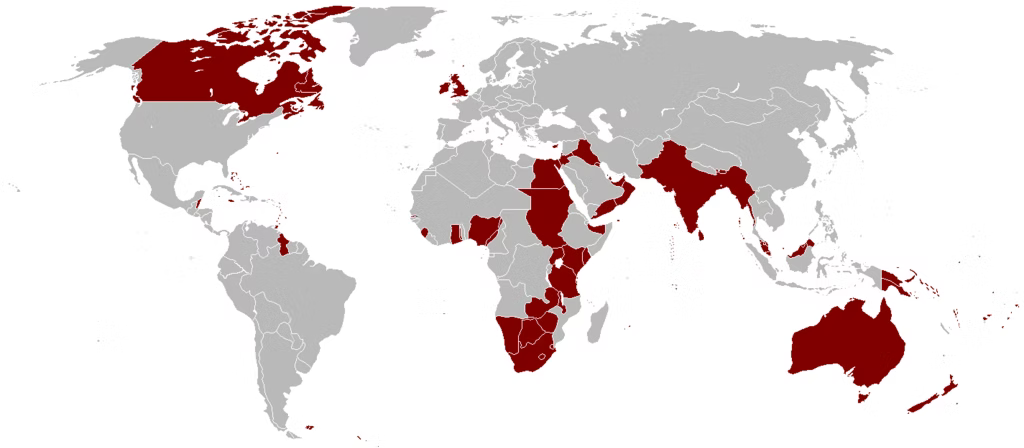
By 1913, the British Empire had grown to encompass 24 percent of the world's landmass and also roughly the same percentage of the global population. This included over 400 million people which at the time was the largest empire in world history. In 1913, even its neighboring island, Ireland, began to more aggressively vie for its independence, which it declared in 1919 and then ultimately achieved in 1920-21. At the same time, Mahatma Gandhi also began a movement to encourage civil disobedience to the British government in India.
An article from JD Whelpley writing for the North American Review in 1925 acknowledged that something changed in 1913. He stated:
In 1913, the British Empire was the most powerful political and economic organization in the world. ...Great Britain, the Mother Country of the Empire, gave of her strength to the Allies with such liberality as not only to check any natural increase but to bring about a certain degree of exhaustion.[1]
Whelpley went on to describe that within Great Britain, a new class of statesman arose which wished to do away with the old guard. Furthermore, it seemed that a nationalist movement was occurring at almost every edge of the British Empire. He wrote:
Canada has taken the lead in asserting her political and economic independence...and all other English speaking Dominions have followed closely in her wake. The Nationalist movement in India, Egypt and other places under the control of the British Government has grown to such dimensions as to cause grave doubts as to British security in those directions.[2]
For many nations, the fact that they were required to fight in a war on behalf of the British, had an effect which shifted their broader sentiment towards nationalism.
Britain's Economic Situation
As World War I drug on, the nations involved continually believed it would be over soon. By the time 1916 arrived, the five major nations involved at that point(Austria-Hungary, Britain, Germany, France, and Russia) were spending $3 billion per month. This equaled 50 percent of their combined GDP at the time. The war quickly became the most expensive war to date.[3]
To contrast the pre-war period with the post-war period, British unemployment rates remained steadily in the range of three percent from 1851 to 1913. Following the war, the rates of unemployment sat stubbornly between nine and fifteen percent providing further indication that something changed.[4] While some sectors of the economy flourished after the war, British exports were the hardest hit following the war.
The bottom line was that the volume of British exports in the mid-1920s was only about 75% of its 1913 level.[5]
By 1920, the GDP deflator stood at 270.8 (1913 = 100) and the national debt was £7.8 billion (1.3 times GDP) compared with £0.62 billion (0.25 times GDP) in 1913.[6]
These two measurements of the British economy following World War I, although simple, highlight the dramatic effects of the war.
Britain's Gold Problem
Similar to the aftermath of most wars, Britain and Europe now had a debt problem on their hands. Out of all the major nations involved in the war, only the United States remained on a gold standard. America had experienced a dramatic influx of gold during the war, just as its new Federal Reserve System was gaining its footing. Ultimately, the amount of debt created by European nations to fund the war, outnumbered the gold backing it. For this reason, the British pound was trading at a discount after the war, around $3.20 relative to what it traded for prior to the war, $4.86. Nevertheless, after the war, British authorities decided that they would try to return to the gold standard at the old par value of $4.86, with the goal to do so by 1925.[7]
The Austrian economist, Murray Rothbard questioned Britain's motive for trying to return to a gold standard at an "overvalued par" since it defied economic logic. Prior to 1920, gold moved more freely between nations and free market interest rates regulated the flow of gold. But again, something changed at this point and in answering his own question, Rothbard acknowledged that America was now "financially predominant."
Why did Britain insist on returning to gold at the old overvalued par? Partly it was a vain desire to recapture old glories, to bring back the days when London was the world's financial center. The British did not seem to realize fully that the United States had emerged from the war as a creditor nation, and financially, the strongest one, so that financial predominance was inexorably moving to New York or Washington.[8]
Unfortunately for Britain, they were never able to return to a true gold standard. Instead, they created something that looked like the gold standard, but in effect, it was not. They did so by limiting normal everyday British citizen's ability to exchange fiat money for gold by stipulating that any gold exchange must be done in bullion, and not in small value coins. By doing so, this kept gold from leaving British vaults except for large depositors such as foreign nations. This gave them hope of returning to an overvalued pound Stirling, without gold escaping their vaults. This system was known by some as the gold-bullion-exchange system and received praise from economists like John Maynard Keynes.
...Keynes emphasized that the gold-exchange standard was a notable advance because it economized on gold internally and internationally, thus allowing greater "elasticity" of money(a longtime code word for ability to inflate credit) in response to business needs. ..."A preference for a tangible reserve currency is...a relic of a time when governments were less trustworthy in these matters than they are now."[9]
Without going into great detail, ultimately, this new system came tumbling to the ground in 1932 during the Great Depression. However, John Maynard Keynes eventually became one of the men responsible for creating a new international system known as the Bretton Woods system in 1944-45.
A Lesson to be Learned By America
In 1913, Britain was the hegemonic leader of the world. In 1914, they believed that World War I would last no longer than a few months. Unfortunately for Britain, the Great War became a turning point in their nation's history. The argument that this was brought on by fiscal irresponsibility caused by an unforeseen war is a lesson that shouldn't be lost on the world at large, or today's empire, America. Empires come and they go...and America will one day also find itself in the rear view mirror of historical empires, however, the lessons of the past are destined to be "relearned" if America doesn't begin taking a different path. The truth is, fiscal spending and debts matter, and Americans will bear the brunt of their nation's fiscal irresponsibility, regardless of whether America maintains reserve currency status or not. Consequences for fiscal recklessness will be paid for by the next generations via inflation. If you find yourself in an older generation, ask yourself how you feel about leaving your children and grandchildren with multi-generational debt. Each generation's legacy is to a large degree established by how they steward their resources for the next generation. Judging by America's fiscal situation, the next generation may not look back upon the previous one with admiration.
Nevertheless, God is in control and the title of most powerful empire will one day leave America and transfer to the next empire when HE says that it is time...and not a minute sooner or later. Christ is the King of kings.
Important Dates
The British Empire reaches its greatest territorial extent.
World War I begins.
Wartime spending reaches unprecedented levels.
Britain's national debt reached £7.8 billion and the GDP deflator rose to 270.8 (1913 = 100), illustrating the severe economic consequences of World War I.
J. D. Whelpley published "The British Empire" in The North American Review, arguing that Britain had been weakened and exhausted by World War I.
Britain officially returned the pound sterling to its pre-war gold parity of $4.86, despite significant changes in the global financial landscape.
Frequently Asked Questions
When was the British Empire at its peak?
Many historians argue that the British Empire reached its peak between 1913 and 1920. During this period, Britain controlled nearly a quarter of the world's landmass and population, making it the largest empire in history.
How large was the British Empire before World War I?
Before World War I, the British Empire governed more than 400 million people and controlled approximately 24 percent of the world's land area. Its vast network of colonies, dominions, and territories made it the dominant global power of the early twentieth century.
How did World War I contribute to the decline of the British Empire?
World War I placed enormous financial and human costs on Britain and its empire. The war increased national debt, weakened economic growth, and accelerated nationalist movements that challenged British rule across the globe.
Why did nationalist movements grow within the British Empire after World War I?
The experience of World War I encouraged many colonies and dominions to seek greater independence from Britain. Countries such as Ireland and nationalist leaders like Mahatma Gandhi in India pushed for self-determination and reduced British control.
What happened to the British economy after World War I?
Britain's economy struggled in the years following World War I, with rising unemployment, reduced exports, and significantly higher government debt. These economic challenges marked a sharp contrast to the relative stability Britain enjoyed before 1914.
How did the United States replace Britain as the world's leading power?
The United States emerged from World War I as the world's largest creditor nation and holder of substantial gold reserves. As Britain's financial position weakened, economic leadership gradually shifted from London to New York, signaling the rise of American global influence.
What lessons can America learn from the rise and decline of the British Empire?
The history of the British Empire demonstrates how war spending, debt accumulation, and fiscal policy can influence a nation's long-term strength. Many historians and economists view Britain's experience as a reminder that even the most powerful empires can face decline when economic fundamentals deteriorate.
Citations
- Whelpley, J. D. “The British Empire.” The North American Review 221, no. 826 (1925): 454–67. http://www.jstor.org/stable/25113398 ↑
- Whelpley. “The British Empire.” ↑
- Ahamed, Liaquat. Lords of Finance: The Bankers Who Broke the World. United Kingdom: Penguin Press, 2009. 76. ↑
- Rothbard, Murray Newton. History of Money and Banking in the United States: The Colonial Era to World War II, A. United States: Ludwig von Mises Institute, 2002. 361. ↑
- Nicholas Crafts, “Walking Wounded: The British Economy in the Aftermath of World War I,” Centre for Economic Policy Research (CEPR) (VoxEU), August 27, 2014, CEPR VoxEU article. https://cepr.org/voxeu/columns/walking-wounded-british-economy-aftermath-world-war-i ↑
- Mitchell, B R (1988), British Historical Statistics. Cambridge: Cambridge University Press. via https://cepr.org. ↑
- Rothbard, Murray Newton. History of Money. 357. ↑
- Rothbard, Murray Newton. History of Money. 357. ↑
- Rothbard, Murray Newton. History of Money. 388. ↑