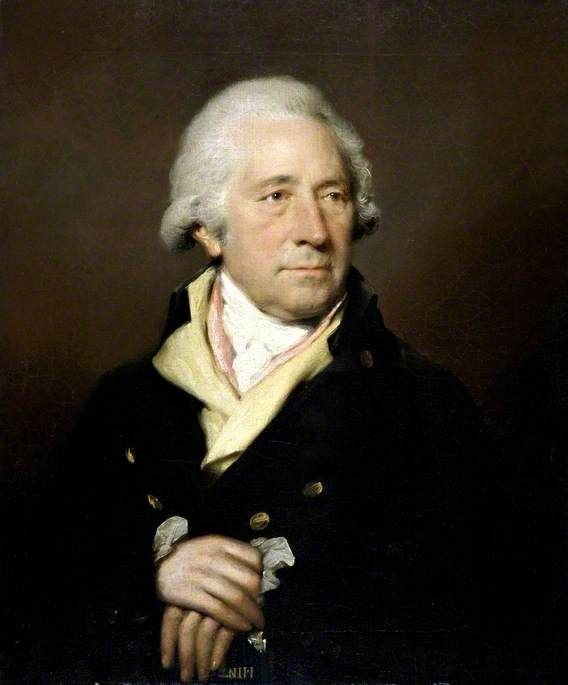
In the winter of 1789 the Albion Mill stood on the Surrey bank of the Thames at the southern foot of Blackfriars Bridge. One modern historian has called it "outstandingly the most advanced industrial building of its day."[1] Behind its classical front, two Boulton & Watt engines drove twenty pairs of millstones. Samuel Smiles, drawing on the Soho papers, put the mill's usual work at 16,000 bushels of wheat in a six-day week. Fashionable Londoners drove down to look at it, and James Watt was irritated to find the mill made a public show of, and constantly crowded with curious and frivolous people. The millers and mealmen of London looked at it too, with very different feelings, since they feared steam would throw their mills out of work.[2] Matthew Boulton, who had promoted the mill and spent long periods in the capital attending to its affairs, was in London that January. On the 27th he wrote to Thomas Wilson, the firm's agent in Cornwall, admitting that he had more letters to write and less strength for hard work than at any time in his life. In the same letter he agreed, with Watt's consent, to excuse the struggling United Mines one month's royalty in every three for as long as the mine kept losing money, up to a year.[3]

That letter holds most of the threads of what followed. Watt's patent on the separate condenser, the improvement that made his engine so much more economical than the old Newcomen pumping engine, had been granted in 1769 and extended by Act of Parliament in 1775 to run until 1800. The partners had spent the 1770s and early 1780s close to ruin, and only in the later 1780s had the business begun to pay. They now had eleven years left in which to collect what they believed they were owed. Those years would prove among the most turbulent in the life of the partnership. Boulton and Watt lost their London showcase to fire, braced for a riot at their own gates, fought the men they called pirates through the courts, watched one son flirt with revolution in Paris, and built a factory designed to outlive their monopoly. They won nearly every battle they chose to fight. Less than two years after the patent expired, however, a young Cornish engineer drove up a hill on Christmas Eve under steam at a pressure Watt had refused to use. This is the story of those twelve years.
The Business of Power
By 1789 Boulton & Watt sold something unusual. In their early contracts the partners did not ask mine owners to buy an engine outright from them. The owners paid for the materials and the erection, and Boulton and Watt took as their royalty one-third of the value of the coal the new engine saved compared with a Newcomen engine doing the same work. To measure that work, Watt devised a counter, a small piece of clockwork fixed to the engine beam and kept under lock, which recorded every stroke. The arrangement seemed fair in principle, but in practice the firm's income depended on the goodwill of the shareholders in the Cornish copper mines, known as adventurers, who had already paid for their engines and resented paying again every year. Over time Boulton came to prefer fixed annual sums for each engine, which caused fewer quarrels than Watt's elaborate tables of coal consumption.[4]
Cornwall had been the firm's first great market, but by the end of the 1780s the rotative engine, which turned a shaft instead of simply working a pump, was bringing in customers of a new kind. When George III questioned Watt at Windsor in the summer of 1790, Watt told him the firm was making engines for almost every purpose, though at present chiefly for brewers, distillers, cotton spinners, and ironmasters, and that they charged by the horse power, at five pounds a year for each horse outside London. Asked how the Albion Mill was getting on, Watt replied, with his usual candor, that it went very well in respect of grinding but not so well in respect of the trade.[5]
The two partners had settled into different roles. Watt, who suffered for years from headaches and depression and hated haggling with mine adventurers, had always relied on Boulton to negotiate, raise money, and keep up appearances. In 1790 Watt moved into a new house he had built at Heathfield, in the parish of Handsworth, and began planting trees on the common land around it. Boulton, then in his early sixties, threw himself into a venture that belonged to him alone and was separate from the engine partnership. A double-acting rotative engine had been installed at his mint beside the Soho Manufactory in 1788, and the new steam-driven coining presses were tested through 1789 and 1790. Boulton saw coinage as a public cause as well as a business, telling a friend that his principal reason for turning coiner was to gratify William Pitt's wish to put an end to the counterfeiting of money. In 1789 he struck a medal to mark the King's recovery from his illness, partly to show what Soho could do. The Royal Mint showed little interest in his offer to make the country's copper coin, so Boulton took orders from the East India Company, colonial governments, and private clients, including French merchants who ordered coins for revolutionary France in 1790 and 1792.[6]
Fire at Blackfriars
The Albion Mill was meant to prove that steam could do on a vast scale what wind and water had done in small mills for centuries. In one week in June 1790 its flour sales reached £6,800, yet Boulton remained unhappy with the way the business and its finances were run. Before he could reorganize it, the mill burned. Accounts of the fire differ. Most modern descriptions have it breaking out at about half past six on the morning of 2 March 1791 and quickly overwhelming the fire engines brought to fight it. Smiles, writing from the Soho papers, dated it to the night of 3 March and blamed incendiaries who, he wrote, had fastened the main cock of the water cistern and chosen the hour of low tide. Boulton suspected foul play and called for a government inquiry, but John Rennie, the designer of the mill's machinery, and Wyatt, its manager, concluded that friction in a poorly greased machine near the kiln had started the blaze. The cause was never settled. Many Londoners saw no reason to mourn, and one placard that circulated afterward wished success to the mills of Albion but no Albion Mills. It has often been suggested that the blackened shell, which stood until 1809, helped inspire William Blake's "dark Satanic mills," since Blake lived nearby in Lambeth, but the connection rests on inference rather than on any statement of his.[7]
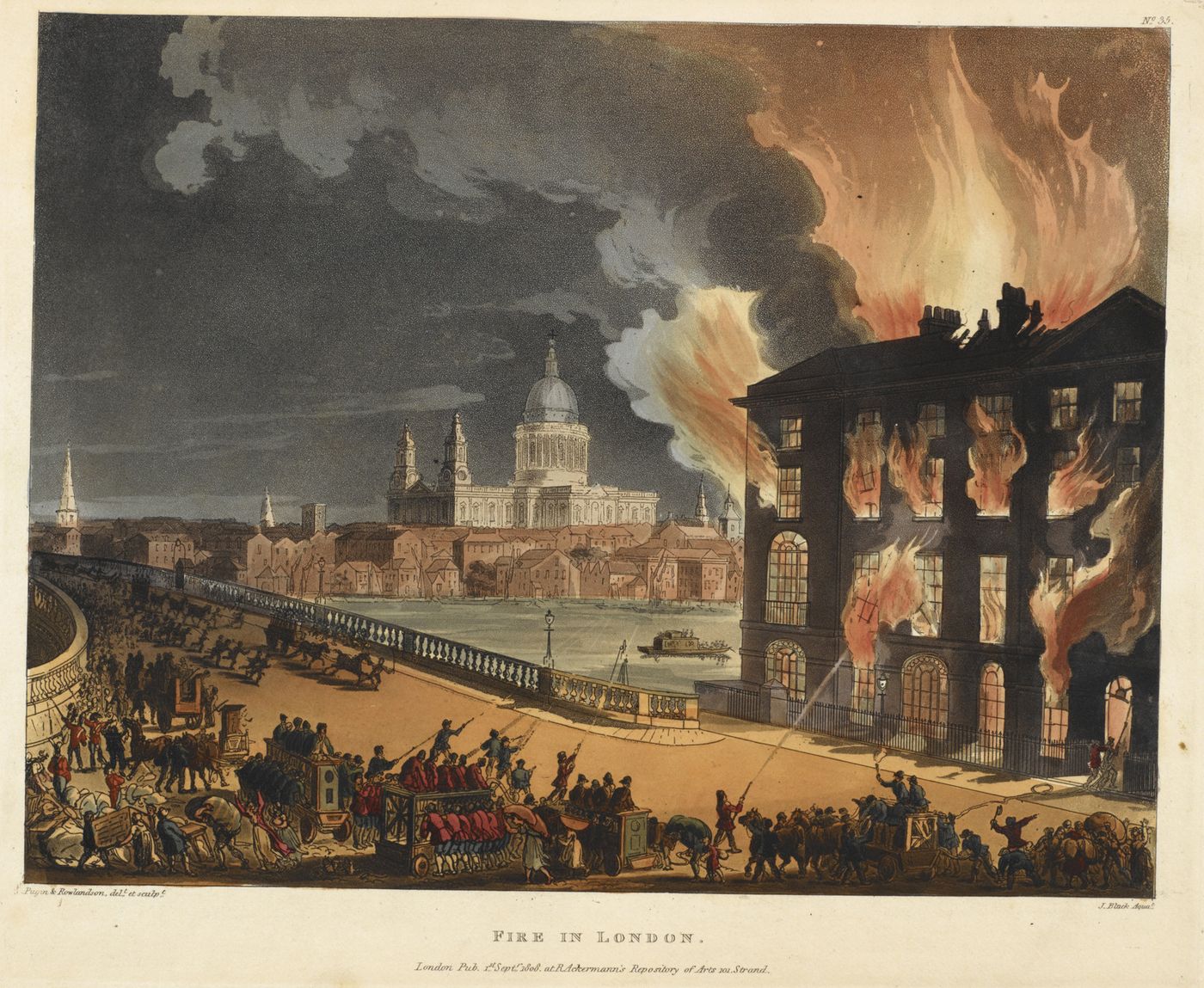
A. W. Skempton puts the insurance at £26,000 on the building and machinery and £15,000 on the stock, with the insurers choosing to pay out in cash rather than rebuild. Smiles put the company's loss at about £10,000 and noted that Boulton and Watt, who held £6,000 and £3,000 of its shares respectively, were the principal sufferers. Twelve days after the fire, Boulton wrote to Wilson that the partners would probably lose nearly the whole of their capital in the mill, adding that since they would never be millers again, they would not need that capital for milling. In May, Erasmus Darwin wrote to his old friend that the burning of the mill had grieved him sincerely, both as the loss of a grand and successful work of human ingenuity and because he feared Boulton had suffered heavily by it.[8]
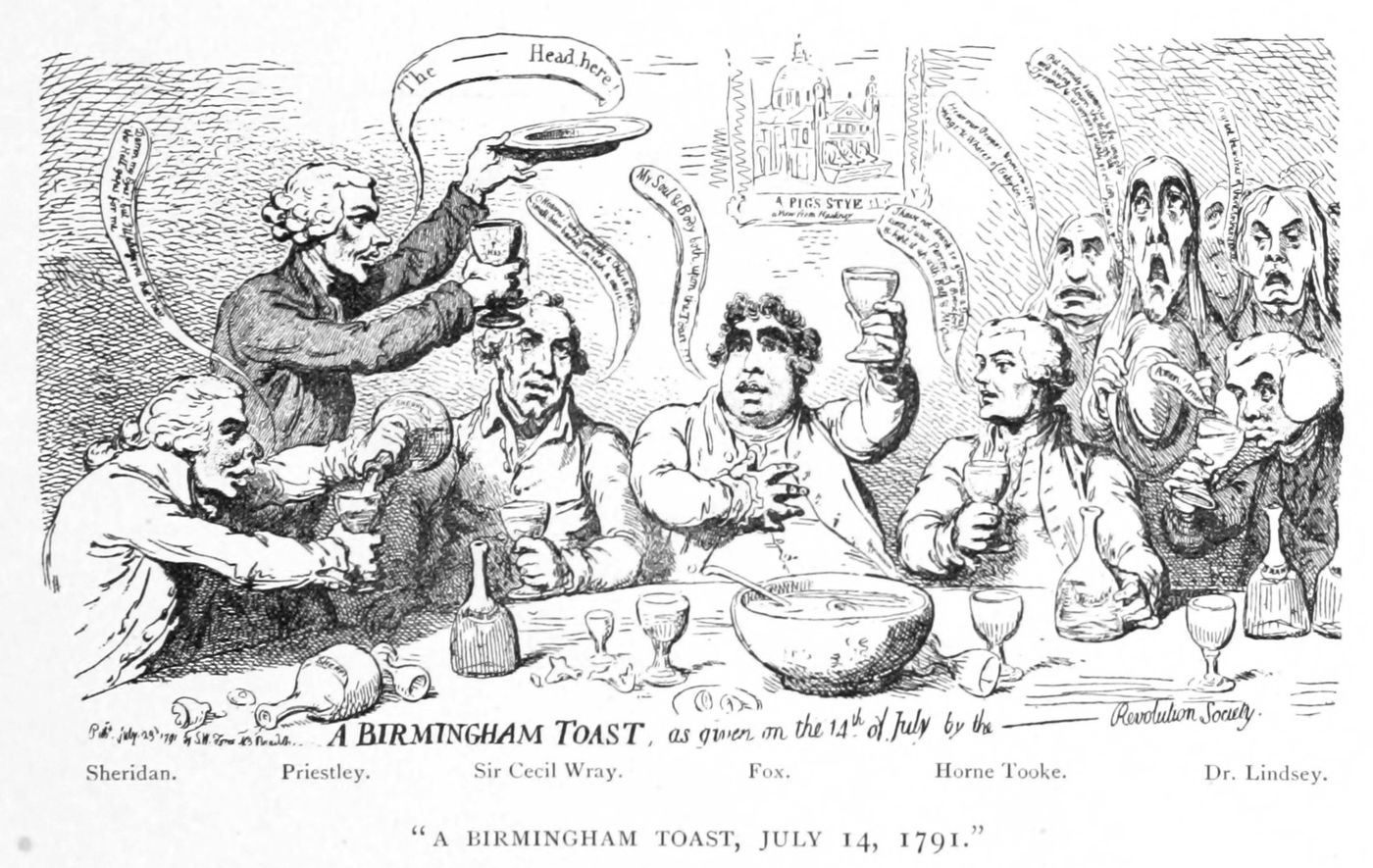
The summer brought a different kind of danger. On 14 July 1791 a dinner was held in Birmingham to celebrate the second anniversary of the fall of the Bastille, and a "Church and King" mob responded by burning the meeting houses of the town's Dissenters and the home and laboratory of Joseph Priestley, a fellow member of the Lunar Society with Boulton and Watt. Over the following days the rioters destroyed several more houses and broke into the house of another Lunar Society member, William Withering. Some of the crowd shouted against "philosophers," and Boulton and Watt feared that Soho would be next. According to Smiles, they gathered their workmen, armed them, and packed up everything portable, but the mob never came. Watt believed Soho had been spared mainly because most of the Dissenters lived in another direction.[9]
Pirates in Cornwall
The deeper threat to the firm came from Cornwall, where the royalty system was beginning to break down. In June 1792 Boulton wrote to the adventurers of Poldice mine that the period during which the partners had waived their share of the savings had long expired, that Wilson had repeatedly asked for the dues without result, and that the firm could not submit to having its premium withheld or reduced without its consent. The same year, Jonathan Hornblower, a Cornish engineer whose family had long built engines in the county, asked Parliament to extend his own patent for a two-cylinder engine. Boulton and Watt, who believed his engine used Watt's principles, opposed the bill, and it failed. Hornblower had wide support among the Cornish adventurers, and both sides argued their cases in newspaper advertisements and pamphlets.[10]
A more direct challenge came from a man the firm had trained. Edward Bull had been an engine man at Bedworth Colliery in 1779 and had gone to Cornwall in 1781 to erect engines for Boulton and Watt. He went on to design an engine in which the steam cylinder was turned upside down and placed directly over the pump, doing away with the heavy rocking beam, and he erected the first at Dolcoath. Ten such engines were built, and the young Richard Trevithick was probably involved in most of them. By the early 1790s Bull was working on his own account. In August 1793 Watt passed on to Wilson a report from Cornwall that Bull had received orders for two engines, had three more being assembled, and was telling people that the patent would soon be broken, with lawyers already engaged.[11] Boulton and Watt sued him. The trial judge reserved for the full Court of Common Pleas the question of whether Watt's patent was valid at all, and in May 1795 the four judges divided evenly. Chief Justice Eyre and Justice Rooke upheld the patent, Justices Buller and Heath held it void, and so no judgment could be given.[12]
The deadlock was costly. Knowing that the patent had only a few years left to run, the Cornish adventurers concluded that they could defy the patentees openly, and many refused outright to pay further dues. According to figures Smiles took from the firm's records, Poldice had paid nothing since October 1793 and owed £2,330, while Wheal Gons had paid nothing since May 1793 and owed £4,290. Watt wrote that the "rascals" seemed to think the patent was their own, and that since the fear of God had no effect on them, the partners would try what the fear of the devil could do.[13]
The litigation had a side effect that the partners could not have foreseen. In 1792 William Murdoch, Boulton and Watt's most trusted engineer in Cornwall, began experimenting at his home in Redruth with gas distilled from coal, and, according to later accounts, was lighting the living room of his house with it by 1794. When he described the results during a visit to Soho that year and urged his employers to take out a patent, they declined. Smiles explains that they were so harassed by litigation over the engine patent that they had no wish to start a new enterprise that might bring fresh disputes.[14] One of the most valuable inventions to come out of Soho was therefore left unprotected, in part because its owners were exhausted by protecting the last one.
The Sons and the Foundry
While the lawsuits dragged on, the firm was changing hands. Both founders had long intended their eldest sons, Matthew Robinson Boulton and James Watt junior, to take over the business. Young Watt, however, had first taken a detour into radical politics. While working in Manchester he became friendly with the chemist and reformer Thomas Cooper, and in 1792 the two went to Paris to present an address from a Manchester political society to the Jacobin Club. Edmund Burke denounced young Watt in the House of Commons for taking part in a public procession there. A story later told by the poet Robert Southey, and repeated by Smiles, held that he had prevented a duel between Danton and Robespierre, and that when Robespierre accused him of being a spy for Pitt he leapt into the tribune to defend himself and then fled France without a passport. The tale is colorful and impossible to confirm. What is certain is that his father was deeply anxious when he returned to England in 1794, at a time when the government was arresting members of the reforming societies.[15]
The young man settled down quickly. On 1 October 1794 a new firm, Boulton, Watt & Sons, began, with the two founders and three of their sons as partners: Matthew Robinson Boulton, James Watt junior, and his younger brother Gregory. In January 1795 Watt junior wrote to his partner that the firm must hire more men, "rather too many than too few," until it had caught up with its orders. The more important change was in how the firm made its engines. Until then Boulton and Watt had supplied designs, supervised erection, and bought most of the heavy castings from other ironworks. In 1795 the Wilkinson brothers, who had made the firm's cylinders, quarrelled and stopped production, and with the patent due to expire in 1800, the partners' future would depend on selling complete engines. That year they began building a new works about a mile from the Soho Manufactory, beside the Birmingham Canal at Smethwick. The Soho Foundry opened in 1796 and is generally regarded as the first factory built specifically to make steam engines. The foundry was run by a separate partnership of Matthew Boulton, Matthew Robinson Boulton, James Watt junior, and Gregory Watt, and Watt junior took the lead in establishing it.[16]
The sons also took over much of the patent enforcement. In February 1796 young Watt went to Leeds to settle with the Bowling Ironworks, which had been running engines on Watt's principles without paying, and reported the result as a "treaty of peace, not amity" with "the Bowling Pirates." In June 1796 the elder Watt wrote to Wilson that with the firm now at rest from other pirates, a new leaf must be turned over with Cornwall, and he named the Ding Dong mine, near Penzance, among those whose adventurers had defied an injunction and must pay both arrears and legal costs. By 1798 he could tell his old friend Joseph Black that he now took little part in the engine business, though it went on successfully.[17]
Judgment
The case that finally settled the patent's fate was brought against Jabez Carter Hornblower, Jonathan's brother, and his partner Maberly, a London currier who had financed the business. Hornblower had once worked for Boulton and Watt erecting their engines. By 1790 he had set up in London, and the engines he built there, including one at the Meux brewery, used a separate condenser. Boulton and Watt sued in 1796. In December a jury in the Common Pleas found for them, and when the court refused a new trial in February 1797, Hornblower and Maberly took the case to the King's Bench on a writ of error. The engineer Joseph Bramah took Hornblower's side and in 1797 published a long open letter to the Chief Justice of the Common Pleas attacking Watt's patent.[18] Argument in the King's Bench began in November 1798 and ran into the Hilary term of 1799. In January 1799, with less than two years of the patent left, the judges unanimously upheld it.[19] The arguments of the judges in both the Bull and the Hornblower cases were taken down in shorthand by Joseph Gurney and published that year, a sign of how closely they had been followed. Hornblower and Maberly's business collapsed, and in 1803 Hornblower was imprisoned for debt. Edward Bull did not live to see the end. He had died in 1798, aged thirty-nine, and was buried at Kenwyn, in Cornwall.[20]
Among the witnesses who had traveled to London for Watt was John Robison, his friend since their days together at Glasgow College. Back in Edinburgh, Robison told his students that the trial had been as much a contest of science against ignorance as of Watt against Hornblower, and they cheered him for it. When Robison told Joseph Black the news, Black, who had watched Watt's career for thirty years, was moved to tears. He died later that year.[21]
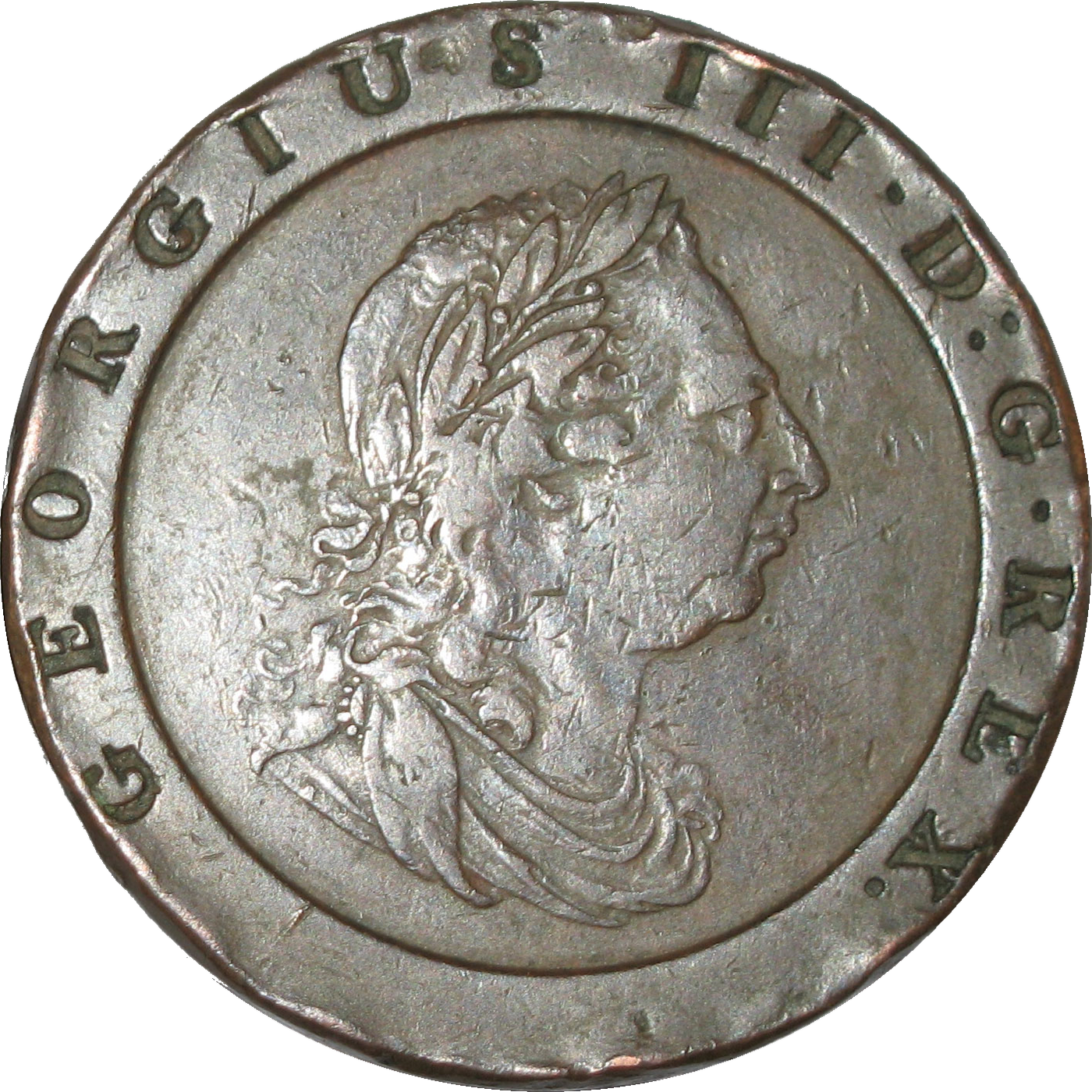
Victory brought money. Boulton and Watt called on the Cornish mining companies to pay what they owed, and Matthew Robinson Boulton went to Cornwall to negotiate the settlements. According to Smiles, about £30,000 in arrears was eventually recovered, though with difficulty, and Watt wrote from Glasgow to congratulate his partner on his son's "very able transactions." The older Boulton had meanwhile won his own long campaign. In 1797, nine years after he had first equipped Soho to coin money for the nation, the government finally ordered a new copper coinage from him, beginning with the heavy twopenny and penny pieces that became known as cartwheels. By Smiles's reckoning about 4,200 tons of copper coin left the Soho Mint between 1797 and 1806.[22]
The Handover
Watt's patent expired in 1800, and in December the original Boulton & Watt partnership came to a close. Boulton was seventy-two and Watt sixty-four. The succession had been arranged a year earlier. On 1 October 1799 Boulton, Watt & Co. succeeded Boulton, Watt & Sons, which had run alongside the original partnership. Watt withdrew from the new firm, while Matthew Boulton, Matthew Robinson Boulton, James Watt junior, and Gregory Watt each held a quarter share, Boulton keeping his until his death in 1809. The firm the sons now largely ran was in far better shape than the one their fathers had nearly lost twenty years earlier. It had a modern foundry, capital, a trained workforce, and, in William Murdoch, an engineer of unusual ability. Murdoch had returned to Soho from Cornwall in 1798, turning down an offer from the Cornish adventurers of a thousand pounds a year to stay, and took charge of the mechanical side of the business.[23]
Watt withdrew gladly. With his share of the Cornish arrears he went looking for land and eventually bought property at Doldowlod, on the river Wye in Radnorshire, though he spent most of his remaining years at Heathfield, working in a garret he had fitted up as a workshop. Boulton never really retired. Late in 1800, learning from a bribed watchman that housebreakers meant to rob the Soho counting house of the Christmas Eve wages for some six hundred workers, he posted armed men and let the thieves try their false keys for three nights. On the third his men seized four of them as they made off with 150 guineas and a load of silver, and Boulton, hoarse from "thief-watching," sent them to Stafford Gaol.[24]
One idea Soho had not pursued was high-pressure steam, or "strong steam," as the Cornish called it. Watt's engines used steam at little more than atmospheric pressure and relied on the separate condenser to create a vacuum on one side of the piston, so that the difference in pressure did the work. Steam at higher pressure could drive a smaller, lighter engine, but Watt, inventive as he was, considered it too dangerous to use. The question had come close to home in the 1780s. Murdoch had built a small model steam carriage in Redruth, and a frequently repeated story holds that when he tried it on a dark lane one night, it so alarmed the local clergyman that he took it for the devil. Accounts give the date as 1784 or 1786, and the story cannot be confirmed. Murdoch deferred to his employer and let the idea drop.[25] Whether the patent itself held back high-pressure steam is still argued. Michele Boldrin and David Levine have contended that Watt's monopoly delayed the high-pressure engine until the patent expired. George Selgin and John Turner reply that the delay owed more to a widely held belief that strong steam was too risky, and that the patent may even have hastened the new engine by pushing Trevithick to find a way around it.[26]
Christmas Eve at Camborne
Richard Trevithick had grown up among the engines. Born in 1771, he was the son of a mine captain, and he had probably worked alongside Edward Bull on the inverted engines that Boulton and Watt had taken to court. Unlike Watt, he believed strong steam could be tamed. By using steam at several times atmospheric pressure and letting it escape after each stroke instead of condensing it, he could build an engine small and light enough to move itself, and one that needed no separate condenser. In 1797 he built working models of both stationary and moving high-pressure engines, and he went on to build a full-size engine for hoisting ore.[27]
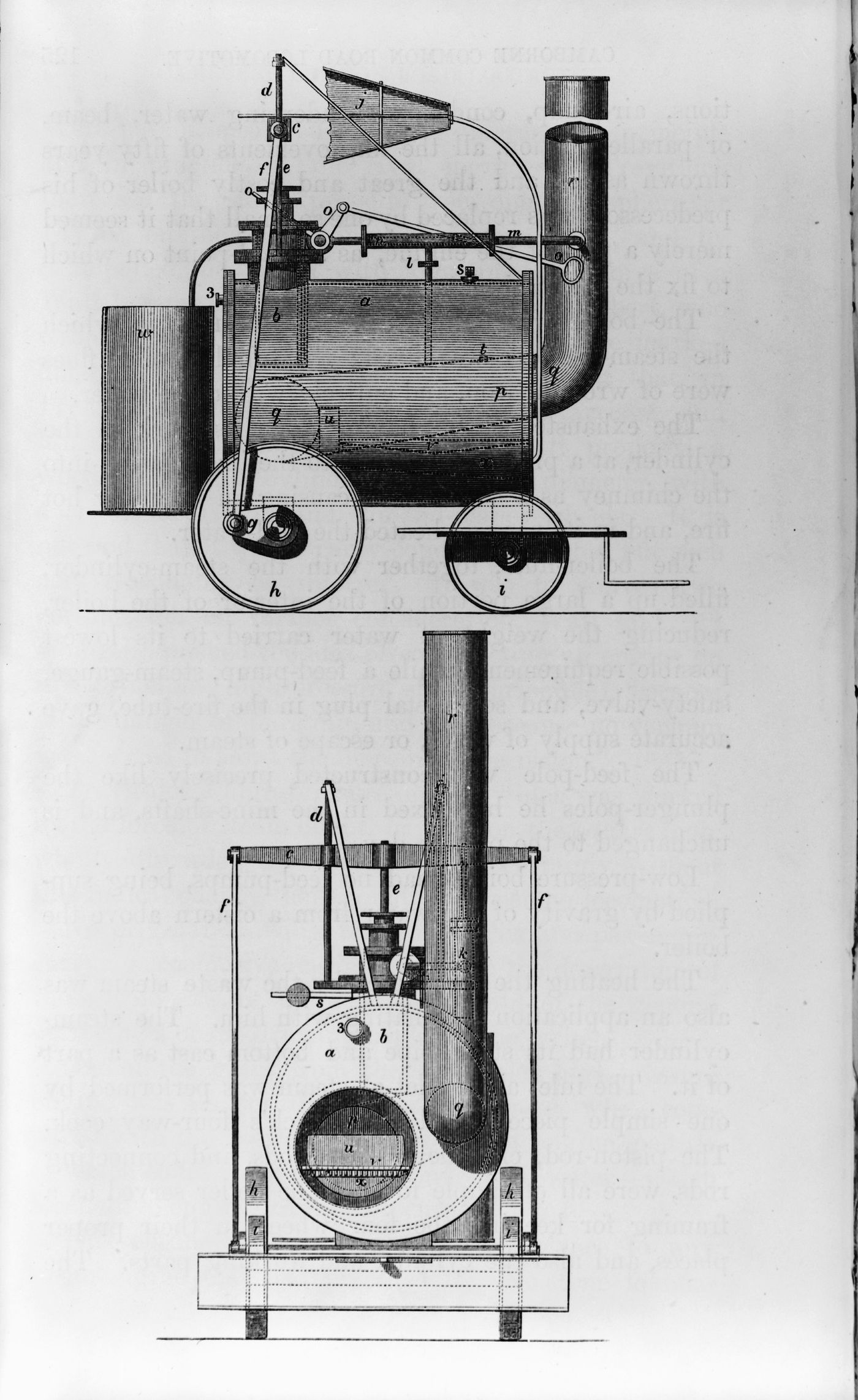
Late in 1801 Trevithick assembled a full-size steam carriage at Camborne. On Christmas Eve he raised steam in the road and, with his cousin Andrew Vivian steering, carried a group of men up Camborne Hill toward the village of Beacon. Accounts differ on the details. Some say six passengers rode on it, others seven, and the sources disagree on where its parts were cast and assembled.[28] One witness, Stephen Williams, recalled long afterward that it was a stiffish climb from the Weith up to Camborne Beacon, but that the engine "went off like a little bird," moving faster than a man could walk, until Williams jumped off in the pouring rain and the crowded machine went on another quarter or half a mile before turning back.[29] The triumph was brief. On a later trial, usually dated to 28 December, the carriage broke down. According to the traditional account, it was then left with its fire still burning, and the overheated engine was badly damaged or destroyed.[30] Trevithick was not discouraged. In March 1802 he and Vivian took out a patent for high-pressure engines for both stationary and locomotive use. Years later Trevithick wrote that Watt had said he deserved hanging for bringing the high-pressure engine into use.[31]
The distance between Blackfriars in 1789 and Camborne in 1801 measures what changed in those twelve years. In 1789 Boulton & Watt's fortune rested on a share of coal saved, recorded by a locked counter and collected from Cornish adventurers who paid unwillingly or not at all, and Boulton, writing from London, was already bargaining over abatements. By 1801 the Albion Mill was a burned-out shell, the patent had survived a deadlocked court, been upheld, and expired, the arrears had been collected, and the business had passed largely to sons who sold engines from a foundry built for the purpose. The partners had defended their rights, made their fortunes, and left behind a firm that could prosper without the protection that had sustained it. Yet the next advance in steam came from outside Soho, from the same Cornish mining districts whose adventurers had resisted Boulton and Watt's royalties, and from a man who had probably worked with one of their defendants. Whatever the patent's effect on invention, Trevithick's climb up Camborne Hill showed that the era Boulton and Watt had dominated was over.
Places in this Story
The places this story moves through, in order — follow them on the interactive map →
- Albion Mill, Blackfriars, London 1789–1791
Two Boulton & Watt engines drove twenty pairs of millstones on the Surrey bank of the Thames, grinding some 16,000 bushels of wheat a week. Watt complained it was “constantly crowded with curious and frivolous people.” It burned on 2 March 1791 and the shell stood until 1809.
- Soho Manufactory and Mint, Handsworth, Birmingham 1788–1806
Boulton installed a double-acting rotative engine at his mint in 1788 and tested steam-driven coining presses through 1789 and 1790. He wanted to end counterfeiting; the Royal Mint was unmoved until 1797, after which about 4,200 tons of copper coin left Soho.
- Windsor Castle, Berkshire Summer 1790
George III questioned Watt about the business. Watt told him the firm made engines for brewers, distillers, cotton spinners and ironmasters at five pounds a year per horsepower — and, asked about the Albion Mill, answered that it went well at grinding but not so well at trade.
- Fair Hill, Sparkbrook, Birmingham July 1791
A “Church and King” mob burned the home and laboratory of Joseph Priestley, a fellow Lunar Society member, after a dinner marking the fall of the Bastille. Boulton and Watt armed their workmen and expected Soho to be next. The mob never came.
- Poldice Mine, St Day, Cornwall 1792–1799
Boulton wrote to the adventurers here in June 1792 that the firm could not submit to having its premium withheld without consent. Poldice paid nothing after October 1793 and owed £2,330 by the time the courts settled the matter.
- Dolcoath Mine, Camborne, Cornwall 1790s
Edward Bull, trained by Boulton and Watt, erected here the first of his inverted engines, which set the cylinder directly over the pump and did away with the rocking beam. Ten were built, and the young Richard Trevithick was probably involved in most of them.
- Murdoch House, Cross Street, Redruth 1792–1794
William Murdoch distilled gas from coal at his home here and, by about 1794, was lighting his living room with it. Soho declined to patent it — too worn down by the engine lawsuits to start another fight.
- Jacobin Club, rue Saint-Honoré, Paris 1792
James Watt junior came with Thomas Cooper to present an address from a Manchester reform society. Burke denounced him in the Commons. Southey later told a tale of him facing down Robespierre and fleeing France without a passport — colorful and unverifiable.
- Soho Foundry, Smethwick 1795–1796
Built beside the Birmingham Canal when the Wilkinsons quarrelled and stopped supplying cylinders, and with the patent due to lapse in 1800. Generally reckoned the first factory built specifically to make steam engines — a works designed to outlive the monopoly.
- Bowling Ironworks, Bradford February 1796
Watt junior came north to settle with an ironworks running engines on his father’s principles without paying, and reported the outcome as a “treaty of peace, not amity” with “the Bowling Pirates.”
- Court of King’s Bench, Westminster Hall, London January 1799
Argument on Hornblower and Maberly’s writ of error ran from November 1798 into Hilary term. The judges upheld Watt’s patent unanimously. John Robison told his Edinburgh students it had been science against ignorance; Joseph Black wept at the news and died later that year.
- Camborne Hill, Cornwall December 24, 1801
Trevithick raised steam in the road and, with Andrew Vivian steering, carried a group of men up the hill toward Beacon. It “went off like a little bird,” faster than a man could walk — the kind of engine Watt had refused to build, running less than two years after his patent lapsed.
Frequently Asked Questions
When did James Watt’s steam engine patent expire?
In 1800. The patent on the separate condenser was granted in 1769 and extended by Act of Parliament in 1775, which carried it to 1800 — an unusually long run of thirty-one years. The original Boulton & Watt partnership was wound up in December 1800, and the firm passed to Boulton, Watt & Co., in which the two founders’ sons held the controlling interest.
How did Boulton and Watt charge for their steam engines?
At first they did not sell engines at all. The mine owner paid for the materials and erection, and Boulton and Watt took an annual royalty of one-third of the value of the coal the engine saved against a Newcomen engine doing the same work. Watt fitted each engine with a locked clockwork counter to record every stroke. Boulton later preferred fixed annual sums, which caused fewer quarrels, and by 1790 the firm was charging rotative-engine customers five pounds a year per horsepower.
What caused the Albion Mill fire of 1791?
It was never settled. Matthew Boulton suspected arson and pressed for a government inquiry, and Samuel Smiles later wrote that incendiaries had fastened the water cistern’s main cock and picked the hour of low tide. But John Rennie, who designed the mill’s machinery, and the manager, Wyatt, concluded that friction in a poorly greased machine near the kiln had started it. The building and machinery were insured for £26,000 and the stock for £15,000; Boulton and Watt, who held £6,000 and £3,000 of the company’s shares, were the heaviest losers.
Did Boulton and Watt win their patent lawsuits?
Eventually. In Boulton and Watt v. Bull (1795) the Court of Common Pleas split two to two on whether the patent was valid at all — Chief Justice Eyre and Justice Rooke for it, Justices Buller and Heath against — so no judgment could be given, and Cornish mine adventurers took the deadlock as licence to stop paying. The question was settled in the case against Jabez Carter Hornblower and Stephen Maberly: a Common Pleas jury found for Boulton and Watt in December 1796, and on a writ of error the Court of King’s Bench upheld the patent unanimously in January 1799, with under two years left to run.
Why didn’t Boulton and Watt patent William Murdoch’s gas lighting?
Because they were worn out by litigation. Murdoch began distilling gas from coal at his house in Redruth in 1792 and was lighting his living room with it by about 1794. When he urged his employers at Soho to take out a patent, they declined — Smiles explains that the engine-patent lawsuits had so harassed them that they had no appetite for a new venture likely to bring fresh disputes. One of Soho’s most valuable inventions was left unprotected because its owners were exhausted from protecting the last one.
What happened on Camborne Hill on Christmas Eve 1801?
Richard Trevithick ran the first full-size high-pressure steam carriage to carry passengers. With his cousin Andrew Vivian steering, it climbed from the Weith up Camborne Hill toward Beacon with a group of men aboard — six or seven, depending on the account — moving faster than a man could walk. One witness, Stephen Williams, recalled that it “went off like a little bird.” On a second trial, usually dated 28 December, the carriage broke down and was left with its fire burning, and the overheated engine was wrecked.
Did Watt’s patent delay the high-pressure steam engine?
Historians disagree. Watt’s engines ran at little above atmospheric pressure and depended on the separate condenser for their vacuum, and Watt thought high-pressure or “strong” steam too dangerous to use — he reportedly said Trevithick deserved hanging for bringing it into use. Michele Boldrin and David Levine argue the monopoly held the high-pressure engine back until it lapsed. George Selgin and John Turner reply that the real brake was a widespread belief that strong steam was unsafe, and that the patent may actually have hurried the new engine along by forcing Trevithick to design around it.
Bibliography
"Albion Mill." Vauxhall History. Accessed October 16, 2026. https://vauxhallhistory.org/albion-mill/.
"Albion Mills, Blackfriars." Grace's Guide to British Industrial History. Accessed October 16, 2026. https://www.gracesguide.co.uk/Albion_Mills,_Blackfriars.
Boldrin, Michele, and David K. Levine. Against Intellectual Monopoly. Cambridge: Cambridge University Press, 2008.
Boulton & Watt, to the Adventurers in Poldice Mine. June 28, 1792. "Letter, Boulton and Watt to The Adventurers in Poldice Mine." AD1583/5/26/2. Kresen Kernow, Redruth. Accessed October 16, 2026. https://kresenkernow.org/SOAP/detail/04c658f4-5ae8-4b3e-9989-a9a80fffbd6c/.
Boulton and Watt v. Bull (1795). 2 H. Bl. 463, 126 Eng. Rep. 651. vLex United Kingdom. Accessed October 16, 2026. https://vlex.co.uk/vid/boulton-and-watt-against-807295093.
Boulton, Matthew, and James Watt, to Thomas Wilson. March 14, 1791. "Letter, Watt and Boulton to Wilson regarding the Albion Mill, and various other matters." Kresen Kernow, Redruth. Accessed October 16, 2026. https://kresenkernow.org/SOAP/detail/f74b3c31-cd5f-4e66-8fee-e71a3eed43db/.
Boulton, Matthew, to Thomas Wilson. London, January 27, 1789. "Letter, Boulton to Wilson regarding abatement for United Mines, and several other matters." AD1583/3/68. Kresen Kernow, Redruth. Accessed October 16, 2026. https://kresenkernow.org/SOAP/detail/12a41f4e-3622-470a-b510-2ebc46057a52/.
Bramah, Joseph. A Letter to the Rt. Hon. Sir James Eyre, Lord Chief Justice of the Common Pleas, on the Subject of the Cause, Boulton & Watt v. Hornblower & Maberly. London: John Stockdale, 1797. Catalogue record, East Carolina University Libraries. Accessed October 16, 2026. https://lib.ecu.edu/catalog-preview/catalog/3048069.
Darwin, Erasmus, to Matthew Boulton. May 9, 1791. "Letter from Erasmus Darwin to Matthew Boulton, 1791/05/09." Revolutionary Players. Accessed October 16, 2026. https://revolutionaryplayers.org.uk/?p=5457.
Demidowicz, George. "When Soho Led the World." Historic England Research, no. 26 (May 24, 2024). Accessed October 16, 2026. https://historicengland.org.uk/whats-new/research/back-issues/when-soho-led-the-world.
"Edward Bull." Grace's Guide to British Industrial History. Accessed October 16, 2026. https://www.gracesguide.co.uk/Edward_Bull.
Gurney, Joseph. The Arguments of the Judges in Two Causes Relating to the Letters Patent Granted to James Watt, Engineer. London, 1799. Catalogue record, East Carolina University Libraries. Accessed October 16, 2026. https://lib.ecu.edu/catalog-preview/catalog/2763907.
Historic England. "Murdoch House." List entry 1161666. Accessed October 16, 2026. https://historicengland.org.uk/listing/the-list/list-entry/1161666.
"Jabez Carter Hornblower." Grace's Guide to British Industrial History. Accessed October 16, 2026. https://www.gracesguide.co.uk/Jabez_Carter_Hornblower.
Keegan, Vic. "Vic Keegan's Lost London 70: Albion Mills." OnLondon. Accessed October 16, 2026. https://onlondon.co.uk/vic-keegans-lost-london-70-albion-mills.
"Legal Records." MS 3147/2. Boulton and Watt Collection. Library of Birmingham. Catalogue description in The National Archives Discovery. Accessed October 16, 2026. https://beta.nationalarchives.gov.uk/catalogue/id/dd5cf905-fc3e-43eb-8862-6768a54a85ab.
"Papers relating to the Writ of Error in King's Bench, 1798–1799." MS 3147/2/46. Boulton and Watt Collection. Library of Birmingham. Catalogue description. Accessed October 16, 2026. https://calmview.birmingham.gov.uk/CalmView/Record.aspx?src=CalmView.Catalog&id=MS%203147%2f2%2f46.
Pierce, N. Scott. "Patent Eligibility as a Function of New Use, Aggregation, and Preemption Through Application of Principle." Richmond Journal of Law & Technology 23, no. 4 (2017). Accessed October 16, 2026. https://scholarship.richmond.edu/cgi/viewcontent.cgi?article=1445&context=jolt.
"Records of Boulton & Watt and Successor Firms." MS 3147/1. Boulton and Watt Collection. Library of Birmingham. Catalogue description. Accessed October 16, 2026. https://calmview.birmingham.gov.uk/CalmView/Record.aspx?src=CalmView.Catalog&id=MS%203147%2f1.
"Richard Trevithick's First Steam Carriage." History Today. Accessed October 16, 2026. https://www.historytoday.com/archive/richard-trevithicks-first-steam-carriage.
"Richard Trevithick's Puffing Devil." Trevithick Society. Accessed October 16, 2026. https://trevithicksociety.info/index.php/puffing-devil/.
"Richard Trevithick." Encyclopaedia Britannica. Accessed October 16, 2026. https://www.britannica.com/print/article/604469.
"Richard Trevithick." ASME. Accessed October 16, 2026. https://asme.org/topics-resources/content/richard-trevithick.
"Richard Trevithick: Puffing Devil." Grace's Guide to British Industrial History. Accessed October 16, 2026. https://www.gracesguide.co.uk/Richard_Trevithick:_Puffing_Devil.
Rous, George. Speech of Mr. Rous, Counsel for Messrs. Boulton and Watt, Defendants in the Proceedings in Error in the Cause Boulton and Watt versus Hornblower and Maberly, in the Court of King's Bench, Hilary Term, 1799. 1799. Catalogue record, Georgetown University Law Library. Accessed October 16, 2026. https://aspace.ll.georgetown.edu/public/repositories/3/archival_objects/30791.
Selgin, George, and John L. Turner. "Strong Steam, Weak Patents, or the Myth of Watt's Innovation-Blocking Monopoly, Exploded." Journal of Law and Economics 54, no. 4 (2011): 841–61. https://doi.org/10.1086/658495.
Skempton, A. W. "Samuel Wyatt and the Albion Mill." Architectural History 14 (1971): 53–73. https://doi.org/10.2307/1568297.
Smiles, Samuel. Lives of Boulton and Watt: Principally from the Original Soho MSS. London: John Murray, 1865. Google Books. Accessed October 16, 2026. https://books.google.com/books/about/Lives_of_Boulton_and_Watt.html?id=t10oAAAAYAAJ.
"Soho Foundry." Grace's Guide to British Industrial History. Accessed October 16, 2026. https://gracesguide.co.uk/Soho_Foundry.
"Soho Mint." Grace's Guide to British Industrial History. Accessed October 16, 2026. https://www.gracesguide.co.uk/Soho_Mint.
"Stephen Maberley." Grace's Guide to British Industrial History. Accessed October 16, 2026. https://gracesguide.co.uk/Stephen_Maberley.
"The Puffin' Devil's First Journey." Cornwall Forever. Accessed October 16, 2026. https://www.cornwallforever.co.uk/history/the-puffin-devils-first-journey.
"Today in London Industrial History: Über-Factory the Albion Mills Burns Down, 1791." Past Tense, March 2, 2019. Accessed October 16, 2026. https://pasttense.co.uk/2019/03/02/today-in-london-industrial-history-uber-factory-the-albion-mills-burns-down-1791/.
Trevithick, Francis. Life of Richard Trevithick, with an Account of His Inventions. Vol. 1. London: E. & F. N. Spon, 1872. Google Books. Accessed October 16, 2026. https://books.google.com/books/about/Life_of_Richard_Trevithick.html?id=sTp2AAAAMAAJ.
Watt, James, and Thomas Wilson junior, to Thomas Wilson. June 14, 1796. "Letter, Watt and Wilson junior to Wilson with copy of letter from William Carne." Kresen Kernow, Redruth. Accessed October 16, 2026. https://kresenkernow.org/SOAP/detail/6ca9c8e0-1741-4bcd-8100-c0f618a77a9a/.
Watt, James, to Thomas Wilson. August 7, 1793. "Letter, Watt to Wilson regarding the continued assembly of engines by Edward Bull." Kresen Kernow, Redruth. Accessed October 16, 2026. https://kresenkernow.org/SOAP/detail/827a8c01-efe8-47e0-b9d8-41ac5c695309/.
Pleas add this article as a draft.
Citations
- A. W. Skempton, "Samuel Wyatt and the Albion Mill," Architectural History 14 (1971): 53. ↑
- "Albion Mills, Blackfriars," Grace's Guide to British Industrial History, accessed October 16, 2026; Samuel Smiles, Lives of Boulton and Watt (London: John Murray, 1865), 354, 357–58. ↑
- Matthew Boulton to Thomas Wilson, London, January 27, 1789, AD1583/3/68, Kresen Kernow, Redruth. ↑
- Smiles, Lives of Boulton and Watt, 245, 271. ↑
- Smiles, Lives of Boulton and Watt, 403. ↑
- Smiles, Lives of Boulton and Watt, 388, 394–95, 460; "Soho Mint," Grace's Guide to British Industrial History, accessed October 16, 2026. ↑
- "Albion Mill," Vauxhall History, accessed October 16, 2026; Vic Keegan, "Vic Keegan's Lost London 70: Albion Mills," OnLondon, accessed October 16, 2026; Smiles, Lives of Boulton and Watt, 358; "Today in London Industrial History: Über-Factory the Albion Mills Burns Down, 1791," Past Tense, March 2, 2019, accessed October 16, 2026. ↑
- Skempton, "Samuel Wyatt and the Albion Mill," n. 41 (the page on which this note appears could not be confirmed); Smiles, Lives of Boulton and Watt, 358; Matthew Boulton and James Watt to Thomas Wilson, March 14, 1791, Kresen Kernow, Redruth; Erasmus Darwin to Matthew Boulton, May 9, 1791, transcribed in Revolutionary Players, accessed October 16, 2026. ↑
- Smiles, Lives of Boulton and Watt, 413. ↑
- Boulton & Watt to the Adventurers in Poldice Mine, June 28, 1792, AD1583/5/26/2, Kresen Kernow, Redruth; "Legal Records," MS 3147/2, Boulton and Watt Collection, Library of Birmingham, catalogue description in The National Archives Discovery, accessed October 16, 2026. ↑
- "Edward Bull," Grace's Guide to British Industrial History, accessed October 16, 2026; James Watt to Thomas Wilson, August 7, 1793, Kresen Kernow, Redruth. ↑
- Boulton and Watt v. Bull (1795), 2 H. Bl. 463, 126 Eng. Rep. 651; N. Scott Pierce, "Patent Eligibility as a Function of New Use, Aggregation, and Preemption Through Application of Principle," Richmond Journal of Law & Technology 23, no. 4 (2017): 15–16. The Pierce page numbers are those of the online PDF and could not be confirmed against the journal's print pagination. ↑
- Smiles, Lives of Boulton and Watt, 420. ↑
- Historic England, "Murdoch House," list entry 1161666, accessed October 16, 2026; Smiles, Lives of Boulton and Watt, 426. Smiles writes that Murdoch told "Mr. Watt"; some later accounts name James Watt junior, so the text does not specify which. ↑
- Smiles, Lives of Boulton and Watt, 415. ↑
- "Records of Boulton & Watt and Successor Firms," MS 3147/1, Boulton and Watt Collection, Library of Birmingham, catalogue description, accessed October 16, 2026; Smiles, Lives of Boulton and Watt, 418; George Demidowicz, "When Soho Led the World," Historic England Research, no. 26 (May 24, 2024), accessed October 16, 2026; "Soho Foundry," Grace's Guide to British Industrial History, accessed October 16, 2026. ↑
- Smiles, Lives of Boulton and Watt, 418, 421; James Watt and Thomas Wilson junior to Thomas Wilson, June 14, 1796, Kresen Kernow, Redruth. ↑
- "Jabez Carter Hornblower," Grace's Guide to British Industrial History, accessed October 16, 2026; "Stephen Maberley," Grace's Guide to British Industrial History, accessed October 16, 2026 (Grace's Guide notes the name is "sometimes shown as John A. Maberley"; its own Hornblower page and Wikipedia give John, while Selgin and Turner give Stephen, so the forename is left out of the text); "Papers relating to the Writ of Error in King's Bench, 1798–1799," MS 3147/2/46, Boulton and Watt Collection, Library of Birmingham, catalogue description, accessed October 16, 2026; Joseph Bramah, A Letter to the Rt. Hon. Sir James Eyre, Lord Chief Justice of the Common Pleas, on the Subject of the Cause, Boulton & Watt v. Hornblower & Maberly (London: John Stockdale, 1797). ↑
- Hornblower v. Boulton (1799), 8 T.R. 95, cited in the reporter's note to Boulton and Watt v. Bull, 126 Eng. Rep. 651; George Rous, Speech of Mr. Rous, Counsel for Messrs. Boulton and Watt, Defendants in the Proceedings in Error in the Cause Boulton and Watt versus Hornblower and Maberly, in the Court of King's Bench, Hilary Term, 1799 (1799), Georgetown University Law Library; "Papers relating to the Writ of Error," MS 3147/2/46; Smiles, Lives of Boulton and Watt, 420. ↑
- Joseph Gurney, The Arguments of the Judges in Two Causes Relating to the Letters Patent Granted to James Watt, Engineer (London, 1799); "Jabez Carter Hornblower," Grace's Guide; "Edward Bull," Grace's Guide. ↑
- Smiles, Lives of Boulton and Watt, 464. ↑
- Smiles, Lives of Boulton and Watt, 398, 421. ↑
- Smiles, Lives of Boulton and Watt, 423, 456; "Records of Boulton & Watt and Successor Firms," MS 3147/1. ↑
- Smiles, Lives of Boulton and Watt, 458, 461. ↑
- "Richard Trevithick," Encyclopaedia Britannica, accessed October 16, 2026; "Richard Trevithick's First Steam Carriage," History Today, accessed October 16, 2026; Smiles, Lives of Boulton and Watt, 423. ↑
- Michele Boldrin and David K. Levine, Against Intellectual Monopoly (Cambridge: Cambridge University Press, 2008), chap. 1 (specific page numbers could not be confirmed); George Selgin and John L. Turner, "Strong Steam, Weak Patents, or the Myth of Watt's Innovation-Blocking Monopoly, Exploded," Journal of Law and Economics 54, no. 4 (2011): 841–61. ↑
- "Edward Bull," Grace's Guide; "Richard Trevithick," Encyclopaedia Britannica. ↑
- "Richard Trevithick's Puffing Devil," Trevithick Society, accessed October 16, 2026; "Richard Trevithick," ASME, accessed October 16, 2026; "Richard Trevithick's First Steam Carriage," History Today; "Richard Trevithick: Puffing Devil," Grace's Guide to British Industrial History, accessed October 16, 2026. ↑
- Francis Trevithick, Life of Richard Trevithick, with an Account of His Inventions, vol. 1 (London: E. & F. N. Spon, 1872), 107. ↑
- "Richard Trevithick: Puffing Devil," Grace's Guide; "The Puffin' Devil's First Journey," Cornwall Forever, accessed October 16, 2026. ↑
- "Richard Trevithick," ASME. ↑