Introduction
Brazil's path to independence differed fundamentally from that of its Spanish American neighbors. Between 1810 and 1822, most of Spanish America experienced prolonged wars of independence, republican experimentation, and the fragmentation of colonial viceroyalties into multiple sovereign states. Brazil, by contrast, emerged from the same imperial crisis as the unified constitutional monarchy governed by the heir to the Portuguese throne. This distinct outcome has long attracted historians seeking to explain why Brazil avoided the political instability that characterized much of Latin America during this period.[1]
Traditional interpretations often present Brazilian independence as the result of the dramatic events of 1822, particularly Dom Pedro's declaration along the banks of the Ipiranga River. But focusing exclusively on that moment obscures the deeper political and constitutional transformations that made independence possible. The Empire of Brazil was not created suddenly through revolutionary upheaval. It emerged gradually from institutional changes unfolding for more than a decade.
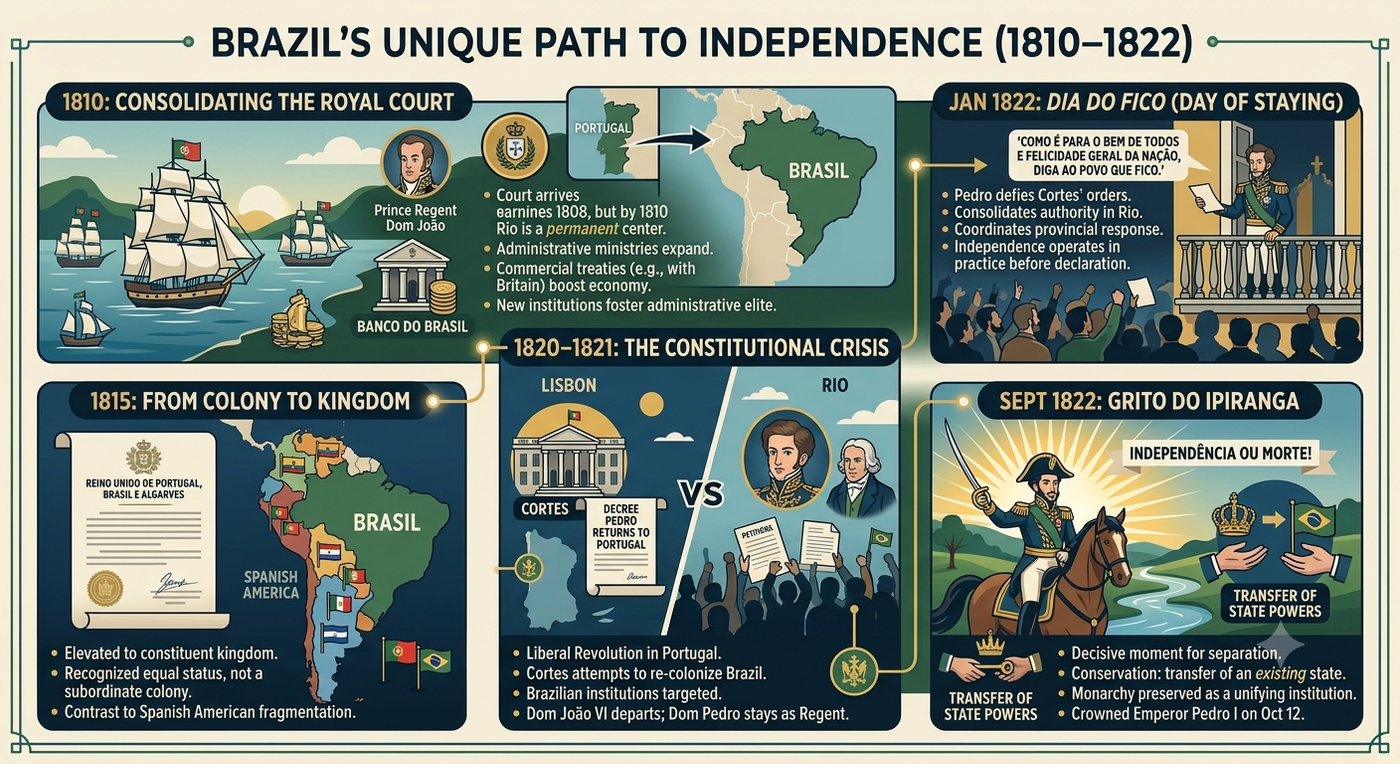
The year 1810 seems to be a more meaningful starting point than either the court's arrival in 1808. The Braganza court had reached Rio de Janeiro two years prior to 1810, fleeing Napoleon's invasion of Portugal. But it was during 1810 that the monarchy ceased functioning as a government in temporary exile. Instead, it began operating as the permanent administrative center of the Portuguese Empire. Ministries expanded their authority from Rio. Diplomatic relations centered increasingly on Brazil. Commercial treaties reshaped the empire's economy, and institutions of governance developed with an expectation of permanence. By 1810, Brazil was no longer merely sheltering a displaced monarchy. It had become the political heart of the Portuguese Empire.[2]
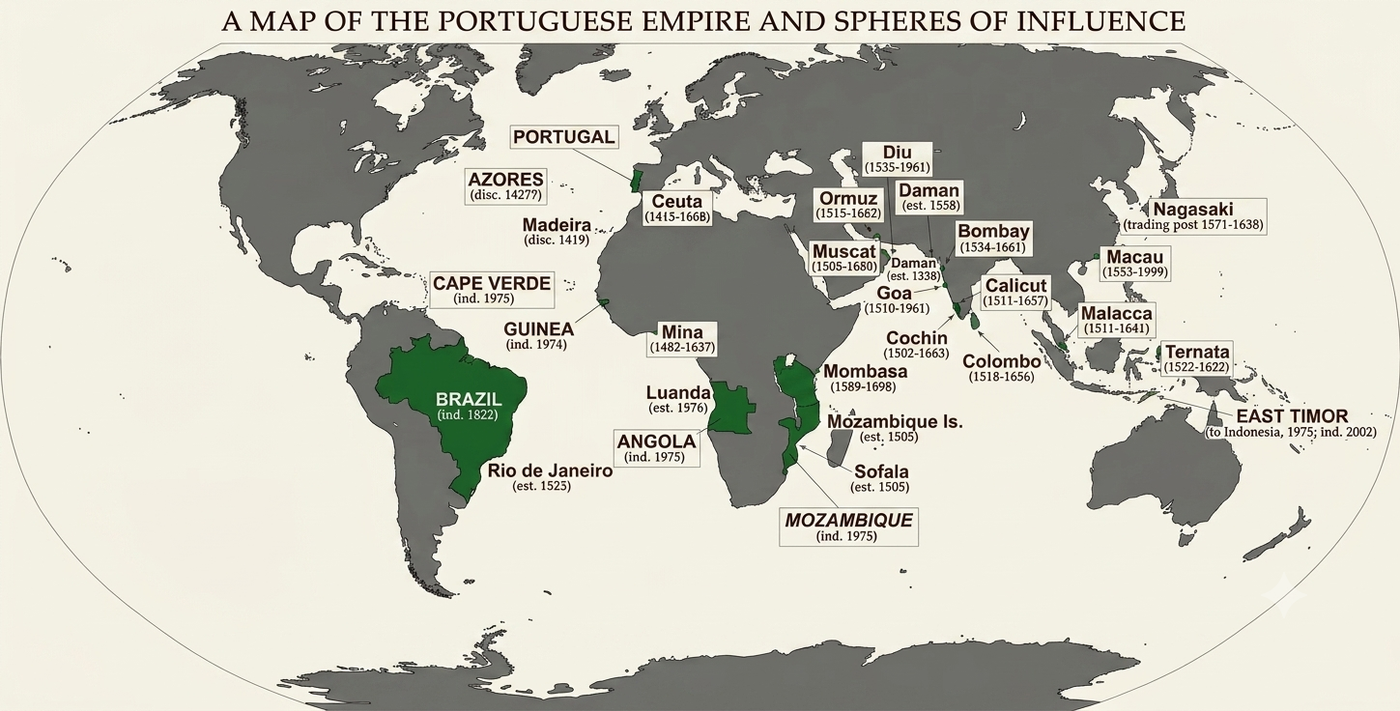
Between 1810 and 1822, these developments fundamentally altered Brazil's constitutional position. The creation of the United Kingdom of Portugal, Brazil, and the Algarves in 1815 formally elevated Brazil from colonial dependency to constituent kingdom. The Liberal Revolution in Portugal in 1820 then attempted to reverse these changes. It created a constitutional conflict that ultimately convinced many Brazilian leaders that preserving the institutions built since 1810 required separation from Lisbon. Independence therefore represented less a revolutionary break than a transfer of sovereignty over an existing governmental structure. It was a transformation characterized by continuity as much as change. The institutions established while the Portuguese court resided in Rio not only made independence possible; they also helped preserve Brazil's territorial unity afterward. Examining the consolidation of royal government after 1810, the elevation of Brazil within the Portuguese monarchy, the constitutional crisis initiated by the Liberal Revolution of Porto, and the political decisions that followed in 1822 together demonstrates why Brazil's transition from colony to independent kingdom looks so different from its neighbors' experience.[3]
Consolidating the Royal Court (1810)
When the Portuguese royal family arrived in Rio de Janeiro in March 1808, few believed Brazil would soon become the political center of one of Europe's oldest monarchies. The relocation had been an emergency measure prompted by Napoleon's invasion of Portugal. Escorted by the British Royal Navy, Prince Regent Dom João, the royal family, and thousands of officials abandoned Lisbon only days before French troops entered the capital. For the first time in modern European history, a reigning monarchy governed its empire from an overseas colony.[4]
Initially, both Portuguese officials and foreign diplomats viewed the move as temporary. They expected a return to Lisbon once Napoleon was defeated. During the first two years, the administration focused on adapting to unfamiliar surroundings while reconstructing the machinery of royal government within Rio de Janeiro. By 1810, however, this perception had begun to change. Rather than preparing for return, the Braganza monarchy increasingly governed as though Rio had become the enduring center of imperial administration. Decisions affecting Portugal, Brazil, and the empire's territories in Africa and Asia were now routinely made from the Americas. Foreign diplomats sought audiences with the prince regent in Rio rather than Lisbon. The Portuguese Empire had not merely transferred its court across the Atlantic. It had transferred its government.[5]
Before 1808, Brazil had occupied a familiar colonial position. It was the Portugal's largest and wealthiest possession, supplying sugar, cotton, tobacco, gold, diamonds, and increasingly coffee, but political authority remained firmly concentrated in Lisbon. Colonial governors administered the captaincies. Appeals ultimately reached metropolitan institutions, and major political decisions originated in Portugal. The court's relocation reversed that hierarchy. Although Brazil remained legally a colony, it now housed the sovereign and the principal ministries of government. In practice, the traditional structure of empire had been turned on its head.
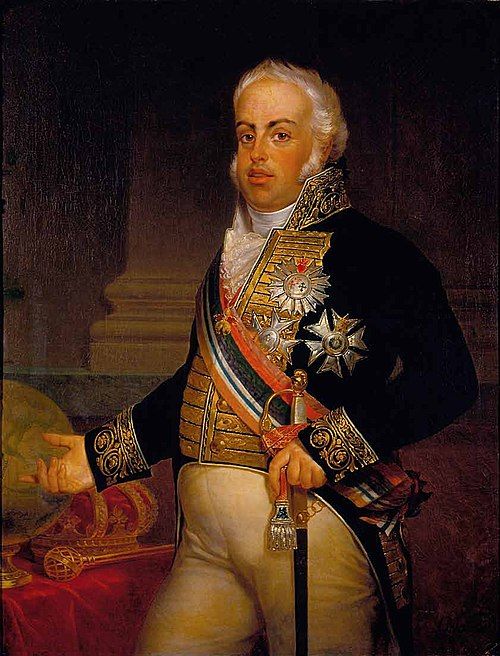
Among the most consequential developments of 1810 were the commercial treaties negotiated with Great Britain. On 19 February 1810, Portugal and Britain concluded the Treaty of Alliance and Friendship and the Treaty of Commerce and Navigation. These agreements reflected Portugal's dependence on British protection and Britain's growing Atlantic influence.[6] British manufactured goods received preferential tariffs, generally entering at 15 percent, compared with 16 percent for Portuguese imports and 24 percent for other foreign goods. The arrangement gave British merchants an advantage even over Portugal's own traders.
The opening of Brazilian markets accelerated Rio de Janeiro's growth as the empire's principal commercial center. British merchants established permanent trading houses. They imported growing quantities of textiles and capital and strengthened Brazil's ties to global markets. This created new opportunities for Brazilian merchants and landowners, while simultaneously increasing British economic influence.[7]
Commercial reform accompanied continued institutional development. The Banco do Brasil, founded in 1808, grew increasingly important in managing imperial finances. The Impressão Régia, the colony's first official printing press, expanded publication of decrees and official documents. Administrative tribunals, treasury departments, and military offices assumed broader responsibilities as Rio evolved into the empire's effective capital.[8] These institutions fostered a new administrative elite. Lawyers, judges, officers, and civil servants increasingly built careers around institutions headquartered in Rio rather than Lisbon. A growing number of Brazilian-born elites gained experience within imperial administration, forming a class that would prove essential to governmental continuity after independence.
This consolidation nevertheless depended on foundations that remained deeply unequal. Economic expansion relied overwhelmingly on enslaved labor, particularly in sugar, cotton, and the rapidly expanding coffee industry. The monarchy introduced sweeping administrative and commercial reforms while leaving slavery fundamentally untouched. Greater access to international markets often reinforced demand for plantation production, further entrenching slavery within Brazil's political economy.[9]
By the close of 1810, the Portuguese monarchy had achieved far more than survival. It had reconstructed the institutions of imperial government in Rio and begun governing from Brazil with increasing confidence and permanence. In doing so, it established the framework upon which independence would later be built.
Building an Imperial Capital (1810–1815)
Between 1810 and 1815, Rio de Janeiro underwent a transformation unprecedented in the history of the Portuguese Empire. No longer merely the temporary residence of a displaced monarchy, the city increasingly assumed the responsibilities of an imperial capital. Ministries responsible for finance, justice, war, and foreign affairs expanded their staffs. Judicial tribunals heard cases once referred to Lisbon, and bureaucratic correspondence flowed regularly between Rio and provincial governments throughout the empire.[10]
The concentration of government offices transformed Rio into the empire's principal center of political influence. Noble families, officers, merchants, and aspiring civil servants relocated to the city, since political advancement now depended on proximity to the Crown. Educated Brazilians increasingly acquired administrative experience that had previously been available almost exclusively in Lisbon. That experience would later prove central to preserving institutional continuity during the independence movement. Patronage networks developed around the royal ministries. Portuguese-born officials continued to dominate the most senior positions, but the sheer expansion of government created openings that had simply not existed under the old colonial system.
Economic development accompanied administrative expansion. Reinforced by the Anglo-Portuguese treaties of 1810, Rio quickly became one of the Atlantic's busiest ports, receiving vessels from Britain, Portugal, and the United States. Exports of sugar, cotton, hides, and coffee expanded steadily. The city evolved from a colonial port into the commercial hub of a transatlantic empire whose economic relationships extended well beyond Portugal.[11] The Banco do Brasil provided greater financial stability for commerce and government operations. The Impressão Régia's establishment marked a fundamental change from the strict prohibitions on printing that had previously prevailed. Official decrees, newspapers, and scholarly works could now be produced within Brazil itself. This encouraged the growth of an educated public sphere, even as censorship remained in force.[12]
The monarchy also invested in institutions meant to demonstrate that Rio was worthy of serving as an imperial capital. These included the Royal Library, transferred from Portugal; the Royal Botanical Garden; and medical schools in Bahia and Rio. Together, they projected an image of Brazil as a civilized seat of government comparable to Europe's established capitals.[13]
Despite these developments, modernization remained inseparable from slavery. Rising demand for Brazilian exports encouraged plantation owners to increase production, particularly in the coffee-growing regions surrounding Rio. The transatlantic slave trade intensified rather than diminished during these years, even as Britain increased diplomatic pressure on Portugal to restrict it. The wealth financing many of the monarchy's administrative and cultural initiatives rested upon an economic system characterized by coercion and profound social inequality.[14] Brazil's governing elite embraced administrative modernization and constitutional reform while remaining committed to preserving slavery as the foundation of agricultural production. It was a contradiction that would continue to shape Brazilian development.
By 1815, Brazil possessed functioning ministries, expanding financial institutions, a sophisticated judicial system, and an administrative elite experienced in governing a vast empire. Although the country remained legally a colony, many practical distinctions separating colony from metropole had begun to disappear. The formal recognition of this transformation would come later that year, when the Portuguese Crown elevated Brazil from colonial possession to constituent kingdom.
From Colony to Kingdom (1815–1820)
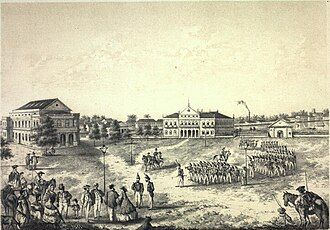
By 1815, Rio de Janeiro had become the capital of the Portuguese Empire in practice, even though Brazil remained legally classified as a colony. The defeat of Napoleon forced the monarchy to confront this contradiction. The Congress of Vienna convened in 1814–1815 to restore political stability after two decades of war, and Portugal needed to redefine its position within the postwar order. It could no longer present itself as merely a kingdom temporarily displaced by invasion. It had become a transatlantic government whose political center lay outside Europe.[15]
The United Kingdom of Portugal, Brazil, and the Algarves
On 16 December 1815, Prince Regent Dom João formally addressed this anomaly by creating the United Kingdom of Portugal, Brazil, and the Algarves. Brazil ceased to exist as a colony and became a constituent kingdom joined to Portugal under a single sovereign. The decree was not merely symbolic diplomatic positioning for the Congress of Vienna. It acknowledged political realities that had already existed for years, since Brazil had housed the monarchy and administered imperial affairs since 1808.[16]
For Brazilian elites, the elevation confirmed their country's new standing as an equal partner rather than a subordinate colony. But the decree also carried costs. Many Portuguese politicians and merchants regarded Brazil's elevation with growing unease. Lisbon had lost its traditional status as political center, and Portuguese commercial interests found themselves competing with Rio's expanding economy and Britain's preferential position. To many observers in Portugal, it appeared that the kingdom had become subordinate to its former colony.[17] Within Brazil, reactions were mixed as well. Provinces near Rio benefited directly, but others believed their interests received insufficient attention from the central government. These regional tensions showed that constitutional reform alone could not resolve longstanding inequalities.
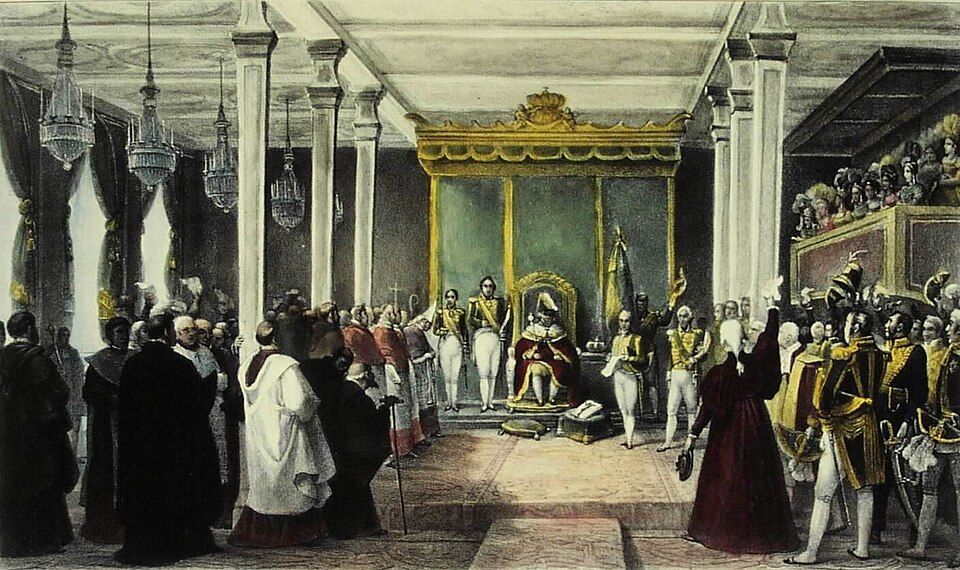
The Pernambuco Revolution
The first major challenge to the new order emerged in 1817 with the Pernambuco Revolution. Pernambuco possessed a long tradition of economic importance. But by the early nineteenth century, declining sugar prices, recurring droughts, rising taxation, and Caribbean competition had weakened its economy. Many plantation owners blamed the royal government in Rio for policies that favored the southern provinces while neglecting Brazil's northeast.[18] These grievances combined with Enlightenment political philosophy and the example of ongoing revolutions elsewhere in the Americas. They were debated within Pernambuco's clergy, military, and professional classes through Masonic lodges and scholarly societies.
The crisis began in March 1817, after authorities uncovered a conspiracy involving military and civilian leaders. When arrests were ordered, the conspirators launched an armed uprising that seized Recife and much of the surrounding province. They established a provisional republican government and sought diplomatic recognition from the United States and Spanish American revolutionary governments.[19] The leadership advocated representative government and freedom of the press. But slavery, the economic foundation of the plantation economy, remained largely untouched, and the movement's appeal stayed concentrated among educated elites.
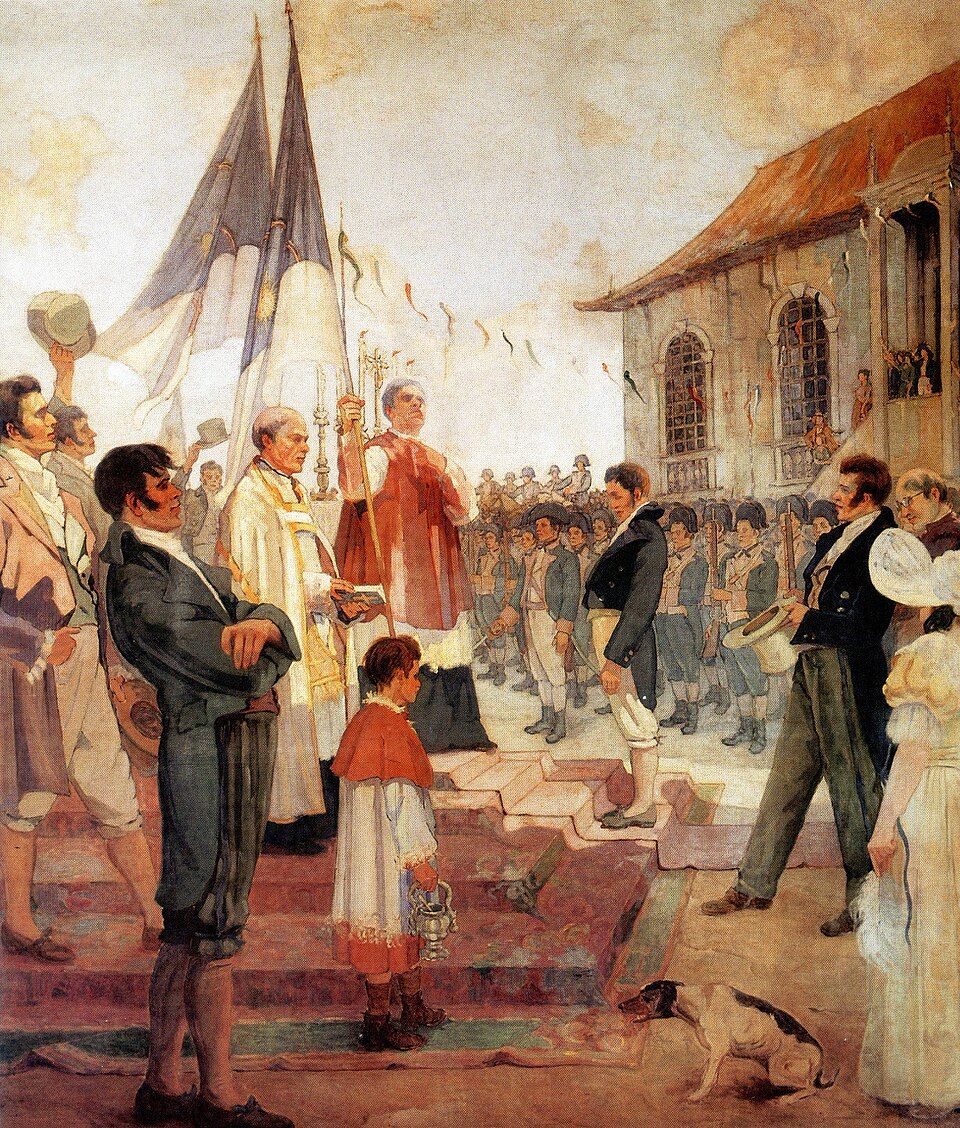
The Crown responded decisively. Loyal forces from Bahia and Rio isolated and suppressed the rebellion within weeks. Many leaders were executed. Others were imprisoned or exiled. Yet its political significance outlasted its brief duration. It revealed two competing visions of Brazil's future: one favoring a republican break modeled on revolutionary movements elsewhere, and the other, which ultimately prevailed, seeking greater autonomy while preserving the monarchy and centralized institutions.[20] The episode left a lasting impression on Brazil's governing elite, who would repeatedly invoke Pernambuco's fate as a cautionary example when weighing more radical courses of action in the years that followed. By 1820, Brazil occupied a unique position. It was no longer legally a colony, yet it remained governed within a monarchy increasingly divided by conflicting interests on opposite sides of the Atlantic.
The Constitutional Crisis (1820–1821)
The 1815 settlement rested on a fragile compromise that did not eliminate competing interests within the empire. As long as Dom João remained in Brazil, these tensions could be managed. Once revolution erupted in Portugal, compromise rapidly became impossible.
The Liberal Revolution of Porto
On 24 August 1820, military officers, merchants, and liberal reformers launched a revolution in Porto demanding constitutional government and the monarchy's return to Lisbon. Like similar movements in Spain and Italy, it reflected broader European efforts to replace absolute monarchy with constitutional institutions while preserving the Crown's legitimacy.[21] The revolutionaries organized a constituent assembly, the Cortes, to draft a constitution. But their reforms were inseparable from another goal: restoring Lisbon as the unquestioned political center of the empire. Many deputies believed Portugal's decline stemmed directly from the monarchy's prolonged residence in Rio.[22]
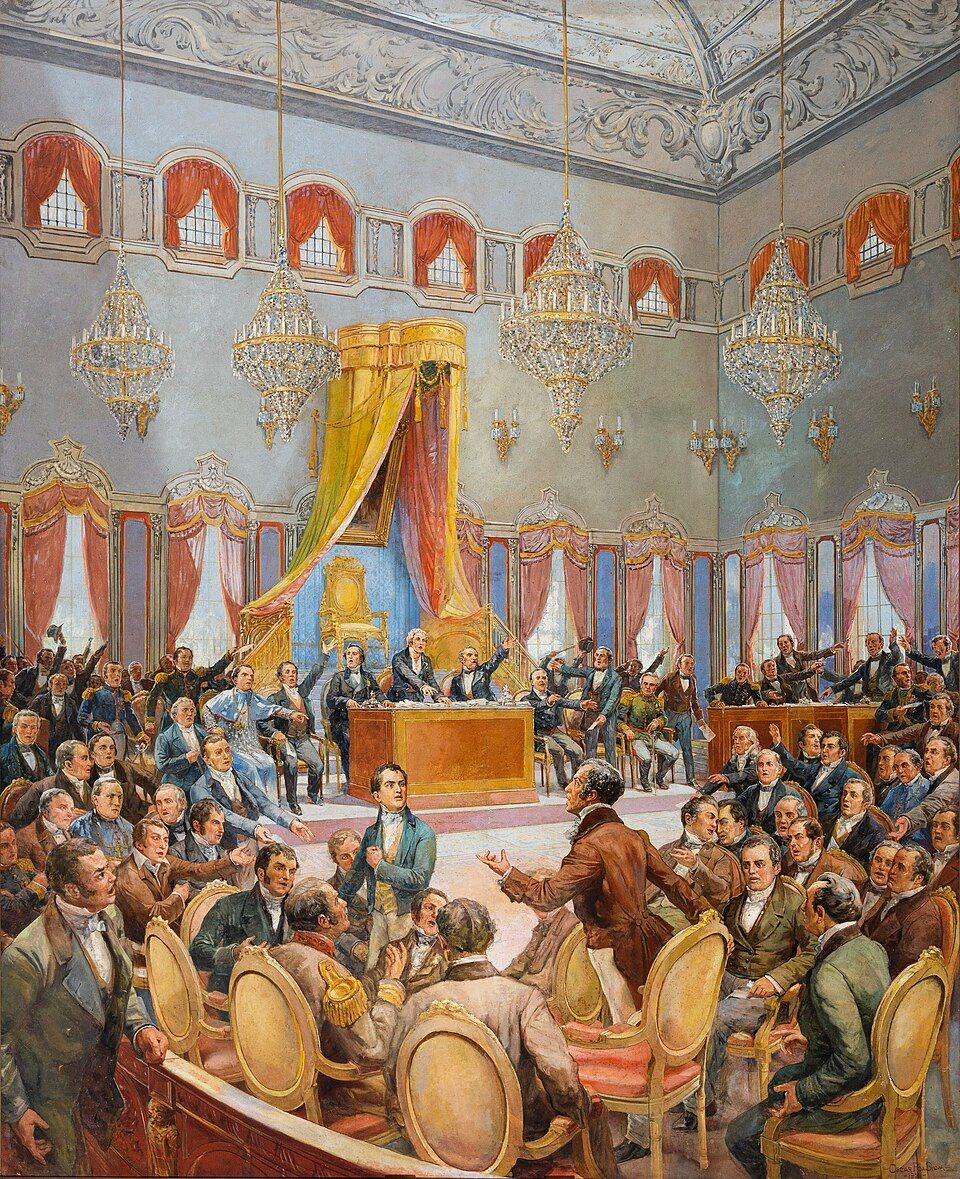
The Cortes adopted policies that many Brazilians interpreted as an attempt to reverse the reforms introduced since 1808. Ministries in Rio were ordered to return to Lisbon. Provincial governors were instructed to communicate directly with Portugal, and administrative bodies created during the court's residence were targeted for abolition. Brazilian leaders recognized that reversing these developments would fundamentally reshape the political and economic order upon which their careers now depended. Merchants had reorganized commercial networks around Rio. Judges had built careers within institutions headquartered in Brazil. Officers had served under commands directed from the capital rather than from Europe. Undoing all of it would not simply alter constitutional theory; it would overturn the practical arrangements that had governed daily life for more than a decade. Many Brazilian historians have since described the Cortes' policies as an attempted recolonization of Brazil. Whether or not that was the Cortes' explicit intention, the perception that it was became one of the most powerful forces driving the independence movement.[23]
Among the influential figures to emerge during this period was José Bonifácio de Andrada e Silva, a natural scientist and administrator educated at Coimbra. He returned to Brazil in 1819, convinced the country possessed the resources to sustain far greater political autonomy.[24] Bonifácio rejected the revolutionary republicanism of the Pernambuco movement. He feared sudden upheaval would fracture Brazil into competing regional states, as had occurred in Spanish America(see West Florida, Gran Columbia, and others). Instead, he advocated a strong constitutional monarchy, a position that would soon make him one of the principal architects of independence.
Dom João VI Returns to Portugal
As revolutionary sentiment spread through Portugal in late 1820 and early 1821, Dom João VI faced an agonizing choice. Remaining in Brazil risked alienating the constitutional government in Lisbon. Returning threatened the institutions that had transformed Brazil into the empire's administrative center. On 26 April 1821, after months of deliberation, Dom João departed Rio de Janeiro for Lisbon after more than thirteen years in Brazil, hoping to reconcile constitutional reform with dynastic stability.[25]
Before leaving, he made a decision of even greater long-term consequence. Rather than dismantling the government in Rio, he appointed his eldest son, Prince Dom Pedro de Alcântara, as Prince Regent of Brazil. Ministries continued their work. Courts remained open, and the heir to the throne remained present to represent the monarchy. In doing so, Dom João inadvertently created the political conditions under which an independent Brazilian monarchy could emerge.
The Cortes, concerned that Pedro's continued residence would encourage separatism, soon ordered him back to Portugal as well. Throughout 1821, Brazilian political opinion shifted. Municipal councils, military commanders, and provincial assemblies coordinated their responses to Lisbon with growing frequency. Bonifácio emerged as the leading advocate for maintaining a strong central government in Rio. By year's end, the crisis had reached an impasse that could no longer be resolved through administrative reform alone.
The Road to Independence (1822)
By early 1822, the conflict between Portugal and Brazil had evolved into a struggle over sovereignty itself. Unlike the revolutionary movements sweeping Spanish America, the Brazilian independence movement remained fundamentally conservative. Its leaders sought to preserve the monarchy and administrative continuity while transferring the center of sovereignty permanently to Brazil. This strategy distinguished Brazilian independence from many contemporary revolutions and contributed significantly to the country's subsequent political stability.[26]
The Dia do Fico
After Dom João's return to Portugal, the Cortes repeatedly instructed Pedro to abandon Brazil as well. Resistance developed rapidly. Municipal councils, military commanders, merchants, and clergy submitted petitions urging the prince to remain. Bonifácio emerged as the leading advocate of resistance, arguing that obedience to Lisbon would undo more than a decade of institutional development.[27]
On 9 January 1822, Dom Pedro announced he would not comply, reportedly declaring, "If it is for the good of all and the general happiness of the nation, tell the people that I am staying." The event became known as the Dia do Fico, or "Day of Staying." Whether the celebrated quotation is precise remains uncertain, but its significance is not. By refusing to leave, Pedro openly challenged the Cortes while maintaining loyalty to his father.[28]
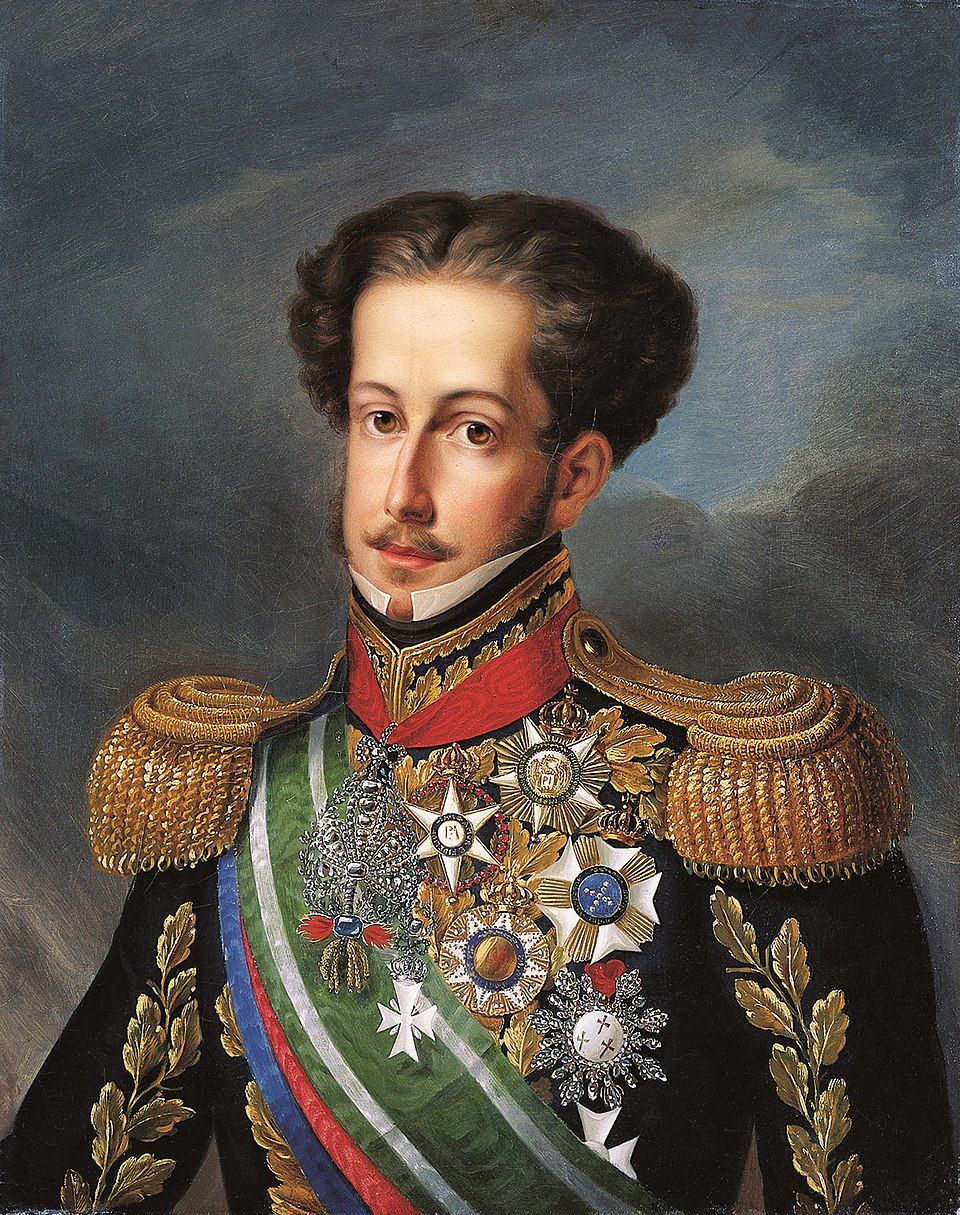
In the months that followed, Bonifácio reorganized the government in Rio and strengthened the regent's authority. Provincial governments were encouraged to recognize directives from Rio rather than Lisbon. Central control over customs, military organization, and provincial administration was consolidated. In effect, Brazil was already operating as a government independent of Portuguese political control, even before any formal declaration.[29] The Cortes responded by invalidating Pedro's decisions and instructing Brazilian officials to disregard his authority altogether. Rather than restoring unity, these decrees only deepened the divide between two governments each claiming legitimate authority over the same monarchy. Moderate reformers who had once hoped for compromise increasingly concluded that coexistence within the United Kingdom had become impossible.
The Grito do Ipiranga
By late summer 1822, events moved swiftly toward separation. While traveling through São Paulo province, Dom Pedro received dispatches informing him that the Cortes had rejected further Brazilian appeals for compromise and sought once again to reduce his authority. At nearly the same time, Bonifácio and Princess Maria Leopoldina, who had served as regent during Pedro's absence from Rio, advised that decisive action could no longer be postponed.[30]
On 7 September 1822, near the Ipiranga River outside São Paulo, Dom Pedro proclaimed Brazil's independence. Tradition holds that he drew his sword and declared, "Independence or Death!" The event became known as the Grito do Ipiranga, the defining symbol of Brazilian independence. Modern scholarship, however, distinguishes the historical event from its later representation. The dramatic scene familiar to most readers derives largely from Pedro Américo's 1888 painting Independência ou Morte, produced more than sixty years afterward. Contemporary accounts indicate a far more modest scene during an exhausting journey, rather than before a grand assembly.[31]
The symbolism of the Grito do Ipiranga has often overshadowed its constitutional significance. But the declaration represented the logical culmination of developments begun in 1810. Independence required no wholesale construction of new government. Ministries, courts, and provincial administrations continued operating, and military units simply transferred allegiance to the newly established Empire of Brazil. As historian Roderick J. Barman has argued, independence represented less the creation of a new state than the transfer of an existing state from Portuguese to Brazilian sovereignty.[32]
Independence did not immediately secure control over the entire territory. Portuguese forces retained strong positions in Bahia, Maranhão, Pará, and Cisplatina, and armed conflict continued into 1823. Still, the central government in Rio possessed the administrative capacity to coordinate these campaigns, precisely because the institutions created after 1808 remained intact. On 12 October 1822, Dom Pedro was acclaimed Constitutional Emperor and Perpetual Defender of Brazil. On 1 December he was formally crowned Emperor Pedro I. The choice of a constitutional monarchy over a republic reflected the political philosophy that had guided Brazil's governing elite throughout the crisis. Monarchy offered continuity, legitimacy, and a unifying institution capable of holding together an enormous and regionally diverse territory. In choosing it, Brazil's leaders rejected both recolonization and revolutionary republicanism in favor of a distinctly Brazilian solution to the crisis of empire.[33]
By the end of 1822, the transformation that had begun with the consolidation of the royal court in 1810 was complete. Brazil had evolved from the most important colony of the Portuguese Empire into its political center, and finally into an independent constitutional monarchy. Its institutions did not merely survive the crisis. They became the foundation of the new Brazilian state. What might have been a violent rupture instead unfolded as a twelve-year process of institutional consolidation. It was that continuity, more than the drama of any single declaration, that ultimately defined Brazil's singular path to nationhood.
Places in this Story
The places this story moves through, in order — follow them on the interactive map →
- Lisbon, Portugal March 1808
The Portuguese royal family abandoned Lisbon only days before French troops entered the capital, fleeing Napoleon’s invasion.
- Rio de Janeiro, Brazil March 1808
The Portuguese royal family arrived in Rio de Janeiro, relocating the seat of imperial government from Lisbon to Brazil for the first time in modern European history.
- London, Great Britain February 19, 1810
Portugal and Britain concluded the Treaty of Alliance and Friendship and the Treaty of Commerce and Navigation, giving British goods preferential tariffs over even Portuguese imports.
- Rio de Janeiro, Brazil December 16, 1815
Prince Regent Dom João formally created the United Kingdom of Portugal, Brazil, and the Algarves, elevating Brazil from a colony to a constituent kingdom.
- Recife, Pernambuco, Brazil March 1817
Conspirators launched an armed uprising that seized Recife and much of the surrounding province, establishing a provisional republican government.
- Porto, Portugal August 24, 1820
Military officers, merchants, and liberal reformers launched the Liberal Revolution in Porto, demanding constitutional government and the monarchy’s return to Lisbon.
- Rio de Janeiro, Brazil April 26, 1821
Dom João VI departed Rio de Janeiro for Lisbon after more than thirteen years in Brazil, leaving his son Dom Pedro behind as Prince Regent.
- Rio de Janeiro, Brazil January 9, 1822
Dom Pedro announced he would not comply with the Cortes’ order to return to Portugal, an event that became known as the Dia do Fico (“Day of Staying”).
- Ipiranga (São Paulo), Brazil September 7, 1822
Dom Pedro proclaimed Brazil’s independence near the Ipiranga River, an event known as the Grito do Ipiranga that became the defining symbol of Brazilian independence.
- Rio de Janeiro, Brazil October 12, 1822
Dom Pedro was acclaimed Constitutional Emperor and Perpetual Defender of Brazil.
- Rio de Janeiro, Brazil December 1, 1822
Dom Pedro was formally crowned Emperor Pedro I, completing Brazil’s transition to an independent constitutional monarchy.
Important Dates
Portugal and Britain sign commercial treaties giving British goods preferential tariffs, deepening Brazil's integration into Atlantic trade.
Rio builds out imperial institutions (Banco do Brasil, Impressão Régia, Royal Library, Botanical Garden, medical schools) that give it the practical apparatus of a real capital.
Dom João creates the United Kingdom of Portugal, Brazil, and the Algarves, formally elevating Brazil from colony to constituent kingdom.
The Pernambuco Revolution breaks out as a republican uprising against Rio's rule, showing an early, ultimately rejected alternative to monarchy.
The Liberal Revolution of Porto erupts in Portugal, demanding constitutional government and the monarchy's return to Lisbon, setting up the crisis with Brazil.
Dom Pedro's Dia do Fico defies the Cortes' order to return to Portugal, openly breaking with Lisbon's authority.
The Grito do Ipiranga is Dom Pedro's declaration of Brazil's independence, the symbolic climax of the separation.
Dom Pedro is acclaimed Constitutional Emperor and then crowned Pedro I, completing Brazil's transformation into an independent monarchy.
Frequently Asked Questions
Why does this article emphasize 1810 rather than 1808?
Although the Portuguese royal court arrived in Brazil in 1808, 1810 holds events that the indicate that Rio de Janeiro was now the permanent administrative center of the Portuguese Empire rather than a temporary refuge. The institutional and commercial changes introduced that year laid the foundation for Brazil's eventual independence.
How did Brazil's path to independence differ from that of Spanish America?
Unlike most Spanish American colonies, Brazil achieved independence while preserving its monarchy, centralized government, and territorial unity. Rather than emerging from prolonged revolutionary wars, Brazil's independence resulted from a gradual constitutional and institutional transformation.
Why was the creation of the United Kingdom of Portugal, Brazil, and the Algarves in 1815 so important?
The elevation of Brazil from colony to constituent kingdom formally recognized the political reality that Brazil had become the center of the Portuguese Empire. It also strengthened Brazilian expectations of equal status within the monarchy, making later attempts to restore colonial rule increasingly unacceptable.
What role did the Liberal Revolution of Porto play in Brazilian independence?
The 1820 Liberal Revolution sought constitutional government in Portugal but also attempted to restore Lisbon as the empire's political center. Many Brazilian leaders interpreted these reforms as an effort to reverse the gains made since 1810, accelerating support for independence.
Who was José Bonifácio, and why was he significant?
José Bonifácio de Andrada e Silva served as Dom Pedro's chief political adviser and became one of the principal architects of Brazilian independence. He believed that a strong constitutional monarchy offered the best chance to preserve Brazil's unity and avoid the regional fragmentation seen elsewhere in Latin America.
Was the Grito do Ipiranga the beginning of Brazilian independence?
No. The declaration of 7 September 1822 was the culmination of more than a decade of political, administrative, and constitutional developments rather than the beginning of the independence movement. The institutions needed to govern an independent Brazil had largely been created before the famous proclamation.
Why did Brazil remain united after independence while many Spanish American states fragmented?
Brazil inherited a functioning central government, experienced administrative institutions, and a monarch who provided political continuity during the transition to independence. These advantages helped preserve national unity despite regional differences and military conflicts that continued after 1822.
Bibliography
Alencastro, Luiz Felipe de. "The Economic Organization of Brazilian Slavery." In The Cambridge Economic History of Latin America, Vol. I, edited by Victor Bulmer-Thomas, John H. Coatsworth, and Roberto Cortés Conde, 321–348. Cambridge: Cambridge University Press, 2006.
Barman, Roderick J. Brazil: The Forging of a Nation, 1798–1852. Stanford: Stanford University Press, 1988.
Bethell, Leslie, ed. The Cambridge History of Latin America, Vol. III: From Independence to c. 1870. Cambridge: Cambridge University Press, 1985.
Cabral de Mello, Evaldo. A Outra Independência: O Federalismo Pernambucano de 1817 a 1824. São Paulo: Editora 34, 2004.
Dolhnikoff, Miriam. José Bonifácio. São Paulo: Companhia das Letras, 2012.
Fausto, Boris. A Concise History of Brazil. 2nd ed. Cambridge: Cambridge University Press, 2014.
Maxwell, Kenneth. Conflicts and Conspiracies: Brazil and Portugal, 1750–1808. Cambridge: Cambridge University Press, 1973.
Pimenta, João Paulo. A Independência do Brasil e a Experiência Hispano-Americana (1808–1822). São Paulo: Hucitec, 2015.
Schultz, Kirsten. Tropical Versailles: Empire, Monarchy, and the Portuguese Royal Court in Rio de Janeiro, 1808–1821. New York: Routledge, 2001.
Schwarcz, Lilia Moritz, and Heloisa Murgel Starling. Brazil: A Biography. New York: Farrar, Straus and Giroux, 2018.
Citations
- Leslie Bethell, ed., The Cambridge History of Latin America, Vol. III: From Independence to c. 1870 (Cambridge: Cambridge University Press, 1985), 395–430. ↑
- Kirsten Schultz, Tropical Versailles: Empire, Monarchy, and the Portuguese Royal Court in Rio de Janeiro, 1808–1821 (New York: Routledge, 2001), 85–118; Roderick J. Barman, Brazil: The Forging of a Nation, 1798–1852 (Stanford: Stanford University Press, 1988), 21–40. ↑
- Boris Fausto, A Concise History of Brazil, 2nd ed. (Cambridge: Cambridge University Press, 2014), 53–70; Lilia Moritz Schwarcz and Heloisa Murgel Starling, Brazil: A Biography (New York: Farrar, Straus and Giroux, 2018), 155–194. ↑
- Schultz, Tropical Versailles, 19–52. ↑
- Schwarcz and Starling, Brazil: A Biography, 155–166; Barman, Brazil: The Forging of a Nation, 24–38. ↑
- Kenneth Maxwell, Conflicts and Conspiracies: Brazil and Portugal, 1750–1808 (Cambridge: Cambridge University Press, 1973), 238–244. ↑
- Bethell, ed., The Cambridge History of Latin America, Vol. III, 400–405; Fausto, A Concise History of Brazil, 55–58. ↑
- Schultz, Tropical Versailles, 103–128; Barman, Brazil: The Forging of a Nation, 31–40. ↑
- Luiz Felipe de Alencastro, "The Economic Organization of Brazilian Slavery," in The Cambridge Economic History of Latin America, Vol. I, ed. Victor Bulmer-Thomas, John H. Coatsworth, and Roberto Cortés Conde (Cambridge: Cambridge University Press, 2006), 321–348. ↑
- Schultz, Tropical Versailles, 129–168. ↑
- Barman, Brazil: The Forging of a Nation, 38–51; Fausto, A Concise History of Brazil, 58–60. ↑
- Schwarcz and Starling, Brazil: A Biography, 166–171. ↑
- Schultz, Tropical Versailles, 169–182; Bethell, ed., The Cambridge History of Latin America, Vol. III, 405–409. ↑
- Alencastro, "The Economic Organization of Brazilian Slavery," 321–348. ↑
- Schultz, Tropical Versailles, 183–190. ↑
- Barman, Brazil: The Forging of a Nation, 52–58; Schwarcz and Starling, Brazil: A Biography, 171–175. ↑
- Fausto, A Concise History of Brazil, 60–63; Bethell, ed., The Cambridge History of Latin America, Vol. III, 409–412. ↑
- Evaldo Cabral de Mello, A Outra Independência: O Federalismo Pernambucano de 1817 a 1824 (São Paulo: Editora 34, 2004), 21–67. ↑
- Cabral de Mello, A Outra Independência, 68–136. ↑
- Pimenta, João Paulo. A Independência do Brasil e a Experiência Hispano-Americana (1808–1822). São Paulo: Hucitec, 2015. 41–58; Barman, Brazil: The Forging of a Nation, 56–59. ↑
- Fausto, A Concise History of Brazil, 63–65. ↑
- Barman, Brazil: The Forging of a Nation, 59–66; Bethell, ed., The Cambridge History of Latin America, Vol. III, 412–416. ↑
- Pimenta, The Independence of Brazil, 59–83. ↑
- Dolhnikoff, Miriam. José Bonifácio. São Paulo: Companhia das Letras, 2012, 45–88. ↑
- Schwarcz and Starling, Brazil: A Biography, 176–183. ↑
- Pimenta, The Independence of Brazil, 84–112. ↑
- Dolhnikoff, José Bonifácio, 89–126. ↑
- Fausto, A Concise History of Brazil, 66–68; Schwarcz and Starling, Brazil: A Biography, 183–187. ↑
- Barman, Brazil: The Forging of a Nation, 69–77. ↑
- Barman, Brazil: The Forging of a Nation, 77–82. ↑
- Schwarcz and Starling, Brazil: A Biography, 188–192. ↑
- Barman, Brazil: The Forging of a Nation, 82–87. ↑
- Bethell, ed., The Cambridge History of Latin America, Vol. III, 420–427. ↑