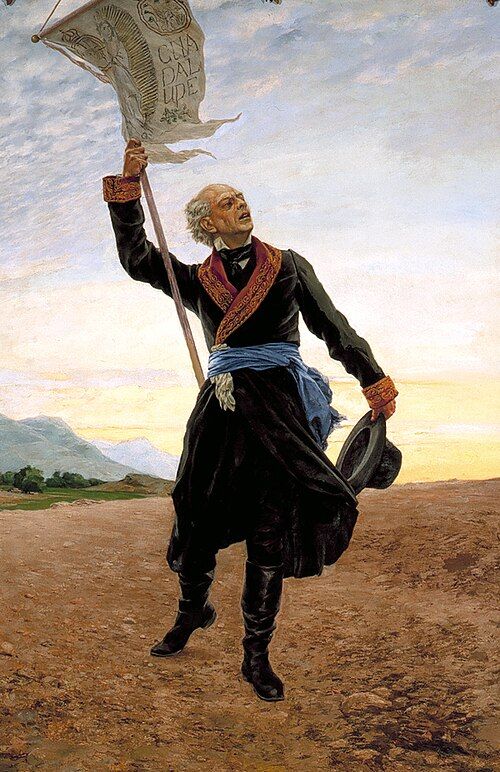
In the early hours of September 16, 1810, a fifty-seven-year-old parish priest in the small town of Dolores rang the church bell and called his parishioners into the plaza. Miguel Hidalgo y Costilla had no army and no treasury. What he had was a network of criollo conspirators about to be exposed, and a determination to rebel against the colonial government. What followed his cry, remembered as the Grito de Dolores, was a grinding, twelve-year struggle that devoured its own leaders and ended in a way almost nobody in 1810 would have predicted. Not with the insurgents triumphant, but with a royalist officer switching sides and crowning himself emperor.
Mexico's independence was not the inevitable culmination of the movement Hidalgo launched. It passed through three distinct political projects which were, Hidalgo's mass uprising, Morelos's revolutionary and constitutional vision, and, after years of stalemate, the conservative coalition assembled by Agustín de Iturbide. Independence ultimately arrived not because the original insurgents defeated Spain, but because a decade later, Mexico's conservative elites concluded that separation from Spain offered the best way to protect their own interests from a liberal revolution then unfolding in Spain itself. That is the arc this account traces, from Hidalgo's bell in 1810 to Iturbide's coronation in 1822.
New Spain on the Eve of Revolt
By 1810, New Spain was Spain's largest American possession and, thanks to its silver mines, arguably its most economically important one. But it was also a society straining against its own contradictions. Colonial law and custom organized New Spain through a complex hierarchy of racial and legal distinctions that placed Spanish-born peninsulares at the top. It placed American-born Spaniards (criollos) beneath them making them increasingly resentful of being barred from the colony's highest offices. Lastly, society had a large population of Indigenous peoples, mixed-race castas, and enslaved and free Black Mexicans, who bore the heaviest burdens of colonial extraction. That silver wealth flowed disproportionately toward the Crown and a narrow colonial elite, with little reaching the people who worked the mines and fields.[1]
The spark that lit the immediate crisis came from Europe. In 1808, Napoleon Bonaparte invaded Spain, forced King Ferdinand VII to abdicate, and installed his own brother, Joseph Bonaparte, on the Spanish throne. This threw the Spanish Empire into a legitimacy crisis in that if the king was a French puppet, who had the right to govern in Spain's name? Juntas claiming to rule for the absent Ferdinand sprang up across Spain and the Americas. In New Spain, this uncertainty opened long-simmering tensions between criollos, who saw an opportunity to claim more authority for themselves, and peninsulares, who moved to suppress any hint of local autonomy. Viceroy José de Iturrigaray showed some sympathy that year toward criollo calls for a local governing junta and peninsular hardliners responded by deposing him in a coup.[2] The episode demonstrated to many criollo reformers the narrow limits of pursuing political autonomy through existing colonial institutions, and it helped set the stage for the conspiratorial networks that would soon turn to open rebellion.
Part of what made this crisis so combustible was that New Spain's administration had already been reshaped, over the preceding decades, by the Bourbon Reforms. These were a program of centralizing measures through which the Spanish Crown had tried to tighten control over its colonies, increase tax revenue, and reduce the influence of local elites and the Church. Those reforms had already pushed criollos further from positions of real authority even as they raised colonial tax burdens. This made the 1808 crisis in Madrid land on a colony where resentment of peninsular privilege was not new, only newly exposed.[3]
New Spain's crisis also unfolded in the shadow of a nearby example. The United States had won independence from Britain only a few decades earlier, and by 1800 its new capital was taking shape around the recently completed White House. For educated criollos in New Spain, the existence of an independent republic to the north provided a tangible example of what political separation from a European empire could produce.
One conspiratorial network formed in Querétaro, where a literary and social club ostensibly devoted to poetry readings was, in fact, cover for plotting armed revolt. Among its members were the corregidor (magistrate) of Querétaro, Miguel Domínguez and his wife, Josefa Ortiz de Domínguez, remembered popularly as "La Corregidora.” They were a group of criollo officers along with the priest of the nearby village of Dolores, Miguel Hidalgo.[4]
Hidalgo and the Explosion of 1810
Hidalgo was an unusual figure to lead an armed uprising. Educated and intellectually restless, he had spent years running a parish that doubled as something like a small development project, encouraging local viticulture, beekeeping, and workshops, several of which ran afoul of Spanish mercantilist restrictions designed to prevent colonial industries from competing with goods imported from Spain. He was also a man shaped by Enlightenment thought. He entered the revolt with an immediate objective of overturning the existing colonial administration, even though the movement's longer-term political shape remained unsettled.[5]
The Querétaro conspiracy was originally planned for early December 1810, but in September, Spanish authorities got wind of it. Warned that arrests were imminent, Hidalgo decided to call for revolt immediately. In the predawn hours of September 16, he rang the bells of his parish church and addressed the gathered townspeople. Mexico's modern Independence Day commemoration begins the night before, on September 15, reenacting the ringing of that bell. The exact wording of the Grito de Dolores was not recorded and has been mythologized ever since, but its substance was a call to arms against bad government and against Spanish-born privilege. It was framed, as much of the early insurgency was, as loyalty to the deposed Ferdinand VII against the officials who claimed to rule in his name.[6]
The call spread rapidly through the Bajío, a rich mining and agricultural region also thick with landless laborers, indebted peons, and miners with grievances of their own. Within days, Hidalgo led a swelling force, eventually numbering in the tens of thousands, armed mostly with agricultural tools, slings, and machetes rather than muskets. This was not a criollo officer corps defecting with its weapons. It drew heavily on rural and working people, though historians such as Eric Van Young have cautioned against reading it as a uniform "peasant uprising," since its participants, motives, and coordination varied considerably by region.[7] At San Miguel and then Celaya, the growing force overwhelmed local garrisons. At Guanajuato, one of the wealthiest mining cities in the world, the rebels stormed the fortified granary known as the Alhóndiga de Granaditas, where Spanish loyalists and their families had taken shelter. Estimates of the dead vary, but contemporary and later accounts agree that the toll numbered in the hundreds. In the eyes of criollo elites who might otherwise have sympathized with reform, this level of violence cemented a fear that Hidalgo's revolt was a mass social upheaval rather than a controllable political movement.[8]
That fear shaped what followed. Hidalgo's army advanced toward Mexico City and won a costly victory at the Battle of Monte de las Cruces in late October 1810, opening the road to the capital. Hidalgo then chose not to advance, and turned his forces back instead. Historians have long debated why and explanations offered at the time and since include concern for the civilian population of the capital, the exhaustion and poor discipline of his own forces, and the approach of a royalist relief army under Félix María Calleja.[9] Whatever the reasoning, the decision cost the insurgency its momentum. Calleja's forces caught and crushed Hidalgo's army at the Battle of Calderón Bridge in January 1811. Hidalgo fled north hoping to reach the United States, but he was betrayed, captured in Coahuila in March 1811, defrocked by the Inquisition, and executed by firing squad in Chihuahua that July. His head, along with those of three other captured insurgent leaders, was displayed in an iron cage on the Alhóndiga de Granaditas for the following decade.[10]
Morelos and the Revolutionary Vision
Hidalgo's death did not end the rebellion. It only transformed it. Leadership passed to José María Morelos y Pavón, another parish priest and briefly Hidalgo's student, who brought a level of military and organizational discipline the earlier movement had lacked. Morelos, of mixed African, Indigenous, and Spanish ancestry, was born in Valladolid, later renamed Morelia in his honor.[11]
Operating in the mountainous terrain of southern Mexico, Morelos built a smaller, more disciplined force and pursued sustained guerrilla and siege warfare rather than Hidalgo's mass mobilization. Under officers he trained himself, including Guerrero, his forces captured Oaxaca and the port of Acapulco and, for a time, controlled a substantial swath of southern territory outside royalist reach. He laid a notable siege to Cuautla in 1812, holding the town for weeks against a much larger royalist force under Calleja before royalist forces eventually forced a desperate breakout. Even in defeat, the siege showed a level of organized resistance the insurgency had not managed under Hidalgo.[12]
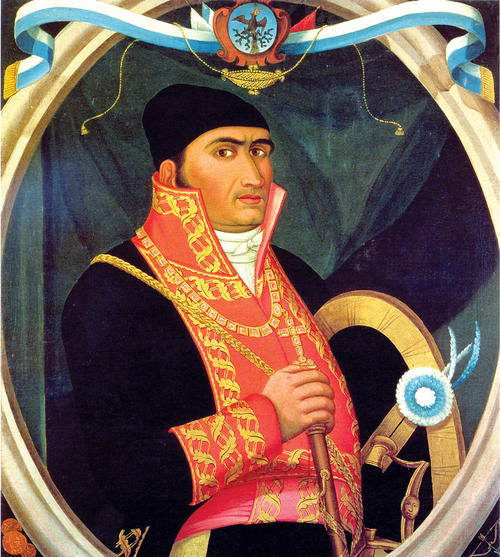
Morelos also emerged as a political thinker, giving the insurgency a clearer institutional and constitutional vision than it had possessed under Hidalgo. In 1813 he convened the Congress of Chilpancingo, which issued, that November, a formal declaration of independence, eight years before independence was actually achieved. Morelos also authored the Sentimientos de la Nación ("Sentiments of the Nation"), a set of guiding principles that called for independence, the abolition of slavery, the end of the caste system, and government by law rather than by any single sovereign.[13] These were ideas well ahead of what most criollo elites of the time were prepared to embrace, and they suggest that for Morelos, independence was inseparable from broader social transformation.
The Chilpancingo congress eventually produced the Constitution of Apatzingán, promulgated in October 1814, which established, on paper, a republic with separation of powers, though it was never effectively implemented across Mexican territory. By the time it was issued, Morelos' military position had already deteriorated. Royalist forces under Calleja, by then elevated to viceroy, had regrouped and gone on the offensive. Defeats through 1814 stripped Morelos of most of his territory and army. He continued fighting while trying to protect the insurgent congress, but was captured in November 1815. Like Hidalgo, he was defrocked, tried, and executed, shot in the village of San Cristóbal Ecatepec that December.[14]
The War That Would Not Die
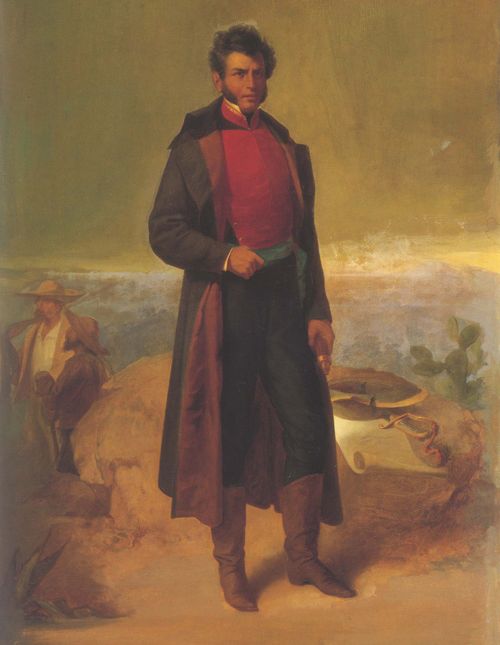
The deaths of Hidalgo and Morelos ended the insurgency's most ambitious phase. From 1815 through 1820, the war ground down into a lower-intensity conflict where royalist forces held the cities and main roads, while insurgent remnants survived in the mountains and remote regions, harassing royalist supply lines without seriously threatening Spanish rule. The most significant remaining insurgent commander was Vicente Guerrero, who had served under Morelos and continued to resist in the rugged south despite the steady recovery of territory by royalist forces. Guadalupe Victoria kept a smaller resistance alive in the mountains of Veracruz.[15] By 1820, though, most observers on either side would likely have judged the insurgency contained, if not entirely extinguished. Spanish colonial rule, however exhausted, was in no near-term danger of collapse.
That makes what followed all the more striking. Independence did not arrive because the original insurgency won. It arrived because of events an ocean away, in Spain, that pulled in exactly the criollo conservatives who had spent a decade fighting against Hidalgo, Morelos, and Guerrero.
1820: When Spain Changed the Meaning of Independence
While Napoleon held Ferdinand VII captive in France, the Cortes of Cádiz governed Spain in his name and drafted the liberal Constitution of 1812. When Ferdinand returned to the throne in 1814, he refused to recognize it, declared it void, and ruled as an absolutist for the six years that followed. In January 1820, a military uprising, led by officers who were supposed to be embarking for service against insurgencies in South America, forced him to reinstate it instead. The restored constitution established a constitutional monarchy in place of his absolute rule, it limited royal authority, reorganized political representation on more liberal lines, and challenged some of the traditional privileges of the Church and other corporate institutions. This included aspects of clerical fueros (special legal jurisdictions) and Church landholding, without itself abandoning Catholicism as the state religion.[16]
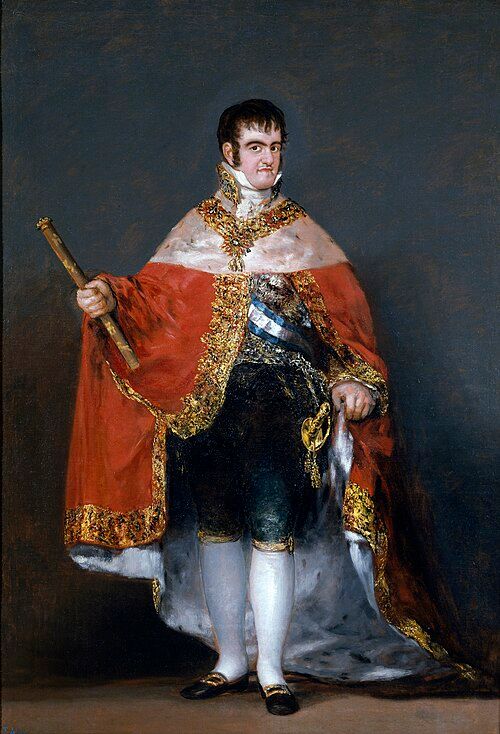
For liberals in Spain and its colonies, its restoration was a triumph, and news of it traveled to New Spain within weeks, where the viceregal government found itself legally obligated to implement a charter its own conservative base opposed. Mexico's crisis was unfolding alongside a much broader collapse of Spanish power in the Americas. In South America, Simón Bolívar was leading campaigns that would eventually break Spanish rule across Venezuela, Colombia, Ecuador, and Peru, making Mexican independence part of a continental transformation rather than an isolated colonial revolt. For conservative elites in New Spain, including peninsular officials, wealthy criollo landowners, and influential members of the Catholic hierarchy, the restoration was an alarming turn imposed from Madrid.[17]
This is the pivot of the whole story. In 1810, independence had meant insurgency or a challenge to colonial authority from below, led by priests willing to arm the rural poor. By 1820, independence no longer belonged exclusively to that tradition. It had become available as an instrument of conservative self-preservation, a way to keep the old colonial order intact by cutting it loose from a Spain whose new constitutional order threatened interests they had long relied on the colonial government to protect.[18]
A conspiracy of conservative clergy, criollo elites, and army officers, organized in part around a conservative network associated with the Conspiracy of La Profesa in Mexico City, concluded that Mexico's traditional hierarchy would be safer independent of a liberal Spain than it would remain as a colony subject to Madrid's new constitutional order.[19]They needed a military leader capable of executing such a break, and they found one in Agustín de Iturbide.
Iturbide and the Coalition for Independence
Iturbide had spent the entire war on the royalist side and had a reputation as an effective, often harsh, counterinsurgent commander, particularly in the Bajío. By 1820 he was in search of a new command after a period on the sidelines. Colonial authorities gave him command of forces tasked with eliminating Vicente Guerrero's remaining insurgent holdouts in the south.[20]
Instead, Iturbide opened negotiations with Guerrero rather than fighting him. The two men had little reason to trust each other as Guerrero's forces had spent years being hunted by royalist officers like Iturbide, and independence for Guerrero had always meant something closer to Morelos's vision of social transformation than to the preservation of colonial hierarchy. But after a series of exchanges, the two agreed to combine forces behind a joint political program broad enough to unite criollo conservatives seeking independence from a liberal Spain with the remaining insurgents who had spent a decade fighting for independence from any Spain at all.[21]
That program, published in February 1821, became known as the Plan of Iguala, or the Plan of the Three Guarantees. These were:
- Independence for Mexico from Spain, with the plan initially proposing that a European prince, ideally a Bourbon, might be invited to rule as a constitutional monarch.
- Religion: the Roman Catholic Church would remain the sole established religion, with its property, privileges, and legal status protected, a direct rebuke to the anticlerical currents in Spain's 1812 Constitution.
- Union: the plan declared the inhabitants of Mexico equal, formally abolishing the colonial caste distinctions that had structured New Spanish society, at least in principle.[22]
Iturbide and Guerrero merged their forces into the Army of the Three Guarantees and marched across the country accumulating support as town after town, garrison after garrison, switched allegiance to the new coalition, often without a shot fired. What ten years of war between insurgents and royalists could not achieve, a political settlement between a former insurgent and a former royalist accomplished in months.[23]
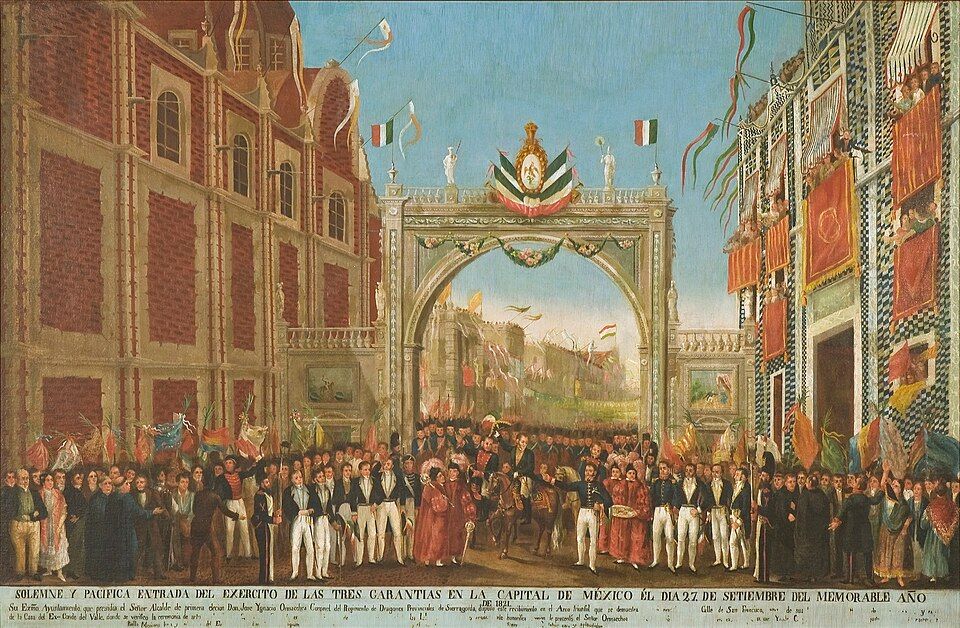
Spain's newly appointed viceroy, Juan O'Donojú, arrived in the summer of 1821 to find royalist authority already effectively broken. Rather than fight a war he judged unwinnable, O'Donojú negotiated with Iturbide. On August 24, 1821, the two signed the Treaty of Córdoba, which accepted the terms of the Plan of Iguala as the basis for the new Mexican government, although the Spanish government rejected the treaty and did not recognize Mexican independence at the time.[24] On September 27, 1821, the Army of the Three Guarantees marched into Mexico City, and the following day the Act of Independence of the Mexican Empire was signed, ending three centuries of Spanish colonial rule in practice, whatever Madrid's formal position.[25]
Mexico, Briefly
With independence achieved, the new nation faced the question of what government it would actually have. The Plan of Iguala had envisioned a constitutional monarchy under an invited European prince, and a provisional governing junta and regency were established in the interim, with Iturbide installed as president of the regency and the most powerful figure in the new state.[26] A newly elected constituent congress convened in early 1822 to begin drafting a constitution and, at least nominally, to decide the succession question, but it quickly found itself at odds with Iturbide over how much authority the regency should hold in the meantime.
No European royal house proved willing to send a prince to rule a country that had just thrown off its colonial master through an improvised political coalition, and as months passed without a foreign monarch, pressure built for a domestic solution.
That pressure culminated on the night of May 18, 1822, when soldiers and civilians in Mexico City demonstrated in favor of proclaiming Iturbide emperor, an episode that the conservative historian and eyewitness Lucas Alamán, and later historians as well, treated as stage-managed rather than spontaneous.[27] The next day, amid significant dissent, the Mexican Congress voted to proclaim Iturbide Emperor of Mexico. He was crowned Agustín I in Mexico City Cathedral on July 21, 1822, and the First Mexican Nation was born. it was independent of Spain, but assembled through a process that left much of the political class uneasy about how it had come about.[28]
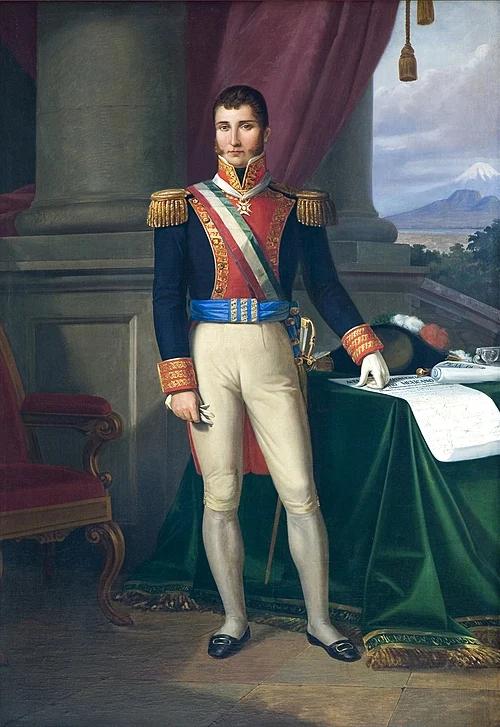
This version of Mexico proved short-lived. He had assembled a coalition broad enough to defeat Spanish authority but with no shared vision of what should follow, and he governed autocratically enough to alienate liberals, federalists, and former insurgent allies alike. Within less than a year, a rebellion led by Antonio López de Santa Anna and Guadalupe Victoria, under the Plan of Casa Mata, forced his abdication in March 1823, and Mexico turned toward becoming a republic instead, a further story of its own, and a turbulent one, that lies just beyond this twelve-year frame.[29]
Conclusion: Three Visions of Mexico
What changed between 1810 and 1821 was not a steady accumulation of insurgent strength but a change in who wanted independence and why. Hidalgo's uprising was a mass rebellion that terrified the same criollo elite whose grievances against peninsular privilege had helped create the conditions for revolt, and it was crushed within a year. Morelos rebuilt the movement with real political vision: the formal declaration of independence, a constitutional framework, and proposals for abolishing slavery and caste distinctions. He too was captured and shot. For half a decade afterward the war simmered without clear direction. Independence finally arrived not through insurgent victory, but through a realignment of the conservative colonial elite, triggered by a liberal revolution in Spain that those elites found more threatening than separation from the empire.[30]
That is why the Plan of Iguala reads as it does: not a revolutionary manifesto in the mode of Morelos's Sentimientos de la Nación, but a compromise designed to satisfy everyone with the power to block it. It offered independence for criollo nationalists, protected privilege for the Church, and formal equality that did not entail redistribution of property or political power for those, including Guerrero's own followers, who had fought for something closer to Morelos's vision. A coalition built to answer the question of separating from Spain had no comparable consensus on what to build instead, and that tension would keep resurfacing through Mexican politics for decades, well past Iturbide's fall in 1823.[31]
None of that diminishes what happened across these twelve years. Hidalgo's Grito remains the symbolic beginning of Mexico's independence struggle, commemorated each September 15 and 16, because it was the moment the demand for a different order first became impossible to ignore. Morelos gave that demand its clearest vision of what independence might mean for those with the least stake in the old order. And the settlement of 1821–22, improvised and elite-brokered, gave it, imperfectly, its formal legal reality. Three distinct projects, compressed into twelve years, left behind a country still arguing about which of them it actually wanted to be.
Bibliography
- Alamán, Lucas. Historia de Méjico desde los primeros movimientos que prepararon su independencia en el año de 1808 hasta la época presente. 5 vols. Mexico City, 1849–1852.
- Anna, Timothy E. The Fall of the Royal Government in Mexico City. Lincoln: University of Nebraska Press, 1978.
- Anna, Timothy E. The Mexican Empire of Iturbide. Lincoln: University of Nebraska Press, 1990.
- Archer, Christon I., ed. The Birth of Modern Mexico, 1780–1824. Wilmington: Scholarly Resources, 2003.
- Brading, David A. The First America: The Spanish Monarchy, Creole Patriots, and the Liberal State, 1492–1867. Cambridge: Cambridge University Press, 1991.
- Hamill, Hugh M. The Hidalgo Revolt: Prelude to Mexican Independence. Gainesville: University of Florida Press, 1966.
- Lynch, John. The Spanish American Revolutions, 1808–1826. 2nd ed. New York: W. W. Norton, 1986.
- Rodríguez O., Jaime E. The Independence of Spanish America. Cambridge: Cambridge University Press, 1998.
- Van Young, Eric. The Other Rebellion: Popular Violence, Ideology, and the Mexican Struggle for Independence, 1810–1821. Stanford: Stanford University Press, 2001.
Places in this Story
The places this story moves through, in order — follow them on the interactive map →
- Querétaro, Querétaro August 1810
The Querétaro conspiracy brought together figures including Miguel Hidalgo, Ignacio Allende, Juan Aldama, and Josefa Ortiz de Domínguez before authorities discovered the plot and forced the rebels to move ahead of schedule.
- Dolores, Guanajuato September 16, 1810
Miguel Hidalgo issued the Grito de Dolores, launching the armed uprising against Spanish colonial rule.
- Guanajuato, Guanajuato September 28, 1810
Insurgent forces captured Guanajuato and stormed the Alhóndiga de Granaditas, one of the rebellion's earliest major acts of violence.
- Monte de las Cruces, Estado de México October 30, 1810
Hidalgo's army defeated the royalists at Monte de las Cruces, bringing the insurgents to their closest approach to Mexico City during the initial campaign.
- Puente de Calderón, Jalisco January 17, 1811
The decisive royalist victory effectively ended Hidalgo's first major campaign.
- Cuautla, Morelos February 19 – May 2, 1812
Morelos's 72-day defense and eventual breakout demonstrated the greater organization and military discipline of the second phase of the insurgency.
- Iguala, Guerrero February 24, 1821
Iturbide proclaimed the Plan of Iguala, bringing former royalists and insurgents together around Independence, Religion, and Union.
- Mexico City September 27, 1821 to July 21, 1822
The Army of the Three Guarantees entered Mexico City on September 27, 1821, effectively ending Spanish rule, and Iturbide was crowned emperor there on July 21, 1822.
Important Dates
Ignacio Allende wrote to Miguel Hidalgo outlining plans for the coming uprising and emphasizing that the movement should initially be presented as defending Ferdinand VII rather than openly proclaiming revolution.
Miguel Hidalgo issued the Grito de Dolores, launching the armed uprising against Spanish colonial rule.
Royalist forces defeated Hidalgo's army at the Battle of Calderón Bridge, effectively ending the first major phase of the insurgency.
Miguel Hidalgo was executed by firing squad in Chihuahua after being captured and tried by colonial authorities.
The Congress of Chilpancingo formally declared Mexican independence through the Acta Solemne de la Declaración de Independencia de la América Septentrional.
The insurgent Congress promulgated the Constitution of Apatzingán, establishing a republican framework for an independent Mexico.
José María Morelos was executed at San Cristóbal Ecatepec after his capture by royalist forces.
Agustín de Iturbide proclaimed the Plan of Iguala, establishing Independence, Religion, and Union as the three guarantees of his new coalition.
The Army of the Three Guarantees entered Mexico City, marking the effective end of Spanish colonial rule in Mexico.
Agustín de Iturbide was crowned Agustín I, Emperor of Mexico, formally establishing the short-lived First Mexican Empire.
Frequently Asked Questions
When did Mexico gain independence from Spain?
Mexico effectively gained independence from Spain on September 27, 1821, when the Army of the Three Guarantees entered Mexico City after more than a decade of war. Spain did not immediately recognize Mexican independence, but the Act of Independence was signed the following day.
What started the Mexican War of Independence in 1810?
The Mexican War of Independence began in September 1810 when Miguel Hidalgo y Costilla called for an uprising against the colonial government in what became known as the Grito de Dolores. The revolt emerged from longstanding tensions in New Spain that were intensified by the political crisis caused by Napoleon's invasion of Spain in 1808.
Who were the main leaders of Mexican independence?
The most important leaders included Miguel Hidalgo, José María Morelos, Vicente Guerrero, and Agustín de Iturbide, although they represented very different political visions. Hidalgo launched the rebellion, Morelos developed its most radical political program, Guerrero kept the insurgency alive, and Iturbide ultimately negotiated the coalition that achieved independence.
Why did Miguel Hidalgo start the Mexican War of Independence?
Miguel Hidalgo joined the movement to challenge Spanish colonial rule and the political dominance of Spanish-born peninsulares. His September 1810 call to arms transformed a conspiracy in Querétaro into a mass uprising that spread rapidly through central Mexico.
What was the Plan of Iguala?
The Plan of Iguala, issued by Agustín de Iturbide in February 1821, provided the political framework that united former royalists and insurgents behind Mexican independence. Its three guarantees were Independence, Religion, and Union, combining separation from Spain with protection for Catholicism and formal equality among Mexicans.
Why did Mexico become independent in 1821 after Spain had defeated most of the insurgents?
Mexico became independent largely because Spain's liberal revolution of 1820 changed the political calculations of conservative elites in New Spain. Fearing that Spain's restored constitutional government would threaten the privileges of the Church and established elites, they supported independence and joined Iturbide's coalition with Vicente Guerrero.
Why did Mexico become an empire after independence?
Mexico initially adopted a constitutional monarchy because the Plan of Iguala envisioned inviting a European prince, preferably a Bourbon, to rule the new country. When no European monarch accepted the offer, Agustín de Iturbide was proclaimed emperor in May 1822 and crowned Agustín I, creating the short-lived First Mexican Empire.
Citations
- David A. Brading, The First America: The Spanish Monarchy, Creole Patriots, and the Liberal State, 1492–1867 (Cambridge: Cambridge University Press, 1991). ↑
- Timothy E. Anna, The Fall of the Royal Government in Mexico City (Lincoln: University of Nebraska Press, 1978). ↑
- Brading, The First America; John Lynch, The Spanish American Revolutions, 1808–1826, 2nd ed. (New York: W. W. Norton, 1986). ↑
- Lynch, The Spanish American Revolutions, 1808–1826. ↑
- Hugh M. Hamill, The Hidalgo Revolt: Prelude to Mexican Independence (Gainesville: University of Florida Press, 1966). ↑
- Hamill, The Hidalgo Revolt. ↑
- Eric Van Young, The Other Rebellion: Popular Violence, Ideology, and the Mexican Struggle for Independence, 1810–1821 (Stanford: Stanford University Press, 2001). ↑
- Hugh M. Hamill, The Hidalgo Revolt; Christon I. Archer, ed., The Birth of Modern Mexico, 1780–1824 (Wilmington: Scholarly Resources, 2003). ↑
- Hamill, The Hidalgo Revolt. ↑
- Hamill, The Hidalgo Revolt. ↑
- Christon I. Archer, ed., The Birth of Modern Mexico, 1780–1824. ↑
- Archer, The Birth of Modern Mexico, 1780–1824. ↑
- Jaime E. Rodríguez O., The Independence of Spanish America (Cambridge: Cambridge University Press, 1998). ↑
- Rodríguez O., The Independence of Spanish America. ↑
- Eric Van Young, The Other Rebellion. ↑
- John Lynch, The Spanish American Revolutions, 1808–1826. ↑
- David A. Brading, The First America; Jaime E. Rodríguez O., The Independence of Spanish America. ↑
- Rodríguez O., The Independence of Spanish America. ↑
- Timothy E. Anna, The Fall of the Royal Government in Mexico City. ↑
- Christon I. Archer, ed., The Birth of Modern Mexico, 1780–1824. ↑
- Jaime E. Rodríguez O., The Independence of Spanish America. ↑
- Rodríguez O., The Independence of Spanish America. ↑
- Timothy E. Anna, The Fall of the Royal Government in Mexico City. ↑
- Anna, The Fall of the Royal Government in Mexico City. ↑
- Anna, The Fall of the Royal Government in Mexico City. ↑
- Timothy E. Anna, The Mexican Empire of Iturbide (Lincoln: University of Nebraska Press, 1990). ↑
- Lucas Alamán, Historia de Méjico desde los primeros movimientos que prepararon su independencia en el año de 1808 hasta la época presente, 5 vols. (Mexico City, 1849–1852); Anna, The Mexican Empire of Iturbide. ↑
- Anna, The Mexican Empire of Iturbide. ↑
- Anna, The Mexican Empire of Iturbide. ↑
- David A. Brading, The First America. ↑
- Jaime E. Rodríguez O., The Independence of Spanish America; Eric Van Young, The Other Rebellion. ↑