Introduction: The Liberator
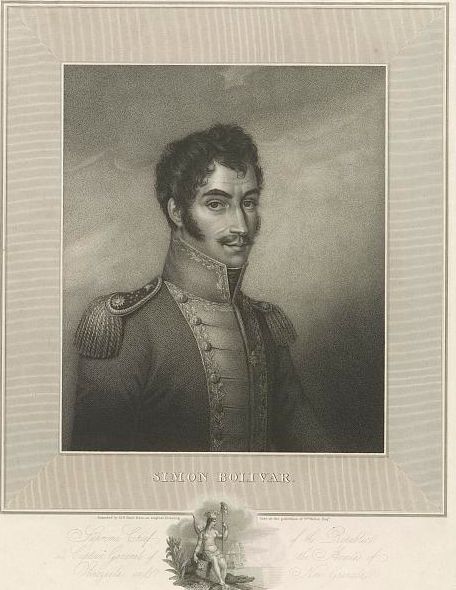
Few figures have shaped the history of Latin America as profoundly as Simón Bolívar. Known throughout the Spanish-speaking world as El Libertador, Bolívar became the principal military and political leader of the independence movements that transformed northern South America from Spanish colonies into independent republics. Between 1810 and 1822, he evolved from a young Creole aristocrat in Venezuela's early revolutionary movement into the founder of the Republic of Colombia, the state later remembered as Gran Colombia. His achievement was not simply the result of battlefield victories: his career was defined by political experimentation, diplomatic negotiation, military defeat, exile, and repeated attempts to build governments capable of surviving revolutionary warfare. Through the failures of Venezuela's First and Second Republics, he was convinced that independence required centralized leadership, organized armies, and institutions capable of replacing colonial authority, not merely declarations of sovereignty.[1]
The crisis that made Spanish American independence possible began in Europe. In May 1808, Napoleon Bonaparte forced the Spanish Bourbon monarch Charles IV and his son Ferdinand VII to abdicate at Bayonne. Next, he placed his brother Joseph Bonaparte on the Spanish throne, creating a crisis of legitimacy throughout the empire. For nearly three centuries, Spanish colonial governments across the Americas had derived their authority directly from the monarchy. Now with Ferdinand VII removed and Spain itself under French occupation, political leaders throughout Spanish America confronted an new question: if the king could not rule, where did legitimate authority reside?[2] This was the same question being asked across Spanish colonies, including West Florida.
The answer developed through local governing juntas, which claimed to preserve royal authority in Ferdinand VII's name. However, in practice they transferred political power from imperial officials to American-born elites. In Caracas, the crisis unfolded on April 19, 1810, when the cabildo removed Captain General Vicente Emparan and established the Junta Suprema Conservadora de los Derechos de Fernando VII. It was a government that claimed loyalty to the imprisoned monarch but exercised independent authority, becoming the foundation of Venezuela's revolutionary movement.[3]
Bolívar was not yet the movement's dominant figure. Born in Caracas in 1783 into one of Venezuela's wealthiest Creole families, with estates, mining interests, and enslaved laborers, he belonged to the colonial elite whose influence shaped the early revolution. Through his education, he was exposed to Enlightenment philosophy and classical republican ideas, though he increasingly believed that Spanish America required institutions adapted to its own circumstances.[4]
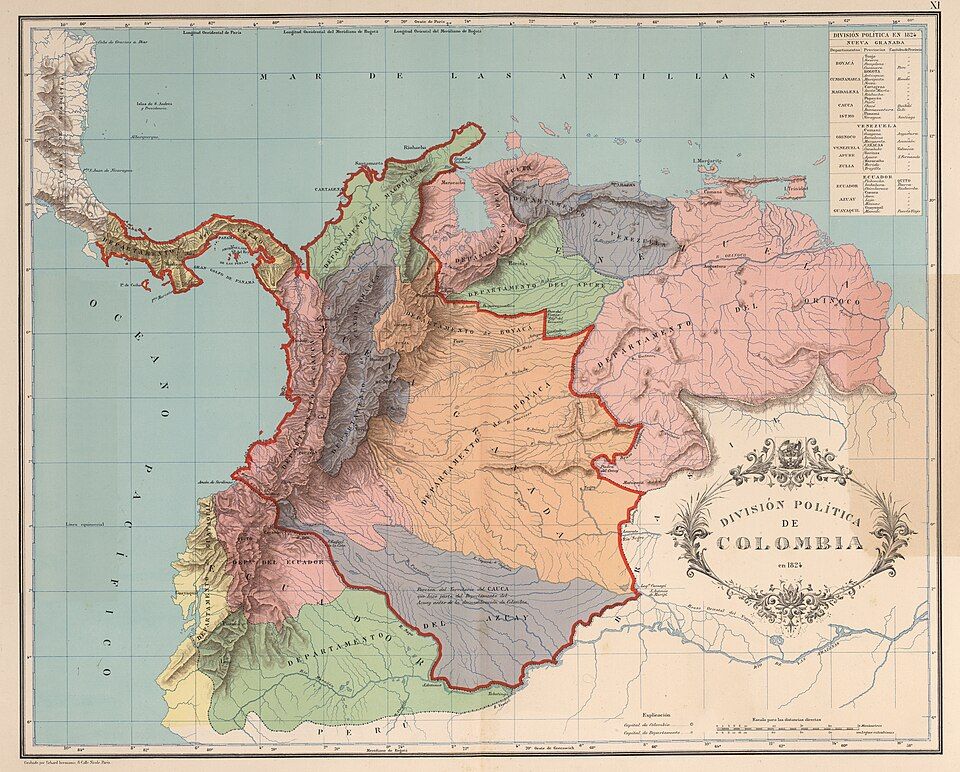
In 1810 the Caracas junta selected Bolívar, the experienced statesman Luis López Méndez, and the young intellectual Andrés Bello for a diplomatic mission to Britain, seeking British sympathy, commercial relations, and reduced British support for Spanish royalist authorities. The mission marked the beginning of Bolívar's emergence as an international revolutionary figure, and although Britain did not recognize the Venezuelan government, the journey brought him into contact with Francisco de Miranda, the veteran revolutionary whose experience and international reputation would profoundly shape the early course of his career.[5]
The London Mission (1810)
Bolívar, López Méndez, and Bello arrived in Britain in July 1810. Their mission was cautious: to secure British neutrality, encourage commerce, and explore whether Britain might mediate between Venezuela and Spain, without seeking immediate recognition of independence. Britain, allied with Spanish resistance against Napoleon, considered cooperation with Spain essential to the wider war. Therefore, Foreign Secretary Richard Wellesley refused to recognize the Caracas junta as an independent government. Even so, the delegation introduced the Venezuelan cause to British political circles and to merchants interested in expanding trade with Spanish America. These became connections that would prove useful in the years that followed.[6]
In London, Bolívar met Francisco de Miranda, the most internationally recognized Venezuelan revolutionary of the period, a veteran of the American Revolution and the French Revolutionary Army who had attempted an unsuccessful invasion of Venezuela in 1806. More than thirty years older than Bolívar, Miranda embodied an earlier generation of revolutionary leadership. Bolívar believed his reputation and connections could give the Venezuelan movement the leadership it lacked and urged him to return. Miranda accepted, departing Britain in October 1810 and arriving in Caracas that December, though disagreements over strategy and authority with younger leaders soon followed.[7]
The mission also shaped Bolívar's political thinking. Observing a constitutional monarchy in which executive authority coexisted with parliamentary institutions and civil liberties, Bolívar admired Britain's balance of stability and representative government without believing it could simply be copied. This was an observation that reinforced his later conviction that newly independent nations needed strong institutions and effective leadership to survive. Before 1810 he had been a wealthy young Creole with little military experience. He returned from Europe with a clearer political vision and a growing commitment to complete independence.[8]
The Venezuelan Revolution (1810–1812): The First Republic
The Caracas junta's claim to govern in Ferdinand VII's name proved unsustainable, and on July 5, 1811, representatives in Caracas formally declared Venezuela independent, creating the First Republic. This was one of the earliest formal breaks with Spanish authority in the Americas. The new republic's federal constitution, influenced partly by the United States, divided authority among the provinces and limited central power. This intended to prevent the emergence of another concentrated authority resembling the monarchy.[9]
Bolívar later became one of the fiercest critics of this structure. He argued that federalism weakened the government precisely when unity and military coordination were essential, and that Venezuela's inexperience with self-government, combined with an active military threat from Spain, made the American model unsuitable for its circumstances.[10] The republic also failed to win broad social support. Leadership remained dominated by wealthy Creoles, and as a result, other inhabitants saw little immediate improvement in their position. Naturally, royalist forces exploited these divisions by presenting the monarchy as a protector of traditional social structures against Creole domination, turning what might have been a straightforward war for independence into a struggle among competing social groups as well.[11]
On March 26, 1812, an earthquake rocked Caracas and other patriot areas, killing thousands. Royalist supporters used the disaster as religious and political propaganda against the revolutionary government. Spanish commander Domingo de Monteverde exploited the crisis, and Bolívar, commanding the fortress at Puerto Cabello, suffered a major defeat in June 1812 when prisoners inside revolted and handed the position to royalist forces. With resistance collapsing, Francisco de Miranda negotiated the First Republic's capitulation to Monteverde on July 25, 1812.[12]
Bolívar and other younger officers viewed this as surrender at the movement's most critical moment and arrested Miranda before he could leave Venezuela. Spanish authorities transported him to Spain, where he died in prison in 1816. The episode remains one of the most debated moments of Bolívar's career, read by some as betrayal and by others as a response to genuine military necessity.[13]Bolívar escaped to Cartagena in New Granada, convinced that future revolutionary governments required stronger central authority, professional military organization, and a strategy extending beyond Venezuela alone.[14]
The Cartagena Manifesto (1812)
In Cartagena, a fugitive with no army and a badly tarnished reputation, Bolívar treated exile as an opportunity to analyze the causes of Venezuela's failure rather than abandon the independence struggle altogether. On December 15, 1812, he published the Memoria dirigida a los ciudadanos de la Nueva Granada por un caraqueño, the Cartagena Manifesto, addressed to the citizens of New Granada. The manifesto combined an unflinching explanation of Venezuela's defeat with an urgent warning against repeating its mistakes.[15]
The manifesto blamed the First Republic's collapse on its federal system, which had weakened national authority and prevented an effective response to royalist advances. There was also an excessive political tolerance that had let enemies of the revolution operate freely. It also argued that reliance on inexperienced militias, rather than a disciplined professional army under unified command, had left the revolution vulnerable. It also argued that New Granada had a direct interest in helping liberate Venezuela, since royalist forces would otherwise use it as a base for future campaigns southward.[16]
The manifesto transformed Bolívar's standing among New Granadan leaders, who granted him a military commission despite his arrival as a defeated officer without an army. The experience of 1810 to 1812 had changed his outlook. He no longer believed independence could be secured by isolated local governments, and began developing the continental strategy that would define the rest of his career.[17]
The Admirable Campaign (1813): The Second Republic
With New Granadan support, Bolívar launched a campaign not merely to retake territory but to rebuild the independence movement on stronger political and military foundations. Contemporaries would soon call the campaign the Campaña Admirable, the Admirable Campaign, for the speed of its advance. Beginning operations in early 1813, he captured Ocaña in January and defeated royalist forces at the Battle of Cúcuta on February 28, victories that secured his eastern approach and opened the route into Venezuela itself.[18] Crossing the frontier, he advanced rapidly through San Cristóbal, Mérida, La Grita, and Trujillo, gaining local support and encountering little organized resistance. He combined military speed with political messaging that presented his forces as liberators rather than another faction in a civil war.[19]
At Trujillo on June 15, 1813, Bolívar issued the Decreto de Guerra a Muerte, the Decree of War to the Death, declaring that Spaniards and Canary Islanders who refused to support independence would be treated as enemies. However, Americans who had fought for Spain could receive clemency by joining the patriot cause. He justified the decree as a response to royalist abuses already committed against independence supporters, believing a harsher policy necessary in what had become a struggle for survival; the decree marked a significant escalation, redefining loyalty in terms of identity and military commitment, and though later criticized for its severity, Bolívar considered it a necessary answer to royalist repression.[20]
The campaign continued successfully, with victories at Taguanes in July 1813 confirming Bolívar's abilities as a commander. On August 6, 1813, he entered Caracas, where supporters granted him the title El Libertador, permanently attached to his identity. The next day he established Venezuela's Second Republic and assumed extraordinary powers, emphasizing centralized authority and military effectiveness in place of the earlier federal system. Even though, the Second Republic faced the same underlying challenges as its predecessor: contested loyalties, persistent royalist support, and difficulty converting battlefield victories into lasting stability.[21]
The Collapse of the Second Republic (1814)
Bolívar's government remained vulnerable, lacking broad social support and facing a conflict that was as much a civil war among Venezuela's competing social groups as a war against Spain. The gravest threat came from José Tomás Boves, a Spanish-born cavalry commander who built the most effective royalist army of the period among Venezuela's llaneros, rather than relying on Spanish troops and colonial institutions.[22] Boves drew enslaved people, free people of color, and poor rural workers who saw the Creole-led republic as a continuation of elite domination rather than a movement offering them anything new. He presented the royalist cause as a struggle against Venezuelan aristocratic privilege and mobilizing mobile, irregular forces motivated by promises of land, wealth, and revenge against the Creole elite.[23]
Throughout 1814, Boves inflicted a series of devastating defeats on republican forces, culminating in the Second Battle of La Puerta on June 15, which crushed the patriot army and opened the road to Caracas. On July 7, thousands of civilians and soldiers abandoned the capital in what became known as the Caracas Exodus, one of the most tragic episodes of the independence struggle; many refugees died along the retreat eastward from exhaustion, disease, hunger, and continued attacks. Boves entered Caracas on July 16, ending the Second Republic; though he was killed that December at the Battle of Urica, his death did not restore stability to the country or resolve the deeper social divisions that had fueled the conflict in the first place.[24]
Amid disputes among revolutionary commanders over responsibility for the defeat, Bolívar again traveled to Cartagena, but deteriorating relations with New Granadan leaders and advancing Spanish forces eventually drove him into Caribbean exile. By 1815, having witnessed the destruction of two Venezuelan republics, Bolívar concluded that independence required foreign assistance, broader social reforms, and a military organization strong enough to defeat Spain's remaining forces.[25]
Jamaica and Haiti (1815–1816)
Bolívar arrived in Jamaica in May 1815 at one of the lowest points of his career, as Spanish forces regained control of most of Venezuela and observers increasingly believed the independence movement was nearing defeat. On September 6, 1815, in Kingston, he wrote the Carta de Jamaica, the Jamaica Letter, one of his most important political writings, analyzing the causes of revolution, the legacy of colonial rule, and the challenges facing newly independent nations.[26]
Bolívar argued that Spanish America's colonial history had left it unprepared for self-government, rejecting both a return to Spanish rule and any unrealistic imitation of foreign political systems in favor of institutions suited to American conditions. The letter also revealed his continental vision, imagining Spanish America as a connected political space whose peoples shared common historical experience rather than a set of isolated national movements pursuing independence in parallel. It attracted intellectual attention but produced no practical assistance, as Britain maintained official neutrality throughout the period.[27]
Real support came from Haiti. After leaving Jamaica, Bolívar traveled to Les Cayes, where he met President Alexandre Pétion in December 1815. Pétion agreed to provide weapons, supplies, and political backing, on the condition that Bolívar commit to ending slavery in any territory his armies liberated, a condition reflecting Haiti's own revolutionary history.[28] Bolívar accepted and launched an expedition in 1816. The first attempt achieved only limited success, but after returning briefly to Haiti for further assistance, he prepared a second, more successful expedition. Haitian support proved crucial, supplying resources at the moment the movement appeared defeated, and shaping Bolívar's evolving commitment to gradual emancipation as part of the revolutionary project.[29]
Return to Venezuela (1816–1818)
Bolívar's second Haitian-backed expedition, launched late in 1816, allowed him to gradually build the political and military foundations that would eventually defeat Spanish authority in the north. The Orinoco River basin, distant from the strongest royalist centers and rich in trade routes, let him organize supplies, institutions, and an army capable of sustained operations. He also captured Angostura, a strategically important town on the southern bank of the river, in July 1817 which gave him something he had lacked since the Second Republic's collapse: a secure territorial base from which to govern and plan future campaigns.[30]
From Angostura, Bolívar built the apparatus of a functioning state: government offices, a treasury, diplomatic correspondence, and a newspaper, the Correo del Orinoco. Uniting the patriot movement's regional commanders under central authority remained his greatest challenge. Among them was José Antonio Páez, whose llanero cavalry gave Bolívar a military resource that had previously strengthened Boves's royalist forces. On the other hand, Manuel Piar, a talented general who had contributed significantly to patriot victories, increasingly appeared to Bolívar as a threat to unity because of his opposition to centralized authority and his criticism of Creole leadership.[31]
In 1817, Bolívar ordered Piar's arrest on charges of insubordination and conspiracy against the government. Following a military trial, Piar was executed at Angostura on October 16, 1817, a decision that remains one of the most debated of Bolívar's career. This decision is defended by some as necessary to prevent the fragmentation of the patriot movement at a critical moment and criticized by others as evidence of Bolívar's growing willingness to concentrate power and suppress internal opposition.[32]
Despite the controversy, Bolívar's government made real progress, controlling significant territory by 1818 and building the institutions needed for a broader campaign. His alliance with Páez also broadened the movement's social base beyond the Creole elites who had dominated earlier republics. He incorporated llaneros and former royalists who changed sides, even as questions of slavery, racial inequality, and land ownership remained unresolved. By early 1819, Bolívar judged the government strong enough to convene a national congress at Angostura.[33]
The Congress of Angostura (1819)
The Congress of Angostura opened on February 15, 1819, bringing together patriot representatives from Venezuela and New Granada, intended by Bolívar to legitimize the government he had built. At its opening, Bolívar delivered the Discurso de Angostura, which, alongside the Cartagena Manifesto and the Jamaica Letter, became one of the foundational documents of his political thought.[34]
The address asked what government could replace colonial rule, rejecting both monarchy and direct imitation of foreign republican models in favor of institutions suited to Spanish America's own historical conditions. Bolívar argued that centuries of colonial rule had left these societies politically inexperienced, gaining freedom before developing the traditions needed to sustain stable government, and that a strong executive was necessary to avoid repeating the weaknesses that had destroyed the First Republic. He also proposed a hereditary senate, modeled loosely on the British House of Lords and intended to provide continuity across changes of government. This was along with a moral branch of government, the Poder Moral, charged with cultivating civic virtue and public education, both reflecting his broader belief that political institutions needed to shape citizens as well as govern them.[35]
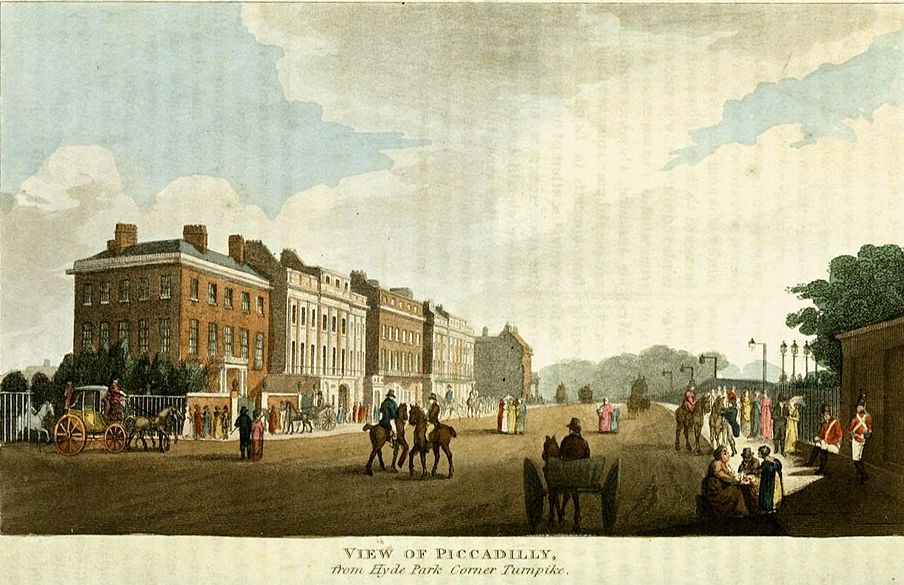
The congress rejected some of these proposals but confirmed Bolívar's leadership and, on December 17, 1819, approved the Fundamental Law of the Republic of Colombia, uniting Venezuela, New Granada, and the still-unliberated territory of Quito into the state later historians would call Gran Colombia.[36] The new republic existed largely as a political project until military victories could bring more territory under its control, and Bolívar's next task was his most ambitious campaign yet: the invasion of New Granada through the Andes.[37]
The Crossing of the Andes (1819): The Campaign Leading to Boyacá
Venezuela alone could not secure the independence movement, and by the middle of 1819 Bolívar had turned his attention to New Granada, whose liberation would provide the resources, population, and strategic position that Gran Colombia badly needed. Spanish authorities in Bogotá believed the region was protected by geography alone. The vast, seasonally flooded llanos of Casanare and the eastern Andes, including the freezing Páramo de Pisba, formed a barrier that Spanish commanders considered impassable to a large army, especially during the rainy season. However, Bolívar calculated that this very difficulty could be turned to his advantage, since no one would expect an attack along so unlikely a route.[38]
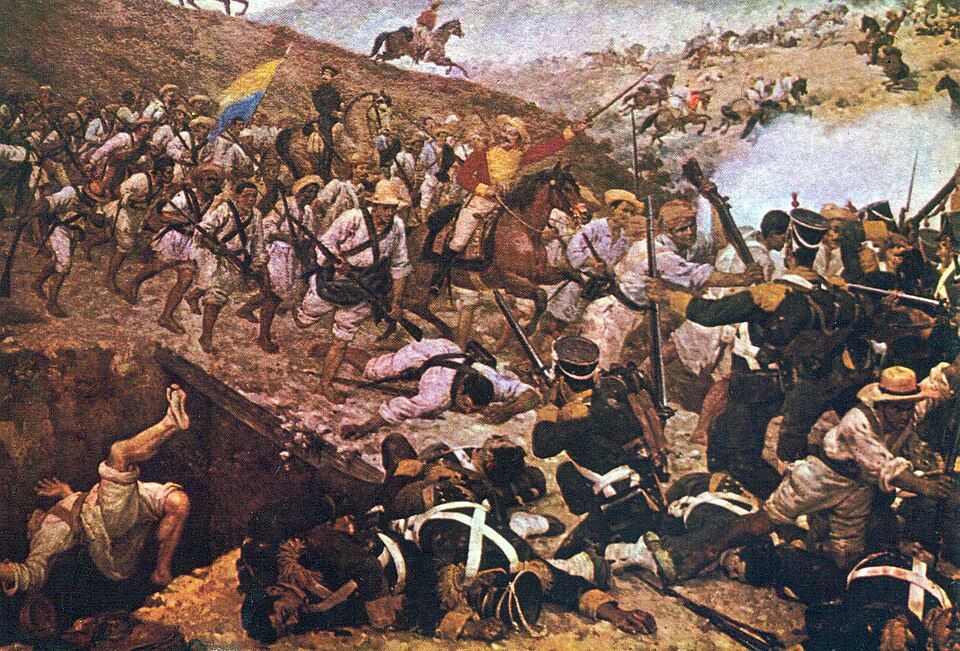
Beginning in May 1819, his army crossed the flooded plains of Casanare under harsh conditions of disease, exhaustion, and shortage, before ascending the páramo, where freezing temperatures and inadequate clothing killed many soldiers and animals. The army that emerged was weakened but undetected. Descending into New Granada, Bolívar joined forces with Francisco de Paula Santander, whose local knowledge and troops proved essential.[39]
The combined army defeated royalist forces at Gámeza on July 11, forcing Spanish commander José María Barreiro to retreat. Next, they survived a costly, inconclusive battle at Pantano de Vargas on July 25, saved by a decisive cavalry charge under Colonel Juan José Rondón. Though it wasn’t a clean victory, Pantano de Vargas weakened Barreiro's ability to block the advance on Bogotá.[40]
The decisive battle came on August 7, 1819, at Boyacá, where the patriot army trapped Barreiro's column at a bridge over the Boyacá River. The engagement, lasting only hours, ended in complete patriot victory, with 1,600 to 1,800 royalist soldiers captured and the main Spanish army in New Granada destroyed.[41] The Spanish viceroy fled the capital rather than face capture, and three days later Bolívar entered an undefended Bogotá. This transformed himself from the leader of a regional Venezuelan rebellion into the head of a continental movement. The Battle of Boyacá's importance extended well beyond the battlefield, giving Gran Colombia a major population center, substantial financial resources, and proof that coordinated military planning could defeat a European imperial power that had ruled the region for nearly three centuries.[42]
Creation of Gran Colombia (1819–1821)
Boyacá transformed Gran Colombia from a political aspiration into an emerging state, though the war with Spain was far from over in Venezuela, Quito, and elsewhere. Bolívar returned to Venezuela to continue military operations while Francisco de Paula Santander assumed responsibility for the day-to-day civil administration of New Granada. It was an arrangement that allowed the fledgling government to function even as Bolívar remained occupied with the war. However, it also planted the seeds of a later and more serious tension between Santander's preference for constitutional, civilian government and Bolívar's growing conviction that extraordinary circumstances demanded stronger executive authority.[43]
The Venezuelan war continued until the decisive Battle of Carabobo on June 24, 1821, following a period of negotiation and continued fighting against royalist commanders Pablo Morillo and, later, Miguel de la Torre. At Carabobo, a combined army of Venezuelan and New Granadan troops, José Antonio Páez's llanero cavalry, and British and Irish volunteers who had joined the independence cause defeated the royalist army in an engagement lasting only a few hours. This effectively secured Venezuelan independence and ended organized Spanish resistance across the country.[44]
A constitutional congress met at Cúcuta between May and October 1821 to replace wartime administration with permanent institutions. The Constitution of Cúcuta, adopted August 30, 1821, established Gran Colombia as a centralized republic with a president, vice president, bicameral legislature, and judiciary organized along republican principles. Bolívar was elected president, while Santander became vice president and assumed much of the daily responsibility for civil administration, freeing Bolívar to continue directing military operations against remaining Spanish strongholds.[45] The constitution also addressed one of the most significant social questions inherited from the colonial period, introducing a gradual "free womb" emancipation law that declared children born to enslaved women free. However, it stopped short of abolishing slavery outright, a measure that represented a partial but real fulfillment of the commitment Bolívar had made to Pétion in Haiti six years earlier.[46]
By 1821, Gran Colombia possessed a constitution, elected institutions, a functioning government, and an army still fighting for independence, though Quito remained under Spanish control, regional differences threatened unity, and the tension between military necessity and constitutional government remained unresolved.[47]
The Liberation of Ecuador (1822): Pichincha and Bolívar's Arrival in Quito
Both the Fundamental Law proclaimed at Angostura in 1819 and the Constitution of Cúcuta in 1821 had counted Quito as part of Gran Colombia, but the territory remained under Spanish control throughout this period. The coastal city of Guayaquil had declared its own independence on October 9, 1820, though it lacked the resources to dislodge royalist forces from the Andean highlands on its own, and appealed for outside help. Bolívar responded by dispatching General Antonio José de Sucre in 1821 with instructions to secure the region's annexation to Colombia, while José de San Martín, then campaigning in Peru, sent supplies and a smaller contingent of his own.[48]
Sucre's campaign faltered initially, but by early 1822, reinforced by Peruvian, Argentine, and Chilean troops that San Martín had promised, he commanded a genuinely continental force. He retook Cuenca without a fight in February 1822 and continued to maneuver against a royalist army that repeatedly avoided open battle. Bolívar, meanwhile, led a separate force overland toward Quito from the north, through Popayán and against the royalist stronghold at Pasto, defeating a Spanish detachment under Basilio García at the costly Battle of Bomboná on April 7, 1822. This cleared his own approach into Quito even as Sucre closed in from the south.[49]
The decisive engagement came on May 24, 1822, when Sucre's army confronted a royalist force under Field Marshal Melchor Aymerich on the slopes of the Pichincha volcano, some 3,500 meters above Quito. After several hours of hard fighting at high altitude, Aymerich's army broke; Spanish losses ran to roughly four hundred dead against two hundred patriot dead, with more than a thousand prisoners taken. Aymerich surrendered the following day, and Sucre entered Quito on May 25, ending three centuries of Spanish rule over the city.[50]
Pasto held out a little longer, and García capitulated there to Bolívar on June 8, 1822, clearing the last significant royalist resistance in the north. Bolívar reached Quito on June 16, joining Sucre amid a large public welcome, and formally incorporated the province into the Republic of Colombia, completing the territorial union first proclaimed at Angostura three years earlier.[51]
Conclusion: Bolívar's Achievements by 1822
By the close of 1822, Bolívar presided over a republic stretching from the Caribbean coast of Venezuela to the Pacific shores of Guayaquil, encompassing the modern territories of Venezuela, Colombia, Panama, and Ecuador. He had survived the collapse of two Venezuelan republics, years of Caribbean exile, the hostility of rival commanders, and defeats that would have ended a less determined career, emerging from each setback with a sharper political vision, one first articulated at Cartagena in 1812, deepened at Kingston in 1815, and given its fullest expression at Angostura in 1819.[52]
The union he had built was a constitutional achievement as much as a military one. Gran Colombia possessed a written constitution, elected executive and legislative institutions, and a legal commitment. And there was a gradual commitment to the abolition of slavery, a commitment traceable directly to the terms Pétion had set in Haiti seven years earlier. Real tensions already ran beneath the Gran Colombia achievement. There was an unresolved pull between centralist and federalist visions of the state, not unlike some in America’s independence movement. Also the growing distance between Bolívar's preference for strong executive authority and Santander's more constitutionalist instincts coincided with the practical difficulty of governing so vast and fragmented a territory from a single capital(see Washington D.C.). These tensions would define Gran Colombia's brief remaining history and contribute to its dissolution in 1830.[53]
None of that lay in the immediate foreground in 1822. Attention was already turning south, toward Peru, still under Spanish control, and toward the campaigns that would carry Bolívar to Junín and, through Sucre, to the decisive victory at Ayacucho in 1824. Those triumphs would rest on the foundation, military, political, and constitutional, laid across the twelve extraordinary years chronicled here.
Bibliography
Arana, Marie. Bolívar: American Liberator. New York: Simon & Schuster, 2013.
Baker, Nigel. "Great Britain and Bolivar." Foreign, Commonwealth & Development Office Blogs, September 28, 2010.
Bolívar, Simón. Carta de Jamaica. September 6, 1815.
Bolívar, Simón. Decreto de Guerra a Muerte. June 15, 1813.
Bolívar, Simón. Memoria dirigida a los ciudadanos de la Nueva Granada por un caraqueño (Cartagena Manifesto). December 15, 1812.
Bolívar, Simón. Message to the Congress of Angostura, 1819. Washington, DC: Press of B. S. Adams, 1919.
Bushnell, David. The Santander Regime in Gran Colombia. Newark: University of Delaware Press, 1954.
Encyclopaedia Britannica. "Battle of Boyacá." Accessed 2026.
Encyclopaedia Britannica. "Battle of Carabobo." Accessed 2026.
Encyclopaedia Britannica. "Battle of Pichincha." Accessed July 29, 2026.
Encyclopaedia Britannica. "Francisco de Miranda." Accessed July 29, 2026.
Encyclopaedia Britannica. "Simón Bolívar." Accessed July 29, 2026.
Encyclopedia of Latin American History and Culture. "Congress of Cúcuta." Encyclopedia.com. Accessed July 29, 2026.
Encyclopedia of Latin American History and Culture. "Gran Colombia." Encyclopedia.com. Accessed July 29, 2026.
Encyclopedia of Latin American History and Culture. "Pichincha, Battle of." Encyclopedia.com. Accessed July 29, 2026.
"Global Nineteenth-Century Studies." "London in 1810: Spanish American Independence at 27 Grafton Street." Liverpool University Press, 2023.
Hamnett, Brian R. The End of Iberian Rule on the American Continent, 1770–1830. Cambridge: Cambridge University Press, 2017.
Lynch, John. Simón Bolívar: A Life. New Haven, CT: Yale University Press, 2006.
Lynch, John. The Spanish American Revolutions, 1808–1826. 2nd ed. New York: W. W. Norton, 1986.
Proceedings. "Ecuador." U.S. Naval Institute, vol. 67, no. 8 (August 1941).
Rudan, Paola. "Bolívar's Discurso de Angostura and the constitution of the people." Storicamente, December 22, 2014.
Sherwell, Guillermo A. Simon Bolivar: His Life and His Work. Heritage History. Accessed 2026.
Stieber, Chelsea. "Pétion and Bolívar." Island Luminous, Florida International University.
Important Dates
Bolívar travels to London on a diplomatic mission that fails to secure British recognition but brings him into contact with the veteran revolutionary Francisco de Miranda.
Venezuela formally declares independence from Spain, becoming the first Spanish American territory to do so and establishing the First Republic.
Bolívar publishes the Cartagena Manifesto from exile in New Granada, diagnosing the First Republic's collapse and calling for centralized authority and a professional army.
Bolívar enters Caracas at the climax of the Admirable Campaign and is granted the title El Libertador, establishing Venezuela's Second Republic.
Royalist commander José Tomás Boves occupies Caracas, ending the Second Republic and driving Bolívar into Caribbean exile.
Writing from Kingston, Jamaica, Bolívar composes the Jamaica Letter, one of the foundational texts of Spanish American political thought.
Bolívar's forces defeat the main Spanish army in New Granada at the Battle of Boyacá after crossing the Andes, opening the road to Bogotá.
The Congress of Angostura approves the Fundamental Law uniting Venezuela and New Granada into the Republic of Colombia, later remembered as Gran Colombia.
Antonio José de Sucre's victory at the Battle of Pichincha liberates Quito, completing the territorial union first proclaimed at Angostura three years earlier.
Bolívar rides into Quito to join Sucre amid a large public welcome, formally incorporating the province into the Republic of Colombia and completing the union first proclaimed at Angostura.
Frequently Asked Questions
Who was Simón Bolívar and why is he called "El Libertador"?
Simón Bolívar was a Venezuelan-born military and political leader who led the independence movements that freed much of northern South America from Spanish rule between 1810 and 1822. He earned the title El Libertador after entering Caracas in 1813 during the Admirable Campaign, and the name remained permanently attached to his identity for the rest of his life.
What was Gran Colombia and when was it founded?
Gran Colombia was the republic Bolívar built by uniting Venezuela, New Granada, and later Quito into a single centralized state, first proclaimed at the Congress of Angostura on December 17, 1819. It was formally organized under the Constitution of Cúcuta in 1821 and existed until its dissolution in 1830.
What was the Cartagena Manifesto?
The Cartagena Manifesto was a political document Bolívar published on December 15, 1812, from exile in New Granada, analyzing why Venezuela's First Republic had collapsed. It argued that federalism and weak military organization had doomed the revolution and called for centralized authority and a professional army instead.
What did Bolívar promise Haiti in exchange for military support?
In late 1815, Haitian president Alexandre Pétion agreed to supply Bolívar with weapons, ships, and volunteers on the condition that he commit to abolishing slavery in any liberated territory. Bolívar accepted the condition, and it later shaped his support for gradual emancipation, including the "free womb" law adopted at Cúcuta in 1821.
What happened at the Battle of Boyacá?
Fought on August 7, 1819, after Bolívar's army crossed the Andes through Casanare and the freezing Páramo de Pisba, the Battle of Boyacá destroyed the main Spanish army defending New Granada. The victory opened the road to Bogotá and transformed Gran Colombia from a political declaration into a functioning state.
When did Bolívar liberate Quito, and who led the decisive battle?
Quito was liberated after General Antonio José de Sucre's victory at the Battle of Pichincha on May 24, 1822. Bolívar himself entered the city on June 16, 1822, completing the territorial union of Venezuela, New Granada, and Quito first proclaimed at Angostura three years earlier.
Why was Francisco de Miranda arrested by Bolívar?
After Miranda negotiated the First Republic's surrender to Spanish forces in July 1812, Bolívar and other younger officers believed he had abandoned the independence cause and arrested him before he could flee the country. Miranda was transported to Spain, where he died in prison in 1816, and the episode remains one of the most debated decisions of Bolívar's career.
Citations
- John Lynch, Simón Bolívar: A Life (New Haven, CT: Yale University Press, 2006), 1–20. ↑
- Brian R. Hamnett, The End of Iberian Rule on the American Continent, 1770–1830 (Cambridge: Cambridge University Press, 2017), 177–185; John Lynch, The Spanish American Revolutions, 1808–1826, 2nd ed. (New York: W. W. Norton, 1986), 45–55. ↑
- Lynch, The Spanish American Revolutions, 55–65; David Bushnell, The Santander Regime in Gran Colombia (Newark: University of Delaware Press, 1954), 5–10. ↑
- Marie Arana, Bolívar: American Liberator (New York: Simon & Schuster, 2013), 50–60; John Lynch, Simón Bolívar: A Life, 33–41. ↑
- Lynch, Simón Bolívar: A Life, 46–50; Arana, Bolívar: American Liberator, 90–94. ↑
- Lynch, Simón Bolívar: A Life, 46–50; Nigel Baker, "Great Britain and Bolivar," Foreign, Commonwealth & Development Office Blogs, September 28, 2010; "London in 1810: Spanish American Independence at 27 Grafton Street," Global Nineteenth-Century Studies, Liverpool University Press, 2023. ↑
- "Francisco de Miranda," Encyclopaedia Britannica, accessed 2026; Arana, Bolívar: American Liberator, 90–94; Lynch, Simón Bolívar: A Life, 50–58. ↑
- Lynch, Simón Bolívar: A Life, 46–48; Lynch, The Spanish American Revolutions, 78–82; Arana, Bolívar: American Liberator, 90–96. ↑
- David Bushnell, The Santander Regime in Gran Colombia, 9–10. ↩ ↑
- Lynch, The Spanish American Revolutions, 85–88. ↑
- Simón Bolívar, Memoria dirigida a los ciudadanos de la Nueva Granada por un caraqueño (Cartagena Manifesto), December 15, 1812; Hamnett, The End of Iberian Rule, 237–241. ↑
- Hamnett, The End of Iberian Rule, 241–245; Arana, Bolívar: American Liberator, 119–124; Lynch, Simón Bolívar: A Life, 60–63. ↑
- Lynch, Simón Bolívar: A Life, 60–67; "Francisco de Miranda," Encyclopaedia Britannica, accessed 2026. ↑
- Lynch, Simón Bolívar: A Life, 67–70. ↑
- Lynch, Simón Bolívar: A Life, 67–70; Bolívar, Cartagena Manifesto. ↑
- Lynch, The Spanish American Revolutions, 90–92; Bolívar, Cartagena Manifesto; Lynch, Simón Bolívar: A Life, 70–75. ↑
- David Bushnell, The Santander Regime in Gran Colombia, 17–21; Lynch, Simón Bolívar: A Life, 70–75. ↑
- Arana, Bolívar: American Liberator, 140–145; Lynch, Simón Bolívar: A Life, 95–101. ↑
- Arana, Bolívar: American Liberator, 140–145; Lynch, Simón Bolívar: A Life, 95–105. ↑
- Simón Bolívar, "Decreto de Guerra a Muerte," June 15, 1813; Hamnett, The End of Iberian Rule, 248–253; Lynch, Simón Bolívar: A Life, 101–105. ↑
- Arana, Bolívar: American Liberator, 145–155; Lynch, Simón Bolívar: A Life, 101–105; Hamnett, The End of Iberian Rule, 253–257. ↑
- Lynch, Simón Bolívar: A Life, 101–115; Hamnett, The End of Iberian Rule, 253–257. ↑
- Lynch, Simón Bolívar: A Life, 110–115; Arana, Bolívar: American Liberator, 160–165. ↑
- Lynch, Simón Bolívar: A Life, 115–120; Arana, Bolívar: American Liberator, 165–170; Hamnett, The End of Iberian Rule, 257–260. ↑
- Lynch, Simón Bolívar: A Life, 120–125; Lynch, The Spanish American Revolutions, 120–125; Arana, Bolívar: American Liberator, 175–180. ↑
- Lynch, Simón Bolívar: A Life, 125–135; Simón Bolívar, Carta de Jamaica, September 6, 1815. ↑
- Bolívar, Carta de Jamaica; Lynch, The Spanish American Revolutions, 130–135; Nigel Baker, "Great Britain and Bolivar," Foreign, Commonwealth & Development Office Blogs, September 28, 2010. ↑
- Chelsea Stieber, "Pétion and Bolívar," Island Luminous, Florida International University. ↑
- Lynch, Simón Bolívar: A Life, 135–145; Arana, Bolívar: American Liberator, 180–185. ↑
- Lynch, Simón Bolívar: A Life, 140–150; Arana, Bolívar: American Liberator, 190–195. ↑
- David Bushnell, The Santander Regime in Gran Colombia, 25–30; Lynch, Simón Bolívar: A Life, 150–155; Arana, Bolívar: American Liberator, 195–200. ↑
- Brian R. Hamnett, The End of Iberian Rule, 265–268; Lynch, Simón Bolívar: A Life, 155–160. ↑
- David Bushnell, The Santander Regime in Gran Colombia, 30–35; Hamnett, The End of Iberian Rule, 260–265; Lynch, The Spanish American Revolutions, 145–150; Arana, Bolívar: American Liberator, 205–210. ↑
- David Bushnell, The Santander Regime in Gran Colombia, 35–40; Paola Rudan, "Bolívar's Discurso de Angostura and the constitution of the people," Storicamente, December 22, 2014. ↑
- Simón Bolívar, "Message to the Congress of Angostura, 1819," in An Address of Bolivar at the Congress of Angostura (Washington, D.C.: Press of B. S. Adams, 1919); Lynch, Simón Bolívar: A Life, 165–170; Rudan, "Bolívar's Discurso de Angostura and the constitution of the people." ↑
- David Bushnell, The Santander Regime in Gran Colombia, 40–45; "Gran Colombia," Encyclopedia of Latin American History and Culture, Encyclopedia.com, accessed 2026. ↑
- Lynch, The Spanish American Revolutions, 150–155; Arana, Bolívar: American Liberator, 210–215. ↑
- Lynch, Simón Bolívar: A Life, 165–175; Arana, Bolívar: American Liberator, 215–220. ↑
- Hamnett, The End of Iberian Rule, 275–278; Arana, Bolívar: American Liberator, 220–225; David Bushnell, The Santander Regime in Gran Colombia, 45–50. ↑
- Lynch, Simón Bolívar: A Life, 175–180; Arana, Bolívar: American Liberator, 225–230; David Bushnell, The Santander Regime in Gran Colombia, 50–55. ↑
- "Battle of Boyacá," Encyclopaedia Britannica, accessed 2026; Lynch, Simón Bolívar: A Life, 180–185. ↑
- Arana, Bolívar: American Liberator, 230–235; David Bushnell, The Santander Regime in Gran Colombia, 55–60. ↑
- Lynch, The Spanish American Revolutions, 155–160; David Bushnell, The Santander Regime in Gran Colombia, 60–65; Lynch, Simón Bolívar: A Life, 190–195. ↑
- "Battle of Carabobo," Encyclopaedia Britannica, accessed 2026; Lynch, Simón Bolívar: A Life, 195–200; Hamnett, The End of Iberian Rule, 280–283 ↑
- "Congress of Cúcuta," Encyclopedia of Latin American History and Culture, Encyclopedia.com, accessed 2026; David Bushnell, The Santander Regime in Gran Colombia, 70–75. ↑
- Lynch, Simón Bolívar: A Life, 200–205. ↑
- "Gran Colombia," Encyclopedia of Latin American History and Culture, Encyclopedia.com, accessed 2026. ↑
- "Pichincha, Battle of," Encyclopedia of Latin American History and Culture, Encyclopedia.com, accessed 2026. ↑
- Guillermo A. Sherwell, Simon Bolivar: His Life and His Work (Heritage History), accessed 2026. "Ecuador," Proceedings, U.S. Naval Institute, vol. 67, no. 8 (August 1941). ↑
- "Battle of Pichincha," Encyclopaedia Britannica, accessed 2026; Sherwell, Simon Bolivar: His Life and His Work. ↑
- "Ecuador," Proceedings, U.S. Naval Institute, August 1941; "Simón Bolívar," Encyclopaedia Britannica, accessed 2026. ↑
- "Simon Bolivar," Encyclopaedia Britannica, accessed 2026. ↑
- "Gran Colombia," Encyclopedia of Latin American History and Culture, Encyclopedia.com, accessed 2026. ↑