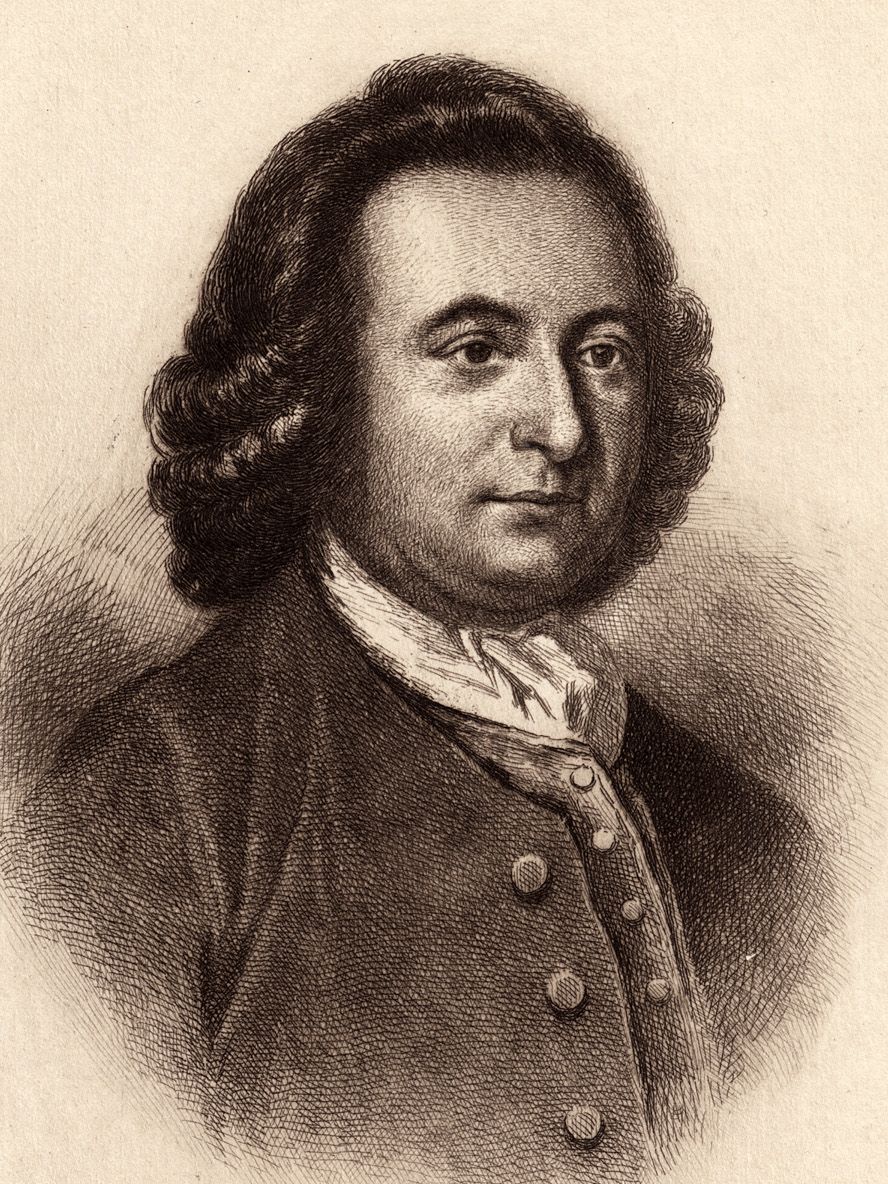
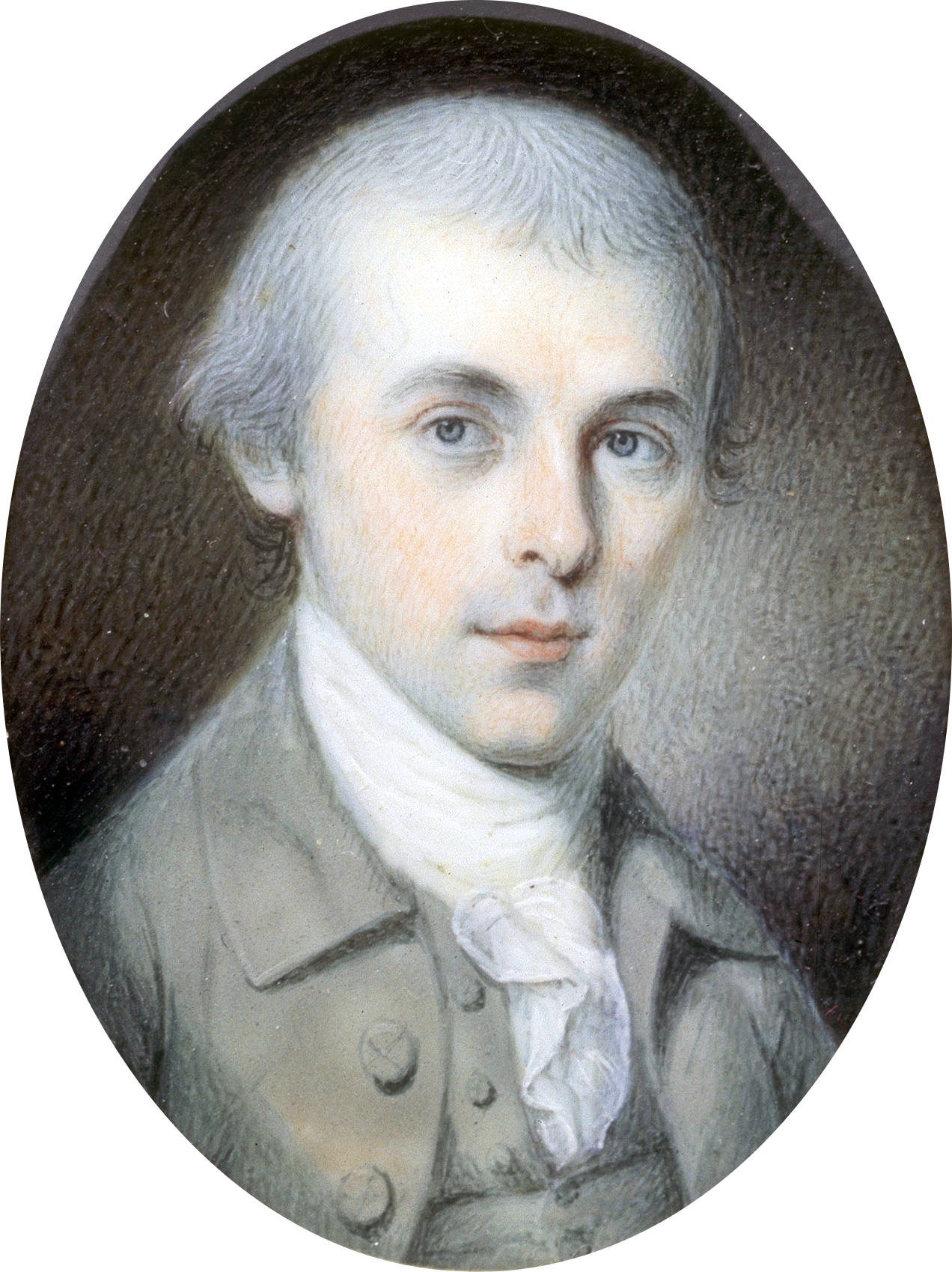
In the last days of May 1776, the delegates of the Virginia Convention sat in the Capitol at Williamsburg with a printed draft of a declaration of rights in front of them. Its final article dealt with religion, and its language came from George Mason of Fairfax County. Mason had written that because religion "can be governed only by Reason and Conviction, not by Force or Violence," all men "shou'd enjoy the fullest Toleration in the Exercise of Religion, according to the Dictates of Conscience."[1] One delegate believed it could be improved: James Madison, a twenty-five-year-old delegate from Orange County with almost no public reputation. His first attempt, which would have barred any man or class of men from receiving "peculiar emoluments or privileges" on account of religion, was introduced on the floor by Patrick Henry and rejected. Madison then helped secure a compromise that replaced Mason's language of toleration with an equal entitlement to the free exercise of religion, while stopping short of the broader disestablishment he had first sought. When the Convention unanimously adopted the Declaration of Rights on June 12, the word "toleration" was gone, and the article declared that "all men are equally entitled to the free exercise of religion, according to the dictates of conscience."[2]
The change looked small. Toleration was something a government granted. It assumed an established church that held the field by right and a set of dissenters who were permitted, as a favor, to worship in their own way. In the language of natural rights, free exercise was not a favor granted by the state but a right that government was supposed to recognize and protect. What the right required in practice remained to be worked out. The same article closed with a sentence quoted far less often, declaring it "the mutual duty of all to practice christian forbearance, love and charity towards each other."[3]
Both halves of the article belong to what followed. The people who pressed hardest for religious liberty over the next twelve years were, for the most part, devout Baptists and Presbyterians who wanted their own churches freed from an Anglican establishment. Madison worked with them and depended on their votes, yet the laws he helped write were framed in terms broad enough to protect people who shared none of their faith. Theirs was also a society that took its own Christianity for granted. Most of the new states required their lawmakers to be Christians, several taxed citizens to support Christian worship, and few Americans imagined their country as anything other than a Christian commonwealth. The language of free exercise grew up inside that assumption, and by 1788 it had begun to strain against it. This is the story of those twelve years.
Jails in Culpeper
Madison's interest in the question was not academic. Two years before the Williamsburg convention, he had written from Orange County to his college friend William Bradford in Philadelphia, and the letter shows a young man close to fury. "That diabolical Hell conceived principle of persecution rages among some," he wrote, and in the next county there were "not less than 5 or 6 well meaning men in close Goal for publishing their religious Sentiments which in the main are very orthodox." He said he had "squabbled and scolded abused and ridiculed so long about it" that he had lost all patience. The editors of Madison's papers identify the jailed men as Baptist preachers held in Culpeper County in 1773 and 1774, imprisoned for preaching without the license Virginia law required of dissenters. The prisoners were not unbelievers, and their sentiments were, in Madison's words, very orthodox. What angered him was the sight of Christians punishing other Christians for worshipping outside the established church. The editors notice something else. A month earlier Madison had spoken of "religious Toleration." In January 1774 he closed instead with a plea for "Liberty of Conscience." His position may have moved in those weeks.[4]
The dissenting preachers did not disappear from the story. A Joseph Spencer, possibly the same man jailed in Orange County in 1773 for preaching without a license, would write to Madison in 1788 at a decisive moment in his career.[5] The persecution of dissenters in Culpeper and Orange helped shape a politically active Baptist community, and by the late 1780s no Virginia politician could ignore it.
The Petition of Ten Thousand
The dissenters moved quickly to test the new promise. When Virginia's first General Assembly met in October 1776, the Church of England was still the established church, supported by taxes on every householder. Among the petitions waiting for the legislators was one from "the Dissenters from the Ecclesiastical Establishment," circulated mainly by Baptists but signed by members of other denominations as well. Its 125 pages, sewn together, carried the names of nearly ten thousand men. The petitioners rejoiced at being "delivered from British Oppression," complained that their property had been "wrested from them" to support a church they did not attend, and asked that "every other Yoke may be broken." Their goal was equality among Christian churches. With "every religious Denomination being on a Level," they wrote, "Animosities may cease," and "Christian Forbearance, Love and Charity may be practised towards each other," words borrowed from the last line of the Declaration's article on religion.[6]
Thomas Jefferson, newly returned from Philadelphia, led the dissenters' cause in the House of Delegates and later called the struggle that followed "the severest contests in which I have ever been engaged." The outcome was a compromise. The Assembly repealed laws that made it a crime to hold or practice dissenting opinions and exempted dissenters from paying for the established church, but it left open whether a general tax for all churches might replace the old one.[7] That open question would shape Virginia politics for the next nine years.
Thirteen Answers
Between 1776 and 1784 nearly every state adopted a new constitution, and each had to say something about religion. Read together, the answers show that the new language of free exercise and the assumption of a Christian commonwealth traveled side by side. Ten of the twelve constitutions written in those years, counting Vermont's, set a religious test for officeholders, and most of the tests were explicitly Christian.[8]
Pennsylvania's constitution of 1776 declared that "all men have a natural and unalienable right to worship Almighty God according to the dictates of their own consciences and understanding," a sentence as strong as Virginia's. Its frame of government then required every member of the assembly to declare, "I do believe in one God, the creator and governor of the universe, the rewarder of the good and the punisher of the wicked," and to acknowledge "the Scriptures of the Old and New Testament to be given by Divine inspiration."[9] Other states went further. Delaware required every legislator and officeholder to profess faith in God the Father, in Jesus Christ his only Son, and in the Holy Ghost. Maryland required a declaration of belief in the Christian religion. Georgia's representatives had to be of the Protestant religion, and so, under the New Hampshire constitution of 1784, did its representatives, senators, and president. North Carolina barred anyone who would deny the being of God or the truth of the Protestant religion, and New Jersey opened office to all professing a belief in the faith of any Protestant sect. Massachusetts required its governor and legislators to declare, "I believe the Christian religion, and have a firm persuasion of its truth."[8] The pattern was consistent. A state would guarantee worship as a natural right and then assume, as a matter of course, that the people who governed it would be Christians.
Several states also kept public support for religion. Maryland's Declaration of Rights of 1776 allowed the legislature to lay "a general and equal tax, for the support of the Christian religion," while leaving each taxpayer free to direct his payment to the church of his choice. South Carolina's constitution of 1778 promised that all who acknowledged one God and a future state of rewards and punishments "shall be freely tolerated," and in the next breath declared "the Christian Protestant religion" to be "the established religion of this State." At the other end of the range stood New York, whose constitution of 1777 guaranteed "the free exercise and enjoyment of religious profession and worship, without discrimination or preference," to "all mankind," subject only to a proviso against "acts of licentiousness" and practices dangerous to the peace of the state.[9]
The first state constitutions increasingly protected religious worship, but they disagreed about the scope of that protection. Public money for religion and religious tests for office would drive the next decade of argument.
Massachusetts and the Power Behind the Pence
The sharpest test of the first issue came in Massachusetts, where the Congregational churches descended from the Puritan founders had been supported by town taxes since the seventeenth century. Isaac Backus, a Baptist minister from Middleborough, had spent years fighting the system. In 1778 a convention drafted a state constitution that would have written the existing church laws into the frame of government. Backus responded with a pamphlet called Government and Liberty Described; and Ecclesiastical Tyranny Exposed. He pointed out that the legislature had recently continued a tax of four pence a year on Baptists as an acknowledgment of its authority over them, and he refused to treat the smallness of the sum as an excuse. "It is not the PENCE, but the POWER, that alarms us," he wrote.[10]
The voters rejected that draft, and the constitution adopted in 1780 tried to have it both ways. Its second article declared that no one would be "hurt, molested, or restrained" for worshipping God "in the manner and season most agreeable to the dictates of his own conscience." Its third article began from the premise that the good order of civil government essentially depends upon piety, religion and morality, and it authorized the legislature to require towns and parishes to provide "for the support and maintenance of public Protestant teachers of piety, religion and morality" wherever such provision was not made voluntarily. A taxpayer could ask that his money go to a teacher of his own denomination, provided there was one whose instruction he attended.[9] John Adams, the principal drafter of the constitution, later said that the article on religion "was the only Article which I omitted to draw," and it caused more than a week of contentious debate before the convention approved a rewritten version.[11]
For Backus, the right to redirect one's tax only proved his point. The state was still deciding that religion must be paid for and still claiming a power the Baptists believed belonged to God alone. The same conflict was about to break out in Virginia.
Patrick Henry's Remedy
In 1777 Jefferson drafted a bill for establishing religious freedom as part of his larger revision of Virginia's laws. It was introduced in June 1779, while Jefferson was governor, and was quickly postponed in a way that killed it for the session. The petitions that came in that autumn showed how divided the public was. One group of dissenters from Lunenburg County managed to endorse Jefferson's bill and to pray for a general assessment in the same petition.[3] Many Virginians saw nothing contradictory in asking the state to support every Christian church equally.
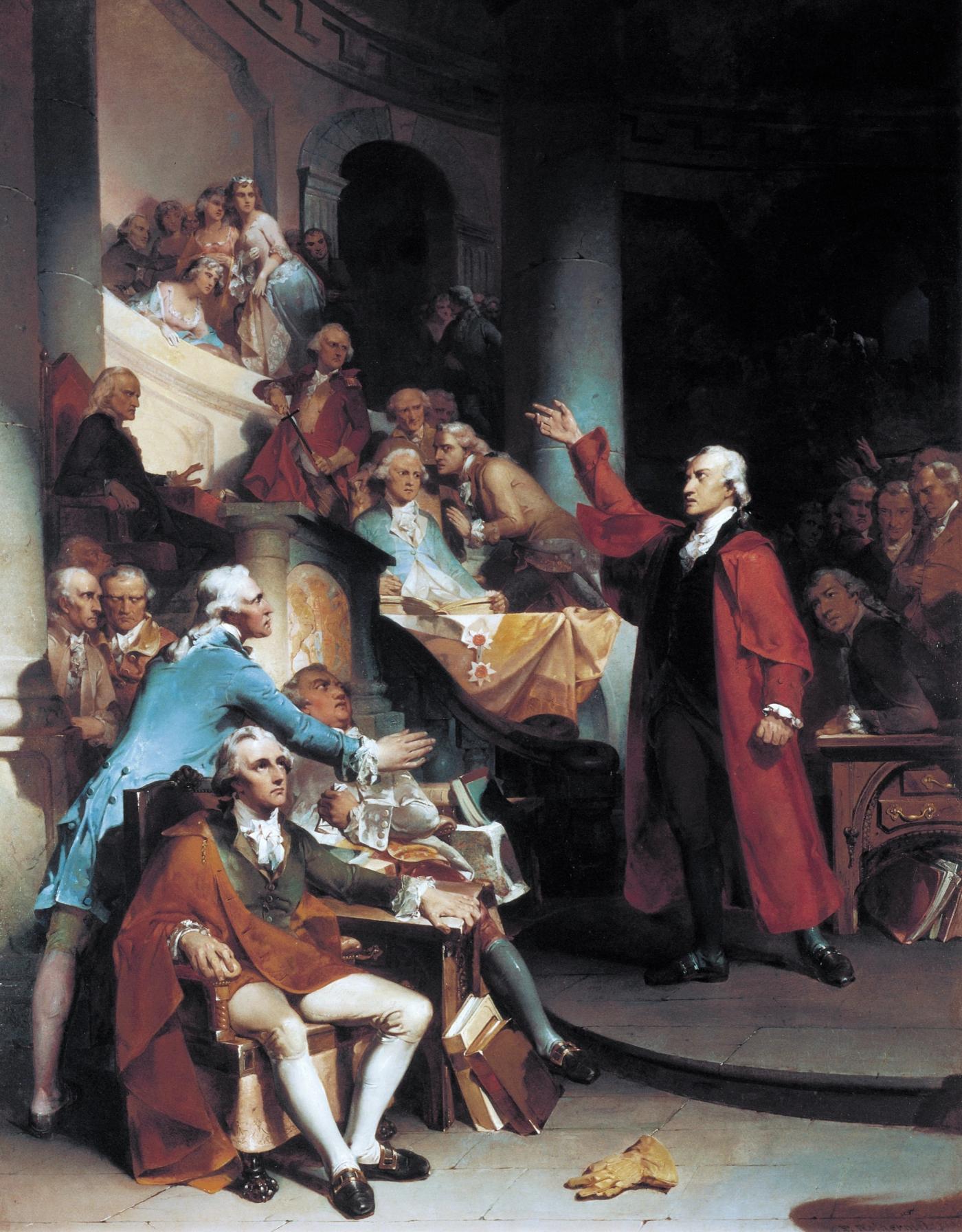
The idea gathered strength after the war. In 1784 Patrick Henry, the same Henry who had introduced Madison's first amendment in 1776, sponsored a bill establishing a provision for teachers of the Christian religion. It would have taxed every citizen for the support of Christian teaching while letting each taxpayer choose which church received the money. The bill passed two readings and appeared certain to become law, but its opponents won a delay so that the people could be consulted. Henry's election as governor late in 1784 removed him from the House, and on December 24 the House voted 45 to 38 to put the bill off until the following autumn.[12]
The bill's supporters were sincere. Citizens of Surry County, petitioning in its favor, noted with evident alarm that the United States offered the world the singular case of a free and enlightened government with no legal provision for the support of religion. Even the Presbyterians wavered. Their Hanover Presbytery declared that religion as a spiritual system was not a proper object of legislation, and then asked to share in the proceeds of a general assessment if one were enacted.[12]
Two Kinds of Protest
Madison used the interval. In the summer of 1785, at the urging of George Mason and George Nicholas, he wrote A Memorial and Remonstrance against Religious Assessments and took pains to keep his authorship secret. Mason had it printed in Alexandria and sent copies to his neighbors, including George Washington, describing it only as the work of "a particular Freind, whose Name I am not at Liberty to mention."[12]
Much of the Memorial was an argument addressed to Christians in Christian terms. Christianity, Madison wrote, had "existed and flourished, not only without the support of human laws, but in spite of every opposition from them," while almost fifteen centuries of legal establishment had produced "pride and indolence in the Clergy, ignorance and servility in the laity." Like Backus, he refused to be reassured by the small amount the tax would collect. The authority that could force a citizen "to contribute three pence only of his property" for one establishment, he warned, could force him to conform to any other. At the center of the document, though, lay a claim that reached beyond Christianity. "The Religion then of every man must be left to the conviction and conscience of every man," Madison wrote. Believers who asserted their own freedom to follow the religion they held to be divine "cannot deny an equal freedom to those whose minds have not yet yielded to the evidence which has convinced us." If that freedom were abused, "it is an offence against God, not against man."[13]
Madison's petition was not the most popular one at the time. The editors of his papers found that at least thirteen copies of the Memorial circulated and gathered 1,552 signatures. A different petition, whose author remains unknown, appeared in twenty-nine copies signed by 4,899 Virginians, including at least eleven women in Westmoreland County. It argued that the assessment was contrary to the spirit of the gospel and warned that deism was spreading through the state. In all, according to the same editors, the anti-assessment petitions gathered 10,929 signatures, and only eleven counties sent petitions in favor.[12] The assessment died without a vote. Its defeat owed as much to Christians who believed that state support betrayed the gospel as it did to Madison's arguments from natural right.
The Statute of 1786
On October 31, 1785, Madison introduced Jefferson's old bill, now numbered 82 in the revised code. He later reported to Jefferson, who was serving as American minister in Paris, that the table of the House "was loaded with petitions & remonstrances from all parts against the interposition of the Legislature in matters of Religion," and that a general convention of the Presbyterian church had asked for the bill's passage "as the best safeguard short of a constitutional one, for their religious rights."[14]
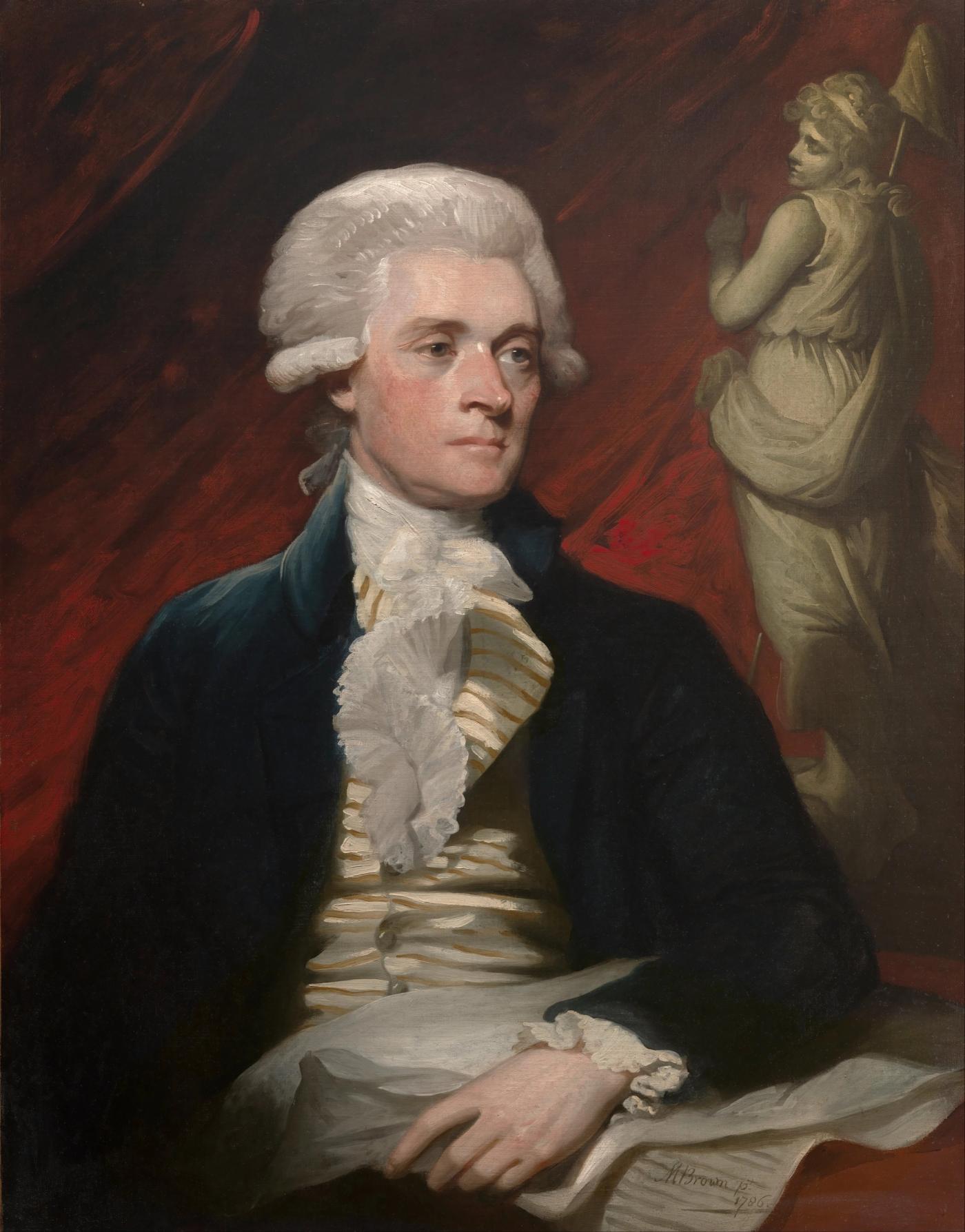
The fight in the Assembly centered on Jefferson's preamble, a long philosophical statement that "Almighty God hath created the mind free" and that the opinions of men are not the object of civil government. Opponents twice tried to replace it with the familiar words of the Declaration of Rights and failed, 38 to 66 and then 35 to 56. The House passed the bill 74 to 20, and after a conference with the Senate, which trimmed some of Jefferson's broadest statements about reason, the final text was agreed on January 16, 1786. Jefferson later recalled that a proposal to describe coercion as a departure from the plan of "Jesus Christ, the holy author of our religion" was rejected by a great majority, which he read as proof that the act was meant to protect believers and unbelievers of every kind. The editors of his papers note that the House journals contain no record of that particular amendment, so his account cannot be checked against the official record.[3] If his memory was accurate, a legislature whose members mostly assumed that Virginia would remain a Christian society had declined to tie the statute's protection to a Christian creed.
Apart from the formula that introduced it, the enacting clause passed unchanged. It provided that "no man shall be compelled to frequent or support any religious worship, place, or ministry whatsoever," nor suffer "on account of his religious opinions or belief," and that opinions in religion "shall in no wise diminish, enlarge, or affect their civil capacities." It declared that "the rights hereby asserted are of the natural rights of mankind."[15] Madison was satisfied. The enacting clauses, he told Jefferson, "have in this Country extinguished for ever the ambitious hope of making laws for the human mind."[14] Virginia had moved beyond both toleration and the general assessment.
A National Frame
On July 13, 1787, the Confederation Congress, still operating under the Articles of Confederation, adopted the Northwest Ordinance to govern the territory north of the Ohio River. The first of its articles of compact provided that "no person, demeaning himself in a peaceable and orderly manner, shall ever be molested on account of his mode of worship or religious sentiments, in the said territory." The same ordinance declared in its third article that "religion, morality, and knowledge" were "necessary to good government and the happiness of mankind." It applied to a vast territory already inhabited by Indigenous nations and older French-speaking settlements but not yet organized into states.[16]
At the same moment, the Constitutional Convention in Philadelphia was writing a frame of government that said very little about religion. Charles Pinckney of South Carolina took a particular interest in the subject. On August 20 he submitted a list of proposals that included a ban on religious tests for federal office.[17] When the article prescribing oaths came before the Convention on August 30, he moved to add that "no religious test shall ever be required as a qualification to any office or public trust under the authority of the United States." Roger Sherman of Connecticut objected only that the clause was "unnecessary, the prevailing liberality being a sufficient security agst. such tests." The motion passed without a dissenting state.[18]
The ease of that vote was misleading. The federal clause broke with the practice of most states, and many Americans regarded religious tests as a basic protection of public virtue. Luther Martin of Maryland, who had left the Convention in opposition, told his state's legislature that the clause had been adopted "by a very great majority of the convention, and without much debate," but that some members had been "so unfashionable" as to think that belief in God and in future rewards and punishments "would be some security for the good conduct of our rulers," and that "in a Christian country it would be at least decent to hold out some distinction between the professors of Christianity and downright infidelity or paganism."[19] Martin took it for granted that the United States was a Christian country, and so did most of his readers.
Ratification and the Baptist Vote
The debate over the test clause ran through the state ratifying conventions of 1788. In Massachusetts, Isaac Backus was now a delegate, and on February 4 he rose to defend the exclusion of religious tests. Religion, he said, "is ever a matter between God and individuals," and the imposing of tests "hath been the greatest engine of tyranny in the world."[20]
In North Carolina, where many delegates feared that the absence of a test would open federal office to men of no religion at all, James Iredell gave the fullest answer. Excluding any group, he argued, could not be done "without taking away that principle of religious freedom which we ourselves so warmly contend for." Yet even Iredell assured the delegates that "it is never to be supposed that the people of America will trust their dearest rights to persons who have no religion at all, or a religion materially different from their own."[21] The defenders of the federal ban did not foresee a non-Christian America. They expected Christian voters to choose Christian rulers without being compelled to.
For many dissenters, the problem with the Constitution lay in what it did not say, and in Virginia the warning reached Madison from his own neighbors. He was in New York, serving in the Confederation Congress, when James Gordon Jr. wrote on February 17, 1788, that "the sentiments of the people of Orange are much dividid" and that several men with weight among the people opposed the Constitution, among them "Parson Bledsoe & Leeland." Leland was a Massachusetts-born Baptist preacher who had settled in Orange County.[22]
Eleven days later Joseph Spencer wrote that the Baptists had become "very formible in pint of Elections" and that their preachers were "much alarm'd fearing relegious liberty is not Sufficiently secur'd." He enclosed Leland's written objections. The tenth was the most serious. "What is dearest of all, Religious Liberty, is not Sufficiently Secured," Leland wrote. Nothing in the Constitution, he argued, kept a future Congress from making all citizens pay for a favored church. Spencer urged Madison to stop and spend a few hours with Leland on his way home. On March 7 the Baptist General Committee of Virginia resolved unanimously that the Constitution did not make sufficient provision for religious liberty.[5]
Madison reached Orange on March 23, the day before the election of delegates to the state ratifying convention. A long tradition holds that he met Leland shortly before, perhaps on March 22, answered his objections, and won the Baptist preacher's support. The editors of Madison's papers call the surviving accounts of the meeting fanciful, though they regard the tradition that some meeting took place as strong, and one historian has traced the earliest printed accounts to the months after Madison's death in 1836.[23] According to the diary of a local planter, Francis Taylor, Madison received 202 votes and his fellow Federalist James Gordon 187, against 56 for Thomas Barbour and 34 for Charles Porter. On July 1, after the convention had ratified, Madison sent his father two copies of The Federalist, "one for Mr. Leland, the other for Mr. Bledsoe."[5]
Richmond
In Richmond that June, Madison again faced Patrick Henry, who led the opposition to the Constitution. Edmund Randolph, the governor, told the convention that he had once thought freedom of religion in danger under the Constitution and had felt "great repugnance" to it for that reason, but that he had changed his mind. "I am a friend to a variety of sects," he said, "because they keep one another in order."[24]
Madison took up the same theme on June 12. "There is not a shadow of right in the General Government to intermeddle with religion," he said. "If there were a majority of one sect, a Bill of Rights would be a poor protection for liberty," and the freedom Americans enjoyed arose "from that multiplicity of sects, which pervades America, and which is the best and only security for religious liberty in any society."[25]
The Virginia convention voted to ratify on June 25, 1788, by 89 votes to 79. It signed its formal instrument of ratification the next day, and on June 27 recommended a list of amendments to the first Congress. The twentieth repeated, almost word for word, the article adopted in Williamsburg twelve years earlier, but it now called free exercise "an equal, natural and unalienable right" and added that "no particular religious sect or society ought to be favored or established by Law in preference to others."[26] The wording forbade preference among sects. Whether it also ruled out public support given to all of them equally was a question it left open.
What Twelve Years Had Settled
By the end of 1788, the change Madison had pressed in 1776 had spread far beyond Virginia. Free exercise was now widely described as a natural right rather than a privilege that governments extended to dissenters. Virginia had abolished its establishment and refused to create a new one, Congress had guaranteed freedom of worship in the western territory, and the federal Constitution had barred religious tests for national office.
The people who won these changes were overwhelmingly Christian, and almost all of them assumed they lived in a Christian nation. The state constitutions said so in the tests they set for lawmakers, Maryland and Massachusetts said so in the support they allowed for Christian worship, and even the defenders of the federal ban on tests expected Christian voters to elect Christian rulers. The petition of 1776 asked for equality among Christian denominations, and the most popular protest against the assessment appealed to the spirit of the gospel. Yet the principle they helped write into law was framed in universal terms. Virginia's statute protected the opinions of every man, the Memorial extended equal freedom to those who did not share the believers' faith, and the federal Constitution refused to make religion a qualification for national office.
Much remained unsettled. Massachusetts kept its system of public support for Protestant teachers until 1833, and religious tests for state office survived for decades in several states. Madison himself doubted that written guarantees could do much against a determined majority. Even so, the argument had moved to new ground. In 1776 the question had been how much the state should tolerate. By 1788 the argument increasingly concerned how governments should protect liberty of conscience, and whether that protection could coexist with religious taxes, establishments, and tests for public office. That shift began with one word struck out of George Mason's draft by a young delegate who had watched Christian preachers go to jail in the next county.
Places in this Story
The places this story moves through, in order — follow them on the interactive map →
- Williamsburg, Virginia June 1776
The Virginia Convention strikes "toleration" from Mason's draft and declares free exercise an equal entitlement.
- Culpeper, Virginia 1773 to 1774
Baptist preachers are jailed for preaching without a license, and Madison writes to William Bradford about it in fury.
- Middleborough, Massachusetts 1778
Isaac Backus answers the proposed state constitution: it is not the pence, but the power, that alarms us.
- Boston, Massachusetts 1780
The Massachusetts constitution guarantees worship and in the next article authorizes towns to support Protestant teachers.
- Richmond, Virginia January 1786
The Assembly agrees the Statute for Establishing Religious Freedom, holding these to be the natural rights of mankind.
- Philadelphia, Pennsylvania August 1787
The Constitutional Convention bars religious tests for federal office without a dissenting state.
- Orange, Virginia March 1788
Madison comes home to face Baptist voters who think the Constitution does not secure religious liberty.
- Richmond, Virginia June 1788
Virginia ratifies and recommends an amendment calling free exercise an equal, natural and unalienable right.
Frequently Asked Questions
What changed in the Virginia Declaration of Rights in 1776?
George Mason's draft promised "the fullest Toleration in the Exercise of Religion," and the Convention replaced that with an equal entitlement to "the free exercise of religion." Toleration was a favor a government granted; free exercise was described as a right it had to recognize.
What did James Madison do at the 1776 Virginia Convention?
Madison, then a twenty-five-year-old delegate from Orange County, proposed the change after his broader amendment was rejected. Patrick Henry introduced that first attempt on the floor, and the Convention adopted the revised article unanimously on June 12, 1776.
What was Patrick Henry's religious assessment bill of 1784?
Patrick Henry's bill of 1784 would have taxed every citizen to support teachers of the Christian religion, letting each taxpayer choose which church received his money. The House postponed it in December 1784 and it died the next year without a final vote.
Did the Memorial and Remonstrance defeat the assessment on its own?
No. The editors of Madison's papers count 1,552 signatures on the Memorial against 4,899 on an anonymous petition arguing that the tax was contrary to the spirit of the gospel. Christians who thought state support corrupted religion did more of the work than arguments from natural right.
What did the Virginia Statute for Religious Freedom do?
Agreed on January 16, 1786, it provided that no one could be compelled to support any religious worship or suffer for his religious opinions, and that belief should not affect a citizen's civil capacities. It called these "the natural rights of mankind."
Did the Constitution of 1787 ban religious tests for office?
Very little. On Charles Pinckney's motion the Convention barred religious tests for federal office, passing it without a dissenting state, though most state constitutions of the period required officeholders to be Christians.
Why did Baptists oppose the Constitution in 1788?
John Leland of Orange County objected that nothing in it stopped a future Congress from making citizens pay for a favored church, and the Baptist General Committee of Virginia agreed unanimously on March 7, 1788. Their votes mattered enough that Madison went home to Orange before the election of convention delegates.
Bibliography
Backus, Isaac. Government and Liberty Described; and Ecclesiastical Tyranny Exposed. Boston: Powars and Willis, 1778.
Center for the Study of the American Constitution. "Religious Tests and Oaths in State Constitutions, 1776-1784." University of Wisconsin-Madison.
The Constitutions of the Several Independent States of America. Philadelphia: Francis Bailey, 1781.
Dilbeck, D. H. "The Madison-Leland Legend in Nineteenth-Century Print." Nineteenth-Century Prose 39, nos. 1-2 (2012): 303-22.
Dissenters Petition, 16 October 1776. Legislative Petitions of the General Assembly, 1776-1865, Accession 36121. Library of Virginia, Richmond.
Farrand, Max, ed. The Records of the Federal Convention of 1787. Vol. 2. New Haven: Yale University Press, 1911.
Hening, William Waller, ed. The Statutes at Large; Being a Collection of All the Laws of Virginia. Vol. 12. Richmond: George Cochran, 1823.
Kaminski, John P., et al., eds. The Documentary History of the Ratification of the Constitution. Vols. 6, 8, 9, 10, 16 and 30. Madison: State Historical Society of Wisconsin and Wisconsin Historical Society Press, 1986-2019.
The Papers of James Madison. Vols. 1, 8 and 10. Chicago: University of Chicago Press, 1962-77. Founders Online, National Archives. https://founders.archives.gov
The Papers of Thomas Jefferson. Vols. 1 and 2. Edited by Julian P. Boyd. Princeton: Princeton University Press, 1950. Founders Online, National Archives. https://founders.archives.gov
"An Ordinance for the Government of the Territory of the United States North-West of the River Ohio," 13 July 1787. National Archives, Milestone Documents. https://www.archives.gov/milestone-documents/northwest-ordinance
"Ratification of the Constitution by the State of Virginia; June 26, 1788." Avalon Project, Lillian Goldman Law Library, Yale Law School. https://avalon.law.yale.edu/18th_century/ratva.asp
Citations
- George Mason, "George Mason's Proposed Declaration of Rights, [ca. 20-25 May 1776]," in The Papers of James Madison, vol. 1, ed. William T. Hutchinson and William M. E. Rachal (Chicago: University of Chicago Press, 1962), Founders Online. ↑
- James Madison, "Madison's Amendments to the Declaration of Rights, [29 May-12 June 1776]," in The Papers of James Madison, vol. 1, Founders Online, with the editorial note on Patrick Henry's introduction of the first amendment and the unanimous adoption of 12 June. ↑
- Julian P. Boyd, editorial note to "82. A Bill for Establishing Religious Freedom, 18 June 1779," in The Papers of Thomas Jefferson, vol. 2 (Princeton: Princeton University Press, 1950), Founders Online. Boyd quotes the full text of the 1776 article in the substitute preamble proposed in 1785, prints the 1779 postponement and the Lunenburg petition, and records the votes of 1785 and 1786. ↑
- James Madison to William Bradford, 24 January 1774, in The Papers of James Madison, vol. 1, Founders Online, with editorial notes 8 and 10. The editors identify the prisoners as Baptist preachers held in Culpeper County in 1773 and 1774, and note that Madison wrote of "religious Toleration" in December 1773 and of "Liberty of Conscience" a month later. ↑
- Joseph Spencer to James Madison, 28 February 1788, with John Leland's objections to the Constitution, in The Documentary History of the Ratification of the Constitution, vol. 8, ed. John P. Kaminski et al. (Madison: Wisconsin Historical Society Press, 2016), 424-27, editorial notes 1 to 4; and the same letter in The Papers of James Madison, vol. 10, Founders Online, editorial note 4, for the Orange County election and the copies of The Federalist sent to Leland and Bledsoe. ↑
- Dissenters Petition, 16 October 1776, Legislative Petitions of the General Assembly, 1776-1865, Accession 36121, Library of Virginia; Library of Virginia, "Petition of 10,000 Dissenters for Religious Freedom, 1776," Document Bank of Virginia. ↑
- Julian P. Boyd, editorial note to "Notes and Proceedings on Discontinuing the Establishment of the Church of England, 11 October-9 December 1776," in The Papers of Thomas Jefferson, vol. 1 (Princeton: Princeton University Press, 1950), Founders Online, quoting Jefferson's Autobiography. ↑
- Center for the Study of the American Constitution, "Religious Tests and Oaths in State Constitutions, 1776-1784," University of Wisconsin-Madison. ↑
- The Constitutions of the Several Independent States of America (Philadelphia: Francis Bailey, 1781), for the Pennsylvania Constitution of 1776, Declaration of Rights, art. 2, and Frame of Government, sec. 10; the Maryland Declaration of Rights of 1776, art. 33; the South Carolina Constitution of 1778, art. 38; the New York Constitution of 1777, art. 38; and the Massachusetts Constitution of 1780, Declaration of Rights, arts. 2 and 3. ↑
- Isaac Backus, Government and Liberty Described; and Ecclesiastical Tyranny Exposed (Boston: Powars and Willis, 1778), 6, 12-13. ↑
- John Adams to William D. Williamson, 25 February 1812, Founders Online. On the convention's week of debate over Article III, see Massachusetts Trial Court Law Libraries, "Massachusetts Declaration of Rights, Article 3," quoting editorial note 12 to "The Report of a Constitution or Form of Government for the Commonwealth of Massachusetts," in The Papers of John Adams, vol. 8. ↑
- Robert A. Rutland and William M. E. Rachal, editorial note to "Memorial and Remonstrance against Religious Assessments, [ca. 20 June] 1785," in The Papers of James Madison, vol. 8 (Chicago: University of Chicago Press, 1973), Founders Online, with notes 1 and 9 and the quotation of George Mason to George Washington, 2 October 1785; and James Madison to James Monroe, 4 December 1784, in the same volume, editorial note 3. The editors supply the postponement of 24 December 1784 by 45 votes to 38, the Surry County and Hanover Presbytery petitions, and the signature counts given here. ↑
- James Madison, "Memorial and Remonstrance against Religious Assessments, [ca. 20 June] 1785," in The Papers of James Madison, vol. 8, Founders Online, paragraphs 1, 3, 4, 6 and 7. ↑
- James Madison to Thomas Jefferson, 22 January 1786, in The Papers of James Madison, vol. 8, Founders Online. ↑
- "An Act for Establishing Religious Freedom," in William Waller Hening, ed., The Statutes at Large; Being a Collection of All the Laws of Virginia, vol. 12 (Richmond: George Cochran, 1823), 84-86. ↑
- "An Ordinance for the Government of the Territory of the United States North-West of the River Ohio," 13 July 1787, arts. 1 and 3, National Archives, Milestone Documents. ↑
- Library of Congress, "Religion and the Founding of the American Republic: Religion and the Federal Government, Part 1," for Charles Pinckney's proposals of 20 August 1787. ↑
- Max Farrand, ed., The Records of the Federal Convention of 1787, vol. 2 (New Haven: Yale University Press, 1911), 468, for the motion of 30 August 1787 and Roger Sherman's objection. ↑
- Luther Martin, "Genuine Information XII," Baltimore Maryland Gazette, 8 February 1788, in The Documentary History of the Ratification of the Constitution, vol. 16, ed. John P. Kaminski et al. (Madison: State Historical Society of Wisconsin, 1986), 89-94. ↑
- Isaac Backus, speech in the Massachusetts Convention, 4 February 1788, in The Documentary History of the Ratification of the Constitution, vol. 6, ed. John P. Kaminski et al. (Madison: State Historical Society of Wisconsin, 2000), 1421-23. ↑
- James Iredell, speech in the North Carolina Convention, 30 July 1788, in The Documentary History of the Ratification of the Constitution, vol. 30, ed. John P. Kaminski et al. (Madison: Wisconsin Historical Society Press, 2019), 404-9. ↑
- James Gordon Jr. to James Madison, 17 February 1788, in The Papers of James Madison, vol. 10, ed. Robert A. Rutland et al. (Chicago: University of Chicago Press, 1977), Founders Online, with editorial note 2. ↑
- D. H. Dilbeck, "The Madison-Leland Legend in Nineteenth-Century Print," Nineteenth-Century Prose 39, nos. 1-2 (2012): 303-22. The editors of the Madison papers call the surviving accounts of the meeting fanciful while regarding the tradition that some meeting occurred as strong. ↑
- Edmund Randolph, speech in the Virginia Convention, 10 June 1788, in The Documentary History of the Ratification of the Constitution, vol. 9, ed. John P. Kaminski et al. (Madison: State Historical Society of Wisconsin, 1990), 1100-1101. ↑
- James Madison, speech in the Virginia Convention, 12 June 1788, in The Documentary History of the Ratification of the Constitution, vol. 10, ed. John P. Kaminski et al. (Madison: State Historical Society of Wisconsin, 1993), 1222-28. ↑
- "Ratification of the Constitution by the State of Virginia; June 26, 1788," with the amendments subsequently agreed to in convention, Avalon Project, Lillian Goldman Law Library, Yale Law School. The convention voted to ratify on 25 June by 89 to 79, the instrument is dated 26 June, and the recommended amendments were adopted on 27 June. ↑