How Charles Calvert, Fifth Lord Baltimore, Ruled a Province He Had Never Seen and Came to Regret the Line He Drew: 1721 to 1733
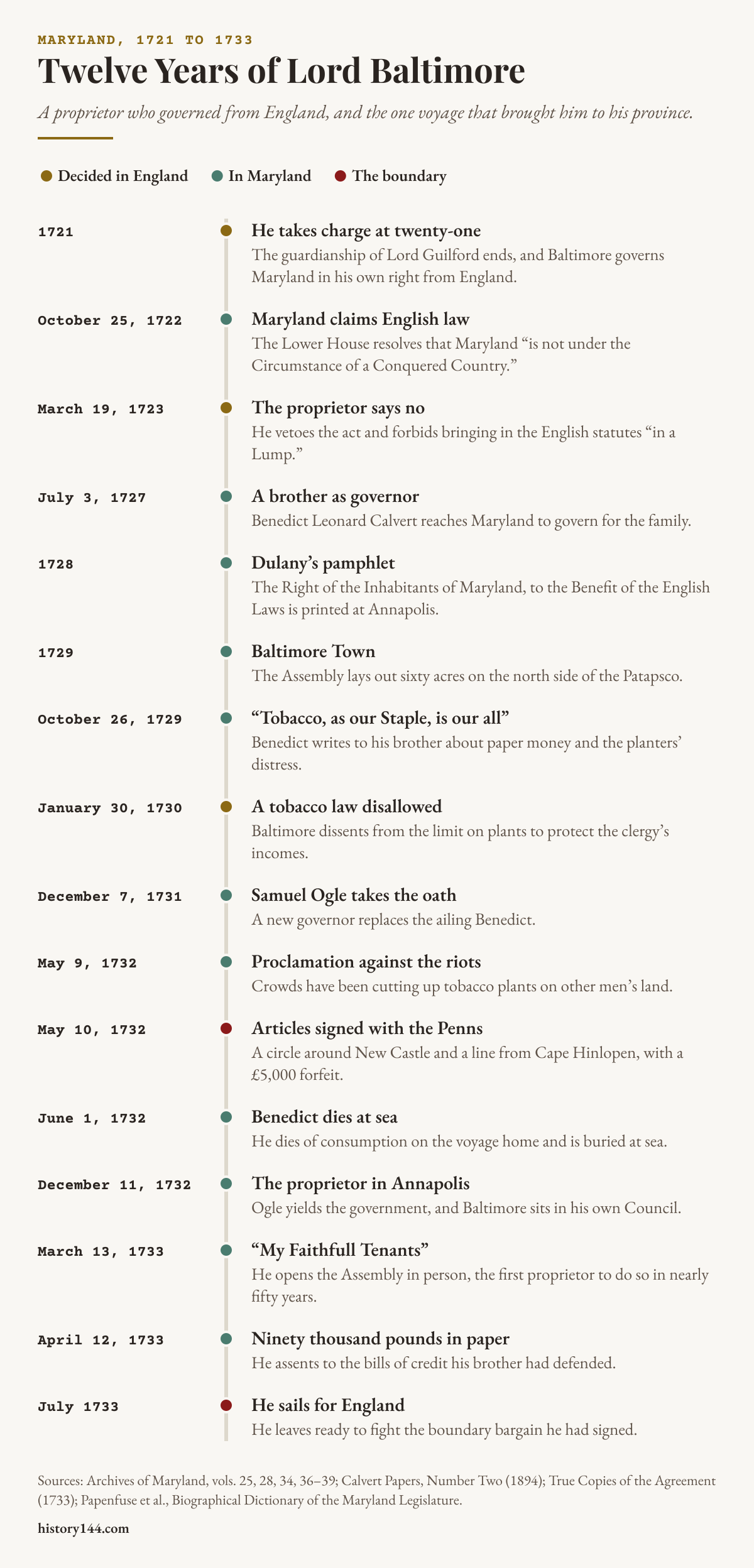
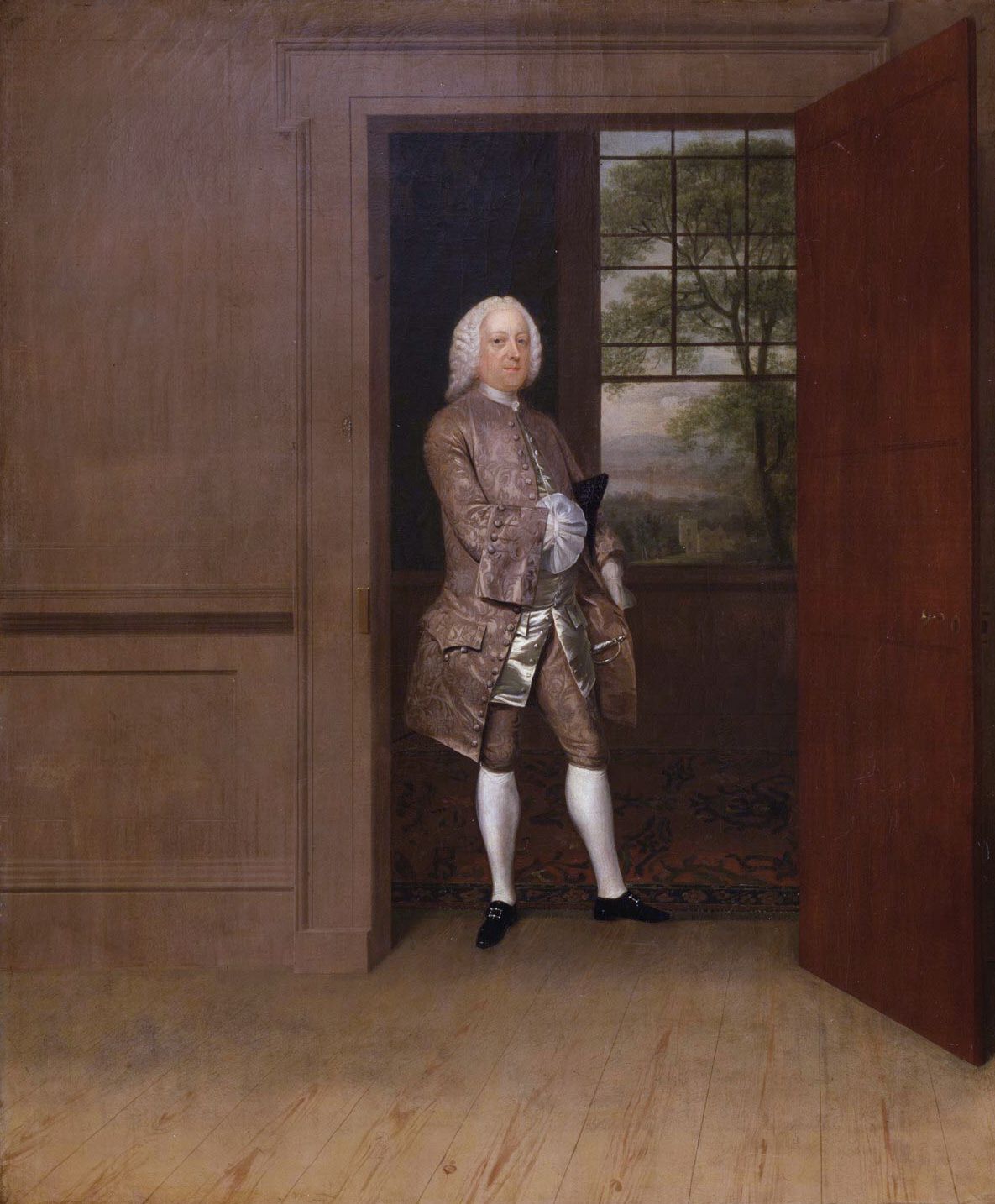
On Tuesday, March 13, 1733, the Speaker and members of Maryland's Lower House of Assembly left their own chamber in Annapolis and went to the Upper House to hear the proprietor of the province open the session. Charles Calvert, fifth Lord Baltimore, was thirty-three years old. He had owned Maryland since boyhood and had governed it in his own name for more than a decade, but he had come to it in person only three months before. "I am glad of this Opportunity of meeting the good People of Maryland," he told them, and he called the assembled delegates "my Faithfull Tenants legislatively Assembled."[1] The phrase was both courteous and exact. To the Calverts, Maryland was a landed estate as well as a government, and the planters who sat in the Assembly owed them rent for their land.
No Lord Baltimore had stood in that position for nearly fifty years. His grandfather, the third lord, was the only other proprietor who had governed the province in person, and he had left it in 1684.[2] The fifth lord told the Assembly that the purpose of his voyage was to promote the province's welfare, and a later editor of Maryland's records concluded that he had come to settle the disorders on the Pennsylvania border.[3] Those disorders were bound up with a document he had signed the previous May, an agreement with the sons of William Penn that was supposed to end half a century of argument over the boundary between the two provinces. By the spring of 1733 he was openly at odds with the Pennsylvanians, and when he sailed home that July he was ready to fight the bargain he had made. This is the story of the twelve years between his coming of age and that voyage home, and of how a proprietor who governed from across the Atlantic learned what his distance had cost him.
A Proprietor at Twenty-One
Charles Calvert was born in England on September 29, 1699, the eldest son of Benedict Leonard Calvert and Lady Charlotte Lee.[4] He inherited a peculiar position. His great-grandfather Cecil Calvert had received Maryland by royal charter in 1632 and opened it as a refuge for English Catholics, and for four generations the Calverts were a Roman Catholic family. After the Revolution of 1688, Protestant Marylanders overthrew the proprietary government, and the Crown took political control of the province while leaving the Calverts their lands and rents. The road back to power ran through religion. Benedict Leonard Calvert converted to the Church of England in 1713, and his conversion was an important condition for the return of the government to his family.[5]
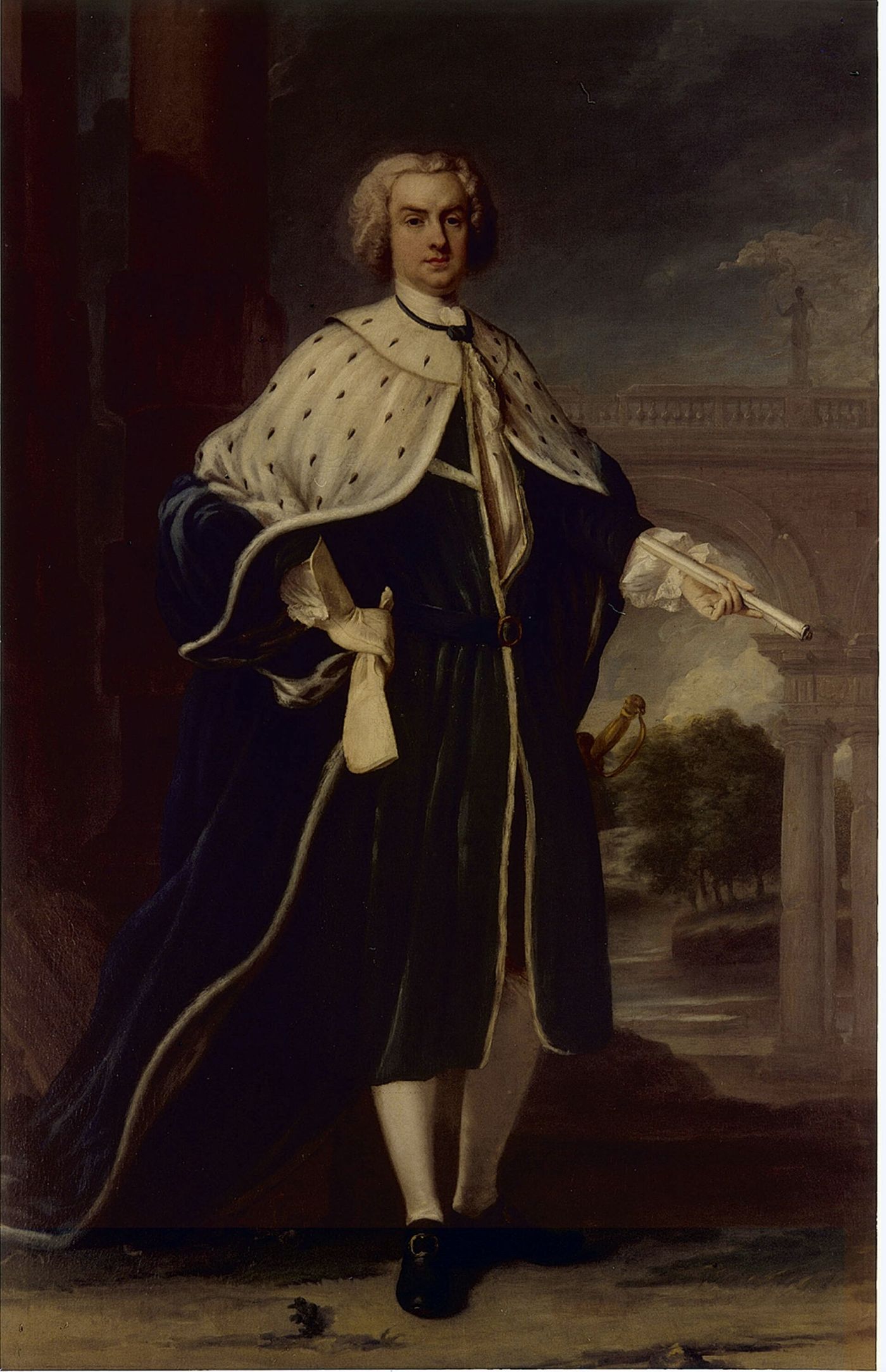
He did not live to enjoy it. Benedict's father, the third lord, died in February 1715, and Benedict Leonard himself died on April 16, 1715, at Epsom in Surrey.[6] His son Charles, fifteen years old, had also left the Catholic Church for the Church of England. He became the fifth Lord Baltimore, and in May 1715 the government of Maryland was restored to him.[7]
A minor could not govern, so the family's ally Francis North, second Baron Guilford, acted as his guardian. Guilford was a prominent Tory and a member of the Board of Trade who had helped secure the restoration, and he joined his name to the young proprietor's in all public acts.[8] The arrangement left an uneven reputation behind it. Writing in 1953, the historian Donnell Owings judged Guilford "a Jacobite of debauched habits" whose example corrupted his ward, though he added that Baltimore, once he came of age, proved "a careful and a fairly successful administrator."[9] He turned twenty-one in September 1720, and in 1721 he took control of the province in his own right.[10]
His first decisions showed the pressures he faced. Money was short, and in 1722 he sold Kiplin Hall in Yorkshire, the house his ancestor George Calvert had built in the early 1620s, to his stepfather, Christopher Crowe.[11] To govern Maryland he relied on Captain Charles Calvert of the First Regiment of Foot Guards, the regiment later known as the Grenadier Guards. The captain's commission called him the proprietor's cousin, but the exact relationship has never been established, and he may have been the same man as one Charles Calvert Lazenby. He had been commissioned governor in 1720 and settled in Annapolis, and in November 1722 he married Rebecca Gerard, the daughter of a Prince George's County merchant and planter. He served as governor until 1727 and afterward remained on the Council and in a string of provincial offices until his death in 1734.[12] For most of the 1720s, then, the proprietor's will reached Maryland as written instructions carried by ship and interpreted by a namesake on the spot.
The Quarrel over English Law
Those instructions soon met resistance. The Maryland Assembly had two houses. The Upper House was the governor's Council, appointed by the proprietor, while the Lower House was elected by the freeholders. One of the sharpest disputes between the elected house and the proprietor concerned law itself.[13] At issue was whether the statutes of England, the great body of law that protected Englishmen at home, extended to Maryland.
In October 1722 the Lower House adopted a series of resolutions meant to settle the matter. Maryland, it declared, "is not under the Circumstance of a Conquered Country." If anyone in the province could be called conquerors, it was the Christian settlers who had come at the Crown's encouragement and extended its dominions at their own labor and expense. The delegates also instructed a standing committee to examine whether the commissions and oaths of the province's judges bound them to decide cases according to "the Laws Statutes Ordinances and reasonable Customs of England."[14] An act along these lines passed the Assembly that year.
Baltimore vetoed it. His dissent, dated March 19, 1723, came with an instruction to the governor that it be "published and Entered on Record," and the same instruction forbade any act that would "Introduce in a Lump (as it were) any of the English Statutes." Statutes that suited Maryland, he held, should be enacted afresh, one by one, by the Assembly itself.[15] The difference was more than technical. If English statutes applied automatically, Marylanders could claim rights that no proprietor could veto. If each had to be re-enacted, the proprietor's consent remained the gate through which every right must pass.
The argument ran on through the rest of the 1720s. The Lower House readopted its resolutions, and its committee of laws, headed by the lawyer Daniel Dulany, drafted further addresses to the proprietor. In 1728 the Annapolis printer William Parks published a pamphlet by Dulany titled The Right of the Inhabitants of Maryland, to the Benefit of the English Laws, dedicated "To all true Patriots, and sincere Lovers of Liberty." It began by acknowledging the "pretty warm Contest" over the question. Dulany then argued that Marylanders were entitled to English law, common and statute alike, both as English subjects and under the guarantees of their charter.[16]
A Brother in Annapolis
In 1727 Baltimore replaced Captain Calvert with someone closer to home. His younger brother Benedict Leonard Calvert, born in September 1700, had studied at Christ Church, Oxford, under the antiquary Thomas Hearne. He had made the grand tour through France and Italy. He was commissioned governor in March 1727 and reached Maryland on July 3.[17] Hearne had tried to talk him out of going, but Benedict believed he could serve the family there.[18] He was a scholar by temperament, and he spent part of his time in Annapolis researching the history of the province.[19]
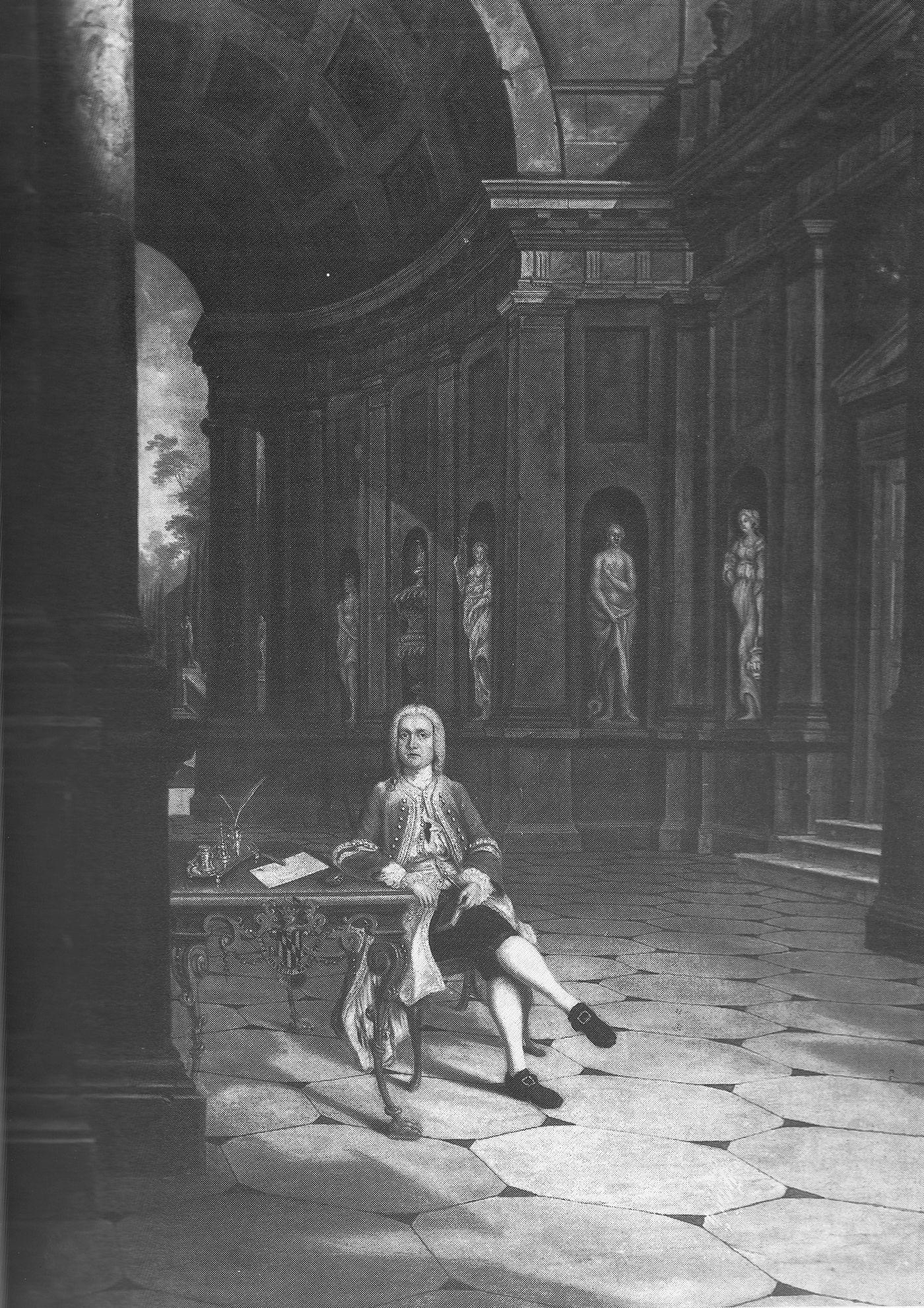
He was also often ill. In 1728 he told the Assembly that his "frequent Indispositions" threatened him "with a Short Continuance amongst you," and his health continued to fail.[20] On October 26, 1729, he sent his brother a long letter from Annapolis, one of the most revealing documents of these years. He described an Assembly in which some members of the Lower House denied the proprietor's right to dissent from laws at all. He explained why the Upper House had insisted that a bill for paper money could take effect only with Baltimore's approval. New York and Pennsylvania had prospered with paper money, he observed, but Maryland and Virginia depended on a single crop. "Tobacco, as our Staple, is our all," he wrote.[21] When it sold poorly, the planter could scarcely make a living. Because the crop returned so little money to circulate, the province was left almost lifeless, and "it is like a Dead Palsie on the publick."[22] He resented that the people controlled the revenue that paid for government, and he blamed the attitude of planters who were, in his words, "so generally proud."[23]
Near its end the letter turned personal. Benedict had recently traveled to Philadelphia to call on Pennsylvania's governor, Patrick Gordon, and had been extremely ill there and on the whole journey. The summer had been worse. For six months he had had no appetite, "living that time I think in Continued Misery and pain." Their brother Edward Henry Calvert, called Ned, who had also come to Maryland, was thin and coughing.[24] Ned died in 1730.[25]
The Assembly session of 1729 produced a more lasting monument to the family. Inhabitants of Baltimore County petitioned that "a Town is much wanting on the North Side of Patapsco-River," and that summer the Assembly passed an act to lay out sixty acres there in lots.[26] The new settlement took the family's title and was called Baltimore Town, and it became the city that still bears the name.
Tobacco and Riot
Benedict's worries about tobacco were shared in London. In a memorial dated January 17, 1730 (January 17, 1729, in the Old Style reckoning of the document), five merchants trading to Maryland told Baltimore that the staple had sold so low that the planters could not long subsist. In their view the planters were themselves to blame, growing as much as possible without regard to quality and overloading European markets with inferior leaf. The merchants asked him to confirm a recent Maryland law that limited each person to no more than seven thousand plants a year. Baltimore heard the case argued by counsel. Then, on January 30, he dissented from the law, judging that it would unjustly take a fourth part of the clergy's incomes and do the province no good.[27] The episode showed the proprietor's position in small. He could protect the established clergy, whose salaries were paid in tobacco, but only by overruling the planters and merchants on the question that mattered most to them. In 1730 the Assembly tried again with an act "for Improving the Staple of Tobacco." It set detailed allowances of plants for each kind of worker in a household and appointed counters in every precinct to number the plants and destroy the excess.[28]
Some planters decided to enforce scarcity themselves. In the spring of 1732 the Council received reports that people had gathered "in a tumultuous manner" in several parts of the province, notably in Prince George's County, and cut up tobacco plants on other men's plantations without the owners' leave. On May 9 Governor Samuel Ogle issued a proclamation forbidding "all Riots Routs and unlawful Assemblys." The Council offered a reward of fifty pounds for evidence against the leaders, and the county militia were ordered to stand ready to help the sheriffs.[29] The news reached London, where the Gentleman's Magazine reported in June 1732 that planters in Maryland had destroyed seventy tobacco plantations and threatened to leave no plant standing, saying the crop was not worth sending to England.[30] That summer the Assembly made cutting another man's tobacco plants a crime. The preamble of the act recited that rioters had threatened to burn houses and tobacco.[31]
Marriage, Court, and a Change of Governors
Baltimore's own life in these years lay in England, and it was rising. In 1730 he married Mary Janssen, daughter of Sir Theodore Janssen, who had come to England from France in 1680 and been made a baronet in 1714.[32] Their son Frederick, the future sixth and last Lord Baltimore, was born on February 6, 1732.[33] Baltimore became a fellow of the Royal Society. He also attached himself to the household of Frederick, Prince of Wales, the king's estranged eldest son, whom he served as a gentleman of the bedchamber from 1731 and later as a trusted adviser.[34]
He also changed governors once more. Benedict's health was failing, and in 1731 Baltimore commissioned Samuel Ogle, said to have been a captain in the British army, who took the oath in Council at Annapolis on December 7, 1731.[35] Ogle's first report from Annapolis, written in January 1732, described Benedict as reserved and unwell and passed on his complaint that the Council lacked courage. On the question of Pennsylvania, he warned that Benedict and the councilor Philemon Lloyd "talked exceedingly against any manner of agreement with the Pens."[36] Benedict stayed in Annapolis through the winter and embarked for England at about the end of April 1732. He died of consumption on June 1, on the voyage, and was buried at sea.[37]
The Articles of May 10, 1732
The boundary that troubled Ogle's first letter had been in dispute since 1681. Maryland's charter carried the province north to the fortieth degree of latitude. William Penn's later charter for Pennsylvania described a southern border that began at a circle drawn twelve miles from the town of New Castle on the Delaware. The two descriptions could not both be satisfied. The fortieth parallel lay north of Philadelphia, so a strict reading of the Maryland charter would have placed Penn's capital inside Maryland. Penn had also acquired the "three lower counties" on the Delaware, the later state of Delaware, which the Calverts claimed as part of their peninsula. Early in 1724 Baltimore and Penn's widow, Hannah Penn, agreed to a truce under which neither side would disturb the other's settlers or grant disputed land near the border. According to the Pennsylvanians, it was generally observed until about 1732.[38]
On May 10, 1732, Baltimore and three of Penn's sons, John, Thomas, and Richard, signed Articles of Agreement. The articles recited that observations of the fortieth degree had "greatly varied and differed from each other" and that settlers were occupying disputed land without authority from either proprietor. They called for a circle "drawn and marked out at the twelve Miles distance from the Town of New-Castle." An east-west line was to run from "Cape Hinlopen" across the peninsula and stop "in the exact Middle" of it. North of the circle, a line was to run due north to the latitude "fifteen English Statute Miles due South of the most southern Part of the City of Philadelphia," and the boundary was then to follow that latitude west. Commissioners from both sides were to begin marking the lines no later than October 1732 and finish by December 25, 1733. If either party's commissioners failed to attend and the work went undone, that party would forfeit five thousand pounds.[39]
A plan of the peninsula was printed in the margin of the articles, which described it as a true copy of plans sent over from America by the parties' agents.[40] According to the Maryland State Archives' history of the map, each side had produced a manuscript map for the negotiations, and Baltimore's was the one accepted and sent to John Senex in London to be engraved. The engraving showed two capes at the mouth of Delaware Bay, Cape Cornelius and, about twenty miles south of it, Cape Hinlopen. The line across the peninsula began at that southern point, now called Fenwick Island. In 1808 John Kilty, writing a guide to Maryland's land office, explained that in those years the modern Cape Henlopen was called Cape Cornelius, and the name Henlopen was thought to belong farther down the coast.[41]
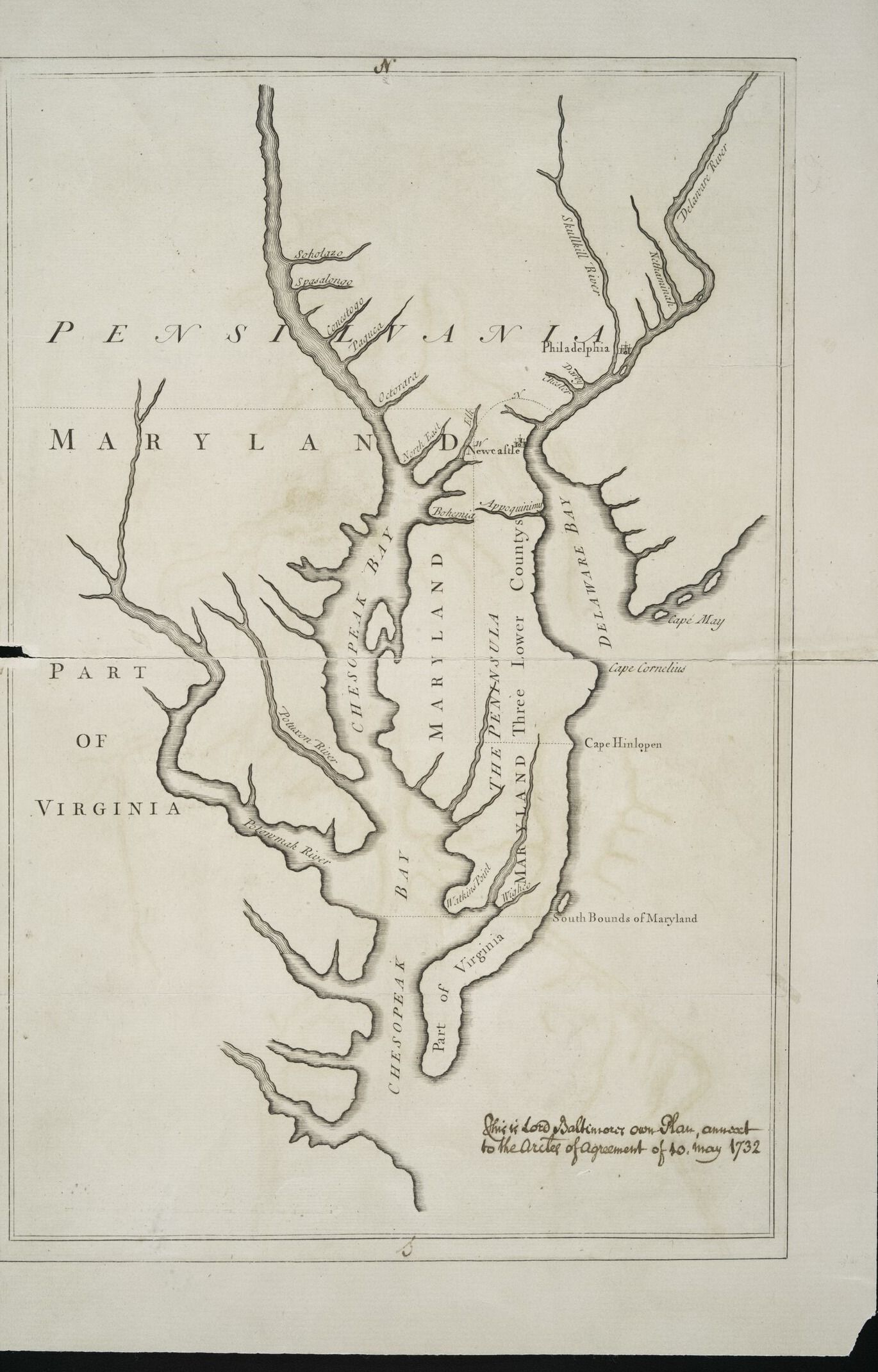
How Baltimore came to accept these terms was disputed from the beginning. In 1737 the government of Pennsylvania told the king that the articles had been made "at the Special Instance of the said Lord Baltemore." Maryland's own address to the king that year said instead that he had been "prevailed" upon "to hearken to Overtures made by the Proprietaries of Pennsilvania."[42] In 1894 the editors of the Calvert family papers called the map fraudulent and charged that the Penns had moved Cape Henlopen southward.[43] Later research points the other way. The State Archives, drawing on Nicholas Wainwright's study of 1963, traces the error to Baltimore's own manuscript map, and map historians have found that it followed an older Dutch map that misplaced the cape. When the plan was reprinted in 1735 to accompany the printed articles, most copies were endorsed, in the hand of the Penns' lawyer Ferdinand John Paris, "This is Lord Baltimore's own Plan."[44] When Baltimore first saw the mistake is not recorded in the sources consulted here. What is clear is that he signed. On July 21 the Privy Council, told that Baltimore's affairs required his presence in Maryland, approved Ogle to resume the government once the proprietor left again, and in a letter to Captain Calvert, Baltimore announced that he intended "to make the Province a Visit in the Fall."[45]
His Lordship in Annapolis
He arrived late in 1732. On November 25 the Annapolis poet Richard Lewis dated Carmen Seculare, a printed address in verse to the proprietor on his coming to take up the government in person.[46] On December 11, Ogle yielded the executive to Baltimore, who sat in Council and took personal direction of affairs.[47] Lady Baltimore came with him. A report from Annapolis printed in Philadelphia's American Weekly Mercury described the celebration of Queen Caroline's birthday on March 1, at which "His Lordship gave a splendid ball to the gentlemen and ladies."[48] On St. George's Day, April 23, he dined with the town's English society at the Stadt House. On May 11, Annapolis fired its guns to mark the birth of a daughter to Lady Baltimore.[49]
The Assembly that met on March 13 heard more from him than compliments. He spoke of "The bad State of Our Trade for some Years past" and recommended amendments to the militia law. He also called on the delegates to correct the condition of the province's jails and "Redress so Unchristian a Grievance."[50] The next day the Upper House answered that the government under his authority had left them "nothing to wish for, but your Lordships presence amongst us." His speech, the councilors added, assured them "that the Purpose of your Voyage was to promote the Welfare of it."[51] When both houses had a joint address ready in April, he received it "at his own House."[52]
The session's chief work was money. On March 16 Daniel Dulany, the pamphleteer of 1728, brought in the heads of a bill for a paper currency, the kind of measure Benedict had discussed in his letter of 1729.[53] On April 12, 1733, Baltimore assented to it in the Upper House.[54] The act authorized ninety thousand pounds in bills of credit. Thirty shillings was issued for every taxable person in the province, paid to the master or mistress of each household for the taxables in it, and directly to every free man who was himself a taxable. Money was set aside for a governor's house and for jails in every county, and the rest was to be lent out at interest on mortgages.[55] Two days later he issued a proclamation regulating officers' fees, the subject of what one editor of the records called a "perennial struggle" between proprietor and Assembly.[56] For a few months Maryland had what the Upper House had called the one thing it lacked, a proprietor who could be addressed directly instead of through a governor waiting on instructions from London.
Turning against the Line
The boundary was another matter. The commissioners had met as the articles required, first at Newtown in Kent County, Maryland, on October 6, 1732, and then at New Castle from October 30. They held "divers Conferences for some Days" without agreeing.[57] Whatever passed between the two sides in these months, it left Baltimore unwilling to treat the Pennsylvanians as partners. In May 1733 he wrote from Burlington, New Jersey, to Governor Gordon, who had raised the question of the courtesies due to a peer. According to the New York Public Library's description of the letter, Baltimore replied that, as he had said at New Castle, he neither sought nor expected compliments from men he must oppose because of their conduct in the government of Pennsylvania. The letter was endorsed as received on May 22, 1733.[58] The catalog does not say when or to whom he had said this at New Castle, or whether he said it there in person, and accounts of these weeks are thin.
He did not stay to see the commissioners finish. On June 20, 1733, he recommissioned Ogle as governor, and Ogle took the oath on July 11.[59] Baltimore sailed for England in July 1733, ending a residence of about seven months.[60] On August 25 Ogle wrote to him from Annapolis. He hoped Baltimore had reached England safely, and he added that if the passage had been rough, he hoped it would "determine you to bid adieu to the Sea for ever." One of the Penns, Ogle reported, had answered a local address by saying that if the articles could not be carried out, "the Equity of their cause and common Justice will compel a division" at least as favorable as the agreement.[61]
The commissioners met for the last time at New Castle in November 1733 and could agree on nothing. The Pennsylvanians insisted on a circle drawn twelve miles out from New Castle. The Marylanders insisted that the articles meant a circle twelve miles in circumference, less than four miles across. The Pennsylvanians refused to go on to Cape Henlopen to fix its position, holding that it would serve no purpose. On November 24, 1733, with the deadline close, they signed a return recording their disagreement and parted, referring the matter to their principals.[62] The deadline of December 25 passed. Baltimore then petitioned George II for a new grant confirming the lands on the Delaware as part of Maryland, and the Penns answered with a petition of their own. In 1735 the Privy Council postponed both so that the Penns could seek enforcement of the articles in the Court of Chancery.[63]
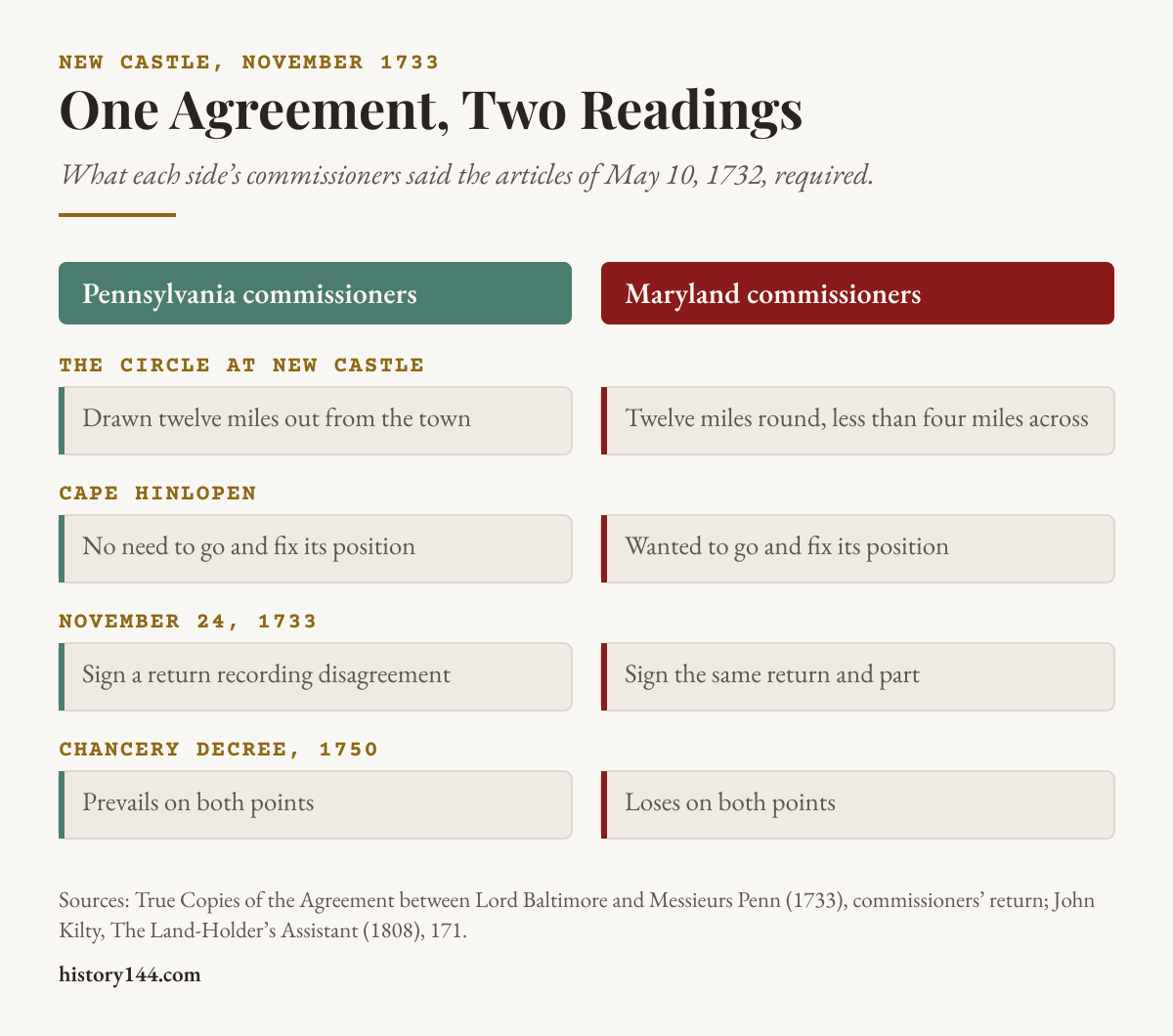
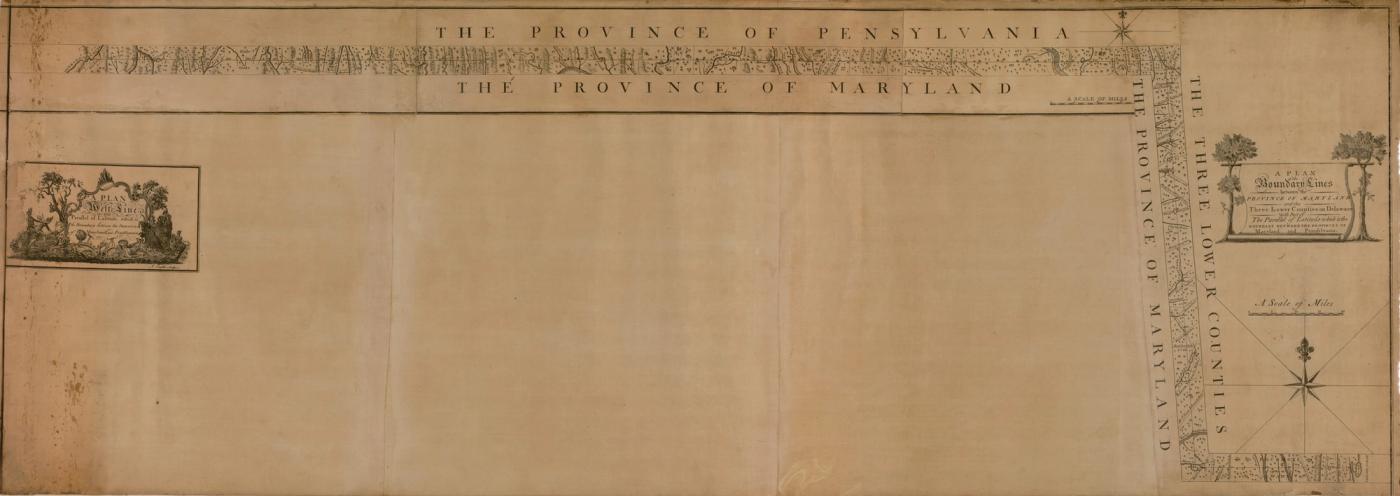
The dispute consumed nearly the rest of his life. In 1750 Lord Chancellor Hardwicke decreed that the articles of 1732 be carried out. He ruled that the circle was to have a radius of twelve miles and that Cape Henlopen lay where the articles had placed it.[64] Baltimore died the following April. In the 1760s Charles Mason and Jeremiah Dixon completed the survey of the lines on the basis of the agreement and the decree that enforced it, and the misplaced cape and the line across the peninsula cost Maryland, by one State Archives estimate, about a thousand square miles.[65]
The Proprietor and His Province
Ogle's hope about the sea went unfulfilled. Baltimore became an enthusiastic yachtsman and remained at the center of the Prince of Wales's circle, where Horace Walpole later called him "a very goodnatured, weak, honest, man."[66] He never returned to Maryland, and his son Frederick, the last proprietor, never visited it at all.[67]
The twelve years between his coming of age and his voyage home show both the reach and the limits of proprietary government at a distance. Baltimore could veto a law, name a governor, and approve a paper currency, and he did all three. He could not see the tobacco fields that rioters were cutting up, the Assembly's resentment over English law, or the peninsula whose plan he signed in London. He learned of them from letters written by Captain Calvert, a dying brother, and a newly arrived governor, each with his own view of what the proprietor needed to hear. When he finally came, the delegates welcomed him as their landlord and lawgiver, and he gave them the money bill they wanted. By the time he left, the bargain he had struck in London over the boundary was one he meant to fight.
He spent the rest of his life trying to undo that bargain, and he failed. The line that the courts eventually enforced became, in Mason and Dixon's survey, one of the most famous borders in American history. When Baltimore told the Assembly in March 1733 that he was glad to meet his faithful tenants, he was the last proprietor who would ever do so in person. Of everything he did as proprietor, the agreement that brought him to Maryland, and that he set out to fight when he left, did the most to shape the map of the country his tenants' descendants would build.
Places in this Story
The places this story moves through, in order — follow them on the interactive map →
- Annapolis, Maryland March 13, 1733
Lord Baltimore opened the Assembly in person, greeting the delegates as "my Faithfull Tenants legislatively Assembled."
- Epsom, Surrey, England April 16, 1715
Benedict Leonard Calvert, fourth Lord Baltimore, died here, leaving the province to his fifteen-year-old son Charles.
- Kiplin Hall, North Yorkshire, England 1722
Short of money, Baltimore sold the house George Calvert had built to his stepfather, Christopher Crowe.
- Philadelphia, Pennsylvania 1729
Governor Benedict Leonard Calvert traveled here to call on Pennsylvania's governor, Patrick Gordon, and was extremely ill on the journey.
- Baltimore, Maryland 1729
The Assembly passed an act to lay out sixty acres on the north side of the Patapsco as a town, which became Baltimore Town.
- Prince George's County, Maryland May 9, 1732
Crowds cut up tobacco plants on other men's plantations, and Governor Ogle proclaimed against the riots.
- Fenwick Island, Delaware May 10, 1732
The line across the peninsula began here, at the point the articles' plan labeled Cape Hinlopen.
- Burlington, New Jersey May 1733
Baltimore wrote to Governor Gordon that he neither sought nor expected compliments from men he must oppose.
- New Castle, Delaware November 24, 1733
The boundary commissioners signed a return recording their disagreement and parted without marking the lines.
Frequently Asked Questions
Who was Charles Calvert, fifth Lord Baltimore?
He was the proprietor of Maryland from 1715 until his death in 1751, and he took control of the province in his own right in 1721. He governed it from England through appointed governors and visited it only once, from December 1732 to July 1733.
Why did Maryland argue with Lord Baltimore over English law?
In 1722 the Lower House claimed that the statutes of England extended to Maryland, and an act to that effect passed the Assembly. Baltimore vetoed it in 1723, insisting that English statutes be enacted afresh, one by one, by the Assembly itself.
How was the city of Baltimore founded?
In 1729 inhabitants of Baltimore County petitioned for a town on the north side of the Patapsco River, and the Assembly passed an act to lay out sixty acres there in lots. The new settlement took the family's title as Baltimore Town.
What were the Maryland tobacco riots of 1732?
In the spring of 1732 crowds in Prince George's County and other parts of Maryland cut up tobacco plants on other men's plantations. Governor Samuel Ogle issued a proclamation against the riots on May 9, and the Assembly made cutting another man's plants a crime.
What was the Penn-Baltimore agreement of 1732?
On May 10, 1732, Lord Baltimore and William Penn's sons John, Thomas, and Richard signed articles to settle the Maryland-Pennsylvania boundary. They called for a circle twelve miles from New Castle and a line across the peninsula from Cape Hinlopen, with a five-thousand-pound forfeit for a side whose commissioners failed to attend.
Why did Lord Baltimore turn against the 1732 agreement?
The plan attached to the articles placed Cape Hinlopen about twenty miles south of the cape that bears the name today, moving the boundary at Maryland's expense. By May 1733 he was refusing to treat the Pennsylvanians as partners, and in November 1733 the commissioners split over the size of the New Castle circle and parted without marking the lines.
How did the Calvert boundary dispute lead to the Mason-Dixon line?
In 1750 Lord Chancellor Hardwicke ordered the articles of 1732 carried out, with a twelve-mile radius around New Castle and Cape Henlopen where the articles had placed it. Charles Mason and Jeremiah Dixon completed the survey of the lines on that basis in the 1760s.
Bibliography
American Weekly Mercury (Philadelphia). April 12–19 and May 10–17, 1733. As indexed and excerpted in "American Weekly Mercury: 1733.04.19" and "American Weekly Mercury: 1733.05.17," Colonial Music Institute database, Country Dance and Song Society. Accessed November 14, 2026. https://cdss.org/elibrary/PacanNew/CITATION/C0001/C0001081.htm; https://cdss.org/elibrary/PacanNew/CITATION/C0001/C0001085.htm.
ArgoMaps. "Proposed Maryland / Pennsylvania Boundary." Catalog record for Lord Baltimore's own plan. Accessed November 16, 2026. https://www.argomaps.org/maps/commonwealth:q524mt414.
Baltimore, Charles Calvert, Lord, John Penn, Thomas Penn, and Richard Penn. True Copies of I. The Agreement between Lord Baltimore and Messieurs Penn, Dated 10 May, 1732. II. The Commissions Given to the Commissioners to Mark Out the Lines between Maryland, and Pensilvania and the Three Lower Counties of Delaware. III. The Return or Report of the Commissioners on Both Sides, Made 24 Nov. 1733. [London, 1733]. Printed Ephemera Collection, Library of Congress. Accessed November 14, 2026. https://tile.loc.gov/storage-services/service/rbc/rbpe/rbpe02/rbpe028/02800100/02800100.pdf.
Baltimore, Charles Calvert, Lord, to Patrick Gordon. Burlington, NJ, May 1733. Thomas Addis Emmet Collection, EM. 3517. Manuscripts and Archives Division, New York Public Library. Catalog record. Accessed November 14, 2026. https://rp-digitalcollections.nypl.org/items/bac0a75c-2829-b981-e040-e00a18067fd9.
Browne, William Hand, ed. Proceedings of the Council of Maryland, 1698–1731. Archives of Maryland 25. Baltimore: Maryland Historical Society, 1905. Archives of Maryland Online. Accessed November 14, 2026. https://msa.maryland.gov/megafile/msa/speccol/sc2900/sc2908/000001/000025/html/index.html.
Browne, William Hand, ed. Proceedings of the Council of Maryland, April 15, 1732–July 26, 1753. Archives of Maryland 28. Baltimore: Maryland Historical Society, 1908. Archives of Maryland Online. Accessed November 14, 2026. https://msa.maryland.gov/megafile/msa/speccol/sc2900/sc2908/000001/000028/html/index.html.
The Calvert Papers, Number Two: Selections from Correspondence. Fund Publication 34. Baltimore: Maryland Historical Society, 1894. Internet Archive. Accessed November 14, 2026. https://archive.org/details/calvertpapers02leej.
Dulany, Daniel. The Right of the Inhabitants of Maryland, to the Benefit of the English Laws. Annapolis: William Parks, 1728. Reprinted in Sioussat, The English Statutes in Maryland, 81–104.
Hall, Clayton Colman, ed. Proceedings and Acts of the General Assembly of Maryland, October 1720–October 1723. Archives of Maryland 34. Baltimore: Maryland Historical Society, 1914. Archives of Maryland Online. Accessed November 14, 2026. https://msa.maryland.gov/megafile/msa/speccol/sc2900/sc2908/000001/000034/html/index.html.
Kilty, John. The Land-Holder's Assistant, and Land-Office Guide. Baltimore, 1808. Reprinted as Archives of Maryland 73. Archives of Maryland Online. Accessed November 14, 2026. https://msa.maryland.gov/megafile/msa/speccol/sc2900/sc2908/000001/000073/html/am73--169.html.
Library of Congress. "(Maps of the Maryland-Pennsylvania Boundary Used as Trial Exhibits in the 1735 Court Suit Brought by the Penns against Lord Baltimore to Determine the Official Interprovincial Boundary Line)." Catalog record, Geography and Map Division. Accessed November 16, 2026. https://www.loc.gov/item/2006625071/.
Maryland State Archives. "Charles Calvert (1637–1714/15), Third Lord Baltimore." Archives of Maryland Biographical Series, MSA SC 3520-193, extended biography. Accessed November 15, 2026. https://msa.maryland.gov/megafile/msa/speccol/sc3500/sc3520/000100/000193/html/193extendedbio.html.
Maryland State Archives. "Charles Calvert (1699–1751)." Archives of Maryland Biographical Series, MSA SC 3520-195. Accessed November 14, 2026. https://msa.maryland.gov/megafile/msa/speccol/sc3500/sc3520/000100/000195/html/calvertch5.html.
Maryland State Archives. "The Fifth Lord Baltimore: Charles Calvert (1699–1751)." The Maryland State House, Grand Staircase. Accessed November 14, 2026. https://www.msa.maryland.gov/msa/mdstatehouse/html/grandstaircase_ccalvert5.html.
Maryland State Archives. Huntingfield Map Collection. "Lord Baltimore's Own Plan." Map record 260S5, MSA SC 1399. Accessed November 15, 2026. https://msa.maryland.gov/msa/speccol/1399/reports/html/260s5.html.
National Army Museum. "The Grenadier Guards." Accessed November 15, 2026. https://nam.ac.uk/explore/grenadier-guards.
Owings, Donnell MacClure. His Lordship's Patronage: Offices of Profit in Colonial Maryland. Baltimore: Maryland Historical Society, 1953. Reprinted as Archives of Maryland 662. Annapolis: Maryland State Archives, 2004. Archives of Maryland Online. Accessed November 14, 2026. https://msa.maryland.gov/megafile/msa/speccol/sc2900/sc2908/000001/000662/html/am662--114.html.
Papenfuse, Edward C., Alan F. Day, David W. Jordan, and Gregory A. Stiverson. A Biographical Dictionary of the Maryland Legislature, 1635–1789. Vol. 1, A–H. Baltimore: Johns Hopkins University Press, 1979. Reprinted as Archives of Maryland 426. Archives of Maryland Online. Accessed November 14, 2026. https://msa.maryland.gov/megafile/msa/speccol/sc2900/sc2908/000001/000426/html/am426--188.html.
Sioussat, St. George Leakin. The English Statutes in Maryland. Johns Hopkins University Studies in Historical and Political Science, ser. 21, nos. 11–12. Baltimore: Johns Hopkins Press, 1903. Reprinted as Archives of Maryland 195. Archives of Maryland Online. Accessed November 14, 2026. https://msa.maryland.gov/megafile/msa/speccol/sc2900/sc2908/000001/000195/html/am195--33.html.
Steiner, Bernard Christian, ed. Acts of the General Assembly Hitherto Unprinted, 1694–1698, 1711–1729. Archives of Maryland 38. Baltimore: Maryland Historical Society, 1918. Archives of Maryland Online. Accessed November 14, 2026. https://msa.maryland.gov/megafile/msa/speccol/sc2900/sc2908/000001/000038/html/index.html.
Steiner, Bernard Christian, ed. Proceedings and Acts of the General Assembly of Maryland, May 1730–August 1732. Archives of Maryland 37. Baltimore: Maryland Historical Society, 1917. Archives of Maryland Online. Accessed November 14, 2026. https://msa.maryland.gov/megafile/msa/speccol/sc2900/sc2908/000001/000037/html/index.html.
Steiner, Bernard Christian, ed. Proceedings and Acts of the General Assembly, 1727–1729, with Appendix of Statutes, 1714–1726. Archives of Maryland 36. Baltimore: Maryland Historical Society, 1916. Archives of Maryland Online. Accessed November 14, 2026. https://msa.maryland.gov/megafile/msa/speccol/sc2900/sc2908/000001/000036/html/index.html.
Steiner, Bernard Christian, ed. Proceedings and Acts of the General Assembly, 1733–1736. Archives of Maryland 39. Baltimore: Maryland Historical Society, 1919. Archives of Maryland Online. Accessed November 14, 2026. https://msa.maryland.gov/megafile/msa/speccol/sc2900/sc2908/000001/000039/html/index.html.
Steiner, Bernard Christian, ed. Proceedings and Acts of the General Assembly, April 1737–June 1740. Archives of Maryland 40. Baltimore: Maryland Historical Society, 1921. Archives of Maryland Online. Accessed November 14, 2026. https://msa.maryland.gov/megafile/msa/speccol/sc2900/sc2908/000001/000040/html/index.html.
Wainwright, Nicholas B. "Tale of a Runaway Cape: The Penn-Baltimore Agreement of 1732." Pennsylvania Magazine of History and Biography 87, no. 3 (July 1963): 251–93. Not consulted directly; cited as summarized by the Maryland State Archives.
Wroth, Lawrence C. A History of Printing in Colonial Maryland, 1686–1776. Baltimore: Typothetae of Baltimore, 1922. Reprinted as Archives of Maryland 435. Archives of Maryland Online. Accessed November 14, 2026. https://msa.maryland.gov/megafile/msa/speccol/sc2900/sc2908/000001/000435/html/am435--181.html.
Citations
- Lord Baltimore, speech to both houses, March 13, 1733, in Steiner, Proceedings and Acts of the General Assembly, 1733–1736, 1; Lower House journal, same date, ibid., 56. Maryland began the year on March 25 under the Old Style calendar, so the records give this date as March 13, 1732/3. Years in the text are given in modern form. ↑
- Steiner, Proceedings and Acts of the General Assembly, May 1730–August 1732, preface, xiii; Maryland State Archives, "The Fifth Lord Baltimore"; Maryland State Archives, "Charles Calvert (1637–1714/15), Third Lord Baltimore," extended biography, for his departure in 1684. ↑
- Lord Baltimore, speech to both houses, March 13, 1733, in Steiner, Proceedings and Acts of the General Assembly, 1733–1736, 2; Browne, Proceedings of the Council of Maryland, 1732–1753, preface, ix; Steiner, Proceedings and Acts of the General Assembly, 1733–1736, letter of transmission, iv, which says he came "upon the ill-starred business of the Pennsylvania boundary." ↑
- Papenfuse et al., Biographical Dictionary, 1:188. ↑
- Papenfuse et al., Biographical Dictionary, 1:186, entry for Benedict Leonard Calvert, fourth Lord Baltimore; Maryland State Archives, "Charles Calvert (1637–1714/15), Third Lord Baltimore," extended biography, for the Protestant takeover of 1689 and the Crown's rule through royal governors. The founding of Maryland is common knowledge. ↑
- Papenfuse et al., Biographical Dictionary, 1:186, 188; Owings, His Lordship's Patronage, 109. ↑
- Papenfuse et al., Biographical Dictionary, 1:189, which lists his religion as "Catholic, converted to Anglican"; Owings, His Lordship's Patronage, 109, 114. Steiner, Proceedings and Acts of the General Assembly, May 1730–August 1732, preface, xii, says that Charles, still a minor, "became a Protestant with" his father. ↑
- Papenfuse et al., Biographical Dictionary, 1:186; Kilty, Land-Holder's Assistant, 163. ↑
- Owings, His Lordship's Patronage, 114. ↑
- Papenfuse et al., Biographical Dictionary, 1:188, for his birth on September 29, 1699; Maryland State Archives, "The Fifth Lord Baltimore," for 1721. No document marking the end of the guardianship was found, so the year 1721 rests on the State Archives' account. ↑
- Maryland State Archives, "The Fifth Lord Baltimore." The surname is also spelled Crewe. ↑
- Papenfuse et al., Biographical Dictionary, 1:188, entry for Charles Calvert (?–1733/34), which gives his regiment as the "First Grenadier Guards" and notes that he may have been the same man as Charles Calvert Lazenby; Hall, Proceedings and Acts of the General Assembly, October 1720–October 1723, preface, ix, which reports that his commission describes him as the proprietor's cousin but that "the exact relationship between the two has never been successfully traced." The regiment was the First Regiment of Foot Guards until it was renamed the First or Grenadier Regiment of Foot Guards after Waterloo in 1815 (National Army Museum, "The Grenadier Guards"). ↑
- Sioussat, English Statutes in Maryland, 33–36. The composition of the two houses is common knowledge. ↑
- Hall, Proceedings and Acts of the General Assembly, October 1720–October 1723, 440–41 (Lower House journal, October 25, 1722); Sioussat, English Statutes in Maryland, 32–33. ↑
- Lord Baltimore's dissent and his instruction to the governor, laid before the Upper House on September 25, 1723, in Hall, Proceedings and Acts of the General Assembly, October 1720–October 1723, 487, 493, and in the Lower House journal, ibid., 603; Sioussat, English Statutes in Maryland, 33. The dissent is dated March 19, 1722, Old Style. ↑
- Sioussat, English Statutes in Maryland, 36, 51, for the readoption of the resolutions, Dulany's committee, and the pamphlet's argument; Dulany, Right of the Inhabitants of Maryland, as reprinted in Sioussat, English Statutes in Maryland, 81; Wroth, History of Printing in Colonial Maryland, 173, for the printer and date. ↑
- Papenfuse et al., Biographical Dictionary, 1:185; Steiner, Proceedings and Acts of the General Assembly, 1727–1729, preface, xii. ↑
- Steiner, Proceedings and Acts of the General Assembly, 1727–1729, preface, xii. ↑
- Papenfuse et al., Biographical Dictionary, 1:185. ↑
- Steiner, Proceedings and Acts of the General Assembly, 1727–1729, preface, xii; Benedict Leonard Calvert, speech to the Assembly, 1728, ibid., 106. ↑
- Benedict Leonard Calvert to Lord Baltimore, October 26, 1729, in Browne, Proceedings of the Council of Maryland, 1698–1731, 601–2, 610. The letter is also printed in Calvert Papers, Number Two, 68–81. ↑
- Calvert to Baltimore, October 26, 1729, in Browne, Proceedings of the Council, 1698–1731, 603. ↑
- Calvert to Baltimore, October 26, 1729, in Browne, Proceedings of the Council, 1698–1731, 605. ↑
- Calvert to Baltimore, October 26, 1729, in Browne, Proceedings of the Council, 1698–1731, 609. ↑
- Papenfuse et al., Biographical Dictionary, 1:185, which gives Edward Henry Calvert's dates as 1701–1730. ↑
- "An Act for erecting a Town on the North Side of Patapsco, in Baltemore County," 1729, ch. 12, in Steiner, Proceedings and Acts of the General Assembly, 1727–1729, 464; Upper and Lower House journals, July 23–25, 1729, ibid., 331, 334, 415. The derivation of the city's name from the family title is common knowledge. ↑
- Memorial of Samuel Hyde and other traders to Maryland to Lord Baltimore, dated January 17, 1729, with marginal note on the proprietor's dissent of January 30, from Calvert Papers no. 2954, in Steiner, Acts of the General Assembly Hitherto Unprinted, 441. Because the year then began on March 25, a January date written as 1729 falls in January 1730 by the modern calendar (January 1729/30). The sequence confirms it: on December 18, 1729, a Privy Council committee suspended the clergy's complaint against the tobacco act of the October 1728 session so that Baltimore could hear it himself (Steiner, Acts of the General Assembly Hitherto Unprinted, 439–40). ↑
- "An Act for Improving the Staple of Tobacco," 1730, in Steiner, Proceedings and Acts of the General Assembly, May 1730–August 1732, 138–51, esp. 139–40, 144. The allowances varied by the kind of worker and the size of the household; for example, three thousand plants were allowed for each male child, male servant, or enslaved worker of either sex aged thirteen to sixteen who worked in tobacco. ↑
- Council minutes and proclamation of May 9, 1732, in Browne, Proceedings of the Council of Maryland, 1732–1753, 7–9. ↑
- Steiner, Proceedings and Acts of the General Assembly, May 1730–August 1732, preface, xiii, summarizing Gentleman's Magazine 2 (June 1732): 824. The magazine itself was not consulted. ↑
- "An Act to prevent cutting up Tobacco Plants," 1732, ch. 8, in Steiner, Proceedings and Acts of the General Assembly, May 1730–August 1732, 530. ↑
- Papenfuse et al., Biographical Dictionary, 1:188; Maryland State Archives, "Charles Calvert (1699–1751)." ↑
- Papenfuse et al., Biographical Dictionary, 1:189; Maryland State Archives, "Charles Calvert (1699–1751)," which gives the year as 1731/32 in Old Style form. ↑
- Papenfuse et al., Biographical Dictionary, 1:189; Steiner, Proceedings and Acts of the General Assembly, 1733–1736, preface, iv. R. O. Bucholz, Database of Court Officers, 1660–1837, gives his appointment as gentleman of the bedchamber to the Prince of Wales on July 16, 1731, citing British Library Add. MS. 24397. The Gentleman's Magazine for 1731 gives June 11. ↑
- Proclamation of December 7, 1731, citing Ogle's commission dated at London September 16, 1731, in Browne, Proceedings of the Council of Maryland, 1698–1731, 549–50; Steiner, Proceedings and Acts of the General Assembly, 1727–1729, preface, xii; Steiner, Proceedings and Acts of the General Assembly, May 1730–August 1732, preface, xvi, which says he "is said to have been a captain." ↑
- Samuel Ogle to Lord Baltimore, January 10, 1732, in Calvert Papers, Number Two, 81–83. The letter is dated January 10, 1731, Old Style, and Ogle writes that he had landed on December 2. Ogle names only "Mr. Lloyd." Philemon Lloyd sat on the Council with Ogle in 1732 (Browne, Proceedings of the Council of Maryland, 1732–1753, 7). ↑
- Steiner, Proceedings and Acts of the General Assembly, 1727–1729, preface, xii; Papenfuse et al., Biographical Dictionary, 1:186. ↑
- Petition of the President, Council, and General Assembly of Pennsylvania to the King in Council, 1737, in Steiner, Proceedings and Acts of the General Assembly, 1737–1740, 125–26. The charter terms and the location of the fortieth parallel are common knowledge. ↑
- True Copies of I. The Agreement, recitals and articles II, III, V, VI, and IX. ↑
- True Copies of I. The Agreement, article I. ↑
- Maryland State Archives, Huntingfield Map Collection, "Lord Baltimore's Own Plan," map record 260S5; Kilty, Land-Holder's Assistant, 169 and note k. Estimates of the distance between the two capes vary: about twenty miles in the Huntingfield record, more than twenty in Calvert Papers, Number Two, prefatory note on the facsimile map facing 135, and about twenty-five in Maryland State Archives, "The Fifth Lord Baltimore." ↑
- Steiner, Proceedings and Acts of the General Assembly, 1737–1740, 110, 126. ↑
- Calvert Papers, Number Two, prefatory note on the facsimile map facing 135. ↑
- Maryland State Archives, Huntingfield Map Collection, "Lord Baltimore's Own Plan," map record 260S5, which calls Wainwright, "Tale of a Runaway Cape," the best source; "Lord Baltimore's Own Plan," catalog record, ArgoMaps, for the Dutch source map (Visscher's) and the endorsements in Paris's hand; Library of Congress, catalog record for the maps of the Maryland-Pennsylvania boundary used as trial exhibits in 1735, which identifies Paris as attorney for the Penn family. The endorsement is quoted from the copy at the New York Public Library, which reads in full "This is Lord Baltimore's own Plan, annext to the Articles of Agreement of 10. May 1732." Wainwright's article itself was not consulted, and its page range is taken from secondary citation. ↑
- Minutes of the Privy Council at Kensington, July 21, 1732, recording that Ogle had been approved by Order in Council of July 1, 1731, and Lord Baltimore to Charles Calvert, from the Calvert Papers, both in Steiner, Proceedings and Acts of the General Assembly, May 1730–August 1732, 585–87. The recipient is identified there as the commissary general, an office Captain Calvert held from 1730. The letter's date is not visible on these pages, and its year was not confirmed. ↑
- Wroth, History of Printing in Colonial Maryland, 181, no. 76. ↑
- Browne, Proceedings of the Council of Maryland, 1732–1753, 17; Steiner, Proceedings and Acts of the General Assembly, May 1730–August 1732, preface, xvi. ↑
- American Weekly Mercury, April 12–19, 1733, report from Annapolis dated March 2, as indexed in Colonial Music Institute, "American Weekly Mercury: 1733.04.19"; address of the Upper House, March 14, 1733, in Steiner, Proceedings and Acts of the General Assembly, 1733–1736, 3, for Lady Baltimore's arrival. ↑
- American Weekly Mercury, May 10–17, 1733, as indexed in Colonial Music Institute, "American Weekly Mercury: 1733.05.17." The daughter is not named in the report. ↑
- Lord Baltimore, speech to both houses, March 13, 1733, in Steiner, Proceedings and Acts of the General Assembly, 1733–1736, 2. ↑
- Address of the Upper House to Lord Baltimore, March 14, 1733, in Steiner, Proceedings and Acts of the General Assembly, 1733–1736, 3–4. ↑
- Upper House journal, April 3–4, 1733, in Steiner, Proceedings and Acts of the General Assembly, 1733–1736, 38. ↑
- Lower House journal, March 16, 1733, in Steiner, Proceedings and Acts of the General Assembly, 1733–1736, 59. ↑
- Upper and Lower House journals, April 12, 1733, in Steiner, Proceedings and Acts of the General Assembly, 1733–1736, 53, 90; Owings, His Lordship's Patronage, 109. ↑
- "An Act for emitting and making Current Ninety Thousand pounds Current Money of Maryland in Bills of Credit," 1733, in Steiner, Proceedings and Acts of the General Assembly, 1733–1736, 53, 92–98. ↑
- Council minutes and proclamation of April 14, 1733, in Browne, Proceedings of the Council of Maryland, 1732–1753, 31–32; Owings, His Lordship's Patronage, 110; Steiner, Proceedings and Acts of the General Assembly, 1727–1729, preface, xi. ↑
- True Copies of I. The Agreement, part III, the commissioners' return. ↑
- Lord Baltimore to Patrick Gordon, Burlington, NJ, May 1733, Thomas Addis Emmet Collection, New York Public Library, EM. 3517, as described in the library's catalog record. The letter itself was not examined. The catalog misidentifies the writer as the sixth Lord Baltimore. Whether Baltimore spoke at New Castle in person or in writing could not be confirmed. Ogle's letter of August 25, 1733, refers to "your Lordship's journey to Burlington" (Calvert Papers, Number Two, 88). ↑
- Browne, Proceedings of the Council of Maryland, 1732–1753, 49; Steiner, Proceedings and Acts of the General Assembly, May 1730–August 1732, preface, xvi. ↑
- Papenfuse et al., Biographical Dictionary, 1:188; Owings, His Lordship's Patronage, 110. ↑
- Samuel Ogle to Lord Baltimore, August 25, 1733, in Calvert Papers, Number Two, 88–92. ↑
- True Copies of I. The Agreement, part III, the commissioners' return, "Done at Newcastle," November 24, 1733. ↑
- Kilty, Land-Holder's Assistant, 171; Maryland's address of 1737, reciting the Order in Council, in Steiner, Proceedings and Acts of the General Assembly, 1737–1740, 112. ↑
- Kilty, Land-Holder's Assistant, 171, which reports that the chancellor declared Cape Henlopen to be "where it was laid down in the original articles of agreement"; Maryland State Archives, "The Fifth Lord Baltimore," for the year of the decision. ↑
- Maryland State Archives, "The Fifth Lord Baltimore." The State Archives' Huntingfield record puts the cost of the error lower, at more than a quarter of the present state of Delaware. The Mason-Dixon survey is common knowledge. ↑
- Steiner, Proceedings and Acts of the General Assembly, 1733–1736, preface, iv, quoting Horace Walpole's letter of March 4, 1749. ↑
- Papenfuse et al., Biographical Dictionary, 1:189. ↑