Introduction
Between 1804 and 1816, the Spanish viceroyalty centered on Buenos Aires underwent one of the most compressed political transformations in the history of the Americas. In little more than a decade, a colonial territory administered under the authority of the Spanish monarchy passed through foreign invasion, political revolution, factional conflict, military defeat and recovery, and finally a formal declaration of independence. This was not a single dramatic event but a chain of interlocking crises in which each upheaval altered the conditions under which the next one occurred.
The period began under Viceroy Rafael, Marqués de Sobremonte, an experienced colonial administrator whose authority collapsed during the British invasions of 1806 and 1807. Those invasions did not cause independence, but they weakened the prestige of viceregal government and accelerated the militarization of Buenos Aires society. Two years later, Napoleon's intervention in Spain produced a much deeper crisis by removing the recognized monarch and throwing the legal basis of imperial government into doubt. The May Revolution of 1810 emerged from that crisis, but it did not immediately produce either an independent nation or a stable political order. Instead, the revolution opened six years of political experimentation, provincial resistance, military campaigning, and debate over sovereignty.
This article traces that transformation from Sobremonte's accession to the viceroyalty in 1804 through the British invasions, the May Revolution, the campaigns in Upper Peru and the northwest, the Assembly of the Year XIII, and the Congress of Tucumán. It culminates on July 9, 1816, when representatives of the United Provinces formally declared independence from Spain.
One qualification is important. Argentina as a consolidated nation-state did not yet exist during most of the period discussed here. The political geography of the former Viceroyalty of the Río de la Plata remained fluid, and territories that had once belonged to the same imperial jurisdiction eventually became parts of Argentina, Bolivia, Paraguay, and Uruguay. For that reason, the discussion generally uses terms appropriate to the period, including the viceroyalty, the United Provinces, revolutionary government, and patriot forces, rather than projecting the later Argentine state backward onto the events of 1804–1816.[1]
Before 1804: A Viceroyalty on the Rise
The Viceroyalty of the Río de la Plata was created in 1776 as part of the Bourbon monarchy's effort to strengthen imperial administration in southern South America. Buenos Aires became the viceregal capital, while the new jurisdiction incorporated territories previously governed principally through the Viceroyalty of Peru, including the core areas of present-day Argentina, Uruguay, Paraguay, and Bolivia. The reorganization reflected several concerns, among them the need to administer the region more effectively, restrict contraband, defend the Río de la Plata against Portuguese expansion from Brazil, and protect the South Atlantic against other European powers.[2]
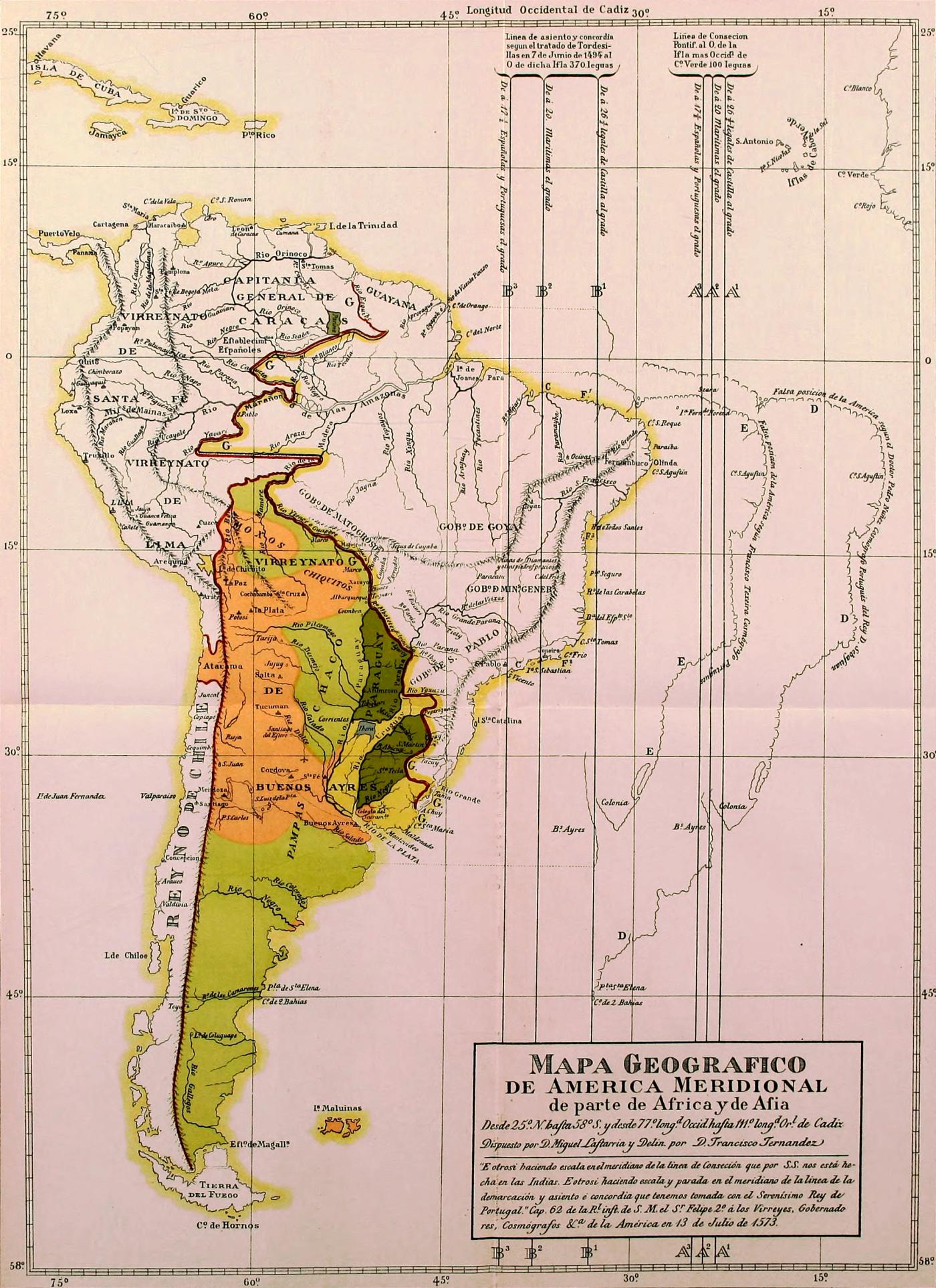
Buenos Aires had long occupied a peripheral position compared with the great mining and administrative centers of Mexico and Peru. During the eighteenth century, however, its commercial importance increased. Silver from Upper Peru moved through the Río de la Plata in growing quantities, while the cattle economy of the Pampas supported an expanding trade in hides, tallow, and salted meat. The creation of the viceroyalty reinforced Buenos Aires's position as an administrative, military, and commercial center.
The city also possessed a political institution that would become crucial during moments of imperial crisis known as the cabildo, or municipal council. Under exceptional circumstances, a cabildo abierto, or open cabildo, could bring a wider group of prominent inhabitants into deliberations over questions affecting the community. This did not constitute representative democracy in the modern sense. Participation remained socially restricted. Nevertheless, the institution provided a recognized mechanism through which local political authority could be debated. In May 1810, it would become the setting for the challenge to the authority of the Spanish viceroy.
1804: Sobremonte and the Viceregal Government
Rafael de Sobremonte entered the highest office in the viceroyalty with extensive experience in the region. He had arrived in Buenos Aires in 1779 as secretary to Viceroy Juan José de Vértiz and subsequently served for many years as governor-intendant of Córdoba del Tucumán. In that position he acquired a reputation for active administration before later serving as subinspector general of the viceroyalty's military forces. Following the death of Viceroy Joaquín del Pino in 1804, Sobremonte succeeded to viceregal authority.[3]
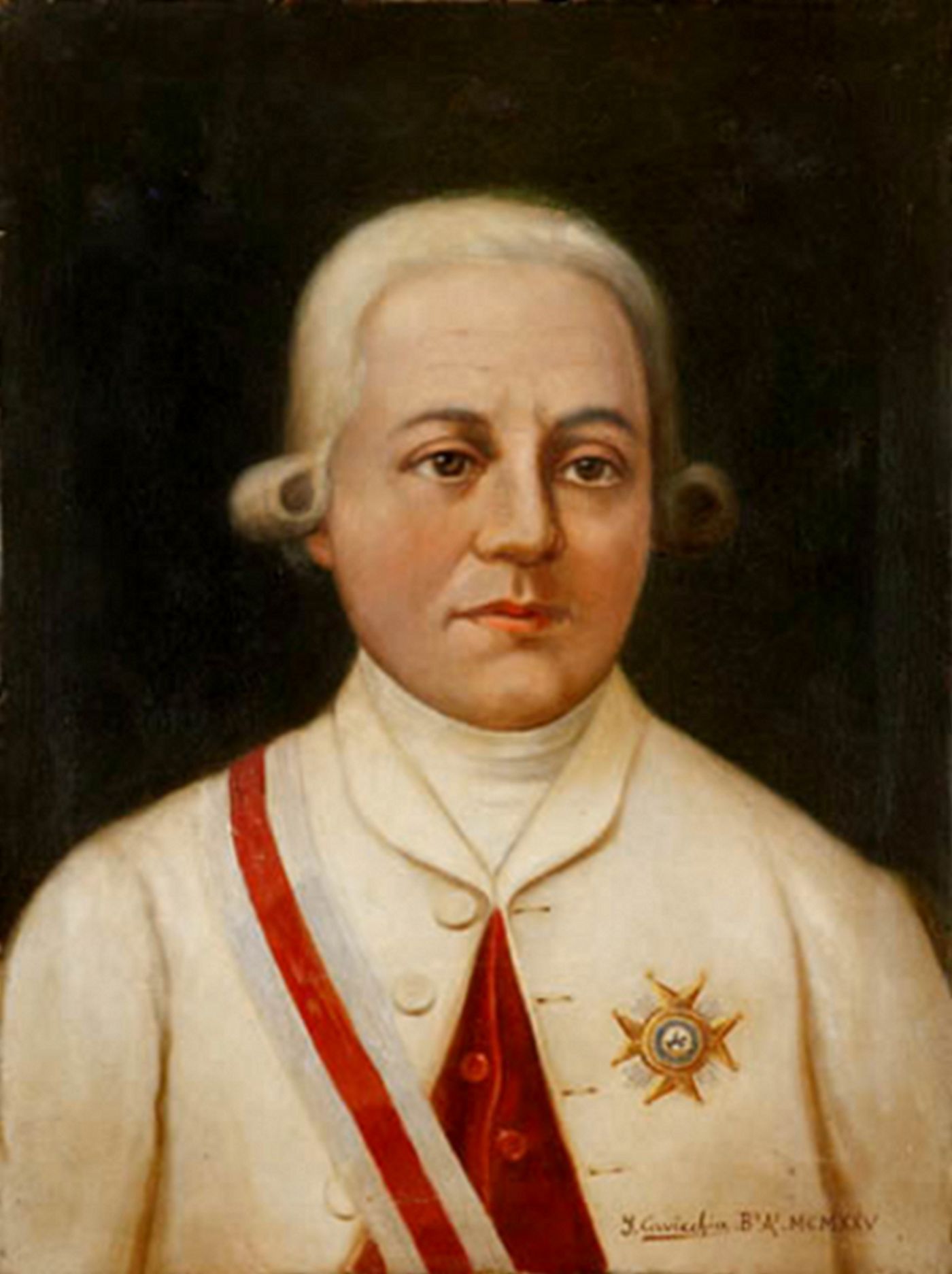
His later reputation was dominated by the British invasions, particularly his departure from Buenos Aires during the first invasion in 1806. That episode produced an enduring image of a viceroy who fled while his capital was occupied. The reality was more complicated. Sobremonte's decision was consistent with a strategy of preserving the viceregal government, removing valuable resources from British reach, and organizing resistance from the interior. What mattered politically, however, was not simply what Sobremonte intended. His departure was interpreted by many inhabitants of Buenos Aires as abandonment, and the failure of his strategy destroyed much of the authority he had accumulated during decades of colonial service.[4]
1806–1807: The British Invasions
The wider European conflict soon reached the Río de la Plata. Spain's alliance with Napoleonic France placed it at war with Britain, whose naval and commercial ambitions made the Spanish colonies tempting targets. In June 1806, a British expedition commanded by William Carr Beresford landed near Buenos Aires. British forces entered the capital on June 27.[5]
Sobremonte withdrew toward Córdoba with the royal treasury and sought to organize resistance outside the occupied city. The decision proved disastrous. British forces obtained much of the treasure, while Sobremonte's absence damaged his standing among the inhabitants of Buenos Aires.
The reconquest that followed was not simply a spontaneous uprising by the city's Creole population. Santiago de Liniers, a French-born officer in Spanish service, organized forces in the Banda Oriental, crossed the Río de la Plata, and combined them with volunteers and local support as he approached Buenos Aires. On August 12, 1806, Beresford surrendered.[6]
The victory transformed the political atmosphere of the city. Liniers emerged as a hero, while Sobremonte's formal title increasingly diverged from the reality of political and military power. More important for the future was the rapid expansion of locally organized militia units. Among the most prominent was the Regimiento de Patricios, whose members selected Cornelio Saavedra as their commander.
Britain returned in 1807 with a substantially larger expedition. After taking Montevideo, British forces again attacked Buenos Aires. This time they confronted a city that had spent months preparing for another assault. Local militia formations fought from streets, rooftops, houses, and fortified positions. The British suffered heavy losses, with thousands killed, wounded, or captured, and their commander, John Whitelocke, agreed to evacuate both Buenos Aires and Montevideo.[7]
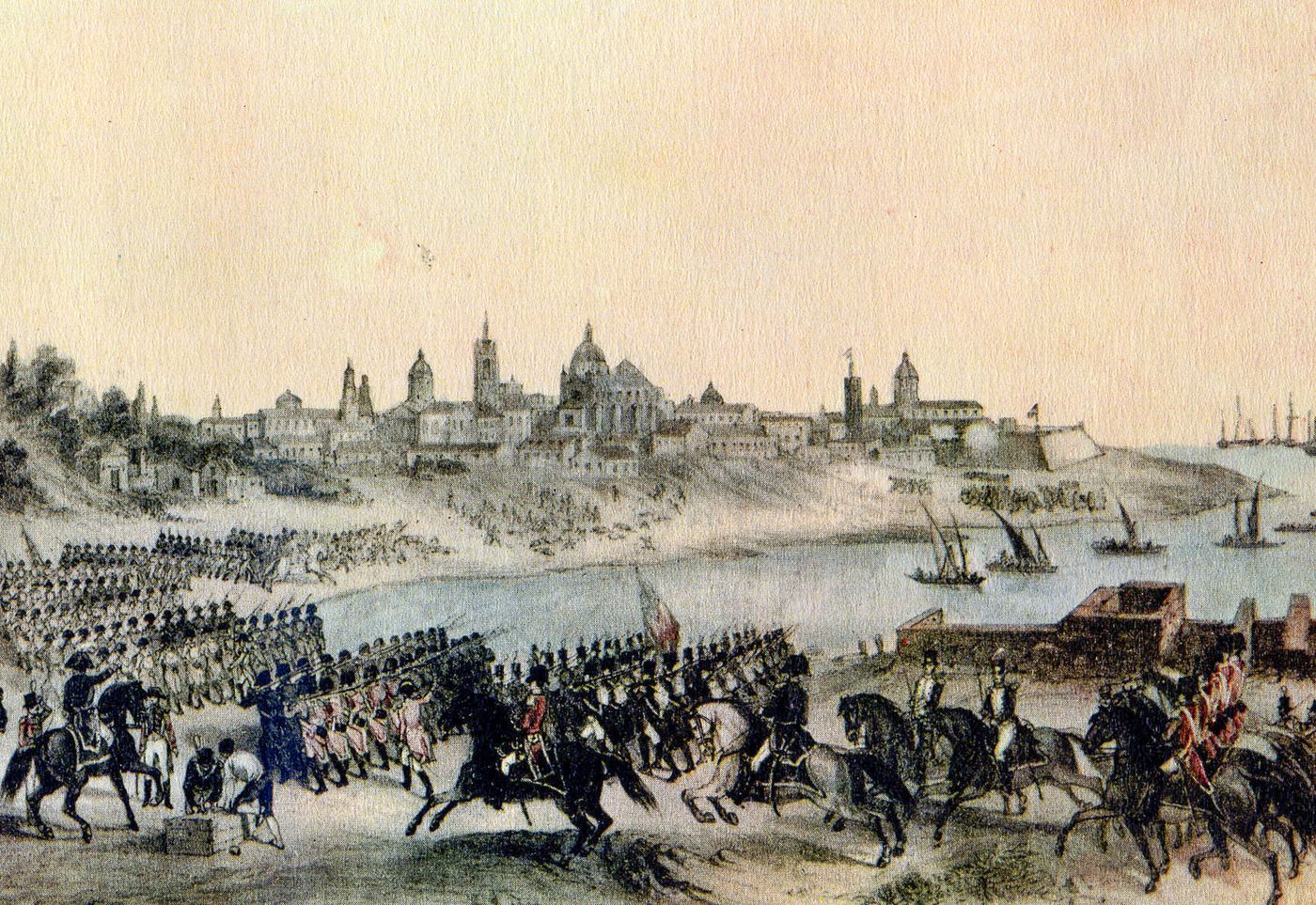
The invasions had several lasting consequences. Sobremonte's authority collapsed, and Liniers eventually succeeded him as viceroy. More broadly, Buenos Aires had experienced something politically unusual: locally raised forces had played the decisive role in defending the capital when the normal structures of imperial defense had failed.
The importance of that experience should not be exaggerated. The militias of 1806 and 1807 were raised to defend a Spanish city, not to create an independent Argentina. Yet their existence changed the distribution of power inside Buenos Aires. Creole officers now commanded armed organizations with substantial political importance. Men such as Saavedra entered the crisis of 1810 with an authority they had not possessed before the British invasions.[8]
The invasions therefore did not make revolution inevitable. They did, however, weaken confidence in viceregal leadership, increase the political importance of locally commanded military forces, and demonstrate that Buenos Aires could survive a major crisis without relying entirely on metropolitan protection.
1808–1809: The Monarchy Collapses
If the British invasions weakened the prestige of Spanish colonial government in Buenos Aires, the events of 1808 created a far more fundamental problem. It created uncertainty over who possessed legitimate authority at all.
Napoleon Bonaparte intervened in a dynastic crisis within the Spanish monarchy and compelled Charles IV and Ferdinand VII to renounce their claims to the throne at Bayonne. Napoleon then installed his brother Joseph Bonaparte as king of Spain. Ferdinand became a prisoner of the French, while resistance to the new regime spread across Spain.[9]
Spanish opposition to Joseph initially organized itself through local and provincial juntas. A Supreme Central Junta subsequently claimed authority on behalf of the absent Ferdinand VII. As French armies advanced, however, the Central Junta was forced south and collapsed in early 1810. Authority was transferred to a Council of Regency established at Cádiz.[10]
For Spanish America, this sequence created an extraordinary constitutional problem. The American territories had not traditionally understood themselves simply as colonies belonging to Spain in the modern sense. They were components of a composite monarchy whose legitimate sovereign was now absent. If the king could not rule, and if the institutions claiming to govern in his name had themselves collapsed or been reconstructed, where did legitimate sovereignty reside?
One answer drew upon the principle sometimes described as the retroversion or reversion of sovereignty, which held that in the absence of the legitimate monarch, political authority reverted to the communities or pueblos that had originally constituted the political order. The implications were potentially revolutionary. If Spanish communities could create juntas in Ferdinand's absence, American communities could ask why they did not possess the same right.[11]
These arguments did not automatically imply independence. Many of those who invoked them continued to profess loyalty to Ferdinand VII. Yet the constitutional crisis created a language through which local governments could challenge officials appointed under the old imperial structure while claiming that they were defending, rather than overthrowing, legitimate monarchy.
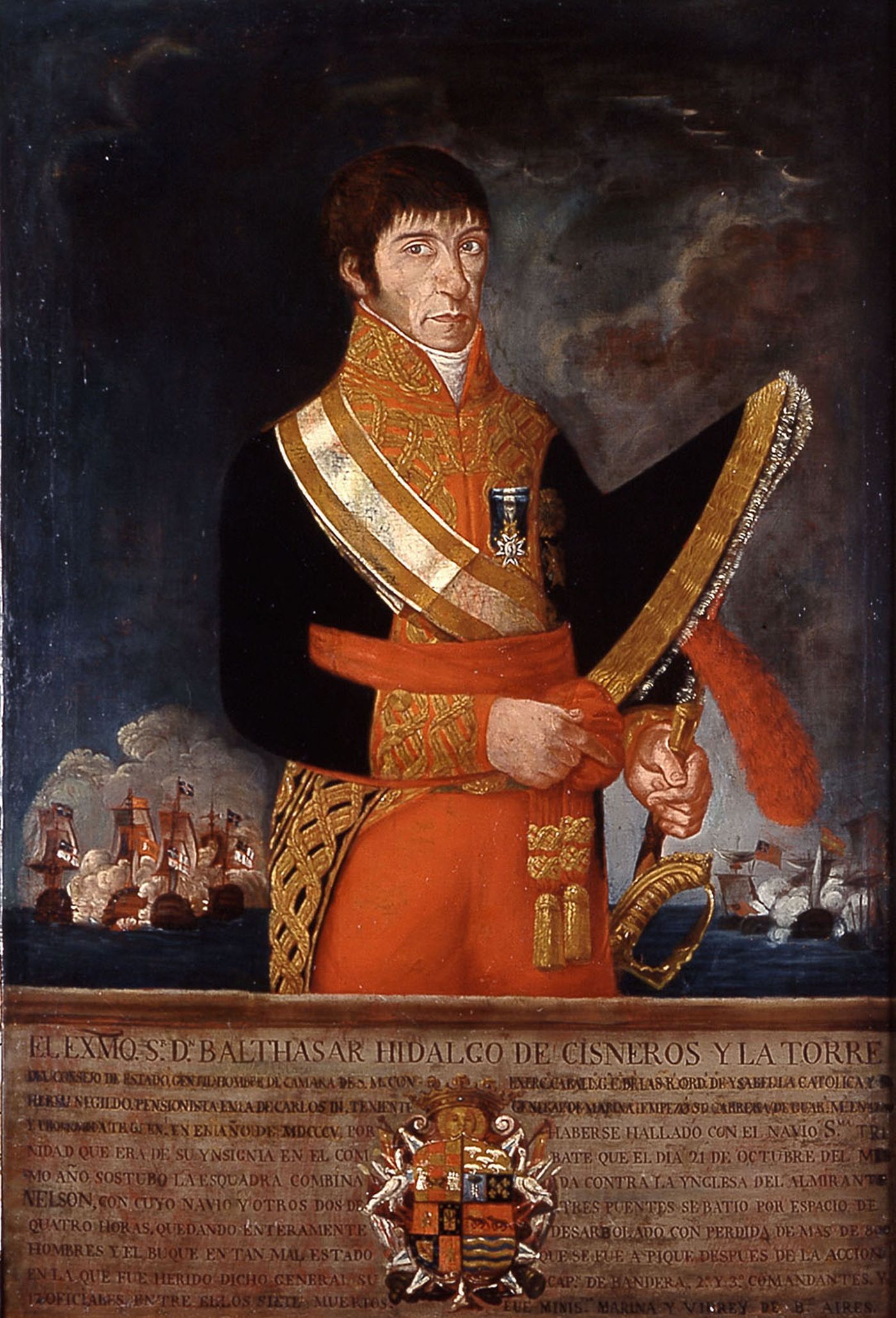
In Buenos Aires, Santiago de Liniers had meanwhile been replaced in 1809 by Baltasar Hidalgo de Cisneros. Cisneros inherited a capital whose locally organized militias had become politically important and whose inhabitants were receiving increasingly alarming reports from Spain.
1810: The May Revolution
News of the collapse of the Supreme Central Junta reached Buenos Aires in May 1810. The implications were immediately political. If the institution under whose authority Cisneros governed no longer existed, could he legitimately remain viceroy?
Prominent political and military figures demanded an open cabildo. On May 22, participants debated the legitimacy of the viceregal government and the location of sovereignty during the king's absence. The resulting political struggle unfolded over several days. On May 25, Cisneros was finally removed and a new governing body, subsequently known as the Primera Junta, assumed power.[12]
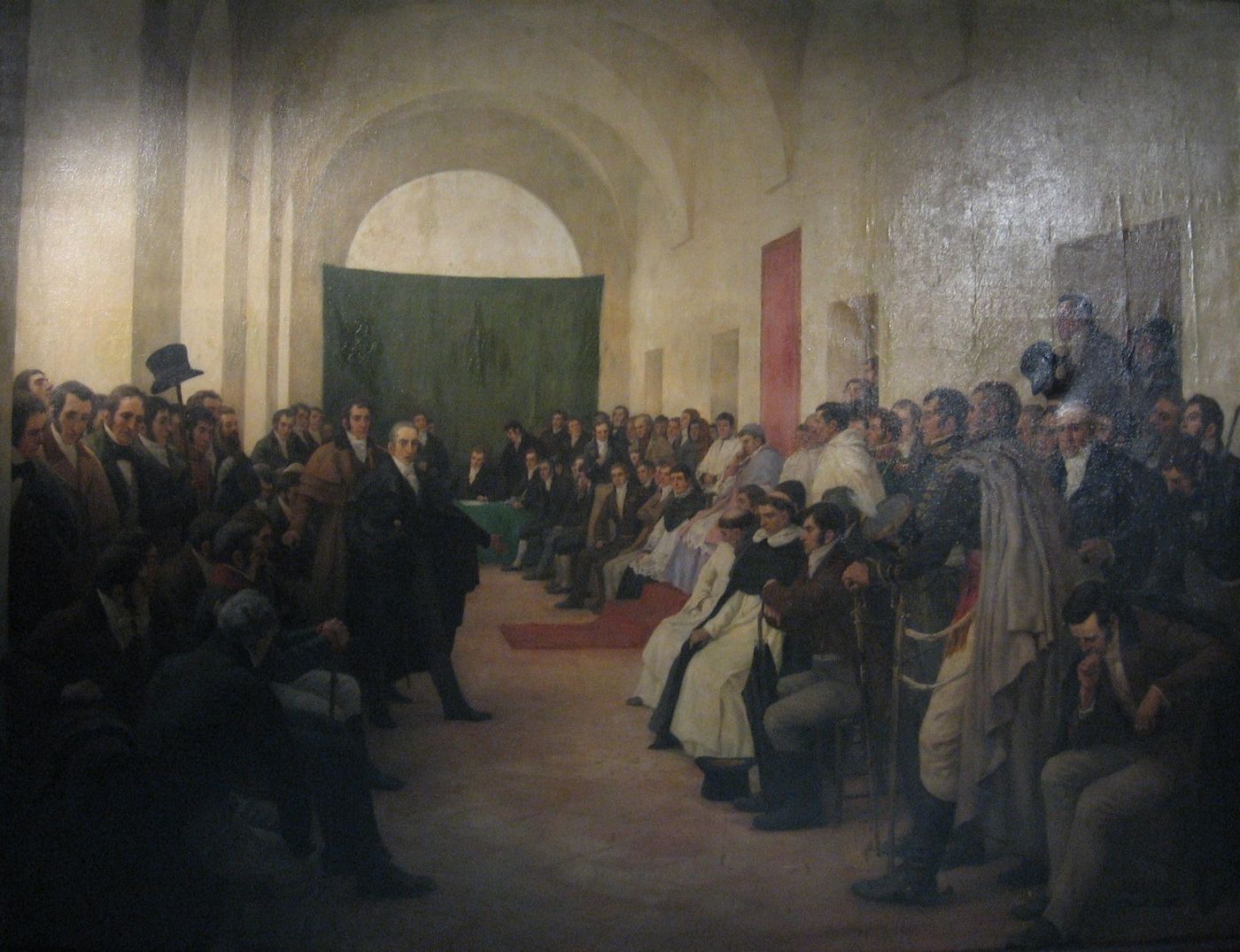
The Junta consisted of nine members. Cornelio Saavedra served as president. Manuel Belgrano, Manuel Alberti, Miguel de Azcuénaga, Juan Larrea, Juan José Castelli, and Domingo Matheu served as voting members, while Mariano Moreno and Juan José Paso became secretaries.
The new government formally acted in the name of Ferdinand VII. Historians have long debated how this language should be understood. It is tempting to dismiss loyalty to Ferdinand as nothing more than a convenient disguise for an independence movement that already knew exactly where it was going. The political reality was less straightforward. Some revolutionaries may indeed have regarded royal legitimacy as temporary cover, but others could envision substantial political autonomy within a reconstructed Spanish monarchy. The goals of the revolution changed as the imperial crisis developed.[13]
Nor did the revolution produce political unity inside Buenos Aires. One of the most important early divisions developed between supporters of Saavedra and Mariano Moreno. Saavedra generally favored a more cautious political course, while Moreno pressed for more rapid institutional transformation and a stronger revolutionary government. As secretary, Moreno also became closely associated with the Gaceta de Buenos Aires, established in June 1810 as an official vehicle for government information and political argument.
The rivalry sharpened late in the year. Following the patriot victory at Suipacha, a banquet honoring Saavedra provoked Moreno's opposition to what he considered excessive personal honors. A more consequential disagreement concerned representatives arriving from the interior. Saavedra supported incorporating those deputies into the existing Junta, while Moreno opposed that arrangement. Their incorporation transformed the government into what became known as the Junta Grande and left Moreno increasingly isolated.[14]
Moreno resigned in December 1810 and was sent on a diplomatic mission to Britain. He died at sea on March 4, 1811, at only thirty-two years of age. His death generated enduring allegations that he had been poisoned. The suspicions became part of the political mythology surrounding Moreno, but the surviving evidence does not establish assassination as historical fact.
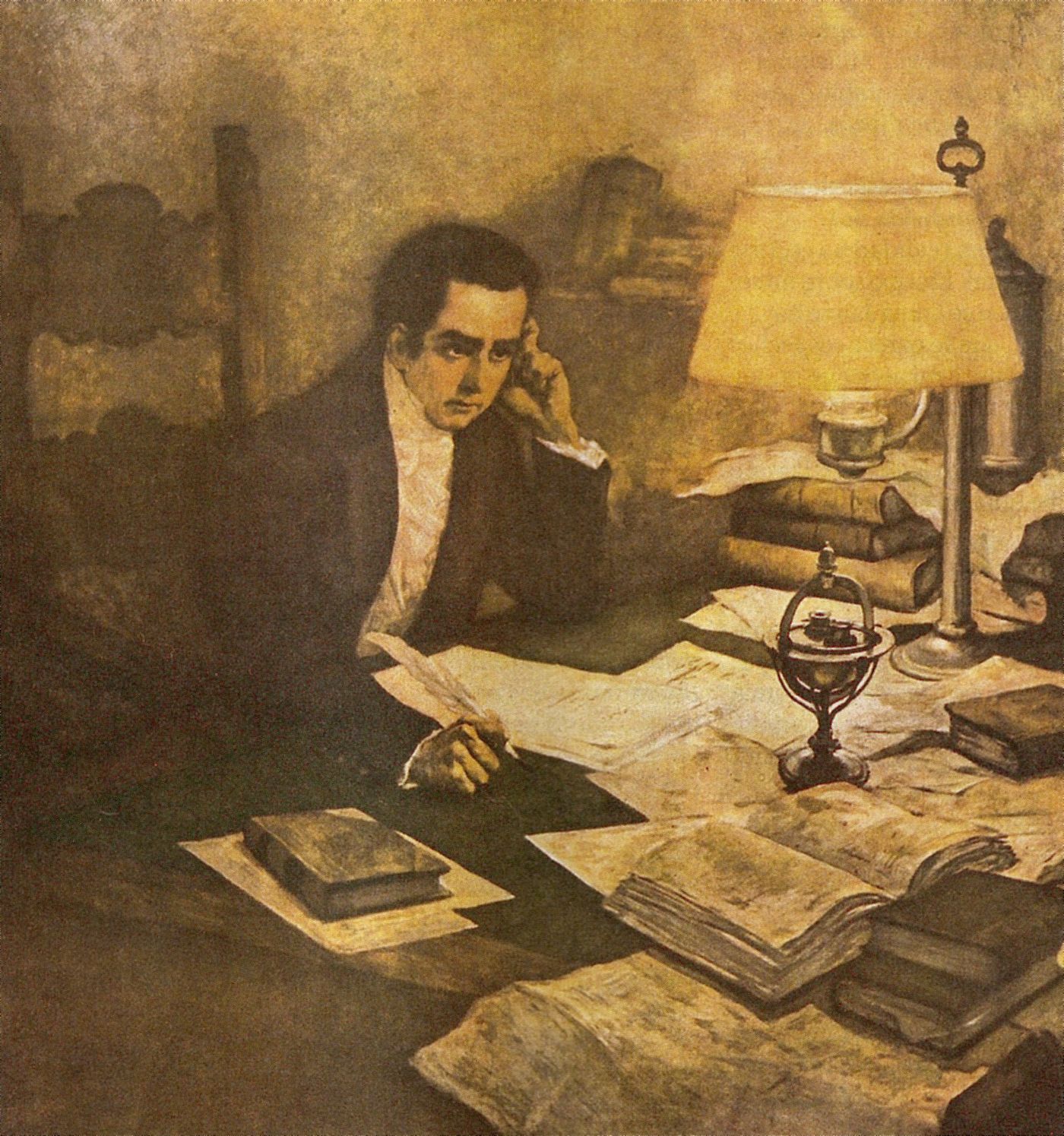
The conflict between Saavedra and Moreno should not be treated as an early version of every political conflict that later divided Argentina. Their dispute nevertheless exposed problems that would persist throughout the revolutionary era: how concentrated revolutionary authority should be, how quickly political institutions should be transformed, and how Buenos Aires should relate to the provinces.
1811: Disaster in Upper Peru
Removing the viceroy in Buenos Aires did not give the new government control over the former viceroyalty. Political authority had to be asserted across a vast region, and several jurisdictions rejected or resisted Buenos Aires's claims.
Upper Peru, roughly corresponding to modern Bolivia, was particularly important. Its cities, population, economic resources, and connection to the silver economy of Potosí made the region strategically significant. Revolutionary forces initially advanced successfully and won a notable victory at Suipacha in November 1810.
Juan José Castelli accompanied the expedition as the Junta's political representative. Revolutionary authority in Upper Peru proved fragile, however. On June 20, 1811, royalist forces under José Manuel de Goyeneche defeated the revolutionary army at Huaqui. The defeat shattered the patriot position in much of Upper Peru and forced a retreat southward.[15]
Huaqui also intensified the political crisis in Buenos Aires. Saavedra traveled north in connection with the effort to reorganize the army, and his opponents took advantage of his absence to remove him from power. The episode demonstrated a recurring feature of the revolutionary period which was that political authority in Buenos Aires and military success in the provinces were inseparable. Defeat at the front could destabilize governments hundreds of miles away.
1812: Belgrano, Jujuy, and Tucumán
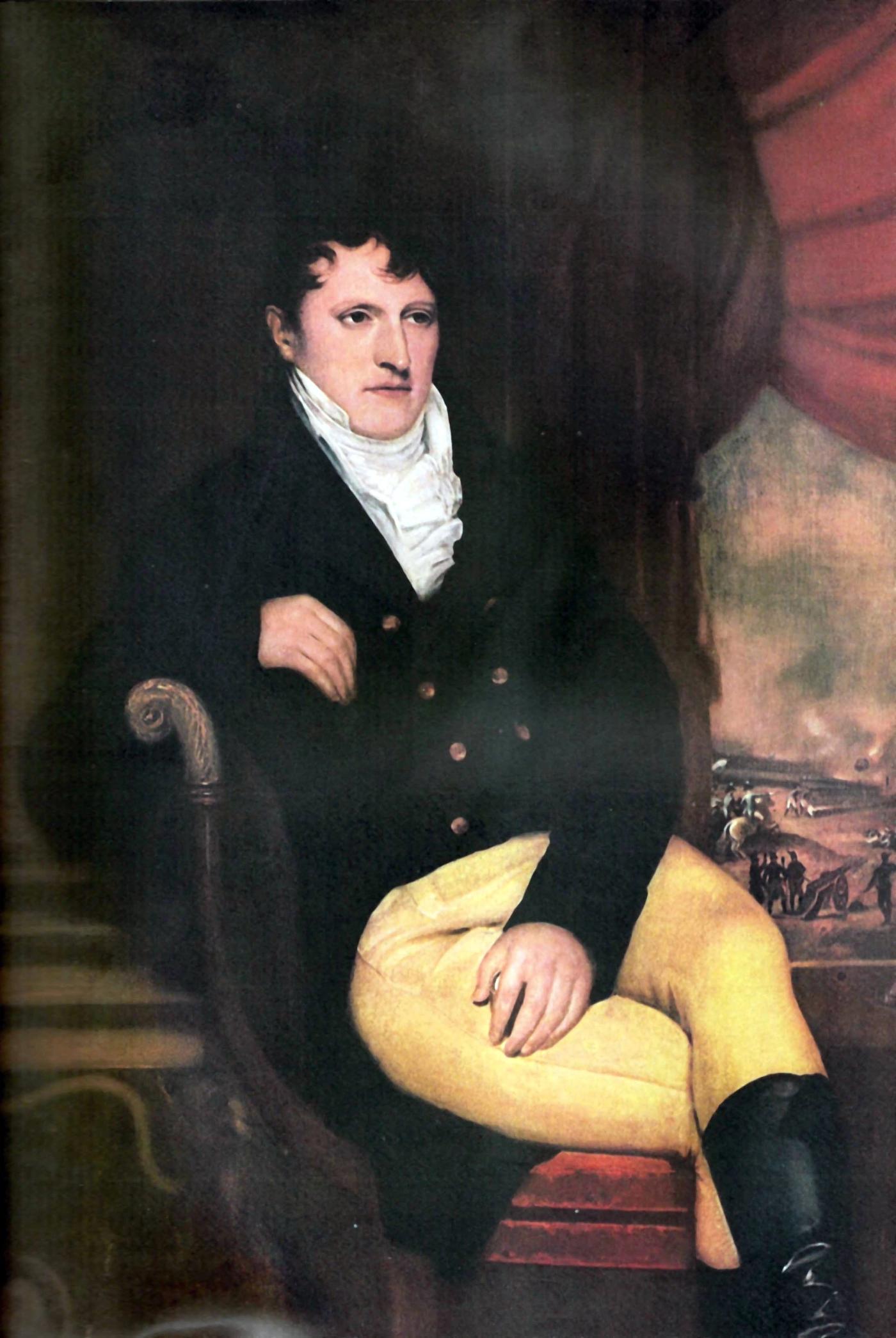
By 1812, executive power had passed to the First Triumvirate. In late March, Manuel Belgrano took command of the Army of the North. Belgrano was not a professional soldier by training. Educated in law and political economy, he had entered military command as the imperial crisis transformed lawyers, merchants, officials, and militia officers into revolutionary leaders.
A few weeks earlier, while stationed near Rosario on the Paraná River, Belgrano created a light-blue-and-white flag for his forces. He raised it on February 27, 1812. The government reacted cautiously, since it had not yet formally abandoned the language of loyalty to Ferdinand VII. The colors survived, however, and became increasingly identified with the patriot cause.[16]
The immediate military situation in the north was dangerous. Royalist forces were advancing from Upper Peru. Belgrano concluded that Jujuy could not be defended effectively and ordered its evacuation. Beginning on August 23, 1812, much of the population withdrew south with the army in the episode remembered as the Jujuy Exodus. Supplies that could aid the advancing royalists were removed or destroyed. The policy imposed a severe burden on the local population but denied the enemy resources as Belgrano retreated.[17]
His rearguard checked royalist pursuit at Las Piedras on September 3. Belgrano had been instructed by the government to continue withdrawing toward Córdoba, but he instead chose to make a stand at Tucumán.
On September 24 and 25, approximately 1,800 men under Belgrano confronted a royalist army under Pío de Tristán often estimated at around 3,000. Precise troop and casualty figures vary among accounts, but the disparity was substantial. Belgrano nevertheless won a strategically important victory.[18]
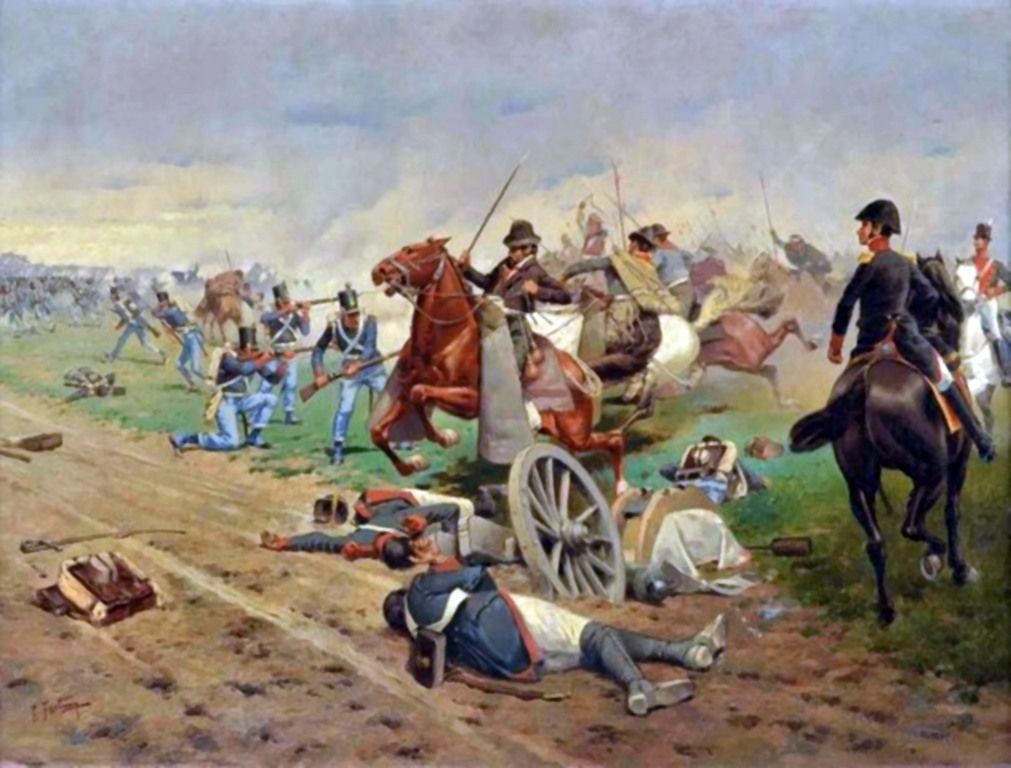
The Battle of Tucumán did more than produce a battlefield success. It halted the immediate royalist advance and preserved the revolutionary position in the northwest at a moment when continued retreat might have surrendered a much larger area. It also strengthened Belgrano's political and military standing despite his decision to disregard instructions from Buenos Aires.
1813: Salta and the Assembly of the Year XIII
Belgrano followed Tucumán with another major victory. On February 20, 1813, his army defeated Tristán at the Battle of Salta. The royalist force surrendered, leaving thousands of prisoners in patriot hands.[19]
The combined victories at Tucumán and Salta temporarily transformed the military situation. They did not, however, permanently secure the northwest. This distinction is important because the later national memory of the victories can obscure how unstable the frontier remained.
Belgrano advanced again into Upper Peru during 1813 but suffered severe defeats at Vilcapugio in October and Ayohuma in November. Royalist forces subsequently returned south. Salta was occupied again, and the region became the scene of prolonged warfare involving regular troops, local militias, rural mobilization, and eventually the forces associated with Martín Miguel de Güemes. The northern frontier remained contested for years rather than becoming permanently secure after Belgrano's victories.[20]
At the same time, the revolution was becoming more radical politically. The Second Triumvirate convened the Assembly of the Year XIII, which began its sessions on January 31, 1813. The Assembly did not formally declare independence and failed to produce a lasting constitution, but its measures signaled a significant movement away from the institutional and symbolic order of the Spanish monarchy.[21]
Among its reforms were measures against titles and signs of nobility, the abolition of several forms of compulsory indigenous labor and tribute, and the adoption or promotion of revolutionary symbols that would later become associated with the Argentine state. The Assembly approved the patriotic march that developed into the national anthem, and its seal became the basis for the national coat of arms.
The Assembly also took an important step against slavery through the policy known as libertad de vientres, or freedom of the womb. Children born to enslaved women after the measure took effect in 1813 were not to inherit permanent slave status from their mothers, although the regulations did not make all such children immediately and unconditionally free adults. The Assembly also acted against the further introduction of enslaved people.[22]
This was gradual emancipation, not abolition. Adults already enslaved generally remained in bondage, and slavery continued for decades. Article 15 of the Constitution of 1853 eventually declared that slavery did not exist in the Argentine Confederation, although Buenos Aires was then politically separate from that Confederation.[23]
The distinction matters because describing the Assembly as having "abolished slavery" obscures both the limitations of the 1813 reforms and the experiences of enslaved people who remained in bondage. Africans and people of African descent were a significant presence in Buenos Aires and participated in the revolutionary period as soldiers, workers, family members, artisans, servants, and political actors. Their history cannot be reduced to a single emancipation decree.[24]
1813–1815: Defeat and a New Military Strategy
The defeats at Vilcapugio and Ayohuma ended Belgrano's second campaign in Upper Peru. In early 1814, José de San Martín assumed command of the Army of the North.
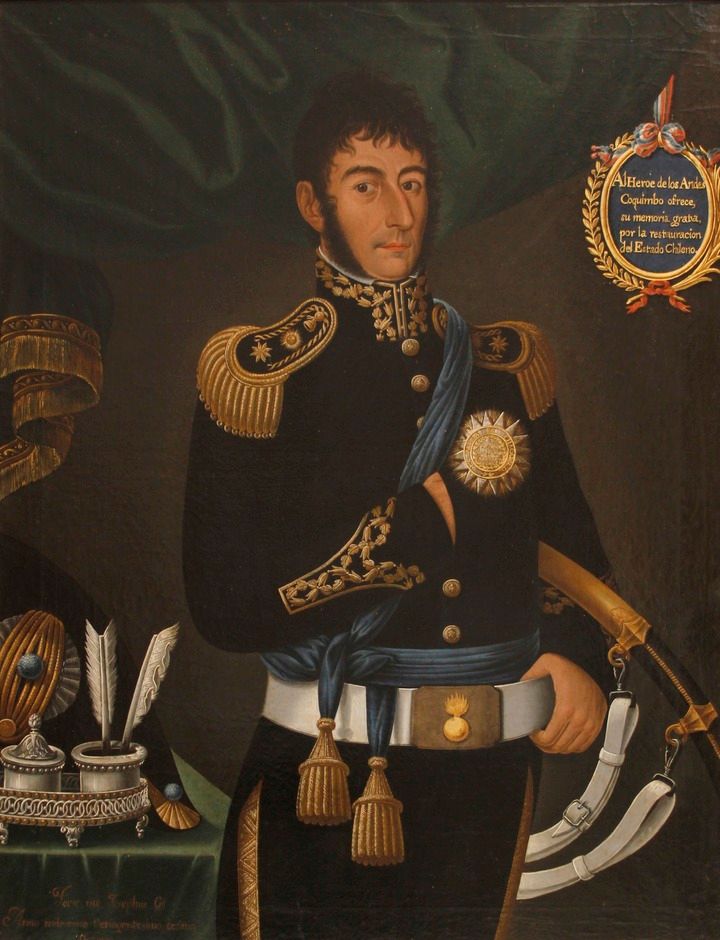
San Martín increasingly doubted that repeated direct advances through Upper Peru offered the best route to defeating royalist power. The geography favored defenders, royalist forces could draw support from Peru, and earlier patriot campaigns had repeatedly advanced only to be driven south again. San Martín eventually embraced a different strategy: build an army in the Cuyo region, cross the Andes, help secure Chile, and then attack the royalist center in Peru from the Pacific.[25]
That plan would be carried out after the period covered here, beginning with the crossing of the Andes in 1817. Its development nevertheless marked an important strategic transition. The northern campaigns had demonstrated that defending the revolution and defeating royalist power were not the same problem.
Belgrano, meanwhile, was sent to Europe with Bernardino Rivadavia on a diplomatic mission. The revolutionary leadership faced an increasingly difficult international situation. Ferdinand VII had returned to the Spanish throne in 1814, Napoleon's empire was collapsing, and the victorious European powers were restoring monarchies. The Río de la Plata revolution therefore had to consider not only how it would govern itself but how it could survive in a world increasingly hostile to revolutionary republicanism.
The mission explored monarchical solutions, including the possibility of securing a European prince for a constitutional throne. No viable arrangement resulted. The experience nevertheless influenced Belgrano's thinking and would become important when he returned to the Río de la Plata.
Political instability continued at home. Carlos María de Alvear became Supreme Director in January 1815 but rapidly lost support. In April, military and political opposition forced him from power. The collapse of his government intensified demands for a broader political settlement.
A new general congress was therefore called to meet not in Buenos Aires but in San Miguel de Tucumán. The location mattered. Suspicion of Buenos Aires had become one of the central problems of the revolutionary project, and convening the Congress in the interior offered at least a symbolic answer to accusations that the capital intended to dominate the provinces.
1816: The Congress of Tucumán
The Congress opened in San Miguel de Tucumán on March 24, 1816. Thirty-three deputies participated in its opening phase, although attendance changed as the sessions continued. The representatives came from Buenos Aires and numerous interior jurisdictions, including several Upper Peruvian provinces associated with the revolutionary cause.[26]
The Congress did not represent all the territories that had belonged to the old viceroyalty. Paraguay had followed its own political course after 1811. The Banda Oriental and provinces aligned with José Artigas's Federal League, including Santa Fe, Entre Ríos, Corrientes, and Misiones, did not participate.
Their absence revealed a fundamental weakness in the revolutionary project. The question was no longer simply whether Spanish authority should survive. The provinces also disagreed over what would replace it. Would sovereignty be concentrated in a central state, or would the provinces retain extensive autonomous authority? Independence from Spain could not answer that question.
The Congress also confronted another issue that is sometimes obscured by later assumptions about Argentina's republican identity: whether the new state should be a republic at all.
Belgrano returned from Europe convinced that the restoration of monarchy had changed the international environment. In a secret session on July 6, 1816, he recommended a constitutional monarchy headed by a descendant of the Inca dynasty.[27]
The proposal can sound extraordinary from a modern perspective, but it addressed several practical political problems. A constitutional monarch might make the new state more acceptable to monarchical Europe. An Inca dynasty could also provide a specifically American source of legitimacy and potentially strengthen support among the populations of Upper Peru and the Andes.
The proposal attracted serious interest and support, including from San Martín and a number of political figures in the interior. It also encountered strong opposition, especially among critics in Buenos Aires. The plan was never implemented.
Its failure should not be interpreted as proof that republican government had already become inevitable. Monarchical constitutional projects remained part of Río de la Plata politics after 1816. The form of the future state was still genuinely unresolved.[28]
July 9, 1816: Independence
Three days after Belgrano presented his monarchical proposal, the Congress addressed the question that would define its historical reputation.
On July 9, 1816, with Francisco Narciso de Laprida presiding, twenty-nine deputies signed the Act of Independence. Juan José Paso served as secretary. The Congress declared the United Provinces free and independent of Ferdinand VII, his successors, and the Spanish metropolis.[29]
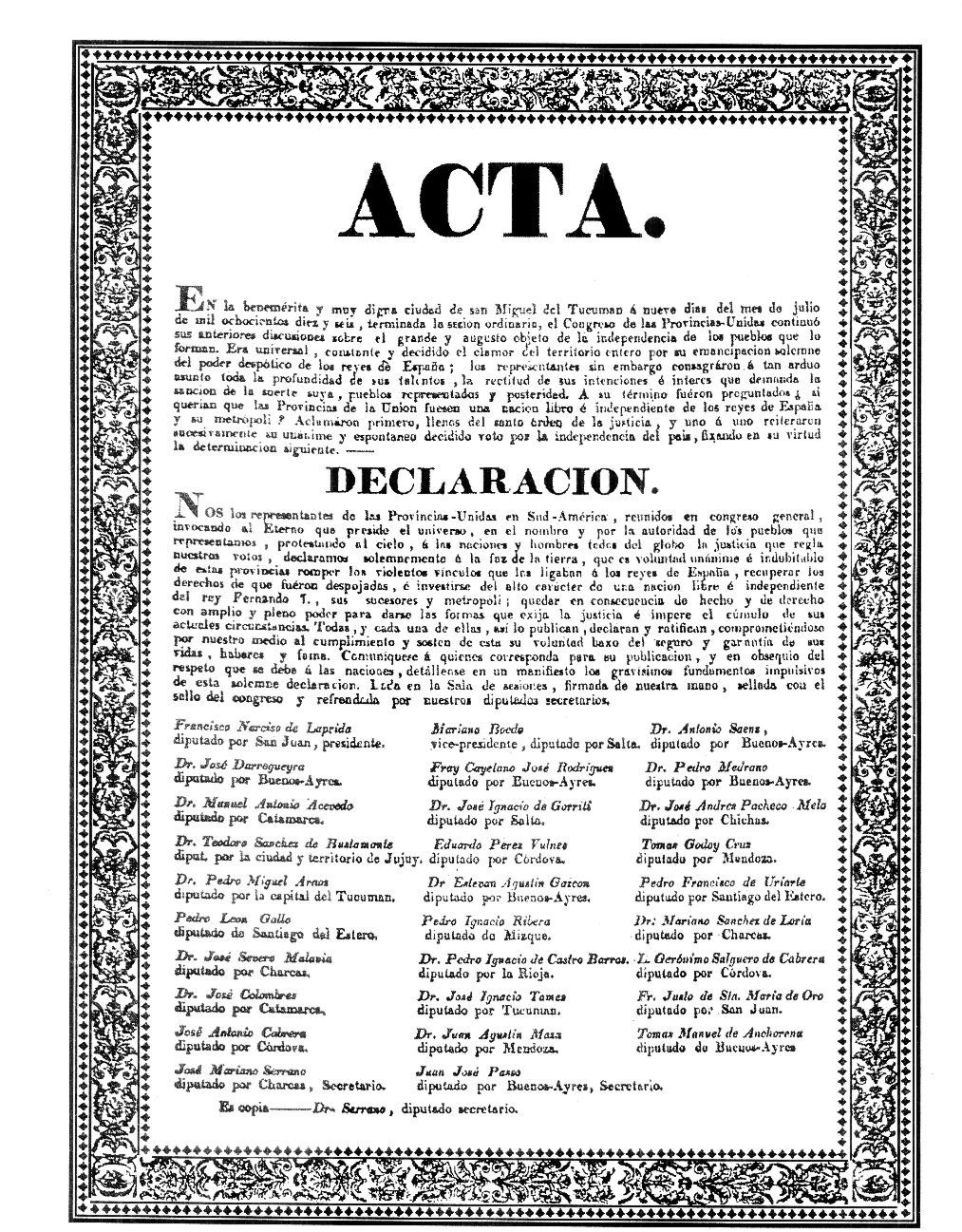
The political name used in the declaration is significant. The Congress acted in the name of the "United Provinces in South America," not a territorially settled nation-state identical to modern Argentina. Several signatories represented jurisdictions in Upper Peru that would eventually become part of Bolivia. Other territories once included within the Viceroyalty of the Río de la Plata had already moved toward separate political futures.
Independence therefore preceded the final definition of the nation.
The wording of the declaration also changed shortly afterward. On July 19, the Congress added language renouncing not only the Spanish monarchy but "all other foreign domination." The addition closed a potential ambiguity at a moment when various monarchical and diplomatic schemes were circulating and made the assertion of sovereignty more explicit.[30]
The Congress then addressed symbols appropriate to the newly independent political order. On July 20, it formally recognized the celeste-and-white flag already associated with Belgrano and the patriot armies. In 1818, after the Congress had moved to Buenos Aires, the sun emblem was incorporated into the bandera mayor, the ceremonial state flag.[31] Independence was now formally declared, but almost every difficult constitutional question remained.
The Congress eventually relocated to Buenos Aires and produced a constitution in 1819. Its centralizing features encountered intense provincial opposition. The conflict culminated in the collapse of the central Directorial government in 1820, and the Congress itself dissolved.
A durable federal constitution would not be adopted until 1853. Even then, Buenos Aires initially remained outside the Argentine Confederation. The Pact of San José de Flores in 1859 established terms for its reincorporation after the Battle of Cepeda, but political conflict continued. The Battle of Pavón in 1861 was followed by the consolidation of a national political order under Bartolomé Mitre.
International recognition was similarly protracted. Spain signed a Treaty of Recognition, Peace and Friendship with the Argentine Confederation on July 9, 1859. After the political reunification involving Buenos Aires, a revised treaty was signed in Madrid on September 21, 1863, preserving Spain's recognition while modifying the earlier settlement.[32]
The state that emerged from the revolutionary crisis therefore took decades to acquire the constitutional and territorial form retrospectively associated with Argentina.
Conclusion
Viewed from 1804, the declaration made at Tucumán only twelve years later would have been extraordinarily difficult to predict.
Sobremonte entered the viceroyalty as an experienced servant of the Spanish monarchy. His political destruction during the British invasions exposed the fragility of viceregal authority in a moment of military crisis. At the same time, the mobilization of local militias gave men in Buenos Aires practical experience in organizing armed power outside the normal structures of imperial defense.
Yet the decisive rupture came from Europe. Napoleon's intervention in Spain destroyed the accepted center of monarchical authority and forced both Spaniards and Spanish Americans to confront a question the imperial system had not been designed to answer: who governed when the legitimate king could not?
The May Revolution supplied one answer. Sovereignty could be exercised locally until legitimate authority was restored. But once that principle had been asserted, it became extraordinarily difficult to contain. If Buenos Aires could challenge a viceroy in the name of political sovereignty, the provinces could challenge Buenos Aires on similar grounds. The revolution against imperial authority therefore contained within it a second dispute over the distribution of authority among the former viceroyalty's component territories.
The rivalry between Saavedra and Moreno exposed some of these tensions without mapping neatly onto the centralist and federalist conflicts that followed. Military campaigns made them still more urgent. Huaqui demonstrated how quickly revolutionary expansion could collapse. Tucumán and Salta preserved the northern position but did not secure it permanently. Vilcapugio and Ayohuma showed the limits of repeated invasions of Upper Peru and contributed to the strategic reorientation eventually associated with San Martín.
Political institutions evolved just as unevenly. The Assembly of the Year XIII dismantled parts of the colonial legal and symbolic order and took important steps toward gradual emancipation, yet it did not declare independence or establish an accepted constitutional structure. The fall of Alvear in 1815 again demonstrated the weakness of central authority and helped produce the Congress at Tucumán.
On July 9, 1816, that Congress finally converted six years of revolutionary government into a formal declaration of sovereign independence. Even then, the destination remained uncertain. The boundaries of the future state were unsettled. The provinces disagreed over the location of political sovereignty. Constitutional monarchy remained a serious possibility. A stable national constitution lay decades in the future.
The significance of 1816 therefore lies not in the sudden birth of a fully formed Argentine nation. It lies in the definitive rejection of Spanish sovereignty by a revolutionary political order whose own territorial and constitutional identity was still being created.
Seen in that light, the twelve years from Sobremonte to Tucumán tell a larger story than a simple progression from colony to nation. They reveal how military crisis weakened imperial authority, how a European dynastic catastrophe opened a constitutional revolution in America, and how the destruction of one political order forced the inhabitants of the Río de la Plata to confront the much harder problem of constructing another.
Places in this Story
The places this story moves through, in order — follow them on the interactive map →
- Buenos Aires, Argentina 1804
Rafael de Sobremonte succeeded to the viceregal government following the death of Viceroy Joaquín del Pino. Buenos Aires was the political and administrative center of the Viceroyalty of the Río de la Plata.
- Buenos Aires, Argentina June 27, 1806
British forces under William Carr Beresford entered and occupied Buenos Aires. The invasion severely damaged Sobremonte's authority and accelerated the political importance of locally organized militias.
- Cabildo of Buenos Aires, Argentina May 25, 1810
The May Revolution culminated in the removal of Viceroy Baltasar Hidalgo de Cisneros and the establishment of the Primera Junta. The new government initially claimed to act in the name of Ferdinand VII.
- Suipacha, Bolivia November 7, 1810
Revolutionary forces defeated royalist troops at the Battle of Suipacha, an important early patriot victory in Upper Peru. The success temporarily expanded revolutionary control northward.
- Huaqui, Bolivia June 20, 1811
Royalist forces defeated the revolutionary army at Huaqui, effectively shattering the patriot position in much of Upper Peru. The defeat forced the revolutionary forces to retreat south.
- Jujuy, Argentina August 23, 1812
Belgrano began the Jujuy Exodus, ordering much of the population to withdraw ahead of the advancing royalist army. Supplies that could aid the enemy were removed or destroyed during the retreat.
- San Miguel de Tucumán, Argentina September 24–25, 1812
Belgrano made a stand against the advancing royalists at the Battle of Tucumán and won a strategically important victory. The battle halted the royalist advance and preserved the revolutionary position in the northwest.
- Salta, Argentina February 20, 1813
Belgrano defeated the royalist army at the Battle of Salta. The victory temporarily pushed royalist forces out of much of the northwest, although the frontier remained contested.
- Mendoza, Argentina 1814
San Martín, named governor-intendant of Cuyo in 1814, makes Mendoza the base where he builds the Army of the Andes for the crossing into Chile.
- Casa Histórica, San Miguel de Tucumán, Argentina July 9, 1816
The Congress of Tucumán declared the United Provinces independent of Ferdinand VII, his successors, and the Spanish metropolis. The declaration formally ended Spanish sovereignty, although the future territorial and constitutional form of Argentina remained unsettled.
Frequently Asked Questions
When did Argentina declare independence from Spain?
Argentina's independence was formally declared on July 9, 1816, when the Congress of Tucumán adopted the Act of Independence. The declaration stated that the United Provinces in South America were free and independent of Ferdinand VII, his successors, and the Spanish metropolis.
What was the May Revolution of 1810?
The May Revolution of 1810 was the political upheaval in Buenos Aires that removed Viceroy Baltasar Hidalgo de Cisneros and established the Primera Junta on May 25. It followed the collapse of the Spanish Supreme Central Junta and the resulting crisis over who possessed legitimate political authority while Ferdinand VII was held by Napoleon.
Why did the British invasions of Buenos Aires matter to Argentine independence?
The British invasions of 1806 and 1807 did not directly cause Argentine independence, but they weakened the authority of the Spanish viceregal government and demonstrated the importance of locally organized militias. Creole officers such as Cornelio Saavedra gained military and political influence, helping reshape the balance of power in Buenos Aires before the revolution of 1810.
What was the Viceroyalty of the Río de la Plata?
The Viceroyalty of the Río de la Plata was a Spanish colonial jurisdiction created in 1776, with Buenos Aires as its capital. It encompassed territories corresponding broadly to parts of present-day Argentina, Uruguay, Paraguay, and Bolivia, although these territories followed different political paths during and after the revolutionary period.
What happened at the Congress of Tucumán in 1816?
The Congress of Tucumán opened on March 24, 1816, and brought together representatives from Buenos Aires and several interior jurisdictions. Its most consequential act came on July 9, when the deputies formally declared the United Provinces independent of Spanish rule.
Did Argentina become a republic when it declared independence in 1816?
Not necessarily. Although the independence declaration ended Spanish sovereignty, the political form of the new state remained unsettled. In 1816, constitutional monarchy was still being seriously considered, including Manuel Belgrano's proposal for a constitutional monarchy headed by a descendant of the Inca dynasty.
How did Argentina become independent from Spain?
Argentine independence developed through a series of interconnected crises rather than a single event. The British invasions weakened viceregal authority, Napoleon's intervention in Spain created a crisis of royal legitimacy, the May Revolution established revolutionary government in 1810, military campaigns defended the revolution against royalist forces, and the Congress of Tucumán formally declared independence on July 9, 1816.
Bibliography
Argentina. Archivo General de la Nación. Bicentenario de la Asamblea General Constituyente de 1813. Buenos Aires: Archivo General de la Nación.
Argentina. Biblioteca Nacional de Maestros. Materials on the Assembly of the Year XIII, libertad de vientres, Manuel Belgrano, and the Congress of Tucumán. Buenos Aires: Ministerio de Educación.
Argentina. Constitución de la Confederación Argentina. 1853.
Argentina. Ministerio de Relaciones Exteriores, Comercio Internacional y Culto. "Tratado de Reconocimiento, Paz y Amistad firmado por la Confederación Argentina con S.M. la Reina de España." Madrid, July 9, 1859.
Argentina. Ministerio de Relaciones Exteriores, Comercio Internacional y Culto. "Tratado de Reconocimiento, Paz y Amistad entre Su Majestad la Reina de las Españas y S.E. el Presidente de la República Argentina." Madrid, September 21, 1863.
Argentina. "Bandera Nacional." Government historical materials on the Argentine national flag.
Congreso de Tucumán. Acta de la Declaración de la Independencia. San Miguel de Tucumán, July 9, 1816.
Congreso de Tucumán. Proceedings concerning the amendment to the declaration renouncing "all other foreign domination." July 19, 1816.
Adelman, Jeremy. Sovereignty and Revolution in the Iberian Atlantic. Princeton, NJ: Princeton University Press, 2006.
Andrews, George Reid. The Afro-Argentines of Buenos Aires, 1800–1900. Madison: University of Wisconsin Press, 1980.
Di Meglio, Gabriel. ¡Viva el bajo pueblo! La plebe urbana de Buenos Aires y la política entre la Revolución de Mayo y el rosismo. Buenos Aires: Prometeo Libros, 2006.
Dib, Matías. "El virrey Sobre Monte ante el dominio británico de Buenos Aires y la apropiación del tesoro real." Temas de Historia Argentina y Americana 26, no. 1 (2018).
Gallo, Klaus. "Entre Viena y Tucumán: Las paradojas de la emancipación Argentina 1814–1820." Anuario del Instituto de Historia Argentina 16, no. 1 (2016).
Goldman, Noemí, ed. Revolución, república, confederación (1806–1852). Nueva Historia Argentina, vol. 3. Buenos Aires: Sudamericana, 1998.
Halperín Donghi, Tulio. Politics, Economics, and Society in Argentina in the Revolutionary Period. Cambridge: Cambridge University Press, 1975.
Lynch, John. Spanish Colonial Administration, 1782–1810: The Intendant System in the Viceroyalty of the Río de la Plata. London: Athlone Press, 1958.
Lynch, John. The Spanish American Revolutions, 1808–1826. 2nd ed. New York: W. W. Norton, 1986.
Mata, Sara Emilia. "Liderazgos militares y estrategias de poder: Salta 1814–1821." Anuario del Instituto de Historia Argentina 20, no. 2 (2020): e121.
Rock, David. Argentina, 1516–1987: From Spanish Colonization to Alfonsín. Berkeley: University of California Press, 1987.
Shumway, Nicolás. The Invention of Argentina. Berkeley: University of California Press, 1991.
Ternavasio, Marcela. Gobernar la revolución: Poderes en disputa en el Río de la Plata, 1810–1816. Buenos Aires: Siglo XXI, 2007.
University of Kent. "1812: The Battle of Tucumán." War and Nation: Identity and the Process of State-Building in South America (1800–1840).
Citations
- Nicolás Shumway, The Invention of Argentina (Berkeley: University of California Press, 1991); Jeremy Adelman, Sovereignty and Revolution in the Iberian Atlantic (Princeton, NJ: Princeton University Press, 2006). Both are useful for avoiding a retrospective assumption that the political community and territorial state later called Argentina already existed in finished form during the revolutionary period. ↑
- John Lynch, Spanish Colonial Administration, 1782–1810: The Intendant System in the Viceroyalty of the Río de la Plata (London: Athlone Press, 1958); David Rock, Argentina, 1516–1987: From Spanish Colonization to Alfonsín (Berkeley: University of California Press, 1987). ↑
- Lynch, Spanish Colonial Administration. Sobremonte's long administrative career in the Río de la Plata is important because his later reputation has often been reduced to his conduct during the British invasions. ↑
- For a reassessment of Sobremonte's conduct during the British occupation, including the royal treasury and the political consequences of his withdrawal, see Matías Dib, "El virrey Sobre Monte ante el dominio británico de Buenos Aires y la apropiación del tesoro real," Temas de Historia Argentina y Americana 26, no. 1 (2018). ↑
- John Lynch, The Spanish American Revolutions, 1808–1826, 2nd ed. (New York: W. W. Norton, 1986); Dib, "El virrey Sobre Monte." ↑
- Lynch, The Spanish American Revolutions. The contribution of forces organized from the Banda Oriental is important because accounts centered exclusively on Buenos Aires can make the reconquest appear to have been entirely a spontaneous local uprising. ↑
- Lynch, The Spanish American Revolutions; Noemí Goldman, ed., Revolución, república, confederación (1806–1852), Nueva Historia Argentina, vol. 3 (Buenos Aires: Sudamericana, 1998). Exact British casualty and prisoner totals vary among accounts. ↑
- Gabriel Di Meglio, ¡Viva el bajo pueblo! La plebe urbana de Buenos Aires y la política entre la Revolución de Mayo y el rosismo (Buenos Aires: Prometeo Libros, 2006); Tulio Halperín Donghi, Politics, Economics, and Society in Argentina in the Revolutionary Period (Cambridge: Cambridge University Press, 1975). ↑
- Lynch, The Spanish American Revolutions; Adelman, Sovereignty and Revolution in the Iberian Atlantic. ↑
- Adelman, Sovereignty and Revolution in the Iberian Atlantic; Lynch, The Spanish American Revolutions. ↑
- For the crisis of sovereignty and the legal and political problems created by the collapse of legitimate royal authority, see Adelman, Sovereignty and Revolution in the Iberian Atlantic; Marcela Ternavasio, Gobernar la revolución: Poderes en disputa en el Río de la Plata, 1810–1816 (Buenos Aires: Siglo XXI, 2007). ↑
- Ternavasio, Gobernar la revolución; Goldman, Revolución, república, confederación. ↑
- Ternavasio, Gobernar la revolución; Halperín Donghi, Politics, Economics, and Society in Argentina in the Revolutionary Period. The political meaning of continued loyalty to Ferdinand VII should not be reduced to a single motive shared by all participants. ↑
- Goldman, Revolución, república, confederación; Ternavasio, Gobernar la revolución. The Saavedra-Moreno division involved personal and political rivalries as well as disagreements about the organization and direction of the revolutionary government. ↑
- Lynch, The Spanish American Revolutions; Halperín Donghi, Politics, Economics, and Society in Argentina in the Revolutionary Period. ↑
- The Argentine government's official history of the national flag dates Belgrano's creation of the flag to February 27, 1812, its congressional recognition to July 20, 1816, and the incorporation of the sun into the bandera mayor to February 25, 1818. ↑
- Goldman, Revolución, república, confederación; Lynch, The Spanish American Revolutions. ↑
- University of Kent, "1812: The Battle of Tucumán," War and Nation: Identity and the Process of State-Building in South America (1800–1840). Estimates of the forces engaged vary, so the figures given here are intentionally approximate. ↑
- Lynch, The Spanish American Revolutions. Contemporary and later accounts give differing casualty totals, which is why the text avoids an unnecessarily precise figure for the dead. ↑
- Sara Emilia Mata, "Liderazgos militares y estrategias de poder: Salta 1814–1821," Anuario del Instituto de Historia Argentina 20, no. 2 (2020): e121. Mata notes that after the defeats at Vilcapugio and Ayohuma, the Royal Army of Peru occupied Salta again and that the region remained a theater of sustained warfare through the following years. ↑
- Archivo General de la Nación, Bicentenario de la Asamblea General Constituyente de 1813; Biblioteca Nacional de Maestros, materials on the Assembly of the Year XIII. The Assembly began its sessions on January 31, 1813, and enacted substantial reforms without achieving either a declaration of independence or a durable constitution. ↑
- Archivo General de la Nación, records of the Asamblea General Constituyente, including the February 1813 decree establishing libertad de vientres; Biblioteca Nacional de Maestros, "La Asamblea del Año 13 y la Declaración de la Libertad de Vientres." The archival catalog identifies the Assembly's decree establishing freedom of the womb among the surviving records of February 1813. ↑
- Constitución de la Confederación Argentina (1853), art. 15. Because Buenos Aires remained outside the Confederation at the time, the constitutional chronology should not be described as instantaneous abolition throughout all territory that later formed the Argentine Republic. ↑
- George Reid Andrews, The Afro-Argentines of Buenos Aires, 1800–1900 (Madison: University of Wisconsin Press, 1980); Di Meglio, ¡Viva el bajo pueblo!. ↑
- Lynch, The Spanish American Revolutions; Halperín Donghi, Politics, Economics, and Society in Argentina in the Revolutionary Period. ↑
- Government of Argentina, historical materials on the Congress of Tucumán. Official accounts identify March 24, 1816, as the opening of the Congress and thirty-three deputies as participating at the beginning of its sessions. ↑
- Biblioteca Nacional de Maestros, materials concerning Manuel Belgrano's monarchical proposal and the secret session of the Congress of Tucumán, July 6, 1816. ↑
- Klaus Gallo, "Entre Viena y Tucumán: Las paradojas de la emancipación Argentina 1814–1820," Anuario del Instituto de Historia Argentina 16, no. 1 (2016). The persistence of monarchical projects after the declaration of independence cautions against interpreting the rejection of Belgrano's Inca proposal as an immediate and definitive triumph of republicanism. ↑
- Congreso de Tucumán, Acta de la Declaración de la Independencia, July 9, 1816. Official Argentine historical materials identify twenty-nine deputies as signatories of the act. ↑
- Congreso de Tucumán, session of July 19, 1816. The additional formula renouncing "all other foreign domination" was incorporated ten days after the original declaration. ↑
- Government of Argentina, "Bandera Nacional." Congress recognized the celeste-and-white flag on July 20, 1816. On February 25, 1818, with Congress sitting in Buenos Aires, the sun was incorporated into the bandera mayor. ↑
- Argentina, Ministerio de Relaciones Exteriores, Comercio Internacional y Culto, treaty records, "Tratado de Reconocimiento, Paz y Amistad firmado por la Confederación Argentina con S.M. la Reina de España," Madrid, July 9, 1859; and "Tratado de Reconocimiento, Paz y Amistad entre Su Majestad la Reina de las Españas y S.E. el Presidente de la República Argentina," Madrid, September 21, 1863. The 1863 instrument explicitly modified the 1859 treaty following the reincorporation of Buenos Aires. ↑