On September 20, 1784, George Washington sat down to dinner in the house of David Reed, a settler on Millers Run in the hill country southwest of Pittsburgh, and listened to a group of farmers explain why they would not leave his land. Washington claimed 2,813 acres along the run. The families living on it had cleared fields, raised log houses and barns, and put up fences, and they had come together, as Washington put it in his diary, "as a society of Ceceders," members of the strict Presbyterian sect known as the Seceders. That morning he had ridden from farm to farm with a local guide, recording each man's meadow, plowland, and buildings. After dinner the settlers asked whether he would sell. He offered the whole tract at twenty-five shillings an acre, payable over three years with interest, or leases of 999 years at a fixed rent. They conferred, asked for longer credit without interest, and were refused. Then Washington called on them one at a time, and each man answered that he would stand suit and abide by the outcome of the law.[1] A tradition in the Reed family, printed nearly a century later in a county history, holds that Washington rose, lifted a red silk handkerchief by one corner, and told them he would have the land as surely as he held the cloth. The story may be true, but it rests on local memory rather than on anything Washington wrote.[2]
The scene was a small one, yet the confrontation on Millers Run captured the problem that would pull Washington out of retirement again and again over the next twelve years. Beyond the Appalachians lay an enormous country filling with independent-minded people who owed little to the distant governments of the seaboard and who could not be counted on to respect titles, taxes, or treaties made in the East. Whether that country would remain part of the United States, and whether the United States would remain a single nation at all, was an open question in 1784. Washington spent the following years trying to answer it, first through a canal company, then through a new constitution, then as the head of a government that had never existed before. He took up each task while insisting that he wanted only to farm, and the reluctance was real. This is the story of those twelve years.
Under His Own Vine and Fig Tree
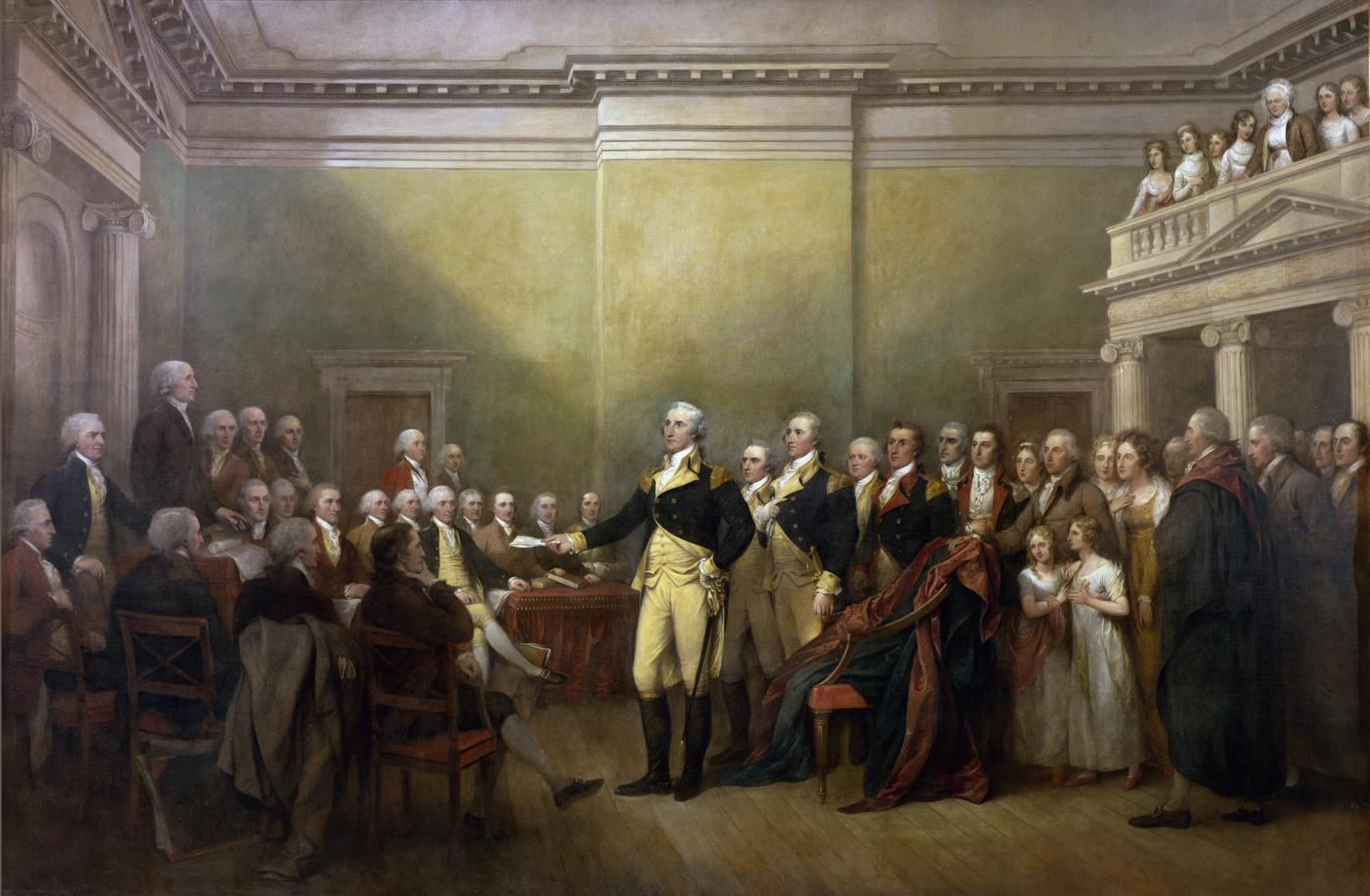
Washington had resigned his commission before Congress at Annapolis in December 1783 and reached Mount Vernon on Christmas Eve. On February 1, 1784, he wrote to the Marquis de Lafayette that he had at last become "a private citizen on the banks of the Potomac," living "under the shadow of my own Vine & my own Fig tree," free "from the bustle of a camp & the busy scenes of public life."[3] Eight years of absence had left his affairs in disorder, and nowhere more than in the West, where he had invested heavily before the war.
The worst of those investments was a partnership with Gilbert Simpson, who had run a tract called Washington's Bottom on the Youghiogheny River throughout the war. In February 1784 Washington demanded a full accounting, adding pointedly that "the world does not scruple to say that you have been much more attentive to your own interest than to mine."[4] In September he went to see for himself. He left Mount Vernon on the first of the month with his old friend and army physician Dr. James Craik, three servants, and six horses. Besides settling with Simpson, he meant, as he wrote in his diary, to learn "the nearest and best communication between the Eastern & Western Waters" and to promote the navigation of the Potomac.[5]
At the village of Bath, Washington watched the inventor James Rumsey demonstrate a model boat designed to work its way upstream against the current, and he came away convinced it could be of the greatest use in inland navigation. At Washington's Bottom he found his mill without water and in bad repair, and the crowd at his auction, he suspected, had gathered more out of curiosity than to buy. Travelers he met in the mountains warned of Indian hostility along the Ohio, officers from Fort Pitt confirmed the reports, and he gave up his plan to visit his lands on the Great Kanawha.[6] Washington reached home before sundown on October 4. By his own reckoning he had ridden 680 miles on the same horses since the first of September.[7]
The River and the Union
Six days after his return, Washington wrote a long letter to Benjamin Harrison, the governor of Virginia. He argued that the Potomac and James rivers offered the shortest route between the Atlantic and the Great Lakes, and he enclosed a table of distances showing that Virginia's tidewater lay closer to Detroit than either the St. Lawrence or the Hudson at Albany. But the core of the letter was political. With Spain on the western settlers' right and Britain on their left, Washington wrote, either power might hold out "lures for their trade and alliance." Speaking from his own recent observation, he warned that the western settlers "stand as it were upon a pivot, the touch of a feather, would turn them any way." The remedy was to "apply the cement of interest, to bind all parts of the Union together by indissoluble bonds." If Virginia would "smooth the road" to the West, trade would follow, and loyalty would follow trade.[8]
In late December 1784 Washington spent nearly a week at Annapolis with commissioners from Maryland, working out a bill to charter a private Potomac navigation company, and he reported the result to Madison.[9] Maryland and Virginia passed the bill within days of each other. Early in January, Benjamin Harrison, by then Speaker of the Virginia House of Delegates, informed him that the Virginia assembly had voted him fifty shares in the new company and a hundred in a companion James River company. Washington agonized over the gift, fearing it would compromise his reputation for disinterested service, and he eventually asked that the act, insofar as it was meant for his personal benefit, not take effect.[10] When the subscribers met at Alexandria on May 17, 1785, they chose a president and four directors, and the presidency, Washington wrote, "fell upon me."[11]
The company's success depended on cooperation between Virginia and Maryland, which had long quarreled over rights on the river they shared. In March 1785 commissioners from the two states gathered to settle their differences, and on March 25 Washington noted the arrival at Mount Vernon of the Maryland commissioners Daniel of St. Thomas Jenifer, Thomas Stone, and Samuel Chase.[12] George Mason, one of the Virginia commissioners, later wrote that the delegates had "adjourn'd to Mount Vernon, and finished the Business there" at the general's particular invitation.[13] The compact's success suggested that broader commercial problems might be handled the same way. That idea led to a meeting of the states at Annapolis in September 1786, which, though poorly attended, called for a general convention in Philadelphia the following May. A plan to improve a river had become, almost by accident, a plan to improve the Union.
Thirteen Sovereignties
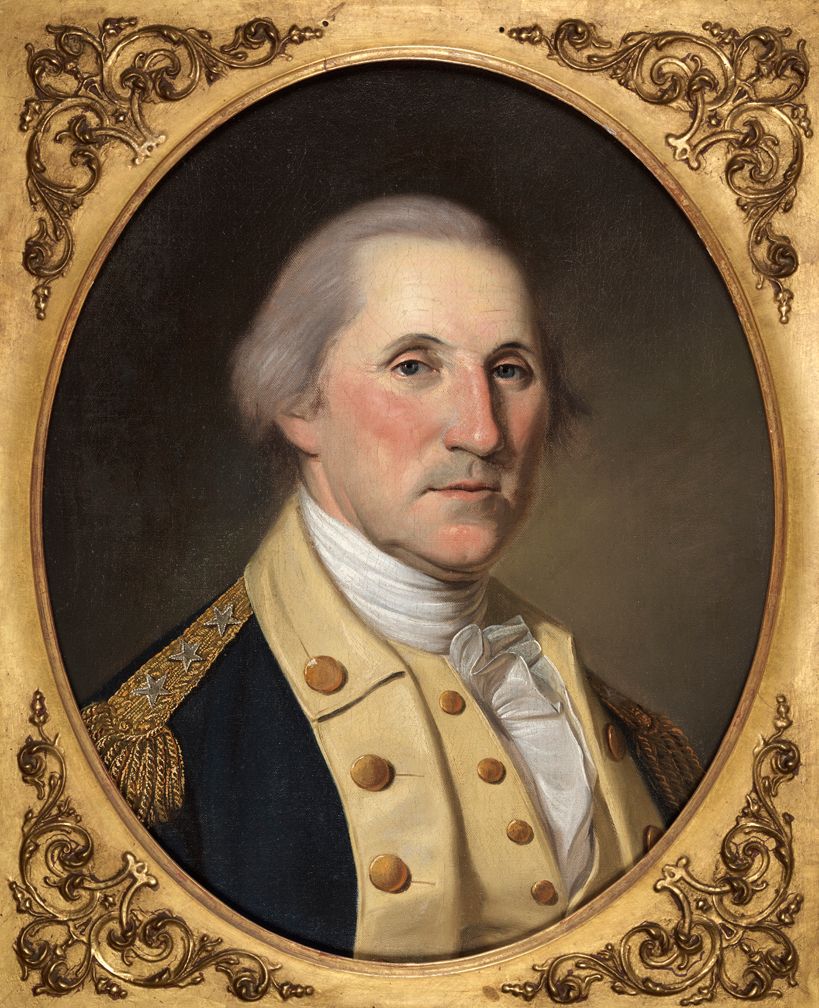
By the autumn of 1786 Washington's concern about the Union had turned to alarm. Armed farmers in western Massachusetts, burdened by debts and taxes, were closing county courts, and the Confederation Congress had neither money nor troops to respond. On November 5 Washington wrote to James Madison that "thirteen sovereignties pulling against each other, and all tugging at the foederal head will soon bring ruin on the whole." The alternative, he wrote, was "a liberal, and energetic Constitution, well guarded, & closely watched."[14]
Yet when Virginia named him a delegate to the Philadelphia convention, Washington hesitated for months. Part of his reason was the Society of the Cincinnati, a fraternal order of former Continental officers of which he was president. The society had scheduled its general meeting for Philadelphia in May 1787. In late October 1786 Washington had sent a circular letter telling the state societies that he would not attend and did not wish to be reelected. To appear in Philadelphia "at the same moment on another occasion," he explained to a Virginia legislator, would be improper toward the former officers of the army.[15] Only at the end of March 1787 did he tell Governor Edmund Randolph that he had resolved to go if his health permitted. His friends, he wrote, seemed to wish his attendance, and he now planned to reach Philadelphia early enough to explain himself in person to the Cincinnati.[16] When the delegates assembled in May, they elected him president of the convention without opposition. Washington said little during the long summer of debate. After signing the Constitution on September 17, 1787, he returned to Mount Vernon to follow the ratification struggle by letter.

A Culprit Going to the Place of Execution
When the presidential electors voted in early 1789, every one of them chose Washington. Before the official notice arrived, he wrote to Henry Knox on April 1 that his journey to the seat of government would be "accompanied with feelings not unlike those of a culprit who is going to the place of his execution." He was unwilling, he said, "in the evening of a life nearly consumed in public cares, to quit a peaceful abode for an Ocean of difficulties."[17] On April 14 Charles Thomson, the longtime secretary of Congress, arrived at Mount Vernon with formal word of the election. Two days later Washington left. "About ten o'clock," he wrote, "I bade adieu to Mount Vernon, to private life, and to domestic felicity; and with a mind oppressed with more anxious and painful sensations than I have words to express, set out for New York." The original diary for these weeks is lost; the entry survives because John Marshall printed it in his biography of Washington.[18]
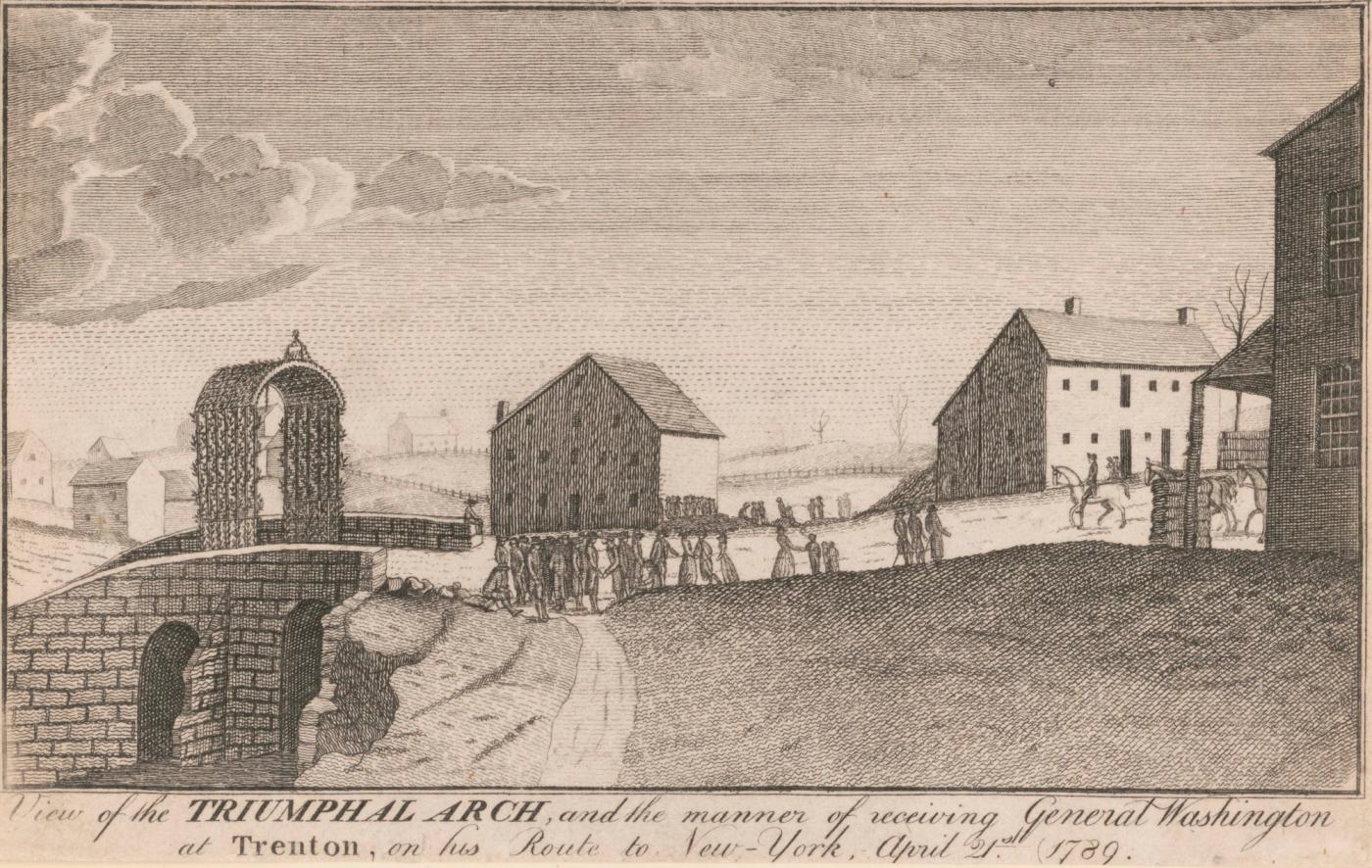
When Washington crossed to Manhattan on April 23, he recorded boats carrying singers and musicians, decorated ships, the roar of cannon, and the cheers of the crowd.[19] On April 30 he took the oath of office from Robert R. Livingston, the chancellor of New York, on the balcony of Federal Hall at Wall Street, then went inside to address Congress. He described "the preservation of the sacred fire of liberty and the destiny of the republican model of government" as staked on "the experiment entrusted to the hands of the American people."[20]
Building a Government

In New York, Washington assembled a small group of department heads, later called the cabinet: Thomas Jefferson at State, Alexander Hamilton at the Treasury, Henry Knox at War, and Edmund Randolph as attorney general. Hamilton proposed that the federal government assume the war debts of the states, a plan that favored states with large unpaid debts and alarmed those, like Virginia, that had paid much of theirs. The House rejected it in the spring of 1790, and the quarrel became entangled with an equally bitter dispute over where to locate the permanent capital.
According to Jefferson, he met Hamilton in the street near the president's door in June 1790, his look "sombre, haggard, and dejected beyond description," and invited him and Madison to dine the next day. There, Jefferson recalled, Madison, while still refusing to vote for assumption, agreed to stop fighting it, two congressmen from Potomac districts agreed to change their votes in its favor, and Hamilton undertook to find the Pennsylvania votes needed to place the capital on the Potomac, with Philadelphia serving as a temporary seat. Jefferson probably wrote his account about two years after the event, and no one else who attended left a detailed version, so how much the evening actually decided has long been disputed.[21] Whatever the dinner's role, Congress approved both measures that summer. The permanent seat of government would rise on the river Washington had been promoting since 1784.
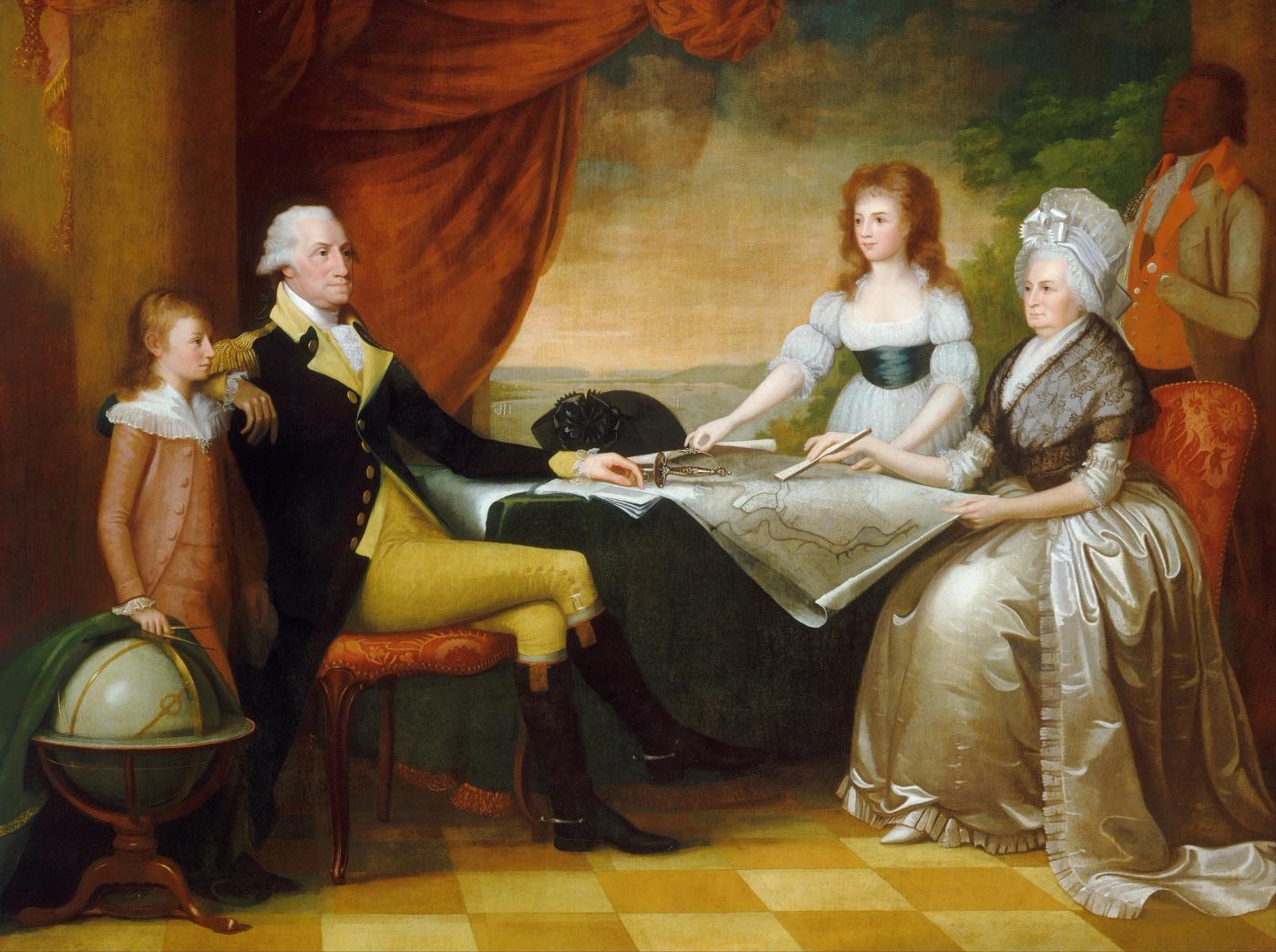
The next quarrel exposed a deeper division. Early in 1791 Congress passed Hamilton's bill to charter a Bank of the United States. Washington asked first Randolph and then Jefferson whether it was constitutional. Both argued that the Constitution gave Congress no power to create such a corporation. Washington sent their opinions to Hamilton and asked him to answer them, and Hamilton replied with an extended defense of the government's implied powers.[22] Washington signed the bill on February 25, 1791. The episode hardened the split between Hamilton and Jefferson into something resembling rival parties, each with its own newspaper. In August 1792 Washington wrote to Jefferson lamenting that "internal dissentions should be harrowing & tearing our vitals" while the country was surrounded by enemies, and pleading for "liberal allowances, mutual forbearances, and temporising yieldings on all sides." He sent Hamilton a similar appeal.[23] Neither man yielded. Washington had hoped to retire after one term, and in May 1792 he asked Madison to help him prepare a farewell to the public; four years later he would still be working from the draft Madison produced.[24] Leaders on both sides urged him to stay on, and in December the electors again chose him unanimously. Jefferson left the cabinet at the end of 1793.
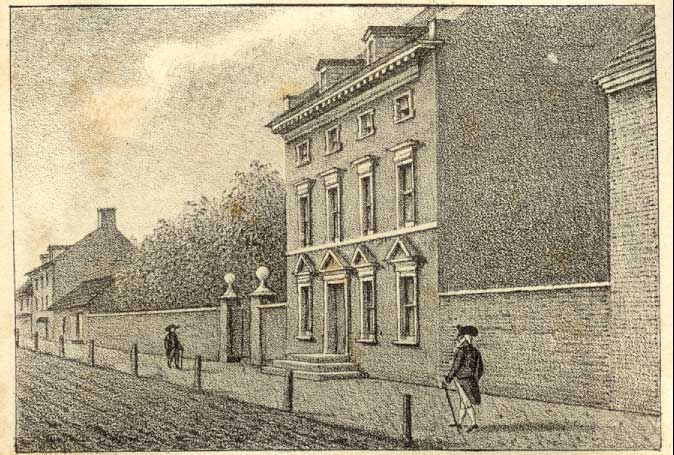
The government's move to Philadelphia in 1790 raised a problem that Washington handled with notably less candor than he brought to public affairs. Pennsylvania's gradual abolition law of 1780 allowed nonresidents to hold enslaved people in the state for no more than six months, though it exempted the household servants of delegates to Congress.[25] In April 1791 Tobias Lear, Washington's secretary, warned him that the enslaved people in the presidential household might claim their freedom under the law. Washington replied from Richmond that if they had to be sent back to Virginia, it should be done "under pretext that may deceive both them and the Public." Thereafter the household moved enslaved workers out of the state before the six months elapsed.[26]
War in the West and War in Europe

The western country that worried Washington in 1784 had become a battlefield by 1790. A confederacy of Native nations north of the Ohio River resisted American settlement, and an expedition under General Josiah Harmar was turned back that year. In 1791 Washington sent Arthur St. Clair, the governor of the Northwest Territory, with a larger force. Shortly before sunrise on November 4, 1791, warriors attacked St. Clair's camp. By the time the survivors broke out, St. Clair reported, more than half the army had fallen, with the heaviest losses among the officers, and the retreat had become "in fact a flight."[27] Washington's reaction is the subject of a frequently repeated account. Richard Rush, writing in 1857 from what Tobias Lear had told him, described an officer arriving with dispatches while Washington was at dinner. By this account Washington stepped out to receive them, returned without a word, and spent the evening with his guests. Only after the company had gone and Martha had retired did he break into fury in front of Lear, recalling that when he said goodbye to St. Clair he had warned him, "BEWARE OF A SURPRISE."[28] The story reached print more than sixty years after the event, and unofficial reports of the defeat had already been circulating in Philadelphia before the dispatches arrived, so the scene may be more dramatic in the retelling than it was in fact.[29] The following March the House of Representatives appointed a committee to inquire into the disaster, the first congressional investigation of the executive branch.[30]
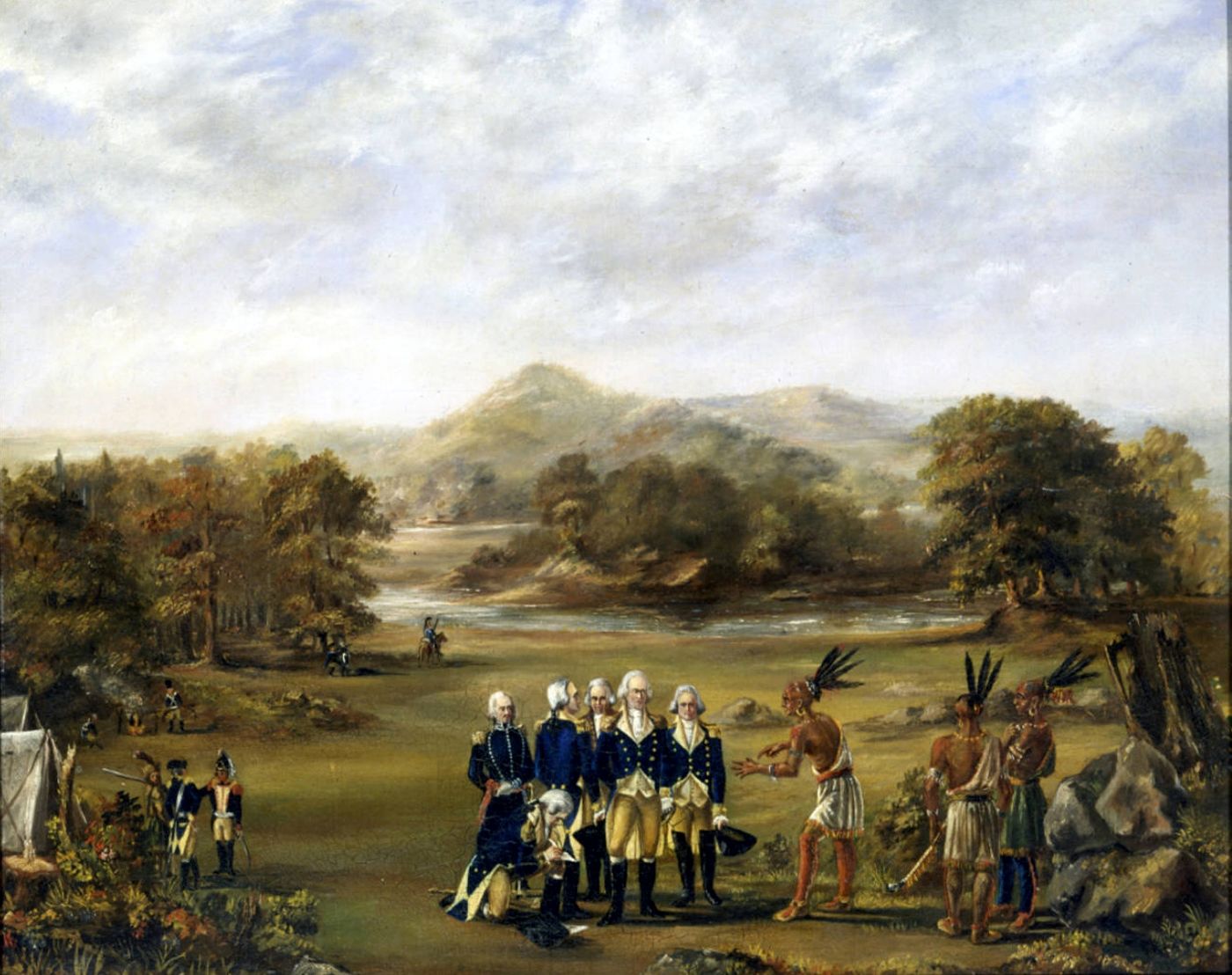
Washington and Knox rebuilt the army and placed it under Anthony Wayne. On August 20, 1794, Wayne defeated the confederacy at Fallen Timbers, near present-day Toledo. The following August, at Greenville, the defeated nations ceded most of what is now Ohio to the United States.
Meanwhile, war in Europe threatened to draw the country in from the other direction. Revolutionary France and Britain went to war early in 1793, and many Americans felt bound to France by the alliance of 1778. On April 22, 1793, Washington issued a proclamation, which never used the word neutrality, declaring that the United States would pursue "a conduct friendly and impartial toward the belligerent powers" and warning Americans against taking part in the hostilities.[31] The new French minister, Edmond Genet, ignored it, commissioning privateers from American ports and appealing to the public over the government's head, and by the end of the summer the administration had asked France to recall him.
Whiskey and the Treaty
In 1791 Congress had passed Hamilton's excise tax on domestically distilled spirits. Farmers in western Pennsylvania regarded the tax as an injustice imposed from the East, and many refused to pay. On July 16 and 17, 1794, armed men attacked the house of John Neville, the regional inspector of the excise. On the second day, by the account in Washington's proclamation, their numbers had grown to "several hundreds."[32] Before they left, Washington later told Congress, they "destroyed by fire his buildings and whatsoever they contained."[33] Ten years earlier Neville's son Presley had ridden with Washington to see the land on Millers Run.[34] The country Washington had seen balanced on a pivot was now in open defiance of federal law.
Washington responded with force. He issued a proclamation ordering the insurgents to disperse and warning all persons against "aiding abetting or comforting" them, and he called out the militia of several states, a force he put at fifteen thousand men.[35] At the end of September he rode west himself. The episode is often described as the only time a sitting president has led an army in the field, though no fighting took place. At Fort Cumberland in Maryland he counted "upwards of 3200 Men." From Bedford, with Congress soon to meet, he committed the troops to Henry Lee, the governor of Virginia, and returned to Philadelphia.[36] By the time the militia reached the Pittsburgh area, the rebels had scattered. Two men, John Mitchell and Philip Vigol, were later condemned to death for treason, and in November 1795 Washington pardoned them both, choosing, as he told Congress a month later, "to extend forgiveness."[37]

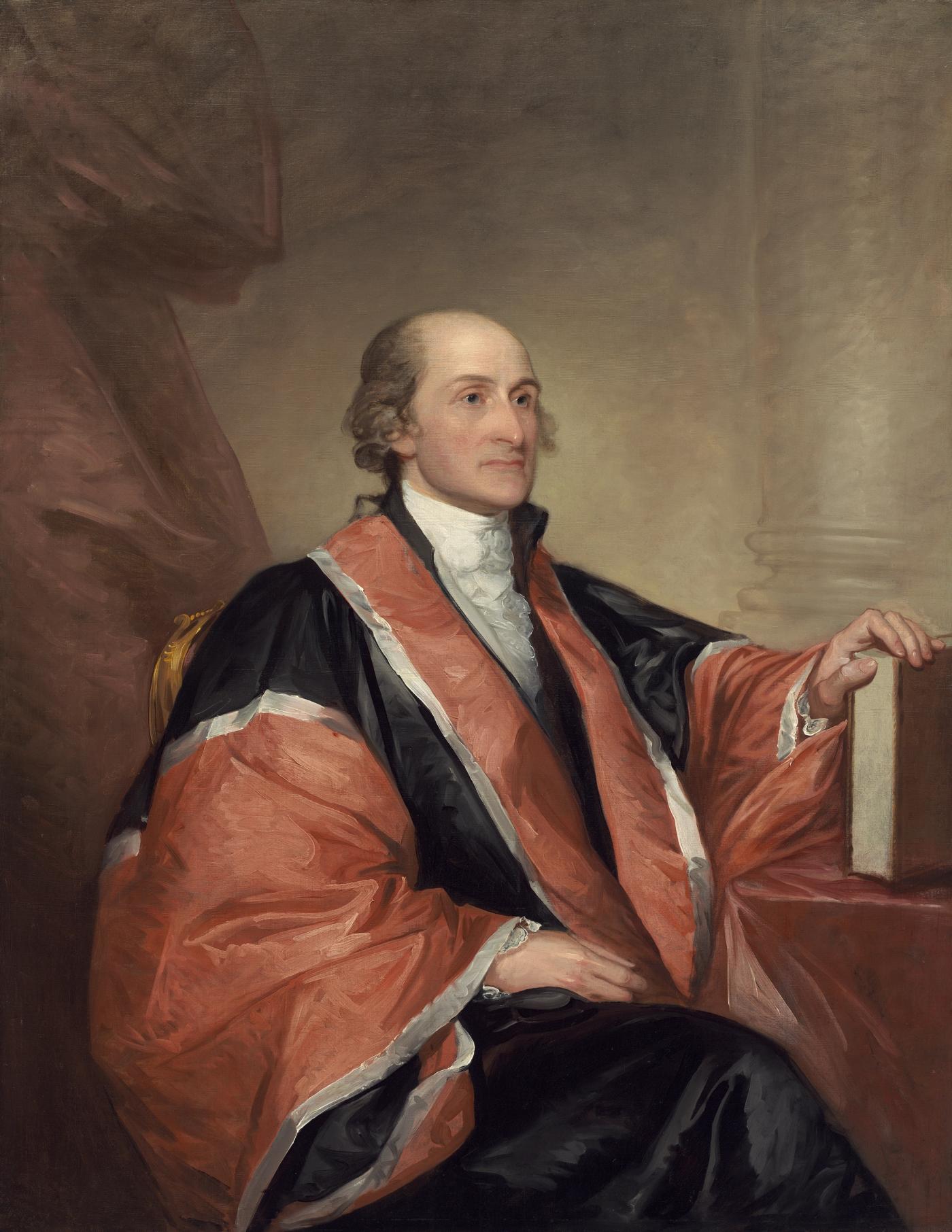
Meanwhile Washington had sent Chief Justice John Jay to London in 1794 to settle disputes left over from the Revolution, among them the British posts still held on American soil and British seizures of American ships. The treaty Jay signed in November 1794 reached Philadelphia the following March. Its terms favored Britain, and Washington kept them secret while the Senate debated in closed session. Soon after the Senate approved the treaty, an opposition newspaper printed it, and protests followed in city after city. "At present the cry against the Treaty is like that against a mad dog," Washington wrote to Hamilton at the end of July, and everyone seemed "engaged in running it down."[38] He ratified it in August, in the same weeks that an intercepted French dispatch cast suspicion on his secretary of state, Edmund Randolph, who soon resigned. The treaty kept the peace with Britain, and that October Spain also came to terms, signing a treaty that opened the Mississippi River to American trade. The two grievances Washington had named in 1784, British posts on one flank and Spanish obstruction on the other, were both on the way to settlement. When the House of Representatives demanded Jay's instructions and correspondence in March 1796, Washington refused, holding that the Constitution gave the House no part in making treaties.[39]
Farewell
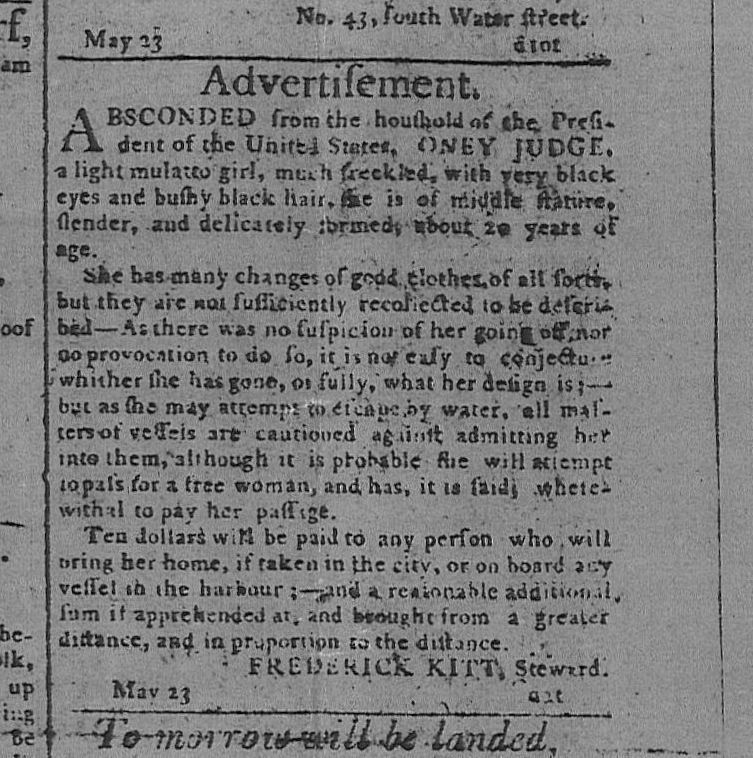
In the spring of 1796 two events brought older stories to a close. On Saturday, May 21, with the household in Philadelphia getting ready for its summer at Mount Vernon, Ona Judge, the young enslaved woman who served as Martha Washington's personal maid, walked out of the President's House while the family was at dinner. Interviewed in New Hampshire nearly fifty years later, she said that she had wanted to be free and had learned that after the Washingtons' deaths she would pass to their granddaughter, whose slave she was "determined never to be." By her account, she had sent her belongings ahead to friends among Philadelphia's free Black community and escaped aboard a ship bound for Portsmouth.[40] On June 1 Washington sold the disputed land on Millers Run. The settlers there had stood suit as they promised, and lost. "Verdicts have been given in your favour in every one of them," his lawyer had written him after the trials of October 1786.[41] The buyer, who paid $12,000, was Matthew Ritchie, one of the men who had accompanied Washington to the land in 1784.[42]

In May 1796 Washington sent Hamilton a draft built around the text Madison had written in 1792, asking him to curtail it "if too verbose," to relieve it "of all tautology," and even, if he thought best, "to throw the whole into a different form."[43] Hamilton produced a new draft, which Washington edited closely. The finished address announced that he would not accept a third term, urged Americans to value the Union above regional loyalties, and warned against the spirit of party. Speaking directly to the inhabitants of the West, it pointed to the recent treaties with Britain and Spain as proof that the national government had secured their interests. On foreign affairs it counseled, "Observe good faith and justice towards all nations; cultivate peace and harmony with all," while avoiding permanent attachments or hatreds toward any one of them.[44] It appeared in Claypoole's American Daily Advertiser in Philadelphia on September 19, 1796, and by then Washington, still president until March, was on the road home. "The President set out early this morning for Mount Vernon," Secretary of State Timothy Pickering wrote to Vice President John Adams that day, "and soon after, his address to the people of the United States appeared in Claypoole's news-paper."[45]
Why the Twelve Years Mattered
Washington returned to Philadelphia that autumn and served out his term, but the address marked the end of the public career he had taken up again, almost against his will, in the weeks after Millers Run. The settlers there had told him they would abide by the law, and they did, fighting him in court rather than by force and leaving when the verdicts went against them. Washington spent those twelve years trying to make that habit general. Doing so required a national government strong enough that people on a distant frontier would bring their disputes to its courts and pay its taxes rather than turn toward Spain, Britain, or rebellion. By 1796 such a government existed, with a functioning treasury, a disciplined army, a federal judiciary, a permanent capital rising on the Potomac, treaties with Britain and Spain, and a western frontier largely pacified.
Much of this was the work of others, including Madison, Hamilton, Jefferson, Jay, and Wayne. Washington's contribution was his judgment about when to act and when to let others act, and above all the authority he lent to institutions too new to command loyalty on their own. His reluctance was part of that authority. He had retired in 1783, hesitated in 1787 and again in 1789, and planned to step down in 1792. Because he kept trying to leave, each return looked like duty rather than ambition. When he left in 1797, he established the custom of a president stepping down after two terms, and showed that power in the new republic could pass peacefully from one man to another. The record of those years is not unblemished, as his efforts to keep the enslaved people in his household beyond the reach of Pennsylvania law make plain. A stronger Union was not always a just one, either: the government that taught settlers to take their quarrels to court also marched armies against the Ohio nations and the farmers of western Pennsylvania. But the Union that had seemed to rest on a pivot in 1784 was, by the time Washington rode south from Philadelphia in September 1796, a good deal harder to turn.
Places in this Story
The places this story moves through, in order — follow them on the interactive map →
- Millers Run, Washington County, Pennsylvania September 20, 1784
Washington confronts the Seceder settlers on his 2,813-acre Millers Run tract. They refuse to buy or lease and say they will stand suit.
- Washington's Bottom, Perryopolis, Pennsylvania September 1784
Washington inspects his mill on the Youghiogheny River and tries to settle accounts with his partner Gilbert Simpson.
- Bath (Berkeley Springs), West Virginia September 1784
Washington watches James Rumsey demonstrate a model boat built to work its way upstream against the current.
- Mount Vernon, Virginia March 1785
Virginia and Maryland commissioners finish the Mount Vernon Compact on Potomac navigation at Washington's home, a step toward the Constitutional Convention.
- Alexandria, Virginia May 17, 1785
Subscribers to the Potomac Company meet and elect Washington president of the company.
- Independence Hall, Philadelphia May to September 1787
The Constitutional Convention elects Washington its president. He signs the Constitution on September 17, 1787.
- Federal Hall, Wall Street, New York April 30, 1789
Washington takes the oath of office as the first president of the United States on the balcony of Federal Hall.
- St. Clair's Defeat, Fort Recovery, Ohio November 4, 1791
A Native confederacy routs Arthur St. Clair's army on the Wabash, the worst defeat of the U.S. Army by Native forces.
- Fallen Timbers Battlefield, Maumee, Ohio August 20, 1794
Anthony Wayne's rebuilt army defeats the Native confederacy, leading to the Treaty of Greenville in 1795.
- Bower Hill, near Pittsburgh, Pennsylvania July 16 and 17, 1794
Armed opponents of the federal whiskey tax attack and burn the house of excise inspector John Neville in the most serious violence of the Whiskey Rebellion.
- Fort Cumberland, Cumberland, Maryland October 1794
Washington reviews more than 3,200 militiamen marching west against the Whiskey Rebellion, often called the only time a sitting president has led an army in the field.
- President's House, Market Street, Philadelphia May 21, 1796
Ona Judge, Martha Washington's enslaved maid, escapes from the President's House and sails to Portsmouth, New Hampshire.
Frequently Asked Questions
What did George Washington do between the Revolutionary War and his presidency?
After resigning his commission in December 1783, Washington returned to Mount Vernon to restore his farms and western lands. In 1784 he toured his properties beyond the Appalachians, then promoted a navigation company to open the Potomac River to western trade and became its president in 1785. He presided over the Constitutional Convention in Philadelphia in 1787 and was elected the first president in 1789.
What was the Potomac Company?
The Potomac Company was a private company chartered by Virginia and Maryland in 1784 and 1785 to improve navigation on the Potomac River and link the Atlantic coast with the Ohio Valley. Washington was elected its president at Alexandria on May 17, 1785. He believed trade with the West would "bind all parts of the Union together" and keep western settlers from turning to Spain or Britain.
What was the Mount Vernon Conference of 1785?
In March 1785 commissioners from Virginia and Maryland met to settle disputes over navigation and trade on the Potomac River and Chesapeake Bay. At Washington's invitation they adjourned to Mount Vernon and finished their agreement there. Its success led to the Annapolis Convention of 1786, which called for the Constitutional Convention in Philadelphia in 1787.
Why did George Washington hesitate to attend the Constitutional Convention?
The Society of the Cincinnati, the order of former Continental officers that Washington led, was holding its general meeting in Philadelphia in May 1787. He had already told the society he would not attend or seek reelection, and he thought it would be improper toward the officers to appear in the same city for another purpose. He agreed to go only at the end of March 1787, and the delegates then elected him president of the convention.
What was the Compromise of 1790?
The Compromise of 1790 linked two disputed measures: federal assumption of the states' war debts, proposed by Alexander Hamilton, and the location of the permanent capital. According to Thomas Jefferson, at a dinner he hosted in June 1790, James Madison agreed to stop opposing assumption and Hamilton agreed to find votes for a capital on the Potomac, with Philadelphia as a temporary seat. Congress passed both measures that summer, though historians still debate how much the dinner decided.
Did George Washington lead troops during the Whiskey Rebellion?
Yes. In 1794 Washington called out the militia of several states, a force he put at fifteen thousand men, to suppress the armed resistance to the federal whiskey tax in western Pennsylvania. He rode west himself at the end of September, reviewed troops at Fort Cumberland, Maryland, and handed command to Governor Henry Lee of Virginia at Bedford. The rebels scattered before the army arrived, and Washington later pardoned the two men condemned for treason.
Who was Ona Judge, and how did she escape from George Washington?
Ona Judge was an enslaved woman who served as Martha Washington's personal maid. On May 21, 1796, while the Washingtons were at dinner in the President's House in Philadelphia, she walked out and escaped aboard a ship to Portsmouth, New Hampshire, with help from the city's free Black community. She later said she fled because she wanted to be free and had learned that after the Washingtons' deaths she would pass to their granddaughter.
What did George Washington's Farewell Address say?
The Farewell Address, first published in Philadelphia's American Daily Advertiser on September 19, 1796, announced that Washington would not seek a third term. It urged Americans to value the Union above regional loyalties, warned against the spirit of party, and advised the country to keep peace and good faith with all nations while avoiding permanent attachments or hatreds toward any of them. Alexander Hamilton drafted much of it from an earlier version by James Madison.
Bibliography
Washington's Diaries and Journals
Washington, George. Diary entries for September 1784. In The Diaries of George Washington, vol. 4. Founders Online, National Archives. Accessed October 26, 2026. https://founders.archives.gov/documents/Washington/01-04-02-0001-0001.
Washington, George. Diary entry for October 4, 1784. Founders Online, National Archives. Accessed October 26, 2026. https://founders.archives.gov/documents/Washington/01-04-02-0001-0002-0004.
Washington, George. Diary entry for March 25, 1785. Founders Online, National Archives. Accessed October 26, 2026. https://founders.archives.gov/documents/Washington/01-04-02-0002-0003-0025.
Washington, George. Diary entry for May 17, 1785. Founders Online, National Archives. Accessed October 26, 2026. https://founders.archives.gov/documents/Washington/01-04-02-0002-0005-0016.
Washington, George. Diary entries for April 1789. Founders Online, National Archives. Accessed October 26, 2026. https://founders.archives.gov/documents/Washington/01-05-02-0005-0001.
Washington, George. Diary entry for April 16, 1789. Founders Online, National Archives. Accessed October 26, 2026. https://founders.archives.gov/documents/Washington/01-05-02-0005-0001-0001.
Washington, George. Journal of the western expedition, September 30–October 20, 1794. Editors' introduction. Founders Online, National Archives. Accessed October 27, 2026. https://founders.archives.gov/documents/Washington/01-06-02-0003-0001.
Washington, George. Journal entry for October 17–18, 1794. Founders Online, National Archives. Accessed October 26, 2026. https://founders.archives.gov/documents/Washington/01-06-02-0003-0003-0012.
Washington's Public Papers
Washington, George. First Inaugural Address, April 30, 1789. Avalon Project, Lillian Goldman Law Library, Yale Law School. Accessed October 26, 2026. https://avalon.law.yale.edu/18th_century/wash1.asp.
Washington, George. Message to the Senate and House of Representatives, December 12, 1791. Founders Online, National Archives. Accessed October 26, 2026. https://founders.archives.gov/documents/Washington/05-09-02-0166.
Washington, George. Neutrality Proclamation, April 22, 1793. Founders Online, National Archives. Accessed October 26, 2026. https://founders.archives.gov/documents/Washington/05-12-02-0371.
Washington, George. Proclamation, August 7, 1794. Founders Online, National Archives. Accessed October 26, 2026. https://founders.archives.gov/documents/Washington/05-16-02-0365.
Washington, George. Sixth Annual Address to Congress, November 19, 1794. Avalon Project, Lillian Goldman Law Library, Yale Law School. Accessed October 26, 2026. https://avalon.law.yale.edu/18th_century/washs06.asp.
Washington, George. Seventh Annual Address to Congress, December 8, 1795. Teaching American History. Accessed October 26, 2026. https://teachingamericanhistory.org/document/seventh-annual-message/.
Washington, George. Message to the House of Representatives, March 30, 1796. Founders Online, National Archives. Accessed October 26, 2026. https://founders.archives.gov/documents/Washington/05-19-02-0513.
Washington, George. Farewell Address, September 19, 1796. Avalon Project, Lillian Goldman Law Library, Yale Law School. Accessed October 27, 2026. https://avalon.law.yale.edu/18th_century/washing.asp.
Washington's Correspondence
Washington, George. George Washington to Lafayette, February 1, 1784. Founders Online, National Archives. Accessed October 26, 2026. https://founders.archives.gov/documents/Washington/04-01-02-0064.
Washington, George. George Washington to Gilbert Simpson, February 13, 1784. Founders Online, National Archives. Accessed October 26, 2026. https://founders.archives.gov/documents/Washington/04-01-02-0084.
Washington, George. George Washington to Benjamin Harrison, October 10, 1784. Founders Online, National Archives. Accessed October 26, 2026. https://founders.archives.gov/documents/Washington/04-02-02-0082.
Washington, George. George Washington to James Madison, December 28, 1784. Founders Online, National Archives. Accessed October 26, 2026. https://founders.archives.gov/documents/Washington/04-02-02-0172.
Washington, George. George Washington to James Madison, November 5, 1786. Founders Online, National Archives. Accessed October 26, 2026. https://founders.archives.gov/documents/Madison/01-09-02-0070.
Washington, George. George Washington to Theodorick Bland, November 18, 1786. Founders Online, National Archives. Accessed October 26, 2026. https://founders.archives.gov/documents/Washington/04-04-02-0336.
Washington, George. George Washington to Edmund Randolph, March 28, 1787. Founders Online, National Archives. Accessed October 26, 2026. https://founders.archives.gov/documents/Washington/04-05-02-0110.
Washington, George. George Washington to Henry Knox, April 1, 1789. Founders Online, National Archives. Accessed October 26, 2026. https://founders.archives.gov/documents/Washington/05-02-02-0003.
Washington, George. George Washington to Alexander Hamilton, February 16, 1791. Founders Online, National Archives. Accessed October 26, 2026. https://founders.archives.gov/documents/Hamilton/01-08-02-0047.
Washington, George. George Washington to Tobias Lear, April 12, 1791. Founders Online, National Archives. Accessed October 26, 2026. https://founders.archives.gov/documents/Washington/05-08-02-0062.
Washington, George. George Washington to James Madison, May 20, 1792. Founders Online, National Archives. Accessed October 26, 2026. https://founders.archives.gov/documents/Washington/05-10-02-0260.
Washington, George. George Washington to Thomas Jefferson, August 23, 1792. Founders Online, National Archives. Accessed October 26, 2026. https://founders.archives.gov/documents/Washington/05-11-02-0009.
Washington, George. George Washington to Alexander Hamilton, August 26, 1792. Founders Online, National Archives. Accessed October 26, 2026. https://founders.archives.gov/documents/Hamilton/01-12-02-0206.
Washington, George. George Washington to Henry Lee, October 20, 1794. Founders Online, National Archives. Accessed October 27, 2026. https://founders.archives.gov/documents/Washington/05-17-02-0061.
Washington, George. George Washington to Alexander Hamilton, July 29, 1795. Founders Online, National Archives. Accessed October 26, 2026. https://founders.archives.gov/documents/Hamilton/01-18-02-0318.
Washington, George. George Washington to Alexander Hamilton, May 15, 1796. Founders Online, National Archives. Accessed October 26, 2026. https://founders.archives.gov/documents/Hamilton/01-20-02-0106.
Other Primary Sources
Adams, T. H. "Washington's Runaway Slave." Granite Freeman (Concord, NH), May 22, 1845. Transcribed in The President's House in Philadelphia, Independence Hall Association. Accessed October 26, 2026. https://ushistory.org/presidentshouse/slaves/oneyinterview.php.
Annals of Congress. 2nd Cong., 1st sess. Washington, DC: Gales and Seaton, 1834–56.
Crumrine, Boyd. History of Washington County, Pennsylvania, with Biographical Sketches of Many of Its Pioneers and Prominent Men. Philadelphia: H. L. Everts, 1882. Accessed October 26, 2026. https://archive.org/details/historyofwashing00crum.
Harrison, Benjamin. Benjamin Harrison to George Washington, January 6, 1785. Founders Online, National Archives. Accessed October 26, 2026. https://founders.archives.gov/documents/Washington/04-02-02-0183.
Irving, Washington. Life of George Washington. 5 vols. New York: G. P. Putnam, 1855–59.
Jefferson, Thomas. "Jefferson's Account of the Bargain on the Assumption and Residence Bills." [1792?]. Founders Online, National Archives. Accessed October 26, 2026. https://founders.archives.gov/documents/Jefferson/01-17-02-0018-0012.
Jefferson, Thomas. "Opinion on the Constitutionality of the Bill for Establishing a National Bank." February 15, 1791. Founders Online, National Archives. Accessed October 26, 2026. https://founders.archives.gov/documents/Jefferson/01-19-02-0051.
Kitt, Frederick. Advertisement for Oney Judge. Philadelphia Gazette and Universal Daily Advertiser, May 24, 1796. Encyclopedia Virginia. Accessed October 27, 2026. https://encyclopediavirginia.org/entries/advertisement-for-the-capture-of-oney-judge-philadelphia-gazette-may-24-1796/.
Lear, Tobias. Tobias Lear to George Washington, April 5, 1791. Founders Online, National Archives. Accessed October 26, 2026. https://founders.archives.gov/documents/Washington/05-08-02-0050.
Marshall, John. The Life of George Washington. 5 vols. Philadelphia: C. P. Wayne, 1804–7.
Mason, George. George Mason to James Madison, August 9, 1785. Founders Online, National Archives. Accessed October 26, 2026. https://founders.archives.gov/documents/Madison/01-08-02-0179.
Pennsylvania. "An Act for the Gradual Abolition of Slavery." March 1, 1780. Avalon Project, Lillian Goldman Law Library, Yale Law School. Accessed October 26, 2026. https://avalon.law.yale.edu/18th_century/pennst01.asp.
Pickering, Timothy. Timothy Pickering to George Washington, November 2, 1795. Founders Online, National Archives. Accessed October 27, 2026. https://founders.archives.gov/documents/Washington/05-19-02-0082.
Pickering, Timothy. Timothy Pickering to John Adams, September 19, 1796. Founders Online, National Archives. Accessed October 26, 2026. https://founders.archives.gov/documents/Adams/06-21-02-0355.
Randolph, Edmund. Edmund Randolph to George Washington, February 12, 1791. Founders Online, National Archives. Accessed October 26, 2026. https://founders.archives.gov/documents/Washington/05-07-02-0200-0001.
Rush, Richard. Washington in Domestic Life: From Original Letters and Manuscripts. Philadelphia: J. B. Lippincott, 1857. Project Gutenberg. Accessed October 26, 2026. https://www.gutenberg.org/ebooks/11926.
Smith, Thomas. Thomas Smith to George Washington, November 7, 1786. Founders Online, National Archives. Accessed October 26, 2026. https://founders.archives.gov/documents/Washington/04-04-02-0305.
Smith, William Henry, ed. The St. Clair Papers: The Life and Public Services of Arthur St. Clair. 2 vols. Cincinnati: Robert Clarke, 1882.
Modern Editorial Apparatus
The Papers of James Madison. Vol. 13. Editorial note on the residence and assumption bargain. Founders Online, National Archives. Accessed October 26, 2026. https://founders.archives.gov/documents/Madison/01-13-02-0173.
Citations
- George Washington, diary entry for September 20, 1784, in "September 1784," The Diaries of George Washington, vol. 4, Founders Online, National Archives, accessed October 26, 2026, https://founders.archives.gov/documents/Washington/01-04-02-0001-0001. ↑
- Boyd Crumrine, History of Washington County, Pennsylvania, with Biographical Sketches of Many of Its Pioneers and Prominent Men (Philadelphia: H. L. Everts, 1882), 858–59, accessed October 26, 2026, https://archive.org/details/historyofwashing00crum. ↑
- George Washington to Lafayette, February 1, 1784, Founders Online, National Archives, accessed October 26, 2026, https://founders.archives.gov/documents/Washington/04-01-02-0064. ↑
- George Washington to Gilbert Simpson, February 13, 1784, Founders Online, National Archives, accessed October 26, 2026, https://founders.archives.gov/documents/Washington/04-01-02-0084. ↑
- Washington, diary entries for September 1 and 3, 1784, in "September 1784." ↑
- Washington, diary entries for September 6, 12, 13, 14, and 15, 1784, in "September 1784." ↑
- George Washington, diary entry for October 4, 1784, Founders Online, National Archives, accessed October 26, 2026, https://founders.archives.gov/documents/Washington/01-04-02-0001-0002-0004. ↑
- George Washington to Benjamin Harrison, October 10, 1784, Founders Online, National Archives, accessed October 26, 2026, https://founders.archives.gov/documents/Washington/04-02-02-0082. ↑
- George Washington to James Madison, December 28, 1784, Founders Online, National Archives, accessed October 26, 2026, https://founders.archives.gov/documents/Washington/04-02-02-0172. ↑
- Benjamin Harrison to George Washington, January 6, 1785, Founders Online, National Archives, accessed October 26, 2026, https://founders.archives.gov/documents/Washington/04-02-02-0183. The editorial note to this letter summarizes Washington's later correspondence about the shares, including his formal reply of October 29, 1785. ↑
- George Washington, diary entry for May 17, 1785, Founders Online, National Archives, accessed October 26, 2026, https://founders.archives.gov/documents/Washington/01-04-02-0002-0005-0016. ↑
- George Washington, diary entry for March 25, 1785, Founders Online, National Archives, accessed October 26, 2026, https://founders.archives.gov/documents/Washington/01-04-02-0002-0003-0025. ↑
- George Mason to James Madison, August 9, 1785, Founders Online, National Archives, accessed October 26, 2026, https://founders.archives.gov/documents/Madison/01-08-02-0179. ↑
- George Washington to James Madison, November 5, 1786, Founders Online, National Archives, accessed October 26, 2026, https://founders.archives.gov/documents/Madison/01-09-02-0070. ↑
- George Washington to Theodorick Bland, November 18, 1786, Founders Online, National Archives, accessed October 26, 2026, https://founders.archives.gov/documents/Washington/04-04-02-0336. ↑
- George Washington to Edmund Randolph, March 28, 1787, Founders Online, National Archives, accessed October 26, 2026, https://founders.archives.gov/documents/Washington/04-05-02-0110. ↑
- George Washington to Henry Knox, April 1, 1789, Founders Online, National Archives, accessed October 26, 2026, https://founders.archives.gov/documents/Washington/05-02-02-0003. ↑
- George Washington, diary entry for April 16, 1789, Founders Online, National Archives, accessed October 26, 2026, https://founders.archives.gov/documents/Washington/01-05-02-0005-0001-0001, printed from John Marshall, The Life of George Washington, vol. 5 (Philadelphia: C. P. Wayne, 1807), 154. On Thomson's arrival and the loss of the original diary, see the editors' introduction to the April 1789 entries, Founders Online, National Archives, accessed October 26, 2026, https://founders.archives.gov/documents/Washington/01-05-02-0005-0001. ↑
- George Washington, diary entry for April 23, 1789, in the April 1789 entries, Founders Online, https://founders.archives.gov/documents/Washington/01-05-02-0005-0001, printed from Washington Irving, Life of George Washington, vol. 4 (New York: G. P. Putnam, 1855–59), 505–6. ↑
- George Washington, First Inaugural Address, April 30, 1789, Avalon Project, Lillian Goldman Law Library, Yale Law School, accessed October 26, 2026, https://avalon.law.yale.edu/18th_century/wash1.asp. ↑
- Thomas Jefferson, "Jefferson's Account of the Bargain on the Assumption and Residence Bills," [1792?], Founders Online, National Archives, accessed October 26, 2026, https://founders.archives.gov/documents/Jefferson/01-17-02-0018-0012. On the absence of other detailed accounts and the long-running disagreement over the dinner's importance, see the editorial note in The Papers of James Madison, vol. 13, Founders Online, National Archives, accessed October 26, 2026, https://founders.archives.gov/documents/Madison/01-13-02-0173. ↑
- Edmund Randolph to George Washington, February 12, 1791, Founders Online, National Archives, accessed October 26, 2026, https://founders.archives.gov/documents/Washington/05-07-02-0200-0001; Thomas Jefferson, "Opinion on the Constitutionality of the Bill for Establishing a National Bank," February 15, 1791, Founders Online, National Archives, accessed October 26, 2026, https://founders.archives.gov/documents/Jefferson/01-19-02-0051; George Washington to Alexander Hamilton, February 16, 1791, Founders Online, National Archives, accessed October 26, 2026, https://founders.archives.gov/documents/Hamilton/01-08-02-0047. ↑
- George Washington to Thomas Jefferson, August 23, 1792, Founders Online, National Archives, accessed October 26, 2026, https://founders.archives.gov/documents/Washington/05-11-02-0009; George Washington to Alexander Hamilton, August 26, 1792, Founders Online, National Archives, accessed October 26, 2026, https://founders.archives.gov/documents/Hamilton/01-12-02-0206. ↑
- George Washington to James Madison, May 20, 1792, Founders Online, National Archives, accessed October 26, 2026, https://founders.archives.gov/documents/Washington/05-10-02-0260; George Washington to Alexander Hamilton, May 15, 1796, Founders Online, National Archives, accessed October 26, 2026, https://founders.archives.gov/documents/Hamilton/01-20-02-0106. ↑
- Pennsylvania, "An Act for the Gradual Abolition of Slavery," March 1, 1780, sec. 10, Avalon Project, Lillian Goldman Law Library, Yale Law School, accessed October 26, 2026, https://avalon.law.yale.edu/18th_century/pennst01.asp. ↑
- Tobias Lear to George Washington, April 5, 1791, Founders Online, National Archives, accessed October 26, 2026, https://founders.archives.gov/documents/Washington/05-08-02-0050; George Washington to Tobias Lear, April 12, 1791, Founders Online, National Archives, accessed October 26, 2026, https://founders.archives.gov/documents/Washington/05-08-02-0062. ↑
- Arthur St. Clair to Henry Knox, November 9, 1791, in William Henry Smith, ed., The St. Clair Papers: The Life and Public Services of Arthur St. Clair, vol. 2 (Cincinnati: Robert Clarke, 1882), 262–67. The full text of the report is also printed in the editorial note to George Washington, Message to the Senate and House of Representatives, December 12, 1791, Founders Online, National Archives, accessed October 26, 2026, https://founders.archives.gov/documents/Washington/05-09-02-0166. ↑
- Richard Rush, Washington in Domestic Life: From Original Letters and Manuscripts (Philadelphia: J. B. Lippincott, 1857), 65–69, Project Gutenberg, accessed October 26, 2026, https://www.gutenberg.org/ebooks/11926. ↑
- Editorial note to Washington, Message to the Senate and House of Representatives, December 12, 1791, Founders Online. ↑
- Annals of Congress, 2nd Cong., 1st sess. (Washington, DC: Gales and Seaton, 1834–56), 490–94. On its standing as the first congressional investigation of the executive branch, see the editorial note to Washington, Message to the Senate and House of Representatives, December 12, 1791, Founders Online. ↑
- George Washington, Neutrality Proclamation, April 22, 1793, Founders Online, National Archives, accessed October 26, 2026, https://founders.archives.gov/documents/Washington/05-12-02-0371. ↑
- George Washington, Proclamation, August 7, 1794, Founders Online, National Archives, accessed October 26, 2026, https://founders.archives.gov/documents/Washington/05-16-02-0365. ↑
- George Washington, Sixth Annual Address to Congress, November 19, 1794, Avalon Project, Lillian Goldman Law Library, Yale Law School, accessed October 26, 2026, https://avalon.law.yale.edu/18th_century/washs06.asp. ↑
- Washington, diary entry for September 20, 1784, in "September 1784." ↑
- Washington, Proclamation, August 7, 1794; Washington, Sixth Annual Address to Congress. ↑
- George Washington, journal of the western expedition, September 30–October 20, 1794, editors' introduction, Founders Online, National Archives, accessed October 27, 2026, https://founders.archives.gov/documents/Washington/01-06-02-0003-0001; George Washington, journal entry for October 17–18, 1794, Founders Online, National Archives, accessed October 26, 2026, https://founders.archives.gov/documents/Washington/01-06-02-0003-0003-0012; George Washington to Henry Lee, October 20, 1794, Founders Online, National Archives, accessed October 27, 2026, https://founders.archives.gov/documents/Washington/05-17-02-0061. ↑
- Timothy Pickering to George Washington, November 2, 1795, with editorial note, Founders Online, National Archives, accessed October 27, 2026, https://founders.archives.gov/documents/Washington/05-19-02-0082; George Washington, Seventh Annual Address to Congress, December 8, 1795, Teaching American History, accessed October 26, 2026, https://teachingamericanhistory.org/document/seventh-annual-message/. ↑
- George Washington to Alexander Hamilton, July 29, 1795, Founders Online, National Archives, accessed October 26, 2026, https://founders.archives.gov/documents/Hamilton/01-18-02-0318. ↑
- George Washington, Message to the House of Representatives, March 30, 1796, Founders Online, National Archives, accessed October 26, 2026, https://founders.archives.gov/documents/Washington/05-19-02-0513. ↑
- Frederick Kitt, advertisement for Oney Judge, Philadelphia Gazette and Universal Daily Advertiser, May 24, 1796, Encyclopedia Virginia, accessed October 27, 2026, https://encyclopediavirginia.org/entries/advertisement-for-the-capture-of-oney-judge-philadelphia-gazette-may-24-1796/; T. H. Adams, "Washington's Runaway Slave," Granite Freeman (Concord, NH), May 22, 1845, transcribed in The President's House in Philadelphia, Independence Hall Association, accessed October 26, 2026, https://ushistory.org/presidentshouse/slaves/oneyinterview.php. ↑
- Thomas Smith to George Washington, November 7, 1786, Founders Online, National Archives, accessed October 26, 2026, https://founders.archives.gov/documents/Washington/04-04-02-0305. ↑
- Crumrine, History of Washington County, 483, 859. ↑
- Washington to Hamilton, May 15, 1796. ↑
- George Washington, Farewell Address, September 19, 1796, as printed in Claypoole's American Daily Advertiser, Avalon Project, Lillian Goldman Law Library, Yale Law School, accessed October 27, 2026, https://avalon.law.yale.edu/18th_century/washing.asp. ↑
- Timothy Pickering to John Adams, September 19, 1796, Founders Online, National Archives, accessed October 26, 2026, https://founders.archives.gov/documents/Adams/06-21-02-0355. ↑