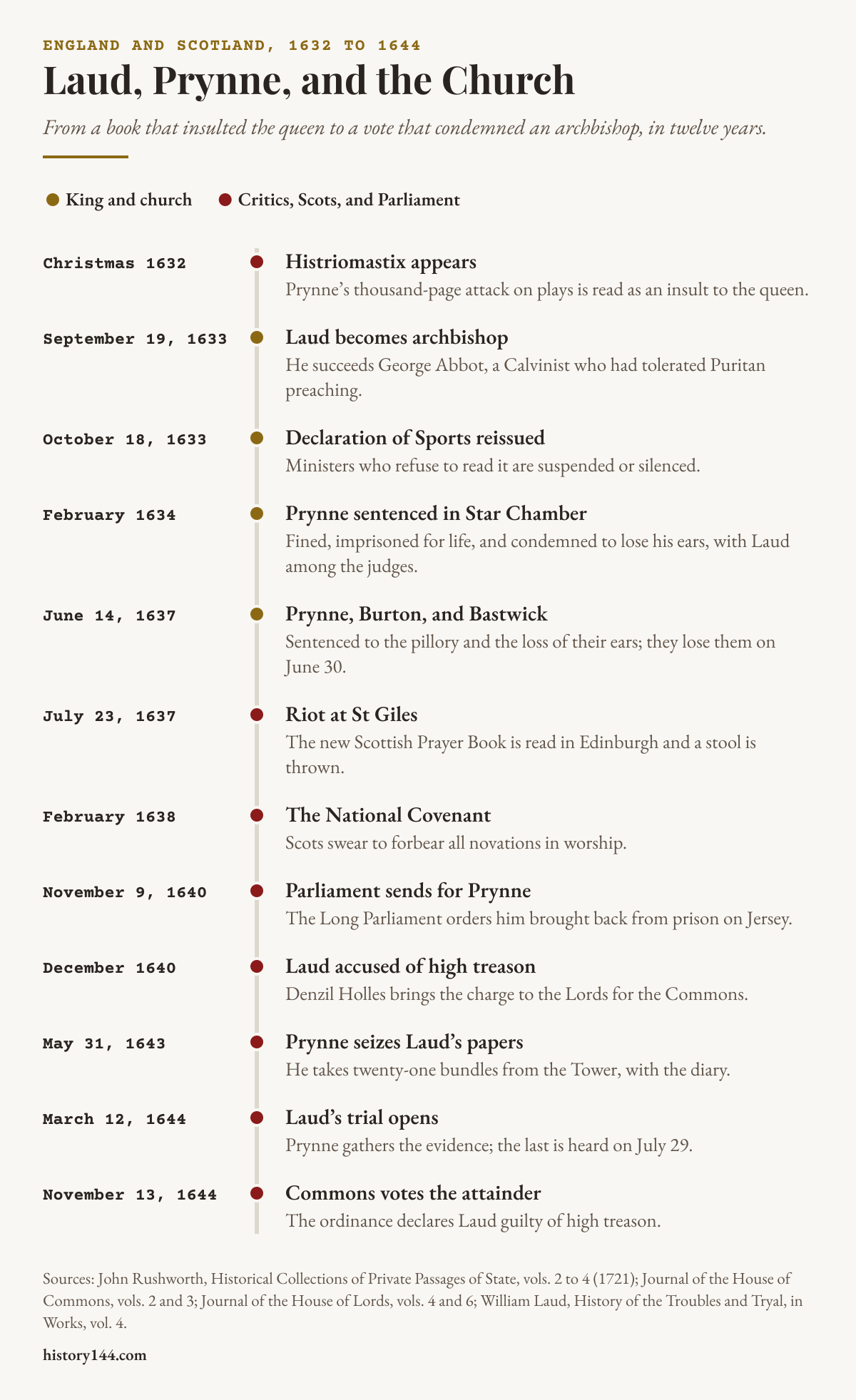
Around Christmas 1632, a London bookseller finished binding a book that had spent three years in the press. Histriomastix, by the Lincoln's Inn barrister William Prynne, ran to more than a thousand pages against stage plays, and it did not stop at the theater. It railed against dancing, masques, hunting, Christmas-keeping, bonfires, and maypoles, in a kingdom whose queen danced in court masques and whose privy councillors watched them. When the attorney general, William Noy, brought the book before Star Chamber, he charged that it cast "an aspersion upon Her Majesty the Queen" and drew hateful comparisons between princes and Nero. By the time Noy spoke, Prynne had spent a year as a prisoner in the Tower.[1] It was the beginning of a twelve-year quarrel between Prynne and the man who became Archbishop of Canterbury.
Star Chamber sentenced him in February 1634. He was to be expelled from Lincoln's Inn and barred from practicing law, degraded by the University of Oxford, fined five thousand pounds, imprisoned for life, and to lose both his ears in the pillory at Westminster and Cheapside. William Laud, newly Archbishop of Canterbury, sat among the judges. When Oxford was named, the historian John Rushworth recorded, Laud said in a low voice that he was sorry that ever Oxford bred "such an evil Member."[2] It is easy to read what followed as an English quarrel, fought out between an archbishop and Puritan critics like Prynne. The decisive blow came from Scotland. Over the next twelve years, Charles I and his chosen bishop tried to bring the worship of the Church of England, and then of the Church of Scotland, into a single pattern of order and ceremony imposed by royal authority. In Scotland, where the king pressed hardest and listened least, resistance became revolt, and the revolt unraveled his government in all three of his kingdoms. By November 1644 Laud had stood trial before the Lords, with Prynne gathering the evidence against him. The bishops had been expelled from Parliament, the altars he had raised were coming down by parliamentary order, and the House of Commons had voted that he should die. This is the story of those twelve years.
Altar-Wise
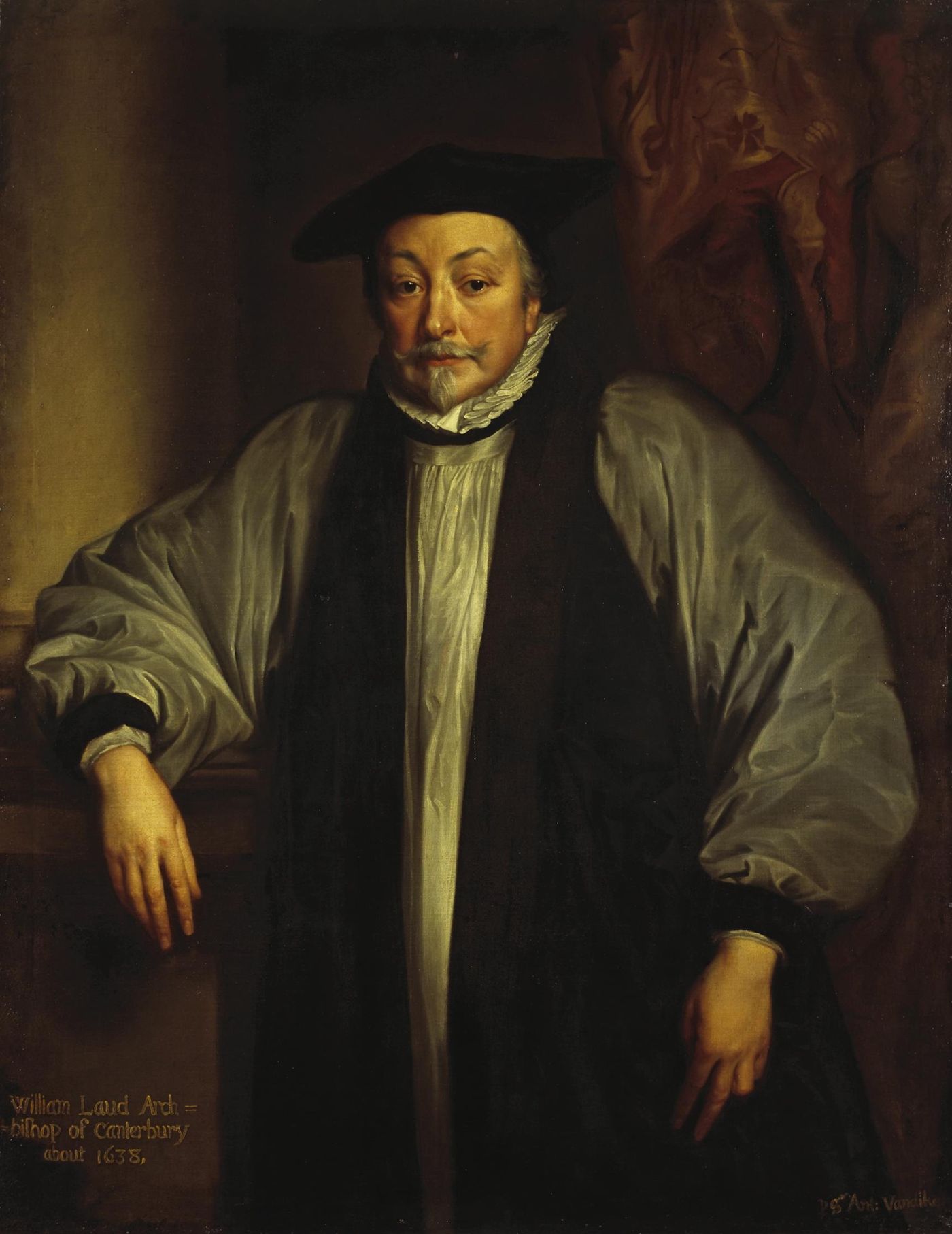
Laud had been Bishop of London since 1628, and by 1632 he was the king's principal adviser on the affairs of the church. King and bishop both believed that the Church of England had been allowed to drift since the Reformation, that its worship had grown slovenly, and that order, reverence, and visible ceremony were forms of devotion in their own right. Their program came to be called Laudianism. Its most visible feature was the communion table. In most parish churches the table stood in the body of the church or the chancel, where the congregation gathered around it. Laud wanted it placed at the east end, set lengthwise like an altar, and fenced with rails, as it already stood in the cathedrals. Rushworth observed that in these years parish communion tables began to be placed "Altar-wise after the Pattern of Cathedrals."[3] To Laud this was decency. To his critics it looked like a return to the Mass.
Theology deepened the quarrel. The Calvinist doctrine of predestination, the belief that God had chosen from eternity those who would be saved, was deeply rooted in the English church, especially among Puritan clergy. Laud and many of his allies were associated with views that left more room for human cooperation with divine grace. Their opponents labeled those views Arminian, after the Dutch theologian Jacobus Arminius, and saw them as a step toward Rome. In a declaration printed with the Articles of Religion, the king had forbidden preachers to dispute these questions, and the order was enforced. In 1632 Nathaniel Barnard, a lecturer at St Sepulchre's in London, preached at Cambridge against those who brought "Pelagian Errors" into the church and set up "high Altars, Crucifixes, and bowing to them." The Court of High Commission, the church's highest disciplinary court, ordered him to recant. When he refused, he was fined a thousand pounds, suspended from his ministry, and sent to prison.[4]
Laud's diary for 1632 shows a bishop at work and a courtier building a network of allies. On July 17 he consecrated a new brick church at Stanmore Magna, on the Middlesex edge of the capital, paid for by Sir John Wolstenholme. The diary gives it a single line, though Daniel Lysons, writing in 1795, placed the consecration a day earlier. Puritans later denounced the church as a private chapel, an example of the ceremonial religion they believed Laud had forced on England. The same diary records that he obtained the post of Secretary of State for his old friend Francis Windebank. It also notes that he had William Juxon made Clerk of the King's Closet so that he might have "one that I might trust near his Majesty," against the day he grew weak or infirm.[5]
A Little Old Man in a Blue Coat
In early 1633, two cases showed how far the king's government would go in defense of the church's order. Both were dated 1632 by the reckoning of the time, when the new year began in late March, and both involved Laud directly.
The first concerned a body called the Feoffees for Impropriations. Since the dissolution of the monasteries, the tithes of thousands of English parishes had belonged to laymen, who collected them as private income. These holdings were called impropriations. A group of clergy, lawyers, and London merchants had been raising money to buy them back. Attorney General William Noy brought the Crown's case against them in the Exchequer. The court found that they had bought impropriations but kept them in their own hands, paying the profits to lecturers and ministers they chose, and it declared their proceedings against the law. Laud was satisfied. In his diary for Wednesday, February 13, he wrote that the feoffees had been dissolved, calling them "the main Instruments for the Puritan Faction, to undo the Church."[6]
The same month the second case came before the Court of Star Chamber, the king's prerogative court. Henry Sherfield, the recorder of Salisbury, was a member of the vestry of St Edmund's church. There an old painted window showed the Creation with God the Father pictured as a little old man in a blue coat, measuring the sun with a pair of compasses. Sherfield held that any image of God the Father was unlawful, and he told the court there was talk that some ignorant people had bowed before it. Acting on a vestry order but without the bishop's leave, he shut himself inside the church and broke holes in the glass with his staff. Star Chamber fined him five hundred pounds and ordered him to acknowledge his offense before his bishop. During the sentencing Laud spoke in the painter's defense, pointing out that Scripture calls God the "Ancient of Days." The Earl of Dorset replied that the phrase meant God from eternity, not God pictured as an old man creating the world with a pair of compasses.[7] Ten years later Parliament would order every such image defaced across the whole kingdom.
"I Have All Your Names Here"
In the spring of 1633 Charles traveled north to be crowned in Scotland, the kingdom of his birth, and Laud went with him. The coronation took place in the abbey church at Holyrood on June 18. Rushworth records that Laud, a stranger there, took charge of the ceremonies. When he found the Archbishop of Glasgow standing at the king's left hand without the embroidered coat of his order, he pushed him aside and put the Bishop of Ross in his place. The Scottish Parliament that followed was asked to confirm the king's power to prescribe the dress of the clergy. Many members suspected that the English surplice was intended, and when the vote came, Charles took a list from his pocket and told them, "I have all your Names here."[8] The measure passed, but the king had marked his opponents, and they had marked him.
On Sunday, August 4, news reached the court that George Abbot, the Archbishop of Canterbury, had died. Abbot was a Calvinist who had tolerated Puritan preaching. Laud recorded that Charles resolved at once to give him the see. That same morning a visitor offered, with apparent seriousness, to make him a cardinal. Laud reported the offer to the king, and when it came again nearly two weeks later, he answered that something within him would not allow it "till Rome were other than it is." He was translated to Canterbury on September 19. The day before, he crossed the Thames to Lambeth for the first time, and the overloaded ferry carrying his coach, horses, and servants sank to the bottom of the river. He noted with gratitude that no man or horse was lost.[9]
One of the new archbishop's first acts concerned Sunday recreation. In Somerset, the assize judges had renewed earlier orders suppressing the parish festivals known as wakes and church-ales, which local magistrates blamed for drunkenness and disorder. They had also directed every minister to read the ban to his congregation. Laud objected that judges had no business directing what ministers read from the pulpit. The council summoned Chief Justice Richardson and made him revoke the order. The king then went further. On October 18, 1633, he reissued his father's Declaration of Sports, which permitted dancing, archery, May games, morris dances, and maypoles on Sundays after evening service, and directed that it be published in every parish church. For ministers who kept a strict Sabbath, the order to read it aloud forced a choice between conscience and office. Rushworth recorded that ministers who refused were suspended or silenced. In his account, the severe sentences in Star Chamber, the pressure to conform to ceremonies, and the silencing of ministers over the declaration led many, clergy and laity alike, to sell their estates and sail for New England.[10]
The king took a personal hand in the altar question as well. In November 1633 he heard a dispute from St Gregory's, a parish church standing against the wall of St Paul's Cathedral, where a handful of parishioners had appealed against moving their communion table to the east end. Charles upheld the move. In doing so he declared his dislike of "all Innovation," meaning the parishioners' objection, not the change itself.[11] Each side believed it was defending the ancient church against innovators.
Ears in the Pillory
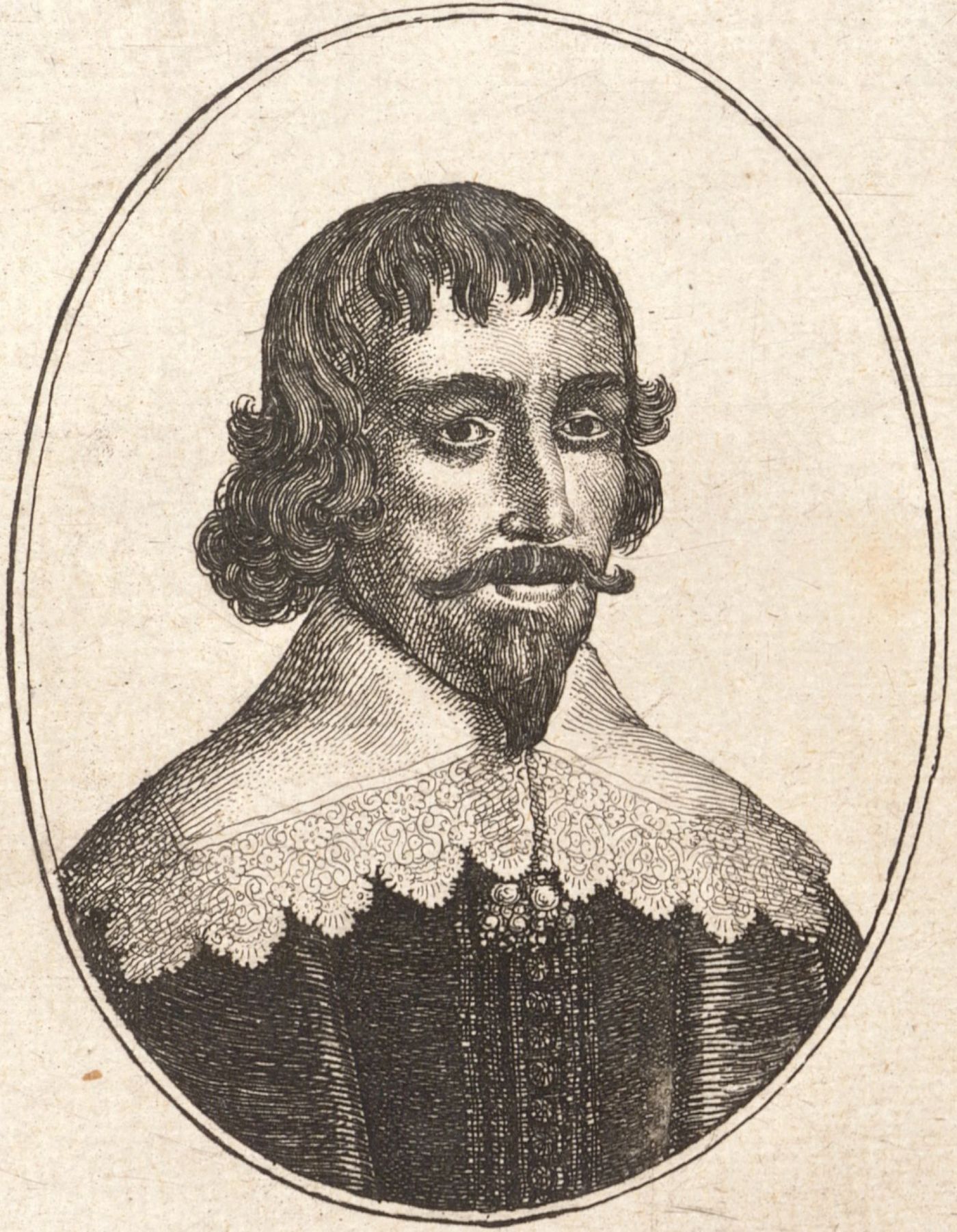
Opposition in England was loudest in print, and the government answered it with the law. On June 14, 1637, three critics of the bishops came before Star Chamber. They were John Bastwick, a physician, Henry Burton, a clergyman, and William Prynne, a lawyer who had already been sentenced to lose his ears by the same court in 1634. They were charged with publishing seditious and libellous books against the hierarchy of the church. Each was fined five thousand pounds and sentenced to stand in the pillory at Westminster and lose his ears. Prynne was also to be branded on both cheeks with the letters S.L., for Seditious Libeller. The sentence was carried out on June 30. Rushworth recorded that the hangman sawed off what remained of Prynne's ears instead of cutting them. The three men were then sent as close prisoners to distant castles in Cornwall, Lancashire, and Wales, and afterwards moved again to remote islands.[12]
Laud made a long speech at the sentencing. On bowing toward the altar he was unrepentant, calling it "the greatest place of God's residence upon Earth." He complained that it was now counted superstition to enter a church with more reverence than "a Tinker and his Bitch come into an Ale-house." The speech was printed by the king's command, but it did not win the argument in the streets. A week after the mutilations, a libel posted on the Cross in Cheapside accused the archbishop of persecuting the saints and shedding the blood of martyrs.[13]

Suspicion of popery also attached to the court, where the queen, Henrietta Maria, was a Catholic who heard Mass in her own chapels. Laud was no friend to her circle. In October 1637 he spoke bluntly at the council table against the growth of the Roman party at court, and the queen was so offended that, as he recorded, she remained displeased with him.[14] To most of his critics, the distinction was invisible.
A Stool in St Giles
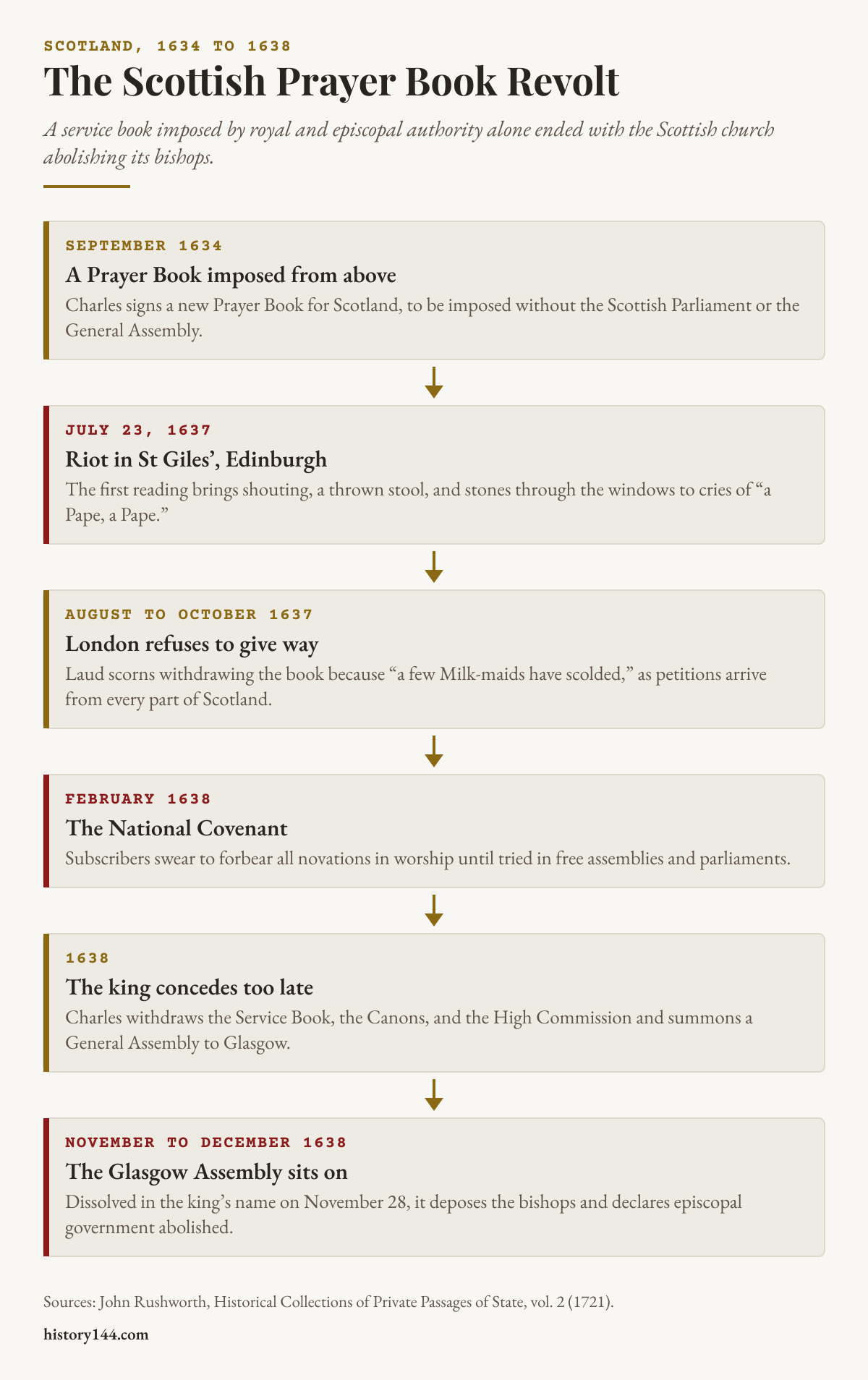
In Scotland the trouble began with a book. Since 1633 Charles, Laud, and the Scottish bishops had been preparing a new liturgy for the Scottish church, which, in the king's own account, used no set form of public prayer. In October 1633 the king ordered that prayers in his Edinburgh chapel follow the English liturgy until a Scottish one could be made. On September 28, 1634, at Laud's prompting, the king signed a Prayer Book for the use of the Scottish church. It was only a first stage. The book went through further revision with the Scottish bishops and was not printed until 1637, while they compiled a set of canons that appeared in 1636. Rushworth noted that both were to be imposed by royal and episcopal authority alone, without the consent of the Scottish Parliament or the General Assembly of the church. The bishops who would enforce them were closely tied to the government. Of the fourteen Scottish bishops, nine sat on the Privy Council.[15]
The book was first read in St Giles' Church in Edinburgh on Sunday, July 23, 1637, after a delay from Easter. No sooner had the Dean of Edinburgh opened it than a crowd of what Rushworth called "the meaner sort," many of them women, began clapping, shouting, and cursing. When the Bishop of Edinburgh climbed into the pulpit to restore order, a stool was thrown at his head, though someone deflected it. The magistrates cleared the church, but stones came through the windows to cries of "a Pape, a Pape, Antichrist." After the service the bishop was mobbed in the street and nearly trodden to death before he was rescued. Edinburgh tradition holds that the stool was thrown by a market woman named Jenny Geddes at the Dean, James Hannay. St Giles' Cathedral, which has a memorial to her, acknowledges that there is no definitive evidence of the event, and Rushworth's account names no one.[16]

In London the riot was blamed on the bishops' poor management. Laud wrote that the king took it very ill that the business had been "so weakly carried," and he scorned the idea of withdrawing the book because "a few Milk-maids have scolded." By the autumn, petitions against the book were arriving in Edinburgh from every part of the country.[17]
A Moderator Without Moderation
The opponents of the book organized themselves into committees in Edinburgh, known as the Tables, representing the nobility, gentry, burghs, and ministers. In February 1638 they produced a National Covenant. It renewed the Confession of Faith that King James and his household had signed in 1580, and its subscribers swore to forbear the practice of all novations in worship until they had been tried in free assemblies and parliaments. The Covenant was sworn first in Edinburgh that February and then throughout the country. It professed loyalty to the king, but it also bound its subscribers to defend one another against all persons whatsoever, and his later declaration complained that this did not except himself. Even the Scottish Privy Council told Charles that the cause of the trouble was fear of innovation in religion arising from the Service Book, the Canons, and the High Commission.[18]

Charles sent the Marquis of Hamilton north as his commissioner in May 1638. Over the following months the king gave ground. He withdrew the Service Book, the Canons, and the Court of High Commission, and he summoned a free General Assembly to meet at Glasgow on November 21. The concessions came too late, and neither side trusted the other. Hamilton complained that secret instructions from the Tables had packed the Assembly against the bishops. He also privately advised the king to send a fleet to blockade the Firth of Forth and to follow it with an army, and Charles wrote back that he agreed.[19]
The Assembly chose as its moderator Alexander Henderson, a minister from Fife. When it became clear that the Assembly meant to put the bishops on trial, Hamilton dissolved it in the king's name on November 28 and forbade it to continue under pain of treason. Henderson and the Earl of Rothes answered that they could not desert "the Work of God." The Assembly sat on, and the Earl of Argyll, one of the king's own privy councillors, openly took the Covenanters' side. Before it rose in December, the Assembly condemned the Service Book and the Canons, deposed the Scottish bishops and excommunicated several of them, and declared episcopacy abjured and removed from the church. From Lambeth, Laud passed on a correspondent's verdict that Henderson was "a Moderator without Moderation."[20] In a matter of weeks, the Scottish church had overturned the episcopal order that James and Charles had spent decades rebuilding.
Roots and Branches
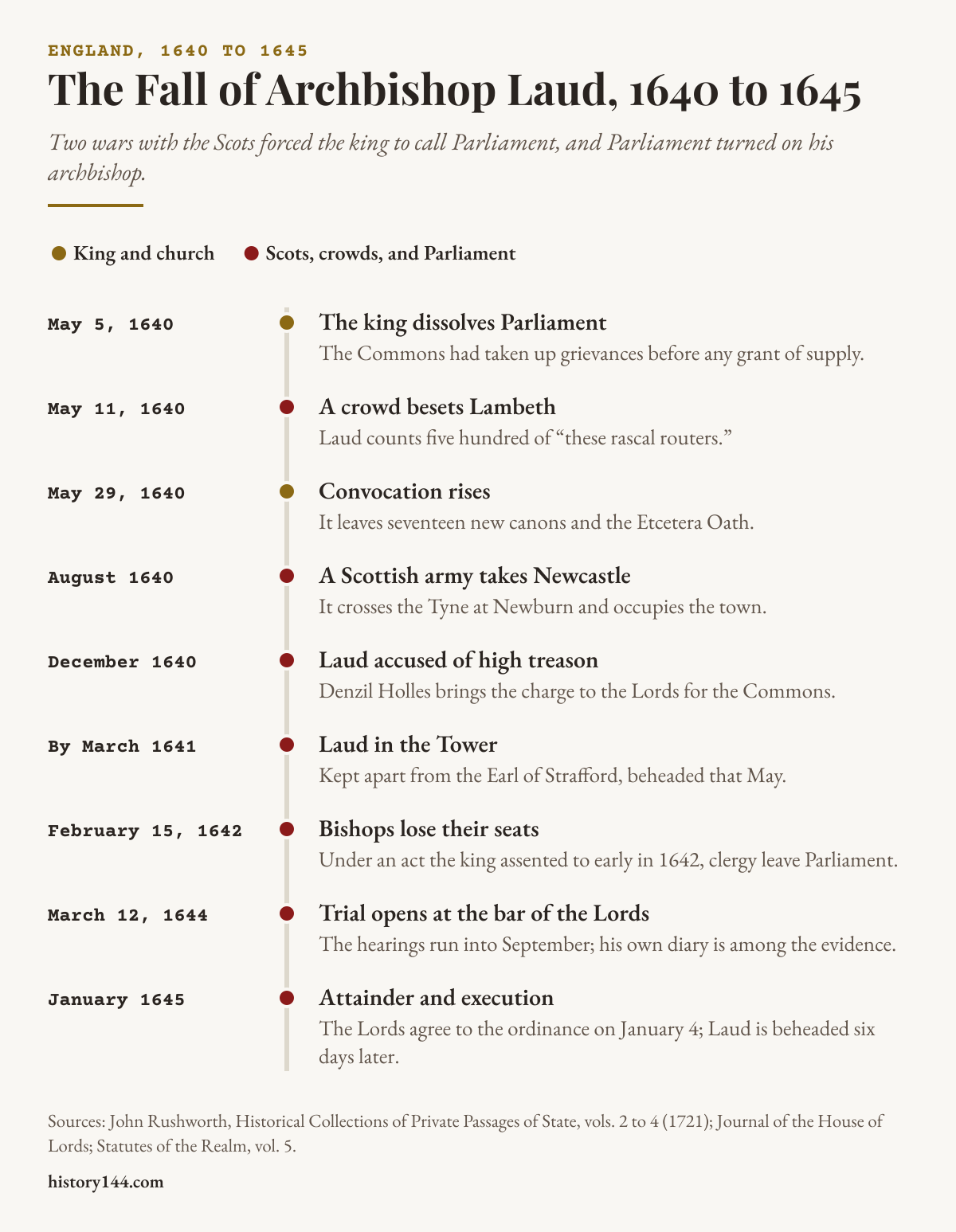
Charles chose force. In 1639 he marched north with an army, and the First Bishops' War ended in a truce without a battle. To fight again, he needed money, and for the first time in eleven years he summoned the English Parliament. It met in April 1640, but the Commons took up their grievances before any grant of supply. On May 5 the king dissolved it, blaming the "sinister and malicious Courses" of its members. Within days a paper posted at the Old Exchange urged the apprentices to sack the archbishop's house. On the night of May 11, Laud recorded, his house at Lambeth was beset by five hundred of "these rascal routers." The king allowed Convocation, the assembly of the clergy, to keep sitting after Parliament had gone. Before it rose on May 29 it had made seventeen new canons and a new oath, by which the swearer promised never to consent to alter the government of the church "by Arch-bishops, Bishops, Deans, and Archdeacons, &c." The open-ended "&c." gave it the name by which it became notorious, the Etcetera Oath.[21]
The second war went worse than the first. In August 1640 a Scottish army crossed the Tyne at Newburn and occupied Newcastle. Charles had to call a new Parliament, which assembled on November 3. Six days later the Commons ordered that Prynne, then a close prisoner on Jersey, be sent for, and on November 30 he stood at the bar of the House to press his petition. On December 11 a petition from London and several counties asked that the government of the church by bishops, "with all its Dependencies, Roots and Branches," be abolished. A week later Denzil Holles appeared at the bar of the Lords and, in the name of the Commons of England, accused the Archbishop of Canterbury of high treason. The Lords committed Laud to the custody of the Gentleman Usher and barred him from sitting in Parliament. By March 1, 1641, he was in the Tower, where the Lords ordered that he and the Earl of Strafford, the king's other chief minister, should not be allowed to meet.[22]
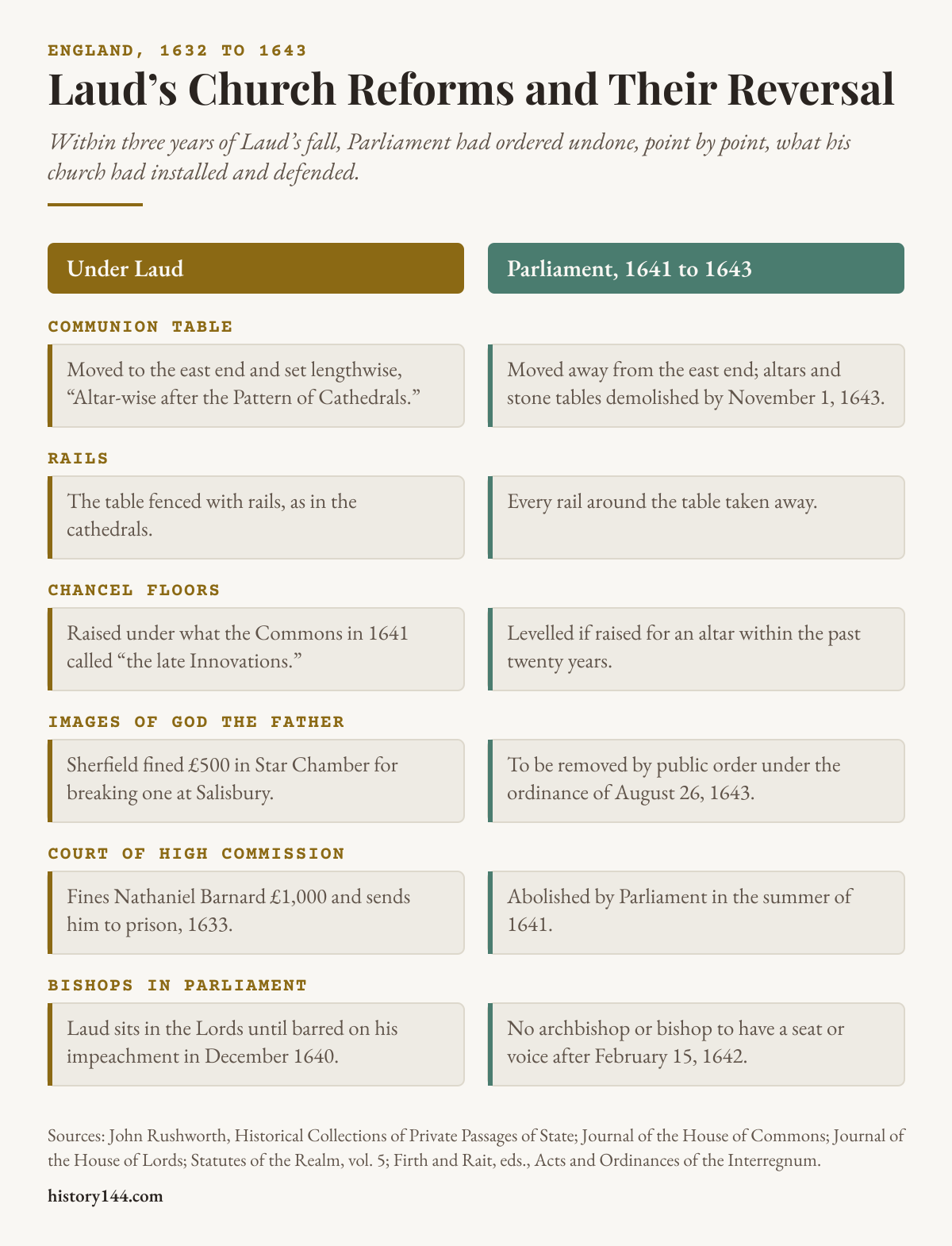
Strafford went first. When his defense at his trial that spring proved too strong, the Commons proceeded by attainder, a parliamentary act declaring him guilty without a verdict. In May 1641 Charles reluctantly gave his assent, and Strafford was beheaded. Laud remained in the Tower while his church was dismantled around him. That summer Parliament abolished the Court of High Commission. On August 31 the Commons resolved that churchwardens in every parish should move the communion table from the east end, "where they stand Altar-wise," take away the rails, and level the chancels as they had been before "the late Innovations." The next day the House made the resolution an order. In October rebellion broke out among the Catholic Irish of Ulster, and in England the news seemed to confirm every fear of a popish conspiracy around the throne. At the end of December twelve bishops petitioned the king and Lords that they had been "violently menaced, affronted, and assaulted" by crowds on their way to Parliament, and they protested that everything done in their absence was void. The Commons accused all twelve of high treason, and most of them were sent to the Tower.[23]
Bishops Out, Altars Down
Early in 1642 Charles gave his assent to the Bishops Exclusion Act, providing that after February 15 no archbishop, bishop, or other person in holy orders should have any seat or voice in Parliament.[24] Later that month the queen sailed for the Netherlands, and in August the king raised his standard at Nottingham. The Prayer Book and the bishops had become part of the royalist cause.
In June 1643 Parliament called an assembly of learned and godly divines to advise it on the government of the church. The stated aim was to bring that government into nearer agreement with the Church of Scotland and the other Reformed churches abroad. That August, Parliament struck at the visible marks of Laud's program. An ordinance of August 26 required that by November 1 all altars and stone tables be demolished, communion tables be moved away from the east end, and every rail around them be taken away. Any chancel floor raised for an altar within the past twenty years was to be leveled, and crucifixes and images of the Trinity or the Virgin were to be taken down and defaced.[25] The twenty-year limit reached back to the years of Laud's rise. Painted images of God the Father, of the kind Sherfield had been fined five hundred pounds for breaking, were now to be removed by public order.
In September Parliament sealed its alliance with the Scots. On September 25, 1643, the members of the House of Commons took the Solemn League and Covenant at St Margaret's, Westminster, together with the Assembly of Divines. Alexander Henderson, one of the commissioners of the Scottish church, had addressed them first. In January 1644 a Scottish army marched into England. An ordinance of February 1644 directed that the Covenant be tendered in every parish to all men over the age of eighteen, and that those who refused be reported by name.[26] Parliament's church, like the king's, would be uniform.
The Archbishop at the Bar
Laud had spent three years in the Tower when his trial finally began, and his old adversary had helped prepare it. On May 31, 1643, under a warrant from Parliament's Close Committee, Prynne had come to Laud's lodging in the Tower as soon as the gates were opened and searched Laud's pockets while he still lay in bed. He carried away twenty-one bundles of papers Laud had prepared for his defense, together with the diary and the book of private devotions. On March 12, 1644, the Gentleman Usher of the Black Rod brought the prisoner to the bar of the Lords, where he knelt as a delinquent until he was told to stand. The Commons managers asked that each charge receive its own proof and its own defense, as had been done at Strafford's trial.[27]
The trial sat through the spring and summer, with Laud answering the evidence himself, often on the afternoon of the day it was given. Prynne, Laud wrote, was trusted with providing all the evidence and was "relater, and prompter, and all," and he took the stand himself on the charge concerning his own sentence of 1637. On March 16 the Lords heard how houses near St Paul's had been pulled down by order of the council to clear the ground around the cathedral. One witness, speaking of a house that had come down, testified that the archbishop had told him to go to King James, who was long dead. Article followed article through the summer, and the last evidence was heard on July 29. Among the papers in his accusers' hands was his own diary, with its one line about the church at Stanmore, and Rushworth watched it produced at the bar. The hearings continued until September, when a member of the Commons summed up the evidence and Laud, declining to reply himself, asked that his counsel be heard on points of law.[28]
Why the Twelve Years Mattered
The Lords never gave judgment on the impeachment. The Commons turned instead to an ordinance of attainder, which recited that his offenses had been sufficiently proved. On November 13, 1644, Laud was brought to the bar of the Commons to hear Samuel Browne sum up the evidence against him, and that day the House passed the ordinance declaring him guilty of high treason and sentencing him to death. Prynne had by then printed Laud's diary, with hostile notes in the margins, as A Breviate of the Life of William Laud, a book Laud said was fraught with "base and malicious slanders." The Lords agreed to the attainder on January 4, 1645.[29] Laud was beheaded on Tower Hill six days later. His death lies just beyond these twelve years, but the outcome was settled within them. In 1632 he had been the king's chosen bishop, consecrating churches and placing his allies near the throne. By 1644 the bishops were gone from Parliament and from the Scottish church, and the altars were coming down. On the same day the Lords agreed to his attainder, they also passed the ordinance that set aside the Book of Common Prayer itself.
Charles and Laud believed that a single, ordered pattern of devotion would bind the king's subjects together. They imposed it without the consent of those who had to use it, beginning in Scotland, and the people they meant to bind came to call it innovation. The victors did not abandon the idea of uniformity. They replaced the bishops' church with a covenant tendered to every man over eighteen. The quarrel over who should govern the church and how its people should pray would outlast both the king and his archbishop.
The brick church at Stanmore stood until the middle of the nineteenth century, when it was judged too small and unsafe and replaced by a new building nearby. Its roofless walls and tower still stand at the western end of the churchyard.[30] In July 1632 Laud gave it one line in a book meant for no one but himself. Twelve years later Prynne had the book. It was produced at Laud's trial and printed for anyone to read, as evidence against him and against the church he had tried to build.
Places in this Story
The places this story moves through, in order — follow them on the interactive map →
- Great Stanmore, England July 17, 1632
Laud consecrated Sir John Wolstenholme's new brick church and noted it in one line of his diary.
- Salisbury, England February 1633
Star Chamber fined Henry Sherfield for breaking the window at St Edmund's that showed God the Father with a pair of compasses.
- Holyrood Palace, Scotland June 18, 1633
Charles was crowned king of Scots in the abbey church, with Laud directing the ceremonies.
- Lambeth, London September 19, 1633
Laud was translated to Canterbury, a day after the ferry carrying his coach sank in the Thames.
- Westminster, London June 14, 1637
Star Chamber sentenced Bastwick, Burton and Prynne to the pillory and the loss of their ears.
- Edinburgh, Scotland July 23, 1637
The new Prayer Book was read in St Giles' Church and a stool was thrown at the bishop.
- Greyfriars Kirk, Scotland February 1638
The National Covenant was sworn in Edinburgh and then carried through the country for subscription.
- Glasgow, Scotland November 1638
The General Assembly sat on after it was dissolved on November 28 and, before it rose in December, deposed the bishops and abolished episcopacy.
- Tower of London, England March 1641
Laud was committed to the Tower, where he waited three years for his trial to begin.
Frequently Asked Questions
What was Laudianism in the Church of England?
It was the program of order and ceremony that William Laud pressed on the church, most visibly by moving the communion table to the east end and railing it like an altar. Its critics heard in it a return to the Mass and a drift toward the free will theology of Arminius.
Why did Charles I reissue the Declaration of Sports?
Somerset's assize judges had ordered parish ministers to read out a ban on church ales, which Laud took as judges trespassing on the church's authority. On October 18, 1633 the king reissued his father's declaration permitting Sunday recreations and ordered it published in every parish church.
What happened to William Prynne under Archbishop Laud?
Star Chamber sentenced him in 1634 for Histriomastix, his attack on stage plays, and again in 1637 with Bastwick and Burton, when he lost what remained of his ears and was branded as a seditious libeller. Freed by the Long Parliament, he seized Laud's papers in 1643 and gathered the evidence against him at his trial in 1644.
What caused the riot in St Giles' Church in 1637?
The new Scottish Prayer Book was read there for the first time on July 23, 1637, and a crowd began shouting and cursing before a stool was thrown at the Bishop of Edinburgh. Edinburgh tradition names Jenny Geddes as the thrower, but Rushworth's contemporary account names no one.
What was the Scottish National Covenant of 1638?
It renewed the Confession of Faith of 1580 and bound its subscribers to forbear all novations in worship until free assemblies and parliaments had tried them. It professed loyalty to the king while binding its subscribers to defend one another against all persons whatsoever.
When were bishops removed from the English Parliament?
An act assented to by Charles I early in 1642 provided that after February 15 no archbishop, bishop or other person in holy orders should have any seat or voice in Parliament. The Scottish General Assembly had already deposed the Scottish bishops and abjured episcopacy in December 1638.
Why was Archbishop Laud executed?
The Lords never gave judgment on his impeachment for treason, so the Commons passed an ordinance of attainder on November 13, 1644, and the Lords agreed to it on January 4, 1645. He was beheaded on Tower Hill six days later.
Bibliography
Baggs, A. P., Diane K. Bolton, Eileen P. Scarff, and G. C. Tyack. "Great Stanmore: Church." In A History of the County of Middlesex. Vol. 5, edited by T. F. T. Baker and R. B. Pugh, 105-7. London: Victoria County History, 1976. British History Online. https://www.british-history.ac.uk/vch/middx/vol5/pp105-107. Accessed October 11, 2026.
Firth, C. H., and R. S. Rait, eds. Acts and Ordinances of the Interregnum, 1642-1660. Vol. 1. London: His Majesty's Stationery Office, 1911. British History Online. https://www.british-history.ac.uk/no-series/acts-ordinances-interregnum. Accessed October 11, 2026.
Journal of the House of Commons. Vol. 2, 1640-1643. London, 1802. British History Online. https://www.british-history.ac.uk/commons-jrnl/vol2/p278. Accessed October 11, 2026.
Journal of the House of Commons. Vol. 3, 1643-1644. London, 1802. British History Online. https://www.british-history.ac.uk/commons-jrnl/vol3/p254. Accessed October 11, 2026.
Journal of the House of Lords. Vol. 4, 1629-42. London, 1767-1830. British History Online. https://www.british-history.ac.uk/lords-jrnl/vol4. Accessed October 11, 2026.
Journal of the House of Lords. Vol. 6, 1643. London, 1767-1830. British History Online. https://www.british-history.ac.uk/lords-jrnl/vol6. Accessed October 11, 2026.
Journal of the House of Lords. Vol. 7, 1644. London, 1767-1830. British History Online. https://www.british-history.ac.uk/lords-jrnl/vol7/pp124-127. Accessed October 11, 2026.
Laud, William. The Works of William Laud. Vol. 3. Oxford: John Henry Parker, 1853.
Lysons, Daniel. The Environs of London. Vol. 3, County of Middlesex. London: T. Cadell and W. Davies, 1795. British History Online. https://www.british-history.ac.uk/london-environs/vol3/pp391-403. Accessed October 11, 2026.
Rushworth, John. Historical Collections of Private Passages of State. Vol. 2, 1629-38. London: D. Browne, 1721. British History Online. https://www.british-history.ac.uk/rushworth-papers/vol2. Accessed October 11, 2026.
Rushworth, John. Historical Collections of Private Passages of State. Vol. 3, 1639-40. London: D. Browne, 1721. British History Online. https://www.british-history.ac.uk/rushworth-papers/vol3. Accessed October 11, 2026.
Rushworth, John. Historical Collections of Private Passages of State. Vol. 4, 1640-42. London: D. Browne, 1721. British History Online. https://www.british-history.ac.uk/rushworth-papers/vol4. Accessed October 11, 2026.
Rushworth, John. Historical Collections of Private Passages of State. Vol. 5, 1642-45. London: D. Browne, 1721. British History Online. https://www.british-history.ac.uk/rushworth-papers/vol5/pp387-504. Accessed November 9, 2026.
St Giles' Cathedral. "Jenny Geddes." https://stgilescathedral.org.uk/jenny-geddes. Accessed October 11, 2026.
Statutes of the Realm. Vol. 5, 1625-80. London: Record Commission, 1819. British History Online. https://www.british-history.ac.uk/statutes-realm/vol5/p138. Accessed October 11, 2026.
Citations
- John Rushworth, Historical Collections of Private Passages of State, vol. 2, 1629-38 (London: D. Browne, 1721), 220-22, 226. ↑
- Rushworth, Historical Collections, 2:233. ↑
- Rushworth, Historical Collections, 2:207. ↑
- Rushworth, Historical Collections, 2:140-42. ↑
- Rushworth, Historical Collections, 2:139; Daniel Lysons, The Environs of London, vol. 3, County of Middlesex (London: T. Cadell and W. Davies, 1795), 391-403; A. P. Baggs et al., "Great Stanmore: Church," in A History of the County of Middlesex, vol. 5, ed. T. F. T. Baker and R. B. Pugh (London: Victoria County History, 1976), 105-7. ↑
- Rushworth, Historical Collections, 2:140, 150-52. ↑
- Rushworth, Historical Collections, 2:152-56. ↑
- Rushworth, Historical Collections, 2:175, 181-83. ↑
- Rushworth, Historical Collections, 2:176. ↑
- Rushworth, Historical Collections, 2:191-96, 410. ↑
- Rushworth, Historical Collections, 2:207. ↑
- Rushworth, Historical Collections, 2:379-82. ↑
- Rushworth, Historical Collections, 2:379, 384-85; the "Tinker and his Bitch" passage is in the full text of the speech, "A Speech delivered in the Star-Chamber ... at the Censure of John Bastwick, Henry Burton, and William Prinn," in Rushworth, Historical Collections, 3:116-33, at 126. ↑
- Rushworth, Historical Collections, 2:380. ↑
- Rushworth, Historical Collections, 2:205-6, 386. ↑
- Rushworth, Historical Collections, 2:385, 387-88; St Giles' Cathedral, "Jenny Geddes." ↑
- Rushworth, Historical Collections, 2:389-90, 400. ↑
- Rushworth, Historical Collections, 2:734, 739-42. ↑
- Rushworth, Historical Collections, 2:717, 843-47, 853. ↑
- Rushworth, Historical Collections, 2:717, 847-54, 864-65, 873. ↑
- John Rushworth, Historical Collections of Private Passages of State, vol. 3, 1639-40 (London: D. Browne, 1721), 1155, 1163-65, 1172-74, 1186; William Laud, diary, May 9 and 11, 1640, in The Works of William Laud, vol. 3 (Oxford: John Henry Parker, 1853), 234-35. ↑
- John Rushworth, Historical Collections of Private Passages of State, vol. 4, 1640-42 (London: D. Browne, 1721), 93; Journal of the House of Commons, vol. 2, 1640-1643 (London, 1802), 22-25, 39-40; Journal of the House of Lords, vol. 4, 1629-42 (London, 1767-1830), 111-12, 174. ↑
- Journal of the House of Commons, 2:278; Journal of the House of Lords, 4:496-99. ↑
- Statutes of the Realm, vol. 5, 1625-80 (London: Record Commission, 1819), 138. ↑
- C. H. Firth and R. S. Rait, eds., Acts and Ordinances of the Interregnum, 1642-1660, vol. 1 (London: His Majesty's Stationery Office, 1911), 180-84, 265-66. ↑
- Journal of the House of Commons, vol. 3, 1643-1644 (London, 1802), 254; John Rushworth, Historical Collections of Private Passages of State, vol. 5, 1642-45 (London: D. Browne, 1721), 475, which misdates the ceremony to September 22; Firth and Rait, Acts and Ordinances, 1:376-78. ↑
- Journal of the House of Lords, vol. 6, 1643 (London, 1767-1830), 466; William Laud, The History of the Troubles and Tryal of William Laud, in The Works of William Laud, vol. 4 (Oxford: John Henry Parker, 1854), 24-26. ↑
- Journal of the House of Lords, 6:472-73, 594-95, 648-49, 700-701; Laud, History of the Troubles and Tryal, 4:47, 105; Rushworth, Historical Collections, 2:139. ↑
- Journal of the House of Commons, 3:682-83, 694-95; Journal of the House of Lords, vol. 7, 1644 (London, 1767-1830), 66-67, 124-27; Laud, History of the Troubles and Tryal, 4:109; Henry Wharton, preface, in The Works of William Laud, vol. 3 (Oxford: John Henry Parker, 1853), 113. ↑
- Baggs et al., "Great Stanmore: Church," 105-7. ↑