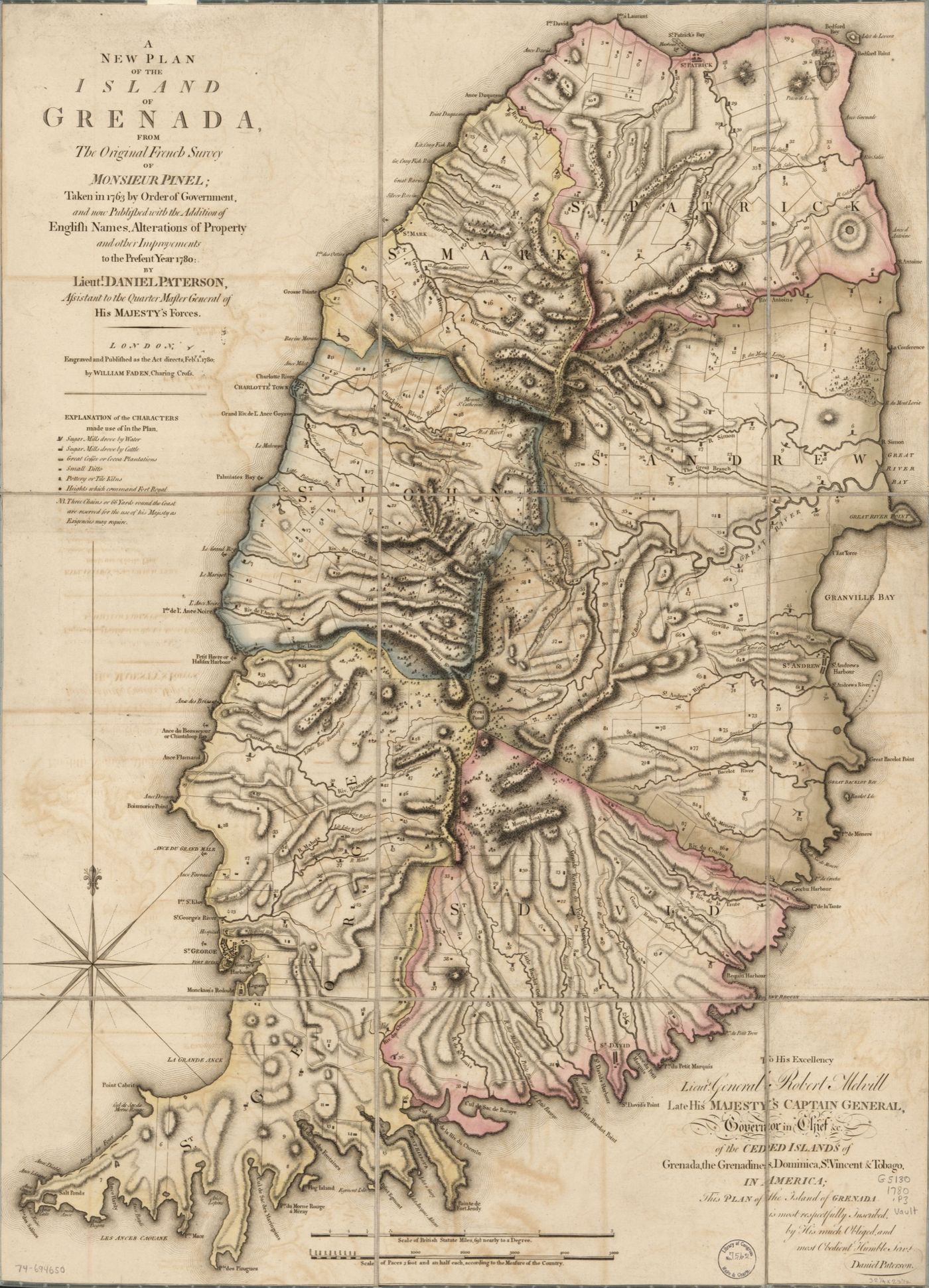
On Thursday, November 3, 1763, the Lords Commissioners for Trade and Plantations sat in Whitehall and worked through an ordinary day's agenda. The first item they put off: papers from the Company of Merchants trading to Africa about the establishments at Senegal, trading forts taken from France that dealt in gum and in slaves. In the afternoon they approved, transcribed and signed a representation to the King "upon the method of disposing of his Majesty's lands in the Islands of Grenada, Dominica, St. Vincent's and Tobago." Later in the same sitting they approved and signed another "upon the method of peopling the new governments with useful and industrious inhabitants."[1]
Those islands had been ceded to Britain nine months earlier by the Treaty of Paris, and officials called them simply the Ceded Islands. The plan signed that afternoon turned their forests and hillsides into lots for sugar and cotton estates, and the labor for that work came from Africa. One day's business in a committee room held the Senegal forts, the useful and industrious inhabitants, and the land. Nobody present appears to have thought the three items sat oddly together.
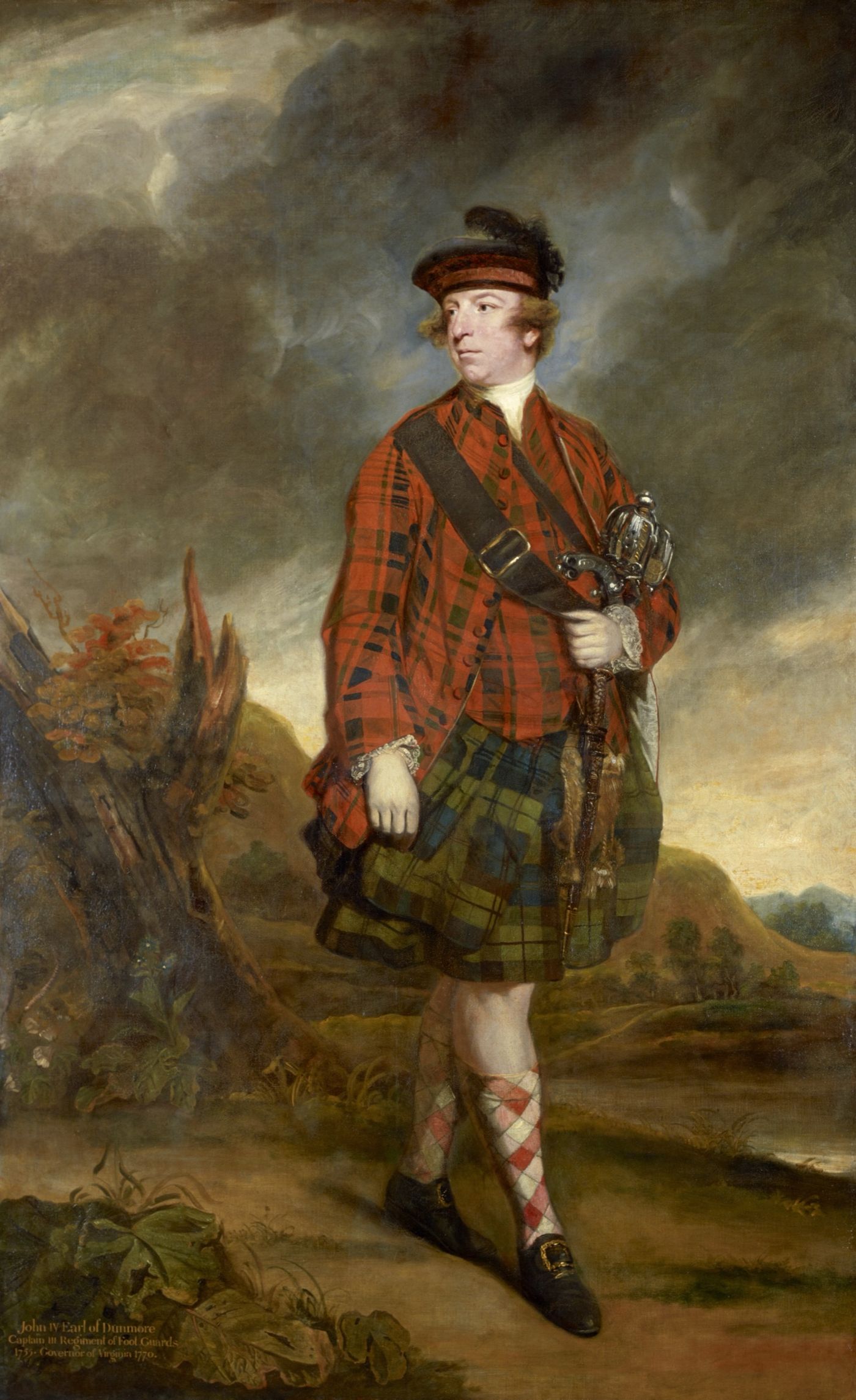
Twelve years later, on November 7, 1775, the royal governor of Virginia, John Murray, Earl of Dunmore, signed a proclamation aboard the ship William off Norfolk. He had fled his capital at Williamsburg in June and now governed from the water. The document declared martial law, and it went further. Dunmore declared free all "indented Servants, Negroes, or others, (appertaining to Rebels,)" who were "able and willing to bear Arms" and would join the king's troops.[2] The empire that had counted new sugar colonies among the spoils of victory in 1763 now offered freedom to enslaved Virginians as a weapon of war.
Set side by side, the two days can look like a conversion: an empire that planned sugar estates worked from Africa in 1763 and offered freedom to the enslaved in 1775. It was nothing of the kind. Neither day ended anything. The Ceded Islands kept importing captives, and Dunmore's offer was a military expedient that left the enslaved people of loyal masters exactly where they were. Yet the distance between those two moments measures a real change. In 1763 slavery was the ordinary background of British commerce, an item of routine business between the Senegal forts and the surveying of lots. Outside a few Quaker meetings it was rarely questioned, and so it was rarely defended. By the end of 1775 it had been argued over in a London courtroom, condemned by Quaker meetings, petitioned against by colonial assemblies and by enslaved people themselves, and thrown back in the faces of American patriots who described themselves as slaves to Parliament. Slavery survived those years almost everywhere, but it lost the protection of silence. This is the story of those twelve years.
As Indeed All Men Are
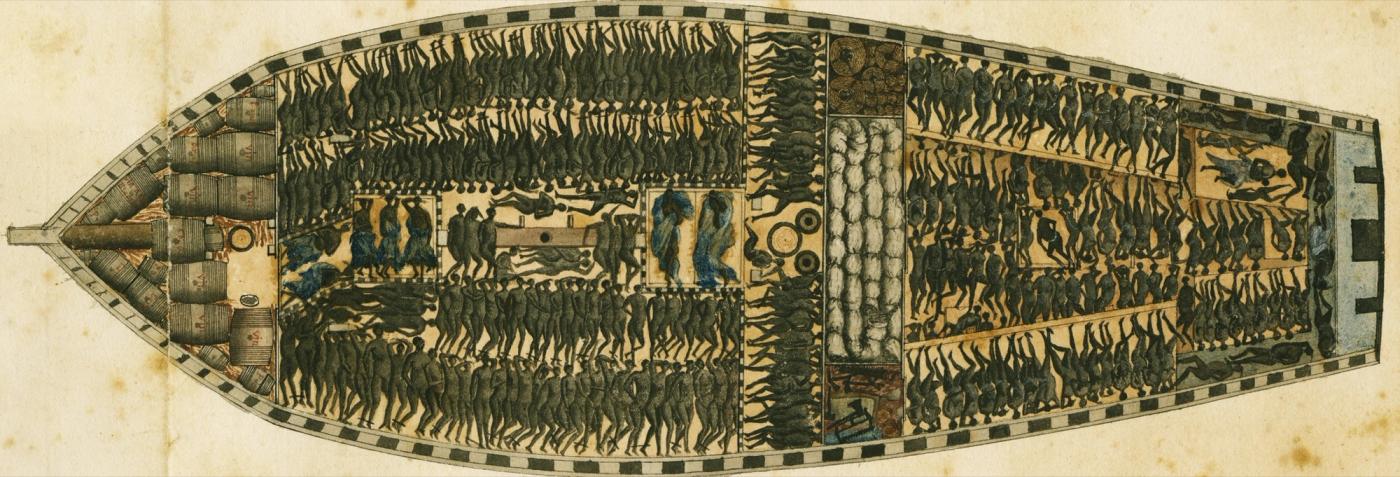
The slave trade that Britain carried into the peace was the largest in the Atlantic world. The surviving shipping records, gathered into a single database over the past half century, show British vessels embarking more than eight hundred thousand captives in the quarter century from 1751 to 1775, upwards of two fifths of everyone forced across the ocean in those years.[3] Liverpool, Bristol, and London supplied the ships. Jamaica, Barbados, the Leeward Islands, and now the Ceded Islands bought most of the captives, and the mainland colonies from Maryland to Georgia took their share. Even New England, where enslaved people were comparatively few, profited by selling fish and timber to the sugar planters and distilling their molasses into rum.
The same peace that enlarged this trade began the quarrel that would break the empire. To pay for the war and for garrisons in America, Parliament passed the Sugar Act in 1764 and the Stamp Act a year later, and colonial writers answered with the language of natural rights. One of the first and most influential answers came from James Otis, a Boston lawyer, in The Rights of the British Colonies Asserted and Proved, published in 1764. Otis followed his principles further than most of his readers cared to go. "The colonists are by the law of nature freeborn," he wrote, "as indeed all men are, white or black."[4] He went on to ask whether it could be right to enslave a man because he was black, and he attacked the West Indian sugar planters for their cruelty. An errata note printed at the end of the pamphlet then narrowed the attack. Otis had been "credibly informed," he explained, that British sugar planters treated their slaves more humanely than others did, and he asked readers to take his words as meant for "foreign sugar islanders and foreign Creoles."[5]
Once colonists began to describe taxation without consent as slavery, they could not keep the word in the abstract. Every pamphlet that called Parliament a tyrant asked, whether its author meant it to or not, what the enslaved people of America might make of the argument.
A Tap on the Shoulder
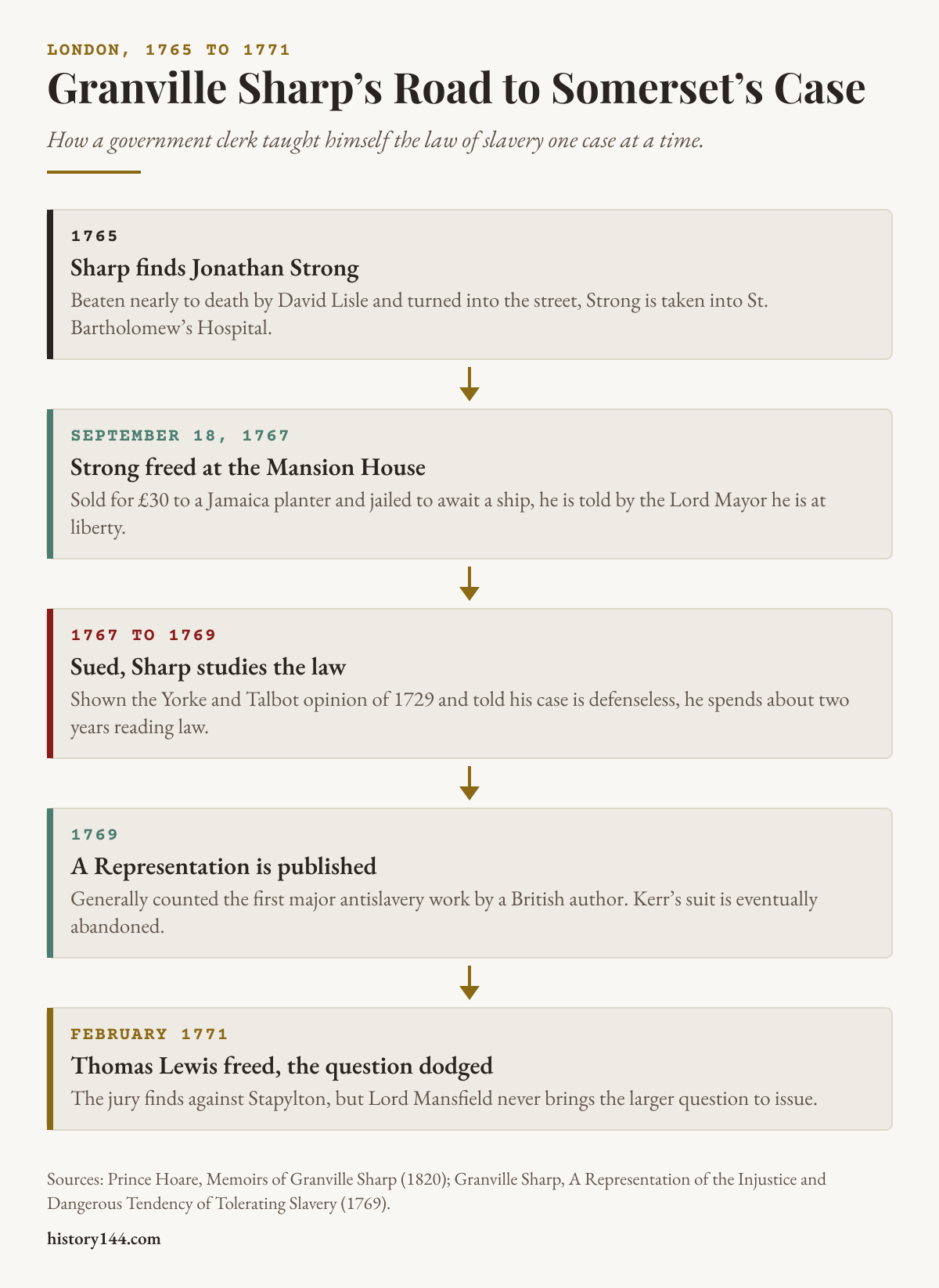
Quaker meetings in London had censured the slave trade for decades, but the first legal challenge to slavery in England began with a chance encounter. Granville Sharp was a minor government clerk in the Ordnance Department, the son of an archdeacon of small income, and a man who had taught himself Greek and Hebrew in his spare time. His brother William, a surgeon, gave free treatment to the poor of the City of London, and one day in 1765 Granville noticed a badly beaten young Black man waiting among the patients.[6] His name was Jonathan Strong, and he had been brought from Barbados by David Lisle, a lawyer who claimed him as his slave. Lisle had beaten him nearly to death and then turned him into the street.[7] The brothers had him admitted to St. Bartholomew's Hospital, where he was partially cured, though his sight remained weak from the blows to his head. Afterward they found him a place with an apothecary named Brown in Fenchurch Street.[8]
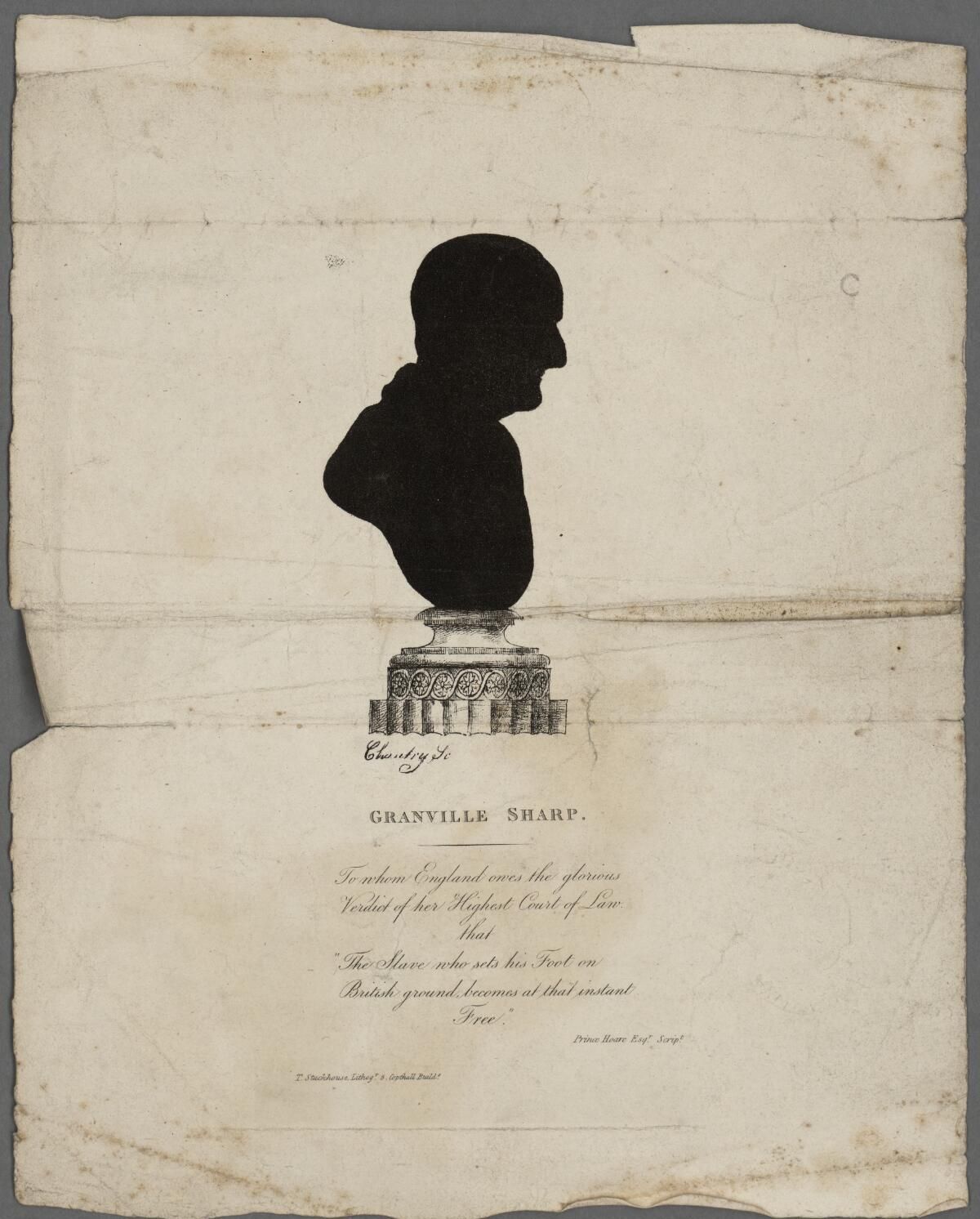
Two years later, in 1767, Lisle saw Strong in the street, now healthy, and decided he was worth something after all. He sold him to a Jamaica planter, James Kerr, for £30 and had him seized and lodged in the Poultry Compter, a city prison, to await a ship.[9] Strong got word to Sharp, who did not at first remember him but went to the prison and then to the Lord Mayor. On September 18, 1767, the matter was heard at the Mansion House. The Lord Mayor found no lawful grounds for holding Strong and told him he was at liberty. As they left, a West India captain named David Laird took hold of Strong and announced that he seized him as Kerr's property. Sharp tapped Laird on the shoulder and told him he charged him with assault, and Laird let go.[10]
Lisle challenged Sharp to a duel, and Kerr sued him for depriving him of his property. Sharp's counsel then showed him the opinion that Sir Philip Yorke and Charles Talbot, the attorney general and solicitor general, had given in 1729. It was a legal opinion, not a statute or a court ruling, but it was widely relied on, and it held that an enslaved person did not become free by coming to England or by being baptized. Sharp was told that his case was defenseless. Having no lawyer willing to argue otherwise, he set out to master the law himself and spent about two years reading it while the suit dragged on.[11] The result was A Representation of the Injustice and Dangerous Tendency of Tolerating Slavery, or of Admitting the Least Claim of Private Property in the Persons of Men, in England, published in 1769, the first major legal argument against slavery in England.[12] Kerr's suit was eventually abandoned, and he was ordered to pay treble costs.[13] Strong lived as a free man for the rest of his short life. On April 17, 1773, Sharp wrote: "Poor Jonathan Strong, the first Negro whose freedom I had procured in 1767, died this morning."[14]
Sharp now made himself the defender of Black people in England threatened with removal. In 1770 a man named Thomas Lewis was seized and carried aboard a ship, and Sharp's intervention brought him back from the vessel as it lay in the Downs, the anchorage off the Kent coast. The prosecution of the man who claimed him, Robert Stapylton, was brought for assault at the request and expense of Mrs. Banks, whose servants had heard Lewis's cries as he was dragged to the boat, while Sharp directed the work. Sharp had offered Stapylton a compromise and been refused. The case came to trial before Lord Mansfield, the chief justice of the King's Bench, in February 1771. Mansfield left the jury to decide whether Lewis was Stapylton's property, and the jury answered with a general cry of "No property, no property" and found him guilty. Lewis went free, in Sharp's own summary, "because the defendant could bring no evidence that Lewis was even nominally his property." Mansfield then declined to pass judgment on Stapylton, who went unpunished.[15] Mansfield had avoided the larger question of whether slavery was lawful in England at all. Sharp wanted a case that would force him to answer it.
Six Hundred Copies for Parliament
Across the Atlantic, a different kind of campaign was already well advanced. Among the Quakers of Pennsylvania and New Jersey, two men had spent years pressing their fellow Friends to give up slaveholding. John Woolman, a tailor from Mount Holly, New Jersey, traveled through the colonies to reason with slaveholding Quakers. Anthony Benezet, a Philadelphia schoolmaster born to a Huguenot family in northern France, wrote and printed antislavery tracts at his own expense.[16] In 1758 the Philadelphia Yearly Meeting, the governing body of Quakers in the two colonies, condemned its members' buying and selling of slaves and appointed committees to visit slaveholders and urge them to free the people they held.[17] It stopped short of forbidding slaveholding itself.
Benezet then carried the argument beyond his own denomination. His Short Account of That Part of Africa Inhabited by the Negroes appeared in 1762, A Caution and Warning to Great Britain and Her Colonies in 1766, and Some Historical Account of Guinea in 1771. He was among the first to combine religious and philosophical argument with eyewitness reports from Africa and the colonies, gathered from the accounts of travelers and traders.[18] Some Historical Account of Guinea was the most influential of these works on both sides of the Atlantic. Sharp and John Wesley, the founder of Methodism, both corresponded with Benezet, and Wesley drew heavily on Some Historical Account of Guinea for his own Thoughts upon Slavery in 1774. The Caution and Warning went further, into the places where laws were made. The general meeting of Quakers at Philadelphia sent it to the meeting in London, asking that it be reprinted and put into the hands of members of Parliament. Six hundred copies went to the members of both Houses. Benezet said the object was "to forward the design of a national inquiry."[19]
The transatlantic connection became personal in 1772. Benezet wrote to Sharp from Philadelphia in May of that year, urging him to attack the trade itself and reporting that thousands in Maryland and Virginia were ready to support petitions against it. According to Sharp's biographer Prince Hoare, it reached him on June 22, 1772, the day Somerset's case ended.[20] By then Sharp had other news on his mind.
So Odious
James Somerset was a native of Africa. According to the return later made to the writ of habeas corpus, he was brought as a slave to Virginia and sold there on August 1, 1749, to Charles Steuart, then a resident of the colony. Steuart sailed for England on business in October 1769 and reached London on November 10, bringing Somerset with him.[21] On October 1, 1771, Somerset left Steuart's service and refused to return. On November 26, on Steuart's orders, men seized him and delivered him to John Knowles, captain of the Ann and Mary, to be carried to Jamaica and sold.[22]
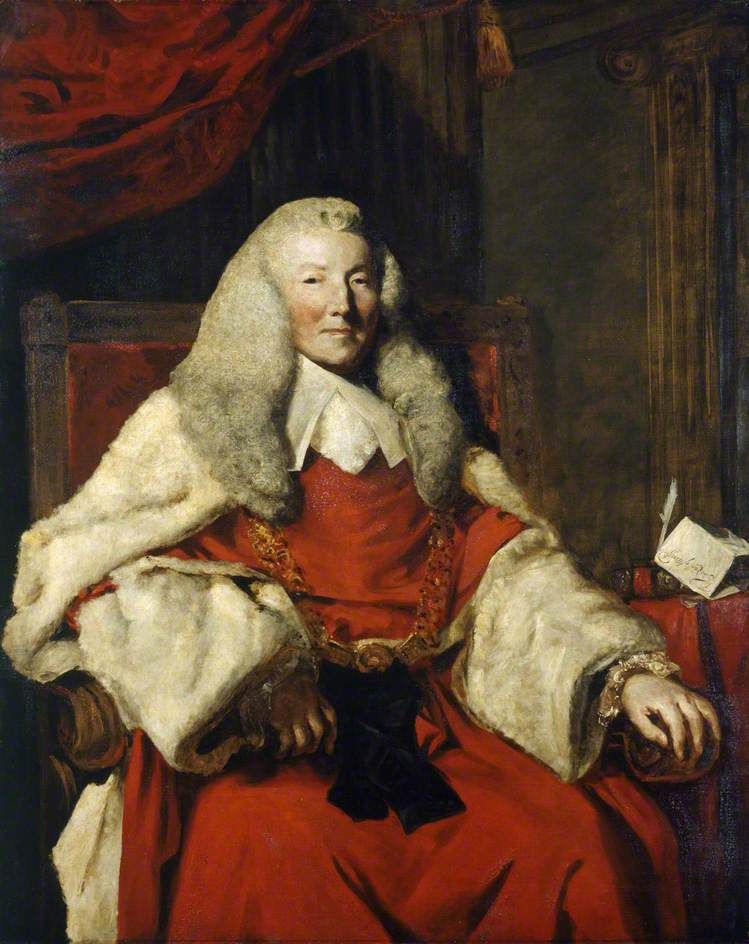
On December 3, 1771, Thomas Walklin, Elizabeth Cade, and John Marlow swore affidavits that Somerset was held in irons aboard the Ann and Mary, and on them Lord Mansfield granted a writ of habeas corpus. Six days later Knowles produced Somerset before him. Sharp paid for the case and stayed in the background, working closely with a young lawyer, Francis Hargrave, because he feared that his own presence might prejudice the outcome. Somerset's counsel, William Davy, John Glynn, Hargrave, James Mansfield, and John Alleyne, argued that villeinage, the medieval form of bondage, had long since expired and that no English law supported slavery. West Indian planters paid for the other side, represented by John Dunning and William Wallace.[23] Lord Mansfield tried for months to avoid a ruling. He urged Steuart to end the question by freeing Somerset, and when that did not happen he declared that justice must be done.[24] The case was argued at four sittings, on February 7 and May 9, 14, and 21.
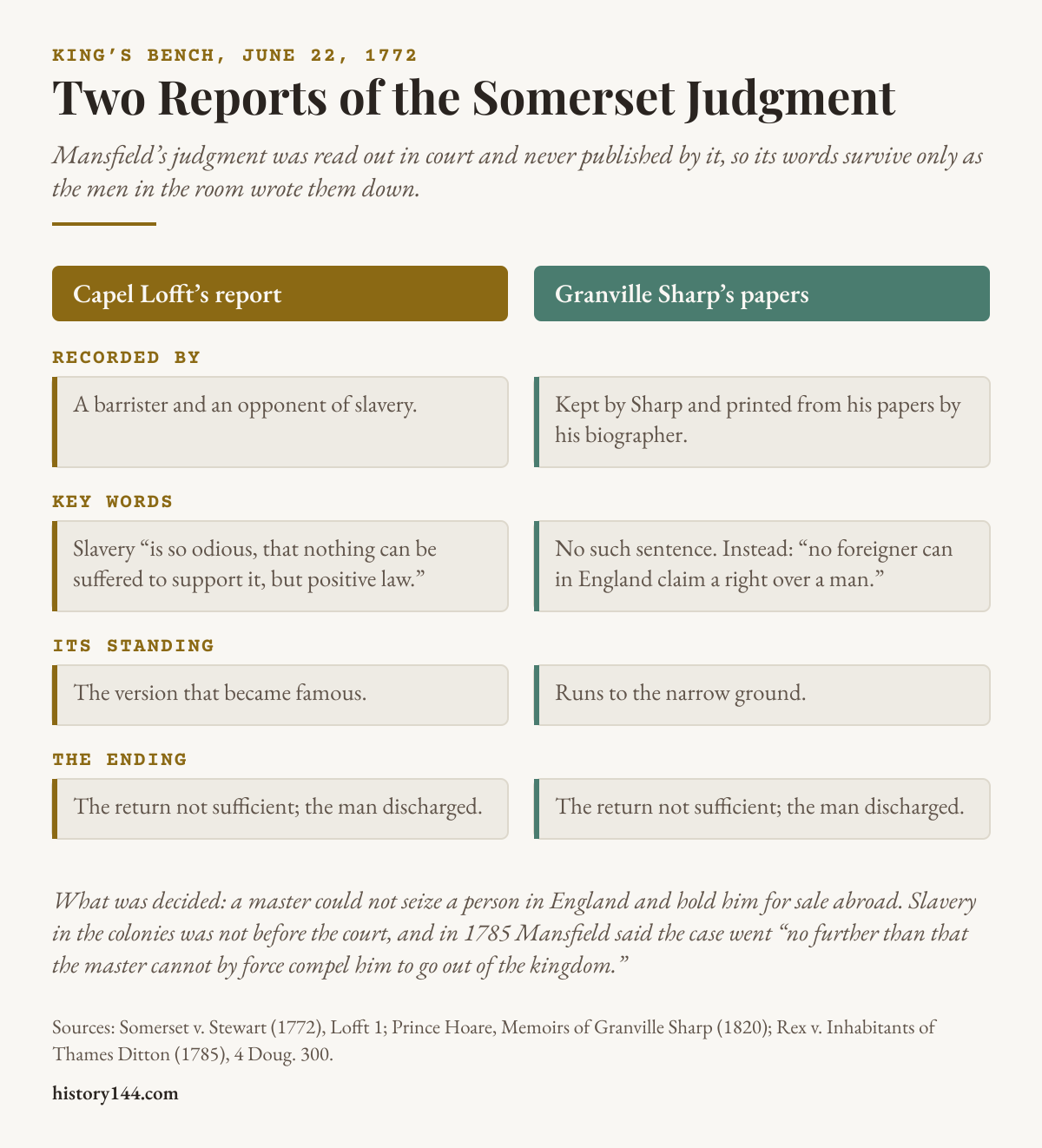
On June 22, 1772, Mansfield gave judgment. No official text of it survives. It was read out in court and never published by the court, and the judges of that day did not check the reports taken of their decisions, so everything known of the words comes from men writing them down in the room or shortly after. The version that became famous was printed by Capel Lofft, a barrister and an opponent of slavery: slavery "is so odious, that nothing can be suffered to support it, but positive law." The version that Granville Sharp kept among his own papers, and that his biographer printed from them, contains no such sentence. It runs instead to the narrow ground: "no foreigner can in England claim a right over a man: such a claim is not known to the laws of England," and "the power claimed never was in use here, or acknowledged by the law." Every version ends the same way, with the court unable to find the return sufficient and the man discharged.[25]
The judgment decided less than its admirers claimed. It established that a master could not seize an enslaved person in England and force him abroad for sale, and that habeas corpus reached such a seizure. It did not declare slavery unlawful in England, and the question of slavery in the colonies was not before the court.[26] Thirteen years later Mansfield remarked from the bench that the case had gone "no further than that the master cannot by force compel him to go out of the kingdom."[27] Popular opinion took little notice of such distinctions. On the day of the judgment Somerset went himself to Sharp to tell him that it had been given in his favor.[28]
More Useful Inhabitants
News of the case reached colonies that were already uneasy about the trade, though not always for humanitarian reasons. On April 1, 1772, two months before Mansfield's judgment, the Virginia House of Burgesses addressed King George III. The importation of slaves from Africa, the Burgesses wrote, "hath long been considered as a Trade of great Inhumanity," and under its present encouragement it might "endanger the very Existance of your Majesty's American Dominions." They asked him to remove "all those Restraints on your Majesty's Governors of this Colony, which inhibit their assenting to such Laws as might check so very pernicious a Commerce." One of their reasons echoed the Board of Trade's business of November 1763, when the lords had signed a plan for peopling the Ceded Islands with useful and industrious inhabitants. The trade, the Burgesses wrote, "greatly retards the Settlement of the Colonies, with more useful Inhabitants."[29] The Burgesses' own reasons said nothing of the condition of the enslaved. They spoke of settlement and security, and asked that "the Interest of a few" in Britain be set aside. London, where the slave merchants carried great weight, left the request unanswered, as it had refused similar Virginia measures before. Granville Sharp, asked from America to inquire after it, was told by the secretary of state himself that the petition had been received but that he expected no answer would be given.[30] Benezet copied the Virginia resolution into a letter to Sharp that November.[31]
In Massachusetts, enslaved people began to speak for themselves through the colony's own institutions. On January 6, 1773, a petition signed only "Felix" was laid before Governor Thomas Hutchinson and the General Court. Its author was probably Felix Holbrook, an enslaved Boston man whose name stands first on the petition the House received that June. "We have no Property! We have no Wives! No Children! We have no City! No Country!" it declared, and it asked only for such relief as could do no injury to the petitioners' masters.[32] On April 20 four enslaved men, Peter Bestes, Sambo Freeman, Felix Holbrook, and Chester Joie, sent a printed letter to the representatives of the province's towns. They began by observing that the legislature's recent efforts "to free themselves from slavery" had given those in bondage "a high degree of satisfaction."[33] In June another petition asked the House to free them, and the House put off its decision to the next session.[34]
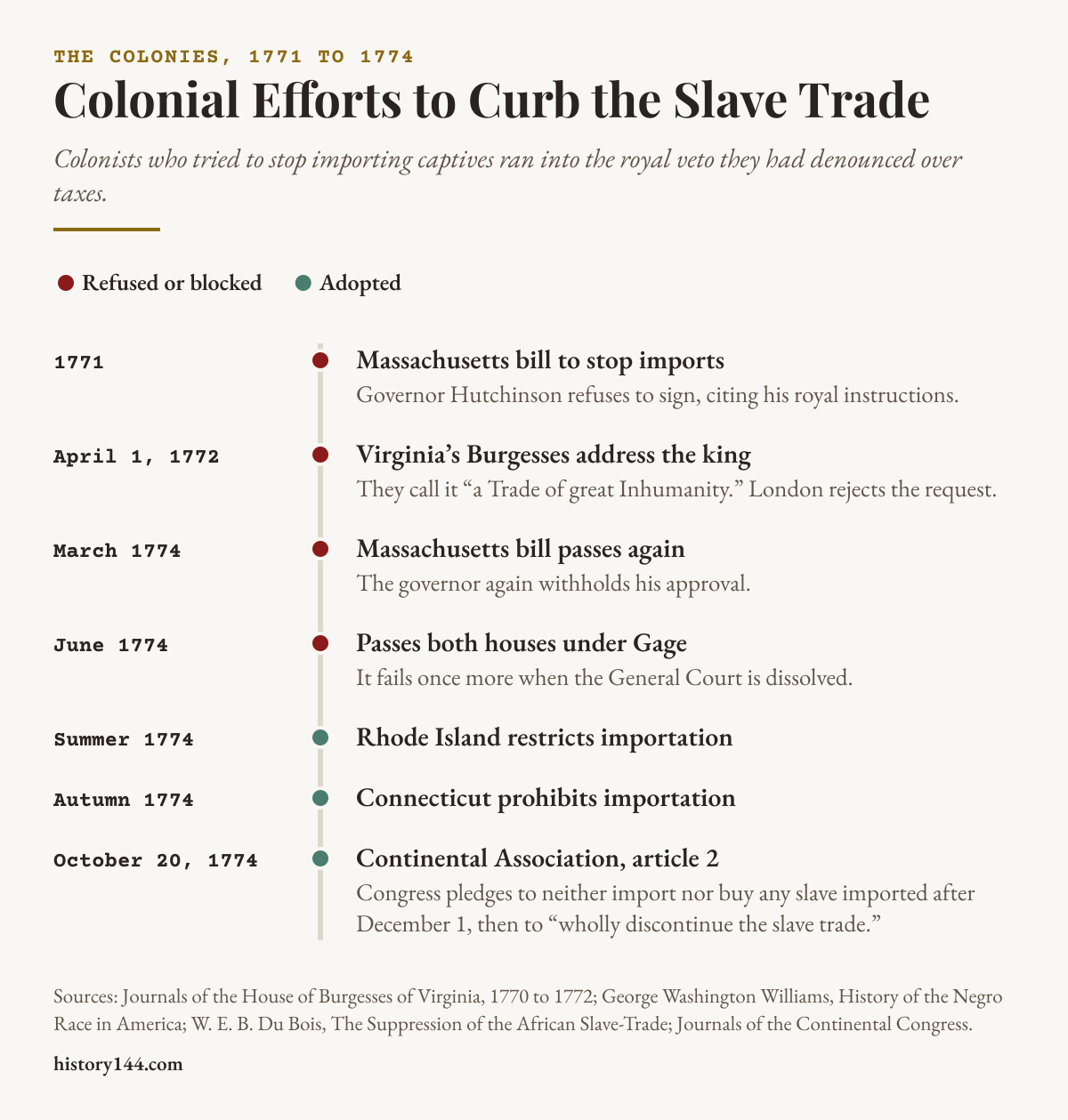
The assembly did try to restrict the trade. In 1771 it passed a bill to prevent the importation of slaves from Africa, but Hutchinson refused to sign it, saying that his royal instructions did not permit him to assent to a law of so unusual a kind. In March 1774 a bill "to prevent the Importation of Negroes or other Persons as Slaves" passed again, and the governor again withheld his approval. In June 1774 the same bill passed both houses under General Thomas Gage, Hutchinson's successor, and failed once more when the General Court was dissolved.[35] The royal veto that colonists had denounced for years in matters of taxation now stood between them and a measure many of them wanted.
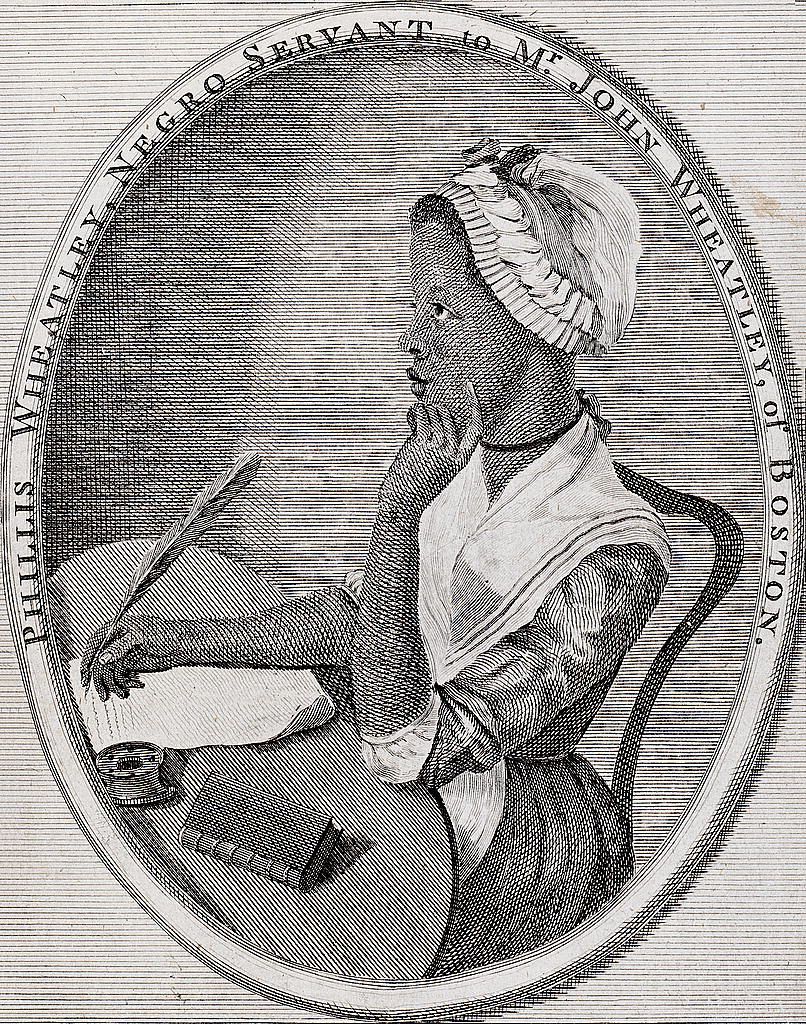
The most celebrated enslaved person in Boston joined the argument in her own way. Phillis Wheatley, carried from West Africa as a small child and enslaved in the household of John and Susanna Wheatley, had been unable to find a Boston publisher for her verse. Her Poems on Various Subjects, Religious and Moral was published in London in 1773, and that autumn, soon after her return to Boston, she was freed. In a letter of October 18 she wrote that her master had given her freedom "at the desire of my friends in England."[36] On February 11, 1774, she wrote to Samson Occom, a Mohegan minister, and the Connecticut Gazette printed the letter the following month. "In every human Breast, God has implanted a Principle, which we call Love of Freedom," she wrote. On the colonists who cried for liberty while holding others in bondage she was dry and exact: "How well the Cry for Liberty, and the reverse Disposition for the exercise of oppressive Power over others agree, I humbly think it does not require the Penetration of a Philosopher to determine."[37]
Neither Import nor Purchase
The year 1774 brought the first colonial laws that actually curbed the trade. Rhode Island, whose Newport merchants were the most active slave traders in North America, passed its act that June. "Those who are desirous of enjoying all the advantages of liberty themselves," the preamble declared, "should be willing to extend personal liberty to others," and any slave brought into the colony thereafter was to be free. The provisos protected Newport's business. A Rhode Island ship that carried captives from Africa to the West Indies and could not sell them there might still land them at home, so long as the owner gave bond to send them out again within a year. Connecticut prohibited importation that autumn.[38] In Virginia, Thomas Jefferson, himself the owner of a large number of enslaved people, drafted instructions for the colony's delegates to the coming Continental Congress, published that summer as A Summary View of the Rights of British America. "The abolition of domestic slavery is the great object of desire in those colonies, where it was unhappily introduced in their infant state," he wrote. He blamed the king's vetoes for defeating every colonial attempt to stop the imports that would have to end first.[39]
On October 20, 1774, the First Continental Congress in Philadelphia adopted the Continental Association, its program of economic resistance to the Coercive Acts. The second of its articles read: "We will neither import nor purchase, any slave imported after the first day of December next; after which time, we will wholly discontinue the slave trade, and will neither be concerned in it ourselves, nor will we hire our vessels, nor sell our commodities or manufactures to those who are concerned in it."[40] The pledge was part of a general boycott of British trade, enforced by local committees alongside the bans on tea and British goods, and it said nothing about the hundreds of thousands of people already enslaved in the colonies. Still, Congress had committed twelve colonies, at least on paper, to end a traffic that a decade earlier few colonists had thought to question.
Among the Quakers the change went deeper. In 1774 the Philadelphia Yearly Meeting ruled that members who bought, sold or gave away slaves should be disowned if they would not make amends, and it enjoined the monthly meetings to labor with those who still held slaves. In 1776 it made slaveholding itself an offense for which Friends could be disowned, and in 1778 the Philadelphia Monthly Meeting disowned seven members on that ground.[41] Benjamin Rush, a young Philadelphia physician who had published his own pamphlet against slavekeeping, wrote to Sharp on May 1, 1773, that "Anthony Benezet stood alone a few years ago, in opposing Negro slavery in Philadelphia; and now three-fourths of the province, as well as the city, cry out against it."[42] Rush wrote as an advocate, and his figure cannot be tested, but the shift he described in Pennsylvania was real.
Yelps for Liberty
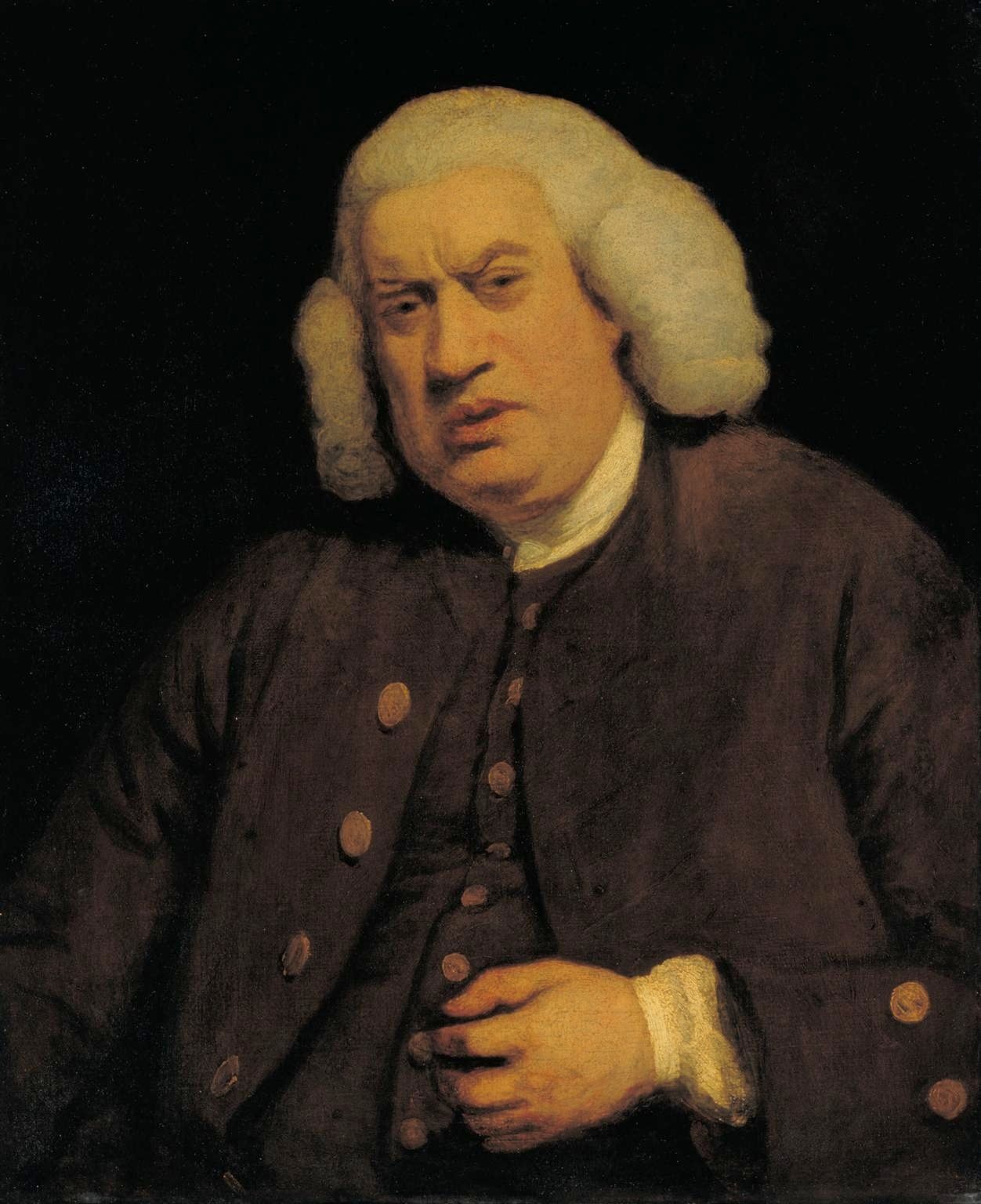
Early in 1775 a British answer to Congress came from the pen of Samuel Johnson. The lexicographer had long detested slavery, and his household included Francis Barber, born into slavery in Jamaica, who had come to Johnson as a servant in 1752 and been freed under his former owner's will. Lord North's government wanted a forceful reply to Congress's declarations, and Johnson supplied Taxation No Tyranny. Most of the pamphlet defended Parliament's right to tax the colonies, but its best-remembered line struck at the colonists' moral standing. "How is it," Johnson asked, "that we hear the loudest yelps for liberty among the drivers of negroes?"[43] It was a debater's thrust, and it came from a writer defending the very government that had vetoed the Virginia and Massachusetts measures. It nonetheless stated in a single sentence the contradiction that Otis, the Boston petitioners, and Phillis Wheatley had been pointing to for a decade.
In Philadelphia that spring, the contradiction produced an institution. On April 14, 1775, a group of men met at the Sun Tavern on Second Street and adopted a constitution. Its preamble said that there were people held as slaves who were "justly entitled to their freedom by the laws and Constitution under which we live, could their particular cases be candidly and openly debated," but who, "being tied by the strong cords of oppression, are rendered incapable of asserting their freedom." It was a duty on Christians, the preamble went on, "but more especially at a time when justice, liberty, and the laws of the land are the general topics, among most ranks and stations of men." They named themselves the Society for the Relief of Free Negroes Unlawfully Held in Bondage, elected officers, and appointed a standing committee of inspection with a number of cases already before it.[44] The society met four times that year, adjourned in the eleventh month to meet again in February, and did not meet again until 1784. It was the first antislavery society in the colonies.[45] Five days after its founding, British regulars and Massachusetts militia exchanged fire at Lexington and Concord.
The war gave slavery a new place in imperial politics, and Virginia showed it first. Dunmore had been at odds with Virginia's patriot leaders for months. On April 21 he had removed the colony's gunpowder from the Williamsburg magazine, and on June 8 he fled with his family to the warship Fowey. From the water his small force raided along the shores of Hampton Roads. He signed his proclamation on November 7 and held it. On the 14th he attacked a body of Virginia troops near Kemp's Landing and scattered them, and he published the proclamation the next day. "Immediately on this," he wrote at the end of the month, "I issued the enclosed proclamation; which has had a wonderful effect, as there are no less than three thousand that have already taken and signed the enclosed oath. The negroes are flocking in, also, from all quarters." A Virginia committee, reading intercepted letters, reported that Dunmore had "proclaimed all slaves free who would join him and take up arms; that a number of about two hundred slaves immediately joined him, and were furnished with arms." The offer freed only those held by rebels, and only men able to bear arms.[46] For a decade the colonists had called themselves slaves. Now a royal governor was arming theirs.
The Protection of Silence
Measured by results, the years between the Treaty of Paris and Dunmore's proclamation accomplished little. No colony freed its slaves. The British trade continued on a vast scale, and the Ceded Islands went on absorbing tens of thousands of captives. Mansfield's judgment protected one man from being shipped to Jamaica and left the institution in the colonies untouched. Virginia's petition went unanswered, the Massachusetts bills failed, and the Continental Association's pledge lasted only as long as the boycott it served.
Yet slavery came out of these years a different kind of institution. In 1763 it needed few defenders because it had few critics beyond a handful of Quaker meetings. By 1775 a government clerk had taught himself enough law to force the chief justice of England to rule, and a Philadelphia schoolmaster's tracts were being read by Methodists and lawyers in London. Enslaved men in Boston were petitioning their legislature in the language of the patriot cause, a formerly enslaved poet was exposing patriot hypocrisy in a Connecticut newspaper, and Congress had pledged to stop the trade. Slavery had lost the protection of silence. It now had to be explained and justified, and the language of rights that colonists had turned against Parliament proved impossible to confine to quarrels over taxes. The contradiction Johnson named would return in the debates over independence, over the Constitution, and in Parliament's long struggle over the trade. In November 1763 the Board of Trade had taken up the Senegal forts, the land, and the useful and industrious inhabitants in a single sitting and appears to have seen nothing odd in the combination. In November 1775 a royal governor was offering freedom to enslaved men, and the people who walked away from their masters to answer him had entered an argument about liberty that neither side of the war would be able to control.
Places in this Story
The places this story moves through, in order — follow them on the interactive map →
- Whitehall, London November 3, 1763
The Board of Trade signed its plan for disposing of the Crown's lands in the Ceded Islands.
- Boston, Massachusetts 1764
James Otis wrote that the colonists were freeborn by the law of nature, as all men are, white or black.
- City of London, England 1765
Granville Sharp found Jonathan Strong beaten and waiting among his brother's patients.
- Mount Holly, New Jersey 1758
John Woolman traveled from here to argue slaveholding before the Philadelphia Yearly Meeting.
- Philadelphia, Pennsylvania 1771
Anthony Benezet printed Some Historical Account of Guinea, the book John Wesley drew on for his Thoughts upon Slavery.
- Westminster, London June 22, 1772
Lord Mansfield gave judgment in the Court of King's Bench and James Somerset was discharged.
- Williamsburg, Virginia April 1, 1772
The House of Burgesses asked the King to let its governors check a trade of great inhumanity.
- Newport, Rhode Island 1774
The colony whose merchants led the American slave trade restricted the importation of enslaved people.
- Norfolk, Virginia November 7, 1775
Lord Dunmore signed his proclamation aboard the ship William and offered freedom to enslaved Virginians.
Frequently Asked Questions
What was Somerset's case and what did it decide?
In June 1772 Lord Mansfield discharged James Somerset, holding that a master could not seize a man in England and ship him abroad for sale. It did not make slavery unlawful in England, and Mansfield said so from the bench thirteen years later.
Who was Granville Sharp and how did he fight slavery?
He was a government clerk who took up the case of Jonathan Strong in 1767 and then spent two years teaching himself the law after being told his case was hopeless. He paid for Somerset's case and worked through other counsel so his own name would not prejudice it.
What did Samuel Johnson mean by yelps for liberty?
In Taxation No Tyranny in 1775 he asked how it was that the loudest yelps for liberty came from the drivers of negroes. It was a debater's thrust at the Continental Congress, but it named a contradiction Americans had been arguing over for a decade.
Did the Continental Congress ban the slave trade in 1774?
The second article of the Continental Association pledged the colonies to import no slave after December 1, 1774 and to discontinue the trade entirely. It said nothing about the people already enslaved, and it lasted only as long as the boycott it belonged to.
What was Lord Dunmore's Proclamation of November 1775?
Virginia's royal governor declared martial law and offered freedom to indented servants and enslaved people belonging to rebels who were able and willing to bear arms for the king. He signed it on November 7 and published it on the 15th, the day after a skirmish at Kemp's Landing.
Did enslaved people petition against slavery before 1776?
Yes. A petition signed Felix went to the Massachusetts governor and General Court in January 1773, and in April four enslaved men wrote a printed circular to the towns' representatives noting the legislature's own efforts to free itself from slavery.
What did Phillis Wheatley say about American liberty?
Writing to Samson Occom in February 1774, she said that God had implanted in every human breast a principle we call love of freedom. She added that it took no philosopher to see how poorly the cry for liberty agreed with the exercise of oppressive power over others.
Bibliography
Bartlett, John Russell, ed. Records of the Colony of Rhode Island and Providence Plantations, in New England. Vol. 7, 1770 to 1776. Providence: A. Crawford Greene, 1862. Internet Archive. https://archive.org/details/recordsofcolonyo07rhod. Accessed November 9, 2026.
Benezet, Anthony. A Caution and Warning to Great Britain and Her Colonies. Philadelphia, 1766. Google Books. https://books.google.com/books?id=3TBcAAAAcAAJ. Accessed November 9, 2026.
Benezet, Anthony. A Short Account of That Part of Africa Inhabited by the Negroes. Philadelphia, 1762. Google Books. https://books.google.com/books?id=XO1DAQAAMAAJ. Accessed November 9, 2026.
Benezet, Anthony. Some Historical Account of Guinea, Its Situation, Produce, and the General Disposition of Its Inhabitants. Philadelphia: Joseph Crukshank, 1771. Google Books. https://books.google.com/books?id=yNBUsS6u4WcC. Accessed November 9, 2026.
Bestes, Peter, Sambo Freeman, Felix Holbrook, and Chester Joie. Printed circular letter. Boston, April 20, 1773. Massachusetts Historical Society.
Connecticut Gazette. March 11, 1774.
Du Bois, W. E. Burghardt. The Suppression of the African Slave-Trade to the United States of America, 1638-1870. New York: Longmans, Green, 1896. Project Gutenberg. https://www.gutenberg.org/ebooks/17700. Accessed November 8, 2026.
Force, Peter, ed. American Archives: Consisting of a Collection of Authentick Records, State Papers, Debates, and Letters and Other Notices of Publick Affairs. 4th series, vol. 3. Washington, 1840. Internet Archive. https://archive.org/details/americanarchive043forc. Accessed November 8, 2026.
Hargrave, Francis. An Argument in the Case of James Sommersett a Negro. London, 1772. Google Books. https://books.google.com/books?id=6CESAAAAIAAJ. Accessed November 9, 2026.
Hoadly, Charles J., ed. The Public Records of the Colony of Connecticut, from October, 1772, to April, 1775. Hartford: Case, Lockwood and Brainard, 1887. Internet Archive. https://archive.org/details/publicrecordsofc014conn. Accessed November 9, 2026.
Hoare, Prince. Memoirs of Granville Sharp, Esq. Composed from his own Manuscripts, and other Authentic Documents. London: Henry Colburn, 1820. Internet Archive. https://archive.org/details/memoirsofgranvil00hoar. Accessed November 8, 2026.
Jefferson, Thomas. A Summary View of the Rights of British America. Williamsburg, 1774. The Avalon Project, Lillian Goldman Law Library, Yale Law School. https://avalon.law.yale.edu/18th_century/jeffsumm.asp. Accessed November 8, 2026.
Johnson, Samuel. Taxation No Tyranny: An Answer to the Resolutions and Address of the American Congress. London: T. Cadell, 1775. Google Books. https://books.google.com/books?id=w4hbAAAAQAAJ. Accessed November 9, 2026.
Journals of the Board of Trade and Plantations. Vol. 11, January 1759 to December 1763. Edited by K. H. Ledward. London: His Majesty's Stationery Office, 1935. British History Online. https://www.british-history.ac.uk/jrnl-trade-plantations/vol11/pp401-413. Accessed November 8, 2026.
Journals of the Continental Congress, 1774-1789. Vol. 1. Edited by Worthington Chauncey Ford. Washington: Government Printing Office, 1904.
Journals of the House of Burgesses of Virginia, 1770-1772. Edited by John Pendleton Kennedy. Richmond: Virginia State Library, 1906. Internet Archive. https://archive.org/details/journalsofhous177072virg. Accessed November 8, 2026.
Lloyd's Register of Shipping. 1768.
Otis, James. The Rights of the British Colonies Asserted and Proved. Boston: Edes and Gill, 1764. Evans Early American Imprint Collection, University of Michigan Library. https://quod.lib.umich.edu/e/evans/N07655.0001.001. Accessed November 8, 2026.
An Historical Memoir of the Pennsylvania Society for Promoting the Abolition of Slavery. Philadelphia: Merrihew and Thompson, 1848. Internet Archive. https://archive.org/details/historicalmemoir01penn. Accessed November 8, 2026.
Philadelphia Yearly Meeting of the Religious Society of Friends. A Brief Statement of the Rise and Progress of the Testimony of the Religious Society of Friends, against Slavery and the Slave Trade. Philadelphia: Joseph and William Kite, 1843. Internet Archive. https://archive.org/details/briefstatementof00soci. Accessed November 9, 2026.
Rex v. Inhabitants of Thames Ditton (1785). 4 Doug. 300, 99 Eng. Rep. 891.
Rush, Benjamin. An Address to the Inhabitants of the British Settlements in America, upon Slave-Keeping. Philadelphia, 1773. Google Books. https://books.google.com/books?id=Q0VgPgAACAAJ. Accessed November 9, 2026.
Sharp, Granville. A Representation of the Injustice and Dangerous Tendency of Tolerating Slavery, or of Admitting the Least Claim of Private Property in the Persons of Men, in England. London: Benjamin White and Robert Horsfield, 1769. Google Books. https://books.google.com/books?id=KbnMYgEACAAJ. Accessed November 9, 2026.
Slave Voyages. Trans-Atlantic Slave Trade Database. Rice University. https://www.slavevoyages.org/voyages/estimates. Accessed November 8, 2026.
Somerset v. Stewart (1772). Lofft 1, 98 Eng. Rep. 499.
The Petition of Felix. January 6, 1773. Broadside.
Wesley, John. Thoughts upon Slavery. London, 1774. Google Books. https://books.google.com/books?id=asQLhrGAd_MC. Accessed November 9, 2026.
Wheatley, Phillis. Phillis Wheatley to David Wooster, October 18, 1773. Massachusetts Historical Society.
Wheatley, Phillis. Poems on Various Subjects, Religious and Moral. London: A. Bell, 1773. Google Books. https://books.google.com/books?id=9kYqnQEACAAJ. Accessed November 9, 2026.
Williams, George W. History of the Negro Race in America from 1619 to 1880. Vol. 1. New York: G. P. Putnam's Sons, 1883. CUNY Manifold. https://cuny.manifoldapp.org/read/597f42dc-4282-4dc3-bbab-d2703bf4a0a4/section/887a2adc-8762-4fb1-b088-6a57ef3fed22. Accessed November 8, 2026.
Woolman, John. The Journal of John Woolman. Boston: Houghton Mifflin, 1871. Internet Archive. https://archive.org/details/journalofjohnwoo00wool. Accessed November 8, 2026.
Citations
- Journal, November 1763: Volume 70, entries for Thursday November 3, 1763, in Journals of the Board of Trade and Plantations, vol. 11, January 1759 to December 1763, ed. K. H. Ledward (London: HMSO, 1935), 401-13. The three items quoted all stand in that day's minutes, with the lands representation signed before the one on peopling the new governments. ↑
- By his Excellency the Right Honourable John, Earl of Dunmore ... A Proclamation, on board the ship William, off Norfolk, November 7, 1775, printed in Peter Force, ed., American Archives, 4th ser. (Washington, 1837-1853), 3:1385-86. ↑
- Slave Voyages, Trans-Atlantic Slave Trade Database, estimates for vessels flying British colors, 1751-1775. The database is compiled from surviving shipping records, muster rolls and customs returns rather than from narrative accounts, and its own estimates pages give the margin of error. ↑
- James Otis, The Rights of the British Colonies Asserted and Proved (Boston: Edes and Gill, 1764), 29. ↑
- Otis, Rights of the British Colonies, 80 (errata). ↑
- Prince Hoare, Memoirs of Granville Sharp, Esq. Composed from his own Manuscripts, and other Authentic Documents (London: Henry Colburn, 1820), 32. ↑
- Hoare, Memoirs of Granville Sharp, 32, and the footnote there drawing on the "Minutes of the Case of J. Strong," which record what came out in the legal examinations about Lisle. ↑
- Hoare, Memoirs of Granville Sharp, 32-33. ↑
- Hoare, Memoirs of Granville Sharp, 33-34. ↑
- Hoare, Memoirs of Granville Sharp, 33-35, printing Strong's own voucher delivered in court and Sharp's account of the hearing at the Mansion House, which names the captain "Mr. David Lair" of a ship of "Messrs. Muir and Atkinson, bound to Jamaica"; Lloyd's Register of Shipping, 1768, under T, lists the ship Thames, master David Laird, owner Hutch. Muir, voyage London to Jamaica, which gives the spelling used here. ↑
- Hoare, Memoirs of Granville Sharp, 37-42, for the Yorke and Talbot opinion of 1729 and Sharp's two years of private study of the law. ↑
- Granville Sharp, A Representation of the Injustice and Dangerous Tendency of Tolerating Slavery, or of Admitting the Least Claim of Private Property in the Persons of Men, in England (London: Benjamin White and Robert Horsfield, 1769). ↑
- Hoare, Memoirs of Granville Sharp, 43-45. ↑
- Hoare, Memoirs of Granville Sharp, 146, printing Sharp's note of April 17, 1773: "Poor Jonathan Strong, the first Negro whose freedom I had procured in 1767, died this morning." ↑
- Hoare, Memoirs of Granville Sharp, chap. 2, 53-60; the summary quoted is at 55, from Sharp's own papers, as is the account of the refused compromise and of the prosecution brought in Mrs. Banks's name. The jury's verdict, from the minutes of the trial of February 20, 1771, and Mansfield's refusal to proceed to judgment are at 59-61. ↑
- Anthony Benezet, A Short Account of That Part of Africa Inhabited by the Negroes (Philadelphia, 1762); A Caution and Warning to Great Britain and Her Colonies (Philadelphia, 1766); Some Historical Account of Guinea (Philadelphia, 1771). For Benezet's free school and his bequest to it, Hoare, Memoirs of Granville Sharp, 96n. ↑
- John Woolman, The Journal of John Woolman, chap. 5, 134-38, his own account, as a man in the room, of the Philadelphia Yearly Meeting of 1758: "A minute was made more full on that subject than any heretofore; and the names of several Friends entered who were free to join in a visit to such as kept slaves." Woolman's chap. 6 records the visits that followed. ↑
- Benezet, Some Historical Account of Guinea, preface and the extracts from travellers printed throughout. ↑
- Hoare, Memoirs of Granville Sharp, 96n, recording that the general meeting of Quakers at Philadelphia sent the Caution and Warning to the meeting in London to be reprinted and placed in the hands of members of Parliament, that six hundred copies went to both Houses, and quoting Benezet on the object; John Wesley, Thoughts upon Slavery (London, 1774). ↑
- Hoare, Memoirs of Granville Sharp, 94-98, printing the opening of the Benezet correspondence. ↑
- Captain Knowles's return to the writ of habeas corpus, printed in Francis Hargrave, An Argument in the Case of James Sommersett a Negro (London, 1772), State of the Case, 1-7, which states that Somerset "is a negro, and a native of Africa," that he was sold in Virginia on August 1, 1749 "to one Charles Steuart Esquire, who then was an inhabitant of Virginia," and that Steuart left America on October 1, 1769 and arrived in London on November 10, bringing Somerset with him; Hoare, Memoirs of Granville Sharp, chap. 4, 70, for his being brought to England "in November 1769," and Sharp's diary entry of January 13, 1772; Somerset v. Stewart (1772), Lofft 1, 98 Eng. Rep. 499. ↑
- Captain Knowles's return to the writ of habeas corpus, in Francis Hargrave, An Argument in the Case of James Sommersett a Negro (London, 1772), State of the Case, 6-8, stating that on October 1, 1771 Somerset "departed and absented himself from the service of the said Charles Steuart, and absolutely refused to return," and that on November 26, 1771 Steuart delivered him aboard the Ann and Mary, "bound upon a voyage for Jamaica"; see also Hoare, Memoirs of Granville Sharp, 68-71. ↑
- Hoare, Memoirs of Granville Sharp, 70-73, printing Sharp's own record of counsel retained on both sides and of his decision to work through Francis Hargrave rather than appear himself; Francis Hargrave, An Argument in the Case of James Sommersett a Negro (London, 1772), State of the Case, 1-2, for the affidavits of December 3, 1771, the writ and the return of December 9. ↑
- Hoare, Memoirs of Granville Sharp, 78-83; Somerset v. Stewart (1772), Lofft 1, 98 Eng. Rep. 499, where Mansfield says "Mr. Stewart may end the question, by discharging or giving freedom to the negro." ↑
- Somerset v. Stewart (1772), Lofft 1, 98 Eng. Rep. 499, for the report that made the case famous; Hoare, Memoirs of Granville Sharp, 90-91, for the version among Sharp's papers and for Sharp's diary entry of June 22, 1772. Hoare's footnote at 91 records, from Clarkson, that the cause was argued at four sittings, on February 7 and May 9, 14 and 21. The judgment was delivered orally and never issued by the court, so no authoritative text exists; the reports differ because the reporters do. ↑
- Hoare, Memoirs of Granville Sharp, 91, and the "Remarks on the Judgment of the Court of King's Bench, in the Case of Stewart and Somerset, by G. S." printed from Sharp's papers immediately after it. ↑
- Rex v. Inhabitants of Thames Ditton (1785), 4 Doug. 300, 99 Eng. Rep. 891, Mansfield's own later account of what Somerset's case had decided. ↑
- Hoare, Memoirs of Granville Sharp, 90-91. ↑
- Address of the House of Burgesses to the King, April 1, 1772, in Journals of the House of Burgesses of Virginia, 1770-1772, ed. John Pendleton Kennedy (Richmond: Virginia State Library, 1906), 283-84; the resolution directing it, March 20, 1772, ibid., 256-57. ↑
- Journals of the House of Burgesses, 1770-1772, 283-84, for the Burgesses' own reasons, which turn on settlement and on the interest of "a few" British subjects rather than on the condition of the enslaved; Hoare, Memoirs of Granville Sharp, 118, for Sharp's own account that he "waited on the Secretary of State, and was informed by himself, that the petition was received, but that he apprehended no answer would be given"; Thomas Jefferson, A Summary View of the Rights of British America (Williamsburg, 1774), for Virginia's earlier prohibitions and duties "defeated by his majesty's negative." ↑
- Hoare, Memoirs of Granville Sharp, 112, for Benezet's second letter, dated November 8, 1772, "enclosing extracts from the minutes of the Assembly of Virginia, in April 1772"; the footnote at 118 records that New York framed a similar bill and that the Assembly of North Carolina proposed a petition to the King of the same purport as Virginia's. ↑
- The Petition of Felix, January 6, 1773, printed broadside addressed to Governor Thomas Hutchinson, the Council and the House of Representatives. ↑
- Peter Bestes, Sambo Freeman, Felix Holbrook and Chester Joie, printed circular letter, Boston, April 20, 1773, Massachusetts Historical Society. ↑
- Williams, History of the Negro Race in America, 1: chap. 15, printing the House's action on the June 1773 petition from the legislative records. ↑
- Williams, History of the Negro Race in America, 1: chap. 15, printing the successive bills of 1771, March 1774 and June 1774 and the governors' refusals from the Massachusetts legislative records. ↑
- Phillis Wheatley to David Wooster, October 18, 1773, Massachusetts Historical Society, in which she reports her manumission; Phillis Wheatley, Poems on Various Subjects, Religious and Moral (London: A. Bell, 1773). ↑
- Phillis Wheatley to Samson Occom, February 11, 1774, printed in the Connecticut Gazette, March 11, 1774. ↑
- An Act prohibiting the importation of Negroes into this Colony, June session 1774, in John Russell Bartlett, ed., Records of the Colony of Rhode Island and Providence Plantations, in New England, vol. 7, 1770 to 1776 (Providence: A. Crawford Greene, 1862), 251-52; An Act for prohibiting the Importation of Indian, Negro or Molatto Slaves, October session 1774, in Charles J. Hoadly, ed., The Public Records of the Colony of Connecticut, from October, 1772, to April, 1775 (Hartford: Case, Lockwood and Brainard, 1887), 329; see also W. E. B. Du Bois, The Suppression of the African Slave-Trade to the United States of America, 1638-1870 (New York: Longmans, Green, 1896), 40-43. ↑
- Thomas Jefferson, A Summary View of the Rights of British America (Williamsburg, 1774). ↑
- The Articles of Association, October 20, 1774, art. 2, in Journals of the Continental Congress, 1774-1789, ed. Worthington Chauncey Ford, vol. 1 (Washington: Government Printing Office, 1904), 75-80. ↑
- Minutes of the Philadelphia Yearly Meeting of 1774 and 1776, printed in A Brief Statement of the Rise and Progress of the Testimony of the Religious Society of Friends, against Slavery and the Slave Trade, published by direction of the Yearly Meeting (Philadelphia: Joseph and William Kite, 1843), 24-27 and 29-30; ibid., 31, for the seven members disowned by Philadelphia Monthly Meeting in 1778. For the minute of 1758, ibid., 21-23, and Woolman, Journal, chaps. 5 and 6. ↑
- Benjamin Rush to Granville Sharp, Philadelphia, May 1, 1773, printed in Hoare, Memoirs of Granville Sharp, 118-19; Benjamin Rush, An Address to the Inhabitants of the British Settlements in America, upon Slave-Keeping (Philadelphia, 1773). ↑
- Samuel Johnson, Taxation No Tyranny: An Answer to the Resolutions and Address of the American Congress (London: T. Cadell, 1775), 89. For Barber, James Boswell, The Life of Samuel Johnson (London, 1791), under 1752. ↑
- An Historical Memoir of the Pennsylvania Society for Promoting the Abolition of Slavery (Philadelphia: Merrihew and Thompson, 1848), 14-15, printing the preamble of the constitution adopted at the Sun Tavern on April 14, 1775 and the first meeting's proceedings from the Society's own minutes. ↑
- Historical Memoir of the Pennsylvania Society, 15-16, for the four meetings of 1775, the adjournment in the eleventh month and the resumption in 1784. ↑
- Dunmore to Lord Dartmouth, on board the ship William, off Norfolk, November 30, 1775, in Force, American Archives, 4th ser., 3:1713-14; the Virginia committee's report of the action near Kemp's Landing on November 14 and of the slaves who joined him, ibid., 3:1670; Dunmore's Proclamation, November 7, 1775, ibid., 3:1385-86. ↑