On the second day of January 1801, at Albany, where he was nearing the end of his second term as governor of New York, John Jay sat down to answer a letter from the President of the United States. John Adams had written in December to say that Oliver Ellsworth, afflicted with gravel and gout, had resigned as Chief Justice, and that he had nominated Jay to return to "your old Station." The Senate had confirmed him the next day, and his commission had arrived in Albany on New Year's Day. Jay thanked the President warmly and then refused. The judicial system created in 1789, he wrote, had been shaped more by "certain Prejudices and Sensibilities" than by sound policy. Every effort to repair it had failed, and he had left the bench in 1795 "perfectly convinced that under a System so defective, it would not obtain the Energy Weight and Dignity which are essential to its affording due support to the national Governmt." To return now would only lend countenance to Congress's neglect of the justices' complaints. His health, he added, settled the matter in any case[1]
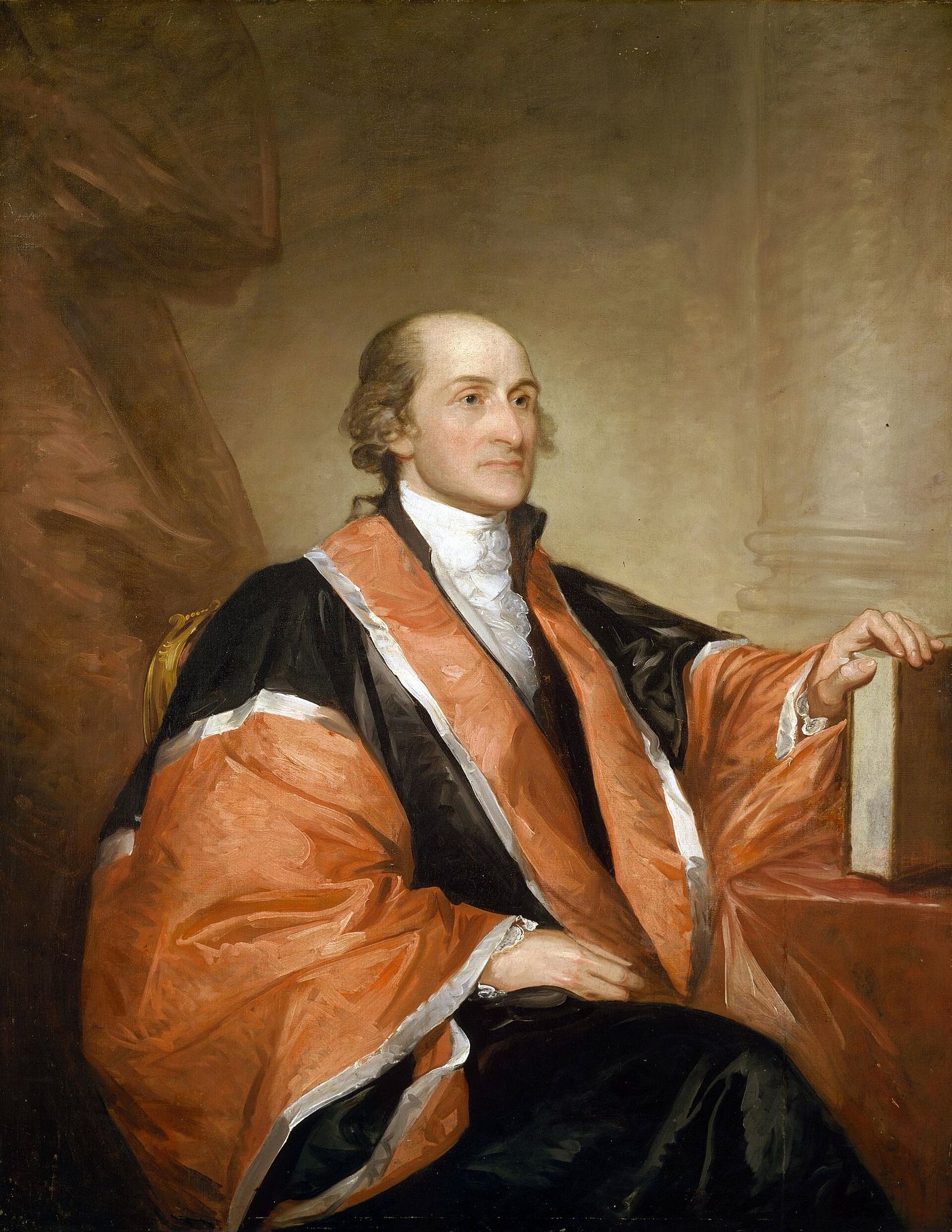
Read on its own, Jay's letter is a damning verdict on the early Supreme Court. The nation's first Chief Justice had concluded that the office, as Congress had arranged it, was not worth resuming. Yet the twelve years between the Judiciary Act of 1789 and Jay's refusal were more than a prelude to the long tenure of John Marshall, who took the post that Jay declined. The justices refused duties they believed were not judicial, declined to act as legal advisers to the President, tested the reach of their power over the states and were overruled by a constitutional amendment, and established that the nation's treaties would override state law. They did all this while riding long circuits over bad roads, enduring constant turnover, and absorbing the bitterness of the party battles of the 1790s. By 1801 the judiciary was weak in prestige, as Jay said, but it was considerably stronger in principle than his letter allowed. This is the story of those twelve years.
An Unfinished Design
The Constitution the states had ratified said remarkably little about the third branch. Article III vested the judicial power in "one supreme Court" and in whatever inferior courts Congress chose to establish, defined the kinds of cases that power would reach, and guaranteed judges their offices during good behavior. Everything else, including the number of justices and the existence of any lower courts at all, was left to the new Congress. The Judiciary Act was drafted principally by Oliver Ellsworth of Connecticut, with significant help from William Paterson of New Jersey, and both men would later sit on the Court. George Washington signed it on September 24, 1789. It fixed the Supreme Court at a Chief Justice and five associate justices, created thirteen district courts, and grouped most of them into three circuits.
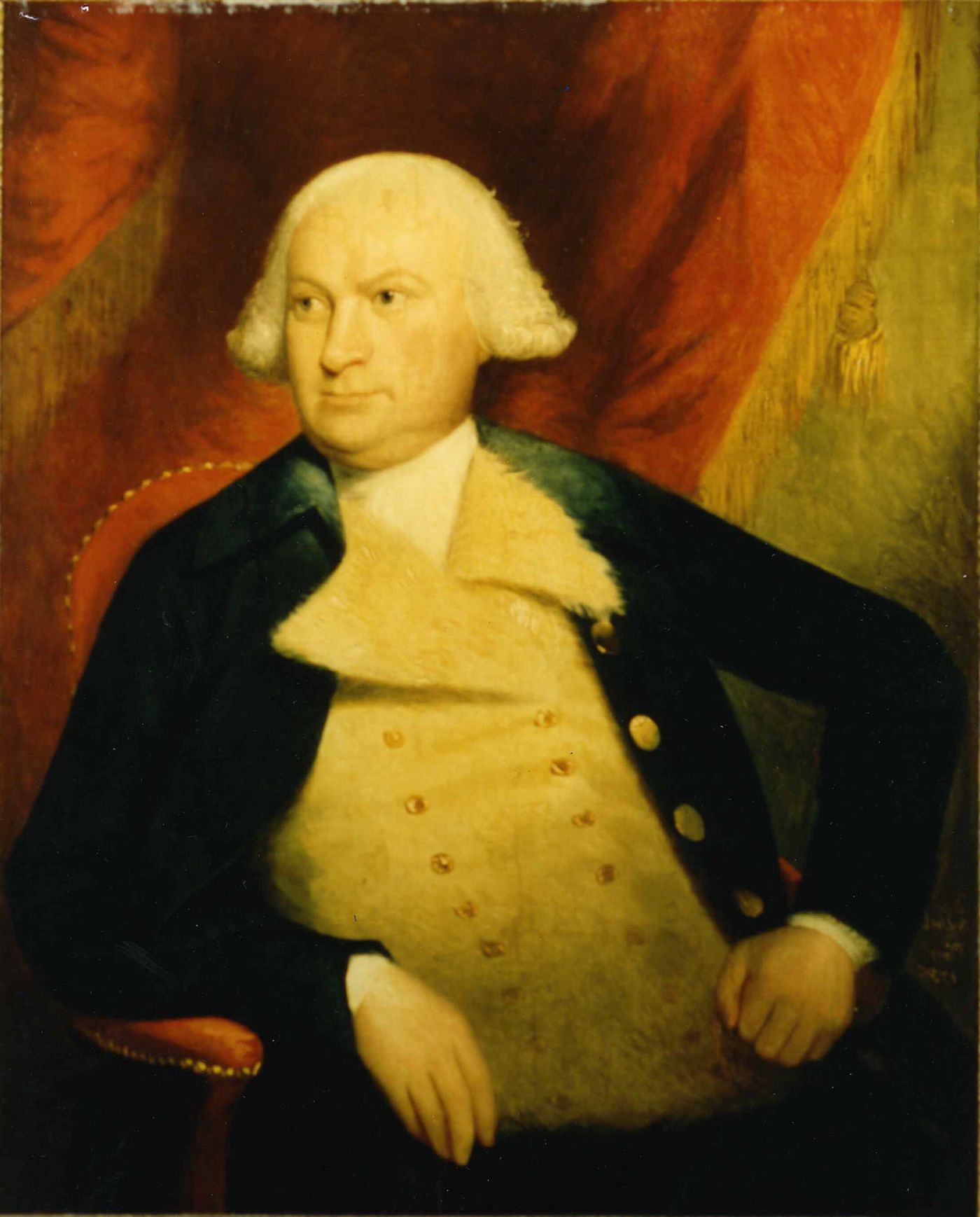
The circuit system embodied the act's central compromise. Rather than appoint a separate corps of circuit judges, Congress provided that each circuit court would be held by two justices of the Supreme Court sitting with the local district judge. The justices would spend much of every year traveling to hold these courts, then meet in the capital to hear appeals, some from circuit courts on which they themselves had sat. The arrangement was economical, and it placed the national judges before the public across the country. It may also have been meant as a stopgap. The justices later recalled a general opinion, when the act passed, that it was to be considered "rather as introducing a temporary expedient, than a permanent System," to be revised when Congress had more leisure[2] Within a year they would identify its central flaws.
Washington took a close interest in the new courts. In April 1790, as the justices prepared for their first circuits, he wrote to tell them that the "stability and success of the National Government" would depend "in a considerable degree" on the interpretation and execution of its laws, and that the judicial system ought to be "as perfect as possible in its formation." He invited them to send him whatever observations their travels produced[3] They would have a great deal to say.
A Court Without Cases
The Supreme Court was required by law to open its first session on the first Monday of February 1790, and on that day, February 1, three of its members gathered in the Exchange on Broad Street in New York, then the seat of the national government. Jay was there, along with William Cushing of Massachusetts and James Wilson of Pennsylvania. Four justices were needed for a quorum, so the three adjourned until the next afternoon. On February 2, John Blair of Virginia arrived, and the Court formally opened. The justices' commissions were read aloud, along with that of Edmund Randolph as Attorney General, and a crier was appointed[4]
What followed was a session devoted entirely to organization, because there were no cases to decide. Over the next eight days the Court appointed John Tucker of Boston as its clerk, ordered that its seal be the arms of the United States engraved on a circle of steel "of the Size of a Dollar," and set rules for admitting lawyers to its bar. A succession of attorneys and counselors took the oath, several of them sitting members of the House of Representatives. On February 10 the Court adjourned. John Rutledge of South Carolina did not attend. The sixth seat was empty, because Robert Harrison of Maryland had declined it, and James Iredell of North Carolina, named in his place, did not take his oath until May. In 1791 the Court moved with the rest of the government to Philadelphia, where its docket stayed thin through the 1790s.
Exile on the Circuit
The justices' travels were another matter. Jay rode the eastern circuit in the spring of 1790, and the diary he kept on the road records the daily realities of the work. He left New York in mid-April through raw northeast winds and a "violent Storm of Snow & afterwards Rain." He held court at New Haven and then pressed on toward Boston, lodging at country taverns whose comforts he rated with a traveler's care. At Palmer, Massachusetts, on April 28, the snow returned. "Snows fast," he wrote, "Staid here all this Day the weather not admitting of Travelling." The next day the horses struggled through snow and wet. Influenza had struck the towns along his route, and in Hartford, he noted, almost every family was down with it[5]
The justices soon concluded that the system was constitutionally questionable as well as exhausting. In a long letter addressed to Washington in September 1790, they argued that by naming them to the circuit courts Congress had made appointments that belonged to the President and Senate, and that the Constitution forbade the same men to hold both offices, since on appeal they would become "both the Controllers and the controled." Whether the letter ever reached the President is uncertain[6] Congress, in any case, did nothing. In August 1792 all six justices signed a formal appeal, which the President laid before Congress. "We really, Sir, find the burthens laid upon us so excessive," they wrote, "that we cannot forbear representing them in strong and explicit terms." The enclosed representation described the task of holding twenty-seven circuit courts a year, "from New Hampshire to Georgia," besides two sessions of the Supreme Court in the most severe seasons of the year. Some of the judges, it said, lacked the health for such journeys, and no set of judges, "however robust," could sustain them for long. In their covering letter the justices confessed that they could not reconcile themselves "to the idea of existing in exile from our families.[2]
The complaints had human consequences. Thomas Johnson of Maryland, who had joined the Court in 1791, resigned in January 1793. He had read the Judiciary Act from the first as "rather an Essay," he told Washington, and had expected Congress to free the justices from circuit duty. Learning that they were still to ride, he concluded that "the Office and the Man do not fit." He could not resolve "to spend six Months in the Year of the few I may have left from my Family, on Roads at Taverns chiefly.[7] Congress offered only partial relief. An act of March 1793 provided that a single justice, rather than two, would ordinarily suffice at each circuit court, which reduced the burden without removing it. Circuit riding remained the justices' chief grievance for the rest of the decade, and it lay behind the ignored "Remonstrances of the Judges" that Jay cited when he refused to return in 1801.
Drawing the Lines
It was on circuit that the justices first marked the boundaries of judicial power. In March 1792 Congress passed an act directing the federal circuit courts to examine the claims of disabled veterans of the Revolutionary War for pensions, and to report their findings to the Secretary of War. Judges on three circuits, in New York, Pennsylvania, and North Carolina, wrote to Washington that the duties were not judicial in nature and that a court's findings could not properly be made subject to revision by the Secretary of War and Congress. In Pennsylvania, Justices Wilson and Blair, with District Judge Richard Peters, refused to act on the petition of a veteran named William Hayburn. Attorney General Randolph asked the Supreme Court to order the circuit court to proceed. The Court held the motion over, and before it ruled, Congress revised the pension law in 1793[8] Hayburn's Case produced no formal decision by the Supreme Court, but the circuit judges' letters, which carried the names of five of the six justices, were an early statement of the limits on what Congress could ask of federal judges.
The following summer the executive branch asked for help of a different kind. War had broken out between Britain and revolutionary France, and Washington's cabinet, struggling to apply the nation's neutrality to questions about privateers, prizes, and the old treaties with France, decided to put a list of legal questions to the justices. The justices took several weeks to consider whether they should answer at all. On August 8, 1793, they replied that they should not. "The Lines of Separation drawn by the Constitution between the three Departments of Government," they wrote, together with the fact that they were "Judges of a court in the last Resort," weighed strongly against their "extrajudicially deciding the questions." The Constitution, they observed, allowed the President to call for written opinions from the heads of the executive departments, and that power seemed "purposely as well as expressly limited" to those departments[9] The letter was polite and brief, but it set out a principle that became central to the federal judiciary's identity: federal courts decide actual cases between adverse parties and do not issue advisory opinions. By declining to serve as the President's legal advisers, the justices drew a firmer line around what a court was for.
Georgia and the Sovereign People
The Court's first major constitutional decision arose from a Revolutionary War debt. Alexander Chisholm of South Carolina, acting as executor of a merchant's estate, sued the state of Georgia in the Supreme Court to recover payment for goods supplied during the war. Article III extended the judicial power to controversies "between a State and Citizens of another State," and the question was whether that language allowed a private citizen to bring an unwilling state into federal court. Georgia denied that it could and declined to appear.
In February 1793 the Court ruled against Georgia by a vote of four to one, with each justice delivering his own opinion in turn, as was then the practice in English courts. The most sweeping was Wilson's. The case, he said, might be resolved into a question "no less radical than this: 'do the people of the United States form a Nation?'" His answer was that the citizens of Georgia, in joining the people of the United States, had retained sovereign power in their own hands rather than surrendering it to the state. "As to the purposes of the Union, therefore," he concluded, "Georgia is NOT a sovereign state." Jay, Cushing, and Blair agreed, Cushing and Blair resting chiefly on the plain words of Article III. Iredell dissented. He argued that Congress had provided no procedure for such suits, that the courts could apply only the remedies existing at common law, and that those remedies gave no compulsory action against a sovereign for money. He added that his opinion was "strongly against" any reading of the Constitution that would allow "a compulsive suit against a State for the recovery of money.[10]
The reaction showed how far the majority had outrun opinion in the states. In November 1793 the Georgia House of Representatives passed a bill titled "an act declaratory of certain parts of the retained sovereignty of the state of Georgia." The newspaper record confirms the bill's passage but not its contents. According to an account repeated in later histories, including Charles Warren's, it would have declared any person attempting to execute federal process in the case guilty of a felony punishable by death "without benefit of clergy," though it does not appear to have become law[11] The more consequential response came from Congress. At its next session it proposed an amendment declaring that the judicial power of the United States should not be construed to extend to suits against a state by citizens of another state or of a foreign country. Congress sent the amendment to the states on March 4, 1794, and it received the necessary ratifications by February 1795. The Eleventh Amendment was the first constitutional amendment adopted in direct response to a Supreme Court decision. It withdrew the jurisdiction the Court had recognized in Chisholm and showed how quickly a controversial ruling could provoke a political answer.
Chief Justices Come and Go
The Court's standing also suffered from the frequent departures of its Chief Justices. In 1794 Washington sent Jay to London to negotiate with Britain over the disputes left unsettled since the peace of 1783, and Jay remained Chief Justice while he did so. He returned in 1795 to find that he had been elected governor of New York, and on June 29 he resigned from the Court. The treaty he had negotiated, which the Senate approved that summer, provoked furious opposition across the country.
Washington chose as Jay's successor John Rutledge, who had left the Court in 1791 to become chief justice of South Carolina. On July 1, 1795, Rutledge received a recess appointment, which allowed him to serve while the Senate was out of session. On July 16 or 17 (accounts differ), before he had even taken his seat, Rutledge spoke against Jay's treaty at a public meeting in Charleston. As a New York newspaper reported the speech, he called the treaty "an humble acknowledgement of our dependence upon his Majesty" and said that accepting its terms amounted to "prostituting the dearest rights of freemen, and laying them prostrate at the feet of royalty.[12] Federalists were appalled. Oliver Wolcott, Washington's Secretary of the Treasury, told Alexander Hamilton that he had learned "to my astonishment" of the offer to Rutledge, and that "by the favour of heaven" the commission had not been issued and now presumably would not be. "How near ruin & disgrace has the Country been?" he asked[13] Wolcott's hope was disappointed. Rutledge took the oath on August 12 and presided over the Court's August term. When the Senate met in December, however, it rejected his nomination by a vote of fourteen to ten. His public attack on a treaty the Senate had just approved weighed heavily against him, and rumors about his mental stability circulated as well[14]
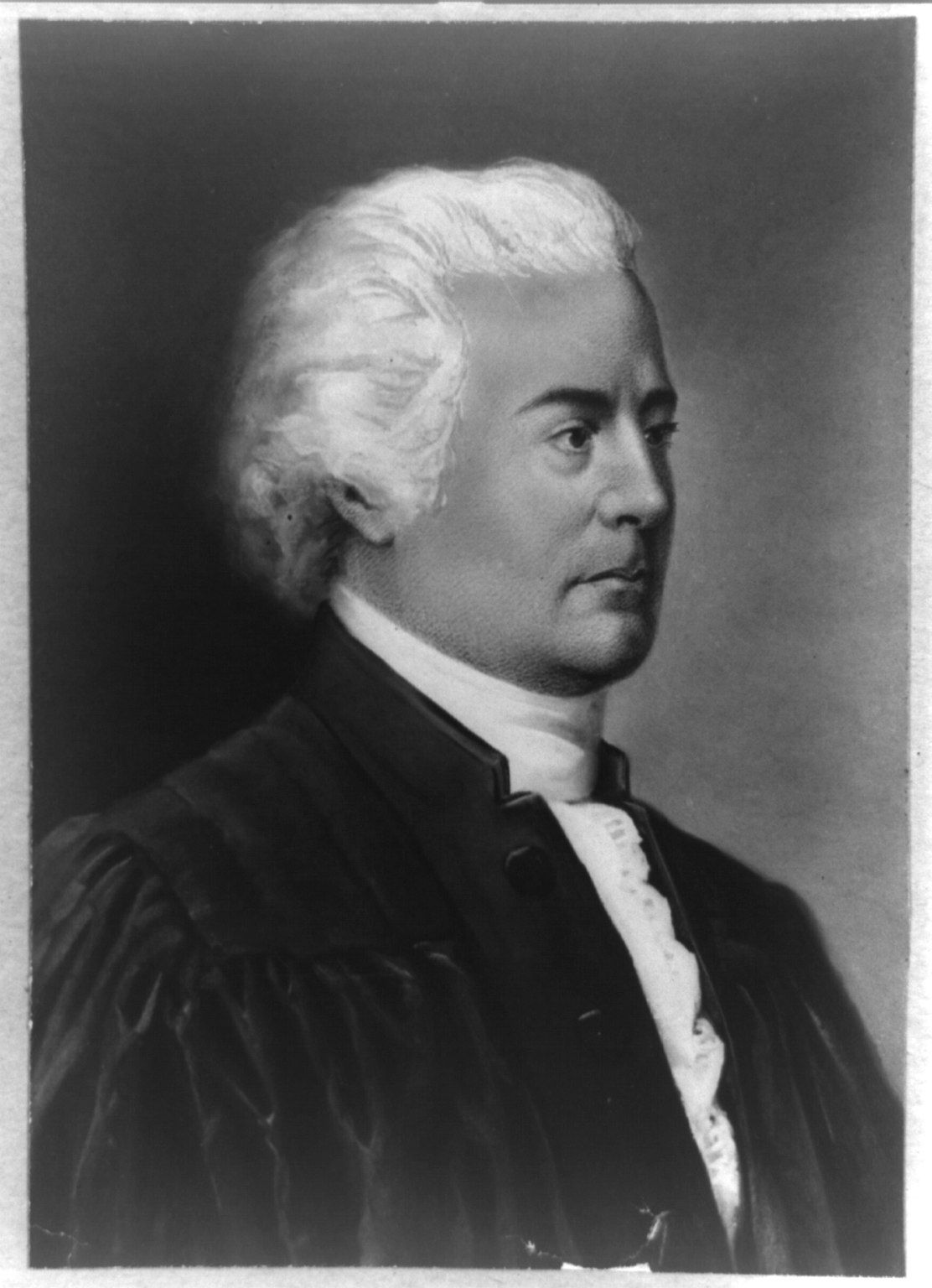
Washington next chose Ellsworth, the principal drafter of the Judiciary Act, whom the Senate confirmed in March 1796. He too would be drawn away from the bench by diplomacy. In 1799 Adams sent him to France to negotiate an end to the undeclared naval war between the two countries. Within a decade of its founding the Court had had three Chief Justices, two of whom had spent long stretches abroad on executive missions and one of whom had been repudiated by the Senate. It was hard to argue that the post carried the dignity Jay found lacking.
Quiet Foundations
Beneath this turmoil the Court was doing work of lasting importance. Two of its most significant decisions came a day apart in March 1796. One case had been openly arranged to test a federal law. In 1794 Congress had imposed a tax on carriages, and its opponents argued that it was a "direct" tax, which the Constitution required to be apportioned among the states by population. The parties agreed to a statement of facts declaring that Daniel Hylton of Virginia kept 125 chariots for his own use, and that if he lost, judgment would be entered against him for two thousand dollars, to be discharged by payment of sixteen. The figures were evidently chosen to bring the dispute within the Supreme Court's appellate jurisdiction. The Court upheld the tax, and each justice who wrote an opinion agreed that a carriage tax was not a direct tax. Chase said it was unnecessary to decide whether the Court could declare an act of Congress void, but added that if it had such a power, he would "never exercise it, but in a very clear case.[15]
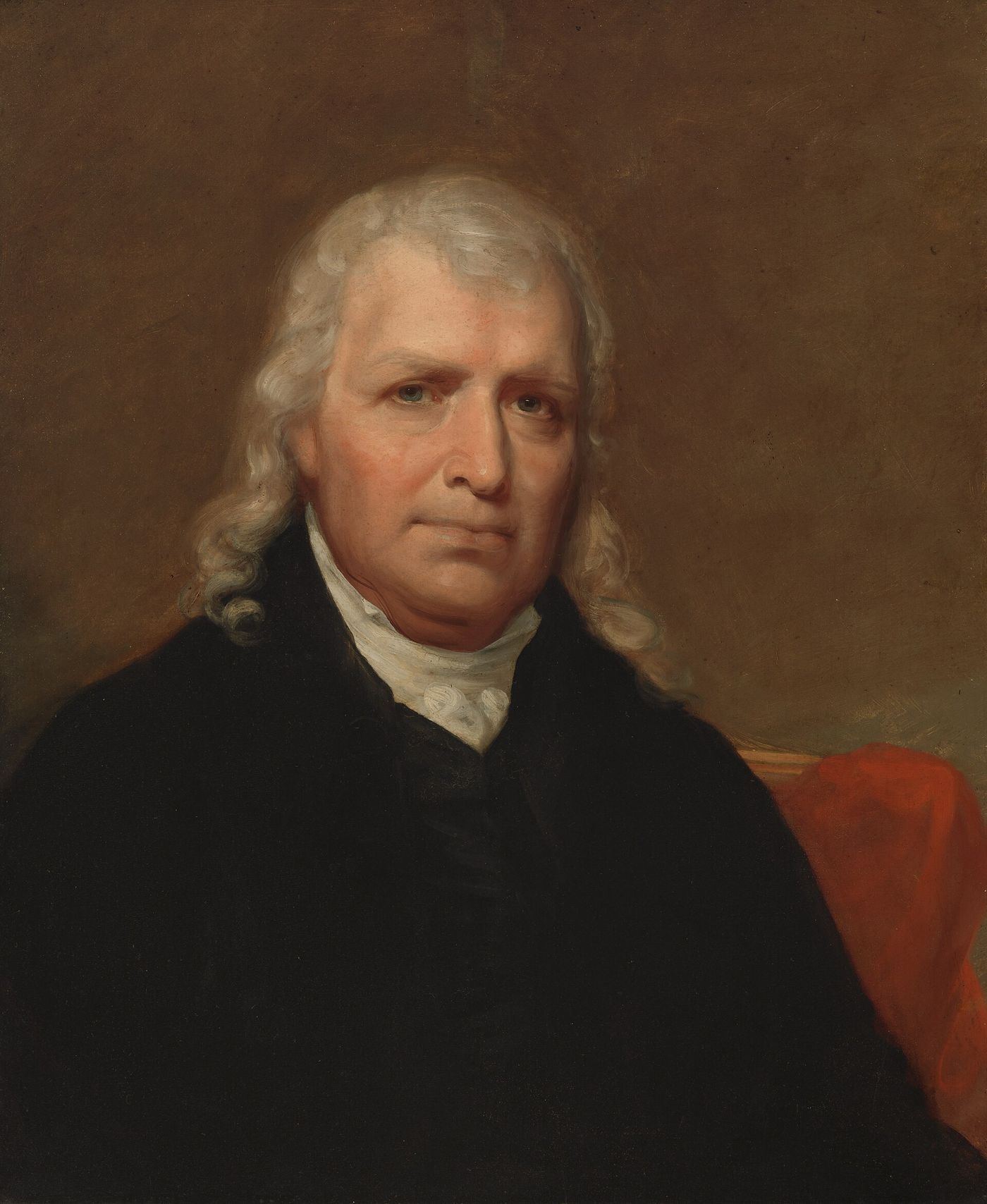
The other case concerned the relationship between federal treaties and state law. During the Revolution, Virginia had allowed citizens who owed money to British merchants to pay their debts into the state loan office in depreciated currency and receive a discharge. The peace treaty of 1783 promised that creditors on either side would meet with "no lawful impediment" to recovering their debts. When a British creditor sued a Virginia debtor, one of the lawyers arguing for the Virginians was John Marshall, who questioned whether the old Congress had possessed the power to make a treaty that could annul a state law and destroy rights acquired under it. He lost. In Ware v. Hylton the Court held that the treaty, made supreme by the Constitution, overrode the Virginia statute. Justice Samuel Chase, newly appointed, wrote that every treaty made under the authority of the United States was superior to the constitution and laws of any individual state, and that state laws contrary to it were "prostrated before the treaty." In words nearly identical to those he used the next day in the carriage tax case, he added that if the Court possessed a power to declare treaties void, he would "never exercise it but in a very clear case indeed.[16] The two cases captured an emerging posture. The Court asserted the supremacy of treaties over conflicting state law with growing confidence, while its authority to set aside an act of Congress remained an open question.
Politics on the Bench
The Court could not stay clear of the party conflict of the later 1790s. The Sedition Act of 1798 made it a crime to publish false, scandalous, and malicious writings against the government, Congress, or the President, and because prosecutions were tried in the circuit courts, Supreme Court justices often presided over them. Chase was the most aggressive of these. His conduct of the 1800 trial of the Republican pamphleteer James Thomson Callender in Richmond, which ended in Callender's conviction, enraged Republicans, and it would later be among the charges brought against him when the House impeached him in 1804. For Jefferson's followers, the federal courts had become an arm of the Federalist party, and that perception shaped much of what happened to the judiciary in the winter of 1800-1801.
The Transition of 1801
The election of 1800 cost the Federalists both the presidency and Congress, though the new government would not take office until March 1801. Meanwhile the Chief Justiceship had fallen vacant. Ellsworth, still in France and "Constantly afflicted with the gravel, and the gout," sent his resignation from Le Havre in October 1800, and it reached the President in December[17] Adams nominated Jay on December 18, and the Senate confirmed him the next day; had Jay accepted, the office would have been safely in Federalist hands before Jefferson took power. Jay's refusal arrived in Washington in January.
What happened next is known chiefly from Marshall's own recollection, written in 1827 at the request of Justice Joseph Story. Marshall, then Secretary of State, brought Jay's letter to the President. According to that account, Adams asked whom he should nominate now, and Marshall said that he could not tell. After a moment's hesitation, Adams said, "I believe I must nominate you." Marshall wrote that he had never heard himself named for the office and was pleased as well as surprised[18] On January 20, 1801, Adams sent the Senate a one-sentence message nominating "John Marshall Secretary of State" to be Chief Justice in place of Jay, "who has declined his appointment." The Senate confirmed him on January 27[19] When Marshall took the oath on February 4, the Court had moved with the federal government to Washington, where the Capitol was still unfinished. No courtroom had been provided, and the justices met in a small committee room in the building's north wing. They did not move into a chamber of their own until 1810[20]
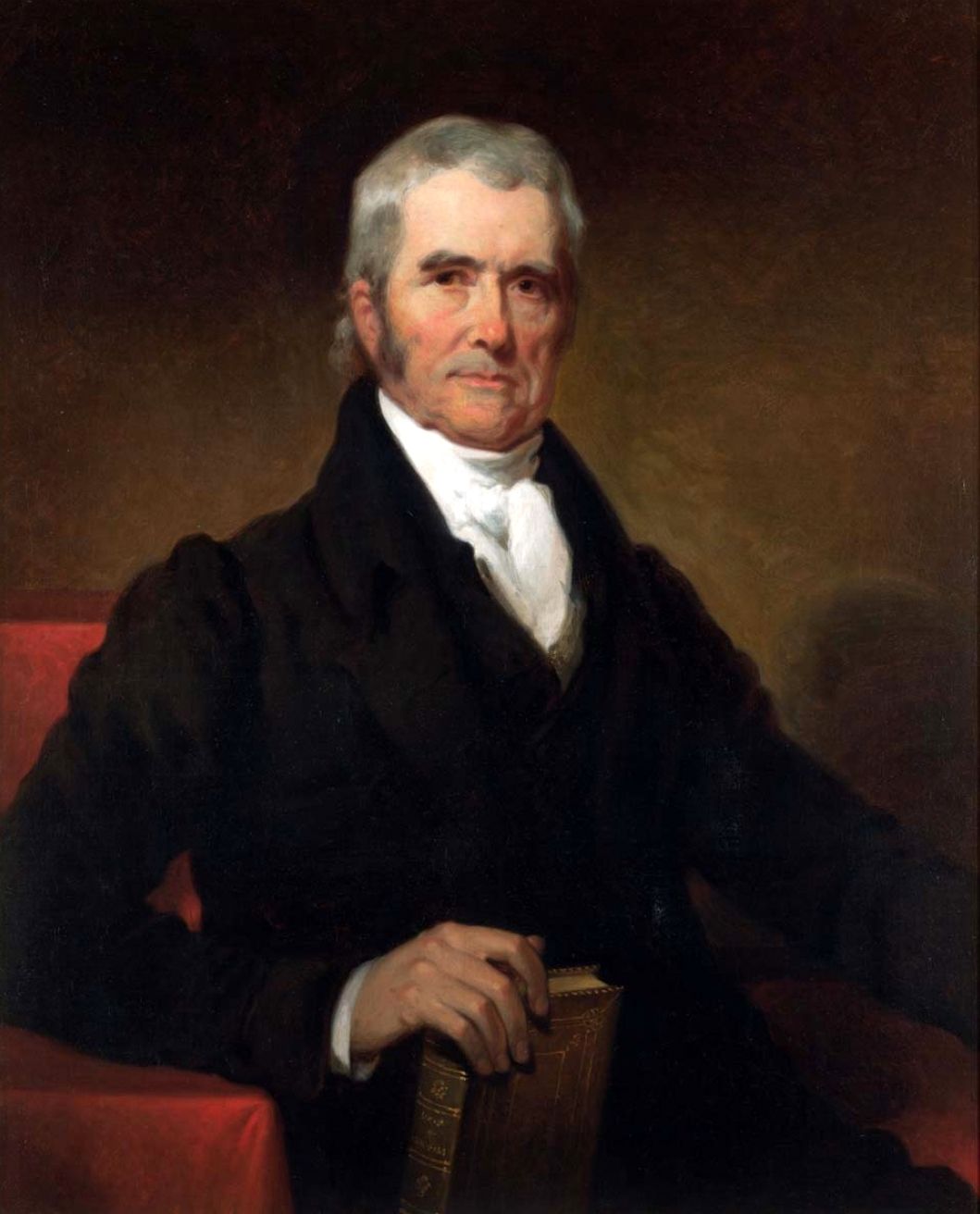
Nine days after Marshall's oath, the outgoing Congress finally addressed the grievances Jay had cited, though as part of a far larger reorganization than the justices had sought. The Judiciary Act of February 13, 1801, abolished circuit riding by the justices and created sixteen new circuit judgeships across six circuits. It also provided that the Supreme Court would shrink from six members to five at the next vacancy, a provision that would have denied Jefferson the next appointment to the Court. No vacancy occurred before the act was repealed, so the reduction never took effect. Adams filled the new judgeships with Federalists in the final weeks of his term, and the appointees became known as the midnight judges. The incoming Republicans saw the whole package as an entrenchment of Federalist power, and it had little chance of surviving.
The Inheritance
It did not. In 1802 the Republican Congress repealed the act of 1801, abolished the new judgeships, returned the justices to their circuits, and canceled the Court's June term. Marshall doubted that the repeal and the restored circuit duty were constitutional, but the Court accepted them[21] The struggle over Adams's last-minute appointments produced Marbury v. Madison in 1803, in which Marshall declared a section of the Judiciary Act of 1789 unconstitutional and stated in plain terms the power of judicial review that the earlier Court had approached with such caution.
Jay's verdict of January 1801 was accurate about the things he named. The judiciary of the 1790s lacked public weight, the justices were worn down by travel, the Court had been led by three Chief Justices in eleven years and was about to receive a fourth, and Congress had ignored the judges' remonstrances. But the twelve years had also produced the materials from which Marshall would build. The justices had resisted nonjudicial assignments and declined to advise the executive, helping to define the judiciary as a branch that decides cases. They had learned from Chisholm and the Eleventh Amendment how far the country would allow them to reach. In Ware v. Hylton they had made treaties supreme over state law, and in the carriage tax case they had weighed the constitutionality of an act of Congress, even if they left their power to void one unsettled. Marshall himself had stood before that Court as a losing advocate, arguing for state power against the treaty. The institution Jay had judged too weak to rejoin was the one Marshall would help transform, and he built on principles worked out case by case and circuit by circuit in the years Jay remembered chiefly as a failure.
Places in this Story
The places this story moves through, in order — follow them on the interactive map →
- New York, New York February 1790
The Supreme Court opens its first session at the Exchange on Broad Street, with no cases to decide.
- Palmer, Massachusetts April 1790
Jay is snowbound on the eastern circuit and records that the weather does not admit of travelling.
- Philadelphia, Pennsylvania March 1796
At the capital the Court upholds the carriage tax and makes the peace treaty supreme over Virginia law.
- Augusta, Georgia November 1793
The Georgia House answers Chisholm with a bill declaring the retained sovereignty of the state.
- Charleston, South Carolina July 1795
Rutledge denounces the Jay Treaty weeks before taking his seat, and the Senate later rejects him.
- Richmond, Virginia 1800
Justice Chase presides over the sedition trial of James Thomson Callender, enraging Republicans.
- Albany, New York January 1801
Jay writes to Adams refusing to resume the office, calling the system too defective to support.
- Washington, District of Columbia February 1801
Marshall takes the oath in a committee room of the unfinished Capitol, the Court having no chamber.
Frequently Asked Questions
Why did John Jay refuse to return as Chief Justice in 1801?
Jay told Adams that the judicial system of 1789 was so defective it would never gain the "Energy Weight and Dignity" a national government needed, and that Congress had ignored every complaint the justices made. He added that his health settled the matter in any case.
What did the Judiciary Act of 1789 create?
It fixed the Supreme Court at a Chief Justice and five associate justices, created thirteen district courts, and grouped most of them into three circuits. Oliver Ellsworth drafted it, and Washington signed it on September 24, 1789.
Why did Supreme Court justices have to ride circuit?
Rather than appoint separate circuit judges, Congress had the justices hold circuit courts alongside the local district judge. In 1792 all six signed a formal protest describing twenty-seven circuit courts a year from New Hampshire to Georgia.
What did Chisholm v. Georgia decide in 1793?
The Court held four to one that a citizen of one state could sue another state in federal court, with Wilson declaring that for the purposes of the Union, Georgia was not a sovereign state. Iredell dissented.
Why was the Eleventh Amendment added to the Constitution?
Congress proposed it to overturn Chisholm v. Georgia, barring federal suits against a state by citizens of another state or a foreign country. It was the first amendment adopted in direct response to a Supreme Court decision.
Why was John Rutledge rejected as Chief Justice in 1795?
Rutledge attacked the Jay Treaty at a public meeting in Charleston weeks before taking his seat under a recess appointment. The Senate, which had just approved the treaty, rejected his nomination fourteen to ten that December.
What did Ware v. Hylton decide about treaties and state law?
The Court held in 1796 that the peace treaty of 1783 overrode a Virginia statute that had let debtors discharge British debts in depreciated currency. John Marshall argued the losing side.
Who were the midnight judges?
They were the Federalists Adams appointed to the sixteen circuit judgeships created by the Judiciary Act of February 13, 1801, in the last weeks of his term. The Republican Congress repealed the act and abolished the posts in 1802.
Bibliography
Adams, John. "From John Adams to United States Senate, 20 January 1801." In The Adams Papers. Founders Online, National Archives. https://founders.archives.gov/documents/Adams/99-02-02-4761. Accessed October 25, 2026.
Annals of Congress: The Debates and Proceedings in the Congress of the United States. Vol. 3, Second Congress. Washington, DC: Gales and Seaton, 1834-56.
Augusta Chronicle and Gazette of the State. "Extracts from the Journal of the House of Representatives." December 7, 1793. Georgia Historic Newspapers. https://gahistoricnewspapers.galileo.usg.edu/lccn/sn82015220/1793-12-07/ed-1/seq-1. Accessed October 25, 2026.
Dallas, Alexander J. Reports of Cases Ruled and Adjudged in the Several Courts of the United States, and of Pennsylvania. Vol. 2. Philadelphia, 1798. Reprint, New York: Banks Law Publishing, 1906. https://books.google.com/books?id=Nis3AAAAIAAJ. Accessed October 25, 2026.
Dallas, Alexander J. Reports of Cases Ruled and Adjudged in the Several Courts of the United States, and of Pennsylvania. Vol. 3. Philadelphia, 1799. Reprint, New York: Banks Law Publishing, 1905. https://books.google.com/books?id=ris3AAAAIAAJ. Accessed October 25, 2026.
Ellsworth, Oliver. "To John Adams from Oliver Ellsworth, 16 October 1800." In The Adams Papers. Founders Online, National Archives. https://founders.archives.gov/documents/Adams/99-02-02-4663. Accessed October 26, 2026.
Federal Judicial Center. "Landmark Legislation: Judiciary Act of 1802." https://www.fjc.gov/history/legislation/landmark-legislation-judiciary-act-1802. Accessed October 25, 2026.
Giles, William Branch. "To Thomas Jefferson from William Branch Giles, 15 December 1795." In The Papers of Thomas Jefferson. Founders Online, National Archives. https://founders.archives.gov/documents/Jefferson/01-28-02-0432. Accessed October 25, 2026.
Jay, John. "Circuit Court Diary, 16 April-30 May 1790." In The Papers of John Jay. Founders Online, National Archives. https://founders.archives.gov/documents/Jay/01-05-02-0134. Accessed October 25, 2026.
Jay, John. "John Jay to John Adams, 2 January 1801." In The Papers of John Jay. Founders Online, National Archives. https://founders.archives.gov/documents/Jay/01-07-02-0077. Accessed October 25, 2026.
Jay, William. The Life of John Jay: With Selections from His Correspondence and Miscellaneous Papers. 2 vols. New York: J. & J. Harper, 1833.
Johnson, Thomas. "Thomas Johnson to George Washington, 16 January 1793." In The Papers of George Washington. Founders Online, National Archives. https://founders.archives.gov/documents/Washington/05-12-02-0002. Accessed October 25, 2026.
Johnston, Henry P., ed. The Correspondence and Public Papers of John Jay. 4 vols. New York: G. P. Putnam's Sons, 1890-93. Vol. 4: https://books.google.com/books?id=K2UsAAAAIAAJ. All volumes: https://oll.libertyfund.org/titles/jay-the-correspondence-and-public-papers-of-john-jay-4-vols. Accessed October 25, 2026.
Marshall, John. An Autobiographical Sketch by John Marshall. Edited by John Stokes Adams. Ann Arbor: University of Michigan Press, 1937.
"Minutes of the Supreme Court of the United States, 1-10 February 1790." In The Papers of John Jay. Founders Online, National Archives. https://founders.archives.gov/documents/Jay/01-05-02-0124. Accessed October 25, 2026.
Supreme Court Justices. "United States Supreme Court Justices to George Washington, 13 September 1790." In The Papers of George Washington. Founders Online, National Archives. https://founders.archives.gov/documents/Washington/05-06-02-0207. Accessed October 25, 2026.
U.S. Senate Commission on Art. "The Old Supreme Court Chamber, 1810-1860." https://www.senate.gov/artandhistory/art/resources/pdf/Old_Supreme_Court.pdf. Accessed October 25, 2026.
Warren, Charles. The Supreme Court in United States History. Vol. 1, 1789-1821. Boston: Little, Brown, 1922. https://books.google.com/books?id=iL0BAAAAYAAJ. Accessed October 25, 2026.
Washington, George. "George Washington to the United States Supreme Court, 3 April 1790." In The Papers of George Washington. Founders Online, National Archives. https://founders.archives.gov/documents/Washington/05-05-02-0201. Accessed October 25, 2026.
Wolcott, Oliver, Jr. "To Alexander Hamilton from Oliver Wolcott, Junior, 28 July 1795." In The Papers of Alexander Hamilton. Founders Online, National Archives. https://founders.archives.gov/documents/Hamilton/01-18-02-0315. Accessed October 25, 2026.
Citations
- John Jay to John Adams, 2 January 1801, in Henry P. Johnston, ed., The Correspondence and Public Papers of John Jay, vol. 4 (New York: G. P. Putnam's Sons, 1890-93), 284-86; John Adams to John Jay, 19 December 1800, in William Jay, The Life of John Jay, vol. 1 (New York: J. & J. Harper, 1833), 421. Quotations follow the manuscript transcription in The Papers of John Jay, Founders Online, which preserves Jay's spelling and punctuation. ↑
- The justices to George Washington, 9 August 1792, and the enclosed representation, in Annals of Congress: The Debates and Proceedings in the Congress of the United States, vol. 3 (Washington, DC: Gales and Seaton, 1834-56), 1317-22. ↑
- George Washington to the United States Supreme Court, 3 April 1790, in The Papers of George Washington, Founders Online, National Archives. ↑
- "Minutes of the Supreme Court of the United States, 1-10 February 1790," in The Papers of John Jay, Founders Online, National Archives, with the editorial notes identifying the counsellors who were sitting members of the House. ↑
- John Jay, "Circuit Court Diary, 16 April-30 May 1790," entries for 17, 18, 26, 28 and 29 April 1790, in The Papers of John Jay, Founders Online. ↑
- The justices to George Washington, c. 13 September 1790, and source note, in The Papers of George Washington, Founders Online. The editors note that only circumstantial evidence suggests Washington received the letter. ↑
- Thomas Johnson to George Washington, 16 January 1793, in The Papers of George Washington, Founders Online. ↑
- Hayburn's Case, 2 U.S. (2 Dall.) 409 (1792), in Alexander J. Dallas, Reports of Cases Ruled and Adjudged in the Several Courts of the United States, and of Pennsylvania, vol. 2 (Philadelphia, 1798; repr., New York: Banks Law Publishing, 1906), 409-14, which prints the judges' letters to Washington from the New York, Pennsylvania and North Carolina circuits. ↑
- The justices to George Washington, 8 August 1793, in Johnston, Correspondence, 3:488-89. ↑
- Chisholm v. Georgia, 2 U.S. (2 Dall.) 419 (1793), in Dallas, Reports, 2:419-79; for Iredell's dissent, see 429-50, with the quoted phrase at 449; for Wilson, see 453, 457. ↑
- "Extracts from the Journal of the House of Representatives," Augusta Chronicle and Gazette of the State, 7 December 1793, 1, recording the bill's passage on 21 November 1793; Charles Warren, The Supreme Court in United States History, vol. 1 (Boston: Little, Brown, 1922), chapter "State Sovereignty and Neutrality," beginning at 91. The page in Warren on which the penalty clause is quoted could not be confirmed, and the full text of the Georgia bill was not examined. ↑
- Argus, or Greenleaf's New Daily Advertiser (New York), 30 July 1795, as printed in editorial note 3 to Oliver Wolcott Jr. to Alexander Hamilton, 28 July 1795, in The Papers of Alexander Hamilton, Founders Online, National Archives. The same note summarizes Washington's letter to Rutledge of 1 July 1795. ↑
- Oliver Wolcott Jr. to Alexander Hamilton, 28 July 1795, in The Papers of Alexander Hamilton, Founders Online, National Archives. ↑
- Editorial note to William Branch Giles to Thomas Jefferson, 15 December 1795, in The Papers of Thomas Jefferson, Founders Online, National Archives. ↑
- Hylton v. United States, 3 U.S. (3 Dall.) 171 (1796), in Alexander J. Dallas, Reports of Cases Ruled and Adjudged in the Several Courts of the United States, and of Pennsylvania, vol. 3 (Philadelphia, 1799; repr., New York: Banks Law Publishing, 1905), 171-84. The agreed statement of facts and the terms of judgment appear at 171-72 and Chase's opinion at 172-75. The exact page of the quoted sentence within Chase's opinion was not confirmed against a page image. ↑
- Ware v. Hylton, 3 U.S. (3 Dall.) 199 (1796), in Dallas, Reports, 3:235-37. ↑
- Oliver Ellsworth to John Adams, 16 October 1800, in The Adams Papers, Founders Online, National Archives; John Adams to John Jay, 19 December 1800, in Johnston, Correspondence, 4:284. ↑
- John Marshall, An Autobiographical Sketch by John Marshall, ed. John Stokes Adams (Ann Arbor: University of Michigan Press, 1937). Marshall wrote the sketch for Joseph Story in 1827; the page of the printed edition on which this passage appears could not be confirmed. ↑
- John Adams to the United States Senate, 20 January 1801, in The Adams Papers, Founders Online, National Archives. ↑
- U.S. Senate Commission on Art, "The Old Supreme Court Chamber, 1810-1860." ↑
- Federal Judicial Center, "Landmark Legislation: Judiciary Act of 1802." ↑