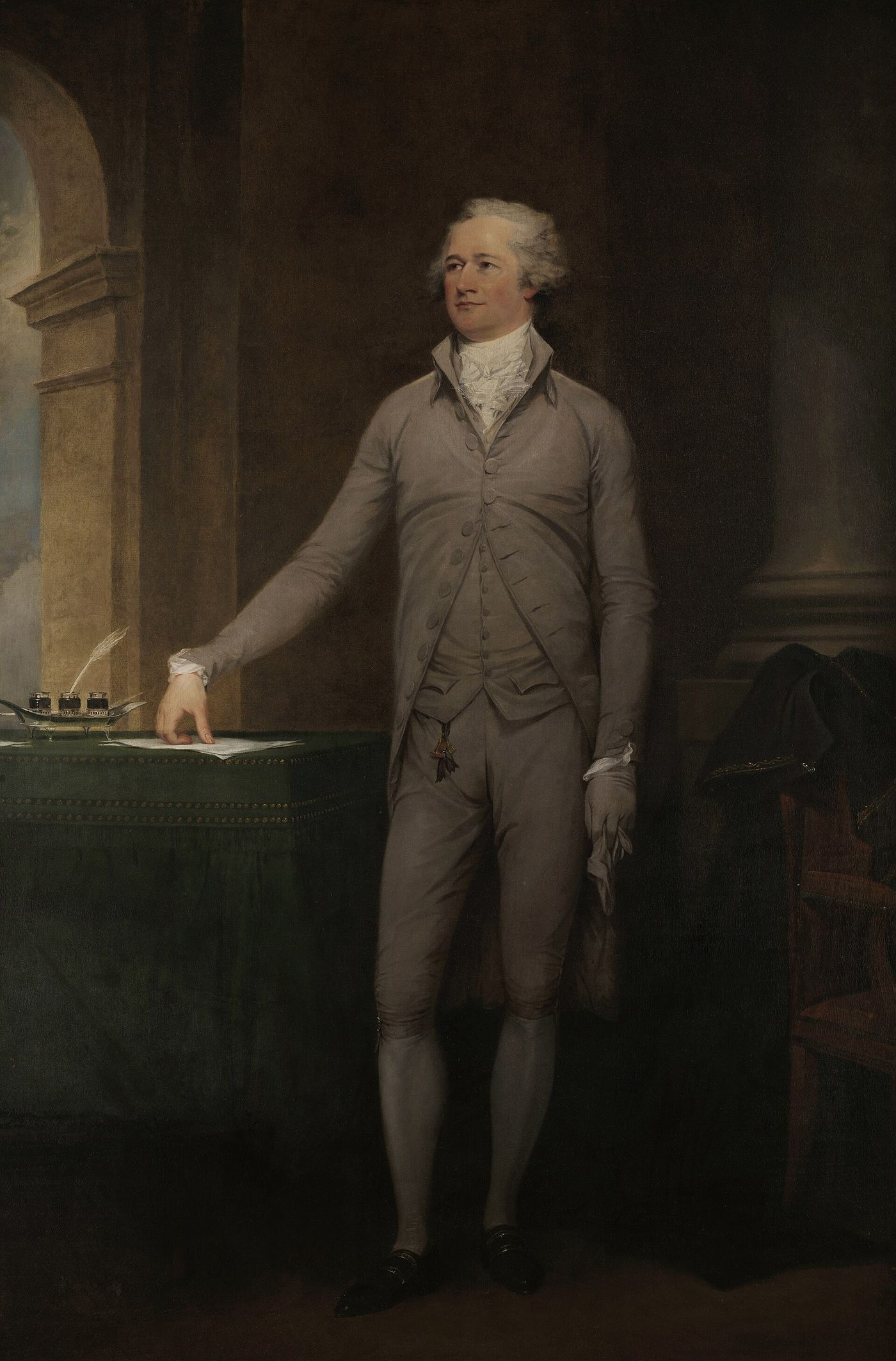
On September 13, 1789, two days after the Senate confirmed him as the first secretary of the treasury, Alexander Hamilton sat down in New York to ask a bank for money. His letter went to Thomas Willing, president of the Bank of North America in Philadelphia. Hamilton wrote that he hoped to "confidently calculate upon the aid" of Willing's bank, and then came to the point: "A sum of Eighty thousand Dollars is immediately wanted." The Bank of New York had already advanced $20,000 and agreed to lend $30,000 more, and Hamilton asked Willing's bank for the remaining $50,000. The man sent to Philadelphia to settle the terms was William Duer, the new assistant secretary. Waiting for him there was Samuel Meredith, a Philadelphia merchant whom the Senate had confirmed as treasurer of the United States on the same day as Hamilton. On September 16 Meredith wrote to thank President Washington for the appointment, apologizing that he had not called in person that evening because Duer had brought him a letter from the secretary asking for his help with the bank. The Bank of North America agreed to the $50,000 loan on September 21 and lent the Treasury two more sums of $20,000 before the end of the year.[1]
The new national government thus began its financial life in debt to two private banks, and much of the money went to pay the first installment of salary owed to the president, senators and representatives, and the officers of Congress. The Treasury's own history of the national loans, published in 1882, said the arrangement was "believed to be the only loan ever negotiated by the Treasury Department without authority of law." When Washington took office the country had only three banks: the Bank of North America, the Bank of New York, and the Massachusetts Bank in Boston. There was no functioning national mint, no national bank, and no organized market for the government's securities. By Hamilton's own reckoning the federal government owed $54,124,464.56, and the states owed perhaps $25 million more.[2] Twelve years later the United States had a funded public debt that traded in New York and Philadelphia, a mint, a national bank with branch offices in five port cities, and, by one count, more than two dozen state-chartered banks. It had also lived through its first bubble, its first panic, and the jailing of its most famous financier. The system had been designed by Federalists over the bitter objections of Thomas Jefferson and James Madison, and in 1801 it passed, largely intact, to a Republican administration whose leaders had once argued that its central institution should never have existed. This is the story of those twelve years.
A Debt Worth Owning
Hamilton's first great task was to decide what the country's debts were worth. In his report of January 1790 he proposed that the federal government pay its own debt at full value and take over the war debts of the states, exchanging the old certificates for new securities that paid regular interest. Congress enacted the plan that August. Paper that had changed hands for a fraction of its face value through the 1780s became a reliable, interest-bearing asset, backed by a government that could now tax imports. The new securities gave merchants something to buy, sell, and borrow against.
The market for the new securities grew quickly, and so did suspicion of it. Many of the old certificates had long since passed from soldiers and farmers to buyers who had paid a fraction of their face value and now stood to collect all of it. When Madison proposed in the House to treat original holders and later purchasers differently, the price of the certificates fell, and when his proposal was defeated it rose again. Richard Hildreth, writing in 1851, recorded that members of Congress who changed their votes on assumption were suspected of speculating themselves.[3]
A Bank and a Constitutional Quarrel
In December 1790 Hamilton asked Congress to charter a national bank. His report drew repeatedly on the example of the Bank of England, whose rule limiting its debts in proportion to its capital he called "worthy of imitation," and it argued that a national bank would lend to the government, keep its money, and supply a sound paper currency. He also dismissed the idea that the existing Bank of North America could serve instead. "So small a capital," he wrote, "promises neither the requisite aid to government, nor the requisite security to the community." The bill passed both houses over the objection that the Constitution gave Congress no power to create a corporation. Madison, speaking in the House on February 2, 1791, called the power of incorporation "a distinct, an independent and substantive prerogative" that could not be implied from any other power.[4]
Washington consulted his cabinet. Attorney General Edmund Randolph and Secretary of State Jefferson both judged the bill unconstitutional. Jefferson's opinion of February 15 rested on the amendment that would become the Tenth, then still awaiting ratification, which reserved to the states or the people the powers not delegated to the federal government. "To take a single step beyond the boundaries thus specially drawn around the powers of Congress," he wrote, "is to take possession of a boundless feild of power, no longer susceptible of any definition." He added a practical objection: the existing banks would compete to offer the government their services, whereas the bill would deliver the public "bound to the national bank."[5]
Hamilton answered on February 23. Every power vested in a government, he argued, "is in its nature sovereign, and includes by force of the term, a right to employ all the means requisite, and fairly applicable to the attainment of the ends of such power." The Constitution's grant of laws "necessary and proper" was not limited to laws without which a power would be useless. In ordinary speech, he wrote, necessary "often means no more than needful, requisite, incidental, useful, or conducive to." He also pointed to a pressing need: an expedition against the Native nations of the Ohio country had to be prepared at once, yet the tax that would pay for it would not begin to be collected until July, so the money would have to be borrowed.[6] Washington signed the bill on February 25, 1791.
The Bank of the United States received a twenty-year charter and a capital of $10 million, divided into 25,000 shares of $400 each, of which the government took $2 million. Private subscribers paid one quarter of the price in gold and silver and three quarters in the new government securities, which tied the bank directly to the funded debt. The government paid for its own shares with money borrowed from the bank itself, to be repaid in ten annual installments. The result was the largest corporation of any kind in the country.[7] Its first president was Thomas Willing, whose Bank of North America had lent Hamilton $50,000 in the government's first weeks.
Scrippomania
Shares in the new bank went on sale on July 4, 1791, and every share offered to the public was taken that day. The first installment on each $400 share was $100, of which only $25 in gold or silver had to be paid at once; the rest of the price was due over the next eighteen months, mostly in federal securities. Subscribers received certificates, known as "scrip," which could themselves be traded, and the scrip became the object of the speculation that followed. Hamilton admitted that August that no one had foreseen "that so rapid a subscription would take place," which was why the law had made no provision for spreading the shares more widely. Jefferson, writing to Edmund Pendleton on July 24, remarked on "the rapidity with which the subscriptions to the bank were filled" and complained that the "delirium of speculation is too strong to admit sober reflection."[8]
From New York, Madison told Jefferson on August 8 that "packet boats and expresses" were again being sent south to buy up paper of every kind, and he compared the injustices of the old paper money with those of the new system: "by the former the few were the victims to the many; by the latter the many to the few." On August 25 Jefferson asked a South Carolina friend, Edward Rutledge, what he thought of "this scrip-pomany." Ships lay idle and buildings stood unfinished, he complained, because capital had been withdrawn from commerce and agriculture "to be employed in gambling." He offered an image of the damage: "The taylor who has made thousands in one day, tho' he has lost them the next, can never again be content with the slow and moderate earnings of his needle."[9]
By the time Jefferson wrote, the bubble had already broken. Prices gave way in New York on August 11, 1791, and the fall reached Philadelphia the next day. Fisher Ames wrote from Boston on August 15 of "the late rise of paper and bank stock, tho now declining." That same day Hamilton committed $150,000 from the sinking fund, a pool of revenue set aside by law for buying up the public debt, and told William Seton, cashier of the Bank of New York, to buy government securities in the city. The market's decline ended on August 17, two days later, and Seton spent $116,542 over the next ten days. How much the purchases contributed to the recovery is unclear.[10]
The Fall of William Duer
The man whose speculation most severely tested the Treasury's nerve was the same William Duer who had carried Hamilton's first loan request to Philadelphia, and who had since left the Treasury. In December 1791 he formed a speculative partnership with Alexander Macomb, a wealthy New York merchant, and supplied most of its working capital by borrowing in his own name. The partners bought government securities and bank shares on a large scale. Security prices peaked late in January 1792 and then fell for five weeks, and on March 9 Duer stopped paying his debts. Three days later Oliver Wolcott Jr., the comptroller of the treasury, told the federal attorney in New York to demand that Duer settle an old balance he owed the government or face a lawsuit.[11]
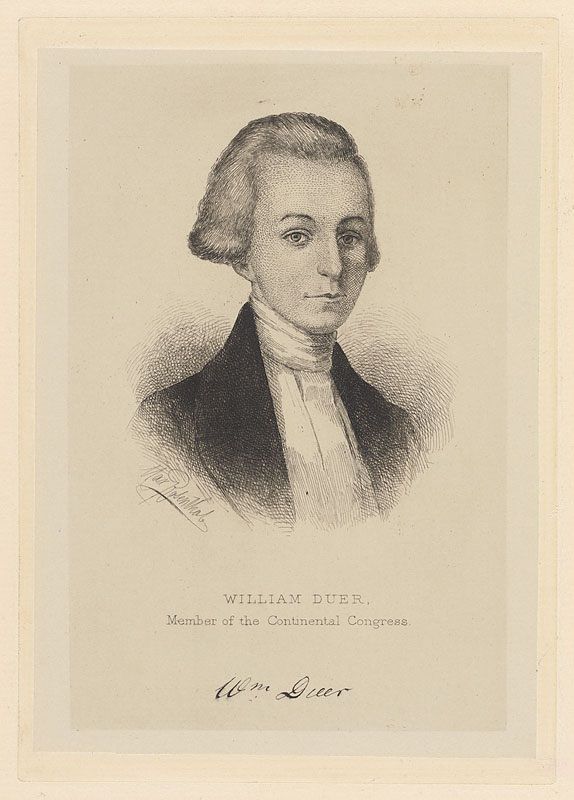
The panic spread quickly. William Seton reported from New York on March 21 that "so many were tainted it is next to impossible to say whom can be counted on," and he warned that if Duer could not satisfy his creditors, "the Consequence will be awfull." Duer was jailed for debt on March 23. The next day his friend Robert Troup wrote to Hamilton that his "heart is nearly broken with the distress of poor Duer." Jefferson reported on April 19 that the loss at New York was put at about five million dollars, "which is reckoned the value of all the buildings of the city: so that if the whole town had been burnt to the ground it would have been just the measure of the present calamity."[12]
On March 25 Hamilton authorized Seton to buy up to $50,000 of six percent stock at par on the government's account, without revealing for whom he was buying, and he urged the banks to show one another forbearance rather than press for immediate payment. "No calamity truly public can happen while these Institutions remain sound," he told Seton. Henry Domett, the Bank of New York's nineteenth-century historian, credited the purchases with bringing real relief to a city drained of hard money by heavy imports. Prices soon steadied. On May 17, 1792, a group of New York brokers, who usually traded outdoors near a buttonwood tree on Wall Street, signed an agreement pledging not to buy or sell public stock for anyone "at a less rate than one-quarter per cent. Commission."[13] The Buttonwood Agreement became the ancestor of the New York Stock Exchange. Duer never left debtors' prison; he died there in 1799.
Dollars, Branches, and a Mint
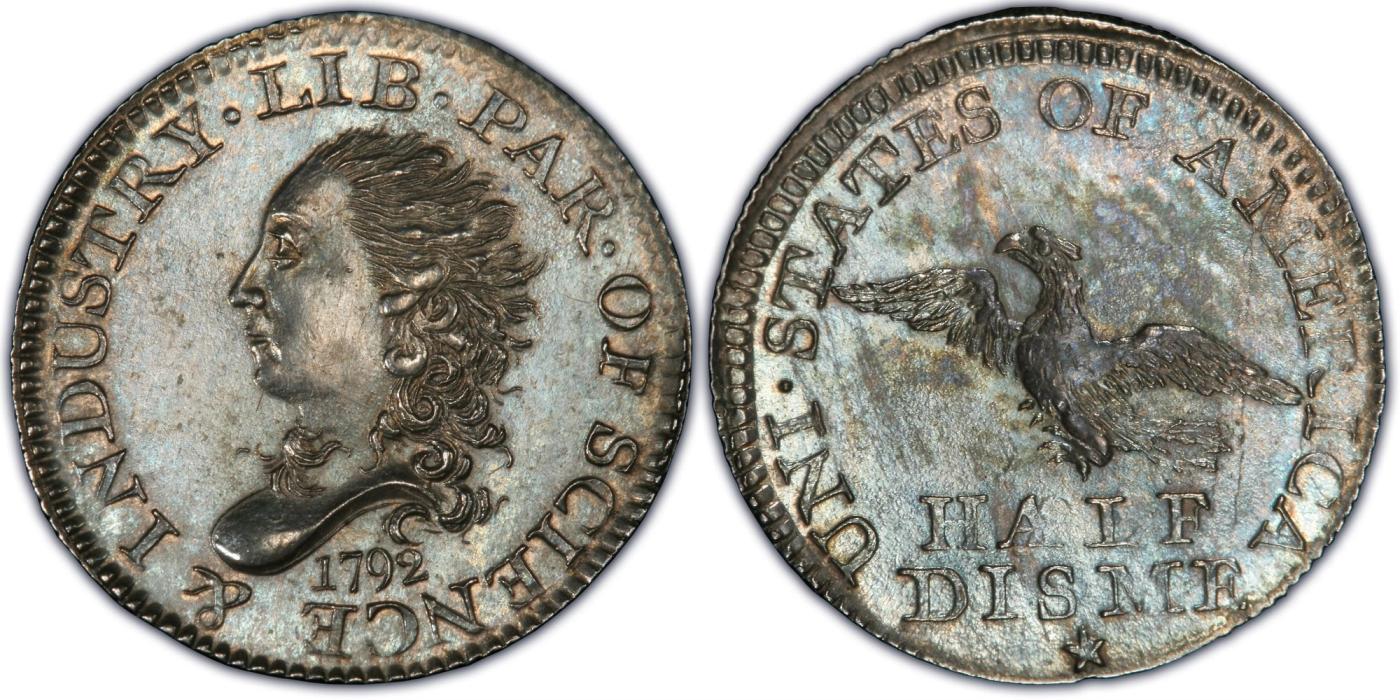
While the market recovered, Congress set out to give the country a coinage of its own. The Confederation Congress had adopted the dollar as the national unit of account in 1785. The Mint Act of April 2, 1792, gave that choice statutory form, required all federal accounts to be kept in dollars and their decimal parts, placed a mint at the seat of government, then Philadelphia, and fixed the value of gold to silver at fifteen to one. American coins entered circulation slowly. The mint struck its first copper cents in 1793 and its first silver and gold coins in 1794 and 1795, and foreign coins such as the Spanish dollar remained in use for decades. Washington named the astronomer David Rittenhouse as the first director, and during the summer and fall of 1792 a building for the mint went up on the east side of Seventh Street, above Sugar Alley.[14]
The national bank spread at the same time. In 1792 it opened branches, called offices of discount and deposit, in Boston, New York, Baltimore, and Charleston, and in 1800 it added a fifth in Norfolk. The bank held the government's deposits, lent to it, moved its money between cities, and paid interest to European holders of American securities. It also had a rough means of restraining credit: because it collected the notes of state banks in the course of business, it could slow their lending by presenting those notes for payment in gold or silver, or encourage it by holding them in its vaults. Much of its stock belonged to foreigners. By one estimate made in January 1798, foreign investors held 13,000 of the bank's 25,000 shares, a fact that troubled Americans who feared European influence over the nation's finances.[15]
A Republic of Banks
Richard Sylla, a leading historian of early American finance, has argued that the government's success with the Bank of the United States, whose dividends exceeded the cost of the money the government had borrowed to buy its shares, encouraged the states to charter banks of their own. By his count there were 28 by 1800. Other scholars, using different methods, have reached somewhat different totals, but every count shows rapid growth from the three banks of 1789.[16]
State legislatures had their own reasons for chartering banks. The Constitution had taken away their power to print paper money, and the banks they chartered gave them a substitute source of revenue and credit. The Bank of New York, which had operated without a charter since 1784, finally received one from the New York legislature in 1791. In 1793 Pennsylvania chartered the Bank of Pennsylvania on a plan drawn up by a member of its legislature named Albert Gallatin. It was meant to stand in the same relation to the state government that the national bank stood to the federal one, and the legislature appointed six of its twenty-five directors. The state itself subscribed for half the stock, and Henry Adams, Gallatin's biographer, wrote in 1879 that its dividends helped pay Pennsylvania's expenses for some forty years without a direct tax. Maryland chartered the Bank of Baltimore in December 1795 and reserved for the state the right to invest up to $180,000 in its stock.[17]
The new banks competed with one another and with the national bank's branches. In July 1796, when Hamilton tried to arrange a loan to the government from the Bank of New York, he reported that some of its directors resisted out of "jealousy & narrowness," suspecting a plan to strengthen the local branch of the national bank at their expense.[18]
The Government in Debt to Its Bank
The federal government was the national bank's largest customer and, by the middle of the decade, its largest debtor. By Hildreth's reckoning it owed the bank about $6 million in 1796, at least $4.4 million of it due within the year. Part of it was the loan the bank had made to pay for the government's own shares. The rest came from advances for the war against the Ohio nations, the suppression of the Whiskey Rebellion, the treaty with Algiers, and a payment toward the French debt. In a memorial to Congress that spring, the bank's directors said they viewed the government's delays in repaying them with "great disquietude and alarm." Hamilton had left the Treasury in January 1795, and it fell to his successor, Oliver Wolcott Jr., to find the money. An act of May 31, 1796, authorized paying the government's debts to the bank partly by selling the government's own shares in it.[19]
Hamilton, by then a private lawyer in New York, was appalled. "The idea of selling Bank Stock is the worst of all," he wrote on July 8, and on August 3 he called it "one of the most infatuated steps that ever was adopted." He helped Wolcott arrange a loan of $320,000 from the Bank of New York, part of which went to pay the national bank. The sales went ahead nonetheless. According to Hildreth, an attempt to raise a loan at par failed that year, and the commissioners of the sinking fund instead sold $1 million worth of the government's bank stock and renewed the rest of the debt. Further sales followed. By 1802 the government held only 2,220 of the five thousand shares it had subscribed, and that June Gallatin, by then secretary of the treasury, sold them to the British financier Alexander Baring at $580 a share to pay a Dutch debt.[20]
Land, Prison, and a Water Company
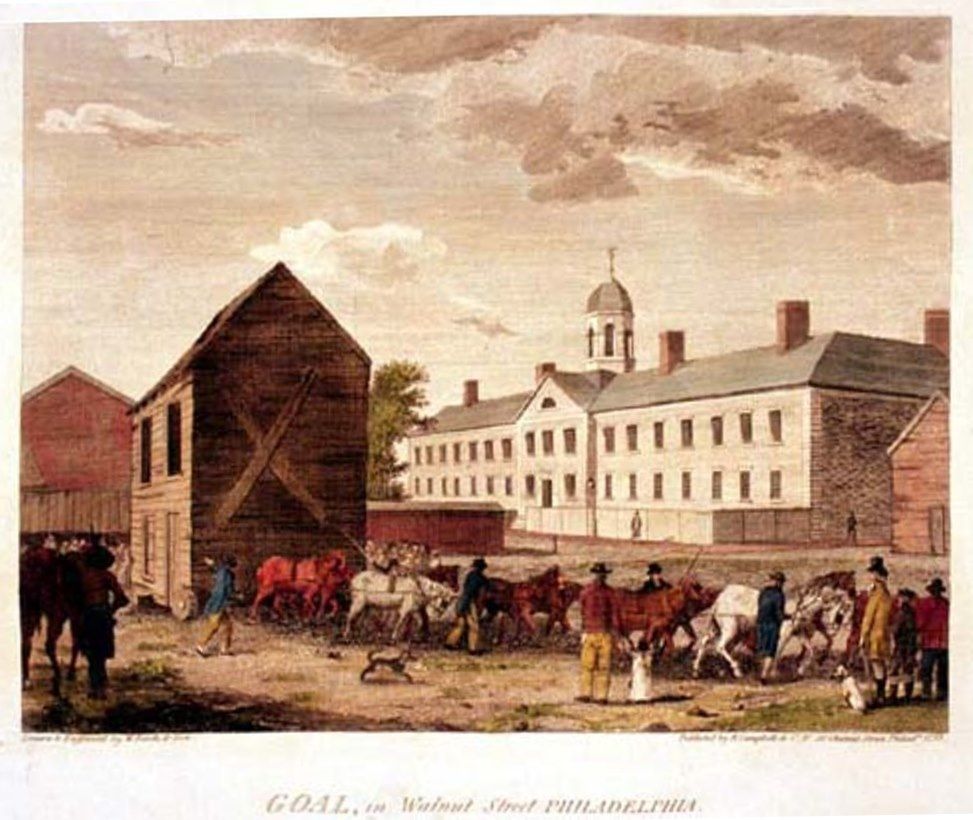
The most dramatic failure of the late 1790s came from land, not securities. Robert Morris, the superintendent of finance who had founded the Bank of North America in 1781, had spent the decade speculating heavily in frontier land, and when his ventures failed he was left with millions of dollars in debts. On February 16, 1798, he entered the debtors' prison on Prune Street in Philadelphia, where, by his own account, he walked the prison yard some fifty times a day. Late that year Washington, then in Philadelphia, dined with him there. Morris's predicament, and the failures of other prominent men, illustrated the need for a federal bankruptcy law, which Congress passed in April 1800. The act was not a general remedy for everyone jailed for debt. Proceedings began on the petition of a debtor's creditors, and only certain commercial debtors qualified. The act covered merchants and anyone who had acted "as a banker, broker, factor, underwriter, or marine insurer," and it gave qualifying bankrupts, Morris among them, a route to release and to discharge from their debts.[21]
In New York, meanwhile, the opposition found a way to charter a bank of its own. After an epidemic of yellow fever, the Republican assemblyman Aaron Burr steered a charter for the Manhattan Company through the state legislature in April 1799. The company's stated purpose was to supply the city with clean water. A clause in the charter allowed the company to invest its surplus capital in any lawful financial transactions it chose. The company built a modest water system, but most of its capital went into a bank, which opened at 40 Wall Street that September and gave Burr and his allies a Republican rival to Hamilton's Bank of New York. James Parton, Burr's nineteenth-century biographer, wrote that few legislators read the bill closely enough to see that they were chartering a bank, and that when the truth came out that spring, the outcry cost Burr his seat in the assembly. The bank was profitable from the start and paid its first dividend in July 1800.[22] By the end of the decade a bank charter had become a prize of party politics, and the Republicans had learned to use banks as readily as the Federalists.
The Inheritance
Jefferson's victory in the election of 1800 put the national bank's chief critic in the president's house. His secretary of the treasury was Gallatin, the Swiss-born Pennsylvanian who had spent the late 1790s in Congress attacking Federalist finance. Gallatin's great aim was to pay off the public debt, and in November 1801 he warned Jefferson that if customs and land sales could not pay it "at the rate proposed," then "one of three things must be done": keep the internal taxes, cut spending further, or pay the debt more slowly.[23] At the end of July 1801 Jefferson left Washington for two months at Monticello, and Gallatin kept him informed of the Treasury's business by letter.
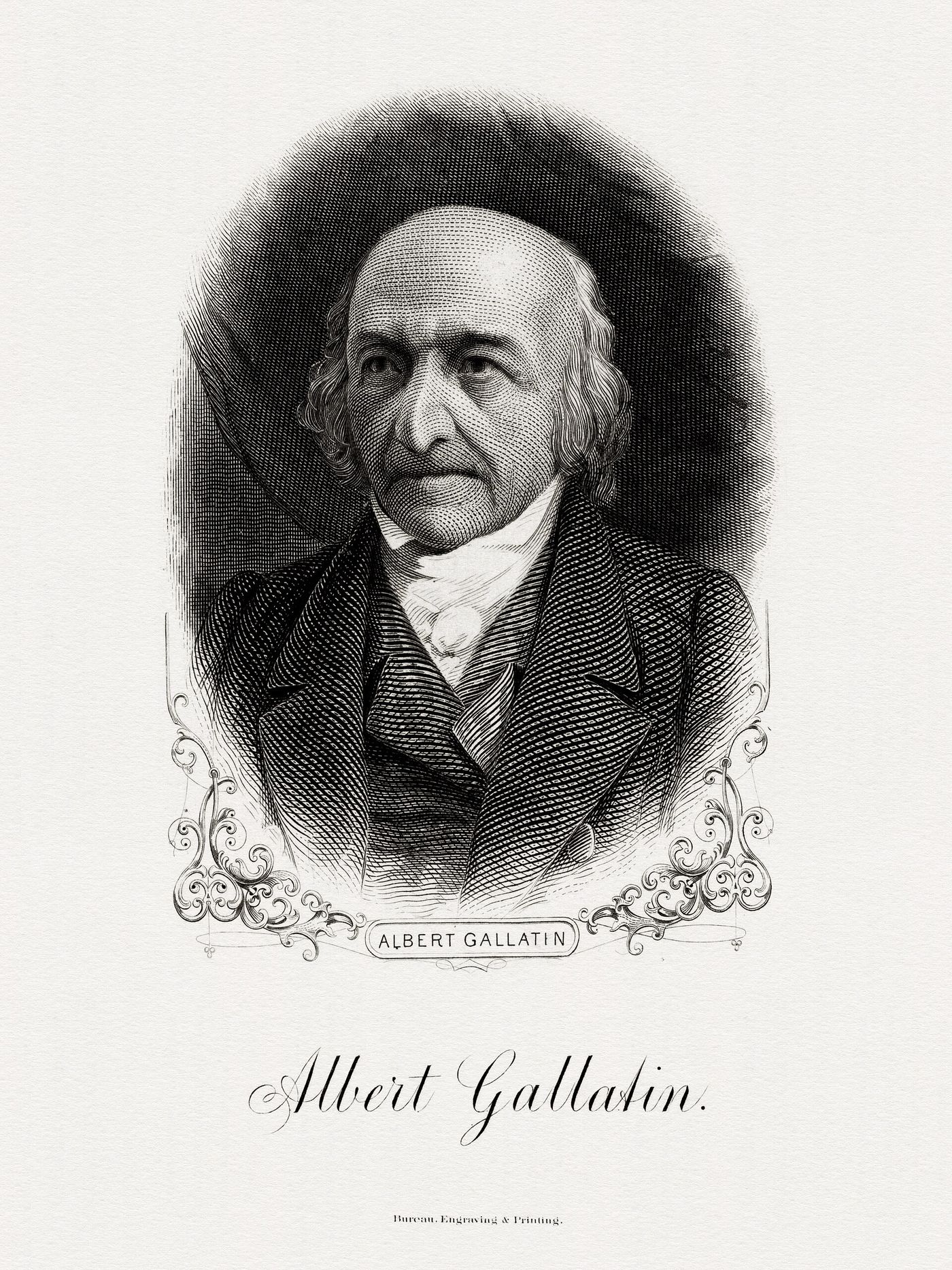
On August 10 Gallatin reported that the Treasury had begun the week with $2,520,228.42 in cash, and he discussed which customs collectors should be removed for failing to render their accounts. "The republicans hope for a greater number of removals; the federals also expect it," he wrote. "The number of removals is not great, but in importance they are beyond their number." Henry Adams later portrayed Gallatin as a steady brake on Republican demands for wholesale removals. On August 26 Robert Morris walked out of the Prune Street jail, released under the bankruptcy law after three and a half years. Afterward he described himself as a free citizen "without one cent that I can call my own."[24]
Three days after Morris's release, Samuel Meredith, who had kept the nation's cash since the week Hamilton borrowed $80,000 from two banks, wrote his letter of resignation as treasurer of the United States. He gave as his reasons "the precarious state of Mrs. Meredith's health," his family's wish to be near relations, and his private affairs, which were "suffering by my absence from Philada." Gallatin had heard of his "strong inclination to resign this fall" as early as June 29. Jefferson accepted the resignation from Monticello on September 4, writing that Meredith had conducted himself "with perfect integrity & propriety." Jefferson first offered the post to Joseph Habersham, who declined, and then to Thomas Tudor Tucker, who took office on December 1, 1801.[25]
In a weekly report enclosed on September 21, Gallatin listed warrants for paying interest and principal on the domestic debt and for buying bills of exchange on Holland to pay the Dutch loans of the Revolution, and he gave the Treasury's closing balance for the week as $3,423,888.66. That November, after Jefferson had shown an interest in the bank's figures, Gallatin compiled a consolidated weekly statement of the Bank of the United States from the reports of the main office in Philadelphia and its five branches.[26] The president who had told Washington that the bank was unconstitutional was now reading its balance sheets.
The settlement did not survive the decade that followed. Jefferson soon urged Gallatin to spread government deposits among the state banks, reasoning that it was "for the public good to keep all the banks competitors for our favors." When the bank's charter came up for renewal in 1811, Gallatin pressed for it, but opponents objected that foreigners owned much of the stock, and Congress refused renewal by a single vote in each house.[27]
In September 1789 the Treasury of the United States had needed $80,000 at once and could get it only by asking two private banks for a favor. Twelve years later, in September 1801, the same Treasury held more than $3.4 million, paid its foreign creditors through bills of exchange, and kept its money in a national bank with offices in six cities. Several of the men who had helped build that system had come to grief. Duer had died in prison after his speculations in securities collapsed, Morris had emerged penniless from his ventures in land, and Hamilton was out of office and out of power. The system itself survived its first great test, the transfer of power to its enemies. The Republicans had called the bank unconstitutional, the funded debt a source of corruption, and the market a gambling den, yet when they took office in 1801 they kept all three and set about paying the debt down rather than tearing the structure apart. The financial order that began with Hamilton's urgent letter to Thomas Willing had become, by 1801, part of the ordinary machinery of American government.
Places in this Story
The places this story moves through, in order — follow them on the interactive map →
- Bank of North America, Chestnut Street, Philadelphia September 1789
Hamilton asks Thomas Willing for $50,000, and the bank agrees on September 21.
- Bank of New York, New York September 1789
The bank advances $20,000 and agrees to lend $30,000 more in the government's first weeks.
- Federal Hall, New York January 1790
Hamilton proposes paying the federal debt at full value and assuming the war debts of the states.
- Congress Hall, Philadelphia February 1791
Congress charters the Bank of the United States over the objection that it may not create a corporation.
- Bank of the United States, Carpenters' Hall, Philadelphia July 1791
Every share offered to the public is taken on the first day, and the scrip becomes an object of speculation. The bank does business from Carpenters' Hall until its marble building is finished.
- Wall Street, New York August 1791
Prices give way on August 11, and Hamilton commits $150,000 from the sinking fund to buy securities.
- New Gaol, New York March 1792
Duer is jailed for debt after his speculations collapse, and he dies in prison in 1799.
- Buttonwood tree, 68 Wall Street, New York May 17, 1792
Brokers sign the commission agreement that became the ancestor of the New York Stock Exchange.
- United States Mint, Seventh Street, Philadelphia 1792
A building for the first national mint goes up above Sugar Alley, and copper cents follow in 1793.
- Prune Street debtors' prison, Philadelphia February 1798
Robert Morris enters prison for debt after his land ventures fail, and walks out in August 1801.
- 40 Wall Street, New York September 1799
The Manhattan Company, chartered to supply water, opens a bank that gives the Republicans a rival to Hamilton's.
- Monticello, Virginia August 1801
Jefferson spends two months here while Gallatin reports the Treasury's weekly business by letter.
Frequently Asked Questions
Why did the United States Treasury have to borrow from private banks in 1789?
The new government had no mint, no national bank, and almost no revenue yet coming in, so within days of taking office Hamilton asked the Bank of New York and the Bank of North America for $80,000. Much of it went to pay the first installment of salary owed to the president, Congress, and its officers.
What was the Bank of the United States?
It was a national bank chartered for twenty years in February 1791, with a capital of $10 million, of which the federal government subscribed a fifth. It held the government's deposits, lent to it, moved its money between cities, and was the largest corporation of any kind in the country.
Why did Jefferson and Madison oppose the national bank?
They argued that the Constitution gave Congress no power to create a corporation, and Jefferson warned that implying such a power would open a boundless field with no definable limit. Hamilton replied that every power carries the right to employ the means needed to exercise it, and Washington signed the bill on February 25, 1791.
What caused the Panic of 1792?
William Duer, Hamilton's former assistant secretary, borrowed heavily to speculate in government securities and bank shares with the merchant Alexander Macomb, and on March 9, 1792, he stopped paying his debts. Prices collapsed, Duer was jailed two weeks later, and Jefferson put the loss at New York at about five million dollars.
What was the Buttonwood Agreement?
On May 17, 1792, a group of New York brokers who traded outdoors near a buttonwood tree on Wall Street signed a pledge not to buy or sell public stock for anyone at less than a quarter percent commission. It became the ancestor of the New York Stock Exchange.
Did Jefferson dismantle Hamilton's financial system after winning in 1800?
No. The Republicans had called the bank unconstitutional, the funded debt a source of corruption, and the securities market a gambling den, yet in office they kept all three and set about paying the debt down rather than tearing the structure apart.
How many banks did the United States have by 1800?
There were three when Washington took office in 1789: the Bank of North America, the Bank of New York, and the Massachusetts Bank. Richard Sylla counts 28 state-chartered banks by 1800, alongside the Bank of the United States and its branch offices in five port cities.
Bibliography
Adams, Henry. The Life of Albert Gallatin. Philadelphia: J. B. Lippincott, 1879. Internet Archive. Accessed October 9, 2026. https://archive.org/details/lifeofalbertgall00adamrich.
Ames, Fisher. Fisher Ames to Alexander Hamilton, August 15, 1791. In The Papers of Alexander Hamilton, vol. 9. Founders Online, National Archives. Accessed October 13, 2026. https://founders.archives.gov/documents/Hamilton/01-09-02-0041.
Bank of the Manhattan Company. Bank of the Manhattan Company, Chartered 1799: A Progressive Commercial Bank. New York: Bank of the Manhattan Company, n.d. Project Gutenberg, 2005. Accessed October 9, 2026. https://www.gutenberg.org/ebooks/17374.
Bayley, Rafael A. The National Loans of the United States, from July 4, 1776, to June 30, 1880. Washington, DC: Government Printing Office, 1882. Google Books. Accessed October 21, 2026. https://books.google.com/books?id=Ce4JAAAAIAAJ.
Bolles, Albert S. The Financial History of the United States. Vol. 2, From 1789 to 1860. New York: D. Appleton, 1883. Internet Archive. Accessed October 9, 2026. https://archive.org/details/financialhistory02bolluoft.
Clarke, M. St. Clair, and D. A. Hall, comps. Legislative and Documentary History of the Bank of the United States: Including the Original Bank of North America. Washington, DC: Gales and Seaton, 1832. Google Books. Accessed October 21, 2026. https://books.google.com/books?id=jmoFAAAAQAAJ.
Commissioners of the Sinking Fund. "Proceedings of the Commissioners of the Sinking Fund," [June 7,] 1802. In The Papers of James Madison, Secretary of State Series, vol. 3. Founders Online, National Archives. Accessed October 9, 2026. https://founders.archives.gov/documents/Madison/02-03-02-0347.
Domett, Henry W. A History of the Bank of New York, 1784–1884. New York: G. P. Putnam's Sons, 1884. Google Books. Accessed October 21, 2026. https://books.google.com/books?id=mnIFAAAAQAAJ.
Duer, William. William Duer to Alexander Hamilton, [March 12, 1792]. In The Papers of Alexander Hamilton, vol. 11. Founders Online, National Archives. Accessed October 13, 2026. https://founders.archives.gov/documents/Hamilton/01-11-02-0099.
Eames, Francis L. The New York Stock Exchange. New York: Thomas G. Hall, 1894. Internet Archive. Accessed October 13, 2026. https://archive.org/details/cu31924030206191.
Gallatin, Albert. Albert Gallatin to Thomas Jefferson, [June 29, 1801]. In The Papers of Thomas Jefferson, vol. 34. Founders Online, National Archives. Accessed October 9, 2026. https://founders.archives.gov/documents/Jefferson/01-34-02-0373.
Gallatin, Albert. Albert Gallatin to Thomas Jefferson, August 10, 1801. In The Papers of Thomas Jefferson, vol. 35. Founders Online, National Archives. Accessed October 9, 2026. https://founders.archives.gov/documents/Jefferson/01-35-02-0042.
Gallatin, Albert. Albert Gallatin to Thomas Jefferson, September 21, 1801. In The Papers of Thomas Jefferson, vol. 35. Founders Online, National Archives. Accessed October 9, 2026. https://founders.archives.gov/documents/Jefferson/01-35-02-0261.
Gallatin, Albert. Albert Gallatin to Thomas Jefferson, [on or before November 16, 1801]. In The Papers of Thomas Jefferson, vol. 35. Founders Online, National Archives. Accessed October 13, 2026. https://founders.archives.gov/documents/Jefferson/01-35-02-0497-0009.
Gallatin, Albert. "Albert Gallatin's Statement on the Bank of the United States," [after November 26, 1801]. In The Papers of Thomas Jefferson, vol. 35. Founders Online, National Archives. Accessed October 9, 2026. https://founders.archives.gov/documents/Jefferson/01-35-02-0558.
Gallatin, Albert. "Memorandum from Albert Gallatin," [on or before June 18, 1802]. In The Papers of Thomas Jefferson, vol. 37. Founders Online, National Archives. Accessed October 9, 2026. https://founders.archives.gov/documents/Jefferson/01-37-02-0505.
Habersham, Joseph. Joseph Habersham to James Madison, August 31, 1801. In The Papers of James Madison, Secretary of State Series, vol. 2. Founders Online, National Archives. Accessed October 9, 2026. https://founders.archives.gov/documents/Madison/02-02-02-0109.
Hamilton, Alexander. Alexander Hamilton to Thomas Willing, September 13, 1789. In The Papers of Alexander Hamilton, vol. 5. Founders Online, National Archives. Accessed October 9, 2026. https://founders.archives.gov/documents/Hamilton/01-05-02-0152.
Hamilton, Alexander. "Report Relative to a Provision for the Support of Public Credit," January 9, 1790. In The Papers of Alexander Hamilton, vol. 6. Founders Online, National Archives. Accessed October 13, 2026. https://founders.archives.gov/documents/Hamilton/01-06-02-0076-0002-0001.
Hamilton, Alexander. "Final Version of the Second Report on the Further Provision Necessary for Establishing Public Credit (Report on a National Bank)," December 13, 1790. In The Papers of Alexander Hamilton, vol. 7. Founders Online, National Archives. Accessed October 13, 2026. https://founders.archives.gov/documents/Hamilton/01-07-02-0229-0003.
Hamilton, Alexander. "Final Version of an Opinion on the Constitutionality of an Act to Establish a Bank," [February 23, 1791]. In The Papers of Alexander Hamilton, vol. 8. Founders Online, National Archives. Accessed October 9, 2026. https://founders.archives.gov/documents/Hamilton/01-08-02-0060-0003.
Hamilton, Alexander. Alexander Hamilton to the President and Directors of the Massachusetts Bank, May 30, 1791. In The Papers of Alexander Hamilton, vol. 8. Founders Online, National Archives. Accessed October 21, 2026. https://founders.archives.gov/documents/Hamilton/01-08-02-0350.
Hamilton, Alexander. Alexander Hamilton to William Seton, August 15, 1791. In The Papers of Alexander Hamilton, vol. 9. Founders Online, National Archives. Accessed October 13, 2026. https://founders.archives.gov/documents/Hamilton/01-09-02-0046.
Hamilton, Alexander. Alexander Hamilton to James Brown, John Graham, and George Pickett, August 27, 1791. In The Papers of Alexander Hamilton, vol. 9. Founders Online, National Archives. Accessed October 13, 2026. https://founders.archives.gov/documents/Hamilton/01-09-02-0097.
Hamilton, Alexander. Alexander Hamilton to William Duer, March 14, 1792. In The Papers of Alexander Hamilton, vol. 11. Founders Online, National Archives. Accessed October 13, 2026. https://founders.archives.gov/documents/Hamilton/01-11-02-0108.
Hamilton, Alexander. Alexander Hamilton to William Seton, March 25, 1792. In The Papers of Alexander Hamilton, vol. 11. Founders Online, National Archives. Accessed October 9, 2026. https://founders.archives.gov/documents/Hamilton/01-11-02-0153.
Hamilton, Alexander. Alexander Hamilton to Oliver Wolcott Jr., July 8, 1796. In The Papers of Alexander Hamilton, vol. 20. Founders Online, National Archives. Accessed October 9, 2026. https://founders.archives.gov/documents/Hamilton/01-20-02-0163.
Hamilton, Alexander. Alexander Hamilton to Oliver Wolcott Jr., July 15, 1796. In The Papers of Alexander Hamilton, vol. 20. Founders Online, National Archives. Accessed October 9, 2026. https://founders.archives.gov/documents/Hamilton/01-20-02-0169.
Hamilton, Alexander. Alexander Hamilton to Oliver Wolcott Jr., August 3, 1796. In The Papers of Alexander Hamilton, vol. 20. Founders Online, National Archives. Accessed October 9, 2026. https://founders.archives.gov/documents/Hamilton/01-20-02-0185.
Hildreth, Richard. The History of the United States of America. Vol. 4, Administration of Washington, 1789–1797. New York: Harper & Brothers, 1851. Internet Archive. Accessed October 9, 2026. https://archive.org/details/historyofuniteds04hilduoft.
Hill, Andrew T. "The First Bank of the United States." Federal Reserve History, December 4, 2015. Accessed October 9, 2026. https://www.federalreservehistory.org/essays/first-bank-of-the-us.
Jefferson, Thomas. "Opinion on the Constitutionality of the Bill for Establishing a National Bank," February 15, 1791. In The Papers of Thomas Jefferson, vol. 19. Founders Online, National Archives. Accessed October 9, 2026. https://founders.archives.gov/documents/Jefferson/01-19-02-0051.
Jefferson, Thomas. Thomas Jefferson to Edmund Pendleton, July 24, 1791. In The Papers of Thomas Jefferson, vol. 20. Founders Online, National Archives. Accessed October 13, 2026. https://founders.archives.gov/documents/Jefferson/01-20-02-0318.
Jefferson, Thomas. Thomas Jefferson to Edward Rutledge, August 25, 1791. In The Papers of Thomas Jefferson, vol. 22. Founders Online, National Archives. Accessed October 9, 2026. https://founders.archives.gov/documents/Jefferson/01-22-02-0071.
Jefferson, Thomas. Thomas Jefferson to Thomas Mann Randolph Jr., April 19, 1792. In The Papers of Thomas Jefferson, vol. 23. Founders Online, National Archives. Accessed October 13, 2026. https://founders.archives.gov/documents/Jefferson/01-23-02-0389.
Jefferson, Thomas. Thomas Jefferson to Joseph Habersham, September 4, 1801. In The Papers of Thomas Jefferson, vol. 35. Founders Online, National Archives. Accessed October 9, 2026. https://founders.archives.gov/documents/Jefferson/01-35-02-0161.
Jefferson, Thomas. Thomas Jefferson to Samuel Meredith, September 4, 1801. In The Papers of Thomas Jefferson, vol. 35. Founders Online, National Archives. Accessed October 9, 2026. https://founders.archives.gov/documents/Jefferson/01-35-02-0163.
Jefferson, Thomas. Thomas Jefferson to Thomas Tudor Tucker, October 31, 1801. In The Papers of Thomas Jefferson, vol. 35. Founders Online, National Archives. Accessed October 9, 2026. https://founders.archives.gov/documents/Jefferson/01-35-02-0443.
Jefferson, Thomas. Thomas Jefferson to Albert Gallatin, October 7, 1802. In The Papers of Thomas Jefferson, vol. 38. Founders Online, National Archives. Accessed October 9, 2026. https://founders.archives.gov/documents/Jefferson/01-38-02-0416.
Lewis, Lawrence, Jr. A History of the Bank of North America, the First Bank Chartered in the United States. Philadelphia: J. B. Lippincott, 1882. Internet Archive. Accessed October 9, 2026. https://archive.org/details/historyofbankofn00lewi.
Madison, James. James Madison to Thomas Jefferson, August 8, 1791. In The Papers of James Madison, vol. 14. Founders Online, National Archives. Accessed October 9, 2026. https://founders.archives.gov/documents/Madison/01-14-02-0062.
McCormick, Emily. "250 Years Later: How America Got Its Banks." Bank Director, July 3, 2026. Accessed October 9, 2026. https://www.bankdirector.com/article/250-years-later-how-america-got-its-banks/.
Meredith, Samuel. Samuel Meredith to Thomas Jefferson, August 29, 1801. In The Papers of Thomas Jefferson, vol. 35. Founders Online, National Archives. Accessed October 21, 2026. https://founders.archives.gov/documents/Jefferson/01-35-02-0132.
Meredith, Samuel. Samuel Meredith to George Washington, September 16, 1789. In The Papers of George Washington, Presidential Series, vol. 4. Founders Online, National Archives. Accessed October 9, 2026. https://founders.archives.gov/documents/Washington/05-04-02-0027.
NYC Municipal Archives. "Dirty Water." For the Record (blog), March 6, 2020. Accessed October 9, 2026. https://www.archives.nyc/blog/2020/3/6/dirty-water.
Oberholtzer, Ellis Paxson. Robert Morris, Patriot and Financier. New York: Macmillan, 1903. Google Books. Accessed October 21, 2026. https://books.google.com/books?id=JDmXcTnw4MgC.
Parton, James. The Life and Times of Aaron Burr. Vol. 1. New York: Mason Brothers, 1864. Internet Archive. Accessed October 9, 2026. https://archive.org/details/lifetimesofaaron01partuoft.
The Public Statutes at Large of the United States of America. Edited by Richard Peters. Vol. 2. Boston: Charles C. Little and James Brown, 1845. "An Act to establish an uniform System of Bankruptcy throughout the United States," April 4, 1800, 2:19. GovInfo. Accessed October 21, 2026. https://www.govinfo.gov/content/pkg/STATUTE-2/pdf/STATUTE-2-Pg19.pdf.
Scharf, J. Thomas, and Thompson Westcott. History of Philadelphia, 1609–1884. Vol. 1. Philadelphia: L. H. Everts, 1884. Internet Archive. Accessed October 9, 2026. https://archive.org/details/historyofphilade01scha.
Seton, William. William Seton to Alexander Hamilton, [March 21, 1792]. In The Papers of Alexander Hamilton, vol. 11. Founders Online, National Archives. Accessed October 13, 2026. https://founders.archives.gov/documents/Hamilton/01-11-02-0131.
Sumner, William Graham. The Financier and the Finances of the American Revolution. Vol. 2. New York: Dodd, Mead, 1891. Internet Archive. Accessed October 9, 2026. https://archive.org/details/financierfinance02sumnuoft.
Sylla, Richard, John B. Legler, and John J. Wallis. "Banks and State Public Finance in the New Republic: The United States, 1790–1860." Journal of Economic History 47, no. 2 (June 1987): 391–403.
Troup, Robert. Robert Troup to Alexander Hamilton, March 24, 1792. Calendar summary in The Papers of Alexander Hamilton, vol. 11. Founders Online, National Archives. Accessed October 21, 2026. https://founders.archives.gov/documents/Hamilton/01-11-02-0149.
United States Congress. The Debates and Proceedings in the Congress of the United States [Annals of Congress]. 1st Cong., 3d sess. Washington, DC: Gales and Seaton, 1834.
United States Congress. American State Papers: Finance. Vol. 1. Washington, DC: Gales and Seaton, 1832. Memorial of the President and Directors of the Bank of the United States, communicated to the Senate, May 11, 1796. FRASER, Federal Reserve Bank of St. Louis. Accessed October 9, 2026. https://fraser.stlouisfed.org/docs/bankunitedstates/asp_v1_097.pdf.
Washington, George. George Washington to the United States Senate, September 11, 1789. In The Papers of George Washington, Presidential Series, vol. 4. Founders Online, National Archives. Accessed October 9, 2026. https://founders.archives.gov/documents/Washington/05-04-02-0011.
Weber, Warren E. "Early State Banks in the United States: How Many Were There and When Did They Exist?" Journal of Economic History 66, no. 2 (June 2006): 433–55.
Willing, Thomas. Thomas Willing to Alexander Hamilton, October 1, 1789. In The Papers of Alexander Hamilton, vol. 5. Founders Online, National Archives. Accessed October 9, 2026. https://founders.archives.gov/documents/Hamilton/01-05-02-0191.
Wolcott, Oliver, Jr. Oliver Wolcott Jr. to Alexander Hamilton, December 8, 1796. In The Papers of Alexander Hamilton, vol. 20. Founders Online, National Archives. Accessed October 9, 2026. https://founders.archives.gov/documents/Hamilton/01-20-02-0279.
Citations
- Hamilton to Thomas Willing, September 13, 1789; Washington to the United States Senate, September 11, 1789, with editorial note recording the confirmations of Hamilton and Meredith; Meredith to Washington, September 16, 1789, with editorial note identifying the negotiation as Duer's effort to borrow from the Bank of North America; Willing to Hamilton, October 1, 1789, all in Founders Online; Bayley, National Loans of the United States, 29, for the dates and amounts of the loans and their use for salaries. ↑
- Bayley, National Loans of the United States, 108; Hamilton, "Report Relative to a Provision for the Support of Public Credit," January 9, 1790, Founders Online. Hamilton gives the foreign debt as $11,710,378.62 and the domestic debt as $42,414,085.94, including about $2 million not yet liquidated, and estimates the state debts at "25 millions of dollars, principal and interest." ↑
- Hildreth, History of the United States, 4:153, 165, 394. ↑
- Hamilton, "Final Version of the Second Report on the Further Provision Necessary for Establishing Public Credit (Report on a National Bank)," December 13, 1790, Founders Online; Lewis, History of the Bank of North America, 75–76; Madison, speech in the House of Representatives, February 2, 1791, in Clarke and Hall, Legislative and Documentary History of the Bank, 43, and Annals of Congress, 1st Cong., 3d sess., cols. 1950–52. ↑
- Jefferson, "Opinion on the Constitutionality of the Bill for Establishing a National Bank," February 15, 1791, Founders Online; Clarke and Hall, Legislative and Documentary History of the Bank, 91. Jefferson cited the amendment as the "XIIth," its number in the list Congress sent to the states. The spelling "feild" follows the manuscript as printed in Founders Online; Clarke and Hall print "field." ↑
- Hamilton, "Opinion on the Constitutionality of an Act to Establish a Bank," February 23, 1791, Founders Online; Clarke and Hall, Legislative and Documentary History of the Bank, 95–97. ↑
- Bolles, Financial History of the United States, 2:128–30; Hill, "The First Bank of the United States." ↑
- Hamilton to James Brown, John Graham, and George Pickett, August 27, 1791, with editorial note 2, which states that the stock "was oversubscribed on July 4, 1791, the day on which it went on sale"; Hamilton to the President and Directors of the Massachusetts Bank, May 30, 1791, editorial note 2, on the terms of payment; Jefferson to Edmund Pendleton, July 24, 1791, all in Founders Online. The note on the Massachusetts Bank gives the first payment as one quarter of the $400 price, of which one fourth had to be in specie, which yields $25 in gold or silver per share; the note gives eighteen months for the balance. ↑
- Madison to Jefferson, August 8, 1791; Jefferson to Edward Rutledge, August 25, 1791, both in Founders Online. ↑
- Fisher Ames to Hamilton, August 15, 1791, with editorial note 6, which dates the break in New York to August 11, its arrival in Philadelphia to the next day, and its end to August 17, without saying what ended it; Hamilton to William Seton, August 15, 1791, with editorial note 2 on Seton's purchases, both in Founders Online. ↑
- William Duer to Hamilton, [March 12, 1792], editorial note; Hamilton to Duer, March 14, 1792, editorial note 2, both in Founders Online. ↑
- William Seton to Hamilton, [March 21, 1792]; Duer to Hamilton, [March 12, 1792], editorial note, for the date of Duer's imprisonment; Robert Troup to Hamilton, March 24, 1792; Jefferson to Thomas Mann Randolph Jr., April 19, 1792, all in Founders Online. Troup's letter has not been found; the quotation comes from the calendar summary printed in the Hamilton Papers. ↑
- Hamilton to William Seton, March 25, 1792, Founders Online; Domett, History of the Bank of New York, 48; Eames, New York Stock Exchange, 14, 17. The quotation follows Eames's printed transcription, which reads "one-quarter per cent. Commission on the Specie value"; other transcriptions of the agreement print "one quarter percent." ↑
- Scharf and Westcott, History of Philadelphia, 1:264, 468. ↑
- Hill, "The First Bank of the United States"; Jefferson to Gallatin, October 7, 1802, Founders Online, editorial note, citing James O. Wettereau's research on the bank's stockholders. ↑
- McCormick, "250 Years Later: How America Got Its Banks," quoting and paraphrasing Richard Sylla; Weber, "Early State Banks in the United States," which constructs a new count of state banks from 1782 to 1861. ↑
- Sylla, Legler, and Wallis, "Banks and State Public Finance in the New Republic," 391; "Memorandum from Albert Gallatin," [on or before June 18, 1802], Founders Online, editorial note; Adams, Life of Albert Gallatin, 86; Jefferson to Gallatin, October 7, 1802, Founders Online, editorial note. ↑
- Hamilton to Oliver Wolcott Jr., July 15, 1796, Founders Online. ↑
- Hildreth, History of the United States, 4:630, which gives both the total of about $6 million and the $4.4 million due within the year; Memorial of the President and Directors of the Bank of the United States, May 11, 1796, American State Papers, Finance, 1:412; Hamilton to Wolcott, August 3, 1796, Founders Online, editorial note identifying the act of May 31, 1796. ↑
- Hamilton to Wolcott, July 8 and August 3, 1796; Wolcott to Hamilton, December 8, 1796, editorial notes 1 and 5, all in Founders Online; Hildreth, History of the United States, 4:631; "Proceedings of the Commissioners of the Sinking Fund," [June 7,] 1802, Founders Online. The figure of five thousand original shares follows from the government's $2 million subscription at $400 a share. ↑
- Sumner, Financier and the Finances of the American Revolution, 2:289, 291, 299; Oberholtzer, Robert Morris, 353, which describes the act as allowing bankrupts to be released on their creditors' petition; "An Act to establish an uniform System of Bankruptcy throughout the United States," April 4, 1800, in Public Statutes at Large, 2:19, sec. 1. ↑
- NYC Municipal Archives, "Dirty Water"; Parton, Life and Times of Aaron Burr, 1:238–39; Bank of the Manhattan Company, Chartered 1799. Parton wrote as a sympathetic biographer, and his account of the legislators' ignorance and of the cause of Burr's defeat is his interpretation rather than an established fact. ↑
- Gallatin to Jefferson, [on or before November 16, 1801], Founders Online. ↑
- Gallatin to Jefferson, August 10, 1801, Founders Online; Adams, Life of Albert Gallatin, 278–80; Oberholtzer, Robert Morris, 354, which dates the release to August 26, 1801, and quotes the remark without giving its date or recipient. ↑
- Samuel Meredith to Jefferson, August 29, 1801; Gallatin to Jefferson, [June 29, 1801]; Jefferson to Meredith, September 4, 1801; Jefferson to Joseph Habersham, September 4, 1801; Habersham to Madison, August 31, 1801, editorial note; Jefferson to Thomas Tudor Tucker, October 31, 1801, editorial note, all in Founders Online. A Pennsylvania state historical marker says Meredith resigned to avoid serving under Jefferson, but his letter mentions only family and private reasons. ↑
- Gallatin to Jefferson, September 21, 1801, with the editors' description of the enclosed weekly warrant report; "Albert Gallatin's Statement on the Bank of the United States," [after November 26, 1801], editorial note, which says Gallatin probably prepared it in response to Jefferson's "expressed interest in the bank statements," both in Founders Online. ↑
- Jefferson to Gallatin, October 7, 1802, Founders Online; Bolles, Financial History of the United States, 2:146. ↑