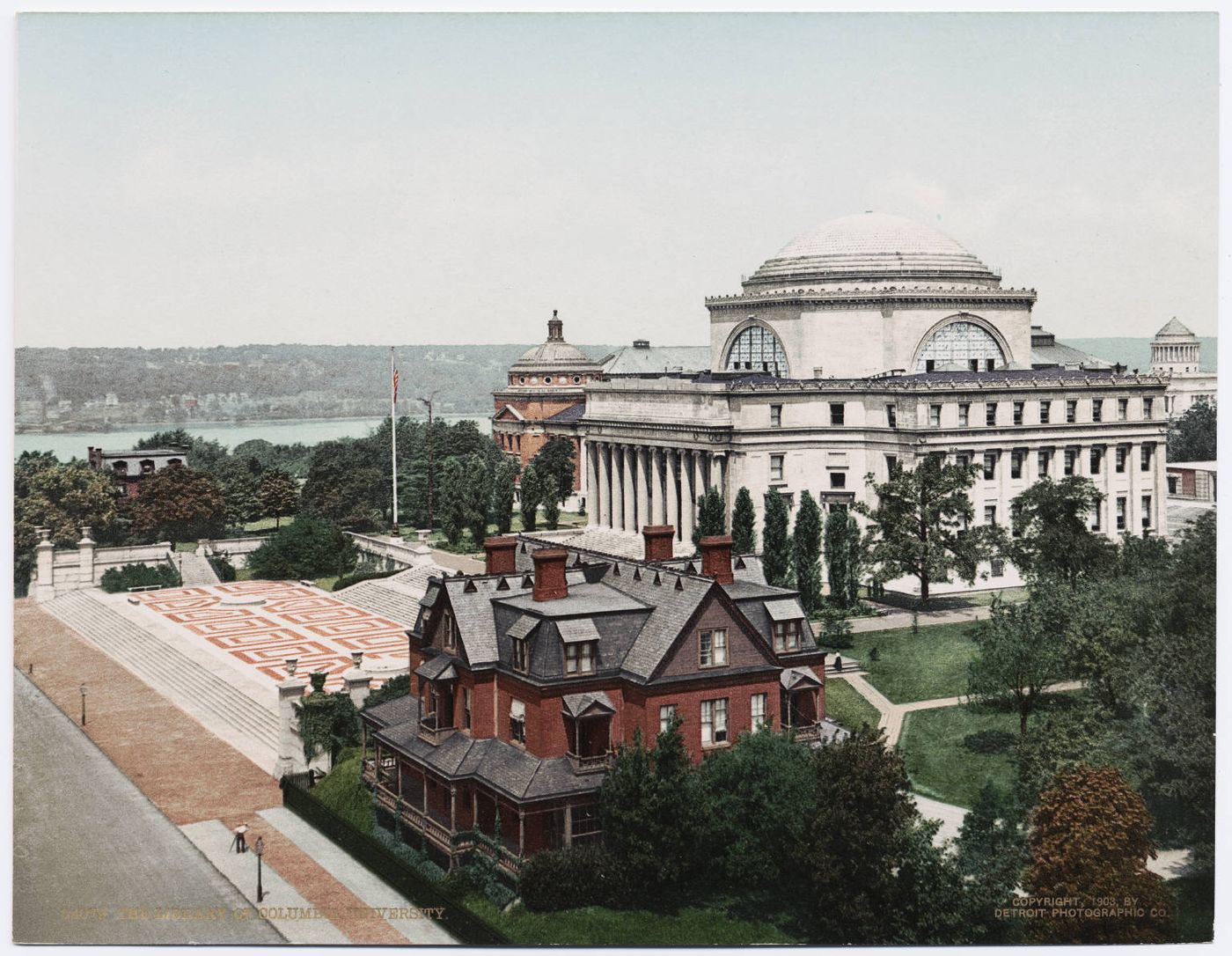
On Friday, March 1, 1907, Woodrow Wilson, the president of Princeton University, gave the first of a series of lectures at Columbia University in New York.[1] The course had been announced as "Party Government in the United States," and it ran weekly through March and April under Columbia's new George Blumenthal Foundation. The lectures drew such crowds that they were moved into Earl Hall, and by the middle of March even that room was "crowded to its capacity."[2] A year later Columbia University Press published them as Constitutional Government in the United States. In the chapter on the presidency, Wilson argued that the men who wrote the Constitution had built it on the wrong science:
The trouble with the theory is that government is not a machine, but a living thing. It falls, not under the theory of the universe, but under the theory of organic life. It is accountable to Darwin, not to Newton. It is modified by its environment, necessitated by its tasks, shaped to its functions by the sheer pressure of life.[3]
Wilson was fifty years old and had never held public office. Six years later he was president of the United States. By 1919 the federal government he led had added a new cabinet department, a central bank, and a string of federal commissions. It had also built a wartime apparatus of boards and administrations and taken most of it apart again. Wilson himself lay gravely ill in the White House. This is the story of those twelve years, from the Columbia lectures in 1907 to the fall of 1919, and of how the federal administration grew across them.
The Scholar of Administration
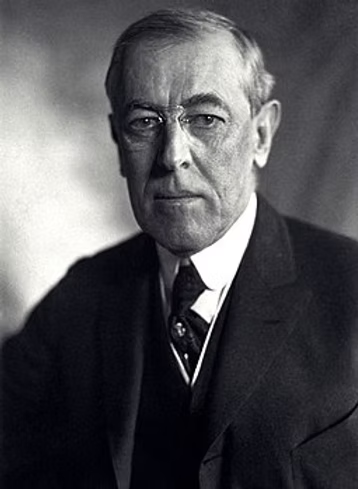
Wilson came to Columbia as one of the best-known political scientists in the country, and he is often called the father of public administration as an academic field. He had earned his PhD at Johns Hopkins University in 1886, and he remains the only president to have held one. Johns Hopkins was known for professors trained in German state theory and philosophy of history.[4] Two of the men who taught him there, the historian Herbert Baxter Adams and the economist Richard T. Ely, had taken their own doctorates at Heidelberg.[5]
In late 1886 Wilson wrote an essay titled "The Study of Administration," which Political Science Quarterly published in June 1887.[6] Many scholars date the study of public administration as a separate field in American universities from this essay. Its argument was that the great constitutional debates, though not finished, now mattered no more in practice than the work of running the government:
It is getting to be harder to run a constitution than to frame one.[7]
Wilson admired how thoroughly Europe, and Prussia above all, had studied administration, though he wanted nothing to do with Prussia's politics. "If I see a murderous fellow sharpening a knife cleverly," he wrote, "I can borrow his way of sharpening the knife without borrowing his probable intention to commit murder with it."[8] In 1889 he followed with a book, The State: Elements of Historical and Practical Politics, a long survey of governments ancient and modern and of what he believed the proper functions of government to be.
George Will calls Wilson the first American president to criticize the founding of the United States, which he did "with a root-and-branch thoroughness." The founders themselves had disagreed about what America should be, as Hamilton and Jefferson each contended for the country they envisioned. Wilson did not reject the Declaration of Independence so much as doubt that its truths, which he called "abstract," held for all times and places.[9] In an essay he wrote around 1885, "The Modern Democratic State," which he never published, he went further:
Justly revered as our great Constitution is, it could be stripped off and thrown aside like a garment, and the nation would still stand forth clothed in the living vestment of flesh and sinew, warm with the heart-blood of one people, ready to recreate constitutions and laws.[10]
The Columbia Lectures, 1907
The lectures of 1907 brought these ideas to bear on the government as it actually worked. Wilson began the chapter on the presidency with the founders' system of checks and balances, "meant to limit the operation of each part and allow to no single part or organ of it a dominating force," and declared that "no government can be successfully conducted upon so mechanical a theory."[11] A government was a living body, he said, and its organs had to cooperate rather than check one another. "Living political constitutions must be Darwinian in structure and in practice."[12]
The organ he had in mind was the presidency. The president, Wilson argued, was more than the head of the executive branch. He "is also the political leader of the nation, or has it in his choice to be," because the whole nation had chosen him:
His is the only national voice in affairs. Let him once win the admiration and confidence of the country, and no other single force can withstand him, no combination of forces will easily overpower him.[13]
The Constitution set no ceiling on the office. "The President is at liberty, both in law and conscience, to be as big a man as he can. His capacity will set the limit."[14] Nor did Wilson think the Constitution's text should hold the nation back. "The Constitution of the United States is not a mere lawyers' document," he said. "It is a vehicle of life, and its spirit is always the spirit of the age."[15]
The lectures say less about agencies than about leadership. Wilson observed that the president could not execute the laws himself; their daily execution was already "taken care of by the several executive departments and by the now innumerable body of federal officials throughout the country," so that "his executive powers are in commission, while his political powers more and more centre and accumulate upon him."[16] Wilson was even wary of federal regulation through commissions, complaining that Americans had stripped their cities of power and handed it to state commissions and legislatures "very much as we are now stripping the States of their powers and putting them in the hands of federal commissions."[17] He signed the preface at Princeton on March 24, 1908, and the book came out that May.[18]
Princeton and Trenton, 1907–1912
At home, 1907 went badly for Wilson. In June the Princeton trustees adopted his report proposing to reorganize undergraduate life into residential colleges, or "quads," and authorized him "to mature detailed plans for the future consideration of this Board." Alumni and faculty opposition grew over the summer, and on October 17, 1907, the trustees asked him to withdraw the plan.[19] Further fights followed, and on October 20, 1910, Wilson resigned the presidency of Princeton. The trustees accepted his resignation the same day.[20]
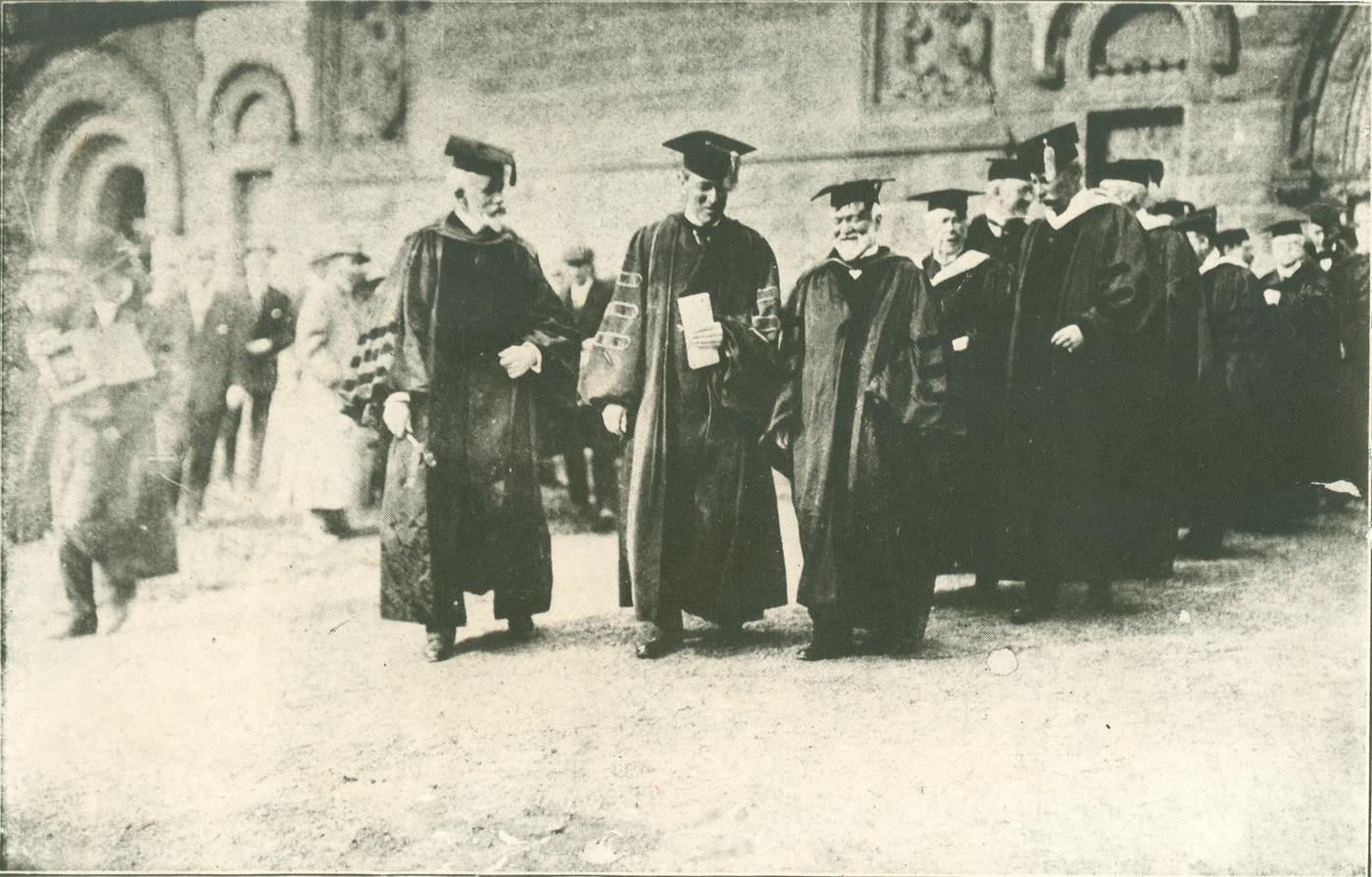
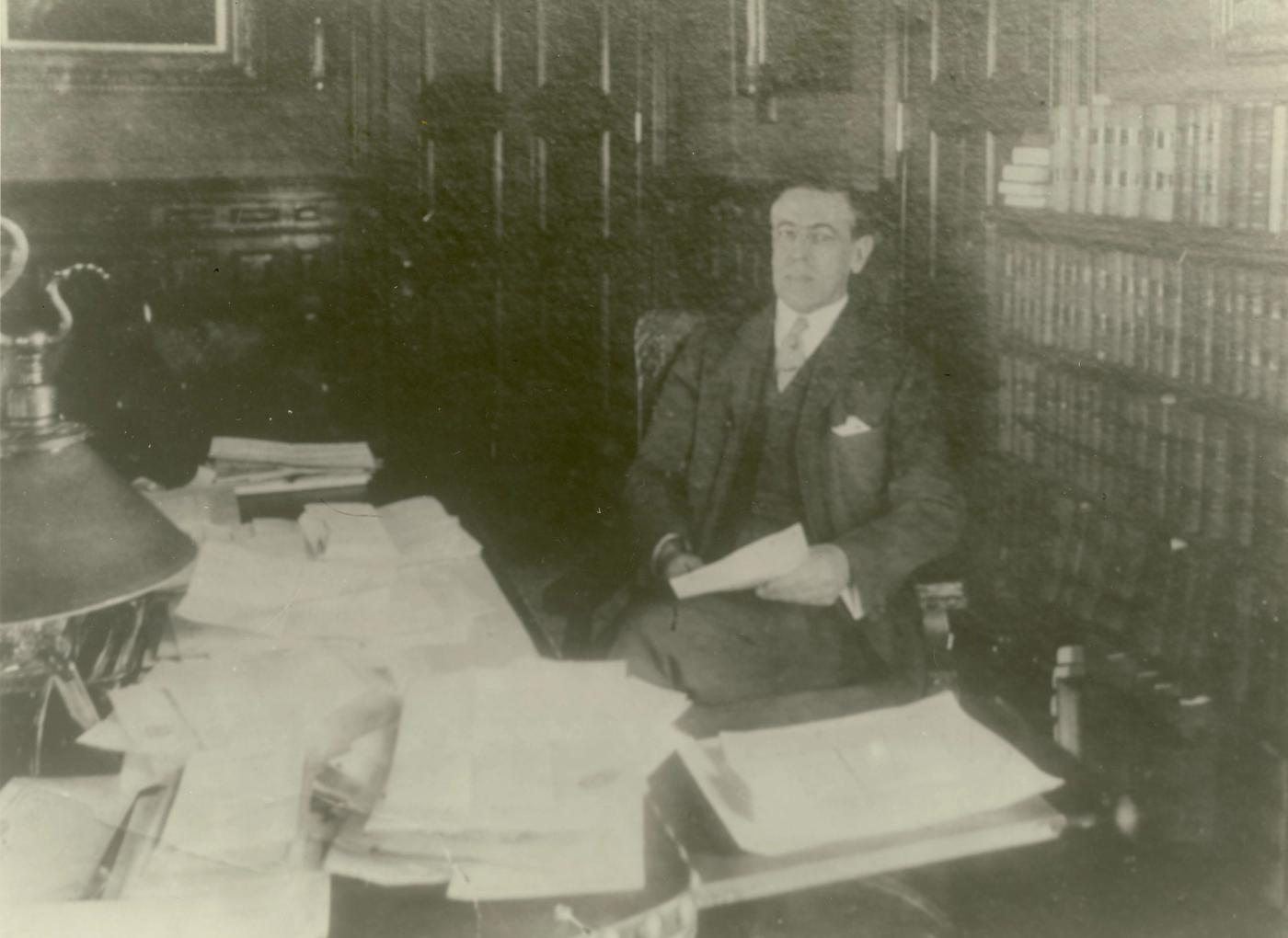
By then he was the Democratic candidate for governor of New Jersey. He won the election on November 8, 1910, and was inaugurated on January 17, 1911. In the spring of 1911 he signed into law the reform program he had campaigned on: a workmen's compensation law on April 4, the Geran election law on April 19, a Corrupt Practices Act on April 20, and, on April 21, a public utilities law that gave the state's Board of Public Utility Commissioners broad new power over railroads, streetcar lines, and utility companies.[21]
That May, on a speaking tour of the West, Wilson told the Jefferson Club of Los Angeles how he read the Declaration of Independence:
Now, the business of every true Jeffersonian is to translate the terms of those abstract portions of the Declaration of Independence into the language and the problems of his own day. If you want to understand the real Declaration of Independence, do not repeat the preface. Make a new table of contents, make a new set of counts in the indictment, make a new statement of the things you mean to set right.[22]
A related line is sometimes attached to this speech, about thoughtful men "deriding those 'Fourth of July sentiments.'" Wilson did write that, but in an 1884 essay, "Committee or Cabinet Government?," from his years as a graduate student.[23]
The New Freedom, 1912–1913
In July 1912 the Democratic convention in Baltimore nominated Wilson for president on the forty-sixth ballot. On November 5 he won 435 of 531 electoral votes against a Republican vote split between William Howard Taft and Theodore Roosevelt, who ran as the Progressive Party candidate. In 1913 his campaign speeches were published as a book, The New Freedom. The journalist William Bayard Hale assembled it from stenographic reports. "I did not write this book at all," Wilson admitted in the preface.[24] The compilation laid out the vision for his coming presidency, and it argued that the corporation had arrived at the center of American economic life:
...for we are conscious that the new order of society has not been made to fit and provide the convenience or prosperity of the average man. ... that a new nation seems to have been created which the old formulas do not fit or afford a vital interpretation of.[25]
There was a time when corporations played a very minor part in our business affairs, but now they play the chief part, and most men are the servants of corporations. ...To-day, the everyday relationships of men are largely with great impersonal concerns, with organizations, not with other individual men. ...There is something very new and very big and very complex about these new relations of capital and labor.[26]
The book repeated, nearly word for word, the Newton and Darwin passage from the Columbia lectures, and added a line: "Society is a living organism and must obey the laws of life, not of mechanics; it must develop."[27] Its closing pages promised:
...A Liberty widened and deepened to match the broadened life of man in modern America, restoring to him in very truth the control of his government, throwing wide all gates of lawful enterprise, unfettering his energies, and warming the generous impulses of his heart...[28]
The legal standing of the corporations Wilson described had been shaped in 1886, the same year he wrote his essay on administration. In Santa Clara County v. Southern Pacific Railroad, decided on May 10, 1886, the Supreme Court ruled on narrower grounds about how the railroad's property had been taxed. Before the lawyers began, though, Chief Justice Morrison Waite told them that the justices did not wish to hear argument on whether the Fourteenth Amendment's equal protection clause applied to corporations: "We are all of opinion that it does." The court reporter put that statement at the head of the published case, and later courts treated corporate personhood under the amendment as settled.[29]
The First Year, 1913
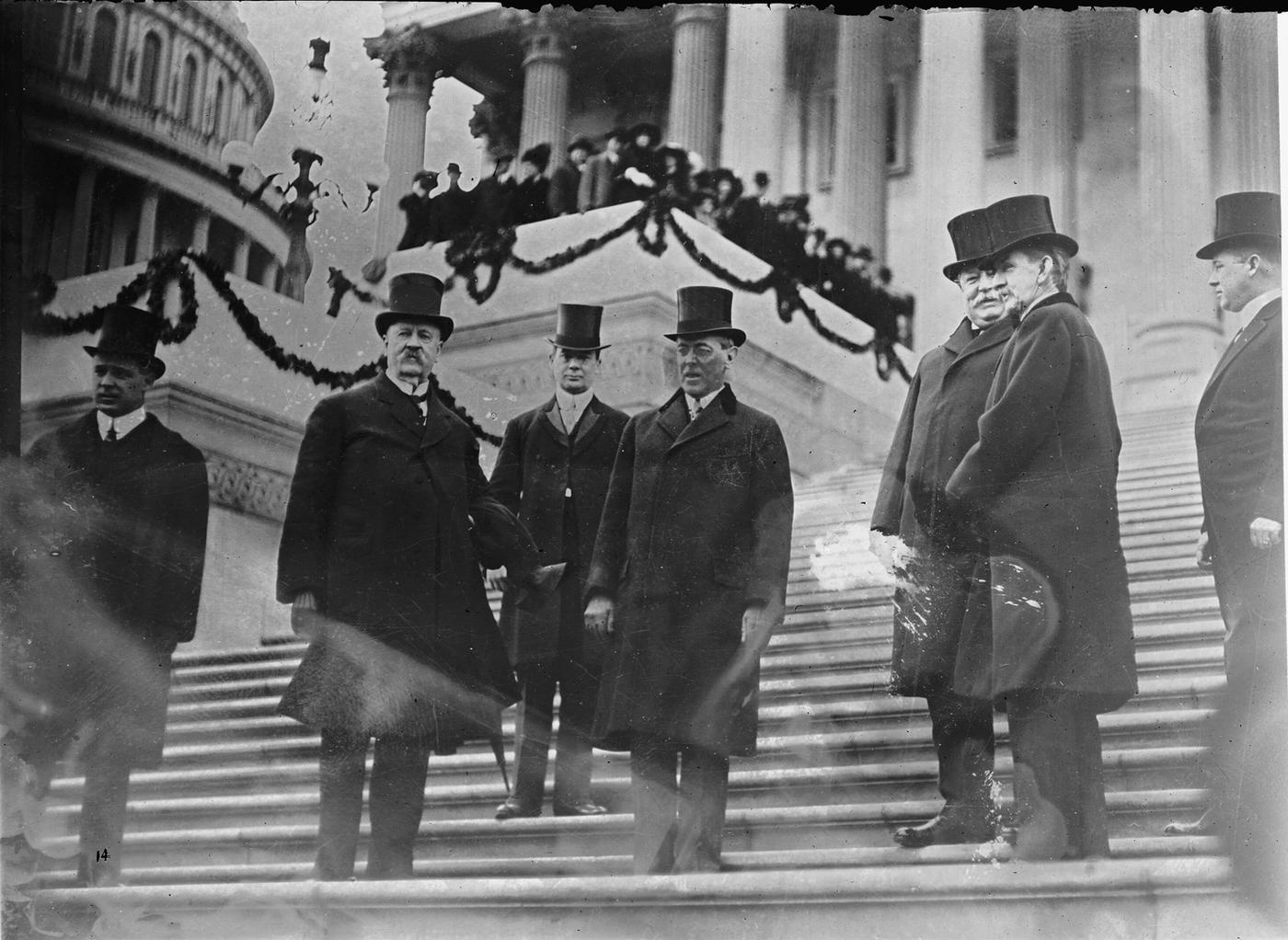
The federal government began growing before Wilson took office. On February 3, 1913, the Sixteenth Amendment reached the number of states needed for ratification, and it was certified on February 25. It let Congress levy a permanent income tax, to be collected by an existing office, the Bureau of Internal Revenue, which had been created in 1862 and would be renamed the Internal Revenue Service in 1953.[30] (See The Sixteenth Amendment and Income Taxes.) On the morning of March 4, in his last hours in office, President Taft signed an act creating a Department of Labor, so that on the very day Wilson was inaugurated, the government he took over gained a new cabinet department.[31]
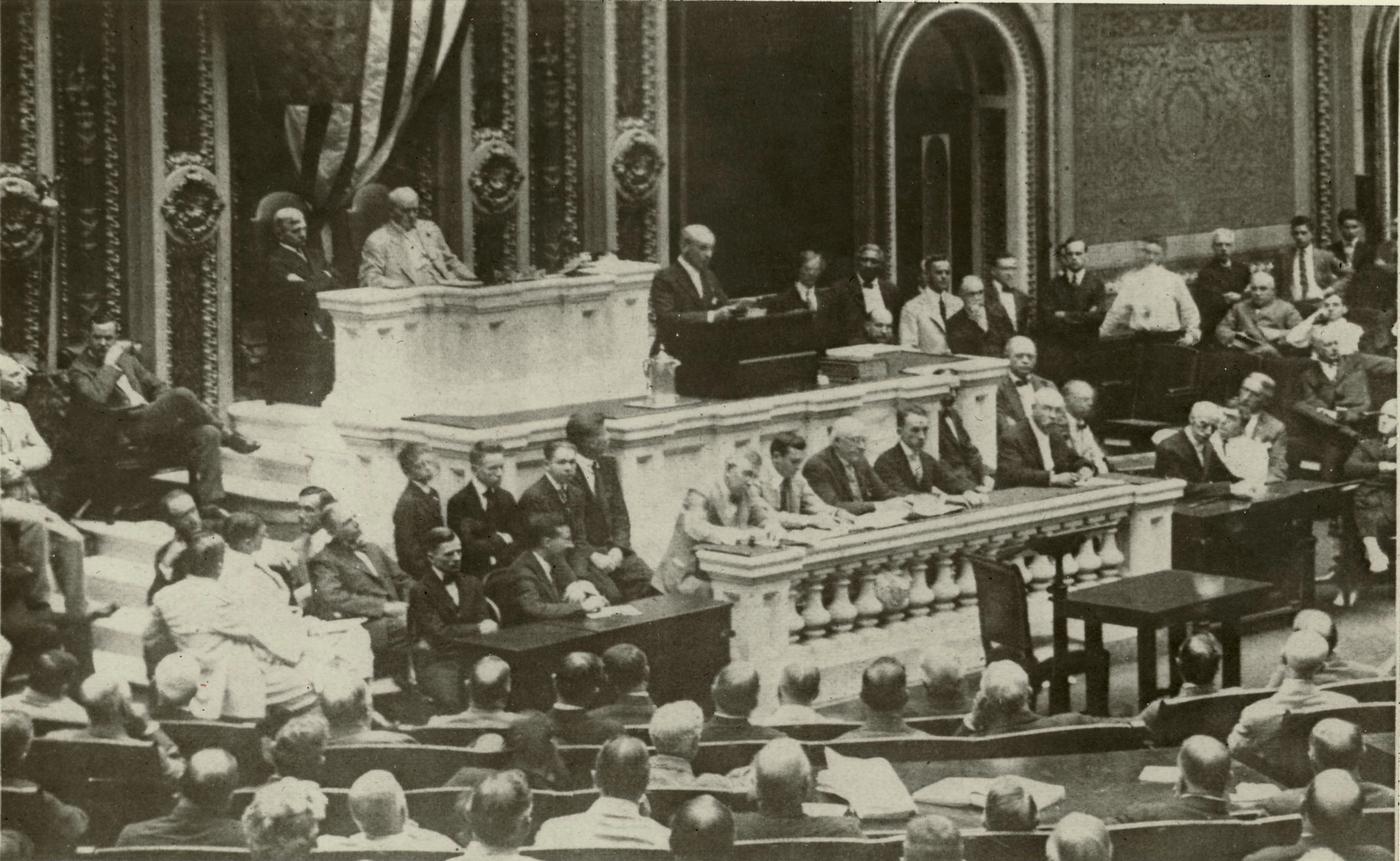
Five weeks later Wilson put his theory of the presidency into practice. On April 8, 1913, he went to the Capitol and read his message on tariff reform to a joint session of Congress, becoming the first president to address Congress in person since John Adams in 1800. He told Congress he was glad "to verify for myself the impression that the President of the United States is a person, not a mere department of the Government hailing Congress from some isolated island of jealous power, sending messages, not speaking naturally and with his own voice."[32] On October 3 he signed the Revenue Act of 1913, also known as the Underwood-Simmons Tariff Act, which cut tariffs and levied the first income tax under the new amendment.
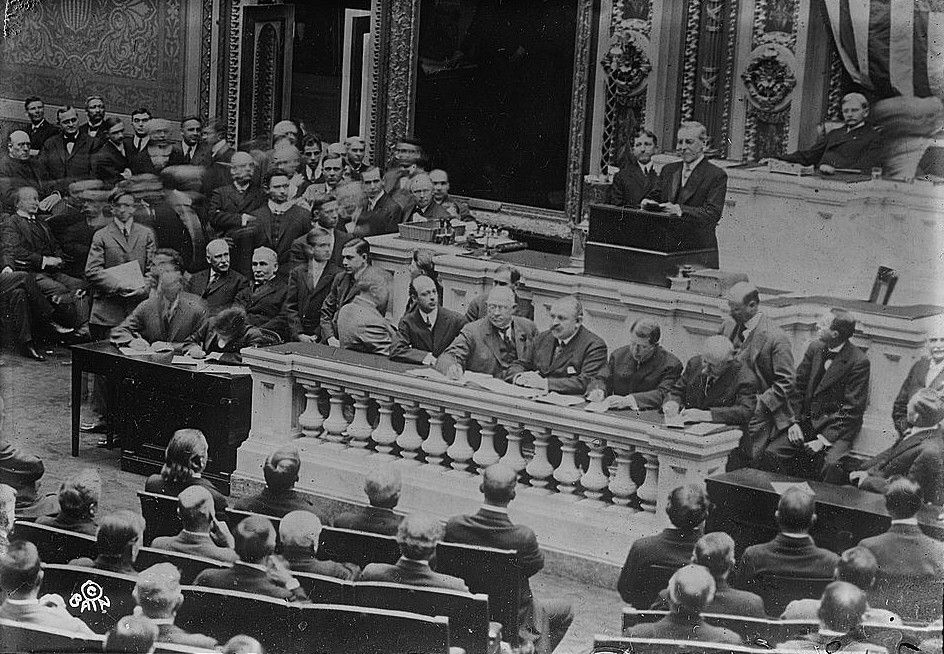
On December 2, 1913, Wilson also delivered his first annual message to Congress in person, reviving a practice Thomas Jefferson had dropped in 1801. In it, he urged the Senate to pass the bill that became the Federal Reserve Act:
I turn to matters of domestic concern. You already have under consideration a bill for the reform of our system of banking and currency, for which the country waits with impatience, as for something fundamental to its whole business life and necessary to set credit free from arbitrary and artificial restraints. I need not say how earnestly I hope for its early enactment into law. I take leave to beg that the whole energy and attention of the Senate be concentrated upon it till the matter is successfully disposed of.[33]
Wilson signed the Federal Reserve Act on December 23, 1913.
Commissions and Boards, 1914–1916
The next three years brought new agencies, including the kind of federal commission Wilson had once been wary of. On May 8, 1914, he signed the Smith-Lever Act, which created the cooperative extension service linking the Department of Agriculture to farmers through the state agricultural colleges. On September 26 he signed the Federal Trade Commission Act, which created the commission, and on October 15 the Clayton Act, which added to the laws against monopoly.
The year 1916 brought a second wave. The National Defense Act of June 3 made the National Guard part of the Army when in federal service, required its members to swear to obey the president as well as their governors, and let the president draft the Guard into federal service whenever Congress authorized the use of more troops than the Regular Army had.[34] The Federal-Aid Road Act of July 11 promised the states $75 million over five years to build rural roads, with the federal government paying up to half the cost. The Secretary of Agriculture ran the program through the department's Office of Public Roads and Rural Engineering, which was renamed the Bureau of Public Roads in 1918.[35] Within the next two months Wilson signed the Federal Farm Loan Act, creating a Federal Farm Loan Board; an army bill establishing a Council of National Defense "for the coordination of industries and resources for the national security and welfare"; the Shipping Act, creating the United States Shipping Board; and a revenue act that created the United States Tariff Commission.[36]
The War Government, 1917–1918
On April 2, 1917, Wilson returned to the Capitol to ask Congress to declare war on Germany. War, he said, "will involve the organization and mobilization of all the material resources of the country to supply the materials of war and serve the incidental needs of the Nation in the most abundant and yet the most economical and efficient way possible."[37] Over the next year the federal government built that organization at speed. On April 13 Wilson created the Committee on Public Information by executive order, with the journalist George Creel as its civilian chairman. The Selective Service Act of May 18 authorized the draft. On July 28 the Council of National Defense created a War Industries Board to coordinate purchasing and production for the war.[38]
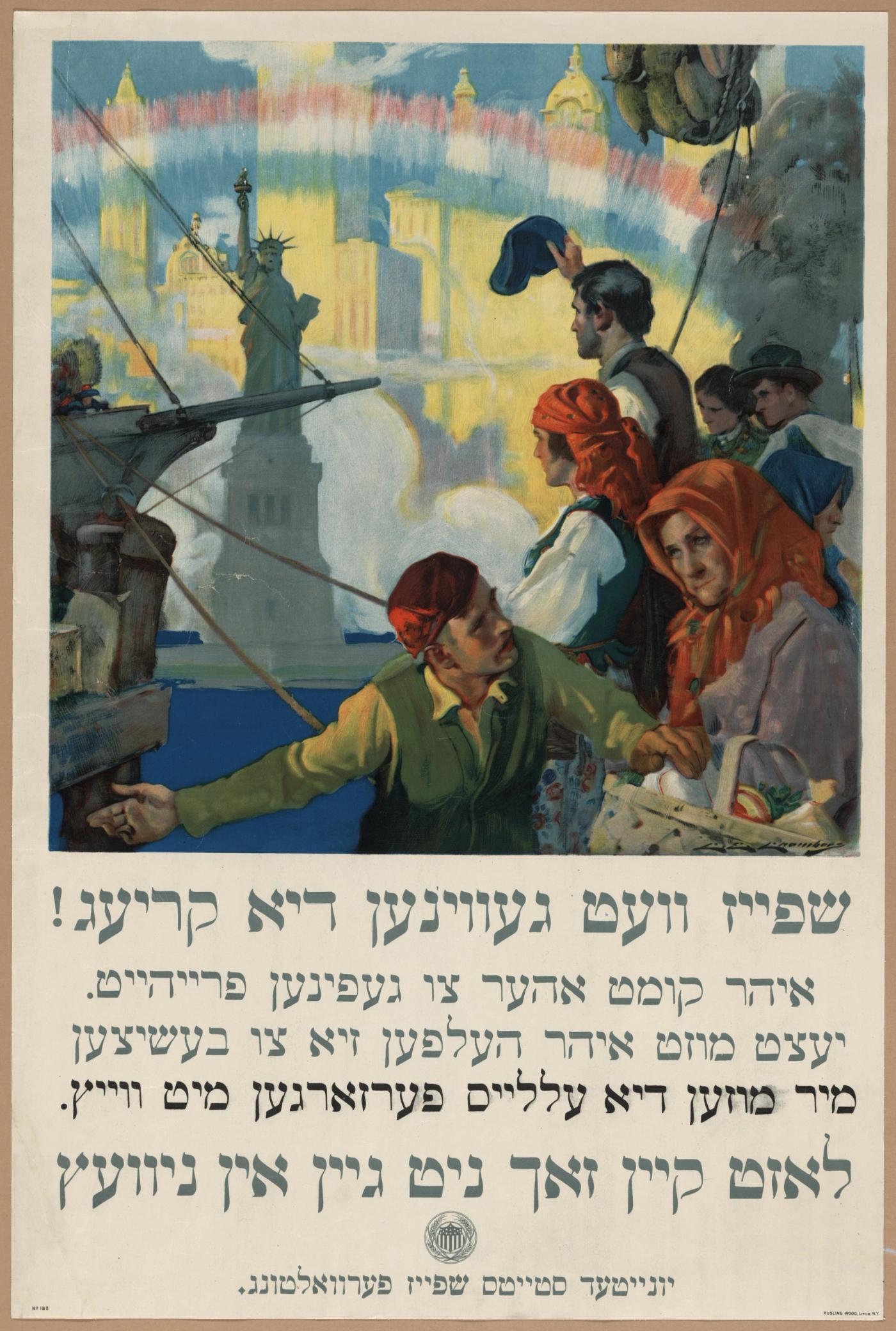
On August 10, 1917, Wilson signed the Lever Food and Fuel Control Act, which authorized him "to create and use any agency or agencies" to control the supply of food and fuel. The same day, by Executive Order 2679-A, he created the United States Food Administration and appointed Herbert Hoover to run it. The Food Administration regulated the supply, distribution, and conservation of food at home and for the armed forces and the Allies, and bought and sold grain through a Food Administration Grain Corporation that Hoover organized under an executive order Wilson signed four days later. On August 23 he named Harry A. Garfield United States Fuel Administrator.[39]
The Trading with the Enemy Act of October 6, 1917, gave the president power over trade and financial dealings with enemy nations. By executive order on October 12, Wilson vested the seizure and management of enemy-owned property in an Alien Property Custodian, and on October 22 he appointed A. Mitchell Palmer to the post.[40] On December 26 he proclaimed that the federal government would take possession of the nation's railroads at noon on December 28, under William G. McAdoo as Director General of Railroads.[41]
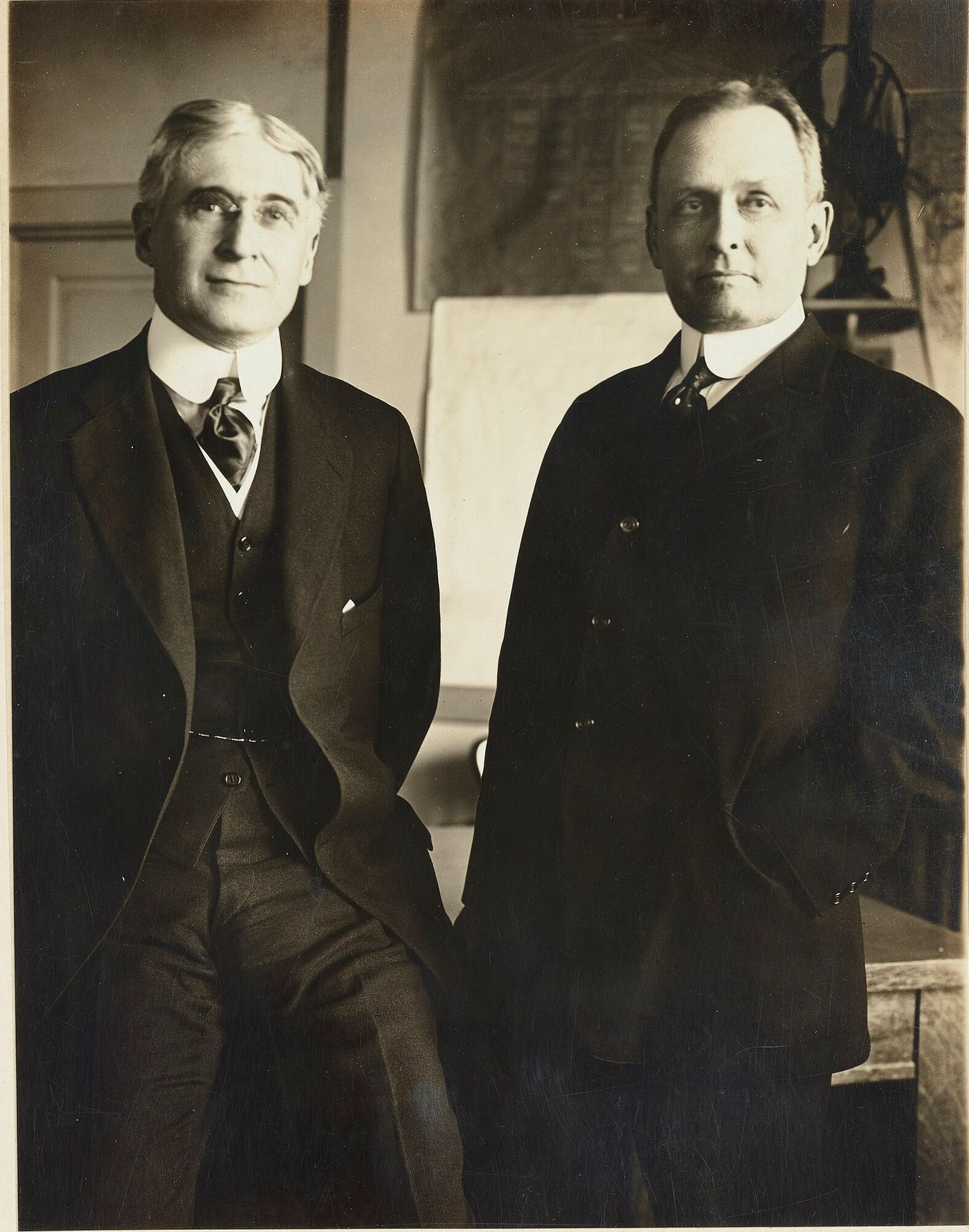
In March 1918 Wilson made Bernard Baruch chairman of the War Industries Board, writing that the chairman "should act as the general eye of all supply departments in the field of industry." In April Congress created a War Finance Corporation to lend money to war industries.[42] Wilson also asked Congress for authority to rearrange the government itself. "Senator after Senator has appealed to me most earnestly to 'cut the red tape,'" he wrote to Senator Lee Overman of North Carolina on March 21. "I am asking for the scissors."[43] The Overman Act of May 20, 1918, authorized the president "to make such redistribution of functions among executive agencies as he may deem necessary," for the duration of the war and until six months after the peace treaty was proclaimed. Eight days later Wilson made the War Industries Board "a separate administrative agency to act for me and under my direction."[44]
Taking Off the Harness, 1918–1919
The armistice of November 11, 1918, ended the fighting. In his annual message that December, Wilson described what came next:
While the war lasted we set up many agencies by which to direct the industries of the country in the services it was necessary for them to render... by which, in short, to put every material energy of the country in harness to draw the common load and make of us one team in the accomplishment of a great task. But the moment we knew the armistice to have been signed we took the harness off.[45]
Much of the wartime government did come down. The War Industries Board was abolished on December 31, 1918. The Fuel Administration was discontinued on June 30, 1919 (it was briefly revived during a coal strike that fall), and the Committee on Public Information was abolished in August 1919. Hoover resigned as Food Administrator, and on November 21, 1919, Wilson transferred the agency's remaining powers to the Attorney General and the wheat director, Julius Barnes. Wilson formally abolished the Food Administration in August 1920.[46]
Not every wartime power went away. The Trading with the Enemy Act stayed on the books, and a 1918 amendment had added the "hoarding" and "melting" of gold to the transactions the president could regulate. In March 1933 Wilson's former Assistant Secretary of the Navy, Franklin D. Roosevelt, cited that section of the 1917 act when he declared a national bank holiday that closed every bank in the country, and Congress approved his action in the Emergency Banking Act three days later.[47]
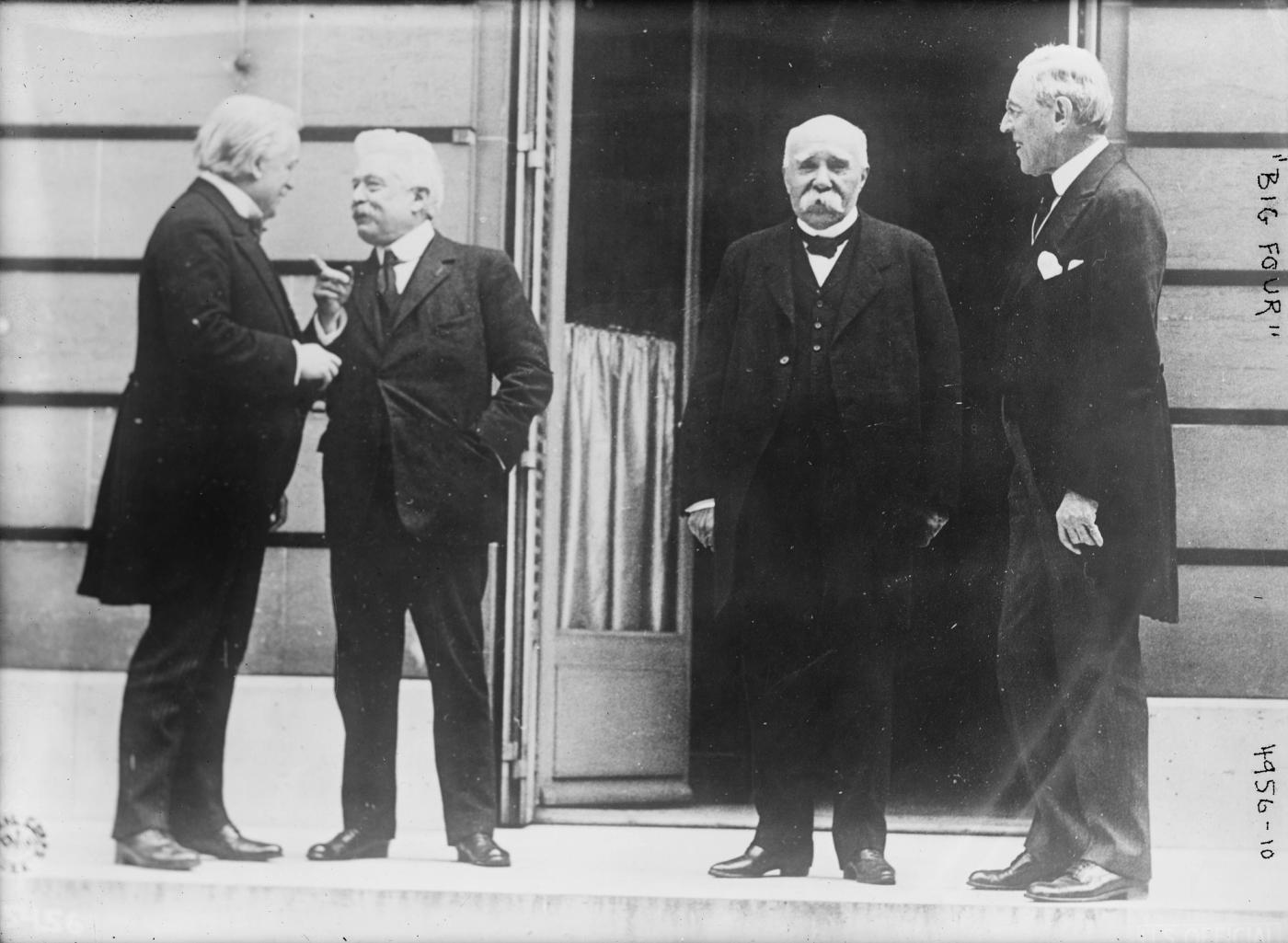
Wilson spent most of the first half of 1919 at the peace conference in Paris. When the new Congress met in May, he could not attend and sent his message by cable: "I deeply regret my inability to be present at the opening of the extraordinary session of the Congress."[48] The treaty was signed at Versailles on June 28. That September Wilson set out on a speaking tour of the West to build support for the treaty and the League of Nations. After a speech at Pueblo, Colorado, on September 25, he fell ill on his train, and the tour was canceled the next morning outside Wichita. On October 2, in the White House, he suffered a stroke. His doctor's bulletin that night said that "the President is a very sick man" and needed absolute rest, but it did not mention a stroke.[49] On November 19, 1919, the Senate voted down the treaty three times, first with Senator Henry Cabot Lodge's reservations attached (39 to 55), again with them after reconsideration (41 to 51), and then without them (38 to 53). A last attempt failed in March 1920.[50]
Wilson's Record
By the end of his presidency Wilson had issued 1,803 executive orders, more than any president before him. Theodore Roosevelt, the previous record holder, had issued 1,081. Only one president since has issued more: Franklin D. Roosevelt, president from 1933 to 1945, with 3,726. No president since Franklin Roosevelt has come close to Wilson's total; the nearest is Harry Truman, with 907.[51]
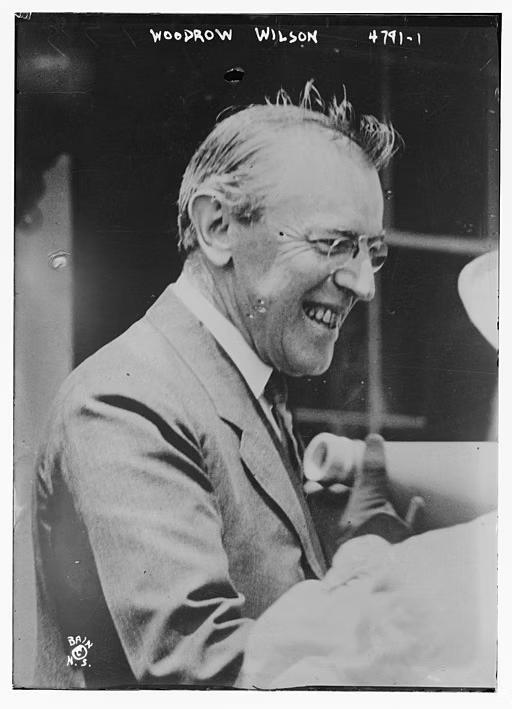
Most of the peacetime institutions that began work in Wilson's first term are still part of the federal government: the Department of Labor, the Federal Reserve, the Federal Trade Commission, the extension service, the federal-aid highway program, and the Tariff Commission, now the United States International Trade Commission. In 1907 Wilson had told his Columbia audience that the president was free to be "as big a man as he can," and that his capacity would set the limit. Twelve years later the office he described sat atop a far larger government, and the man who held it lay ill in the White House, unable to lead the fight for his own treaty.
Places in this Story
The places this story moves through, in order — follow them on the interactive map →
- Columbia University, New York March 1, 1907
Wilson begins his Columbia lectures on American government, later published as Constitutional Government in the United States.
- Nassau Hall, Princeton, New Jersey October 17, 1907
The Princeton trustees ask Wilson to withdraw his plan to reorganize student life into residential quads.
- New Jersey State House, Trenton April 1911
Governor Wilson signs his reform program, including a law giving the Board of Public Utility Commissioners broad new powers.
- Los Angeles, California May 12, 1911
Wilson tells the Jefferson Club: "If you want to understand the real Declaration of Independence, do not repeat the preface."
- Fifth Regiment Armory, Baltimore July 2, 1912
The Democratic convention nominates Wilson for president on the forty-sixth ballot.
- The White House, Washington December 23, 1913
Wilson signs the Federal Reserve Act, three weeks after urging it on Congress in person.
- U.S. Capitol, Washington April 2, 1917
Wilson asks Congress to declare war, calling for "the organization and mobilization of all the material resources of the country."
- Palace of Versailles, France June 28, 1919
The peace treaty with Germany is signed in the Hall of Mirrors after more than five months of negotiation in Paris.
- Pueblo, Colorado September 25, 1919
Wilson gives the last speech of his western tour for the treaty and falls ill that night. A week later he suffers a stroke.
Frequently Asked Questions
What were Woodrow Wilson's 1907 Columbia lectures?
In March and April 1907, while president of Princeton, Wilson gave a series of lectures at Columbia University under the George Blumenthal Foundation. Columbia University Press published them in May 1908 as Constitutional Government in the United States. They argued that government is "not a machine, but a living thing," and that the president, as "the only national voice in affairs," was free "to be as big a man as he can."
Why is Woodrow Wilson called the father of public administration?
His essay "The Study of Administration," written in 1886 and published in Political Science Quarterly in June 1887, argued that "it is getting to be harder to run a constitution than to frame one" and called for the systematic study of how governments carry out their work. Many scholars date public administration as a separate academic field from this essay.
What did Wilson mean by a "Darwinian" constitution?
Wilson argued that the founders had built the government on a Newtonian model of checks and balances, like a machine held in equilibrium. He believed government was instead a living organism shaped by its environment, so its parts had to cooperate under leadership. "Living political constitutions must be Darwinian in structure and in practice," he wrote in 1908, and he repeated the idea in The New Freedom in 1913.
What federal agencies were created during Woodrow Wilson's presidency?
Wilson's administration began with the new Department of Labor, created by an act Taft signed on March 4, 1913. The administration then added the Federal Reserve System (1913), the Federal Trade Commission and the cooperative extension service (1914), and in 1916 the Federal Farm Loan Board, the Council of National Defense, the United States Shipping Board, and the Tariff Commission.
How did World War I expand the federal government under Wilson?
After the United States entered the war in April 1917, Wilson created or oversaw the Committee on Public Information, the War Industries Board, the Food Administration under Herbert Hoover, the Fuel Administration, the Alien Property Custodian, and federal control of the railroads. The Overman Act of May 1918 let him redistribute functions among executive agencies for the rest of the war and until six months after the peace treaty was proclaimed.
What happened to the wartime agencies after World War I?
Most were closed. The War Industries Board was abolished at the end of 1918, the Fuel Administration in June 1919, the Committee on Public Information in August 1919, and the Food Administration in August 1920. The Trading with the Enemy Act remained, and in 1933 Franklin D. Roosevelt cited it to declare a national bank holiday.
How many executive orders did Woodrow Wilson issue?
According to the American Presidency Project, Wilson issued 1,803 executive orders, more than any president before him. Only Franklin D. Roosevelt, with 3,726, has issued more.
Bibliography
Alien Property Custodian. Report. Washington: Government Printing Office, 1919.
Baruch, Bernard M. American Industry in the War: A Report of the War Industries Board. Washington: Government Printing Office, 1921. https://archive.org/details/americanindustry00unit.
Columbia University Quarterly 9, no. 2 (March 1907). https://archive.org/details/sim_columbia-university-quarterly_1907-03_9_2.
Congressional Record. 66th Cong., 1st sess., vol. 58, pt. 9 (1919). https://www.govinfo.gov/content/pkg/GPO-CRECB-1919-pt9-v58/pdf/GPO-CRECB-1919-pt9-v58-5-1.pdf.
Ensure IAS. "Father of Public Administration." ENSURE IAS. Accessed October 3, 2023. https://ensureias.com/blog/public-administration/father-of-public-administration.
Internal Revenue Service. "IRS History Timeline." https://www.irs.gov/irs-history-timeline.
Johns Hopkins Half-Century Directory, 1876–1926. Baltimore: Johns Hopkins University, 1926. https://archive.org/details/johnsh1926brow.
Johns Hopkins University Circulars. Vol. 2 (1882–83). https://archive.org/details/johnshopkinsuni00unkngoog.
Link, Arthur S., ed. The Papers of Woodrow Wilson. Vols. 5, 17, 21, 23, and 47. Princeton: Princeton University Press, 1968–1984.
National Archives. "16th Amendment to the U.S. Constitution: Federal Income Tax (1913)." Milestone Documents. https://www.archives.gov/milestone-documents/16th-amendment.
National Archives. Guide to Federal Records, Record Groups 4, 30, 61, 63, 67, and 131. https://www.archives.gov/research/guide-fed-records.
New Jersey. Acts of the One Hundred and Thirty-Fifth Legislature of the State of New Jersey. 1911. https://archive.org/details/new-jersey-session-laws.
New-York Tribune, March 16, 1907. Chronicling America, Library of Congress. https://www.loc.gov/resource/sn83030214/1907-03-16/ed-1/?sp=7.
New York Times, September 26, September 27, and October 3, 1919.
Oyez. "Santa Clara County v. Southern Pacific Railroad Company." Accessed October 3, 2023. https://www.oyez.org/cases/1850-1900/118us394.
Reports of the United States Food Administration and the United States Fuel Administration. Washington: Government Printing Office, 1918. https://archive.org/details/annualreportuni00admigoog.
Santa Clara County v. Southern Pacific Railroad Co., 118 U.S. 394 (1886). https://tile.loc.gov/storage-services/service/ll/usrep/usrep118/usrep118394/usrep118394.pdf.
Stillman, Richard J., II. "Woodrow Wilson and the Study of Administration: A New Look at an Old Essay." American Political Science Review 67, no. 2 (1973): 582–88. https://doi.org/10.2307/1958787.
The Sun (New York), March 2, 1907. Chronicling America, Library of Congress. https://www.loc.gov/resource/sn83030272/1907-03-02/ed-1/?sp=8.
The American Presidency Project. Documents of Woodrow Wilson, 1913–1920, and "Executive Orders." University of California, Santa Barbara. https://www.presidency.ucsb.edu/statistics/data/executive-orders.
United States. Statutes at Large. Vols. 37–41 and 48. https://www.govinfo.gov/app/collection/statute.
Will, George F. The Conservative Sensibility. New York: Hachette Books, 2019.
Wilson, Woodrow. Constitutional Government in the United States. New York: Columbia University Press, 1908. https://archive.org/details/constitutionalgo00wils.
Wilson, Woodrow. The New Freedom: A Call for the Emancipation of the Generous Energies of a People. New York: Doubleday, Page, 1913. https://archive.org/details/newfreedomacall02halegoog.
Wilson, Woodrow, and William Bayard Hale. The New Freedom: A Call for the Emancipation of the Generous Energies of a People. New York: Doubleday, Page, 1918.
Wilson, Woodrow. The Public Papers of Woodrow Wilson. Edited by Ray Stannard Baker and William E. Dodd. 6 vols. New York: Harper & Brothers, 1925–1927. https://archive.org/details/publicpapersofwo01wils.
Wilson, Woodrow. The State: Elements of Historical and Practical Politics. Boston: D. C. Heath, 1889. https://archive.org/details/stateelementshi14wilsgoog.
Wilson, Woodrow. "The Study of Administration." Political Science Quarterly 2, no. 2 (June 1887): 197–222. https://archive.org/details/sim_political-science-quarterly_1887-06_2_2.
Citations
- The Sun (New York), March 2, 1907, 8; "The University," Columbia University Quarterly 9, no. 2 (March 1907): 199. ↑
- New-York Tribune, March 16, 1907, 7. ↑
- Woodrow Wilson, Constitutional Government in the United States (New York: Columbia University Press, 1908), 56. ↑
- George F. Will, The Conservative Sensibility (New York: Hachette Books, 2019), 75. ↑
- Johns Hopkins University Circulars 2 (1882–83); Johns Hopkins Half-Century Directory, 1876–1926 (Baltimore: Johns Hopkins University, 1926), s.v. "Adams, Herbert Baxter" and "Ely, Richard Theodore." ↑
- Richard J. Stillman II, "Woodrow Wilson and the Study of Administration: A New Look at an Old Essay," American Political Science Review 67, no. 2 (1973): 582–88, https://doi.org/10.2307/1958787; Woodrow Wilson, "The Study of Administration," Political Science Quarterly 2, no. 2 (June 1887): 197–222. ↑
- Wilson, "The Study of Administration," 200. ↑
- Wilson, "The Study of Administration," 220. ↑
- Will, The Conservative Sensibility, 68–69. ↑
- Woodrow Wilson, "The Modern Democratic State" [c. December 1, 1885], in The Papers of Woodrow Wilson, ed. Arthur S. Link, vol. 5 (Princeton: Princeton University Press, 1968), 69; quoted in Will, The Conservative Sensibility, 80. ↑
- Wilson, Constitutional Government, 54. ↑
- Wilson, Constitutional Government, 57. ↑
- Wilson, Constitutional Government, 68. ↑
- Wilson, Constitutional Government, 70. ↑
- Wilson, Constitutional Government, 69. ↑
- Wilson, Constitutional Government, 66–67. ↑
- Wilson, Constitutional Government, 196. ↑
- Wilson, Constitutional Government, prefatory note and copyright page. ↑
- Minutes of the Board of Trustees of Princeton University, June 10 and October 17, 1907, in The Papers of Woodrow Wilson, ed. Arthur S. Link, vol. 17 (Princeton: Princeton University Press, 1974). ↑
- Wilson to the Board of Trustees of Princeton University, October 20, 1910, and Minutes of the Board of Trustees, October 20, 1910, in The Papers of Woodrow Wilson, vol. 21, 362–64. ↑
- Acts of the One Hundred and Thirty-Fifth Legislature of the State of New Jersey (1911), chs. 95, 183, 188, and 195. ↑
- Woodrow Wilson, address to the Jefferson Club of Los Angeles, May 12, 1911, in The Papers of Woodrow Wilson, vol. 23, 32–40; see Will, The Conservative Sensibility, 70. ↑
- Woodrow Wilson, "Committee or Cabinet Government?," Overland Monthly, January 1884, reprinted in The Public Papers of Woodrow Wilson: College and State, ed. Ray Stannard Baker and William E. Dodd, vol. 1 (New York: Harper & Brothers, 1925), 107. ↑
- Woodrow Wilson, The New Freedom: A Call for the Emancipation of the Generous Energies of a People (New York: Doubleday, Page, 1913), preface. ↑
- Woodrow Wilson and William Bayard Hale, The New Freedom: A Call for the Emancipation of the Generous Energies of a People (New York: Doubleday, Page, 1918), 4–5. ↑
- Wilson, The New Freedom (1918), 5–8. ↑
- Wilson, The New Freedom (1913), 48. ↑
- Wilson, The New Freedom (1918), 294. ↑
- Oyez, "Santa Clara County v. Southern Pacific Railroad Company," accessed October 3, 2023, https://www.oyez.org/cases/1850-1900/118us394; Santa Clara County v. Southern Pacific Railroad Co., 118 U.S. 394, 396, 416 (1886). ↑
- National Archives, "16th Amendment to the U.S. Constitution: Federal Income Tax (1913)," Milestone Documents, https://www.archives.gov/milestone-documents/16th-amendment; Internal Revenue Service, "IRS History Timeline," https://www.irs.gov/irs-history-timeline. ↑
- An Act To create a Department of Labor, March 4, 1913, ch. 141, 37 Stat. 736. ↑
- Woodrow Wilson, "Address to a Joint Session of Congress on Tariff Reform," April 8, 1913, The American Presidency Project, https://www.presidency.ucsb.edu/documents/address-joint-session-congress-tariff-reform. ↑
- Woodrow Wilson, "First Annual Message," December 2, 1913, The American Presidency Project, https://www.presidency.ucsb.edu/documents/first-annual-message-18. ↑
- National Defense Act, June 3, 1916, ch. 134, 39 Stat. 166, secs. 1, 70, and 111. ↑
- Federal-Aid Road Act, July 11, 1916, ch. 241, 39 Stat. 355; National Archives, "Records of the Bureau of Public Roads [BPR]," Record Group 30, https://www.archives.gov/research/guide-fed-records/groups/030.html. ↑
- Federal Farm Loan Act, July 17, 1916, ch. 245, 39 Stat. 360; Army Appropriation Act, August 29, 1916, ch. 418, sec. 2, 39 Stat. 649; Shipping Act, September 7, 1916, ch. 451, 39 Stat. 728; Revenue Act of 1916, September 8, 1916, ch. 463, title VII, 39 Stat. 795. ↑
- Woodrow Wilson, "Address to a Joint Session of Congress Requesting a Declaration of War Against Germany," April 2, 1917, The American Presidency Project, https://www.presidency.ucsb.edu/documents/address-joint-session-congress-requesting-declaration-war-against-germany. ↑
- Executive Order 2594, April 13, 1917, The American Presidency Project, https://www.presidency.ucsb.edu/documents/executive-order-2594-creating-committee-public-information; Selective Service Act, May 18, 1917, ch. 15, 40 Stat. 76; Bernard M. Baruch, American Industry in the War: A Report of the War Industries Board (Washington: Government Printing Office, 1921), letter of transmittal. ↑
- Lever Food and Fuel Control Act, August 10, 1917, ch. 53, 40 Stat. 276; Executive Order 2679-A, August 10, 1917, printed as Exhibit A in Reports of the United States Food Administration and the United States Fuel Administration (Washington: Government Printing Office, 1918); Executive Order 2681, August 14, 1917, and Executive Order 2690, August 23, 1917, The American Presidency Project; National Archives, "Records of the U.S. Food Administration," Record Group 4, https://www.archives.gov/research/guide-fed-records/groups/004.html. ↑
- Trading with the Enemy Act, October 6, 1917, ch. 106, 40 Stat. 411; Executive Order 2729-A, October 12, 1917, The American Presidency Project, https://www.presidency.ucsb.edu/documents/executive-order-2729a-vesting-power-and-authority-designated-officers-and-making-rules-and; Alien Property Custodian, Report (Washington: Government Printing Office, 1919), 9. ↑
- Proclamation 1419, December 26, 1917, The American Presidency Project, https://www.presidency.ucsb.edu/documents/proclamation-1419-government-assumption-control-transportation-systems. ↑
- Woodrow Wilson to Bernard M. Baruch, March 4, 1918, The American Presidency Project, https://www.presidency.ucsb.edu/documents/letter-bernard-m-baruch-requesting-acceptance-nomination-chair-the-war-industries-board; War Finance Corporation Act, April 5, 1918, ch. 45, 40 Stat. 506. ↑
- Woodrow Wilson to Lee Slater Overman, March 21, 1918, in The Papers of Woodrow Wilson, vol. 47, 94. ↑
- Overman Act, May 20, 1918, ch. 78, 40 Stat. 556; Executive Order 2868, May 28, 1918, The American Presidency Project, https://www.presidency.ucsb.edu/documents/executive-order-2868-establishment-war-industries-board. ↑
- Woodrow Wilson, "Sixth Annual Message," December 2, 1918, The American Presidency Project, https://www.presidency.ucsb.edu/documents/sixth-annual-message-6. ↑
- National Archives, Record Groups 61, 63, and 67; Proclamation 1542, November 21, 1919, and Executive Order 3320, August 21, 1920, The American Presidency Project. ↑
- Act of September 24, 1918, ch. 176, sec. 5, 40 Stat. 966; Proclamation 2039, March 6, 1933, The American Presidency Project, https://www.presidency.ucsb.edu/documents/proclamation-2039-bank-holiday-march-6-9-1933-inclusive; Emergency Banking Act, March 9, 1933, ch. 1, 48 Stat. 1. ↑
- Woodrow Wilson, message to Congress, May 20, 1919, in The Public Papers of Woodrow Wilson: War and Peace, ed. Ray Stannard Baker and William E. Dodd, vol. 1 (New York: Harper & Brothers, 1927), 485. ↑
- New York Times, September 26, September 27, and October 3, 1919. ↑
- Congressional Record, 66th Cong., 1st sess., vol. 58 (November 19, 1919), 8786, 8802, 8803; Congressional Record, 66th Cong., 2nd sess., vol. 59 (March 19, 1920), 4599. ↑
- The American Presidency Project, "Executive Orders," https://www.presidency.ucsb.edu/statistics/data/executive-orders. ↑